

Eric Dutcher - Can you go off-grid with Type 1 Diabetes?

Episode summary
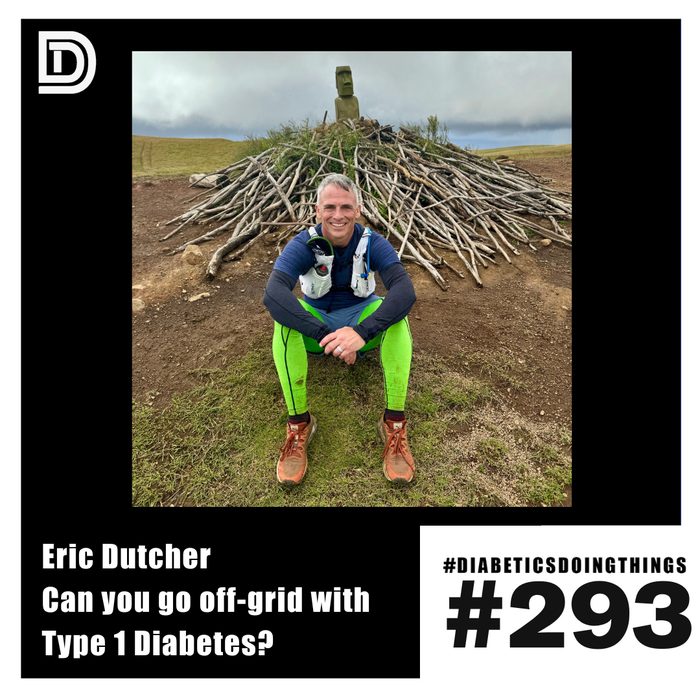
Eric Dutcher, known as the Chronic Superhuman, returns to the show after previous episodes where he ran 46 miles on his 46th birthday. To mark turning 50, he flew to Rapa Nui (Easter Island) to run the first official ultramarathon ever held there, a 50K over volcanic rock. He describes planning around jet lag, weather, and terrain, eating guava and mango off trees to raise his blood sugar, and getting nipped by a dog mid-race. He and Rob talk about the decision ten years ago to live the breadth rather than the length of his life, the role of community and mentorship, and what it means to show up as an athlete first and a diabetic second, even as he gets older.
Key takeaways
- Eric Dutcher ran the first official ultramarathon ever held on Rapa Nui (Easter Island) to celebrate his 50th birthday.
- He ate guava and mango straight off trees along the route when he needed to raise his blood sugar.
- A dog nipped him during the 50K; it didn't break skin but left a bruise, one more unplanned variable to handle mid-race.
- Eric says diabetes becomes less of the story the more he takes on these challenges, which he sums up as 'athlete first, diabetic second.'
- He credits community and mentorship, including runners he's personally trained with, for making it possible to keep attempting bigger races.
Show notes
Eric Dutcher is a diabetes advocate and endurance athlete who has been featured on the "Diabetics Doing Things" podcast previously. In this episode, he discusses his recent 50th birthday celebration, which involved traveling to the remote island of Rapa Nui (Easter Island) to participate in the first-ever ultramarathon race held on the island.
Key Topics Discussed:
Eric's decision 10 years ago to "live the breadth of his life" rather than just the length, and how that has led him to take on increasingly ambitious athletic challenges (00:02:19)
The planning and preparation process for Eric's trip to Rapa Nui, including acclimating to the environment through shorter runs and hikes (00:14:25)
Eric's experience running the 50K ultramarathon on Rapa Nui, including dealing with a dog encounter and managing his diabetes during the long, challenging run (00:24:25)
The importance of community and mentorship for Eric in pursuing athletic goals as a person with diabetes (00:32:10)
Eric's perspective on embracing an "athlete first, diabetic second" mindset, and the grace required to keep showing up and trying new things as one gets older (00:34:13)
Where to Find:
Chronic Superhuman on Instagram
Eric Dutcher LinkedIn
https://dutcherlife.com/
Questions this episode answers
Where is Rapa Nui (Easter Island) and how do you get there?
Eric Dutcher explains Rapa Nui sits about five hours by flight west of Santiago, Chile, with a single daily flight to the island. It's roughly 25 kilometers long and 10 kilometers wide, and travelers need a hotel reservation in Santiago just to clear immigration.
How did Eric Dutcher manage his blood sugar during the 50K ultramarathon?
He ate guava and mango straight off trees along the route to bring his blood sugar up, carried glucose tabs and bars, adjusted his insulin for highs, and relied on a glucometer as backup in case his devices failed.
What happened with the dog during the race?
Eric says a dog was protecting its territory and gave him a nip, not a full attack. It didn't break the skin, but he came home with a noticeable bruise.
What does 'athlete first, diabetic second' mean to Eric Dutcher?
Eric describes it as planning and preparing like any athlete (gear, hydration, terrain, weather) while diabetes management happens in the background. He says the more races he does, the less diabetes becomes the main story of the experience.
Full transcript Searchable, with timestamps
Rob Howe: Hello and welcome back to another episode of Diabetics Doing Things. We are still telling the amazing stories of people with diabetes from all over the world. Sometimes our friends who are pretty close by go all around the world and have a pretty crazy adventure and that's what we're going to cover today. I want to welcome back to the show Eric Dutcher. You guys may know him as the Chronic Superhuman. He guested on episode 148 and on episode 224 on the podcast. but what I really want to focus on today is kind of similar to your first time on the podcast during the pandemic where you were I think running 46 miles on your 46th birthday it's either 46 or 47 okay all right so we'll have to we'll have to go back and double check so podcast heads who have listened to that episode recently correct me if I was wrong so but anyway welcome back to the show man you're you're here it's it's good to see you obviously you and I background for listeners we We live pretty close to each other, even though Dallas-Fort Worth is a large metro area. So I actually got to link up with Eric earlier this year up in Murphy during a basketball game. So you actually got to see one of my men's league teams play, which is really, really fun to have a friendly face in the stands.
Eric Dutcher: It's always fun to come see Rob rock the court. And I was just pinging him recently saying, I need to get out for another game.
Rob Howe: Yeah, we'll definitely make that happen. So you have shared recently on your Instagram, and this was really the impetus for today's conversation. you had another birthday recently. You just turned 50. So congratulations. And in typical chronic superhuman fashion, you decided to celebrate that in a pretty exciting, fantastic, like very different way. So let's talk about it. I want to hear about like going to the ends of the earth, to the most uninhabited point on earth with diabetes. We're going to dig into what does that look like? But first of all, walk us through the process of setting up that 50th birthday, probably got the date circled on the calendar. How did you start thinking about what did you
Eric Dutcher: wanted to do for that? Sure. And maybe people will go back and listen to the other episode. So I don't want to go back into too much detail on it. But about 10 years ago, I decided that I didn't want to live the length of my life, but I wanted to live the breadth of my life. And that I was like this new concept in my mind of moving from this fear of dying from diabetes at some point unexpectedly sooner than I wanted to, to really just embracing that everybody's life is short and you got to go out and do exciting things. And it fits into this whole theme that I recently have just put in my head as, look, I'm an ordinary person, but I've just decided that I'm going to live an extraordinary life. And so over the years, I've started trying to find these things that challenge me or are different or the concept of, look, I'm stuck with diabetes, but diabetes is stuck with me. So what can I like torture diabetes with? And I've been doing these obstacle course races and it's led me onto the adventures. Well, there's one adventure that's been on my plate for a really long time. And that is there's a company called Rat Race that has a 100 mile race over a frozen lake in Mongolia. Sounds like absolutely brutal, but it's also super exciting because you learn about the culture, you stay in a yurt over the night, and you form this bond with these people. but everything that I have to do in my life, I have to decide, is this something that I can take on on my own? Or is it better that I have somebody that is familiar with my condition that is going with me? And so I never, that one seemed too big to do with anyone else. And I haven't been able to get anyone to go with me. So, you know, pod listeners, bring it on. Yeah. If you're out there,
Rob Howe: If you're out there just really itching to go on a hundred mile race over a frozen tundra. Yeah. This is your guy. This is your chance.
Eric Dutcher: Exactly. So, but somehow like rat race is like, look, we're throwing out new races all the time. It's changed its profile to really just doing these bucket list items. And they put a call out for test pilots and said, Hey, look, we're not going to have this thing all figured out, but we need some people to just go fly into an island. and then go run an ultra marathon, would you be interested in doing it? And as I was sitting there going through the different things that what could I do to celebrate 50 years on this planet, boy, going to somewhere in the planet that almost no one goes to and taking diabetes there with me
Rob Howe: sounded pretty fun. You bring up for me a quote that I've heard, and I hope I don't butcher it, but it's not the number of years in your life, but the amount of life in your years. And I think that decision you talked about 10 years ago and where it's led, as we talk about what it was like for you to go on this rat race to Rapa Nui, which again, we're going to dig deeper into going back to that moment where you kind of made that decision, that inflection point 10 years ago, and you start doing the obstacle races. and we highlight that a lot in our first conversation together. When you look at the delta between like that first one and like going and getting that email and knowing that this is something right up your alley that you can do, that expanding in your mind, like the idea of what's possible with diabetes, I don't know, where does that land for you?
Eric Dutcher: To me, it's a special thing because I don't even know that I would have gotten the email in the past. Like I never would have seen the opportunity. And there's so much in our life that we miss out on just because we're not even exposing ourselves to what could be done. So just the fact that I had the email in my inbox was a pretty cool moment for someone who 10 years prior was in a pretty broken state. And that journey of really kind of figuring out what does it look like to go around the block and what does it look like to go further each time? like people say it all the time, but life is so amazing looking in the rear view mirror of incremental steps. And that's really where I am. And now I'm sitting here asking the question 10 years from now, like, what's that going to look like? You and I are both members of the Church
Rob Howe: of Incremental Progress and, you know, really challenging ourselves to move a little bit further and also not expect to hit a home run every time and really get into the momentum of base hits and the power of compound interest in your life. But diabetes has a way of throwing curve balls with our mentality, right? And going back to where you were 10 years ago, and even thinking to the future, but like starting where we started 10 years ago, where you're in that broken place, you have felt and diabetes is sort of bringing this dark cloud of, of can'ts into your life, which is pretty relatable. I think a lot of whether it's patients or people with diabetes or caregivers, people with kids who have diabetes or, you know, spouses, boyfriends, et cetera. The question becomes like, does my life stop because of diabetes? And the answer can be yes. Like, you know, and again, I don't want to get too deep into the mindset aspect, but I want somebody out there to, who is in more of that space and says, Hey, I really resonate more with that mindset than I do with the crossing the finish line of an ultra on a remote Island. But I want to dig into that incremental progress. And we talked about your first obstacle race on the podcast prior, but as you think of those moments that kind of galvanized you to take the next step or, you know, understanding that you're not just going to wake up one day and do a race like the one we're going to talk about, but the aggregate of that mindset and the training and the, just the belief that this is possible and that I could, this could be possible for me. I want to dig into how you view that now, 10 years removed from, from that decision and that action that you took. Like, because I feel like there's more people every day diagnosed with diabetes who find themselves in that, that really clear inflection point where you can go and choose the path that you've taken or you can stay and struggle or be in that area of scarcity or less or defeat in some cases. I want to dig into a little bit of the process of that before we go into the actual race itself.
Eric Dutcher: As I think about it, it's a little bit like, I don't look at it as a binary decision too. You have to decide whether it's in the moment, in the day, in the month, in the week, what is it that I can do now? And where growth happens is by doing what I can do now plus a little bit more. I sent you a text this morning of my sugars last night. I haven't had below 40 in months. I hit it twice yesterday and plus 350 twice yesterday. There was nothing that I could add to my plate yesterday. I was beat twice terribly. And I woke up this morning and like, there is nothing that I'm going to push the limits on today, but tomorrow I'll probably feel better. I'll probably do something a little bit more than, than I wouldn't have. And so I think people get locked up in this mentality of I either got to go or nothing's possible. And the great about the church of incremental progress is that like when you step backwards, you can still step forward. And so it's totally fine to wake up one day or, you know, sit in a period of a month and say, I just don't have anything more. I'm just trying to breathe in this moment. But what you got to do is figure out when it's time to leave it.
Rob Howe: So let's talk about it. When you got that email, it's back to present day. You got that email and you have a choice to make. Pretty awesome opportunity, but not without commitment, not without extra effort, not without questions. When did you decide it was time? Okay, here we go. Another opportunity to jump forward is here. What am I going to do?
Eric Dutcher: Yeah, honestly, I'm a bit impulsive now. So it's kind of like, yeah, I'm going to do this. So like I go running into the room and I'm like, you know, Heather, check this out. This is super exciting. Imagine going to the other side of the world, not even really knowing what they have there, being in the smallest off the grid place and doing an ultra marathon. And like, there's going to be other races there too. What do you think? And she's like, sounds like you, right? Which is just, I mean, it's a testament to how she's been a part of this journey with me. But like, seriously, I think having a little bit of that kid whimsy inside of me that I've rekindled really helps you. Because a kid doesn't look at something as impossible. They just say, I'm going to go do. And I think it's that kid whimsy that gets me.
Rob Howe: It's funny that that was her response. because when I saw, and I, you know, I learned about it as this was happening, I was like, oh yeah, that definitely sounds like Dutch. That sounds like definitely what he's into even without knowing about it ahead of time, like just going to the Island and like, you know, doing some crazy course there. And then like learning about all the different elements to the race and like all the different things you guys are going through. Yeah, man. And it's amazing what 10 years of action can do to change, you know, what, what the way people think about you now, you know, I'm like, oh yeah, that definitely tracks for sure he's doing that.
Eric Dutcher: Well, and I think that I can actually look at different points in time where I've had off-grid experience, but maybe just didn't really think about it that way. I remember one of my first Spartan Beast race, it's a 13-mile race and it was super muddy. This is the one that I tell the story of like, I get to mile seven and I'm just crying because I'm like, I can't believe I'm only at mile seven, you know, and, and that entire race, thank goodness, there was a guy behind me that had overstocked his goo. And I probably stole like three goo from like the energy gels, just to survive that race, because I had gone off under prepared with the materials I needed to complete the race. Or if you look at the run I did with Don Muchow, I mean, we're out in the middle of nowhere, West Texas, like they're miles away from anything. And yes, we had a support band, but there's still all those things that you have to think about. So, you know, the incremental progress oftentimes is preparing you for a future that you haven't thought of yet and that you won't actually even see and know those moments that brought you there until you look backward.
Rob Howe: because you know i feel like you don't think of those races as quote unquote off-grid right but when you're in rapa nui and you're on mile seven and feeling a certain way you it's like oh i've
Eric Dutcher: been here before i recognize this yeah and i i think that feeling of been there before is huge honestly that's the key to doing any of these big adventures is if you do something small and and start somewhere and then start game planning around, okay, in this moment, if this was going to happen, what's my plan A? What's my plan B? What's my plan C? And hell, I've gotten well past plan B before. And in this case, you know, like for Rapa Nui, my final plan is you fly off the island and get to somebody that can help you if they can't help me on the island. But it was part of the plan.
Rob Howe: I was ready to do it if I needed to. So let's get into the game plan. You commit to doing this race. You got the itinerary. It's not just a one day, like one afternoon type of thing. You were there for a little while. I remember seeing a couple of posts and be like, wow, he's still there. I didn't realize, I wasn't sure how long you were going to be there. And you've got training days, you've got race days, you've got maybe days that you're not training. So as you looked at the itinerary, like you said, you, you have a plan all the way down to plan D sometimes, like where you're flying off the Island, everything else has failed. What did that planning process look like?
Eric Dutcher: Well, yeah. So let's, let's talk about the itinerary. So the, like the first, what's interesting about it is some people go to places and they do a segue tour, right? This was about like many of the days where it was almost like doing a segue tour, except for your feet were what got you from one place to another. Right. It's so one of our first days was like a 16 mile historical tour that involved running and caving and everything else. And we had a couple of those and we had a couple of half marathons like actual runs. And then we had this ultra marathon of a 50K and it all kind of lined out to where you had enough time to get over jet lag, which was kind of one of the elements. But the other nice thing about it was we were learning the environment that we were operating in. So the island is extremely rocky. It's very young for an island. It's 400,000 years old. So a lot of volcanic rocks. But one of the things that we learned really on the first day was there's available stuff to get your blood sugars up along the run like there's guava plants all along the way i don't think i've ever had on my list of you know carb raising items for a race a guava straight from the tree but darn if i didn't do that and you know eating you know mango straight off the tree to to get my carbs up during the run so a lot of it was just learning the environment knowing what equipment I might need on which days, preparing for weather elements played a big role in this. You know, rain could pop up from nowhere. But really, it was just kind of going back and thinking about the various environments I've done. You know, do I have something to hydrate? Do I have something to bring my sugars up? Do I have something to bring my sugars down? Do I have something to test my sugars if all my technology fails? You know, do I have the appropriate materials for my feet? You know, a lot of racing is really just being an athlete first and a diabetic second. So all of that planning was really built up over time over this itinerary because of the way they designed it.
Rob Howe: I like that phrase. I want to, I want to circle back on that down the line. So I got to make a note to make sure that we do that because that is something that even in basketball, I think a lot and kind of embody a lot. But you talked about getting acclimated. You did a couple of half marathons. You kind of are familiarizing yourself with the territory. Getting to Rapa Nui is not super straightforward. I imagine there's no direct flights from Dallas-Fort Worth into Rapa Nui. So what was meeting up with the rest of the group, getting there, what did that look like? And then I want to go into the 50K because 50K is a long way. And you're also not just running on flat road. You're running up and down elevation change on volcanic rock. Your gear's got to be a little bit different. So let's talk about that. How did you get to and where is, for listeners who don't know, where is Rapa Nui?
Eric Dutcher: So Rapa Nui, and you'll hear me refer to it as Rapa Nui because that is the second of the local languages names for it. But Easter Island is totally a Western, you know, presence on them. But so it sits five hours west of Santiago, Chile by flight. So and if you look at the island, it's about I think the thing was it's one percent the size of the land mass of Hawaii. So it's 25 kilometers long, 10 kilometers wide. So you have to fly it from DFW to Santiago, Santiago to Easter Island. And there's a single flight a day to the island, but it is a big plane. So it doesn't feel like that nervous flying for five hours. At least you got a big flight that you're on. And it's interesting that you actually have to have reservations at a hotel in order to even leave Santiago, Chile. That's one of the checks that they do at immigration. And when I got there, I actually arrived before some of the others because of how flights were working. And so actually one of my coolest island moments was, and that really clued me into this being like this magical, mystical place is I land there. I get into my first B&B. My card doesn't work. They're nice enough to say, like, just stay here anyways. We'll figure it out. yeah you weren't going anywhere like this guy's gonna have to pay before he leaves the island anyway and i go walking down to where this one famous spot with five of the moai sculptures sits and there's a lot of people just sitting out on the on the lawn waiting for the sunset over the sculptures. And as we're just sitting there, like all of a sudden there's like horses that just come running through the 30, 40 people that are just kind of sitting randomly out on the lawn. And when I say running through, like they're running feet away, running in between the crowds and then going off to the side. And I was like, I had to ask somebody later. I was like, is this some guy selling horse like rides later on the beach like is this some marketing ploy and the answer was no it's like the horses just randomly they roam the island it's it's theirs too there's a lot of respect for the so it was a really cool kind of it was my first moment to say this place
Rob Howe: there's something mysterious and mystical about it tapping into the source seeing this and Exactly. Seeing the signs. Right. So let's, let's get into the 50 K. Yeah. What day, like part of the trip, you know, you've been there for a while. Like what day did that take place on? And like night before what's going through your head? Like, how are you preparing? Cause I've, cause I followed your races for a number of years and like, it's not always smooth sailing. Like, you know, you shared earlier that you had a tough diabetes night last night, but I want to also normalize like, you know, athlete first, diabetic second. can't, sometimes you've got to wake up and get after it, even if your blood sugar conditions are not optimal, or, you know, you maybe didn't get the rest that you liked, but you still got to show up and do it. So how did you prepare for the 50K night of? So we were, I'll start with
Eric Dutcher: saying we were in shared rooms. So there were two other people that were suffering through my diabetic alarms, you know, and I was suffering through their snoring and they were suffering through mine maybe sometimes, but my focus was really, I think the most important thing is always trying to get as much sleep as possible. And so I'm going through my regular routines of I've got a sleep mask. I started doing mouth taping just to help with sleep app, to avoid snoring and that stuff. Getting my kit together, making sure that I've got a pack that's hanging on my back that is loaded with glucose tabs and I've got a cliff bar and and these nature valley like grain bars come sponsor us type thing in the bag along with hydration that you've got to have ready a glucometer I mean you can tell by this time I'm running with like about a 20 pound pack once I go through everything on it. And it was really sitting and thinking through to what the next day was going to be like. For one, because I'm a slower runner, we were starting several hours ahead of the rest of the group. And because I'm faster of the slower runners, I was going to be literally by myself for a really long time. And so thinking through and making sure I understood, okay, if I started to get lost as I was doing this, what were going to be my double back points, making sure my headlamps were charged because we were starting in the darkness, knowing that thinking through like, okay, I know at this part, it's going to be more level and flat. So can I make sure that I'm trying to run in that spot? What's the weather going to be like? Like, you know, it was supposed to rain the entire day. Luckily, we ended up having a mostly beautiful day, but, you know, there was rain that came down. So really kind of walking myself, thinking through what I expected the race to look like, but also all the things that potentially could go wrong during that time frame. For example, I didn't have on my list for the day that a dog was going to bite me. But, like, I didn't pre-plan that, but it was fine. Like I figured it out. Right. So really, I think walking through and making sure you know what to do when things come up really gives you a lot of confidence.
Rob Howe: Did you feel like you made it all? It's like, I came here to the absolute edge of the earth. And yet on the day of my 50K run, a dog attacks me. Did you have any like just like moment of like, wow, really? This is really today of all days.
Eric Dutcher: It was, I mean, it wasn't so much of an attack. You know, it was part of the thing of going on a trek that isn't traveled by people. This was, by the way, this was the very first ultramarathon ever done on the island, official. They have a strong history of triathlons, including running, swimming, paddling thing, and then carrying a 20-pound thing of bananas and running with it.
Rob Howe: Because there's no biking. You're not able to bike. There's no paved roads.
Eric Dutcher: Well, no, there's paved roads and people do bike, but these are the native triathlons. There's actually a big historical story of there's a birdman competition that was in the past. It was also a triathlon and it involves swimming and climbing a 30 foot, 300 foot base and collecting a bird egg.
Rob Howe: And that's right. I saw you on your post, you shared that and you had to get the egg to the top of the rock face without it breaking to be the winner.
Eric Dutcher: Exactly. And it was like this major big thing. So it's an island that has a lot of athletic heritage to it, but there had never really been an ultra marathon done on it before. And so the route just took us in an area where a dog was, you know, protecting his territory. I was talking to him. It wasn't really a tack. It was just a nip and didn't break any skin. But I definitely had a really interesting bruise when I got home.
Rob Howe: For sure. And like every little variable when you're running a 50K affects your stride, affects your energy or, and, you know, not even to mention your diabetes. So let's talk about the, the diabetes side of it. How did it go? You know, athlete first, diabetic second, you finished the 50K, completed the first ultra marathon on the island. And what was it like for you? You know, you mentioned your alarms waking up your roommates or bunkmates a few times. But from start to finish, and as you were kind of flying off and leaving the island, what was your perspective of the diabetes and would you do anything differently?
Eric Dutcher: Diabetes, I've found, the more I do these things becomes less and less of the story.
Rob Howe: Which is what you want, I think. Right.
Eric Dutcher: It's exactly what you want, right? It's cool to be doing something so big that you kind of forget that you're diabetic along the way because you just kind of go into a routine mode of this is what we need to do. You know, I think there was a lot of attention that I had to put in on charging devices for technology that I have the privilege of having the technology to help me. On the races, there were times that I could tell I was slowing down and I needed to eat something and I would. and there were times that I got high and needed to adjust for that as well. A lot of times the endurance races do that to me. And so, you know, throw in a little extra half unit or unit, depending on what I need. But I think honestly, my biggest, like, what would I change? What would I need to do if I were to go completely off grid again was actually not even diabetes related. It It was just like, get an international SIM card because it was really hard to have communications. We didn't have Wi-Fi in the room. We had Wi-Fi at the lobby desk and that was it. And when you went out on the island, strangest thing, I would only get like spam texts. So like, and one random from a previous coworker who was complaining about the job, but was a friend of my wife. So I was like, hey, can you at least let my wife know that I'm halfway through the 32 miles I'm running today and and that I'm still alive and doing well?
Rob Howe: It's like, hey, weird story. I'm I'm on Rapa Nui and somehow your text got through. Can you get word back home for me?
Eric Dutcher: Yes, exactly. It's like. But I think the great thing about it was I had this respite of doing something really complicated with diabetes. but at the same time being completely free of it. There was one false peak on the middle of the island that had this giant eucalyptus tree. And it was that false peak was extremely hard to get up. And so I was completely gassed. But that I could climb up the tree. I sat on the top of the tree. And that's actually where I like address my low blood sugar. It was this kind of Zen-like moment where I'm in this giant eucalyptus tree in the middle of nowhere of the Pacific Ocean. And I'm, you know, eating a glucose tab to get my blood sugars back up. It's those moments that you can actually see something beautiful, even in doing something and living with something so terrible.
Rob Howe: Those moments are incredible, right? And I think sometimes you also need that environment, that false summit, that eucalyptus tree, that view to kind of center yourself. And, you know, it also makes for a great story. You know, I told the story a lot, I had a similar experience in Japan where the hiking up the Arch's temple was a lot further than I thought. And I didn't have a CGM at the time. This was 10 years ago. and getting up to the top of the temple of the Fox God. And certainly, sure enough, there's a Coke machine right up at the top. And I was able to just sit down on the steps of the Fox God and drink a Coca-Cola. I was like, hey, only in Japan do we get a vending machine way up here. Like, hey, I'm glad this worked out. So yeah, I think those moments are, you know, you have to stretch yourself to be able to experience those moments. And fortunately, you know, you're able to do it in a way that's, you know, safe and supportive and allows you to have a little bit of perspective. Absolutely. Well, I mean, let's go back to like athlete first, diabetic second. I think for you now and what you just explained, like, you know, as you do more of these, as you get better at this skill acquisition, as you experience more of these races, diabetes is less of a story. So again, back to 10 years prior when you're doing your first obstacle race, I'm sure had a different mindset. Do you remember when or who or who helped you kind of crystallize or like sharpen that that mindset that like, yeah, you have diabetes, but also diabetes is going to have to deal with you today and where are encouragement to athletes who are struggling with the diabetes side of it?
Eric Dutcher: I think first I had to give myself permission to even consider myself an athlete. Like I am still ordinary, like I go very far. But there's a mind shift in in accepting the fact that even if you're not an Olympic athlete, you can still be an athlete or even if you're an artist, or even if your art isn't in the lure of you're, you know, you're, you're an artist, right? And owning that side of you that gets there. But community has really been the key thing of doing this. I mean, you know, I think Lauren talked about it on your podcast and Charlotte, I think it was the trampoline. Like having people around you that have walked that journey is super helpful. And I still today, like anytime I see a Facebook post of somebody that says, hey, you know, I'm diabetic. I'm looking for somebody to go run this race with me. You know, 2019, I spent a lot of time like taking people who had never done a race before and going and running with them. because it was that just having someone that had been there and, and known what this was like and experienced it and walked that path was so important and critical in my path. You know, we've talked about DSP in the past and how they have a whole bunch of athletes that, that have walked the path before. Just like everything else with diabetes community is,
Rob Howe: is that enabler. It is. And you talked about Charlotte, you talked about Lauren, And we're going to do our diabetes legends camp in Denver with Gary Forbes again. And the interesting thing about community in diabetes, as well as athletics is when you or young people or really anybody encounters someone who is doing something that they want to do. So in your case, like helping those people with the races, like those people wanted to do a race, you have done a race. just to be able to have an interaction with them changes. I don't have the neuro capability to explain what happens in your mind, but I can see the change in the belief of what is possible or belief in what they can do even with diabetes because they see somebody doing it at the highest level. And I think even more, there's a measure, like an order of magnitude when the person who is doing it at that high level admits that it's not easy and admit that they're not perfect. because I think that struggle for perfection with diabetes and athletics prevents a lot of people from getting started. But I also want to dig in on what you said earlier about sort of being ordinary and being comfortable with that. I think that's something like athletics is who I am. It took me a long time after I left and retired, formally retired from playing pro sports. And that decision was made for me. I didn't make it myself. It took me, I hid, I didn't want to be an athlete, like I was like, Oh, I don't want to rely on this for a while. So in my corporate job, I was like, you know, I'm just going to do this. I'm not going to, you know, this is an old part of me. It's a part of me, but I'm not going to really embrace it. And it took me like four or five years to really come back around and remember that. Yeah. Like this is just who I am. I love to play sports. I love to be active and I'm an athlete still. I'm not a, I don't pay my bills with sports anymore, but I really love to play and I really love to move. And I love to be grateful for my body and its ability to move because it won't move the same way forever. And now I'm where I used to sort of miss the, my ability to be, you know, young and jump and be fast. Now I sort of have a different relationship where like, I'm just excited every time I get out because I didn't know if I was going to still be able to do it at this point. And I still can. It's like, oh, wow. You know, what a cool thing. What a unique perspective of like being ordinary and like aging as an athlete, because I think for so for many, and we've talked about this before, like athletes die twice, you know, the, when your career dies, you have to reinvent yourself. But I find that there's a little bit of extra life in there. If you don't just like look at it, so rigid and you can enjoy the ordinary athletics of getting out on a Saturday and walking or running a 5k and, you know, or doing something exceptional, like we're talking about here on Rapa Nui, the first ultra marathon on an Island. And also just saying, Hey, that was just kind of another regular day for something that I like to do. And, or, you know, like me, I, I'm playing in men's league all the time because I'd love to do it. And certainly there are not a whole lot of highlight tapes out there of that because it's not great. But, you know, I think there's some sort of grace that you can cultivate through trying new things and, and getting back up on the horse, returning to the work and you never know where you might find yourself.
Eric Dutcher: Yeah, I love the way you put it there, having the grace of being there, because I think that's what you do. You have to offer yourself grace. There's two things that just made me think about two moments. Like last year, my last big race before going to Rapa Nui, I got pulled for diabetes reasons. and I had a low on the course. I actually had stuff to correct, but my brain fog was so bad, I didn't know. And so I called for medic. And once you get, it's World's Toughest Mudder, you do 24 hours. Like once you called in medic, like you're done. And I could have gone further, but I didn't. But I still enjoyed the moment and I still went back and did it. And that moment was just about as fun as like, you know, I got to play this week with a bunch of my daughter's 19 year old friends, some streetball. And like they appreciate the fact that I was a 50 year old, you know, going out there and and clanging bricks with with them at 19. But there's no way I would be there unless I offered myself the grace to step into things and do well and step into things and have diabetes, have me fail.
Rob Howe: I love it, man. I think when we were recording this the day before was Recreation's summer party, and we were saying goodbye to our summer interns. And my business partner and I were both out in the surf wave pool at Good Surf in Dallas. us and, you know, I was talking to the surf instructor and, you know, one of our young guys, one of our interns has diabetes, he's 20 and he's like, oh man, I feel old. And I was like, you know, do you stop doing things because you get older or do you get older because you stop doing things? And I think, you know, I'm, I'm much more of a believer in the, in the second, like you got to keep doing the stuff, go play, go shoot some bricks with some 19 year olds and have some fun. You know, I think that's, that's what, that's what this is all about, man. Exactly. Well, Eric, thank you again for rejoining us on the podcast. An incredible story. And, you know, I'm really excited to publish this. And I think too, I kind of got lost when you were talking about climbing the fall summit up in the eucalyptus tree. I can see the setting really, really great. And thank you for sharing that with us and our listeners. And man, just can't wait to see what the next 10 years is going to bring in terms of great stories. Who knows? Maybe you'll get me to run alongside you in that Mongolian 100 mile ice race. I mean, got me thinking a little bit. I would love it.
Eric Dutcher: I would love it.
About Eric
Eric Dutcher, known as the Chronic Superhuman, is a diabetes advocate and endurance athlete who has appeared on Diabetics Doing Things twice before. He takes on ultramarathons and obstacle races as part of a decision, made ten years ago, to live the breadth of his life rather than just its length.