

Diabetics Doing Professional Volleyball with Ashley Askin

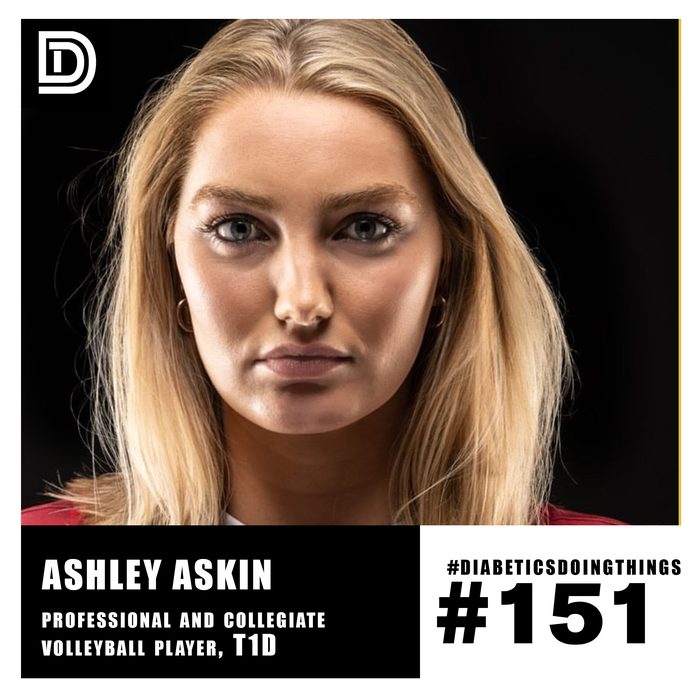
Episode summary
Ashley Askin was diagnosed with type 1 diabetes at seven, after a severe DKA episode that put her in the hospital for ten days. She played volleyball at Georgia Tech for four years, then turned professional in England and France. She talks about hiding her diabetes from coaches and teammates for years out of fear it would be used against her, a spring at Georgia Tech where her blood sugar ran high every morning during off-season conditioning and cost her a starting spot, and a game against Duke where her blood sugar dropped to 17 before tip-off. She also recounts testifying as a ten-year-old at a JDRF Children's Congress and meeting Senator Mitch McConnell. She and Rob compare notes on playing college sports with diabetes.
Key takeaways
- Ashley says she hid her diabetes from coaches and teammates through high school and into college because she thought it would make her look weak or less reliable.
- During an off-season spring at Georgia Tech, her blood sugar ran 300-350 every morning after 5am lifting and running, and not speaking up about it cost her a starting position.
- Her blood sugar dropped to 17 during warmups before a game against Duke; she still went in to play and crashed again in the second set.
- Ashley says once she stopped pushing through highs and lows after college, her blood sugar leveled out, she lost 20 pounds, and her stress dropped.
- At age 10 she addressed Congress for JDRF and met Senator Mitch McConnell, who told her about growing up with polio before a cure existed.
Show notes
*PRE-COVID, PRE QUARANTINE SERIES*
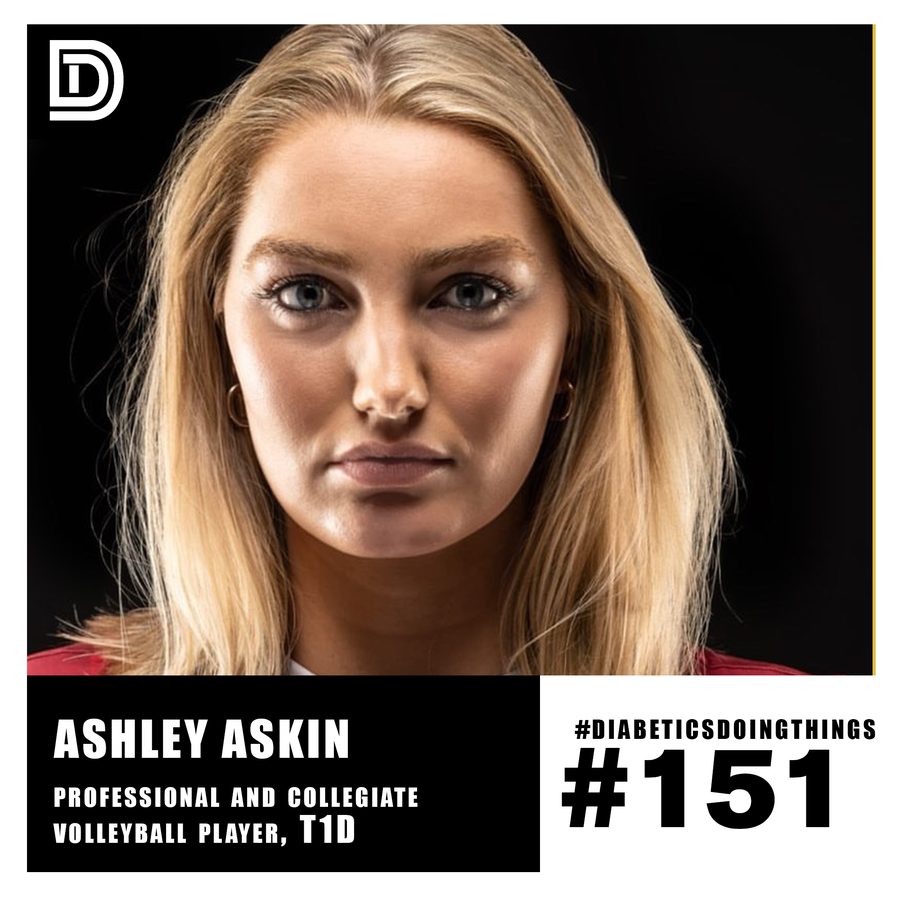
Prior to the lockdown, I recorded a number of interviews that never made it to press. The first of those is professional volleyball player and Type-1 Diabetic, Ashley Askin.
Ashley, (@ashwey33 on Instagram) had just finished her second season of professional Volleyball In France when the COVID-19 outbreak shocked the world. She has since returned home to the states.
Diagnosed with T1D at a young age, Ashley didn’t let it stop her from living her dreams as an athlete. A 4-year letterwinner at Georgia Tech University, Ashley digs deep into what it was like for her as an athlete with T1D and all the moments that you don’t see that go into being a T1D athlete.
This is a great conversation between two T1D athletes, and Rob even shares some behind the scenes stories from his college basketball days. Check it out!
Questions this episode answers
How old was Ashley Askin when she was diagnosed with type 1 diabetes?
She was diagnosed at age seven after a severe illness that led to DKA and a 10-day hospital stay.
Did Ashley Askin play college volleyball with type 1 diabetes?
Yes, she was a four-year letter winner at Georgia Tech, where she says she hid her diabetes from coaches and teammates to avoid looking weak.
What happened to Ashley Askin's blood sugar before a game against Duke?
She says her blood sugar dropped to 17 during warmups; her trainer had her eat and drink juice on the bench before she went in to play that game.
Where did Ashley Askin play professional volleyball?
She played professionally in England and then France, where she was finishing her second season when the COVID-19 outbreak began.
Full transcript Searchable, with timestamps
Rob Howe: Welcome back, ladies and gentlemen. We're here with another episode of an awesome person with diabetes living beyond doing their thing. My guest today is Ashley Askin. She is a professional volleyball player living in France, and she was a four-year letter winner at Georgia Tech University. I believe this is her second year playing professionally overseas playing volleyball. She has had type 1 diabetes for going on 17 years, and she and I talk a lot about the adjustments as a young person, being a child and a teen with diabetes and the challenges that can come along with that, as well as being a competitive athlete and some of the challenges that you face dealing with coaches or dealing with practices and dealing with teammates. And those are a lot of things that I really resonate with because they mirror my professional and college experience playing basketball with diabetes. So I'm really excited to share her story with you. She's an awesome guest and definitely an awesome follow on social media. So stay tuned and listen to her story. And I hope you all enjoy it. Coming at you now. This episode is sponsored by Type Zero Health. Type Zero is the most powerful sugar-free and stimulant-free, yes, that means no caffeine, pre-workout on the market today. For people with diabetes, you can get the boost and the pump you need to crush your workout without having to worry about spiking your blood sugar. Type 0 is packed with robust all-natural ingredients designed to do one thing, give you a massive pump without all the added crap. There are tons of pre-workout products on the market, and they all will get you going, but most are filled with junk that is bad for your body and your blood sugar. Type 0 is proof that all-natural ingredients and a powerful pump don't have to spike your blood sugar or taste bad. I use Type 0 before I play basketball, go on a run, hit the weight room, and lately, since we've been quarantined, I've been using it to help me shift into workout mode while I'm at home. It works, and I've got the CGM charts to prove it doesn't spike your blood sugar. You can order Type 0 on Amazon or visit typezerohealth.com for more information. Type 0 is a T1D-owned business, and you know I love T1D-owned businesses, so check out episode 132 for my interview with Type 0 founder John Jensen. Remember, you can order Type Zero on Amazon or visit typezerohealth.com. So let's get to it. Hello, and welcome back to another episode of Diabetics Doing Things. We're telling the amazing stories of people with diabetes from all across the world. My very special guest, calling from the other side of the globe today, Miss Ashley Askin. Welcome to the show.
Ashley Askin: Hello, hello. Thank you for having me.
Rob Howe: I'm so excited that we were able to make this happen. You are overseas right now in France playing professional volleyball.
Ashley Askin: Yes. Yeah. So I'm in a little town on the border of Germany and Switzerland called Sandier.
Rob Howe: Awesome. Like, is there a better place in the world to be like on the border of France, Germany and Switzerland? I don't know. I'd say that's up there.
Ashley Askin: Yeah, it's definitely a big adjustment and a different experience, but I'm super happy to be over here and learning and growing. So, yeah.
Rob Howe: Well, I'm really excited that we were able to make this happen. You and I got introduced maybe a year and a half ago via social media somehow. I think there's some sort of diabetes athletes collaboration line that we sort of just got introduced to. So I'm really excited that we were able to make this happen. Why don't we get started with just like how you came about joining the diabetes family and what that was like for you?
Ashley Askin: Okay. So I was diagnosed at the age of seven, which I mean, I've had it for going on 17 years now. And yeah, it was, I guess, like a typical diagnosis story. So I have three siblings and it was right around Christmas time, you know, flu season. Everyone was getting sick and I was the first person to get sick in my family. And then, you know, my sister gets the flu, my brother, my other sister, you know, everyone's sick. and I was the first one to get sick and then I was the one who didn't get better and you know so it was a really really rough like I want to say like three or four weeks of just being super sick and I was in DKA and throwing like every time I would stand up I would throw up and I got super super skinny and my mom was like you know this isn't she's not getting better like we need to figure something out take her to the doctor so we went to the doctor and it was like immediate as soon as he saw me, I think he did do a blood test and they just immediately put me in an ambulance and just shot me straight to the hospital, which at seven years old, I was, I didn't know what was going on. You know, I'd been sick for so long. And I, I remember they strapped me into the, like the hospital or the ambulance bed and no one was allowed to come with me for some reason. I think my older sister was like in the front seat of the ambulance and I'm just strapped back there with like a random nurse just like headed to the hospital. And then as soon as we get there, you know, they're doing IVs everywhere because I'm super dehydrated. So I think I ended up having eight IVs, you know, one on each one on each hand on the back of my foot, you know, each arm. And yeah, I just remember being strapped in and they couldn't find my veins because I was so dehydrated and basically just kind of passing out. And when I woke up, you know, my family was there and everyone was there and I'm just trying to figure out like what's going on and you know am I okay so yeah that was that was my diagnosis story but yeah that's funny I remember uh one of my veins collapsed when the like tech was trying to give me like a saline uh IV because I was so dehydrated yeah but just I just remember the nurse like kept stabbing me and kept stabbing me because she just couldn't get it. Like my veins would, they were like shriveled up and rolling away. And so they just kept trying and kept trying. And I just passed out. Cause I was like, you know, I'm seven years old alone at this point, like what's going on. And yeah, everything ended up okay though. So
Rob Howe: yeah. Well, you know, there's always those like little details from diagnoses that, um, you know, everybody's symptoms are relatively the same. You know, we talk about urination, we talk about weight loss, but you know, the flu or whatever the case is, whatever those like trigger incidents are that kind of get us to the doctor or the hospital. And it's always fun. There's like, those little commonalities that we always have. And it's like, you know, I never thought something I'd have in common with someone else is that my vein collapsed during an IV,
Ashley Askin: but here we are. Yeah, it's crazy. And it's wild too, because I was at, so I was at the hospital for 10 days. Like it was a really, really severe thing. And I remember coming back home from the hospital and we had a nurse who would come, she would stay with us like during the day and just like teaching my mom how to take care of me, teaching, you know, my family, trying to teach me. And I just remember the whole time I was at the hospital, it was a blur. Like, I don't really remember too much there. I remember initially getting there. I remember, you know, getting the IVs. And then I remember leaving. And I was sitting, I think I was just watching TV one day. And the nurse was just kind of like, asking me, you know, like, how are you doing? Like, that was the first person who really sat me down and was like, you know, how are you doing? What's going on? And I just started bawling because at seven, I, I didn't know what diabetes meant. And so at seven, I'm thinking I'm dying. And so I started bawling, crying, and I'm just like, I'm dying, I'm dying. And she's like, No, you're not. That's not what diabetes means. It doesn't mean you're dying. And she was the first person to say, like, you know, you're gonna live a long and healthy life, you know, you're just gonna have to, every day, check your blood, your insulin, you know, do these things every single day, but you're gonna be fine. And that was just that was one thing that I always think about, because I'm like, I wonder if nobody had told me that, like how long, you know, I would have been thinking that. And it's, it's funny, too because once I understood that this was something that I would have the rest of my life and of course they tell you like oh we're looking for a cure and you know hopefully in your lifetime you'll have one but I again at seven you just have some you know you have different ways of looking at things and I remember crying to my mom and just being like no one's ever gonna love me why would anyone love me with this and it's so funny how you grow and change and you see things
Rob Howe: differently as you get older too. It's always interesting, like as a kid, things are so important, like life or death, like on a day-to-day basis, like somebody saying a mean thing to you can just totally take you out of, out of your normal routine and rhythm. And, you know, the gravity of things is so much heavier sometimes. Um, I want to go back a little bit to, you know, that nurse, you know, telling you that you were going to be okay. And the impact that that has, looking back on the rest of your life. Sports is obviously a big part of not only your life, but in your family. I know you have a sister, I think, that plays collegiate volleyball as well. Yes. How did your diabetes play a part in your life as a young person? Kids running around, being active, playing sports. How did you sort of take that you're going to be okay advice and, you know, mentality? How did you apply that going forward, both as a kid and then, like, as things started to get more competitive down the road?
Ashley Askin: Yeah, okay, so this is really funny, too. So my, like, my entire family, we are just, everyone's an athlete. Like, my dad's, you know, 6'6". He has five brothers, two sisters. My mom has five sisters, two brothers, and everyone's an athlete. And so growing up, like, sports was always around, and everything, you know, it was always super competitive. My older sister played basketball. My brother played football, basketball track. You know, everyone is just like killing it. And when I got diabetes, it's not that I didn't think about sports. I just it was more of like the day to day, you know, taking care of myself and like, OK, just trying to like adjust my life. And I didn't really think that like, oh, I could be like my mom and play college basketball or, oh, I could be like my dad and play professional. So when I was diagnosed, that wasn't something that I ever thought about. Like it was just kind of like take everything one day at a time. And so when I was 10, I actually I did the the juvenile diabetes research. I was with JDRF. I wrote a letter and I went to Congress to help pass a bill. And it was really, really interesting. So at the time, my, shoot, hold on. I'm kind of like, I'm not processed. So, okay. So I wrote a letter to Congress because the special diabetes bill was, it was going to expire that year. So it was a really big deal. and at the time Mitch McConnell was our he was my state senator and he was the minority leader so I guess it was a really big deal that he signed this bill and like because if he signed it then everyone else would and so it was a big thing and we went to Washington DC for Children's Congress and they had it was really really cool the way it was set up and they had a panel of like you know professional athletes and that was the first time again that I had been introduced to other people with diabetes and other people you know who play sports at a collegiate level at a professional level like this was my first time seeing all this and being introduced to this so it was really really cool for me and there was this day where all the athletes came and I think there were seven of them and we got to like write a question you know if you if you were going to go up and get to talk to one of them, you know, what would you want to ask them? And at the time, I'm, you know, I'm super big into basketball at that time. That was my sport. That was, you know, my mom's sport. Everyone played it. And I remember I wanted to ask the basketball player a question. So I wrote, you know, if you're low in a game, what's your code word? Or like, how do you tell your coach that, you know, you're feeling low, whatever. And they had a full ESPN panel, and it was so cool. they they picked up my question and they were like oh this is great we're gonna have her come up and talk to everyone and so I go up there and I'm 10 at the time but I think I'm like 5'7 or something like I was huge I was always super tall and they pulled me up and the ESPN people have like the camera in my face they're like wow we're gonna be interviewing you on ESPN one day and I remember just standing there like oh like maybe maybe I could play in college maybe this could be something like that was the moment where it clicked for me where I was like okay I can do this like not only can I do the day-to-day but I can do this you know in college and you know wherever else I want to go in life like I can do it diabetes won't hold me back that's so cool so that was yeah so that was like the changing moment for me and that's something that I'm always really
Rob Howe: grateful for yeah and I think like it's those moments where you're just able to see the whole picture or you know see somebody who has done what you want or you like you know that's what you want to do for me when I was uh diagnosed like Adam Morrison played for Gonzaga like that
Ashley Askin: that year was that was him that was the basketball player yeah I was um asking the questions to
Rob Howe: see like what a small world right like uh so like him from afar like I wasn't directly able to talk to him at the time but uh just seeing like him at that level gave me like i was just like yeah okay it can be done like this isn't the re if i don't make it it won't be because of this um yeah and so it was you know really for me as like a motivation to just get to work um and certainly there were like highs and lows along the way both figuratively and literally but um you know just seeing that somebody out there like me was doing the thing that i wanted to do just gave me like the most
Ashley Askin: hope in the world yeah yeah and another like another cool story from that experience too is like so they I remember they had like pulled me aside because it was like really really important that we got my congressman to sign the bill and so um I remember they like pulled me aside and they were like you you know you've got to talk to him blah blah blah whatever and he was actually um and this is Mitch McConnell he was actually on the the floor speaking at this point and it wasn't anything to do with diabetes he was doing something else and he called a recession and whatever he was speaking at and I remember I think we were at a town hall meeting or something like we were somewhere completely different than where he was and they like they had like a like a golf cart or something and they they called me they're like actually we got to get you there whatever so So we get on this golf cart, we head to this building and we go into these like underground tunnels, which I don't like, I don't think anyone is allowed to like be doing this, but they like rushed me over to wherever he was. And so he was on the floor speaking. He called a recession. He was like, I'm going to go talk to this girl. I don't know why. I think, I mean, I guess he had read my letter because that's who I wrote it to, but he called the recession and I met him and he told me this story about how he grew up with polio and he told me about how he you know he understands how I feel being so young and having this disease and you know he told me that he had polio before there was a cure for it and he was like I'm going to sign this bill and I want this I want to find this cure because I want you to be able to say that you had type 1 diabetes before there was a cure for it and that was a moment where I was like oh my goodness like maybe maybe we will find a cure like it was it was one of the coolest things And that's something too that I always think back on that I'm like, that was really special.
Rob Howe: It's so interesting to think of Mitch McConnell doing anything good and not just being like the spawn of Satan himself. But it's nice to know that like the little things like that can like have such a huge impact on somebody's life, right? Yeah. And, you know, just like those words matter and that vernacular matters. And like, you know, for now, like looking back, like you're in a position where, you know, going forward or in the future, you know, people can look at you as like an example of, you know, the way that you and I both looked at Adam Morrison or like, you know, a big authority figure like Mitch McConnell. Like you have that and you have that experience of like how profound it is for a young person to hear something super positive and encouraging from a person in authority.
Ashley Askin: Yeah. Yeah. And I hope so. But like I that's what I really hope, too, is like being overseas and being, you know, playing at Georgia Tech and all these things like I've always in the back of my head. I'm always like I hope that there's another, you know, seven year old girl who was just diagnosed and like maybe I can give her that spark and I can show her that like you're not alone in this and you can do whatever you, you know, you want to do. so that's always like my you know under underlying motivating factor is I want other people to know
Rob Howe: that it's going to be okay and I think that's important like I want to I want to focus on that for one second because part of what I think is going to make this episode really special is like talking about the struggles of people like us who maybe somebody would look at or a kid would look at and say hey these people were able to you know play college sports and play professional sports chase their dream, live around the world, like go be who they want to be. And I want to do that. But in stories like that, very often, very hard times or big details get omitted just because we want the story to be positive. There were challenges along the way, no doubt. Do you want to talk a little bit about those? Let's talk about, I don't know, during the recruiting process, like you had your pick of the litter of schools. I believe you went to Georgia Tech, if I'm not mistaken yes yes so high quality high d1 level program um what was that recruiting process like or like in high school a person with diabetes trying to compete at a very high level very competitive sport like volleyball where not everybody makes it to d1 um you know what was that like for you were there any challenges along the way that stood out yeah so that was something
Ashley Askin: that all throughout the recruiting process always made me so nervous like i would go on different recruiting trips and I would be nervous to check my blood if we were out like you know getting a meal with the coach or something and I just always thought they're gonna look at me as weak and they're gonna look at me as less and they're gonna if if there's me and some other girl and we're the same player they're gonna choose her because of like because I have diabetes and that was something that in during high school and during middle school like I was always trying to hide it like I didn't want anyone to know I wanted to just go and play and like do my thing and I don't want anyone to know that oh that's that girl with diabetes and so I kind of like I carried that through the recruiting process and through like my high school career I just I was I wouldn't say I was ashamed of it I just always saw it as a weakness and I just always thought people are going to think I'm weak they're going to think I'm soft they're not going to think I'm reliable and so even when I got to Georgia Tech that was a whole nother beast because, you know, I didn't really ever deal with it in high school. Like I just, you know, I hit it. I went to the bathroom to check my blood. I went to the bathroom to do my shots. And when I got to Georgia Tech, so, okay, that's another interesting story. I was recruited by a lady named Tanya Johnson. And so I signed super early. I signed my sophomore year of high school, which is super early. I mean, for any sport, I think. But, um, so going into my senior year, like after signing day, I'd already signed, you know, I was going into, I think it was around like Christmas time or something. Like I had just finished my high school season and I get a call from her and she's like, Hey, you know, I need, I need to talk to you. And she got the coaching job at Texas, which is, she's from Texas. You know, that was always her dream school to coach at whatever. and you know there's no hard feelings there but going into my freshman year of college I already had a coaching change and I didn't know this new coach and so you know I had talked with Tanya and it wasn't a big deal of me having diabetes but I knew that you know this is this is a new coach nobody knows her you know the seniors don't know or the juniors the sophomores the freshmen like there's no expectation for anyone and I'm coming into this new program with a coach that doesn't know me doesn't know anyone else like everyone is on like high alert can like just competing like crazy you know so that was really really tough because just being in a new state you know being in a big city being on my own for the very first time and then on top of that having a whole new coaching staff who didn't know me that was that was a really really really big um that was definitely
Rob Howe: very challenging for me and for somebody who doesn't play sports at all or maybe hasn't played sports at that level um i think i'm just trying to create an environment where they would understand it's like basically getting a new job and talking about your role and talking about your skills or being hired for one position and then right before you start the company gets bought and you're bought all everybody to try to hire you is different now they don't know you they you know they don't know what job you're supposed to do they may have a different company idea of what the company's supposed to do because it's a different system and different, you know, mindset, different, um, you know, methodology and also just different attitudes and like personalities and compatibility. Um, so diabetes, obviously for you at that point was, you know, uh, you, I assume you felt unsure of like how to even approach it with the staff. Yeah. Yeah. I remember, I don't, I don't think I
Ashley Askin: even met her face like in person until you know that week that I that very first week getting there so I talked to her about on the phone because I knew that I needed to like let her know my trainer was still there so Carla was was still like in the loop and knew everything going into it so I thankfully I still had her but yeah it was it's it was one of those things where I was like again almost trying to hide it like I knew I couldn't hide it at that point because you're playing at such a high level and it's so demanding every single day I knew that I couldn't hide it but I did my best to not show weakness and not show like even if I was low like I'm just gonna eat this really quick and just like go right back out there or if I'm high you know I'm just gonna you know do my shot and just go right back out there and I I think you know looking back and like just like growing through things I think listening to your body and being your own spokesperson is so important because at the end of the day like people don't know how you're feeling unless you tell them and people aren't gonna they're not gonna look at you any different I mean it's everyone has something you know like they're I don't know how to say this like
Rob Howe: people well let me let me see if i can uh like help you kind of get there because i think what you're saying is you know when you're when you have a chronic illness or or anything going on really you have to be an advocate for yourself first and day-to-day that's relatively easy or easier but when it's the situation i'm trying to show like a high stress situation like you're in a practice, um, say I'll, I'll apply something from my own experience. Like we had pretty frequent losing streaks at my college and we were, you know, 500 for the four years I was there, but we were not a great program. So lose a couple of games in a row and things are pretty tense, um, or underperform or my, my coach was pretty old school. And so to say we're in the middle of a really hard practice or a really hard drill. And I felt that, you know, low blood sugar, high blood sugar or didn't feel myself so I step out to go treat you know figure out what's going on and you know get myself back feeling good that takes courage because in that moment you're like nobody else has you know the ability to maybe you know raise the flag and pull themselves out and there's sometimes like a shame component at least that I experience and I know others have as
Ashley Askin: well. I'm sorry. What did you say? I said, I would always feel so guilty. Like I would just like wait and wait and wait until it's like, I can't wait any longer. I need to like bring this up, but I would feel so guilty. Cause I always felt like I don't, I always, I didn't want it to be a crutch and I didn't want people to ever think like, Oh, she's just using diabetes to get out of this. You know, like for some reason I always thought that's what people would think, but you know I I totally get it the shame the guilt like oh I would like go home I'd go home and sit on the
Rob Howe: couch with my roommates and like it was unspoken like in my mind I'd feel like god they're judging me so hard for not having to do like these you know extra conditioning drills or the three suicides that I missed or that I made up later is like they like do they believe me like I know that they you know are my teammates and my brothers and they love me but it's like the same time do they question when I pull myself out, you know, is it always, you know, why, why is it always during the hardest drills? And it's like, I don't know. Cause that's when my blood sugar would spike or crash. And, you know, I think it's just like a, over a long period of time, the trust factor seems like, it's like, Oh, it seems very convenient that you have diabetes issues when things get hard. And, you know, yeah, I guess, you know, when you look at it from that perspective, it does, but I think people are a lot more giving than we think. And, you know, it's funny that we're both. That was the, both of our first thoughts. Like I just felt so guilty sitting there watching my teammates continue a drill while I sift on Gatorade on the sideline. You know, it's just, and obviously, like you said, you know, you have to advocate for yourself, but it gets hard. It's super not easy, especially at that like cutthroat division one, a high level college, like high expectations. You know, lots of personalities. It's just a very, very different, you know,
Ashley Askin: experience. Yeah. And so I don't know if it was, if it's the same for you for basketball, but we would have, you know, like you're in season, you're out of season. And so our spring season was always our out of season. And that was always the toughest time for me because, so our schedule was crazy. It was Monday, Tuesday, Thursday, Friday, we would be up at 5am for workouts. So we would work, we would lift and run. So we would do 5am to like seven. And one, waking up that early, like your body, like there's just different things that are lighting up and hormones and whatever. It's hard on your blood sugars being up that early anyways, and then lifting right away. And then right after we would lift, we would, you know, we'd run sprints for 30 minutes. And just the mix of all those things, every single day, my blood sugar was at least like 300 350 but it was like I was I didn't really know what else to do I was waking up I was giving myself insulin even though I wasn't eating because I don't know I I would wake up and it's so early you don't really want to eat and you're you know you're about to do all these things and I would wake up I would give myself insulin I would do my long acting I would you know lift run do all these things and it was so hard it was like almost every day I would have a crash and there was one spring in particular where it it really became um every day that I was crashing because I would have a class at 8 a.m that I would go to straight away and I would go from like 450 you know doing my sprints and trying to trying really hard to finish those or you know being on the sideline watching which you know then you're just in your head and you just feel so guilty and shameful and then going straight to class and I would always tank I'd be like 30 40 and then you're just the whole rest of the day you're just trying to like even things out and play catch up and then you have you know class all the way until three practice at 330 and you're just hoping that by this time you've leveled out and by this time you're not you know doing the roller coaster of the high and low. And I just remember there was one spring in particular where it was so hard on me and I could never get into a rhythm. And every single day it was really, really taxing. And I wasn't being the advocate for myself and I wasn't speaking up and being like, Hey, you know, this isn't working for me. Can we try something different? Or, Hey, you know, I'm not feeling good. I know I'm not performing well at this point either, because, you know, if you keep pushing yourself like that every single day and you're not speaking up and you're not telling your coaches and your trainers how you're feeling, like it's going to wear on you. Like if you don't give yourself a break and you don't give your, you don't speak for yourself and give yourself that opportunity for a break, your body's going to, it's going to give you the break. Like it's going to, it's going to show you that it's time. And, um, I remember I had a really, really good season the, the year before. And then I lost my starting position because that whole spring I was basically just sick all the time because I was, you know, just that roller coaster every single day. And then I would get to practice and be so drained and I wasn't hitting as hard and I wasn't moving as
Rob Howe: quick. And oh my goodness. What was that? What was that like mentally? Like, you know, you're, you're physically exerting yourself, like going really hard, trying to prepare, trying to get to a new level. Um, cause in, in my case as well, like the seasons where I was in the best shape, I probably had the worst A1C. And worst for me. I'm very fortunate that my A1Cs have not ever been super out of control. But I remember looking back and being like, I am technically sacrificing my health to be a better basketball player. And it didn't always feel good. And like you said, you're riding the roller coaster up and down. You're physically exerting yourself in conditioning and weights and practice. and for people who aren't college athletes offseason is always the hardest part like in in season is easy comparatively and yeah you're just pushing yourself so hard and then you know mentally it starts to wear on you how did you how did you overcome that
Ashley Askin: you know I just kind of took it day to day and I would just focus on you know just get through this just get through this just get through this and you know I really didn't I really didn't deal with things until after college. Like, again, I did not speak up for myself. I was not an advocate for myself. Like college was the hardest time in my life. Like, and especially every single spring, like I, we would always joke because we, you know, spring was so hard and we'd always be like, oh, we're all depressed. It's spring. But like, no, spring was depressing. Like, I just remember being so tired all the time. And then you would come home, you know, because you'd have practice and then you'd go straight to, you know, meal and you'd go to tutoring and you wouldn't get back until like 11. And I would just come home and cry because I would just be so tired. And also, you know, that's blood sugar too. You know, when you're riding that roller coaster, when you go low, you're going to cry. When you go high, you know, you're going to be mad. And, you know, it was definitely, definitely one of the hardest points of my life. But once I, once I finished my senior volleyball season, you know, I had that spring off. And that was really the first time that I wasn't waking up at five every day. And I wasn't, you know, practicing twice a day and like doing all these things. And it was amazing how my blood sugars like everything just went, like, my average blood sugar was probably like 100, like everything, I felt like all my stress and everything just kind of like fell off me and it was funny too like I lost like 20 pounds of just not doing anything like there was a month straight where I would just like sleep all the time and I think my body and like everything was just so stressed and tired and knowing that it was like I was done playing volleyball at that point I think everything just kind of like fell off and like literally the stress fell off me and you were disabled to finally relax. Yeah. And it was, and it was interesting too, because I finished Georgia tech thinking I was done with volleyball. Like I had no, I was scared to play professional. Like I didn't think that I could with diabetes because I just, I didn't know how, how it would work overseas. Like I just didn't really know how was I going to get insulin? How was I going to get my test strips? Like who was going to know what to do? And you know, if I don't speak the language, What do you do? And so I didn't really like that was not my intent upon graduating. It it kind of fell into my lap, which is really interesting. But yeah, I had this whole spring where I wasn't thinking about volleyball. I wasn't pushing myself like that. And that's where I really came to realize you have to listen to your body and you have to speak up for yourself because, you know, if you don't, people won't know.
Rob Howe: And if you don't, if you don't speak up, like your body will. And it's so important. I think rest and just like caring for your body in that way is, is completely overlooked at times. And well, I think, I think it really is at the college level. And, you know, we're even professional. It's like you and I were chatting the other day about the data from my whoops, whoop strap that I've recently started sharing and how it kind of gamifies rest. and I just remember so much in college just like dragging my beat down body to practice and like trying to get it going and like try to warm up and like just like the diminishing marginal return of all that stress and all that strain and all that exercise and like sort of no rest in sight and sort of rest being like a bad thing and you know like recovery and like getting a bad rap um it's so interesting like about your you know uh blood sugar results and like diabetes as as you relaxed and kind of started to more gently approach the rest of your life. Um, do you think that time, like obviously now you've been overseas playing volleyball, volleyball for, this is your second season now. Yes. So what's been different? Like since that, like, did you have any light bulbs go off about your diabetes management, about your approach to volleyball, like during that time
Ashley Askin: away that has like served you since then oh sorry no it's okay um so I I definitely knew going into this new season in England um I knew that rest was really important and I knew that I needed to listen to my body so that was something that I thankfully even though I wasn't planning on playing like thankfully I had learned that and I you know I'd done a lot of like reflection and thought, you know, if I'm in the situation again, like this is how I would handle it. And it's, it's so funny, like each stage of my life, I feel like once you kind of get a grasp on things, and you're like, Oh, you know, this is how you do it. And you know, now I'm a pro and I figured it out, things change. And so when I played at Georgia Tech, every time before the game, I knew my blood sugar was skyrocketing. Like I knew before a game, my blood sugar would spike up to 300. it. And then, but it was like an excitement high. It wasn't a, like, I didn't feel bad. It was just the adrenaline, the excitement, all these things happening. And then when I get to England, that completely switches, you know, I still am super excited for the games, but I would tank before every single game. So now I'm, I had to like relearn how to prepare for games because I knew that if I gave myself insulin before, you know, I just, I wouldn't even be able to warm up. And so yeah, I had to, I had to relearn how to prepare and like, make sure I had, you know, a snack right before we warm up a snack just in case and like between games, and I'm always checking and, and again, listening to my body and letting my coach know like, hey, I've this whole day I've been low, like you're, you're not going to get anything out of me in practice, essentially. And just being able to like speak for myself and say, hey, I need to stay off. I'll see you tomorrow and I'll be ready to go. And even here in France, it's been a different beast again because in England, everyone speaks English. In France, everyone speaks French. And so just speaking for yourself is so difficult for me because I feel like I have to talk very – I have to dumb down everything that I say, which is really hard when I'm talking about diabetes because I'm used to saying, you know, like, oh, you know, if I do this, my blood sugar goes low and blah, blah, blah. But it's, you know, the language barrier, you have to speak even more carefully. And it's been really hard for me this season just explaining to my teammates, like, you know, this is what's happening. This is what this means. This is what I need to do. so it's another challenge of speak for yourself, advocate for yourself and you know just keep
Rob Howe: trying. Well and I think that's such a good piece of advice for people chasing their dreams right you people can look and find you on social media and we're going to absolutely plug you on in the show notes and you know on our Instagram and everything but you can see a version of life like doesn't go it like all of this complexity doesn't go into it so you're looking at you know somebody that you look at as like a professional athlete a successful college athlete somebody who's living beyond with diabetes but it's so good to hear these stories of like yeah it's hard there's day-to-day things there's conversations with med staff in different languages and with teammates and culturally and it's like you know i have to having to advocate for yourself even you have to advocate for yourself. So, you know, it's just a, it's a lifelong journey. I think that's one of those things that, you know, until we get that cure that we talked about at the beginning, you know, someone with diabetes, if you're diagnosed today or 15 years ago, or whatever the case, you have to be responsible for your own care first, because you are the one that knows best. And that's such a hard thing to do. But once you get in the rhythm with it, once you do it a couple of times, it starts to become a little bit more familiar and a little bit easier. And, you know, hopefully, you know, your story will give some encouragement to people out there. And I want to give you that opportunity as well, like for, you know, put yourself in, you know, back in your seven-year-old shoes and imagine that you're looking at this interview or listening to this interview or your parents are listening to this interview. What's the one thing you would tell yourself, you know, sitting where you are now in France, playing professional volleyball living your dream I assume uh and you know to that seven-year-old girl who's wondering you know what if she can do what she loves what do you have to say that person I would just say
Ashley Askin: it's gonna be okay um yeah I just it's gonna be okay like I I think if I would have told myself you know the the little details of you know do x y and z and whatever like I don't think I would have listened you know I think it would have just gone over my head but just knowing that like just take one step at a time take one day at a time like there's gonna be highs there's gonna be lows but at the end of the day it's it works out and like we're better for it like I I one thing that I would always think about when I was in college is like how would things how better of an athlete would I be if I didn't have diabetes or how, you know, how better would I be at this? Or, you know, I'd have more time, I'd have more energy if I didn't have diabetes. But I think comparison is the thief of all joy. And you can't, you can't sit there and think, what if, what if, what if you just have to understand that, like, I have this. And because of this, you know, I have things that other people don't have, you know, because of diabetes, I think that we are, you know, super intelligent or not intelligent. Yeah, we are. But I mean, disciplined, you know, that day to day discipline, the paying attention to little details to, you know, listening to your body to having to have big girl conversations at seven years old, you know, having to speak up for yourself, you know, in first, second grade and tell the nurse, like, my blood sugar is low, you know, this is what I need. This is, you know, it forces you to grow up, have these big girl conversations. And I honestly feel like I'm more patient and more compassionate for it, too. Because along with that, you know, you have people, you know, as you get older, you know, you have people coming to you saying things like, oh, you have diabetes? Like, you're not fat. Or like, I remember one person told me, like, if you just eat cinnamon, you'll cure your diabetes. And those are things that like, again, if I didn't have diabetes, maybe, maybe I wouldn't know these things. And you, you have to like, look at things in a different way. But I think that, you know, I'm patient now, I'm more compassionate to people. And I think there's also this sense of balance, because, you know, there's the highs, there's the lows, and you're always trying to find that equal balance. And I think that's in life, with everything, you know, with eating, with dieting, with like everything in balance. So I think that's something that diabetes has definitely taught me.
Rob Howe: Yeah. And I think, you know, we can all continue to learn. And thankfully, we have people who are out there living their dreams and truly living beyond like yourself that we can learn from and, and take, you know, hints and cues from and inspiration. I'm just glad that, you know, even through those ups and downs, you didn't let those stop you and that you're here now sharing your story and that this is also isn't the end. This is just the beginning of, you know, of your life with diabetes outside, outside the limitations that other people may put on you. And you gave me this great idea. I need to do a fake cinnamon ad on this podcast, because that would be just hilarious. Like, um, I just, I remember this man told me this one time
Ashley Askin: And I just looked at him like, oh, I'll try that. I honestly didn't know what to say. I was like, okay.
Rob Howe: Like how could I have missed this huge insight? It was just sitting right in front of me all along in my spice cabinet.
Ashley Askin: No one ever told me about the cinnamon.
Rob Howe: Well, Ashley, thank you so much for taking the time today. I know it's late as well over in France. where can if people want to get in touch with you online or follow along with your story where can
Ashley Askin: they find you okay so they can find me on instagram at ash we 33 a-s-h-w-i 33 and then twitter um i think i'm just ashley asking 33 but yeah i don't have anything else just twitter and instagram so So yeah, follow, like, subscribe, do other things. Reach out to me. Feel free to message me. I love connecting with people and I love having this conversation.
Rob Howe: Well, there are a lot of parents that listen to this podcast and I think some of the best conversations that I have with people are when they, you know, they have kids who want to play sports or they, you know, want to chase their dream and they have diabetes. And I'm just glad that we have people like you who are doing that, that we can use as examples and connect them to. It's just a cool thing. And you and I were talking about before we got on the air that this wasn't something that either one of us dealt with during most of our playing career, whether in high school or college. And now it's like, hey, as you're kind of coming into your own as an adult and feeling more confident in who you are and diabetes is a part of that. And I think I'm just grateful that you're able to share your story and inspire the next generation.
Ashley Askin: Yeah, definitely. I have one more story that I just thought about from college.
Rob Howe: Let's hear it.
Ashley Askin: Okay. So this goes along with, you know, speaking up for yourself, being an advocate. And this is just, this is a wild story to me because honestly, when I look back, I'm like, how did this happen? But I remember we were on the road, we were playing Duke and Duke is someone that like, we just, you don't lose to Duke. Okay. So it was a big game. It was my senior year. And it was one of those days where your blood just would not come up. Like my blood sugar was low. I guess starting from like, you know, pregame meal, which is like, it was a Sunday game. So I mean, that was that, you know, 10. I was just I was I was low all day. and I remember I thought I had gotten a grasp on it like okay I'm good for the game because you you just try all day like keep it up keep it up keep eating whatever and I remember we were we got in there early to do like a serve and pass and get ready and you know just get used to the gym before we played and I remember they were setting up like the lights and the cameras and whatever and I was sitting there passing with one of my teammates and I the lights just kept getting brighter and brighter and brighter and I'm looking around like is that like why is it so bright in here why is why are they I can't even see the ball at this point and I remember my teammate looking at me like because I couldn't really see the ball either at this point I'm like why are the lights so bright in here what are they trying to do to us like this is a home court advantage like what and my teammate is like Ash you okay like you want to go check and and then I kind of realized like it's everyone's fine I'm the only one and so I go and I check my blood and it was 17 and that was like that's the lowest that I've ever been and I just remember being so scared like we're about to start this game my blood sugar is 17 like what's gonna happen like I can barely see right now and I my trainer um immediately like we got juice we got snacks um and I it's it just would not come up. It was one of those low blood sugars that just would not come up. And during warmups, they just, they put me in the locker room, me and my trainer were there. I was just laying on the ground. Um, I had just, I drank so much juice and everything. And you know, when you just like force all this stuff down, you know, your stomach doesn't feel great. Your, your brain doesn't feel good. Like nothing feels good. And so I was just laying there kind of crying because I'm like, why, you know, what, why now? Why, you know?
Rob Howe: right right after all that preparation like everything all you've put into being there right
Ashley Askin: yeah and so they're about to we had finished up warm-ups and my blood I think it had gotten up to like 76 80 maybe like it was one of those lows that just would not come up and so we're finishing up warm-ups and my trainer's like you just sit on the bench like I'm not even like in volleyball while you go and you stand she was like no you you sit on the bench and um the media people they all had pizza and she like went over there got me some pizza I'm sitting on the bench they're like I'm sitting on the bench eating pizza and the the announcers are like looking at me like why is she like what's going on I'm just chilling I got all my gear on because I was ready to play but I'm just sitting there smiling eating pizza like watching everyone hit watching everyone line up and so I I don't know I kind of I kind of smiled through it because I'm like this is funny like who would have who would have thought this I'm just sitting here eating pizza and um so we go into the first set my blood sugar starts to come up and at this point you know I think it's like 100 but I'm not I'm still not feeling good like I still don't feel like I'm right yet but my blood sugar's at 100 and at this point I had a Dexcom and my trainers like everyone could see what my blood sugar was and we go into this game and again this is duke you don't lose to duke and we i again it's one of those deals where i felt guilty you know i feel like i messed everything up like i'm supposed to be out there playing you know the lineup's different new people are in you know the flow isn't right like everything just didn't feel right and my blood sugar finally gets up a little bit. We're losing. And my coach looks to my trainer and she's like, is she good? She fine? She looks at the Dexcom, you know, I'm like, I'm like 120 now. But you know, I'm not good. I just spent my warm up sitting here eating pizza. I spent, you know, all the time laying on the ground, drinking juice, like I do not feel good. She looks at me, she goes, Are you okay? I go, yeah and they they put me in and at this point I'm kind of just like floating like what how did I get in this game like how like why is nobody saying no but again you got to talk you got to say like no I'm not okay so I get in this game and at first I think I'm just riding on adrenaline and just like being super stoked that like I'm just here and able to play and so I ride this little bit of a high and I'm like, you know, things are just coming to me and, you know, I'm doing fine. But then that second set, you know, that's when I crash again. And it's one of those things that I am like, I should not have gone in there, you know, cause it, do you ever get like a low hangover? Oh yeah, for sure. Yeah. And like, I had one of those for like three days. Like it was tough. Like my body did not like me for like a few days. Like it was like, no, no, Ashley, no, this is not what you do. Like you, you don't feel good. And you, like you, you don't do that. You don't tell people you're okay. If you know that you should
Rob Howe: be sitting out right now. So, yeah. Yeah. I think it's just another example of like the complexity that goes into just a simple thing with diabetes. Um, you know, having to make those calls for yourself, especially when it's something like that you really want to do, uh, and you put
Ashley Askin: invested so much time and effort in you want to and then you're sitting there guilty because the team's losing and you're like oh if i was out there and then you know you you kind of talk yourself into it but like deep down you know that you probably shouldn't so it's it's definitely very mentally draining as well as physically and yeah it's those it's those hard lessons
Rob Howe: yes it is and it's like those lessons that we're going to keep learning you know um and thankfully like we've got people like you uh to learn them from so um i i know it's it's so weird like you just hearing you talk about you know treating a low blood sugar before exercise and or like you know before a game it's like certainly the stakes are not as high but just the other day i was like had to had to chug an entire 32 ounce gatorade before i went and played basketball so then i'm out there and i just feel like my stomach is sloshing around and i feel terrible uh it's
Ashley Askin: just part of it. Yeah. And that was the other, that was the other mentally draining part too, about like playing college volleyball with diabetes is especially with my position, my position is usually like a very tall, lean player. And I'm, I'm just built different. I'm very muscular, like I'm tall, whatever, but I'm muscular. And I would always, I was always part of, it was this thing called the running club. And so people who, you know, needed to be faster, like, you know, lose weight or whatever. I was always in college trying to lose weight. And when you go low and you go high and you have to like sit out and you have to give yourself, you know, extra sugar. And I would always, I would be, it was always tearing me apart because I'm sitting there like, I'm trying to lose weight. And now I have to, you know, chug this orange juice. And, you know, sometimes you didn't really have stuff with you. And so you're eating a Snickers or you're you know you're doing these things that I was always like you know if I didn't have diabetes I'd be so skinny or you know but you can't look you can't compare yourself that way and it and that was the thing too is like when I finished playing at Georgia Tech that's when all I think all the stress and the weight like everything just fell off me because I was finally able to just like take a break and just relax and like be okay with who I was and be okay with like I have diabetes but you know life goes on you learn from it you grow from it like I'm better for it um but yeah that was it was always so hard I always wanted to like I think that's another hard thing too is like weight and diabetes and like trying to lose weight and that's something
Rob Howe: I struggle with I think and I think especially for ladies and body image is such a huge you know part of life anyway. And diabetes certainly plays into that. I see a lot of like diabetes fitness influencers, fitness coaches talking about kind of overcoming some of those, I guess, stereotypes of like, if you take insulin, you can't be skinny or whatever the case is. And seeing them work through that and kind of helping people overcome those fears and that information and just like mindset
Ashley Askin: said is pretty inspiring. Yeah. I actually remember in college, I was always Googling, like, how do you lose weight with diabetes, blah, blah, blah. And I came across this article that told me that insulin is a fat absorbing hormone. And if you have insulin, then you're going to be fat, blah, blah, blah. And so there was a semester where my blood sugars were so high and I let them be high because I was like, I'm trying to lose weight, blah, blah, blah. But you just wear yourself so you, you can't do that to yourself. You know, I did not feel good. That was the same spring where it was so tough for me and I lost my starting position and like all these different things, but man, it, it's crazy. And also on the flip side, once I did, um, relax and I, I realized that like when you have good blood sugars, that's when you, that's when you're able to like lose weight and stuff. So, so if you are struggling with that and you are trying to like lose weight, you got to get rid of the high and low you got to take care of your body and your diabetes first before you can really tackle that next problem because otherwise you're just you know you're just running on the treadmill and it's just going to keep going going going like you have to you have to have like that balance of having good blood sugars so yeah definitely and I think like
Rob Howe: that goes back to what the doctors told me is like you can have any anything you want in this life every dream is still valid as long as you take care of your diabetes so you know part of advocating for yourself is taking care of yourself first. Um, and yeah, that can be, that can be hard. You got to leverage, you know, parents or significant others or, um, you know, doctors and coaches and like other people in your life. And, but ultimately like you are responsible and that can feel really isolating sometimes, but it's good to know that we've got a community out there of people who are going through the exact same thing. So, um, so for you, what's next? where should we keep an eye out for your exploits obviously we're going to follow you on social where are you guys at in the volleyball season
Ashley Askin: so we are heading into playoffs we have two games until we kind of figure out who's going to make it to the playoffs and all these different things so that's really exciting but yeah so the next step I think that this is going to be my final season. I, I don't know, I feel like I'm like getting older. And I every time I'm like warming up, I'm like, I feel like a grandma, like, I used to just be able to do some jumping jacks and like hop out there. But yeah, I'm ready to start a new chapter in my life. So I'm at this point, I'm going to finish out this season, you know, hopefully we make it to playoffs. And we, you know, win and do super well. And I end on a high note, but I'm definitely looking for that next chapter and I'm excited to like to push myself in new ways you know because I feel like sports and volleyball like you know I feel like I've ran my course with it and I to me at this point I'm like this is easy like what is something that's going to push me and I'm going to learn in new ways and so yeah I'm job searching right now so if anyone wants to talk to me you know reach out. Hey, I'm here. Um, but yeah, I'm ready to start my real life. Thanks so much for listening.
Rob Howe: This episode is sponsored by type zero health type zero is the most powerful sugar-free and stimulant free. Yes. That means no caffeine pre-workout on the market today for people with diabetes. You can get the boost and the pump you need to crush your workout without having to worry about spiking your blood sugar. Type 0 is packed with robust all-natural ingredients designed to do one thing, give you a massive pump without all the added crap. There are tons of pre-workout products on the market and they all will get you going, but most are filled with junk that is bad for your body and your blood sugar. Type 0 is proof that all-natural ingredients and a powerful pump don't have to spike your blood sugar or taste bad. I use type 0 before I play basketball, go on a run, hit the weight room, and lately, since we've been quarantined, I've been using it to help me shift into workout mode while I'm at home. It works, and I've got the CGM charts to prove it doesn't spike your blood sugar. You can order Type Zero on Amazon or visit typezerohealth.com for more information. Type Zero is a T1D-owned business, and you know I love T1D-owned businesses, so check out episode 132 for my interview with Type Zero founder John Jensen. Remember, you can order Type Zero on Amazon or visit typezerohealth.com. So let's get to it.
About Ashley
Ashley Askin is a type 1 diabetic professional volleyball player who was a four-year letter winner at Georgia Tech University before playing professionally in England and France.