

Diabetics Defeating Stigma with Style with The Hangry Woman Mila Clarke-Buckley
Episode summary
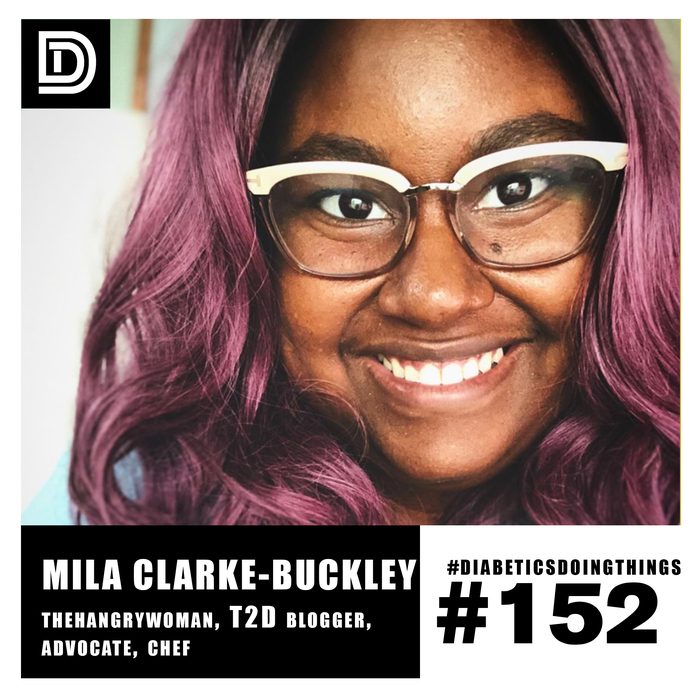
Mila Clarke-Buckley was diagnosed with type 2 diabetes at 26, years earlier than typical, despite already eating well and exercising. Unable to find other type 2 voices online, she started The Hangry Woman to write about her diagnosis and share blood sugar friendly recipes. She and Rob discuss the stigma specific to type 2 diabetes, including a conference slide that depicted people with type 2 as lazy, and the harassment Mila receives as a Black woman who is open about her diabetes and her body online. She talks about her mother and grandmother also having type 2, recognizing her mother's DKA symptoms during a health scare, leaving her hospital job to run her blog full time, and her new diabetes food journal, out May 5.
Key takeaways
- Mila was diagnosed with type 2 diabetes at 26, much younger than is typical.
- She started The Hangry Woman after an anonymous type 2 blogger declined to talk with her, so she decided to become the resource she couldn't find.
- Mila says a doctor once presented a slide depicting someone with type 2 as lazy and surrounded by sugar, which she points to as an example of stigma built into medical training.
- She recognized her mother's DKA symptoms, including a meter reading that just said 'HI,' and got her to the ER in time.
- Mila stays grounded against online criticism by trusting her care team's feedback and her own in-range A1C rather than strangers' comments.
Show notes
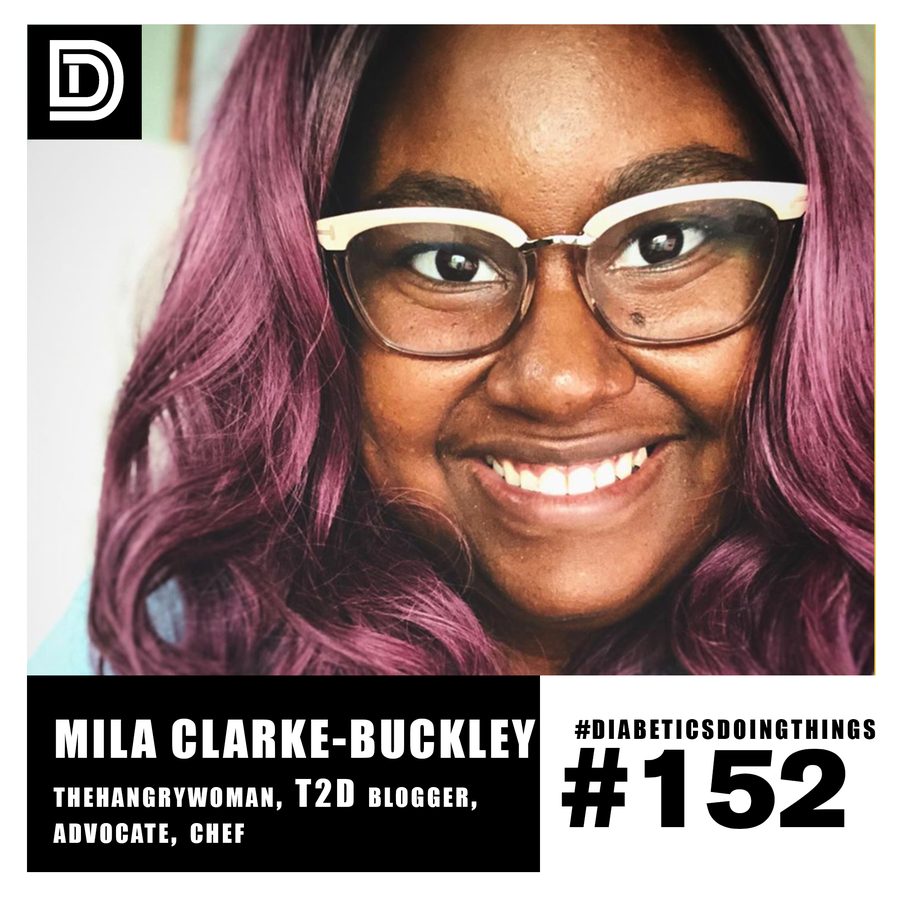
Let’s be clear, if you don’t know Mila Clarke-Buckley (@thehangrywoman on Instagram) you should get to know her!
Mila, who writes under her internet moniker “The Hangry Woman” at www.thehangrywoman.com is a world-class food blogger, person with Diabetes, and Diabetes advocate.
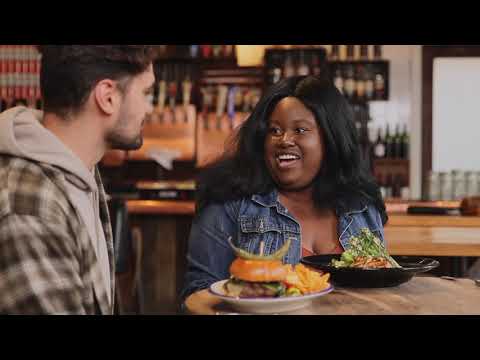
More than other Diabetes Advocates, she puts her story on the line, even in the face of criticism from internet commenters, like on this Yahoo Article. She has even turned the hater’s comments into content, like the video below:

Rob and Mila take some time in the midst of the quarantine of April 2020 to talk about Mila’s diagnosis, how she became The Hangry Woman, and how she deals with internet trolls as a person with Type 2 Diabetes. Rob and Mila first met at AADE 2019, on a Diversity in Diabetes panel moderated by Cherise Shockley. Following AADE, they worked together on the InhalemyInsulin campaign and did a video called “Everyone Knows Somebody with Diabetes.”
In a time where it is more important than ever to amplify Black Diabetes Creators, Black Diabetic Stories and Black Voices in Diabetes, I can think of no better example for how to defeat stigma with style, than my friend Mila. Enjoy the episode!
Questions this episode answers
Does Mila Clarke-Buckley have type 1 or type 2 diabetes?
She has type 2 diabetes, diagnosed at age 26, which she says is younger than typical for a type 2 diagnosis.
What is The Hangry Woman blog about?
It's Mila Clarke-Buckley's food blog at thehangrywoman.com, where she shares her life with type 2 diabetes along with recipes she reworks to be more blood sugar friendly.
Why did Mila Clarke-Buckley leave her job?
She left her hospital social media job to run The Hangry Woman full time after years of working both jobs at once, a decision she says she was scared to make but has not regretted.
What is Mila's diabetes food journal?
It's a print food and blood sugar journal she authored, released May 5, 2020, meant for people without easy access to a CGM and designed to track mood and daily context alongside food and blood sugar.
Full transcript Searchable, with timestamps
Rob Howe: Hello, hello, hello, ladies and gentlemen. How to describe this next guest. If I had to choose one word, I think I would choose powerful, but I'm going to go even further. I'm going to say super powerful, superhero status. Yes, I'm talking about Mila Clarke-Buckley, The Hangry Woman. so Mila is a resident of Texas and she is an outstanding blogger with diabetes her food blog is first of all incredible thehangrywoman.com so be sure to check it out but above that she goes beyond sort of all comprehension and is widely featured in national publications for example like yahoo talking about type 2 diabetes and living with type 2 diabetes and is inundated with you know, really, really backwards horrendous comments almost every time. And she still stands up, takes fire, takes grenades and shuts down and defeats the stigma. So this episode is Diabetics Defeating Stigma with Style with Mila Clark Buckley. I met Mila in 2019 at a panel, a diversity panel at AADE conference. Thanks to Cherie Shockley for adding me to that group. and right off the bat we hit it off. We are people of the internet. She appeared with me in a video last year for MannKind and Afrezza as part of their Everyone Knows Someone with Diabetes campaign and she was a no-brainer. She's an incredible, incredible friend. We nerd out about photography and sometimes jam bands. She was a guest on Rob Howe as a live show. Cannot say enough about her advocacy as a person with diabetes but also she's an outstanding black creator, black voice for people with diabetes. And in this time where the Black Lives Matter movement continues to be at the forefront of all of our minds, she's doing incredible hard work, defeating racism and stigma within the diabetes space, as well as advocating for people with type 2 diabetes. She is a super powerful voice. And I don't want to take anything away from the rest of our conversation together. You're going to hear it from her own mouth. We have a great time here. This is recorded in mid-April. I'm catching up on episodes, but Mila Clark Buckley, episode 152, Diabetics Defeating Stigma with Style, coming at you. This episode is sponsored by Type Zero Health. Type Zero is the most powerful sugar-free and stimulant-free, yes, that means no caffeine, pre-workout on the market today. For people with diabetes, you can get the boost and the pump you need to crush your workout without having to worry about spiking your blood sugar. Type 0 is packed with robust all-natural ingredients designed to do one thing, give you a massive pump without all the added crap. There are tons of pre-workout products on the market, and they all will get you going, but most are filled with junk that is bad for your body and your blood sugar. Type 0 is proof that all-natural ingredients and a powerful pump don't have to spike your blood sugar or taste bad. I use Type 0 before I play basketball, go on a run, hit the weight room, and lately since we've been quarantined, I've been using it to help me shift into workout mode while I'm at home. It works and I've got the CGM charts to prove it doesn't spike your blood sugar. You can order Type Zero on Amazon or visit typezerohealth.com for more information. Type Zero is a T1D-owned business and you know I love T1D-owned businesses. So check out episode 132 for my interview with Type Zero founder, John Jensen. Remember, you can order Type Zero on Amazon or visit typezerohealth.com. so let's get to it Mila Clarke-Buckley, welcome to Diabetics Doing Things what's going on my friend
Mila Clarke-Buckley: thank you i'm so happy to be talking to you because i feel like i have been in isolation for like five years and like it's nice to see a friendly face i totally agree like i think
Rob Howe: i used to not be i was very like anti-face time i was like i don't want to my face to be seen i want to be able to continue to do what i'm doing i like talking on the phone it's fine but But these days, I'm just so desperate for human interaction. I'll even see people walking out my window on the street, and I'll be like, hi. Hey, person. And I think we're all kind of going through some sort of similar, in our own way, mourning of this freedom that we all used to have. But I guess kind of before we dive into that, this is not my usual cold open. Welcome to Diabetics Doing Things. We're telling the amazing stories of people with diabetes from all over the world. We used to say type 1 diabetics, but over the last year, year and a half, that's become too exclusive. We've got to include other people with diabetes. And I'm super excited to talk to you about that today as well because you are a person with diabetes, but you have type 2 diabetes. So I think there's a lot of discussion that you and I are going to have about what people with different kinds of diabetes can do to support each other. But above all of those things and above all of the advocacy and all of the really awesome work that you're involved in, you are first and foremost, the hangry woman.
Mila Clarke-Buckley: I am. And it is definitely a label and a title that is true. People are always like, I meet you and you're so smiley and you're so nice. Like, there's no way that you're hangry. And I'm like, oh, no, you haven't been there. like diabetes can get me hangry so that is me everywhere and you and I met on a diversity panel
Rob Howe: at AADE 2019 in Houston which is where you're from yes and I remember I was sitting next to you and I had not we didn't have much time to like all meet each other beforehand before the panel and you know as you were kind of going through your answers I was like this person I gets it like I this is somebody that I've got to be friends with and I've got to meet. So I'm so thankful for Cherise Shockley for putting that together and inviting me to be a part of that.
Mila Clarke-Buckley: Yeah, seriously. And likewise, I feel like you are one of the coolest people that I've met just in the circle of diabetes. And I'm really grateful that me living in Houston and you being pretty close in Dallas to be able to come to AADE was just such a cool serendipitous moment to be able to meet someone else who's from Texas. So we can like brag about being from Texas.
Rob Howe: If you don't like Texas, like just switch podcasts now because there's going to be a lot of Texas love, I feel like on this pod. So you've been warned if you're listening, this is going to be a very pro-Texas pod.
Mila Clarke-Buckley: Oh, totally pro-Texas.
Rob Howe: So let's talk a little bit about your journey with diabetes because as with most people, you know, that's why we're here, obviously. And I think those little moments can often find us ways to bring us together and bring us closer and kind of feel that relatable experience. So tell us about your journey through diagnosis as a person with type 2 diabetes.
Mila Clarke-Buckley: Yeah. So I'm kind of an anomaly when it comes to type 2 diabetes because I was diagnosed at 26. And typically when people are diagnosed with type 2 diabetes, it's a lot later. It's in their late 30s, early 40s, 50s, 60s. And so I had been feeling just some like crazy symptoms for a while. Like I was super sweaty all the time. I'd go to the bathroom every like 10 minutes. I felt like I couldn't sleep a full night. I was always hungry, like no matter what I would eat. And I just kept thinking like it's stress. I'm stressed out. I'm working a lot. I am not sleeping. I haven't had a vacation in a couple of years. like I just need to chill out and and just do nothing for a little while and I was telling my husband about my symptoms and he said well I think that maybe you should go get checked out like you haven't gone to the doctor in the entire time that I've known you which at the time was like three years um and he was like I think that it would be a good idea for you to just just see if anything is wrong and see if you're okay and it's good to just get the checkup and just know and so I took good advice. And I went to the doctor and the, the funny thing that I always tell people is that I went and I got all the tests done. So they tested cholesterol, blood sugar, like every test no demand, because I hadn't been to the doctor in a while. And normally the doctor doesn't call you and tell you like, come back right now. You need to come back immediately. They're usually like, here are your test results, do better. You'll be fine. And my doctor did the opposite. And his office called me and said, you need to come back ASAP. When are you available? And so I thought I was dying. I was like, they don't just like tell you to come back. Like I, something is really wrong. And so when I went back a couple of days later, he gave me the news that I had type 2 diabetes. And, um, that was a real shock to me. And it's interesting. I always reflect back on that moment and think about why it was shocking to me because my mom and my grandmother both have type 2, but they both had gestational diabetes first. And then it turned into type 2 and stayed with them both for their entire lives. So I was kind of thought like, it runs on my family, but like, I'd probably get pregnant first or, you know, like have that kind of pathway to, to having type 2 diabetes. And so having that conversation with my doctor was just like this, I was like, in disbelief. I was like, there's no way. I'm only in my 20s. I don't have type 2 diabetes. You must be wrong. So I had the conversation with him that was like, eat right, exercise, come back and see me in three months, and we'll go from there. And so leaving his office, I was like, I'm so confused because I already am doing these things. I have lost 30 pounds in the past like three months and I am eating right and I'm working out every day. Like, I don't know what I'm doing wrong. And so I literally Googled, I got home, told my husband, like, I have diabetes and I'm so upset and I'm so sad. And I Googled like, how do you live with type 2 diabetes, which I find hilarious because it's just like, it's such a stupid thing to do, but like, it's all I could think to do because I asked my doctor all these questions and he was like, no, no, no, no, no, no. Just worry about like eating right, exercising, and then we'll do your A1C again. So I Googled, how do you live with type 2 diabetes? And all that I could find was like pharmaceutical resources or a lot of information about type 1, but I was like, I don't have type 1. So it's, I don't know if it's applicable to me. And, and then I found one blog, one person who was writing about having type 2 diabetes. So I was like, cool, somebody's doing this. And I reached out to them and they were like, I don't want to talk to you. Oh my gosh. Yeah. And so they were, and what was interesting was there were an anonymous blog. So it was just somebody who was like writing about their experience with the type 2, I think to just be there, like almost like their diary. Yeah. Like a way to vent kind of. Yeah. But it ranked. So I found them and I was like, Hey, I just got diagnosed and I'm looking for somebody just to give me like some hope and maybe a little bit of guidance of like what I can start doing differently. And they were like, no, this is for me. I don't want to talk. Like I just wanted to write this for myself so that I could just get my feelings out about it. But I don't really want to engage with anybody else who passed type 2. And I was like, okay, well, that's fair. So from that moment, I was like, well, nobody else is doing it. Like I might as well start doing something. So then I started blogging about type 2 and my feelings about it and eventually learning more about it and kind of like diving into the community I learned more about like the shame and stigma that comes with having type 2 diabetes and what people assume about you when you tell them you have type 2 but then I also started writing recipes of my favorite things that I wanted to change up and make more blood sugar friendly because I was like I don't want to miss the great foods that I already love and that I eat all the time so I'm going to reimagine them and maybe somebody else will stumble across it and it can be something that they can use. And then eventually I found more people like me who were Googling, how do you live with type 2 diabetes? And we're reaching out to me and saying, Hey, I was just diagnosed. I found your blog. Do you have any advice for me? Or is there a resource on your site you can point me to, or I love biscuits. So like, do you have a recipe for biscuits that are like good for my blood sugar? And so it was really cool to, to know that other people were looking for that same kind of community and those same answers and that I could just be somebody who was there for them and kind of guide them in a way of letting them know it's going to be okay and you're going to be okay. But you don't have to feel like you're alone in this and you don't have to feel judged either. Like there's somebody who understands you and is willing to help.
Rob Howe: It's such a cool thing to discover that, right? So, you know, opting in, I often talk about raising your voice and opting in and sharing your story. And many people, I think their first, for some reason, the society and culture has conditioned people to think that their story doesn't matter or it's not interesting. Because, you know, and even in the diabetes world, you see people who are like doing these amazing things like running across Canada or, you know, seven marathons in seven days or climbing Everest or snowboarding off the face of the earth or whatever the case is. and there's this sort of subtext of achievement like your diabetes is manageable and you can you know distract people from it by achieving something great and I think I felt victim to that as a little a little bit as well early on like as an athlete and there's a little bit of that sort of athlete DNA in that where you know achievement and really striving but I think it negates a lot of, you know, people's validity and like the stories of regular people who are living and thriving in their own way, the way that they want. And, you know, that lifestyle aspect, I think has been underrated for a long time. And I'm glad to see in the diabetes community that it's being celebrated now. But let's back up a little bit even further. Type 2 diabetes online. So you're, you know, you're making that search. You find this blogger, you reach out to them and And they kind of right off the bat, I'm sure there's a little bit of feelings of hurt and, you know, kind of a little bit of anger as well. Do you feel though now looking back in the position that you're in, do you have a little bit more understanding of where that person was coming from?
Mila Clarke-Buckley: I, so I do and I don't. I do in the sense that everybody adapts to their diagnosis differently. And so I understand. And I think that's the thing is like, I understand. I get why somebody would say, I don't want to talk about it. And I'm not up for that now. And I am trying to deal with this in the way that I know how to deal with it. And then I guess where I don't understand it is it was my first inclination to be like, I got to tell everybody about this. I have to make sure everybody knows that type 2 diabetes is complex and people who have it are complex. And it's not just this one-size-fits-all label for people. And people should know that, one, it is preventable and that if you don't have to have type 2 diabetes, prevent it. But also that if you do have it, your life is going to be okay. And you should talk to people about that. you should open up because you'll find that you get so much support by opening up and letting people in and letting them know how you're feeling and how you're doing. So like I respect that person so much for for being willing to say no for not just talking to me because they felt like oh this poor girl emailed me and and now I have to talk to her and I have to be nice to her like I'm glad that they didn't do something that they weren't comfortable with at the time um and that and I am glad that they said no because I I think to this day like if they had said yes I probably would have just like gotten their advice and moved on and I probably would have never done anything else I would have never started a blog I probably would have never written anything I would have just said like okay I feel good about this and I would have moved on and
Rob Howe: it'd be a completely different story necessity is the mother of invention kind of thing yeah totally My story is a little bit similar regarding, you know, I did find a few people. And this was, I'm not sure you didn't share exactly what year you were diagnosed, but I was, I started diabetics doing things in 2015 and sort of had this moment where I had lived with diabetes for 10 years and had really not given anything back to the community or connected with anyone and kind of been closed off to that part of my life. and people have heard me tell the story before, but ultimately I was thinking about and had a lot of time to think about what I want to do with my life and my insulin pump fell out of my pocket while I was sitting in a chair and I saw it sitting on the floor. I was like, wait, maybe I could help people with diabetes somehow. Maybe my story would be valid and maybe help someone. And then I get on there and I'm like, okay, well, who would I follow or who would I look for? And I'd look for somebody like me. I got sports and his business and photography, I don't know, creativity and out there And I just couldn't find that person. So I was like, you know what, I need to become that person that I needed. And I think, you know, in a lot of ways, most of the diabetes creators, bloggers, Instagrammers, YouTubers would tell you some version of that story. But I think what's really powerful about yours is how type 1 and type 2 diabetes are different from a cultural conversation. so we all have the same like misconception questions right the first the one that everybody gets is like well do you have the bad kind of diabetes or uh you know can you eat that and i think for all people with diabetes that can be you know can stir up feelings um but for people with type 2 diabetes my you know without realizing it i think really just as a defense mechanism. I think a lot of people with type 1 diabetes, when someone asked if they have the bad kind of diabetes, they say, well, first of all, there is no good diabetes. Nobody would, nobody would ever wish for one or the other. Right. Um, but also I think there's a lot of unintended consequences of, oh, well, because I have type 1 and I didn't cause this for myself, I, I, I'm not at fault here. And then I think negates a lot of truths about type 2 diabetes that we don't really talk about because it's not all caused by diet, exercise, whatever the case. So let's talk a little bit about the danger and kind of walking the line of making sure that as people with type 1 diabetes, we don't exclude people with type 2 diabetes or add any shame and
Mila Clarke-Buckley: stigma to that conversation. Yeah. And I think that you hit the nail on the head. When people often ask those questions. I think sometimes when you're asking someone with type 1, the question of, can you eat that? Or like, do you have the bad kind of diabetes? I always feel like that comes from a place of caring. But I think when people with type 2 are asked that question, it comes from a place of judgment a lot of times. And that's, I think, where it differs is really the intention. And I don't think that anybody intends to say, you know, I didn't cause my diabetes, it's not my fault, and automatically implicate somebody with type 2 diabetes and saying that they did cause it. But it always just comes off that way, even if it's not meant to. And I think it's just because of the longstanding stigma about the way that type 2 diabetes is presented everywhere. Like when you see presentations where I think there was like this whole like outcry on Twitter when this doctor put up a slide in one of his presentations and it was of somebody with type 2 diabetes and it was like somebody who was like fat and lazy and had a pile of sugar next to them and had just like endless like like vials of insulin around them and and it was this depiction from a doctor so it was like if you are a medical professional and it's your job to treat people with type 2 diabetes and this is the way that you see them like this is the way you characterize them on a slide in front of other medical professionals then you're a part of perpetuating this this stigma and shame about people with type 2 diabetes like he could have easily put up a picture of a regular person and it would have it wouldn't have had the same effect and the same drama but it would be more representative of people with type 2 diabetes instead of that kind of like caricature. So I think it's just that. I think like there's, it's sad because there's such a long way to go in getting people to understand both of the types because people don't often understand that type 1 is an autoimmune disease and people don't often understand that type 2 isn't always a lifestyle disease. So it's, it's really interesting in just like the perception overall and the ways that people see it and I think that's a part of so much of what I do is like I try to show people like I am a pretty regular person like I have I you know I love my family and I love to like go out and have happy hour with friends and I have a great time like creating content for my website and I love to cook and I you know I love music and I love all of these things and I am a super regular person And I happen to have type 2 diabetes, and that doesn't change anything else about me. It is just a part of me that I have to live with and deal with. So I think when and if, I hope it ever does change. I always tell people I'm kind of sad because I don't think in my lifetime I'll ever see that perception shift. But I think until it does shift and people understand the severity of both types of diabetes, there's always going to be this kind of underlying judgment that always comes with type 2. And I even saw that just in my interactions with my doctor, like since I was diagnosed, I was diagnosed in 2016 and I've had three doctors. And my first doctor was literally just like diet exercise, come back and do better. And I was like, okay, but I need help. Like it's clearly not working. So like, what else can I do? And, and, you know, he's the one that like finger wagged me and told me if you go on insulin that's bad that means that you're not doing good your a1c is not good you are just diving deeper into a hole and i was like i feel like insulin is helpful so it's not a bad thing um and then i had a second doctor who was like more supportive but still didn't listen completely like when i told her i want to use diabetes technology and i want a cgm and i want to know more about my data and understand my patterns and she was just kind of like, you don't really need that, but okay, if you want to. And then finally, I have this new doctor who is amazing and who doesn't bat an eye at any questions that I ask and doesn't finger wag me and high fives me for a decrease in my A1C and explains to me why I may be having overnight highs instead of just finger pointing and saying, you have overnight highs, you're doing something wrong at night. And so it's like this, I feel like it's such a big difference because that is truly the first person you interface with when you're diagnosed. And I think we had this conversation, like when you have type 1, you kind of get to see specialists and people are like very careful with you. And they're, they're very good to explain to you what a carbohydrate is and why you should bolus and what a long acting insulin versus a short acting insulin does. And you get like good, solid information that you can use in your day-to-day life. And I think when you're diagnosed with type 2, you're almost written off as, well, you already did this to yourself. So here's some pills and some insulin and like, we'll throw that at you and see how it goes. And it's never explained to you. Like it took like probably seven months before anybody explained to me like what, what it means to bolus. I was like, uh, so I've been doing this wrong for six months. That's cool. But also why did it take so long? You know, like if you're handing me an insulin pen, you have to teach me how to use it and why, and tell me why I'm using it and give me context. And I think so often doctors maybe don't think that you want the context or they think that if you don't ask a question right then and there, maybe you just don't want to know.
Rob Howe: And I think too, you know, as patients, we assume that our doctor always has all the research, all the resources, all the time to be able to know what to do for us. And unfortunately, in our medical system in America, it's not always the case. And endocrinologists, in order to make money, have to see a certain number of patients every day, which means that they sort of have a playbook to abide by. And if you don't fit into that playbook, then they can't necessarily take the time to help you. And I think some of the things that we've discussed really over the last three or four minutes have been systemic issues for people with type 2 diabetes. And even more, and kind of going back to what you mentioned about the outcry on Twitter, which outcry on Twitter should just be like a diabetes subset of conversations because it can get, as you know, very wild. And I want to talk a little bit about that as well, as not only as a person with type 2 diabetes, but as a black woman with type 2 diabetes who makes delicious treats on her blog and loves to talk about food and sharing recipes, there are conversations that you open yourself up to because of that, because you are a person first and with diabetes comes next. And so you share your life and the things that you like with us. That opens you up to criticism and some of that systemic and having the same comments and conversations over and over and over, I'm sure. Talk a little bit about like your most recent kind of, and maybe four or five weeks ago now, it's hard to remember time since I I haven't left my house in a month, but maybe six weeks ago, early 2020, you had a particularly long conversation on Twitter that went fairly widespread in the diabetes community. Talk a little bit about that and what kind of obstacles that type 2 bloggers and personalities and people of color face versus, you know, compared to other type 1 personalities who don't have to, you know, address those comments.
Mila Clarke-Buckley: Yeah, so I, and it's a really interesting thing to me. It kind of going back to what I said before, like, I'm actually a pretty nice person. And I give people the benefit of the doubt. And I'm never the type of person who like put someone down or is intentionally mean to someone or is even like, mean for the sake of like proving my point. And I think that my tweet was about, I want to say it was about not like whether you have type 1 or type 2 diabetes or LADA, like whatever, it's not your fault. and so while it got a lot of positive reaction from people it also got a whole lot of negative reactions from people especially people with type 1 who were like do not lump yourself in with me who did not cause my diabetes and you're over here with type 2 talking about how it's not your fault so that was like one part of the conversation then the other part of the conversation was like, well, you're fat. So of course you have type 2 diabetes and, you know, you probably did this to yourself and, you know, looking at what you cook or what you are eating, you definitely are doing this to yourself. And it made me laugh because I was like, literally, if you go to like any page on my website, like the one thing that I say is that like, I follow a low carb lifestyle. So I have to take less insulin so that I don't have to like deal with the spikes that often come from foods with a lot of carbs or starches and like literally like it's the first person the first thing you can find when you search any of my recipes or anything on my site so I was just it made me laugh a little bit because it was like I do everything that I can do and that I know how to do to manage my diabetes and I'm in a great place with it but people just see one thing they see that I'm fat or they see that I am like that I am a black woman which also just like that drives people nuts like if you stand up for yourself at all because people are just like ready and willing to do whatever they can to tear you down and it's that part of it is always interesting to me because I feel like it's a it's it's adversity that I never thought that I would have to overcome by being kind enough to share information on a free website that anyone can access that they don't have to pay for that they don't have to do anything for um two that I'm not a celebrity so it's kind of like I and not that celebrities aren't real people but I think there is there's like a shield for people who are of celebrity status and I am like a super regular person defending myself on Twitter or Facebook or Instagram at any point or through email. And also it just takes more time to be unkind than it does to be kind. And so to me, I just felt like people were going out of their way to be rude for no reason and to a message that was very positive and that was telling people it's okay. Like it's not your fault, no matter what, it's not your fault just keep that with you um and so I wrote this long Instagram post because I honestly got pissed I was like if I get another one of these messages like I'm gonna scream at somebody because it's uncalled for and it one it's it's completely ridiculous like people do it and they do it out in public um and that was the thing that that really got to me was that people are seeing these messages it's not just me like I am on the receiving end of it but other people are seeing these pop up in their feed and only I think like there was like one person who responded back and said like this isn't right you need to like take this tweet down and quit it like stop being like this um and I I think that was it for me it was that if I when I see it happen because I know how it feels to be on the other end of it I am automatically someone who like I won't jump in in public and like chastise that person but I'll DM them and say hey I saw your tweet and like I just thought that that was something that was like really uncalled for for you to say like maybe think about the way that you treat people and I'll leave it at that um and I just I felt like I hope that people are seeing it in doing that but I have no faith that that is what's happening um and so for me it was more of a like I have to defend myself and I also have to let people know that like I'm I'm doing this for free like I'm doing this as a part of my joy and my life and the fact that I want people to have accessible resources to and about type 2 diabetes and I don't feel like I should be attacked for that and I don't feel like I should be attacked for saying things that are kind and encouraging just because somebody thinks one thing of me or thinks one thing of type 2 diabetes and has that kind of like label in their mind. So it's for me a really interesting, I guess just like an interesting lesson in like how far kindness can go and how far I can take my own kindness, I guess, and understanding that like not everybody is going to receive you positively. but what matters is like the community that does rally around you. And that does say like, what you're doing is fine. And if people are being like that, it's because they have their own problem in some way, shape or form. And it's not about you. It's never about you. So yeah, it's, it's interesting to go through that, but to also not really have anybody to talk to about that, because like, I can tell my husband, like, oh my God, I've got 200 messages online today and like 30 of them were horrible like here are the ones that I got and he's like oh I'm sorry and like that's all he can say because you know you can only have that sympathy about it but I I haven't met anyone else that I can really talk to and say like this is happening to me and kind of on a constant basis and a lot of times like it happens publicly but a lot of times it happens privately too and so like what do you do and the only thing you can do is, and the only thing I do is respond with kindness. And I'm like, I'm really sorry that you feel that way. Here's where I'm coming from. Hope you have a good day. And I just leave it at that because it's kind of like, I can't fight with them and I can't spend my energy on the negative stuff. So I do what I can to like, let them know, like I saw it and I'm a real person. And like, you're not going to talk to me that way, but also I'm not going to spend all my time on you.
Rob Howe: It's kind of like a balance of making sure you want to like call out that the behavior is inappropriate, but you're also not going to spend time, energy, and effort to try to change their mind because that would be counterproductive. Yeah. Continue to rob you of joy. Exactly.
Mila Clarke-Buckley: Like it's a, it's a fruitless battle. And, and to me, I don't get any satisfaction in like somebody coming back and being like, Oh my God, I was so wrong. Like that. I don't care. Like, but I want them to know that, you know, people are, there is a human being on the other side of whatever you're saying and like especially when it comes to health conditions it's really sensitive and like you can't just like make fun of someone's health condition or or tell them that like they're at fault because they got this certain thing or because they live their life a certain way like it's just not fair to do that to someone especially when you don't know and I think that's the thing is like a lot of people take the the surface level and like what they see maybe in a picture or what they see in a video and then they're like, okay, that's what I'm running with. And it's kind of like, you don't get the full picture of someone's diagnosis or their treatment or the way that they manage by just looking at a picture in a snapshot in one tweet. And I think that goes to a bigger problem. And
Rob Howe: it's something that it's been really top of mind for me this year in and out of diabetes is that humans in general suffer from bad training. That most people are not, they don't do a bad job on purpose most people want to do a good job they want to succeed they want to be happy but they can get bad information and they can believe it because it's the first thing they heard maybe and so i want to address to like before before we move on from this point like that's okay it's okay to have bad training it's not okay to resist the ability to evolve or get new information or to be corrected. Sometimes that feels bad to people, I think, but, you know, it doesn't mean just because you heard it somewhere doesn't make it right. Or even if it was from an authority figure or a doctor or somebody, you know. But I think also a bigger issue, again, back to the systemic issues that I keep bringing up, but women with diabetes who are vocal about and have public platforms and blogs or Instagrams or whatever the case is. I know that you and them face more criticism and more, I guess, reply guy disorder than I do. Even though we could say the exact word for word, post the exact same kinds of pictures, same copy, same words. but you guys would get or you ladies would get comments on appearance on diet on exercise on opinions that you may have things that you say that are seemingly like innocuous like just positive things whereas I will not and again that just kind of addressing that like male privilege male privilege first white male privilege second athletic male privilege third you know I think there's just so many people who are so much more willing to tear down or, or even think that they're trying to help women who do not need their help, uh, and who we're not asking for their opinions. Um, and I think for me, you know, it, I, I've get very few, like people correcting me or trying to tell me that I'm not living the right way. And part of that is probably because I don't open myself up to some of that, but other, other things are, I think it's just like people are biased inherently and especially to people of color, especially to women, especially on the internet where there are no seemingly no, uh, there's no public check about balances and checks and balances. They can just send you a private message with anything in it. And I think that behavior like can be brought up over and over in a variety of different industries, segments of why that's inappropriate, but I don't know, talk a little bit about, you know, some of the, I don't know, I guess like for somebody who's out there and feeling like, oh, you know, I, somebody said something negative to me about my diabetes or about my diet or about my lifestyle. And it's stuck with me for longer than maybe it should. What's, what are some advice for dealing with, uh, how do you approach dealing with some of that criticism or unwarranted opinions?
Mila Clarke-Buckley: Yeah, I think the foundation of it for me is that like someone only can make you feel the way you want them to make you feel, if that makes any sense at all. And so I always think about that. Like if somebody says, I don't think you're eating right. And I don't think that you are like portraying type 2 diabetes in the best way. I think to myself, well, I have an in range A1C and my blood sugars are pretty consistently good. And I'm getting praise from my care team and I'm doing everything that I know how to do to take care of myself. so what you're saying is not accurate it's not true and I think that that is always what like I think what grounds me is that like I know what I'm doing and I know like personally where I am and so somebody can say what they think all they want but at the end of the day it's kind of like the numbers don't lie and like I'm doing well and so I think that's the thing is like that those kind of comments may hurt when you're not doing so well and when you're struggling and everybody has that moment where like you just can't figure it out and you're trying to do everything you know how to do and it's not working and I think in those moments when you get comments like that it's like okay well maybe I am failing or maybe I'm not doing something right but for the most part I do always feel like I'm doing the best I can and that's what I try and keep in mind is like I'm doing the best I can and no one can take that away from me and so like if I always know that I'm doing the very best I can a comment like that doesn't hurt as much because it's like I'm trying my hardest and and you can't take that from me and you can't like dismiss that from me so I think that those are kind of the things that like keep me anchored um when I do get those comments because like sometimes it feels like they come in waves like I feel like it'll be like quiet for a little while there's like one or two and then there's like 20 and I'm like oh my god like what did I do what did I say like how why are people reacting to me this way and I always just have to go back to like okay everything that I feel like I'm putting out into the world I feel like it's true I feel like I say it from a place of love and I feel like I can defend it and if I can do all of those three things I know that I'm doing okay and I know that those comments are just somebody else's projection and not necessarily what the reality of all of it is.
Rob Howe: I think that root, like the root of where I'm coming from, like where you're coming from in that is like, I know that I'm doing my best. It's such a strong place to come from. It's not something that I think is easy to get to. I think you have to, it takes confidence. It takes work. It takes kind of honesty with yourself as well. But yeah, what a great weapon against the haters is to know that like, you know what? My care team say I'm doing good. I'm doing my best. I'm doing the right things. So don't try to rob my shine. Don't try to take that on me.
Mila Clarke-Buckley: For sure. And I love your point about that is like, it's not easy to get to that place. And I don't know that many people with type 2 face that on the scale that maybe somebody who is like talking about it all the time does. You may face it from your family or it may be just kind of like a one-off comment from a friend who just does not get it. And so those sting because there are people that are close to you that feel that way. But it takes a long time to build that confidence and to feel like, okay, I've got this. Like even on the days where I don't feel like I've got it, I've got it. Like I'm going to get it. It's going to be fine. So I think it's important to recognize that too, is that like, it doesn't just happen overnight. You don't just go from like, wow, it's really hard to have diabetes to, okay, I'm awesome. And I'm doing everything the right way and the way I'm supposed to like you take a long time to build that up and I think there are also the ups and downs in between the peaks and valleys like you get there one day and then the next day you're like nope I'm defeated like I don't know what to do now so yeah I think keeping that in mind too is really important because like I don't ever want people to feel bad that they're not perfect because none of us are perfect and none of us manage it perfectly we just do the best we can
Rob Howe: that's so well said it actually reminded me of a a blog i read a few years ago about improv it was like the 10 steps of improv comedy and it was like you know listing the emotional states that you go through and number nine was i love my improv comedy and number 10 was i hate my improv comedy and it was just like those were the last two steps just continually repeat themselves yeah and that's how i feel about diabetes sometimes it's like you know you can one day you can just feel so confident and everything's going right and then the next day maybe you have technology goes out of whack or, you know, somebody gives you a real Coke instead of a Diet Coke and you couldn't tell in the moment because you're doing something else and your blood sugar spikes up super high or you have a tough time with an exercise or, you know, whatever the case is. Diabetes has that real quick way of kind of bringing you back down to earth. And I think that's okay too. If you're experiencing that, that is a super, super normal thing. And I'm I'm definitely going through that myself. Before we move on to talking about the hangry woman, which I really want to make sure we spend a few minutes on, is your family relationship with diabetes. You mentioned that your mother and your grandmother also have type 2 diabetes. What were the conversations like and what are they like even still within your family about your life with diabetes as well as being a platform for people with type 2?
Mila Clarke-Buckley: Yeah. So literally before I was diagnosed, I would see my mom take insulin or like fill prescriptions at the pharmacy. And I was like, all right, she does that. Like I had no idea really why I didn't know what it meant. I, it was just a casual observer of her doing it every day. It was just a part of her life. And I was like, okay, you know, it's something that she just has to take care of. We never had the conversation about diabetes ever, like about her having diabetes, about what she goes through on a day to day basis, about like ordering at restaurants, nothing like we never, ever talked about it or talked about how it affected her until I got diagnosed. um and I we actually had this conversation a couple weeks ago and I asked her I said like you know you I I noticed that she had diabetes when I was about 11 years old um and that was like right after my brother was born and I was like I've seen you do all of these things for what like 20 plus years at this point and you never mentioned it or you never told me why or you never talked about it. Like, why was that? And she said, I just didn't want you to feel like it was a burden to me because it wasn't because it was just something I had to take care of at mealtime. And I didn't want you to feel or see it consume my life. I just wanted you to feel like you had a normal mom who happened to have to do some of these things to take care of blood sugar. And I didn't want you to feel like it was just this like crazy, just, I don't know, like this, this thing that like defined her, I guess. And I thought that was really interesting because when I was first diagnosed, I was like, I wish she would have told me this. And I wish I would have known that I had a family history and I would have done more and I would have done this and done this. And, you know, now I look back and I'm like, well, I couldn't have really done anything. Like it was bound to happen to me. But I, I just, I thought to myself, like, it's interesting that we had never had those conversations. And my grandmother died before I could ever meet her. she lived in Jamaica like my whole life and then I never got to meet her but my mom told me about my family history kind of after I was diagnosed and and now the conversations are so different and they're so fun because it's like we go out to eat and we're both like oh gotta take insulin before you know we get the menu and oh I love that you know it's it's like it's weird to say that it's fun but it's like I understand her so much more and I get where she's coming from And we have this sort of bond that like nobody else really has because we both get it. Like she gets it when I get a low blood sugar or there was a time a few months ago where she had fallen at work. And so I had to go get her. And she was like, I really have to pee. Like I have to, she'll probably hate me for telling the story, but it's a great story. It's okay, mom. Yeah, I know. She won't care. I will tell her. She was like, I really have to pee. Like I'm dizzy. my vision keeps kind of blacking out and like I had to literally go get her drive her home and I was like I need you to test your blood sugar right this minute because she didn't take her meter to work she didn't take like her insulin to work um and she was like I'm having I'm just like I'm having all these weird symptoms and I was like test it right now please I was like I will leave you alone and let you be home if you test it and it's fine but if not we're going to the emergency room so she tested her blood sugar and the meter just said hi it didn't even have a number on it And I was like, we're going to the ER right now. And she was almost in DKA by the time that we got to the ER. So if I didn't understand or I didn't know, like, I probably wouldn't have the same reaction. I probably wouldn't have told her, test your blood sugar. I wouldn't have taken her to the ER. I probably would have just been like, I mean, go to sleep, drink some water. You'll be okay. So like being able to recognize those symptoms and help her and her being like, how did you know that? And I was like, it's just, it was just a feeling. Like you said a bunch of your symptoms and a lot of them sounded like that. And she didn't even know what DKA was. So it was like cool to have that moment to be able to help her. But also to know that like we can have these conversations all the time and we can reflect together and know that we're in the same boat and like we have each other for a support system. So that's always really awesome.
Rob Howe: I've always like, I sort of always took it for granted having someone in your family. with diabetes. And the first time I remember thinking and almost being a little jealous of the relationship that you can have with somebody who you're really close with already. And also you have this like, sort of to quote like an Italian mob, like Cosa Nostra, like a little our little thing that nobody else knows about. Derek Theler mentioned that his sister has type 1 as well. And that as they grew up together, they always had this kind of like, best friend relationship outside of being siblings where like, Hey, you know, I need some insulin. I need some sugar or I need some insulin or, you know, I'm feeling this way. And it's, it's cool to see, you know, obviously that's, you know, very lucky and fortunate that you were able to recognize those symptoms for your mom in that instance. But I'm sure there's dozens of others where you guys just get to laugh or kind of giggle behind the scenes about, you know, bolusing before the
Mila Clarke-Buckley: menu or whatever the case is. That's very cool. So I feel like it's definitely made our relationship stronger, which is always good. Like we are, my mom and I have been like attached at the hip since I was little. Like she was a single mom and like, that was just our dynamic. Like we have always been together all the time. And so it's, it's great to even like in adulthood have this like extra thing that just like bonds us together.
Rob Howe: Sorry, I had to snap a picture of our zoom because that's what I'm doing now. I'm documenting this quarantine through my little camera.
Mila Clarke-Buckley: You have to retake it so I look cute.
Rob Howe: Oh, don't worry.
Mila Clarke-Buckley: That's why I'm not even looking at the camera.
Rob Howe: I got a good smile. Plus it's Zoom. So, you know, neither one of, both of us are at home, guys. We did not get red carpet ready for this interview. At least I did. So let's talk, let's shift a little bit more as we kind of close towards The Hangry Woman. You are now full-time blogging for The Hangry Woman. And I've had multiple emails from your cohorts and employees or virtual assistants or PR people, which is exciting. You have a book coming out very soon. First of all, what's it like to fully step out and be 100% on your own? And second of all, what are you excited about?
Mila Clarke-Buckley: Yeah, so I think it's really funny because I've always loved doing my blog, but I got to this tipping point where I was working 40 hours a week at my regular hospital job doing social media and patient stories and then coming home and cooking dinner and hopping on to like right from 7 p.m to 1 or 2 a.m and then wake up and do it all over again and I had this this realization like I love my job and I love my blog but I can't do them both and I don't know how to give one of them up. And so a friend of mine was like, okay, you have no kids, you have no responsibilities, literally, like, what is stopping you? And so I told her, I'm scared. Like, I'm scared that it won't make money. I won't be able to provide for my family. I will lose my passion for it because it's my job. And I don't want any of those things to happen. And she just said, well, what's the worst that can happen? Like, if you hate it, go back to working in a year if you love it you started your own business and you're doing it and nobody can take that from you so I was like I don't know like I'm not the like jump in kind of person so it was it was weird for me to hand in my two weeks notice at work and say okay I'm leaving and they said what are you doing and I said my blog and they were like uh what what so um I'm really excited about it and it's it's been for the past four years at this point has been like the focus of all of my attention and just like what I pour my heart and soul into and it's so great that it's finally like paid off in this way where I my job is to help people with type 2 diabetes just kind of like get on the path to good management and that to me is like the most valuable thing I can be doing with my life. And so I love it. And it also in turn has like created all of these other opportunities. Like you mentioned the book, I am coming out with a diabetes food journal that comes out on May 5th. And the thing that I love so much about it is that it's one for people who don't necessarily rely on technology. So a lot of people with type 2 don't necessarily have access to a CGM or they're maybe logging their blood sugar in a spreadsheet or even like a photocopy that they get at the doctor's office. And so the book is like a true journal and it's not just about your blood sugar numbers and your food and your exercise, but it also looks at like the holistic picture. Like how are you feeling that day and what happened in your day that you feel like could have affected your blood sugar. And it gets people to think just beyond the food in exercise metrics and gets them really to think about like the holistic picture of their diabetes management. So it, it's so exciting to me to come out with something like that, because that's how I think about it. And it also helps me to not blame myself so much when maybe like I ate a potato and it spooked my blood sugar, or I had a really stressful day, but I did everything else to the to you perfectly and my blood sugar was just like out of range and not what I expected. So for me, I felt like this is a great tool for people to be able to kind of like, just like log the whole picture and then have it in one place so that when you're ready to go to the doctor and you're ready to have the conversation about how you've been for the last three months, you can pull it out and say like, oh, hey, I noticed that like when I did this particular thing, my blood sugar skyrocketed, but all of these other areas were pretty perfect. Is there something else that I can be doing to combat that? Or like, how do I adjust for that? And so I think it helps to ask, it helps people ask those guided questions and kind of like set their agenda for their visit with their doctor too, to just kind of like understand that they can ask the questions that they can ask in the few minutes that they have. But then they have it all together and they can track patterns and see what's been going on for the last three months. So it's really excited to me to have been asked to do it because it's exactly how I feel about managing and tracking. And I love tracking and journaling because it just gets you to put everything down on paper, which is valuable to me in some ways. So I hope that other people, you know, see that value too. And it's something that they can work into how they manage.
Rob Howe: well spoiler alert i am going to get a copy and get to review that and post it for you and in uh as as the book comes on sale the journal comes on sale so you're we're going to see some more about this journal i'm excited for it that's it's such a huge thing and like obviously a big milestone for you uh and you know really just wishing you the best as the hangry woman as well as mila clark buckley my friend uh with diabetes i think uh there are a lot of people with diabetes accounts. There are a lot of them out there. And I think in some ways they come in a lot of different categories, but for the sake of this discussion, I'll keep it to two. There are people who have diabetes accounts. It's all tips, tricks, how-tos, all blood sugars, all site changes all the time. And then there are people who are like, you know, I love living my life and I also have diabetes. That's a part of it, but I'm also going to share some other things that I really like. And you are one of those people who I really am drawn to because of that, because I see diabetes is a part of you. It's not the whole you. You have a great heart for people with diabetes, but you also are a fun follow. And ultimately like you make, make great content. And, uh, you know, you and I actually had this discussion a few months ago when we were working on a project together, you know, sometimes I just am looking for content that I like from people that I like. And I'm just happy that there are more people like you with diabetes who are giving people an option to opt in for that. So I just want to express some gratitude your way and just be grateful that I got to meet you and that you got to come on this podcast. Thank you. And likewise, like I,
Mila Clarke-Buckley: and I have to tell you that one thing that I am so appreciative of you for is that you embrace diversity in so many different ways, whether it's gender or race or type or like just anything. Like I'm not like a super sports fanatic. So I find it funny that we're friends because I'm like, well Rob loves sports and I don't get them so and I couldn't I'm a terrible baker I'm like the worst
Rob Howe: baker I used to think I was a good like cook and or like chef but I'm just a dude who cooks so yeah I can make bacon and eggs like nobody's business but that doesn't make me a chef
Mila Clarke-Buckley: so you know I don't know bacon and eggs can be ruined it has been done it's true very many times But yeah, it's, it's so nice to, to be able to connect with you on like so many different levels and like, know that like you always have my back and you're always somebody in the diabetes community who I can rely on. And so I'm just so grateful to you just for our friendship and for your podcast
Rob Howe: and, you know, everything that you do. Well, thank you. Um, you know, this community has given me so much. And, uh, you know, it's my, you know, my joy, you know, listening to you talk about staying up late and writing blogs and that being your passion and your joy, that is absolutely what this is for me. And, uh, so getting to meet cool people like you is just a, uh, just the icing on the cake really. So, uh, I'm so happy that you were able to take the time today and share your story and, uh, looking forward to more diabetics doing things and a hangry woman collabs here in the future. It's going to be, uh, it's for sure going to happen. So keep your eyes peeled. totally all right thanks mila i appreciate your time thanks rob this episode is sponsored by type zero health type zero is the most powerful sugar-free and stimulant-free yes that means no caffeine pre-workout on the market today for people with diabetes you can get the boost and the pump you need to crush your workout without having to worry about spiking your blood sugar type zero is packed with robust all-natural ingredients designed to do one thing, give you a massive pump without all the added crap. There are tons of pre-workout products on the market and they all will get you going, but most are filled with junk that is bad for your body and your blood sugar. Type 0 is proof that all natural ingredients and a powerful pump don't have to spike your blood sugar or taste bad. I use type 0 before I play basketball, go on a run, hit the weight room, and lately since we've been quarantined, I've been using it to help me shift into workout mode while I'm at home. It works, and I've got the CGM charts to prove it doesn't spike your blood sugar. You can order Type Zero on Amazon or visit typezerohealth.com for more information. Type Zero is a T1D-owned business, and you know I love T1D-owned businesses, so check out episode 132 for my interview with Type Zero founder, John Jensen. Remember, you can order Type Zero on Amazon or visit typezerohealth.com. So let's get to it.
About Mila
Mila Clarke-Buckley is a Houston-based food blogger who writes as The Hangry Woman at thehangrywoman.com. She lives with type 2 diabetes, diagnosed at 26, and has been featured in national outlets like Yahoo despite frequent online criticism of her diagnosis and her body.