

Diabetics Doing Things FOUNDERS - Jon Jensen - Type Zero Health
Episode summary
Jon Jensen was diagnosed with type 1 diabetes at 13 in a small town in Utah. He describes early independence his parents encouraged, a severe low blood sugar incident in his late teens that landed him in the hospital, and meeting a man who had lost limbs to diabetes complications, which pushed him toward a lower carb, more natural diet. His A1C has held around 6.0 to 6.2 for the past 10 to 12 years. Frustrated that pre-workout supplements spiked then crashed his blood sugar, he spent years testing formulas with manufacturers before launching Type Zero Health, a natural pre-workout sweetened with stevia instead of sucralose. He and Rob also talk about procrastination, fear of starting a business, and plans to launch new products.
Key takeaways
- Jon's A1C has stayed around 6.0 to 6.2 for 10 to 12 years, since a severe low blood sugar sent him to the hospital in his late teens.
- He used an insulin pump for five to six years but stopped, saying he wasn't coached well enough on it and it didn't fit his lifestyle.
- Meeting a man who had lost limbs to diabetes complications pushed Jon to eat lower carb and track his blood sugar more closely.
- Jon built Type Zero Health, a natural pre-workout sweetened with stevia instead of sucralose, after years of frustration with pre-workouts that spiked and crashed his blood sugar.
- Jon says staying hydrated helps stabilize blood sugar, which is part of why Type Zero is adding a BCAA product.
Show notes
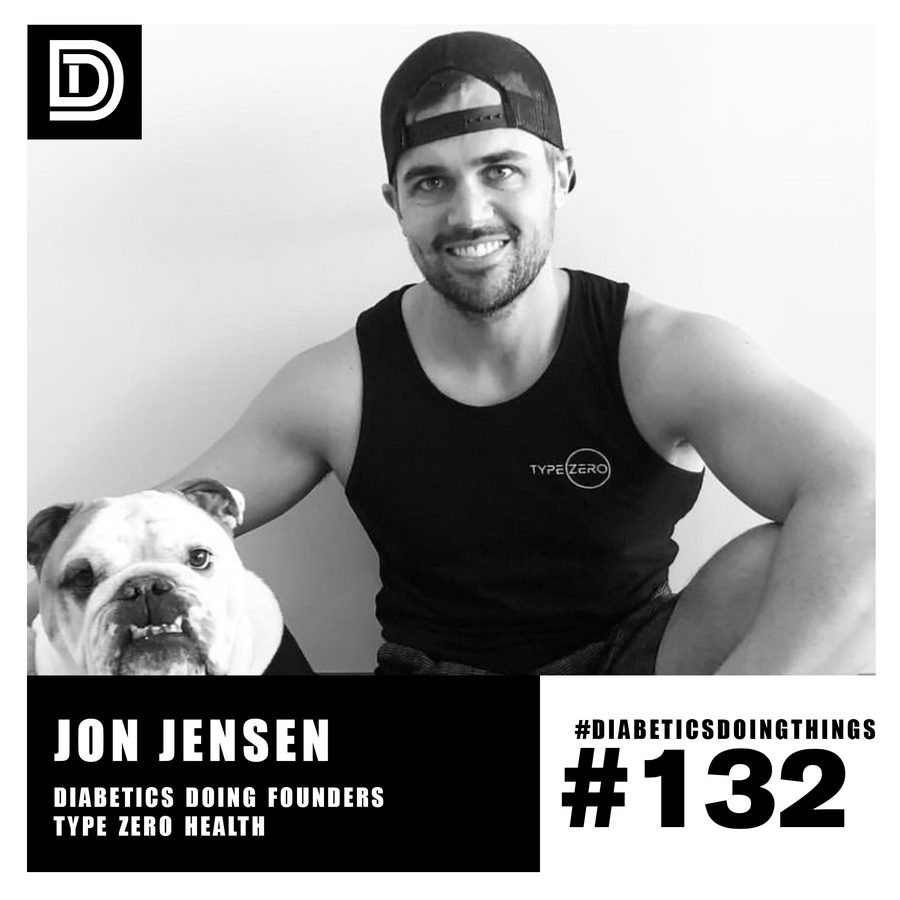
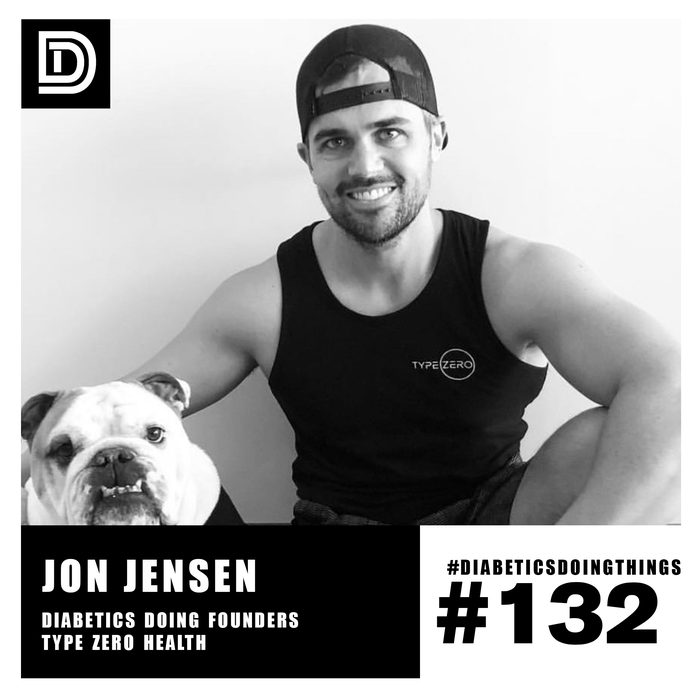
We are continuing to highlight founders with Diabetes on the podcast. The newest founder is Jon Jensen of Type Zero Health.
Diagnosed at the age of 13, Jon has always been passionate about sports, fitness and health. Even when he was recently diagnosed and looking for exercise advantages as a teen, the idea of a Diabetes friendly pre-workout supplement that didn’t spike your blood sugar was something that he felt he could do. Fast forward nearly 15 years later, and Jon made it happen.
After doing tons of research, working with various scientists and multiple manufacturers, TypeZeroHealth was born.
Last summer, Jon reached out to me to try Type Zero, and I’ll admit I was skeptical at first, but Type Zero works! It gives you great energy, pump and endurance without all the skin crawling, heart racing, blood sugar spiking junk that other pre-workouts give you.
If you want to try it out, you can save 20% by using code 20RobHowe at checkout. Let me know what you think if you try it, and be sure to follow Type Zero Health on Instagram for more updates. They even released a new Cherry Limeade flavor which is delicious!
This episode is sponsored by Real Good Foods! Be sure to check out their new Breakfast Sandwiches, made with cauliflower cheesy buns with only 2g net carbs! They’re packed with protein (18g) and have no gluten or grains. Available in sausage egg & cheese and bacon egg & cheese flavors and they’re ready within seconds. Order them online or find a store near you today!
Questions this episode answers
What is Type Zero Health?
Type Zero Health is a natural pre-workout supplement founded by Jon Jensen and built not to spike blood sugar, using stevia instead of sucralose.
Why did Jon Jensen stop using an insulin pump?
Jon used a pump for five to six years but says he wasn't coached well enough on how to use it and decided it didn't fit his lifestyle, so he switched off it.
How did Jon Jensen get his blood sugar under control?
After a severe low blood sugar landed him in the hospital in his late teens, and after meeting a man who had lost limbs to diabetes complications, Jon switched to a lower carb, more natural diet. His A1C has stayed around 6.0 to 6.2 for 10 to 12 years since.
Where can you buy Type Zero Health products?
Jon Jensen says Type Zero is sold on typezerohealth.com and on Amazon, and the brand is on Instagram and Facebook as Type Zero Health.
Full transcript Searchable, with timestamps
Rob Howe: Welcome back ladies and germs. This is Rob, your host, the Diabetics Doing Things podcast. We're continuing our Founders series. Today's founder is Jon Jensen. He's the founder of Type Zero Health. He was diagnosed with Type 1 diabetes at age 13. And he and I talk about how he had an idea very early on about a health supplement for a pre-workout that didn't have a bunch of junk in it that spiked your blood sugars. And he talks a little bit about the procrastination process that he went through to actually get it done. and he and I bond over that. As many of you know, I am a notorious procrastinator and often wait until the very last minute before the deadline to fully flesh out whatever idea or execution or whatever it is that I'm working on. So anyway, we bonded over that. Jon reached out to me last summer to have me try type zero. I was a little bit skeptical at first. I cannot lie because I've tried a lot of healthy pre-workouts and we also talk about that journey for me on the pod, but type zero works. It actually tastes really good as well and I use it to this day. I'll use it tonight when I work out. And I say tonight because it doesn't have caffeine in it. So I can take it late at night, get a good workout and still get a nice, even night's sleep. If you want to save 20%, you can use 20 Rob Howe at checkout on Amazon. You can get that Prime delivered anywhere in the country in like two days. It really works great. So that's 20 Rob Howe, that's me. And I hope you guys enjoyed this amazing interview and a really insightful part of what it's like to develop a company as a side hustle with my friend, John Jensen. Hello, ladies and gentlemen. Thank you for continuing to listen to Diabetics Doing Things. We've been doing this for four years now, thanks to listeners like you and the support of amazing sponsors like Real Good Foods. If you're involved in the diabetes online community, then you have for sure heard of Real Good Foods and their low-carb pizza and enchiladas, which are delicious, but they've really outdone themselves this time with their new breakfast sandwiches. It's just like your typical breakfast sandwich, sausage, egg, and cheese, or bacon, egg, and cheese, except the biscuit is made out of cauliflower, and the whole sandwich has only two net carbs. That's two net carbs, and if you pop it in the microwave, it's ready in seconds. I'm not a big breakfast guy, because I don't like having to deal with big blood sugar spikes for a high-carb breakfast, but when I'm really craving a breakfast sandwich, I grab a real good food sandwich out of the freezer and hit the road without having to worry about a big spike in my blood sugar. Check out realgoodfoods.com to find them in a store near you or use code ROBHOW, that's me, to get a discount when you order the sandwiches online. I'm a big fan of brands who continue to support creators with diabetes and there has been no bigger supporter of me and my friends in the diabetes community than Real Good Foods. If you haven't checked them out yet, give them a shot and let me know what you think. And now let's get back to the episode. Welcome back to another episode of Diabetics Doing Things. We're telling the amazing stories of people with diabetes from all across the world. My very special guest today, calling me from a place that I believe has better weather than we are having today here in Dallas, Jon Jensen calling from Hawaii. How are you, Jon?
Jon Jensen: Doing great. How are you doing, Rob?
Rob Howe: I'm doing great. Thanks so much for joining. And this is part of our Founders series. So we're going to talk a little bit about your journey with diabetes, as well as your company, Type Zero Health. and I'm really excited because I use the product and obviously you and I have chatted over the last couple of months and gotten to know each other so I'm really excited to dig in and share your
Jon Jensen: story with the community. Okay awesome glad to be here and share it as well. So let's get started
Rob Howe: where and when like walk us through your your diagnosis story how did you come to join this
Jon Jensen: type 1 diabetes family? Let's see, I was 13 years old, and I guess the whole story in a very short time. Growing up, I was a chubby, fat little kid who was usually always overweight, and then just within a couple months, I dropped weight pretty severely. And there was one, I remember was a Sunday morning. I felt really flu-like symptoms, and I started getting to the point where I felt like my chest was almost caving in to where I couldn't breathe. So my dad basically pinned me down and just called me, and then they took me to the ER. And in the ER, they took a urine sample, and they saw that I had too many ketones and everything, and they told me right there that I was most likely a type 1 diabetic. And then I spent, I think, three or four days in the hospital. And ever since then, that's where I became diabetic.
Rob Howe: And you obviously live in Hawaii now. Were you diagnosed in Hawaii as well?
Jon Jensen: Oh, yeah, sorry. No, I actually grew up in Utah. Okay, great. I grew up in a small town in Utah.
Rob Howe: So I think, you know, when you're diagnosed, like for me, my experience was big hospital, big city, awesome experience. For you kind of in the small town, Utah, a little bit less population. How did your diagnosis experience go? Did you feel confident that you were going to walk out of there and know what to do and how your life was going to go? Or was there a little bit of fear, stigma, et cetera?
Jon Jensen: Yeah, there was for sure fear of looking back being a 13-year-old kid. I remember in the hospital, I actually asked my mom if I was going to make it out of there. And my doctor, he, luckily my doctor, my pediatrician, he was a diabetic. So he actually was able to help me a ton. He was a pediatrician. I actually saw him up until I was like 25 or so because he was such a good doctor. but he made all the world of difference because he just made it seem like I could get through it and I could live a normal healthy life and by the time I got out of there I remember going back to school and you know I was a lot skinnier actually kids were almost cooler to me in a way because I was really skinny and going back to play like basketball and everything. I remember a few times playing basketball right out of the hospital. I just couldn't do it because I had severe low blood sugars. And just starting out, it was all my responsibility. Probably the best thing my parents did is they were super supportive. They began to cook healthy items, the food. But my dad sat me down one time and he told me that hey Jon he said this is your responsibility you got to own it and take care of it and so i went through some hard times with it where i have blood sugars go up and down but my parents honestly if they knew how to like give me whatever my insulin dosages were i don't know if they'd even know how to do it because i was so independent i don't i don't necessarily suggest that towards diabetic parents today but my parents just put it the ball on my court and they made me take care of
Rob Howe: it and it made the world of difference yeah i think i think it's a balance right especially at 13 it's such a tough age you know for many people with diabetes they look back at that time as you know you're pushing back against everything your parents tell you anyway and you're just kind of in an emotional tough time you know hormonally and you're changing and you know school is tough because being different is very hard and kids can be super ruthless. Yeah, for sure. So for you, you mentioned looking back, you're not sure if you recommend that type of independence always, but for you, did that independence kind of spill over into other areas of your life? Do you feel like making those decisions and your parents kind of giving you that autonomy influenced you and set you up for success maybe later on?
Jon Jensen: Yeah, for sure. Looking back, I mean, it helped me a lot within my career-wise and everything. I think the hardest time, or one of the hardest times is when I had my true independence. And that's when I turned 19, I moved out of my parents' home. And that's the time when I feel like you start to kind of eat whatever you want and do whatever you want. so I actually served a mission for the church that I belonged to and so I was out on my own I lived states away from my parents I was in Northern California and I would eat different foods because I thought I was could do whatever I want I could drink you know the soda that I wanted to or whatever and so my body would experience highs and lows and right before I lived in Northern California I switched to an insulin pump and it was probably a really bad idea because I wasn't coached enough on how to use an insulin pump so I don't use an insulin pump today but I used one for about five to six years I think they serve a good purpose but for me I just don't think an insulin pump works for my lifestyle but I had a super low blood sugar I went to the hospital and you know in an ambulance scared to death my parents weren't there and that was the time where I just kind of shook everything and I said hey I have to take serious responsibility of my health and so when I got out of the hospital it's a world of difference. I was able to balance my blood sugar. I changed my diet. And that was probably 10 to 12 years ago now. But from that day, since I had such a bad experience, my A1C has probably been about 6.0, either a little bit less or maybe a 6.2 ever since that day.
Rob Howe: So do you look at that date as kind of your, I don't know, wake up call with diabetes or, you know, when you sort of took your, your care into your own hands?
Jon Jensen: Yeah, for sure. That was the whole turning point in my diabetic health career.
Rob Howe: And do you remember, you mentioned a couple of things already, but do you remember like getting home from the hospital? Like when you started to build your plan or you started to make those changes, what were the changes that you made that you feel like made a huge impact and kind of set you up for the next 10, 12 years?
Jon Jensen: Just learning more. Well, I guess the one thing that helped too was when I was out there, I met a person who was in a wheelchair. He had two missing limbs. And I just asked him, like, what's wrong? What happened? And he told me that he was diabetic. And it probably sounds crazy, but I had no idea that being a diabetic could do those certain things to you. I knew it could cause other health problems, but I never knew you could lose limbs, go blind, anything like that. I was pretty naive. I was always healthy, but I was pretty naive about what the long-term lasting effects could do. So when I saw that guy, and that happened to me shortly after, that's when I woke up. I mean, still today, I usually eat really low carb. or try to, and I, you know, my meals, and I just, I'm always on top of taking the measurement of my blood sugar.
Rob Howe: And so, you know, talking about, like, those two events, like, meeting the guy who, you know, didn't really know about diabetes complications, the scare you had with the bad hypoglycemic incident, you know, you're kind of reframing your life. Do you remember, like, moments where you were, like anything specific stand out to you like oh i'm gonna do this differently or oh i do this now
Jon Jensen: or this is how i think about xyz um i just started to think about food differently and just where it's made how natural it is i stopped eating you know a lot of artificial things at that time you know i try to eat i don't i don't eat everything organic but i try to eat stuff more natural as I possibly can and just low carb for the most part
Rob Howe: and you know talk a little bit about you know you're you're making these changes you are you know on the go you're learning about your diabetes obviously you're controlling everything you're feeling good let's let's shift over in a little bit into your you know business or entrepreneurial spirit. Okay. At what point did you say, Hey, I've got something, um, or I've, you know, figured something out and I've been able to make this a part of my life and I've been able to have, you know, decent control. How can I, you know, use what I've learned from my diabetes and turn that into an idea? Give me the, what was the, uh, what's the sexy entrepreneurial story
Jon Jensen: about type zero okay uh so i i started a company called type zero and we make a product geared to more more more towards diabetics it's a natural pre-workout and then we have a natural branch chain amino acid drink coming out probably about six weeks now but the whole idea came to me when I was in college, I was starting to get really into fitness and I would go to the gym. And I think every college guy goes to the gym to try to look good for girls and whatnot.
Rob Howe: Got to go curls for the girls, right?
Jon Jensen: Exactly. Um, but I would take all the stuff like C4 and, you know, kind of what was ever out at that time. And for me, I would take it and I would notice that it would elevate my blood sugar. and then I would crash usually after the gym, and then I'd have to eat more food. And if I was trying to lean out and cut weight, I just got really upset because I would work out really hard, and then I'd have a low blood sugar at the end of my session, so then I'd have to eat whatever food was out there on hand. So for me to try to get lean to cut, it was just such an aggravating experience where I just thought to myself, there's got to be something out there that doesn't spike your blood sugar. I think it's still going to get a good workout and, you know, get lean and fit.
Rob Howe: And I think, you know, you could take me out of this conversation, have that conversation with any diabetes bro who was in the gym or diabetes bro lady who was in the gym trying to, you know, get a caffeine boost or, you know, boost some performance. yeah I remember you know preparing for this conversation I was kind of going back through my memory archives of all the pre-workouts I've tried you mentioned c4 I remember Black Powder came out or like NO-Xplode all these like uh you know crazy brands of you know the the original pre-workout type of uh I guess stimulants is the wrong word but like performance supplements and I remember having the same ideas like I'd look and they'd say there were no sugar there was no sugar in the ingredients, but I would just always see like a huge spike and then followed by a huge crash. So how did you start that journey of developing this product?
Jon Jensen: Yeah. I mean, I had the same experiences that you had. So that was in college. And then when I graduated college, I moved to Southern California. And I, again, I was at the gym. I was just like, you know what? there's got to be something I can do because nobody I knew was really making a product like that. So I wanted to make a clean, all-natural pre-workout and gear it towards diabetics. So I would go back home to where my parents lived in Utah, and I started to meet with manufacturers who, you know, make products. And so this was probably like five years ago or so, and I'd meet with them, and I kind of came up with a good idea to do it in a formula. And I think the coolest part about this whole thing, because I'd always have these strong impressions that I need to go and build this product. And my wife, that's how we met. So she worked at the front desk of a company called Bowling Naturals. And I was working with them to develop my product. And long story short, that's how me and my wife met. We're married. we've been married for about three years we have a five-month-old son we live in Hawaii and life's been awesome and then when we got married we moved to Hawaii and I still kept getting these impressions that John you have to go make this company you want to do and then went back to Utah know that someone different that makes a little bit more specialized products and those guys helped me launch Type 0. It's been on Amazon for, I think, I'm pretty sure it's a year this month that we've been on Amazon and our sales have been really well. We sell quite a bit of units each month and it's been such a cool experience. The main job that I do now is I run an entire sales team for a big solar company here in Hawaii and I love that job and it provides me freedom and good financial stability. But there's nothing better than getting an email from someone that's taken Type 0 and they said it's either changed their life, they love the product. So to me, it's been so gratifying just to hear feedback from people that have had good experiences. And that's why we're expanding into more products today.
Rob Howe: That's super cool. You know, like, especially you solved the problem for you. you had the hypothesis right like if this is a problem for me I'm sure it's a problem for someone else out there with diabetes uh because and I can you know obviously we talked about my experiences with other pre-workouts I remember when you first sent it to me I wasn't skeptical necessarily but I was excited to test it out so I remember like taking a picture of my pump and my cgm graph before going and working out taking a picture like during and then after and you know pretty normal workout like pretty, you know, my, my typical kind of circuit. And sure enough, I had, I had energy and I had like the pump and like the readiness to go work out, but I didn't have the, the spike that I was sort of used to. And like, I just assumed that I was going to have to continue to deal with, uh, alongside that. Um, and you mentioned, you know, you're, you're seeing, you know, good sales and you're hearing good stories, uh, are, you know, is it primarily people with diabetes who are reaching out to you and are asking these questions or giving you these reviews is, um, or, you know, or other people who are just looking for a clean supplement also,
Jon Jensen: you know, finding type zero. Yeah. I mean, when we started, I just wanted to gear it just specifically towards diabetics because that's, you know, who I connect with the most. That's what I'm most passionate about. But at the end of the day, um, there's, I think the majority the people that are buying the product are just kind of people who are sick of all these other, I mean, there's plenty of good companies, don't get me wrong, but there's just a lot of products that have too many fake fillers, too many stimulants. So a lot of people just taking it that I've met personally are either moms just looking for something they can take without too much caffeine or too much of a crash. There's a lot of cyclists who take it. I'm talking to boxers. There's a ton of diabetics, obviously. And then a lot of people trying to do the keto diet. So we've had tons of different people take it. It's just generally people looking for something more clean and just more simple ingredients.
Rob Howe: You know, it's interesting. One of my friends, she doesn't have diabetes, but she has intestinal colitis. So she has to really be careful what food she eats. But she used to be an athlete as well at the college level. So she's looking for a pre-workout and she actually takes, uses type zero. She saw it from a link that I shared. Awesome. And for the same reasons, right? Like there's no junk, there's no surprises. Because I think, you know, we can, obviously you mentioned that there are other good companies out there that make, you know, quality products. But health supplements sort of as an industry have a little bit of a stigma attached to them as just filling it with junk and filler and things that are not natural or wouldn't be considered clean. Can you give a little bit of context for somebody who's never really looked at those labels, like what those things might be? What was potentially causing – sorry to talk over you. What's causing those high blood sugar spikes? Like I think it's beneficial for people with diabetes. We get to measure what the things that go into our body, what they do to us. But for somebody who's not necessarily showing those things, like what, what are those things in there that are causing those spikes in blood sugar?
Jon Jensen: Yeah. So just over the past few years, I've learned that each diabetic responds differently. So sometimes diabetics, if they have too much caffeine, obviously that's going to spike the blood sugar. My body, I'm pretty caffeine tolerant, so it doesn't do much to my body as it does sugar spikes, but it used to. There's other ingredients. Like if you take artificial sweeteners and other products, just too many, then your body is going to become less insulin resistant. So if you're eating all the fake sugary foods as diabetics, your body's not going to be able to accept your insulin as good as it would if you want a cleaner diet. So the whole idea with type zero is I thought, well, we go throughout our whole day as diabetics and we're trying to eat clean. But when we're on the go, we're at a gas station, so most likely we're not going to get something clean. so let's still take those if we need to but we might as well take something clean like type zero while we go to the gym because it's there on hand at the bottom with us so i'm not fully against all these fake artificial sweeteners and stuff i try not to use them as much as i can but why just add another product that's fake and artificial to our diet when you could just avoid it so that's where
Rob Howe: it. That's why we had Type 0. Yeah. And I think, you know, there's never a better time, right? This is the time where, you know, people are being more conscious of, you know, what goes into their body and where things are made and what they, where they come from. Were you the guinea pig for Type 0? Were you like, they were, hey, you were developing the products, you know, with the company, with the partner that you mentioned, and you now are, you know, you're, you're sitting there and you're like okay now i gotta test this product do you have any anxiety
Jon Jensen: or worries going into that process uh not really um but i was for sure the guinea pig i just wasn't too worried about it because i was taking other pre-workouts as well that had artificial stuff so i'm like you know this isn't gonna be anything and type zero is just such a i mean it's a mild pre-workout too so it's not it's never been scary to me or anything but there there's some people that do take it and if you know if you're if you don't accept your if your body doesn't accept niacin very well then you could have a you know some sort of a niacin rush and what that is is if you take it and you don't go to the gym most likely your body's gonna feel kind of like red and itchy so the only time you really should take it you know if you're taking a few times is take it and then work out right after because i've gotten emails from people like hey i took this and you know i felt itchy or whatnot you know but if you go to the gym right after you
Rob Howe: shouldn't ever experience that whatsoever yeah and in some cases i think somebody like me who's very familiar with the sort of side effects of uh you know feeling that pump of a pre-workout that to me is like a signal that it's like working so it's like okay hey maybe i'm not feeling stronger or like more energetic yet but i feel that sort of that flush maybe like a little bit of redness or like a little bit of itchy it's like okay now i'm able to like now i feel like i'm doing something yeah exactly uh and when when you're testing out like in these preliminary stages did you have this moment where it's like kind of a light bulb on you mentioned that it's not a quote unquote, uh, serious or like extra crazy mass gainer, you know, mega caffeine blast overload type pre-workout. But as you were testing it, did you like, when did you realize like when the light bulb come on and be like, we've got it, this is the formula. Uh, I mean,
Jon Jensen: it took forever. So I, I worked with maybe five to eight different manufacturers all across the United States. I spent a lot of money. I hired, I even hired a guy to kind of help me develop it. And just the ingredients that I wanted, like beetroot powder, for example, it's not the best tasting thing in the world if you've just taken beetroot powder before. And then the reason why most pre-workouts taste so good is because you use sucralose. If you use sucralose with anything, it can taste it can make anything taste good but we use natural stevia so just the all of our ingredients together and then trying to throw stevia on top of that without sucralose kind of i went through so many different taste testings and everything well most of them just were gross and they didn't taste good at all and by some miracle i met with a manufacturer who's making my product ever since and i mean they're geniuses that they're they're flavoring with stevia and
Rob Howe: well go ahead well and i want to talk a little bit about that for a second because my own journey with pre-workout who knew that that would be a thing that i would say my this is my pre-workout journey so over the years like i started with the hardcore stuff when i was a serious athlete and you know really trying to stay in tip-top shape and be a one percent type athlete where I was you know in there trying to be in the best shape trying to be strong trying to be able to jump over a car and all that crazy college stuff so uh I went to the serious route but then about 2014 end of 2014 I started really changing my diet and being a lot more aware of what I was putting in my body and I wanted my pre-workout to follow that trend uh and as you were talking about taste I just remembered like I was on Amazon trying to order these like all organic or no sugar added all natural sports pre-workout type powders that you put in your shaker cup and you shake up and man I tried some terrible ones they just tasted like you know ground up grass or like really bland tea and then you like suffer through this drink while you're drinking it and it wouldn't even really like blip on the radar of caffeine like way less than a cup of coffee. So I definitely understand like the frustration of just like trying to do something that's clean and, you know, uh, you know, it doesn't affect your blood sugar or using natural ingredients or ingredients, you know, staying away from sucralose or, you know, developing your own proprietary blend of, uh, of flavors because man, there are a lot of really bad pre-workouts that are, you know, all natural. Uh, but then also you mentioned the beet, uh, the beet extract or the beet powder, like that's a, there's an entire beet segment of pre-workouts. And so it's like now, like over the years, like there's been so many different ones. And when you sent me type zero to try, I was like, okay, well, this is probably in the same vein, but it really does taste like a good pre-workout, uh, like a, you know, a top notch, top brand, non-diabetic friendly, like whatever pre-workout, but it gives you all the benefits of one that's very clean. yeah well thank you appreciate it yeah and like you know i'm not just saying that to say that i really do use it i use it up quick and uh even my fiancee uses it occasionally when she's out of her crazy pre-workout uh she says that it's not uh it doesn't give her enough caffeine so she likes one with like a huge caffeine rush but she doesn't have diabetes so she doesn't have to worry about
Jon Jensen: the uh the blood sugar spikes no i feel it uh and i feel her way too because i i had a i mean my son's five months old and I usually never took caffeine, but when you have a baby, you pretty much have to live on caffeine at least me because I don't get sleep like I used to as much. So I understand
Rob Howe: where she's coming from. Yeah. I remember early on when we were talking, I guess it was probably last September. You were like, Hey, I probably won't be emailing you back because my wife's about to have a baby. And I was like, Oh, okay. Yeah. They're totally understandable. yeah exactly uh well a congratulations by the way i didn't say that earlier to you and your wife uh on your on your growing family and i'm glad you have a pre-workout that allows you even if you're not headed to the gym to maybe get a little bit of a a jump starting the day yeah thank you and right on cue it looks like uh you guys is uh you guys baby is trying to be podcast famous
Jon Jensen: Yeah. Can you hear that? Sorry about that.
Rob Howe: Yeah. No, no, no. Not to worry. This is a real podcast. We don't do a ton of like, we don't try to hide anything. This is, this is real life. So yeah. And I think like, you know, from the entrepreneur perspective, this is a great, a great segue into like when you're starting your own business or you're running your own side business, you talked about, you know, having to spend a lot of money on, you know, different flavor combinations and working with different partners and manufacturers. what was the, you know, what kept you going through all of that? Obviously, like, it didn't all just happen and come together in one day. You know, how did you stay motivated throughout that process?
Jon Jensen: I mean, throughout all of Type Zero, I always wish I would have started it sooner because I had the idea years and years ago, but I just didn't do anything. So I was just, and it kind of what it just came down to, I was just too scared to try it. You know, either putting myself out there or creating a product and that people didn't like it. But I guess what kept me going is I just kept having those intuition thoughts like, hey, you have to do this. And there were just so many signs that came into my life that I had to try it. And now that I've tried it and it's been up and running for a year, it's been awesome. and so if anybody's wanting to go out and pursue something entrepreneurial I think the regret you might have at the end of the day is if you didn't try what you have been feeling that you should go out and try and now that I've done it I feel like I can do a lot more we're you know expanding more products now to where if you would ask me if I would have had a couple products with you know my old supplement company probably like five years ago I probably thought you're kind of crazy but it's been such a great experience and to try to help the diabetic community especially
Rob Howe: and you talked a little bit about fear um i think fear innately in any sort of creative exploit or you know fear takes manifests itself in a lot of different ways um i think of something my dad told me when i was a kid playing basketball i had a game where i had like a lot of turnovers or something and he told me something that I really never forgot and I think I'd later learned he stole from Warren Buffett but it was basically the idea of errors of commission versus errors of omission and how he his explanation at the time he's like I can live with you making errors by trying something he's like what I can't live with is you overthinking something and making errors because you're not doing something. And, you know, even in this podcast, for example, or my agency, an exercise that I started going through, and I, we were talking about Tim Ferriss earlier that I totally stole from him, was asking myself like, well, what's the worst that could happen? And often I think in our minds, we build up, you know, this, this immense fear. It seems like it's a big deal. And then when we really distill it down, you know, what's, what really is at stake, right is it is it in our head or is it actually real um and so yeah what you're talking about here is exactly that like you know why why not you why not why not john jensen starting type zero
Jon Jensen: you know somebody's got to do it might as well be you yeah exactly and i agree with everything you
Rob Howe: just said good i love it uh so you mentioned a bcaa product um that you guys are working on Tell us a little bit more about that and kind of like what you're excited about for year two of Type Zero.
Jon Jensen: Yeah, so the product is, you know, I'm sure everybody's heard or at least taken a BCA. And we just try to develop Type Zero to be more of an all-natural type company. When someone asks me what is it, I'm like, well, it's a product you probably see in like a Whole Foods or a natural organic store in one of their supplement sections. And so we're making an all-natural BCAA. And I mean, how that would help a diabetic is anytime you're more hydrated as a diabetic, I feel like, you know, you're going to be healthier. It could help with blood sugar stabilization. Just to stay more hydrated is always in a diabetic's best interest because I know that when I'm not, like right now, you guys probably hear my voice. It's a little bit raspy. I came down with a cold just a couple days ago, so I apologize that I sound like a kind of froggy voice. But, yeah, anything that can help with hydration as a diabetic is always going to be beneficial. And so we're going to launch, our goal is to launch four to five products for 2020.
Rob Howe: Well, I love it, man. And I think, you know, we got a little bit of a taste of what goes into, you know, what kind of effort goes into launching those kinds of products. And, you know, we're looking forward to seeing what you guys come up with. Obviously, I think the biggest thing for me, when I see entrepreneurs like yourself who are developing products to that are for people with diabetes is obviously super inspiring. And even when it's just, you know, not, not necessarily diabetes focused, but somebody who is a type 1 diabetic, and they're looking to, you know, stretch themselves and, and take on a venture, I'm just always super inspired by that. So yeah, looking forward to continuing to follow the growth of type zero. For people who are interested in trying the product, obviously, I'll include a link in the show notes and along with my super official discount code. But where can they go find you guys on social media?
Jon Jensen: Yeah. So on Instagram or Facebook, it's type zero at type zero health. And you can buy our products on type zero health.com or just go to Amazon. Most of you guys have prime to get the free shipping and all of our products should be on that platform. and just want to say likewise Rob it's been really cool to see what you've been doing with just helping the diabetic community the past couple years really inspiring so just to see you and other I didn't really know diabetic influencers was much of a space until you know our product launched it's been awesome to see all these guys go out and put their life out there to help other diabetics
Rob Howe: yeah it's pretty cool we were talking about you know, just the space and how it's grown. It's super cool to just meet other people with diabetes. That was something that I never thought I would say. But I now have access to just hearing. Yeah, right. Like, you know, for years and years and years, it wasn't a part of my life that I was hiding, but I just didn't know where to find other people like me. And I've been super fortunate. I met some of my favorite people. So surprising from this community. And, you know, every year, it seems like it continues to grow and I'm just super grateful to be a part of it yeah yeah me
Jon Jensen: too and I was pretty similar when I grew up I never went to the diabetic camps because I always thought it'd be weird everything but now that you guys are out there influencing the diabetic world I feel like it's it's more normal and accepted so hopefully the youth that are diabetic can just grasp it a lot and be I guess be more proud of being diabetic than I was growing up because I never told anybody I was diabetic until I was probably like in my early 20s because I wasn't
Rob Howe: ashamed of it anymore I guess yeah I think you know being young you it's important I think to learn like who you are and uh sometimes I think we talked about a little bit earlier especially when you're like 13, 16 years old, being different is so scary and everything like, you know, feeling like you're not a part of something or you don't have a community or, you know, you don't feel cool is such a like life or death thing at that time. Uh, so I know a lot of parents listen to this podcast as well. Like if your kid is going through that, that's okay. That's totally normal. Um, just, you know, continue to be patient with them and know that there are an entire generation of people who are out like you, like me out in social media now who didn't talk about diabetes for a long time. And we came around. So I think everybody comes around in their own time. And the good news is that now there's a super accessible community waiting on them. And it's cool. We were talking before, I was like, I almost see a new diabetes account added every day to Instagram. And that's super cool. And always exciting to discover and meet new people who are sharing their journey with the world. Thanks again for listening. Please follow us on Instagram. Check out our sponsor, Real Good Foods. We're diabetics doing things on all the major platforms, and we also are available on Spotify. So if you prefer Spotify or your subscriber, check it out. I definitely have listened to more on Spotify in the recent years. They've got a lot of great podcasts, and it's just super easy to shuffle from music to podcasts and back and forth. Leave us a review if you have a chance, and tell a friend with diabetes about this podcast. That's the best endorsement and the best support that you can provide. Thanks so much, and we'll see you next time.
About Jon
Jon Jensen is the founder of Type Zero Health, a type 1 diabetic diagnosed at 13 who lives in Hawaii with his wife and son and also runs a sales team for a solar company.