

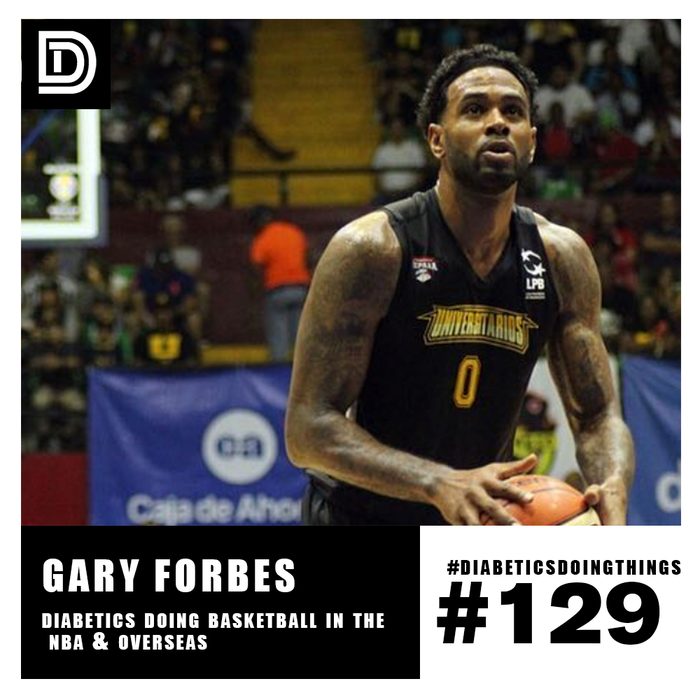
Diabetics Doing Basketball in the NBA and Overseas with Gary Forbes
Episode summary
Gary Forbes, 2008 Atlantic-10 Player of the Year at UMass, talks about building a pro basketball career with type 1 diabetes. Diagnosed after his freshman year at Virginia, he kept his diagnosis quiet through college and the draft process, which he believes cost him a first-round selection after a high A1C showed up on his medical exam. He made the NBA with the Denver Nuggets in 2010 and later played for the Raptors and Rockets. Gary describes a severe low blood sugar seizure during Brooklyn Nets training camp that led to his release, and a diabetic coma in Argentina after switching too abruptly to a vegan diet. He discusses recovering from multiple knee surgeries, writing a children's book, and heading into his 12th pro season with the Saigon Heat in Vietnam.
Key takeaways
- Gary Forbes hid his type 1 diagnosis through most of college, and thinks that secrecy cost him guaranteed first-round draft slots once teams saw his A1C.
- Gary says his blood sugar has consistently run better playing overseas than in the US, which he attributes to food quality.
- Gary had a seizure from a low blood sugar episode during Brooklyn Nets training camp and believes it led directly to his release from the team.
- Gary spent 10 days hospitalized and in a diabetic coma for 13 hours in Argentina after abruptly switching to a vegan diet.
- Gary says playing with an insulin pump taped into tights has let Rob keep training without interrupting his routine.
Show notes
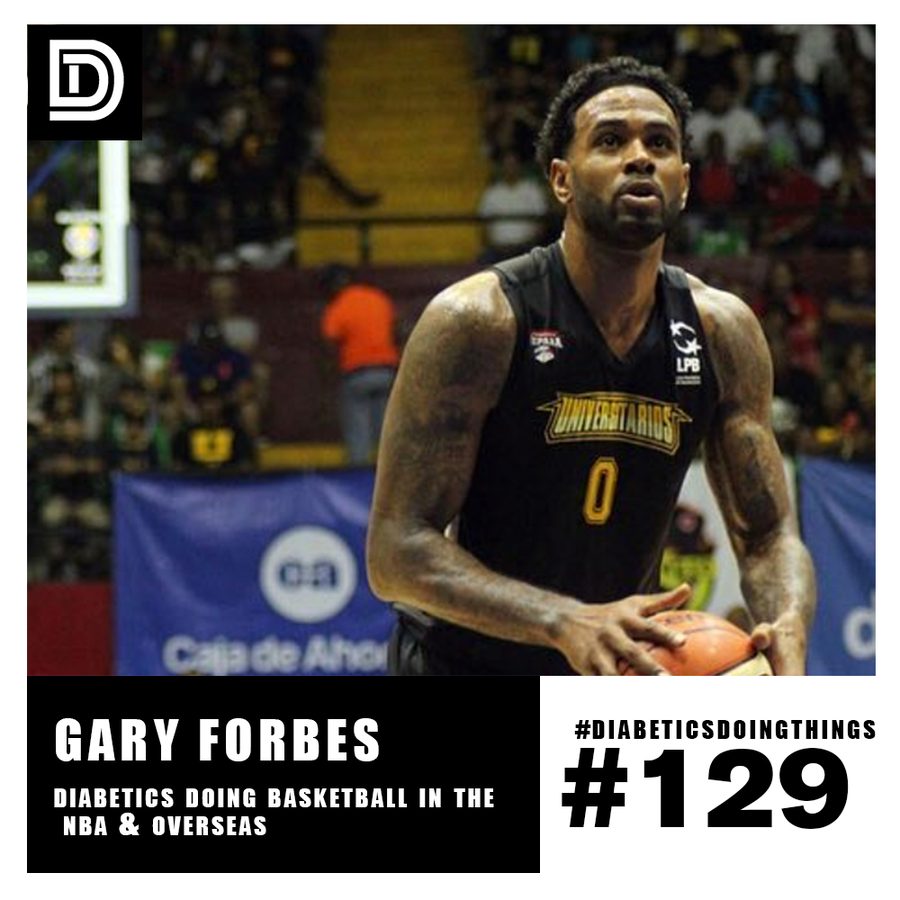
This episode has been nearly 3 years in the making! We welcome Gary Forbes, 2008 Atlantic-10 Player of the Year at UMASS and currently heading into his 12th year as a professional basketball player with the Saigon Heat .
Gary made his NBA debut with the Denver Nuggets in 2010, after going undrafted in the 2008 NBA draft which he attributes to teams not being comfortable with his Diabetes. Rob was playing college basketball in Colorado Springs at the time and remembers hearing the stories of the Nuggets signing a player with T1D, and being inspired by a guy with T1D playing at the highest level of basketball in the world.
Gary and Rob talk about the demands of being a professional athlete in a foreign country, as well as some of the struggles Gary has experienced in his years as an athlete. He’s had a few hypoglycemic incidents that were not only personally scary for him, but affected his ability to stay in the NBA at times.
Gary’s mindset may be his greatest skill, as he has never let his Diabetes, knee injuries, or unfavorable circumstances impact his belief in himself and his ability. He’s currently authoring children’s books to help pass along this mindset to the next generation of people with Diabetes in hopes that they will be able to chase their dreams like he has.
T1D runs in Gary’s family, and he mentions that his father (who also has T1D) was an example to Gary early in his life because he was an Olympic weightlifter with Diabetes long before any of the modern day technology was around. It’s that example that led to him being the most recent person with Type-1 Diabetes to play in the NBA, among others like Adam Morrison and Chris Dudley. Be sure to follow Gary on Instagram and keep up with his 2020 season in Vietnam.
This episode is sponsored by Companion Medical. If you are on multiple daily injections, but want the data and analytics pump users have available to them, then you need the In-Pen by Companion Medical. Learn more at Companion Medical’s website!
Questions this episode answers
Did a player with type 1 diabetes play in the NBA?
Yes. Gary Forbes, diagnosed with type 1 diabetes after his freshman year at the University of Virginia, played in the NBA with the Denver Nuggets, Toronto Raptors, and Houston Rockets.
Why did Gary Forbes go undrafted in 2008 despite being Atlantic-10 Player of the Year?
Gary says he had multiple first-round guarantees, but a high A1C reading on his pre-draft medical exam revealed his diabetes to teams, and he believes that discovery cost him his draft slot.
What happened to Gary Forbes with the Brooklyn Nets?
During a strong preseason training camp, Gary had a severe low blood sugar episode and seizure after possibly undereating relative to his insulin dose. A teammate called paramedics, and he was released by the team that same night.
Can you play professional basketball overseas with type 1 diabetes?
Gary Forbes has played professionally overseas for over a decade, including in Vietnam, Argentina, and China, and says his blood sugar control has generally been better overseas than in the US, which he credits to food differences.
Full transcript Searchable, with timestamps
Rob Howe: Welcome to the Diabetics Doing Things Podcast. We've been telling the amazing stories of type 1 diabetics all across the world since 2015, and we have over a thousand years of living with T1D on the podcast. The interviews range from incredible feats to everyday victories, and we celebrate them all just the same. Thanks for listening, and if you want to get involved even further, just send me an email at rob at diabeticsdoingthings.com. Hello again, ladies and gents. Today I have a very cool diabetes sponsor I'd like to tell you about, Companion Medical. specifically the Companion Medical InPen. When I talk to people who use multiple daily injections to treat their diabetes, one of the things that often comes up is the lack of data they're able to see about dosing, daily insulin totals, etc. In fact, Companion Medical discovered that only 7% of people who use insulin are using insulin pump therapy to control their diabetes. So Companion Medical decided to bring pump benefits to insulin pen users with the InPen. The InPen is an FDA-cleared smart insulin pen and app that gives patients the tools to manage their multiple daily injections. The InPen is compatible with the Lilly and Novolog pre-filled insulin cartridges and single-use disposable needles. Those are not included with the InPen, but that is what is compatible with it. Using the information transmitted from the Pen itself, the Companion Medical app can track insulin therapy, calculate doses, share data with your doctor and family right on your smartphone. The best part is the InPen is covered as a pharmacy benefit under most insurance plans. Currently, you pay no more than $35 for the in-pen with a special co-pay assistance program. So, if you're on multiple daily injections or just thinking about taking a break from your pump therapy and don't want to lose all the features that come with using a pump, talk to your doctor about Companion Medical in-pen and visit companionmedical.com for more information. What's up, diabetes sports fans? Do I have a treat for you? As you guys know, I'm a huge basketball fan. and even when I was diagnosed with diabetes, the most important thing in my life was playing basketball. So making it to the NBA as a basketball player is the ultimate goal and obviously a goal that's only realized by a handful of guys. So I'm very, very excited to introduce you to my next guest, who as far as I can tell is the most recent person to play basketball in the NBA with type 1 diabetes, and that's Gary Forbes. In 2009, he was playing for the Denver Nuggets while I was in college playing at the University of Colorado at Colorado Springs. And I remember reading a story about him or them talking a little bit about it during a halftime show or just an in-game bite. And they were talking about his diabetes. And I remember seeing him and saying, you know what? Diabetes doesn't have to hold me back from living my dream. There's a guy who's literally in the same 50 mile radius as me who's living his dream playing in the NBA. So this is a huge geek out moment for me, big basketball fan. And Gary's super cool and a great, great interview. So I'm really excited to share the ups and downs of living with diabetes and playing professional basketball. Gary's currently overseas playing for the Saigon Heat in Vietnam. And he and I are chatting really about five days, five, six days before he takes off to Vietnam. And you guys can follow along his journey at Gary Forbes on Instagram. He's updating from Vietnam every day. Looks like they're in training camp as a time of publishing of this podcast. So really excited to dig into the ups and downs of playing basketball with diabetes and really learning about a guy who has become a close friend via Instagram over the last few years and is the first NBA player on this podcast. So look at this. You know, we're almost 170 episodes in, I think, total. And Gary is here on the podcast. First NBA player. Certainly not the last, hopefully. We've got to get Adam Morrison and Chris Dudley on here. So one of at least three type 1 diabetic basketball players who have made the NBA, Mr. Gary Forbes. All right, welcome back to another episode of the Diabetics Doing Things podcast. We are telling the amazing stories of people with diabetes from all over the world. And my very special guest, this interview is like two years in the making. I am super, super hyped. Mr. Gary Forbes, former NBA player for the Denver Nuggets, Toronto Raptors, Houston Rockets, and now very shortly will be headed to Vietnam for, I think I'm doing this right, is this your 13th professional season?
Gary Forbes: I think so, man. I think so. I came out of college when I was there. Well, no, no, it's my 11th, actually. 11th, okay.
Rob Howe: Well, still, welcome to the show, man. I'm super, super hyped. I know, like, I was in a couple of my Colorado buddies in a group chat, and I was like, we got Nuggets, great, Gary Forbes coming on the pod, and they were like, yo, shout out 2009. so I'm really psyched that you're here today and obviously you live with type 1 diabetes so as we do on the show I'd love for you to just tell a little bit about yourself and usually we start with diagnosis which I think is right at the beginning of your college career if I did my math correctly and so I think that's a good place for us to start
Gary Forbes: well man, well first of all thank you for having me and I know we've been trying to do this for definitely the last two years But, you know, we've both been, you know, headed in the proper directions. But, yeah, I have type 1 diabetes. My father was diagnosed also with it. My grandfather passed away from it. My nephew has it. So it's something that runs in our family. I was diagnosed in college. It was my sophomore year. No, it was after my freshman year at Virginia, where, you know, I think I was like 228 pounds at the time. And just in one week, literally, I lost 20 pounds. And the symptoms of having diabetes are the urination and the constant thirst. So it was mind-blowing to me that I did watch my father take injections with syringes and insulin. But, you know, we weren't never really like open and, you know, talking about it and things, you know, and educating me on, you know, the proper ways to, you know, to live with someone who could possibly have diabetes. So that hit me. And, you know, I'm actually not one of those people who are not really upset at having diabetes because I've been able to, you know, inspire a whole bunch of different people. And I think it's actually bettered my life and actually made me more conscious of things that I do, and especially being a basketball player and playing at the highest possible level with diabetes. That says a lot about anyone living with diabetes and just myself in general.
Rob Howe: Well, it says a ton about you, man. And we were talking a little bit before we started recording. And for me, when you played with the Nuggets, I was in college and I remember just a quick little news blurb about you having diabetes. And, you know, at that time, I also wasn't very open about it. My teammates obviously knew and the people that I knew close to me knew that I was dealing with it, but it wasn't something that I broadcasted. And so to see somebody like you on the highest level just gave me a ton of inspiration. and now coming full circle almost 10 years later, it's just exciting to kind of be in this time and have this discussion with you. So for you, and this is something that nobody ever understands, but obviously you're a hooper, so you'll know this. So when I got diagnosed, it was 2005. So I was 16 years old, and it was like I got diagnosed on New Year's Day, so it was right in the middle of basketball season. And I remember that season Antoine Walker was playing with the heat and he showed up to training camp like out of shape. So the first like quarter of the season, all the announcers kept saying that he was like losing weight and working his way into shape. So that's what I thought was happening to me. I didn't know I wasn't like I was like 185 pounds and I was losing. I lost like 15 pounds in two weeks. I was like, oh, yeah, I must just be like Antoine Walker, just like working my way into shape. and I just you know obviously didn't know better but for an athlete obviously you said it was after your freshman year what were those first few weeks like for you adjusting to your new life
Gary Forbes: with diabetes oh man like the first I think we were like it was it was right after my freshman year so we were on like summer break for like two weeks before we had to head back to school and I was home and I was just like constantly thirsty every single day so I think I took a day off from like working out and I checked my weight and I was like 222 at the time so that I already lost like six pounds in one day so I'm just like all right maybe I need to eat more so I ordered like some food some Chinese food and I ate a whole bunch of food that night and you know I thought I was just gonna gain my weight back you know maybe it was just like you know just dehydration or water weight or something like that and I checked my weight the next day I'm like 215 and then you I almost thought I had a urinary tract infection because I just kept going to the bathroom time after time. Every time I drank water, I had to go literally right away. I remember when I was on my ride back to school to go ahead and see the doctors about everything. My brother was driving from Maryland back to UVA, which was like a three-hour drive. and we stopped maybe like 10 to 15 times where I had to just use the bathroom, like pull over to the side of the road. And, you know, he didn't know what was wrong with me or stuff like that. And, you know, when I got the news that I had diabetes, it was, you know, a real shock to me. One, I'm super, super scared of syringes. So I remember my first day where the doctor, she was trying to, you know, educate me on how to take syringes. and we were doing it with saline water. And she wanted me to do it on myself. And, you know, I told her, like, no, I'm not going to do that. Like, I'm going to be fine. Like, I'm cool. So she gave me my medicine. She said, you know, you're going to have to start, you know, taking insulin, you know, the next day. I remember that day I didn't even go to class. I was just sitting there as scared as I don't know what because, you know, it's the first time. This is before they had the pens and everything like that. This is when you had to, like, draw the needle with the bottle of syringe and, you know, stick yourself with the needle. Yeah, super manual, right? Right. That's like at a 19-year-old, you know, by himself in college, you know, getting that news that he has diabetes. And I almost thought, like, man, like, yo, basketball is over. Like, man, what am I going to do? And, you know, it was a real shock to me. But, you know, I was able to, you know, have a great, you know, freshman year and I mean, a great sophomore year and and was able to play through college with it. I kind of always hit it because, you know, I felt that people just looked at having an illness as such a, you know, a crutch or like, oh, if you have this or you can't do that. So, you know, I was almost, you know, keeping it a secret and, you know, no one really knew. And I think that also hurt my draft stock because I had a couple of guarantees in the first round because I had such a great college career. You know, I was playing the year in Atlantic 10 and, you know, we won so many games and I had so many guarantees. I had about two, three guarantees to go in the first round. And then, you know, when doctors check my, you know, my medical forms, it's like, oh, man, this kid has diabetes. Like, well, we didn't know that. You know, I never mentioned that, you know, through college or anything like that. Only certain, you know, tabloids in, you know, the UMass area knew that I had diabetes. But as far as broadcasting it to the nation, no, I didn't. And I think that definitely hurt me being drafted.
Rob Howe: So I definitely want to talk about this because, you know, this is something that I struggled with as well. Not being drafted. that was for other reasons but the uh you know broadcasting it and talking about it and this is a question the parents asked me as well so uh for me just my personal feeling on it was i didn't broadcast it early because i didn't want to be a good basketball player with diabetes i just wanted to be a good basketball player so i wanted to be held to the same standard as everybody else and not like you said view it as a crutch or a way to get special treatment or something like that and i I think that was my nature. So, A, when you were on campus, obviously, so my parents and I made the decision to, when I was choosing what college to go to, to talk to the training staff and make sure that they knew what they were getting into because I was going to spend, you know, four years there. What were your, because I know you switched schools. You went from UVA to UMass. Did you have any conversations with the program, like, you know, behind the scenes or with the training staff before you went? or was that something that you just dealt with 100% yourself?
Gary Forbes: Well, I actually had a cheat code in a sense because my father's a diabetic and he was also basically training me in how to live with diabetes. My father was an Olympic lifter with diabetes. So for him to be able to do that with an illness like that, it was almost easy for me to follow in his footsteps and the things that he was able to, you know, relate to me. But the training staff at UMass definitely helped me the, you know, they were always on top of everything, you know, getting my medications and, you know, testing myself, you know, at the proper times and things like that.
Rob Howe: That's, that's always nice, right? And, you know, for your dad to also have, and I assume, you know, years before, like, you were talking about manual injections, his uh you know care regimen was probably even uh you know worse off than that and still able to be an athlete at the olympic level is super impressive so you had a good i assume like his he was telling you like hey if you're feeling this way this is what we can do and things like that
Gary Forbes: exactly exactly and um i mean i've had you know i've had my i've had a whole bunch of i mean we'll get into that later but i've had a bunch of uh you know not so good experiences living with diabetes, but I think that comes with learning about the illness because it affects everyone in so many different ways.
Rob Howe: It does. And I think for one person to another, you could do the exact same thing, eat the exact same thing, get the same amount of sleep, and you would have different results. Exactly. I think it's interesting, though, something that for me that was very helpful early on because I, on my day of diagnosis, was also worried about not being able to play basketball anymore. And, you know, what was I going to do? I really related to when you said that. Was having your father there to, you know, like you said, he was training you. He's obviously involved in your life heavily. Did that impact how your life with diabetes began? I find that, you know, if you have a encouraging, you know, outlook with someone early on, that typically influences how your life with diabetes will go. So do you feel like, you know, your relationship with your dad and his experience like really kind of, like you said, gave you a cheat code and helped you out?
Gary Forbes: Yeah, like, I mean, from experience, well, my father, you know, he's, I doubt that he's had like the, you know, the bad experiences that I've had, obviously playing basketball and the types of food that, you know, obviously he grew up in Panama. So, you know, the foods are different. and the time and lifestyle of living is totally different than what it is now. But having someone who's gone through the same thing that I've gone through, it's kind of a relief almost. You don't have to worry about doing this alone. You have someone there who you can relate to, it being my father, someone who I can follow in his footsteps and be healthy, kind of just like him. um you know it also helped um i mean but in the beginning you know i didn't really know too much about diabetes because like i said we weren't you know really open about it i just knew my father had you know this illness that he had to take injections you know i didn't know why or i didn't know you know the sugars affect them or you know i just always knew you know he always ate healthy and always ate you know a certain regimen because uh you know he just wanted to
Rob Howe: take care of himself and be healthy definitely so it's it's 2008 i guess you you and uh umass had a great season you're a10 player of the year i think you guys were like lost in the nit
Gary Forbes: championship or something that year that's one of the games i wish i had back oh i'm sure i can't
Rob Howe: imagine i imagine it haunts you all the time uh so you get done with your senior year uh But for people who aren't as familiar with the pre-draft process and especially for top guys at Division I level, what was your spring summer like going into, I guess that was the 2008 NBA draft? And like you said, having conversations with teams where you felt that there was a guarantee to go and get drafted and the circumstances around that not happening and how that related to diabetes.
Gary Forbes: Well, the first thing that I went to was where they select all the best seniors in the country to go to. It's called Portsmouth. So I went to that, and I got MVP of Portsmouth. They're telling me, my knock on me in college was I'm a volume shooter. That was my role in the team, to shoot the ball. I'm a scorer. So I actually led Portsmouth in assists. and at the time I think my my teammate led this led the nation to the center I think he went to Davis and I forget his name so then I got invited to Orlando pre-draft camp where you know it's the best players you know from all around college every NBA team is there and I averaged 22 points in 23 minutes so you know it's almost like you know I've really set myself up to be drafted in the first round you know having a great college career here and then doing this you know doing these workouts and right after the the orlando uh pre-draft camp i had i think this what at the yeah it's 30 nba teams i think i have maybe 26 workouts which was really tough i think you know for especially you know a diabetic still a new diabetic you know i'm only like you know four years in and i'm sure you know about you know the honeymoon stage where you know the first year you still kind of can eat the same and you know your sugars aren't really affected by by what you're doing and and what you're eating so much as it does you know as it gets later on into your life with having diabetes definitely so you know i had you know i had all these workouts and then you know i had so many guarantees i think i had a guarantee to boston at 30 a guarantee to houston at i think it was 25 or something like that and then a guarantee and at charlotte at 38 and so So, you know, I felt like I was, you know, I accomplished my dream. Like, you know, man, I'm like, you know, I'm going to make it to the NBA, not even thinking about, you know, diabetes. And I remember my father, you know, told me before the, you know, before my I think it was my medical test, you know, where, you know, you have to do, you know, urine sample and and blood, you know, blood drawn. You know, he told me, you know, make sure, you know, you you eat right the night before. Make sure, you know, your sugars are OK in the morning. and so for some you know for some reason I guess I was just you know so caught up in you know just you know being in the NBA and just you know worrying about I guess you know being drafted I wasn't really thinking so much on you know my sugar levels or or anything like that and I think you know that you know when the test came out you know I guess I had you know a bad reading that day I think my sugars were either high and you know they took my A1C and it was really high. All the teams found out that I had diabetes. Of course, from a business standpoint, you're not going to spend millions of dollars on someone who could possibly be facing life-threatening issues.
Rob Howe: That's a pretty strenuous medical exam, right? At that point, you are an investment to these teams, millions of dollars. Exactly. Do you feel, and maybe this is an unfair question if you would do it again um would you be up more up front about the diabetes since it's obviously not hindered you later on but at this time i think they just didn't maybe
Gary Forbes: didn't know i mean i mean i don't know i don't know if at the time if at in 2008 if still the world you know was you know i kind of like had a different you know i mean adam morrison went number three in the draft with diabetes but me and him have you know two different types of diabetes i've never been on the bench you know sticking myself with the needle and like you said i've never wanted to be that player like oh look he has this illness not yo he's a good basketball player and that's it sure so um i mean but i do wish that i was more up front with it and you know looked more in control than than what i was i mean i've never missed a game never missed a practice which I felt was my argument to, you know, to teams like, you know, listen, I have this condition, but, and I'm playing at a high level. I've showed it in college. I've showed it at Portsmouth. I showed it at Orlando. I showed it all these workouts. And, you know, so what's the, you know, what's the knock? It almost should be like a plus like, Oh, look, he has this. Right. And he's doing this.
Rob Howe: Yeah. It's interesting because like you go back and, you know, what can they do? They go look at the tape and they just see the player that you are. Right. And then they start asking those questions. And I think sometimes the unknowns, you know, like you said, 2008 was a different time. Even though Adam Morrison had just been drafted, it's still, I think, a lot more questions than there maybe are today. And a lot less openness maybe as well.
Gary Forbes: Yeah, definitely. It's more open now. I think people are more educated on the topic. I mean, not as much as they should be, but a lot more than 10 years ago.
Rob Howe: So going after those medical exams kind of go not your way, were there conversations with the teams about the guarantees? It's like, hey, we're going to go in a different direction, or were you sitting there on draft night and expecting your name to be called And obviously, you know, what was that moment like for you? What was that that day? And then what did you do after that, you know, to continue to keep your dream alive? For people who aren't as familiar with professional basketball, like right under the top levels of the NBA and Europe, what was that like for you? Every, I mean, obviously a lot of unknowns every, you know, three to six months, it seems like playing on new teams, in new places, lots of travel, lots of obviously physical strain. For someone with diabetes, like what were some of the things that you remember and some of the things that you had to prepare for along that way?
Gary Forbes: I mean, the practices are like 10 times harder overseas than they are in the U.S., I can tell you that. so I mean I always had to you know have juices and stuff around but I can tell you one thing from experience that you know my blood sugar levels overseas have always been way better than they have been when I've been living here in the United States I mean I'm sure it's because of food and how it's grown over there but I've never really had the the problems that I've had here in the U.S. that I've had, you know, overseas.
Rob Howe: And you mentioned food, obviously, like food culturally, you know, in places like Italy is so different than, you know, here in the U.S., and especially in the NBA where you have such a rigorous travel schedule where, you know, you're just eating takeout in the arena, getting on the plane, going to the next city, sometimes three or four in the morning getting in and what have you. and obviously we know now the impact of like stress and sleep on your diabetes so it's interesting like and obviously you know every professional basketball player that's played overseas knows about European training camps and like practices and how different they are like two a days in the middle of the season but still you found that your blood sugars were more in
Gary Forbes: control in that environment yeah yeah i did i did i'm sure it's because of the food and uh and the i think the way the those teams handle i think the serious seriousness of diabetes i think they uh i think even though they were you know it was a language barrier i think they the fact that they have an american you know over in their country i think they took you know a lot you know more care and I think just made it a more serious effort to make sure everything was okay with me at all times.
Rob Howe: So a couple years go by, you're playing overseas, you're playing in the D League, you're playing in the Summer League and the NBA, and then you get called up to the Nuggets training camp in 2010. I guess I also spent some time with the Rockets. I got your Wikipedia pulled up. I'm not just pulling these out of my head. So you go to Denver and you make the final roster. So you're about to suit up for your first NBA game. Walk me through what that was like for you, obviously, like the journey that you'd been on to get back to that point. How did that feel?
Gary Forbes: I mean, it was so surreal. I think it was like it was in a blink of an eye. Like there was no way I was supposed to make that team because at the time, I think Denver, Kenya Martin was hurt. He was just recovering from a surgery. Birdman was hurt. So they were looking for bigs. And that was, you know, they only had maybe I think two spots or it was one spot that they had. And I think they were leaving the other spot open just to be free for salary cap or something. And I think I just played so well that George, you know, just couldn't, I mean, just couldn't let me go. I think I meshed well with the team. And it was so surreal to me that, you know, I finally made my dream. And I think I still have this piece of paper today from the hotel that I wrote down. It was during training camp. I think it was during the first week of training camp. And I wrote down that I will make this Denver Nuggets roster. And I dated it, signed it, and I folded it. And I took that to practice every single day with me. And I still have it. And I have it in this little plaque on my Denver Nuggets jersey. But I have it framed. Oh, man, that's cool. that's special yeah it's almost like a spell kind of yeah it's like you know kind of like
Rob Howe: manifesting speaking into existence right exactly exactly i'm big on that uh yeah you seem to be that way you're a guy like it seems like you don't let circumstances uh affect your attitude
Gary Forbes: or mindset or where does that come from i mean i mean i feel like i just have this mindset that like every every action or every reaction there's an equal and opposite you know action and reaction to that so if there's a bad thing there has to be an equal good thing that's that's because of that like it's it's almost like it's science it's it's it's the universe it's how it's all supposed to be if it's what goes up must come down kind of thing absolutely so i mean and i've had my you know i've had my fair share of negative experiences with diabetes. Like, you know, very scary, but I don't know. I think I have a mindset that it's for a reason. It's helping me grow or it's challenging me to do better or something like that.
Rob Howe: And I think the same thing, like, to me, especially when I talk to young people with diabetes. I I'm so blown away by how diabetes makes you better at failure, makes you handle failure better because you have a bad blood sugar or you have a tough, a tough event or something that happens and you have to step out and take care of it. You can't just stop, you know, or feel bad about it. Your life keeps going. And I think you learn to respond to that. Um, and it sounds like you, you know, like you said, you had your fair share of low moments. Do you, uh, do you remember any that stick out in particular from you know particularly in the nba side or when traveling overseas where you know you just had a moment where diabetes was just kind of the front and center of the challenges that you were facing oh man where do i start i think i think i have like
Gary Forbes: nine lives man with diabetes um the lat the one in the nba that was the major one i mean i've had had little instances where you know my blood sugar is low and you know i fall asleep and i wake up like 10 or 12 hours later and I'm kind of like just wake up in a daze like whoa what just happened but the major one or one of the major ones that happened in the NBA was when I was with the Brooklyn Nets at this time and I just I was I was killing the entire pre-season training camp and we were I forgot I think we were in North Carolina at the time we were practicing at Duke and I was going to the pharmacy to get test strips after I woke up from the nap. And I think I took maybe a little bit too much insulin according to what I ate. I think I didn't eat enough or maybe I left a plate on the table in my room and I just passed out. And I had seizures that night and I had to go to the hospital. So, you know, my teammates, you know, luckily one of my teammates, Alan Anderson, he was able to, you know, get in the room and had to call, you know, the paramedics and had to call the hospital. And that was, like, you know, real devastating for me because I was, like, right there, you know, getting back into the NBA after going to China and, you know, after being, you know, released from the Houston Rockets with the James Harden train. So, like, this was my, like, my way in. I was right there.
Rob Howe: Yeah, and obviously, you know, I think I'm not sure exactly what time that was but uh you know obviously the your career didn't continue with the nets do you think that
Gary Forbes: that played a part of it i think i think it did because um you know i played well the entire preseason every game that i played i played well you know i was meshing with the team i was kind of like a veteran guy you know a lot of the guys knew me and i feel like that you know stuck out you know with the team you know which which i understood um you know you can't you know put an investment on that when you know that that's scary if a thing happened so um you know i was released that night and like and the night that they released me i think i played like my best game i think i had like four threes that game and you know the the gm at the time was just shaking his head when he had to you know had to tell me he had to release me like man this is hard for me
Rob Howe: too yeah i think that's always tough right because then you know you look back at all these things And do you ever find yourself, you know, you seem like a guy that moves forward pretty, you know, and that's sort of your mentality. But do you ever find times where you obviously you can't live with regret and you can't look back? But like has has diabetes held you back from, you know, the career that you wanted? I don't know. That's a tough question. And I, you know, I just it's my job to ask.
Gary Forbes: Yeah, I think I think it has. I think my scariest scenario is when I was when I was in Argentina. This was after I had the multiple knee surgeries, which took me so long to come back from. It took me about two, almost two and a half years to really fully feel like myself. And I was in Argentina at the time and I was playing really good. And I had another low blood sugar episode. This is when I just had tried to become vegan, vegetarian. And again, being overseas, the food is so different. So taking as much insulin is not required overseas. You know, you just have to really, you know, just have to really be on top of checking it and and and what you're eating. And that that being that extreme to to to switch, I almost didn't gradually do it. I did it from I'm kind of an extremist. I did it from one one day to another. Like, you know, I felt that I could do it and I was doing really well. I was playing well, eating well. I felt good. I was waking up super early. Like my energy was great, but it was just that one day that, you know, that affected me. And I think the doctor said I was in a diabetic coma for 13 hours. You know, my mother had to fly from Atlanta to Argentina. And I think I was in, you know, I was in the hospital for about 10 days and I had like partial, partial like memory loss, you know, and everything like came back, you know, over, over like, you know, the next couple of days. but that was the scariest almost i almost thought like you know man you know basketball is over you know that there's nothing i mean i didn't i kind of almost didn't know an alternative because you know playing basketball was you know was what i do was you know how i live what made me happy what you know what did everything for me yeah and then to have something you know threaten to
Rob Howe: take that away obviously like that just has a lot of just questions right right right right i mean
Gary Forbes: just battling but i mean having the multiple knee surgeries that that's almost the one regret that i wish that i never did because as you i'm not sure you know you know with diabetes once you cut open you know diabetics it just takes so long for you know the healing process your body just takes longer to heal and for me to have a major knee surgery it's the oat surgery where they I had almost bone on bone so they had to graft cartilage from a donor and implant it the first year that I had the surgery the surgery takes 9-10 months of recovery the first year that I had the surgery the cartilage didn't take with mine it didn't match so they had to go back and do it again and after the second surgery that one was good but after the second surgery I had a staph infection so after staph infection you know i had to go back and get surgery and i lost so much weight like my legs and imagine having you know the major knee surgery with the staph infection having diabetes and what that does to the body you know cutting open the body and and all this all this kind of new stuff for the body so it was a major major struggle to to get back and it was it played a a major you know a major effect on me mentally absolutely i wasn't i think i was in a low place that's why i think i was uh shying away from doing uh this podcast i think you wanted me to do it at the time and i just i never felt ready to do it because i never felt like you know i had nothing to talk about you know i'm just going through all these low moments you know i want to feel good to inspire others or to let people know that yo like you know these moments happen but you know you can
Rob Howe: bounce back from it. Yeah. I love that. I feel like I remember, you know, you were doing rehab or something, I think that was when we got connected and, uh, yeah, I understand that. And I think, I think too, what's interesting, you know, in those low moments, you know, that it takes that kind of struggle, I think to, you know, to inspire, you know, to know that, you know, you were a guy that we could have just had the conversation about the NBA. Right. And that's
Gary Forbes: good enough. Right, right. And that would have been it. But then, you know, being able to go
Rob Howe: through and like, that's a real conversation. And, you know, for me, I had surgery on both my ankles and I exactly what you said, I wish I wouldn't have. I sure I don't have as much pain, but it took like two years away from, you know, really being able to move the way I wanted to move. And that was nowhere near as severe of a surgery as what you're talking about. So
Gary Forbes: and I had a great year I think I almost led the China League in scoring I averaged 28 that year but there was always a clause in my contract that said if anything happens to your knee you know your contract is null and void so I wanted to clear that so like here my knee is healthy and with doing that you know it kind of just I think it just went the wrong road to what I thought. Having those low moments actually put me in a real tough place that I had to find something or find a way to feel better. Not just about having diabetes, just about where my life was at. And I'm actually finished writing a children's book that I'm trying to just get published and have some marketing people working on it. But, you know, I wrote that children's book with the intent of, you know, kind of reflecting on things that things that happened to me, and being able to do the do the highest possible things with with an illness like diabetes.
Rob Howe: Man, I love it. Yeah, I mean, without the struggle, I mean, it just it makes everything else not as sweet right so now you you just signed a deal uh with the saigon heat to go over to vietnam and play another season um you know looking at where you are today obviously um you know fully recovered and and moving on to the next step uh as a veteran guy you know and and you're you know in your 30s playing basketball how do you feel are you excited um you know what What are you looking forward to the most by going back and starting another season?
Gary Forbes: What's crazy is I almost quit basketball this summer. I was going to try to do the big three. Obviously, with that scary diabetic episode, teams were reluctant to re-sign me. I had to do a whole bunch of rehab to just get everything feeling 100%. Not only just my knee, but from the diabetic home and fighting back from that. And once I finally felt so good, I went to the big three tryouts, and there was no way I should not have made one of those rosters. I can almost put my life on it. But I almost thought about giving up basketball. But then, you know, me and my girlfriend were talking and I just never wanted to have that what if conversation or, you know, have that what if feeling like what if I didn't take this, you know, deal in in Vietnam. And, you know, with this book that I'm writing coming out, I think it only makes it makes it more, I guess, more real or more, you know, the feeling a lot more realistic to have someone that's still fighting with all these illnesses, with all these downfalls. And, you know, just to have the attitude that I have that I have about it.
Rob Howe: And I know that there are a lot of people that listen to this podcast that maybe don't realize how difficult playing a professional sports career is for 11 years. But, you know, just like there's there's whatever, how many hundred players, 500 players every year coming out of top programs from the United States to Europe. And there's only a certain number of spots on top level professional teams. so to be in contention for one of those at year 34 now obviously that just takes such a level of commitment and dedication and sacrifice and like you said you'll have those moments where you're like is it time to hang him up so when you decided to do this I think relatively recently and you're leaving in just a little over a week, what message do you want to send for people with diabetes who are feeling that same kind of question, like should I continue to chase this dream or should I pivot and do something else and maybe do something a little more safe? What would you say to those people?
Gary Forbes: I mean, I'm always big on what feels right or what makes your emotions feel good. And with me choosing this, I mean, I could have done other things. I feel I'm talented enough. I have this book that I'm writing, and I'm also doing a training. I have this training website. It's called You Decide Development. But I knew that I had to do this. not only for myself, but just to prove, I guess, to be an inspiration. Like, all right, look at this guy. He played in the NBA. He reached his goal, but he had these downfalls, and there was something in him that made him do it. There was also these things with diabetes. I feel like doing that with diabetes almost gives me – puts a battery in my back to do it with diabetes.
Rob Howe: Yeah, man, totally, 100%. Just retweet every day, right, that exact thing.
Gary Forbes: You're right, you're right.
Rob Howe: Yeah, so I'm going to ask you a couple quick questions because I know it's late, and I really appreciate you giving the time, and this has been an awesome conversation. What do you use to treat your diabetes these days? Have you ever won a CGM?
Gary Forbes: No, no, no. I use Lantus and Humalog. I never wanted to use those things. I don't know. It almost just felt comfortable for me to just use those.
Rob Howe: Yeah, no, I get it. I was a big if it ain't broke, don't fix it kind of person with my diabetes, and I always had good numbers and control.
Gary Forbes: I mean, how was the CGM?
Rob Howe: All right, so I'll be honest with you. I love it. and somebody came on my podcast. I think she was episode like 47 and we did the interview and I had spoken on the podcast about how I wasn't on it and I didn't really want something, another thing attached to my body because I wear a pump. But man, it was a game changer for me and I always wondered. So a problem that I had playing ball was in college, like my coach was just a big time asshole and he would, so I had a ton of stress and I was putting all this pressure on myself to perform and get super hyped before games. So my blood sugar would go from without any food or anything from like 80 to like 400. Right. So I had to change the way that I approached the game. But I always wondered what my blood sugar did during the game. I had an idea, but getting to see it on a chart with a CGM was a game changer for me. Now I'll never go back. It's unbelievable.
Gary Forbes: Right. Right. So you wear a CGM and a pump.
Rob Howe: So I do, yeah. And I mean, I'm not playing. I actually wear a pump when I play now because these Dallas men's leagues are not exactly super demanding. So I wear these tights that have a pocket in them from this company called Woloco, who is actually out of New York, who have been super supportive of everything that I do and are just great people. And so I put the pump in one of the pockets and they're like Velcros so I can play with it on. And so I'm going to try to be the – because I don't know anybody else that can do it. I'm going to try to be the first person with an insulin pump on to dunk between the legs that's my 2020 goal uh plus if i don't do it now i'll never do it
Gary Forbes: right right does it i always always wanted to do it like does it did you ever like feel restricted or does it you know does it bother you wearing it did you ever have those those um so i i used
Rob Howe: to be on pens uh human log in lantis my first two years of college and then my doctor at the time recommended that I switch to a pump. So that was kind of, you know, you were talking about honeymooning. I had a very, I had to change a lot of things when I switched over to the pump. And I didn't really like wearing it at first. I like, my doctor was like a 75 year old woman. And I was like, ma'am, this isn't sexy. I can't wear this. And she was like, I don't know what you're talking about. Just wear it. And she was right. So, but anyway, I, once I got the CGM and I started becoming more comfortable wearing the pump while I played. But man, the CGM is super non-intrusive and there's a bunch of different kinds. Maybe we'll have a conversation about that after the fact if that's something you're interested in. Because it helped me a ton. My numbers have never been better, just being able to see it on the chart. Yeah, definitely something that I recommend.
Gary Forbes: Right, right, right. I think I'm going to look into it. But like you said, I've just always been comfortable with Lance's, although I've had, like you said, highs and sometimes lows. But that, I think that what people don't understand is like, well, my girlfriend, sometimes she's getting better. She doesn't understand that. Sometimes your emotions or having diabetes, you're in certain mood swings or certain things like that.
Rob Howe: Yeah, my fiance calls it low blood sugar brain. I'll just be like kind of like wandering around. And I'm like, you know, what am I like? It's that feeling like you walk into a room and you're like, what did I come in here for? And that's just like the ultimate low blood sugar brain experience. So, yeah, I mean, it affects relationships, even just like, you know, responses or moods. It's, yeah, it never goes away either. That's the other thing.
Gary Forbes: you know you're just always dealing with it uh i think that's what that's that's that's i think that's the main thing that people should i mean that's that's what people in general just you know just having good vibration and good you know conversations for feelings but more so with diabetics like you know any little thing can trigger something and then you know your blood sugar's off and then your mood is off and then next thing you know your day's off yep and and i
Rob Howe: think there was a recent study that came out that said people with diabetes make 180 extra decisions a day related to their diabetes compared to someone who doesn't. And I think that's even the same. Like people ask me questions a lot about exercise because they'll kind of, like you said, they'll change their diet. They'll feel like they have it down and then something will happen or they'll go to the gym and they'll feel good about, you know, getting to the gym and then their blood sugar goes low and they have to treat or they have to scratch their workout or whatever and
Gary Forbes: they just feel down about it um that's one thing like that's that's another question i was going to ask you like did have you ever had like training like the only i've had like sometimes minor lows like right before basketball workouts but as far as like exercising or lifting kind of things like that i've never really had you know i feel like the workouts almost kind of you know raise my blood sugar sometimes sometimes my blood sugar levels are higher than what they
Rob Howe: were before the you know the workout yeah definitely and that was something like the way depending it depends on the workout so in the first 15 minutes of a basketball game or like even playing pick up sometimes like because you just pick up the intensity my blood sugar goes up a little bit and then it'll level out uh if i'm doing like a high intensity like a hit workout or sprints, like the best way to push my blood sugar from like a hundred to 200 is like to do two suicides. If I do that, it just spikes way up. Uh, cause that's, you know, stress, adrenaline, and cortisol, uh, that all affect those things. And what's interesting is, you know, when you're a top tier athlete and you're trying to perform at your peak level, you are intense. Like you're very focused and like, you're giving extra effort and those things can make your blood sugar go up. and that was my big problem in college I just couldn't keep my blood sugar from going crazy and you know then I go way up and if I gave too much insulin I crashed down and then I felt even worse so you know there were times I remember one time my college coach I like took pulled myself out of a drill and he was real old school like you know making everybody run way too much and stuff but uh he was just like is that all we're gonna get out of you Rob and I like was like sipping on a Gatorade. I was like, come on, man. But in those moments, I think you can feel very isolated or like, you know, I felt bad because my teammates, I feel like they always knew if, if a workout was too hard, excuse me, that I was probably going to have some kind of problem, pull myself out, self out for two or three minutes and then come back in. And, you know, it just felt bad. It felt weird. And I really resented my diabetes for a lot of that.
Gary Forbes: yeah i just the same way with me too like you know my teammates were actually weren't that uh i mean my my teammates were from new york you know if you don't know anything about new yorkers you know you kind of joke on everything and you know my teammates were always you know joking on me thinking i was you know taking breaks or you know i wasn't in shape but mind you i'm you know the leading scorer on the team so like it was almost like a you know kind of uh i guess a seesaw battle with, with my teammates, like, you know, like, you know, I'm not, I'm not missing any practices, but you know, I have to take these breaks, but they didn't know why I was taking these breaks. So it was always a battle with my teammates and things like that. Yeah. It's a,
Rob Howe: you know, it's constant education. And for me, I think one thing that was different. So, uh, I told you that I was very upfront about my diabetes when I was on the college recruiting trail. But on the professional side, my agent had told me like, Hey man, look, there's plenty of reasons for teams to not want to sign you. Don't make diabetes one of them. So he's like, you know, if we're going to these tryouts and you know how these open tryouts are, there's like one spot, there's like 300 guys. And he's like, so if you know, don't test your blood sugar in front of the scouts, like, don't tell the teams you have diabetes, you'll deal with it after you get there it'll be fine um and so it was it was different because like like you said at that level it's just like uh any reason that you know they don't feel you're going to be you know right for the team there's another 50 guys that they can sign they can take that spot um so yeah it was it was different so i ended up not telling the team i ended up playing against the harlem globetrotters for a season and didn't tell them and you know i ended up being okay but But it's a different mindset. And I think in those situations, I wish that I had just been owned what was going on and been more of an advocate. But, you know, hindsight is 20-20.
Gary Forbes: Exactly, exactly. I mean, I almost feel the same way, but I think with things that I plan to do, especially, I think I definitely want to link with you on this book venture that I'm doing. I really, really see this being a game changer for a lot of children with this illness and with many different illnesses.
Rob Howe: Yeah, man. I think guys like you telling your story, I mean, professional athlete, like alpha male dudes who are out there living their dream and competing and picking themselves up in the face of adversity is a story that needs to be told over and over. So, hey, man, you're an inspiration for people with diabetes. For me and for kids and parents who listen to this podcast, I'm excited they're going to hear your story. What's the one thing that you would tell a kid or tell your 19-year-old self when you get diagnosed? What would you tell yourself or what would you tell that kid about their life with diabetes and what's possible?
Gary Forbes: what i what i would say what i would learn what i've learned from having diabetes is like you know i know we're supposed to take care of ourselves you know because we have this illness but we're supposed to take care of ourselves you know just because like um you know we're supposed to have good attitudes we're supposed to have good vibrations we're supposed to have good moods um we're supposed to eat the right things we're supposed to exercise and all these things are things that diabetics are, you know, these are these topless things that we have to do to, to live a normal life. But, you know, living and I feel like that's, those are the key things to living a normal life regardless. So I've never, I still, I still don't, you know, treat diabetes as a crutch. You know, I, you know, I test my sugars in front of people. I inject myself in front of people. So, you know, I would rather people ask questions so that, that I can educate them and so that they can, you know, have this ignorant, uh, you know, thoughts of, you know, someone with diabetes or, you know, not be educated on, you know, when something happens.
Rob Howe: A hundred percent. Totally agree, man. Uh, in any of your, you know, travels or like tournaments or, you know, just around the hoop scene, the professional scene, have you ever encountered any other people with with diabetes while you're playing any teammates or no man i've never i've
Gary Forbes: never ran into another diabetic basketball player i feel like the one the one thing that i i did have against the nba uh during my time that i had uh dwight howard as the you know diabetes uh i think sponsor or i mean uh face of diabetes and you know i know you know you you i'm sure know it as well like, you know, diabetics don't, don't necessarily aren't in shape. And, you know, I always get this people always are so surprised when I tell them that I'm diabetic, you know, I'm very in shape, I'm very muscular, you know, I'm always got great energy. And, you know, it almost, I almost, you know, no, felt bad about it. But I understood that it was a business, you know, standpoint to try to
Rob Howe: get kids to exercise and things like that. Yeah. And I think, you know, some things that I'm working through with some others in the community is, you know, people with type 1 diabetes often, you know, because type 2 diabetes is so much more popular, not popular, common. And there's so many more people with it. And there's so many more organizations that are focused on stopping it. I think we sometimes as type ones take offense to it, because, you know, a lot of us are in shape and, you know, all of the common diabetes sort of stereotypes we don't really meet. Uh, and then that, that causes us sometimes to, uh, to react negatively to people with type 2. And I think that doesn't help either because, you know, there's a lot of type twos who don't meet those stereotypes either. And that's what we talked about way back at the beginning of this pod, like diabetes is different for everybody. And, you know, the more we learn about type 1 and type 2, there's, you know, type 1.5 late onset adult diabetes, um, and, you know, just various types under type 2, it's, it's wild. And so I think, yeah, I hope that there will be people like you and me and others who are out there just educating people on the differences and sort of each one teach one type of campaign.
Gary Forbes: Definitely keep doing what you're doing, man. And I'm not going to have nothing but time in Vietnam, so I'm definitely going to be listening to all your podcasts.
Rob Howe: No, man, I appreciate it, man. And definitely one that I'll recommend to you, Austin Freeman from Georgetown came on last year, I suppose.
Gary Forbes: That's my guy. That's my guy. We were in the D League together with the – I think it was the Long Island Nuts.
Rob Howe: I think he said at one point that, yeah, you guys were like in a training camp together or something like that. Yeah. Quiet dude. Quiet dude. Yeah? Okay. Yeah. I had to get him warmed up on the podcast, but he ended up talking, so it must have been a good day for him. but yeah man thanks so much for coming on definitely let's talk about your book and when it's time to publish it and everything we'll get you back on and we'll talk about it
Gary Forbes: for sure for sure thanks for having me
Rob Howe: for people who want to keep up with you how do they find you I know you're Gary Forbes on Instagram pretty easy
Gary Forbes: Gary Forbes on Instagram also like I said I have a training site that I'm starting You Decide Development it's all about a mindset like I said the same mindset that I had when I wrote that down on a piece of paper. It's the same mindset that I do with everything. I think Twitter, it's @G4RY_FORBES, I think. And Facebook, Gary Forbes as well.
Rob Howe: Perfect. Well, I'll include all those links in the show notes for people to follow. So looking forward to following your season in Vietnam, man, and safe travels. If you are still listening at the end of this podcast, I just want to say thank you. Four years ago, it was the end of 2015, and I was recording the first five episodes of this podcast. And now four years later, 22 Type 1 Nation Summits for JDRF, lots of advocacy work, lots of Instagram posts, lots of podcast guests, lots of travel. I even got to go overseas at one point. This has been an amazing journey. This year, we did some really cool stuff. Started going to diabetes camps for kids to speak. Spoke at a ton of JDRF Type 1 Nation Summits. traveled all over, released my first email series. I was like 15,000 words that you can subscribe to at diabeticsdoingthings.com slash emails and continue to publish podcasts along the way. This podcast is going to stay. It has been my primary platform throughout the last four years and I want that to continue. So thank you so much for your support and for the support of our sponsors. So this is Rob Howe. I am signing off, not for the rest of the year. We have a few more episodes, but I just wanted to end this episode, the first episode with an NBA player on it, with some gratitude to you and the rest of the diabetes community. So keep doing things, keep being awesome people with diabetes, and I cannot wait to share the next things that we're going to do together in 2020.
About Gary
Gary Forbes was the 2008 Atlantic-10 Player of the Year at UMass, went undrafted, and made his NBA debut with the Denver Nuggets in 2010, also playing for the Toronto Raptors and Houston Rockets. He lives with type 1 diabetes, as does his father, and heading into his 12th pro season he plays for the Saigon Heat in Vietnam.