

Diabetics Doing Congress with Quinn Nystrom

Episode summary
Quinn Nystrom is a type 1 diabetic from Baxter, Minnesota. Her younger brother Will was diagnosed with type 1 diabetes at five, and she was diagnosed herself at thirteen. She describes a year of depression and bullying after her diagnosis, and how a diabetes camp called Camp Needlepoint helped her find her voice. At sixteen she became the American Diabetes Association's National Youth Advocate, speaking at the White House and the Capitol. She ran for the Minnesota House in 2016 and lost, then decided to run for US Congress in Minnesota's 8th District in 2020 after her sitting congressman, Pete Stauber, failed to follow through on promises about insulin affordability. The conversation covers her diagnosis, her advocacy work, and her campaign.
Key takeaways
- Quinn Nystrom was diagnosed with type 1 diabetes at 13, about two and a half years after her younger brother Will was diagnosed at 5.
- She says a year of depression and bullying followed her diagnosis, and that a diabetes camp called Camp Needlepoint in Hudson, Wisconsin helped her find her voice.
- She ran for the Minnesota House in 2016 and lost, but says the campaign still showed young girls in her district a woman running for office.
- Quinn says she only decided to run for Congress after her sitting congressman, Pete Stauber, failed to follow through on promises to support insulin affordability legislation.
- She says one in four people with diabetes in the US ration their insulin, and that three people in Minnesota reportedly died from insulin rationing in the summer of 2020.
Show notes
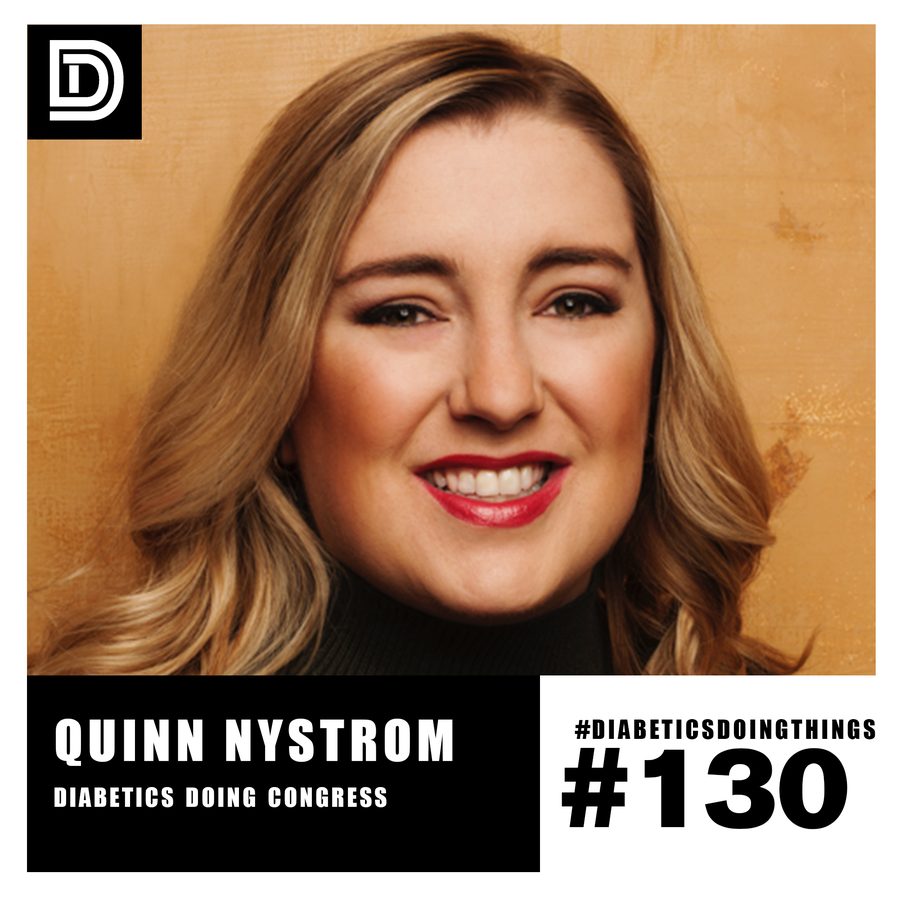
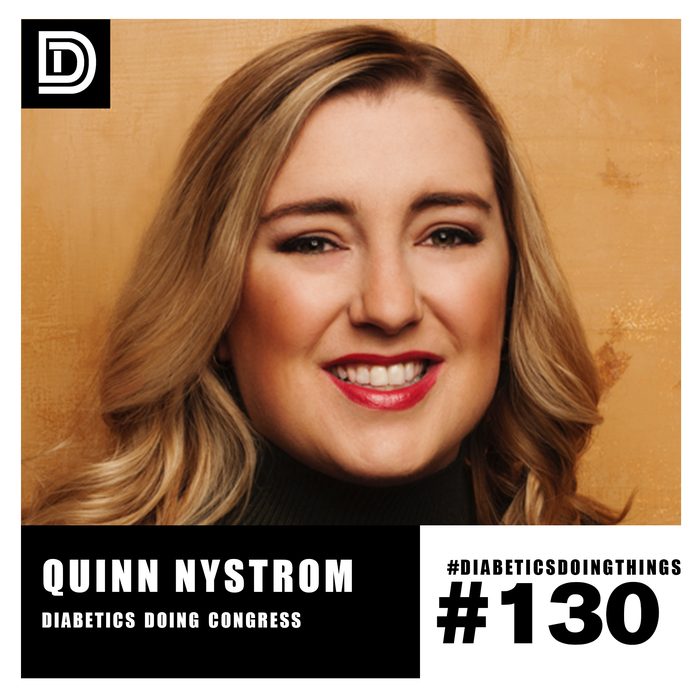
Quinn Nystrom (@QuinnNystrom on Instagram) is running for the United States Congress representing the 8th Congressional District of Minnesota and is a person with Diabetes.
Quinn Nystrom has been using her voice to advocate for people with Diabetes for many years, and now she’s taking that advocacy to congress.
Quinn shares her story of her and her family’s life with Type-1 Diabetes, and how an interaction with her sitting congressmen (who she’s now running against) inspired her to take action into her own hands and run to give people with Diabetes and chronic illnesses a voice in Congress.
She has a fundraising deadline on 12/31 that she needs our help with, so be sure to visit Quinn’s website and donate today. Every dollar can help you support a person with Diabetes representing you in Congress.
Questions this episode answers
Who is Quinn Nystrom?
Quinn Nystrom is a type 1 diabetic from Minnesota who served as the American Diabetes Association's National Youth Advocate, ran for the Minnesota House in 2016, and ran for US Congress in Minnesota's 8th District in 2020 on a platform of insulin affordability.
Why did Quinn Nystrom decide to run for Congress?
She says she decided to run after her sitting congressman, Pete Stauber, failed to follow through on promises he made her about supporting insulin affordability legislation, protecting pre-existing condition coverage, and holding a diabetes roundtable in the district.
At what age was Quinn Nystrom diagnosed with type 1 diabetes?
She was diagnosed at 13, about two and a half years after her younger brother Will was diagnosed with type 1 diabetes at age 5.
How many people ration insulin because of cost, according to Quinn Nystrom?
Quinn says one in four people with diabetes in the US ration their insulin because they can't afford it, and that Minnesota had three reported insulin-rationing deaths in the summer of 2020.
Full transcript Searchable, with timestamps
Rob Howe: Welcome to the Diabetics Doing Things podcast. We've been telling the amazing stories of type 1 diabetics all across the world since 2015, and we have over a thousand years of living with T1D on the podcast. The interviews range from incredible feats to everyday victories, and we celebrate them all just the same. Thanks for listening, and if you want to get involved even further, just send me an email at rob at diabeticsdoingthings.com. Hello, ladies and germs. Getting ready for the holidays here, holiday season 2020. This is a very special episode because it is time sensitive. Today's guest is Quinn Nystrom. She's a person with diabetes, was diagnosed at age 13. She also has a brother with type 1. She's from Minnesota. And what you're going to learn in this story is that Quinn is running for Congress in the 8th District of Minnesota. And now you might be saying, hey, I don't live in Minnesota. There's no way I can support Quinn, but I really hope that she's able to win. Well, good news. You can help. And when you're running a campaign like Quinn's, you need the support of individual donors. So I am currently pledging $50. I'm going to go donate on Quinn's website tonight. And I need you guys to do the same so that we can show how the type 1 community supports one of its own. So her website is Quinn for Congress. That's Q-U-I-N-N-F-O-R congress.com. Quinn for Congress. It's linked in the show notes so you're able to find it. Even a small donation, like $10, goes a long way in a campaign like this and will go to support someone with diabetes being in Congress to advocate on our behalf. Obviously, there is an insulin crisis right now in the U.S., and that is just the start of addressing some of the challenges that people with diabetes and other chronic illnesses face in this country today. So, listen to Quinn's episode, support people doing things for people with diabetes, and go to QuinnForCongress.com and donate today. Here's the episode. Hello and welcome back to another episode of Diabetics Doing Things. We're telling the amazing stories of people with diabetes from all across the world. My very special guest today, you may have seen, like I did at a big, big story this summer, Quinn Nystrom from Minnesota, a person with type 1 diabetes and also running for Congress. Welcome to the show.
Quinn Nystrom: Thank you so much for having me, Rob.
Rob Howe: Well, I am really, really excited to dive into today's conversation. Just to put it plainly, you've been busy over your life with diabetes. And, you know, I think for people who are experiencing, you know, the life of an advocate, there's pretty much no stone unturned on your side over the last 25 years. Why don't you tell us a little bit about your personal like diagnosis and life with diabetes and how you have prioritized advocacy, you know, along that journey?
Quinn Nystrom: Yeah, my story started when my younger brother, Will, was diagnosed with type 1 diabetes at the age of five. You know, my parents came into the living room, told my older brother Thor and I that our brother had been diagnosed and they brought us to the local hospital where he had been admitted into the pediatric unit. And being his big older sister, I was in the fifth grade. I was 10 years old at the time. I went, sat with him in the hospital bed. and I made a promise to him that I would do whatever I could to help find a cure for diabetes and I would do whatever I could to help improve his life with diabetes. You know, I don't think I knew exactly what that meant at that time. But what I started doing at 10 was knocking on neighborhood doors in my neighborhood in Baxter, Minnesota. I come from a small rural community in central Minnesota. So I was raising money for diabetes. And then I was going into area classrooms in my elementary school, talking about what diabetes was and what it wasn't, because I saw a lot of people were quite ignorant about diabetes. People were making fun of Will, thinking that my parents gave him too much sugar, that he, you know, didn't exercise enough. It was like they thought he should be a hamster on a hamster wheel or something. And so, you know, I wanted to try to dispel some of those misconceptions. And then, you know, I was quite shocked two and a half years later at the age of 13 when I was diagnosed with type 1 diabetes. And I was so surprised. And, you know, as a 13-year-old girl, all I wanted to do was fit in, blend in, that the last thing I wanted was to be diagnosed with a chronic incurable illness. And so I was quite shell-shocked by the diagnosis and didn't want to tell anybody I had diabetes and had about a year of just kind of mourning and where I was in denial. And it wasn't until I went to a diabetes camp in Hudson, Wisconsin named Camp Needlepoint where I really found kind of the power of perspective and realized, you know, I didn't get the choice to get type 1 diabetes. but I certainly got the choice of how I was going to react to getting it. And that's when I decided to redouble down on that initial promise to Will and decided to redouble down on my efforts. And so that's kind of the origin of what got me first personally involved in diabetes work.
Rob Howe: Well, and I mean, there's so much to unpack there. And I think I want to focus on a couple of things just to, you know, in your experience, obviously you know that 13 years old is a very, very tough age to be diagnosed with anything, much less a, you know, incurable chronic illness, like you said, and how being different at that age can just be, seem so insurmountable, especially for a young person. Um, did, did you, were you able to rely on your relationship with your brother at all, you know, during that time,
Quinn Nystrom: or what was that time like for you and your family? It was incredibly difficult. One, you know, the pediatrician who had diagnosed Will in our small town, you know, my parents had asked him, you know, what is the likelihood that another one of our children could be diagnosed with type 1 diabetes? That was back in 1996. He had told my parents, you know, that would be nearly impossible and your family will be on the cover of the New England Journal of Medicine if a second child is diagnosed with type 1. And so, you know, my parents, you know, were equally shocked, you know, than when I was diagnosed. And I think, you know, didn't quite know what to say when I got that diagnosis. And I think I thought like, well, this is Will's disease, not my disease. And, you know, know, I loved my brother. We were very close, but we were six years apart and Will had sort of gotten on with his life despite getting diagnosed with diabetes. And so, you know, I felt like we had much different experiences because for Will, Will's only reality is that he's had type 1 diabetes. You know, I have lived this large portion of my life as a quote unquote, you know, you know I say quote unquote normal person whatever that means right um because I don't
Rob Howe: think there is really a normal person but yeah show me what that looks like and I'll yeah exactly
Quinn Nystrom: right the older I get I know that's not a thing uh but you know I I knew what it was like not to have to take multiple injections a day multiple finger pokes and so I wanted that life back I didn't want this new reality. And so, and being from a small town, it's not like there were multiple girls my age with it. So it was really painful. And when I was diagnosed, I was made fun of in school. People thought I was contagious. They wanted to move away from me in classrooms. You know, there was bullying that occurred. And I was very insecure. And I didn't have a voice. You know, I just, I didn't know what to say. Right. You know, and it was a tough, tough year where I fell into, you know, a major depression.
Rob Howe: Well, and I think that's something that speaks to an issue that I talk about in one of my talks. And we'll talk about how we met in person in Minneapolis in a bit. But, you know, the T1D Renaissance is the title of one of my talks, like living in the T1D Renaissance. And And so for you in a small town at that particular time, isolation used to go hand in hand with a type 1 diabetes diagnosis if there were it wasn't a strong immediate local community around you. And, you know, so for you, that becomes your normal, right? Having to explain to people dealing with the bullying, dealing with the lack of information. And honestly, I think I tell people this all the time. You couldn't pay me enough money and pay me all the money in the world to go back to being a seventh grader because kids in seventh grade are relentless. And they don't really have any sort of concept as to the power of their words. And they will focus on anything that makes someone else different and point it out and sort of make them feel less, less than. him. How did you, dealing with that, like, you know, dealing with that deep depression, how did you find your way through that and really find your footing to kind of become the advocate that you become and the person that you become?
Quinn Nystrom: Honestly, you know, looking back and reflecting, you know, now that I've had type 1 for over 20 years, I look back and it was honestly my mother a year, you know, about a year after my diagnosis is coming to me and telling me that she had found out about this diabetes camp called Camp Needle Point and that she was going to send me there. And, you know, I was furious. I just thought it was going to ruin my life forever. I did not want to go to this place. And, but, you know, she put her foot down and said, you're going. And I went kicking and screaming to this camp, But it's honestly what saved my life because it was the first time I was around other girls my age, you know, for seven days straight who had learned to sort of get on with it and had learned, you know, they were from other, you know, small towns in Minnesota, Wisconsin. And they had figured out a way to deal with it. They had also learned to kind of date with diabetes or tell guys, right, that they had diabetes. which seems so like just an out of this world concept for me as a now 14 year old girl. And it was like, wow, if they can do it, I can do it. And I kind of learned like, OK, my pancreas shut down. Like, so what? Like, what's your problem? You know, like like we all have these issues. Like, that's mine. Big deal. Like, you know, we all have something. So I honestly went back, you know, to the ninth grade that year and was just like, okay, like I'm coming out of the closet, you know, out of the diabetes closet. And I just didn't care. And I think in a way, it wasn't that I wasn't made fun of anymore because that's not true. You know, I still to this day get, I don't want to say I get bullied. I get I still get very ignorant comments on a weekly basis even running for Congress now which we'll talk about later so I'm not immune to that but what I'll say is I think in a way they just don't bother you as much when you don't give them as much power you know sure And I also was able to find my voice. And so when I realized, like, these people don't know anything. Do you know what I mean? Like, I kind of feel bad for them. They must not have a lot of friends if this is all they want to say about people. And I gave them less power. It really was able to help me along the way. And then at 16, I applied for and was chosen to be the National Youth Advocate for the American Diabetes Association and traveled all over the country, you know, speaking at the White House, the U.S. Capitol, at, gosh, a dozen diabetes camps, at Diabetes Expos, at fundraisers. and realized that really by me deciding to speak out and be public, that I could make a difference. And in a way, that was the best therapy for me because I felt like I wasn't giving power to those bullies any longer. You know? And what they said, you know, really, I just ended up using it as good material in my speeches.
Rob Howe: ultimately. It's funny how, you know, in the comedy world, they say like tragedy plus time equals comedy. Yeah. And, you know, I think that's, they didn't realize that they were just giving you more ammunition that was going to resonate with a room full of adults who were there to support you and cheer you on, right? 100%. So was that sort of your first experience, experience I guess in the public eye and obviously speaking and going to these incredible venues and historic places and feeling like you know this is maybe what you were supposed to be doing?
Quinn Nystrom: Yeah I mean it was you know I had met the National Youth Advocate that very first time I went to Camp Needlepoint and so actually that very next year when I was 15 I applied I wasn't selected but living with diabetes, right? I learned an important life lesson, which is, you know, as people with diabetes, we just learned to never give up, right? We have some really bad days, but we also have good days. And like I've always said with diabetes, like I just try to work to make the next best decision and not beat myself up over like waking up with a super high blood sugar or going low or whatever. And so not getting to be the national youth advocate the first time, I just was like, okay, well, I'm going to try to improve my application. And that next year I was selected. And I actually found out then that I had been the first runner up the year before, which I had no idea. And that was then the first time that I was being sent to all these places. and people were, I mean, you know, before I had done it on a local level, but now people were really listening to me and it was U.S. senators and U.S. representatives. And, you know, I was just a small town girl from a town of 5,000 people. You know, I didn't have any initials beyond my name. I wasn't a celebrity. And it showed me that if you told your story very authentically and truthfully that you can make a difference, that you could change policy, you could change people's minds, you could raise awareness about diabetes and how people live with it and the struggles that we face. And that was just an incredible lesson as a 16-year-old girl.
Rob Howe: Absolutely. And I think, you know, outside of just learning that lesson outside of diabetes, just as a young person and the confidence that that can give you. I love what you said about not knowing that you were first runner up, where, you know, there's really if a person can't commit to it, that you're the winner at that point. And I have spoken a little bit on this podcast and sort of at length about how diabetes makes you better at failure because, you know, some days you wake up and your blood sugar is out of whack and you feel bad, but you still have things to do. So you make a decision and you either, you know, treat a low blood sugar or treat a high blood sugar or whatever the case, uh, or overcome your, uh, insurance delay in your prescription or your, you know, prior authorization or whatever, or what have you, uh, and you continue to move on. and so many people I think are paralyzed by failure in their life and I just know so so many people with diabetes that understand that failure is not final and so that's super cool that in this second year you had the courage to apply again and you win it and now I'm going to fast forward a little bit because I believe this applies like to your you know kind of current campaign in a way. Talk about, I believe you ran for Congress in a different district, if I'm not mistaken, in 2016. What did you learn from that experience that you've used in your advocacy and
Quinn Nystrom: in your campaign going into 2020? Yeah, so I ran for the Minnesota House back in 2016. and again I ran because you know living with a chronic illness living with a pre-existing condition I am passionate about people having affordable and accessible health care we shouldn't live in the richest country in the world and literally have one in four people with diabetes rationing their medication because they can't afford it and I know in my own home state of Minnesota know that we've had just three people reportedly actually report that they passed away due to insulin rationing just this summer. I mean, to me, that is a complete tragedy and totally preventable. And so I ran for the Minnesota House because I wanted to help fix her healthcare system. And, you know, I did not win back in 2016. But what I learned was, you know, winning is not just all about winning on election night. Winning is also about the whole campaign. because you also get to meet a whole new audience. You're meeting people, you're door knocking, you're at different campaign stops, and you're getting to still tell your message and talk to people and listen to their stories that you would never really have gotten the opportunity to meet before. And another thing I learned, you know, I come from a smaller rural community. A lot of people in my smaller rural community do not see a lot of young women run for public office. Okay? Now, I don't think somebody should vote for me just because I'm female. I'll say that. I think people should vote for me because I'm fully qualified to hold that public office. But what I'll say is, I, you know, I thought I was running in 2016 and, you know, that that I'd be out campaigning and mainly talking to the 18 plus voters and that's who you're trying to make the impact with. But what I found was that I was also making a huge impact on young girls and teenagers in my district who just did not see younger women running for public office or women in general running for public office and what that meant to them. And there was actually a party that was held in my honor a week after the election. So I lost. If you would have seen a video from this party that actually was recorded, there were four little girls who had been at various campaign events through the year. When I walked into that door, they were jumping up and down with excitement as I walked through that door, you would have thought that this was an election night victory party, right? The room was packed and people were screaming and cheering. And these girls were in the front jumping up and down. And what I learned was that to these four little girl, it was like I had won the governor of Minnesota. And so if I would have taken that night of the election as a defeat, I would be letting those girls down. Because every single word that I said during that campaign, everything I did with my actions, that impacted them in a tremendous way and impacts them also today when I see them out in my community. That they saw somebody like themselves run for public office so that they too know that one day that they too can run for public office. And so, you know, that was just an incredible thing that I learned that I didn't think, you know, I really didn't think about that, you know, when I ran in 2016. And, you know, deciding to run for Congress in 2020, you know, that wasn't something that I grew up thinking like, oh, one day I'd love to run for Congress, then I'm going to run for president. That was never anything in my mind. Even earlier this year, I would not have said I
Rob Howe: was going to run for Congress. And what do you think, you know, as you and your team, obviously now, you know, looking back, was it the, you know, how much did the insulin for all and like insulin affordability crisis in the U S how much did that impact your decision to to actually, you know, make that jump. And like you said, you haven't been drinking this your whole life. You don't identify as a person who wanted to be president, you know, in your elementary school days. And that was who you were going to be. How did those, you know, did those play a part? Did that shift your, you know, shift your goals and say, I'm going to do this to be a part of something bigger.
Quinn Nystrom: I mean I would say almost 100 percent I I would not be running for the United States Congress if when I had met with my recently elected congressman Pete Stauber you know when I was out in DC so ever ever since I was you know the national youth advocate back in 2002 I have gone out to D.C. nearly every single year in the springtime and met with whoever the Minnesota contingency was. I meet with Republicans, independents, Democrats, whoever, because I just want legislation to be passed to keep people with diabetes alive. I sat down and met with him and I had asked him three simple things, I thought. One, I said this insulin affordability thing has become a crisis in this country and we have people dying. I asked him to sign on to some pieces of legislation that had been proposed at that point. And he said, yep, you'll find no greater diabetes advocate than me. My nephew has type 1 diabetes. Second thing I asked him is if you would protect people with pre-existing conditions on the Affordable Care Act. Since Since I'm a small business owner, I access my health insurance through there. You know, that is something I absolutely depend on. And number three, I asked him if he would hold a diabetes roundtable insulin, you know, listening session back in our Minnesota's 8th district. Because most people who can't afford their health care, their insulin, will never be able to fly out to D.C. to meet with him. I was out there on a scholarship. So he said, yes, I will do that. Now, clearly, I'm running for Congress now, which means I followed up with him on every single one of those things. He lied to me on every single one. If he would have followed through on all three of those, like he had promised me, I would not be running for Congress. I had no plans to run for Congress. I think, as you know, Rob, I was very busy, you know, leading the efforts in Minnesota, you know, as the chapter leader for the Minnesota Insulin for All group to pass legislation on the state level to help save the lives of people who couldn't afford it. I was leading caravans, you know, over to Canada to simply keeping people alive. This wasn't, you know, in my plans for 2019, 2020. But when I found out that he had zero plans to help anybody access affordable, life-saving medication, I felt like I had no other choice but to throw my name in the hat and to run against him. Because for far too long, people like us with diabetes have, I feel like, just been cashed in like cash cows. and we have had companies just benefit off of us, and they have raised the prices multiple times a year, and they give us, as you know, a plethora of excuses. And to me, we need somebody in Congress who's going to speak up and hold their feet to the fire, and who better than somebody with diabetes who's already done that as an advocate. Because frankly, I just don't see it. I don't see somebody like myself in Congress fighting for us loud enough and making traction. And so that's why I felt like I have to run for Congress. The clock is up. I can't let another person in this country die from that. I can't.
Rob Howe: Absolutely. And I think, you know, going back even two years ago when, you know, I was, obviously I interviewed Elizabeth. She was then Rowley, but the leader of T1 International, founder of T1 International. And we talked about the insulin crisis in the United States and really globally as well. And then, you know, at the end of 2017, how many stories were there that came out of children and young adults and adults who died because they couldn't afford their diabetes? And I thought at that point, I was like, okay, well, these deaths are senseless, but we're getting the publication that they needed. And, you know, there are these foundations that are being set up. And hopefully this will, you know, really reinforce and draw a line in the sand for people who don't have diabetes but are making these decisions to hold these people accountable. And here we are almost two years later, and it's only gotten worse. Correct. So, you know, there's more, you know, blood on hands. I think people throw around as hyperbole, but in this case, it's very poignant. People are dying because the price of their life-saving medication is too high and inaccessible in, like you said, the richest country in the world. So, yeah, I think like you mentioned earlier with those two young girls who were at your party who you felt like you could have won, you're representing them. and I think in a different way now you're representing people with diabetes and people who are parents and loved ones and caretakers of people with diabetes to say, hey, there is a voice now who really understands and can advocate for you at the highest level where actually changes can be made.
Quinn Nystrom: Yeah, because what I found was being an advocate, I've been in the diabetes advocacy world for 23 years. I've been on the federal advocacy level for 17 years I have fought for these pieces of legislation and I am sick and tired of them not getting passed and so to me it was like well what else can I do well I can run for Congress and I felt like talking to enough people you know they were ready to support somebody with type 1 diabetes as a strong advocate to run for Congress. And I felt like, again, we just have no more time to wait. This is such a crisis in our country. And we are the only country in the world that has this problem. And the only people that can fix this problem, you know, we can get as upset as we want. at the pharmaceutical companies, the health insurance companies, the pharmacy benefit managers. And trust me, I do get upset at them. But the only people who can really fix this are the elected officials. Because they have to pass laws in order to make those companies play within the sandbox. And right now, sadly, those companies are playing within the sandbox that our government has put in place for them. You know, if we're just having an honest conversation about it. Our government has set up a system where they are allowed to price gouge us. so we need to elect people to office that don't take money from pharmaceutical companies from health insurance companies so their hands won't be tied and that will really hold those companies feet to the fire and say we need massive reform when it comes to this because we need to do something different to get these prices dropped, or otherwise we're going to continue to see people die.
Rob Howe: Well, and I think this is obviously a very poignant subject for people with diabetes, but I think your story also has tremendous potential for, on an advocacy level, to say, hey, for someone who's been really pushing and feeling like they're doing what they can do as a citizen to make their priorities known and tell the story to local representatives and get involved, and then feeling like they're just spinning their wheels, the next step is to follow Quinn Nystrom's footprint and say, I'm going to stand up and be a voice for people with diabetes in my district and run for public office. Do you feel like for you, now leading the charge on that, as a person with a chronic illness with a vested interest in this type of work, do you hope to, obviously, we're focused on 2020 right now, but for people who feel like there's a little bit of Quinn Nystrom in them, what would you say to those people who are on the fence of doing something like this?
Quinn Nystrom: gosh i mean um you know the people who are on the fence i mean one i always say to people too right insulin is simply a case study um you know insulin is just one drug um in the plethora of high prescription drug costs that we have in this country. And we need to see that as a country, it's not just about lowering the cost of insulin. And even if somebody is not impacted by diabetes whatsoever, I think most people in America care about being fiscally responsible on some level. and so if we don't take care of you know about insulin affordability or about some of these other high prescription drug costs what we're going to see you know and and i just talk about insulin because i know it the best but like for people who can't afford insulin right the one in four people who are currently rationing when people can't afford their insulin and they're rationing we know their blood sugars are so high most often they they don't have money so So their only option is to go into the emergency room when their blood sugars are skyrocket high. Well, oftentimes then they're not going to have the money to even pay for that visit, which those visits then are crippling our health care system. up. And so I say to people, really then what we're saying is, do you want to pay now to fix, you know, the insulin affordability issue and some of these other high prescription drug costs, or do we want to pay more later? And in my opinion, why wouldn't we just want to pay now fight for saving human lives.
Rob Howe: Yeah, what greater cause can you find than that?
Quinn Nystrom: Right? You know, it's just, it's very hard for me to see the other side of the argument here because you're going to also lose lives and pay much more later. So, you know.
Rob Howe: Yeah, no, I think you're absolutely right. I think, and that rings true, you know, I think especially for when you're coming to the table as a person with diabetes, like that is the clear explanation. If death and, you know, saving lives don't get people over on your side from the start, I think that's obviously, you know, the best follow up. so yeah obviously like i think your this episode and this this interview and this conversation is going to you know i think inspire people who are not inside your districts but still want to support you uh to kind of come to your aid and and you know believe in you and i want to make sure that i give you the opportunity to plug where they can do that i know your website is quinnforcongress.com and fundraising is a huge part of winning a political campaign especially when you're not taking money from big insurance companies and pharmaceutical companies. So how can people
Quinn Nystrom: support you? Yeah. So yeah, the truth about running for Congress is in order to run for Congress and be successful, especially when you are going to challenge an incumbent who takes nearly 50% of his money from corporations, is you have to be able to raise money. And I think that is a sad reality of the political system we have. But I'm scrappy and I'm a fighter. I think I learned that from living with diabetes all these years. And so I'm willing to work hard so that we can put somebody with type 1 diabetes who's going to fight hard on this insulin affordability issue in Congress. But in order to do that, I'm going to need each and every one of your help. And so if people would be willing, you know, to contribute 10, 20, $50, whatever amount they're able, and they can go to my congressional website, my congressional campaign website, which is Quinn for Congress.com. It's all spelled out, all lowercase. And Quinn is spelled Q-U-I-N-N. And then it's F-O-R. You can go there. You'll see the donate button. And that would be a huge help. And it also shows, too, for our campaign that no matter what the donation size is, it shows that we have strong grassroots support from a lot of people. And that shows a strong groundswell of support. So as many individuals as we can get to donate, that shows a great deal when we have to file our first quarterly report, which will be filed on December 31st at midnight. So that's going to be our first deadline. And so I would so appreciate any of your support. And a second way you can support the campaign is by spreading the word about the campaign on social media, posting about why you support our campaign, why it's important that we get a candidate with type 1 diabetes and who's a strong advocate for insulin affordability in Congress and sharing our campaign's website. Because that's how we're going to be able to do it is by spreading word of mouth and getting the word out about the campaign.
Rob Howe: Well, I knew when I met you in Minneapolis and our paths crossed in person that I was hopeful that we'd be able to work together. And so I'm going to make sure to get this episode out as quickly as possible. Tomorrow is going to be the release date, which is very rare for this podcast. But I obviously, you know, with the short time we have remaining in the year, I want to give people with diabetes a chance to support you as much as possible. before that report is due at midnight on December 31st. So you guys will be working on New Year's Eve, I take it. We will be.
Quinn Nystrom: We will be working until the clock strikes midnight. So, yes, I'll take a day off on the first.
Rob Howe: I love it. Start 2020 off the right way. The first is also my anniversary. So I'll be 15 years with diabetes on the 1st of January. So just a fun little personal note to add to that.
Quinn Nystrom: Yes, happy anniversary.
Rob Howe: Thank you very much. So, Quinn, I want everybody to follow you as well on Instagram and to continue to spread that message. We're going to publish this episode. And I think, honestly, you know, for me, I want to thank you for taking the time out of your campaign today to do this podcast. and for continuing to inspire people like me who, you know, feel like at times they're frustrated by the progress that they're able to make with their advocacy, both locally and nationally, and taking matters into their own hands and just being an extremely inspirational person to follow and, you know, wish you the best of luck and will support you as much as I can from afar. and just looking forward to seeing you roll through on Election Day with hopefully those four girls at your celebration party in 2020.
Quinn Nystrom: I hope so too. So, yes, thank you so much and thank you for having me on. I appreciate all the support and the well wishes.
Rob Howe: If you are still listening at the end of this podcast, I just want to say thank you. Four years ago, it was the end of 2015, and I was recording the first five episodes of this podcast. And now four years later, 22 Type 1 Nation Summits for JDRF, lots of advocacy work, lots of Instagram posts, lots of podcast guests, lots of travel, even got to go overseas at one point. This has been an amazing journey. This year we did some really cool stuff. Started going to diabetes camps for kids to speak, spoke at a ton of JDRF Type 1 Nation Summits, traveled all over, released my first email series. I was like 15,000 words that you can subscribe to at diabeticsdoingthings.com slash emails and continue to publish podcasts along the way. This podcast is going to stay. It has been my primary platform throughout the last four years and I want that to continue. So thank you so much for your support and for the support of our sponsors. So this is Rob Howe. I am signing off, not for the rest of the year. We have a few more episodes, but I just wanted to end this episode with some gratitude to you and the rest of the diabetes community. So keep doing things, keep being awesome people with diabetes, and I cannot wait to share the next things that we're going to do together in 2020.
About Quinn
Quinn Nystrom is a type 1 diabetic from Baxter, Minnesota, who served as the American Diabetes Association's National Youth Advocate at 16, ran for the Minnesota House in 2016, and ran for US Congress in Minnesota's 8th District in 2020 on a platform of insulin affordability.