

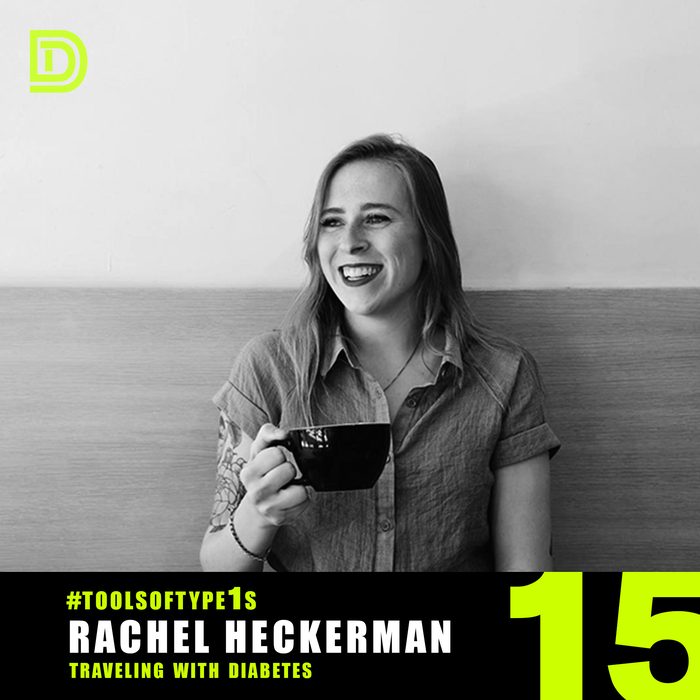
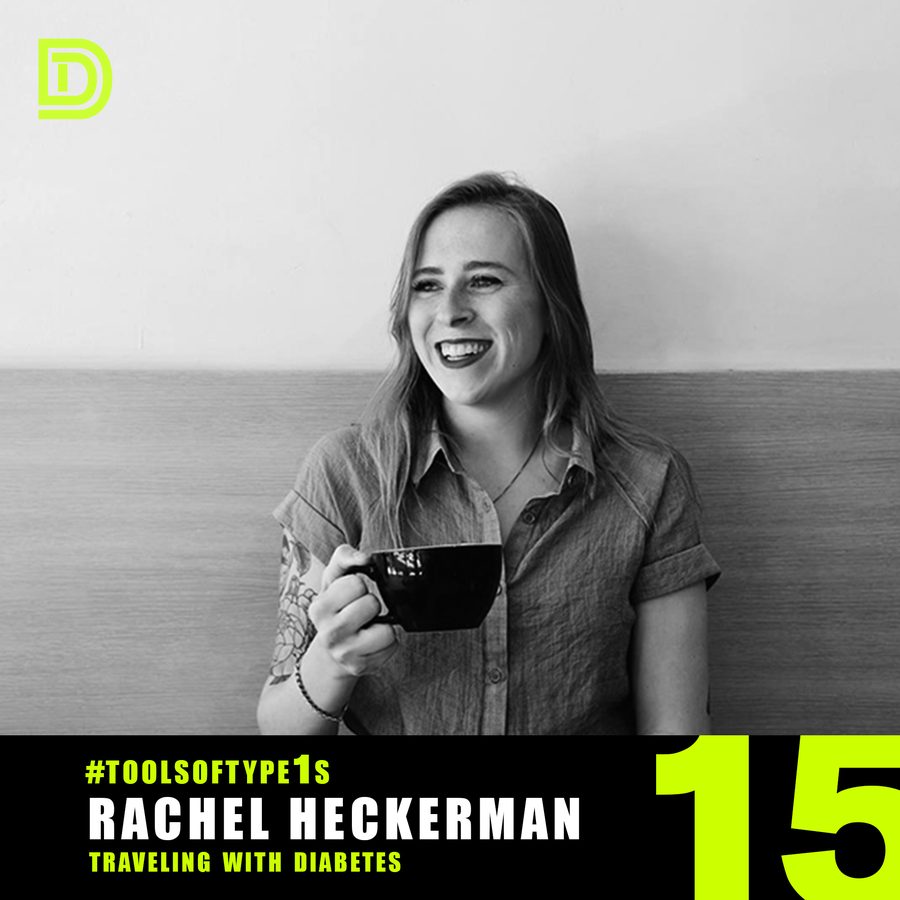
#ToolsofType1s - 015 - Rachel Heckerman

Episode summary
Rachel Heckerman was diagnosed with type 1 diabetes in 2007 and has spent years figuring out how to travel with it, from budget backpacking to managing insulin in extreme heat and cold. She describes a night in Mendoza, Argentina, when she mistakenly injected 28 units of fast-acting Novolog instead of her long-acting Lantus and had to eat over 200 carbs and call an ambulance to avoid a crash. She talks about a college thesis mapping survey answers from diabetics about insurance and insulin affordability, her fear of losing coverage at 26, and how going pescatarian helped her blood sugar. She also shares her plans to document wildlife in Costa Rica and backpack South America, and corrects a common myth about treating unconsciousness.
Key takeaways
- Rachel mistakenly injected 28 units of Novolog instead of Lantus while traveling in Argentina and had to eat over 200 carbs to avoid a crash.
- She now triple-checks her insulin vials, physically tracing the name before injecting at night.
- Rachel says never give insulin to someone who has passed out. Give sugar or glucagon and call paramedics instead.
- She went pescatarian about eight months before this interview and says it helped stabilize her blood sugar.
- For a college thesis, she charted survey answers from diabetics about insurance and insulin affordability using knotted string on a board.
Show notes
Name: Rachel Heckerman
Hometown: Wanaque, New Jersey
Date of Diagnosis: 07/18/07
Tool: Traveling With Diabetes
Diabetes Devices/Treatment Methods: Dexcom, Apidra, Levemir
Animal Personality: Butterfly
Questions this episode answers
What happened when Rachel Heckerman took the wrong insulin while traveling?
In Mendoza, Argentina, she injected 28 units of fast-acting Novolog instead of her long-acting Lantus. She ate over 200 carbs, had hostel staff call an ambulance, and woke up the next morning with normal blood sugar.
What does Rachel Heckerman say people get wrong about treating a diabetic emergency?
She says people often assume you should give insulin to someone who has passed out from low blood sugar. She says it is the opposite: give sugar or glucagon and call paramedics.
What diabetes devices does Rachel Heckerman use?
Per the show notes, she uses a Dexcom CGM along with Apidra and Levemir insulin.
How does Rachel Heckerman manage diabetes while traveling?
She focuses on keeping insulin cool across different climates, packing light while carrying enough supplies, and finding budget travel options, having backpacked through South America and Southeast Asia.
Full transcript Searchable, with timestamps
Rob Howe: Tools of Type 1s. This is the last episode in February. Rachel Heckerman. Her tool? Traveling with diabetes. When you guys inevitably look at Rachel's Instagram, Rachel Heckerman, she is very well-traveled, and she's one of my favorite creatives that I've found through the diabetes community, and not even necessarily in... almost has nothing to do with diabetes, right? she's just a very cool visual artist her perspectives on traveling are just excellent to follow and I you know I'm just grateful that she took the time to answer these questions and do so in such a thoughtful manner also I believe right now she's in Costa Rica working on a in a butterfly garden so if you want some high quality butterfly and insect content be sure to follow her at Rachel Heckerman. So I don't want to take too much time away from her or her episode. I want you to dig in and learn her tips and tricks with traveling with diabetes. And I think she does an awesome job of personifying that not only is diabetes not going to hold you back from anything, but you can take the steps necessary to designing the life that you want. So without further ado, Rachel Heckerman. Big news on the Tools of Type 1 podcast. We have a sponsor. You've heard of them before. They've sponsored the podcast in the past, Real Good Foods. Real Good Foods at Real Good Foods on Instagram, realgoodfoods.com. You can actually order Real Good Foods products online and using code ROBHOW, that's me, Rob Howe, R-O-B-H-O-W-E, at checkout. You can save 10% and get free shipping. And I believe the shipping is the biggest piece there because it can be quite costly at times to ship frozen products, but you get free shipping when you use code ROBHOW. So don't forget that. One thing that's really important to me are companies like Real Good Foods who are designing products that they don't know necessarily are perfect for people with type 1 diabetes, but then they discover and they get really involved and they kind of dive in with both feet. And Real Good Foods has done that. During National Diabetes Awareness Month, they donated a ton of money to Beyond Type 1. They design products that are great for our lifestyle and also taste great. So pizza is obviously one of many guilty pleasures that I have, But also, I know a lot of people in the type 1 community have anxiety about eating pizza because it can be really tough. You know, high spikes, you know, the fat and the crust. Difficult to count the carbs correctly and for the fat as well. Especially if you're eating it at night, it can be very difficult. So, Real Good Foods pizza, 4 grams of carbs per serving. That's crazy. So, I believe in one of their pizzas, it's 3 servings in a single pizza. guys that's 12 carbs and you know what counting those carbs injecting for that pizza it's right my levels stay flat and it's it's really cool to just have that sense of well-being and confidence when you're eating a product so highly recommend that you try it also very good when i was on vacation with my girlfriend over christmas we ran out of food in our airbnb we're like well we got to go to the store we gotta get some food i'm craving pizza lucky enough in the frozen food aisle, Kroger, Walmart, your general grocery stores, check online if your local grocery store has them. But we were easily able to find the pizzas that we liked. And they also have these poppers that are made with chicken. They have jalapeno and they have pizza flavored, pepperoni pizza flavored. And they've changed the recipe on those. I pop them in the air fryer. They're delicious. So if you want to try a low carb, low glycemic index, easy to manage with diabetes, delicious food check out real good foods they're in your frozen food section in your local store and if you do try them let me know give me a tag on instagram we'll chat about it okay guys um hope you guys are enjoying tools of type ones let's get back to the episode
Rachel Heckerman: okay so um i'm rachel heckerman i have been type 1 diabetic for 11 years um i'm from new jersey slash New York City. I'm a video editor, wannabe videographer, photographer, painter, dancer, artist. I love doing anything creative. That's how I sum myself up. In terms of expertise in the type 1 diabetic community, I would say my strongest suit is understanding how my diabetes
Rob Howe: works when traveling. What is your tool of type 1s and what's the one thing that a person living
Rachel Heckerman: with T1D could learn from you or your experience? Well, I've been in all sorts of travel scenarios and conditions because I'm a pretty avid traveler, I would say. So I've learned how to deal with diabetes and different weather conditions and temperatures, scenarios, and how my blood sugar relates to that. I've definitely learned what products to bring to keep my insulin cool, how to still pack extremely lightly, but still have more than enough supplies for diabetes. And overall, I'm pretty good at budget traveling tips because you don't really need to have that much money to travel. There are definitely a lot of little travel secrets to saving a lot of money.
Rob Howe: What is the simplest thing you've done that has helped you with the management of your type 1 diabetes? Where did you learn it or who showed it to you?
Rachel Heckerman: I would say there are probably two things that have significantly helped with my type 1 diabetes. the number one and I'm sure a lot of people would agree and have said the same thing but just finding the community on Instagram of the type 1 diabetic community has been a huge thing for me knowing that others have it and just knowing that other people have these tips I've never even heard of um it's definitely changed how my blood sugar levels have been and just my A1c has gone down a lot just having like encouraging people telling me their tips and tricks and another thing that I think has significantly helped is I recently about eight months ago went vegetarian slash pescatarian and I've seen a lot of benefits for me personally with blood sugar levels through just taking me out of my diet so I think those two things combined definitely have gotten more stable blood sugars more encouragement and just more overall a better diabetic experience
Rob Howe: What failures or apparent failures with T1D have made you better at living the rest of your life or made you more well-rounded as a person?
Rachel Heckerman: I have a very like there's like one instance that I can say definitely defined how I treated my diabetes. And it was actually while traveling in Argentina with my best friend. We had been backpacking South America together and I'd never had anything happen to me pretty drastically diabetes wise, I guess. and we were in the wine region of Mendoza in Argentina and the hostel we were staying at had a lot of free wine because they just have an abundance of it there so after around like 6 p.m. you can just drink as much wine as you want and there was one night where I was just a little too drunk on wine just enjoying myself and it was around the time for me to take my Lantus and And I wasn't paying attention and I took, instead of 28 units of Lantus, I took 28 units of Novolog. And let me tell you that it was probably the scariest situation that has ever happened to me to date. Luckily, I realized that I had done that immediately and I was with my best friend and I turned to her and I said, you need to go to the most local supermarket and get as much carbs as you can for me. and I like turned to the front desk of the hostel and I just said to him I was like you need to get me as much bread as you can and I told him to call the ambulance like immediately and I just started stuffing my face with carbs so I had to eat well over 200 carbs to make up for the amount of insulin I had taken plus I had drunk drank in a ton of wine so I was drunk um so it was pretty terrifying and I was like shoving food down my face and the ambulance came and the guy at the front desk told me to like calm down I kind of yelled at him because he was like the paramedics told you you should probably start eating stop eating the food you've ingested already and I said to him I was like I know how my body works you do not tell me how to like do this right now um anyway it was all fine and I mean I wound up actually throwing up half the food that I ate. Sorry, it's kind of gross to talk about but it happened and I was so frustrated because I was like I worked so hard to eat all these carbs and now they're like out of my body and out of my system. Fortunately, everything was fine. I woke up with perfect blood sugar levels. I think it was like 1.30 when I woke up the next day which is kind of terrifying to think if I'd eaten anything less and what I'd eat and it would be low. I really thought that I was going to die that night. It was scary. It was like the worst case scenario being in a foreign country. Not many people spoke English where we were and but I'm fortunate that my best friend was by my side. There was a man in the hostel that spoke fluent English and Spanish and he translated everything to the paramedics for me and the big learning lesson from that is I guess it's the PTSD that was involved but But anytime I take my insulin now, especially like my nighttime insulin, I triple check. I like take my finger and I like underline the word of the insulin I'm taking to make sure like triple check that it's the right insulin. And I've never been even remotely close to doing that again. So that was a huge, scary situation to happen. But I mean, like, I guess sometimes those situations need to happen in order for you to learn and realize, like, how scary this disease can be and how important it is to be on top of it every moment.
Rob Howe: What unusual or absurd opinion or approach regarding your diabetes do you have?
Rachel Heckerman: I kind of feel like my answer is probably going to be in line with a lot of other people's. but I would just say that diabetes has always just been the motivator for me to do half the stuff that I do, especially around travel. There was an instance after I came back from a backpacking trip in Southeast Asia, and I had done the second half of it alone and by myself, and it was great and amazing, and I met the most amazing people. and I get home and I'm in my house alone back in New Jersey after this entire thing happens. I'm looking at this photo of my dog that I had taken in the backyard and I accidentally took a panorama of her as she was walking so her neck was like extremely long in the photo so she kind of looked like an anteater so I started laughing and I was eating a strawberry and at that moment I like started choking on the strawberry right. This happened for about two minutes that I was just choking alone in the house and I almost blacked out like I tried to dislodge it just wouldn't come out and finally at the last second I like fell to my knees it started going black and it dislodged itself and I don't know I couldn't breathe like it was terrifying as stupid as this story sounds like I was like I could die in my own house eating a strawberry non-diabetes related non-travel related so having this disease shouldn't stop me from doing anything I could slip in the shower. I could choke on a strawberry. I could do something so dumb. But essentially, it's just always been like, go do what you want to do. Go travel where you want to and try to just live your life to the fullest and just take every day as it comes. What's your favorite thing?
Rob Howe: What gets you to smile or laugh almost every time? This is really hard to put into words,
Rachel Heckerman: but I just am like a big fan of the extremely strange and beautiful things. For example like I love butterflies and bugs. I think they're so interesting and weird and like I have a collection of butterfly wings and butterfly and moth like species like frames in my room. I collect old National Geographic magazines. I have like Lewis and Clark expedition books. I like field guides and maps and dried up flowers things that are textural and just gritty and and has some kind of odd element as to like this thing exists this thing is in the world people study it I don't know there's just always so many weird things that are out there that people study that we don't know about that I just think is super interesting for some reason I don't know I just always think there's always something to learn about that you don't know about and there's always something new you can learn like you can never be bored there's always something to think about
Rob Howe: in the last five years what new adjustment to your lifestyle has improved your life with diabetes the
Rachel Heckerman: most i think the biggest thing for me is when i was younger i used to have this mentality of like diabetes doesn't define me and i still agree to that completely because it doesn't but i think i would look at that in the sense of like diabetes doesn't define me it's like i don't want to talk about it I don't want people to know I have it because it's not who I am but I also like yes diabetes is who you are because if you didn't have this disease you probably wouldn't do a lot of the things that you have done I used to not wear a medical ID I really didn't talk about it I wasn't like nervous or like I never felt like ashamed to talk about it and for me it's just more about spreading knowledge to people about the disease and answering questions and being kind of funny about it like I like to almost joke about things sometimes and try to break things down in a way that's more digestible for people to understand and try to just make it more approachable for people and I think having bad adjustment in my life has made diabetes not only like more of an easy thing to talk about for myself but just for other people like making people feel more easy to ask me questions and find out more because I don't want to make it intimidating for somebody or make somebody feel bad because they don't know because I don't know about all the cancers in the world. I don't know about all the diseases in the world. And there are a lot of miscommunications, I think, that people have with diabetes, which I'll talk about in a little bit. But I think for the most part, people don't want to hurt your feelings about it. And people aren't trying to be like rude when they do make jokes about diabetes. And when you're really approachable about it, I think people just appreciate that. And I appreciate when people are super curious about it.
Rob Howe: what challenges related to t1d did you encounter or have to overcome while you were doing your thing
Rachel Heckerman: that's a really great question and i think for me it's more of like a mental block in terms of kind of like health insurance and the pharmaceutical industry and how diabetes is going to be affordable for me when i turned 26 i'm currently still under parents health insurance and it's really great health insurance so the cost of insulin and like diabetic devices is not it's still expensive but it's doable it's fine I think the big fear for me is when I turn 26 like how will I be able to maintain the lifestyle that I want to maintain but still be able to afford my insulin medicine like everything the big thing that actually started making me really think about this is when I was a senior in college I created my thesis around diabetes and the pharmaceutical industry and because I'm a designer I had to create I didn't really write a huge paper about it so much but I had to create a design and like a visual project around the theme of what we were doing so what I wound up doing was I created this board and I charted it out visually to see patterns with string and I'll explain a little bit more about it but I went on reddit and I took a big survey and I was I made it anonymous so people could answer as freely as they wanted to and some of the questions were like do you have health insurance what is your employment status can you afford your medicine and have you ever decreased insulin intake to save money and it was very overwhelming the responses that I heard some of them were from fathers saying like I'm really terrified I'm losing my job soon and I don't know how I'm going to take care of my son and some were like I was a stripper in college to be able to afford my insulin and it broke my heart you know like to hear that people had to do certain things just to freaking live and I have it so easy that I can just go into the refrigerator and grab new insulin when I need it and I don't have to think about that but yeah I took a chart and I put out all these questions and for the answers if it was a yes or a no if somebody answered yes I would tie a string to it like one string and knot it and then to the next question I would have another question that was like have you decreased insulin intake to save money and if they answered yes or no then I would take that same string and attach it to that answer and chart it all the way down and I did that for I forget like maybe you were 70 to 100 people and it was interesting because by the end you could see the patterns of people's different stories and timelines and everything like that I'll send you a photo so you can see because it makes way more sense when you can have a visual on it. But that changed my perspective on diabetes so, so much.
Rob Howe: What bad advice regarding diabetes do you see or hear that you'd like to address?
Rachel Heckerman: I'll just narrow this down to one because it kind of freaks me out when I hear it. A lot of people, when they're asking me, they're like, oh, if you're passed out, you're on the floor, you're unconscious, I need to give you your insulin, right? and I always try to tell them that is the complete opposite of what you need to do. You need to get me sugar or if I'm unconscious, you definitely need to call the paramedics first, but I also have a glucagon in my bag. And I also have this strategy that I tell people now that I'm like, now that I'm way more aware of telling people about it, if I'm working or something and I'm home alone and I know my blood sugar is going down really fast, I know for the most part I'll be able to take care of it, but I'll send to my co-worker. I'll be like, hey, if you don't hear me respond in like five minutes, this is the address that I live at. And please call my parents. This is their phone number. Like, I'll keep you updated in the next five minutes just so you know that I'm okay. I'll be definitely on top of it. But just in case, like if you don't hear anything from me, call my parents and send, tell them that I haven't been answering and send like the paramedics to this address. And that's something I've tried to implement in my life.
Rob Howe: What priority are you focusing on in your own life currently? This can be diabetes related or not.
Rachel Heckerman: This is actually huge to me because I'm making pretty big life choices and there's going to be a big change in my life in the next two months. So something I'm super passionate about is the environment and just like the animals affected by climate change. I, being somebody that works as a video editor and trying to work more with shooting my own footage, I really want to in the future work for environmental organizations. And I figured I can't go document that footage without going out and seeing it on my own. so in January I'm going to Costa Rica to document wildlife and particularly bugs and butterflies and I'm going to work as like a tour guide in Costa Rica in Monte Verde and talk about why bugs and butterflies are not as scary as we think they are while I'm there I'm going to also document everything that I see and then from the time after that I'm going to be backpacking down South America solo and in Colombia I'm going to take Spanish classes to become more fluent in Spanish. I don't really I can understand some of it but I can't speak it and that's something I really know I need to improve on and I'm going to make my way down South America down to Patagonia that's the goal and but I want to be volunteering my way down the entire time so and working with animals documenting it with my camera and creating some kind of documentary at the end of it based on what happens on that trip. I'm not sure what that looks like yet. I'm just gonna let the story tell itself and be documenting it. And then, this is probably the most exciting part, it's like 95% sure that it's happening, but in October, around this time next year, I'm gonna be working in Antarctica as a steward. So it'll be really crazy to be there. Hopefully, I'll get some time to document things while I'm down there, but I'll be working there for four months. Definitely we'll see how my diabetes reacts to the cold, but I'm super excited about it, and this is just the year for me. This is like the grand scheme of the year of just learning about myself, trying to move forward in my career personally and on my own to push for the position that I want outside of that. And doing all this before I turn 26 and before like diabetes and affording medical expenses and everything becomes my number one top priority. So that's the big exciting news for me.
Rob Howe: Who is someone that you look up to and what have they taught you? How do you apply that to your life?
Rachel Heckerman: Overall, I'm inspired by so many different people and just everyone has a story and everyone has something that they learned and I think just listening to podcasts and hearing different perspectives is like a huge thing when you listen to different people tell their stories you gather different advice and you can kind of mix and match what works for you and create your own life sequence from that but someone who definitely I look up to is my mother because she's definitely taught me that it's never too late to begin or start anything that you want to do Life is in chapters, and the main goal in life doesn't happen. You don't accomplish that one goal at the end of your life. You're always accomplishing goals as you go. And it's never too late to begin something that you want to do. It's never too late to restart your life or do the thing that you wanted to do forever. And that's something I've watched her do. And she's given me the freedom to be who I want to be, and she's always supported me in what I wanted to do. There's always room to reinvent yourself. You don't have to be the same person your entire life. You can have interest in one thing for a certain portion of your life and then transition into something else. I think having the curiosity to keep trying out new things and just going where your curiosity guides you is, I think, a huge thing.
Rob Howe: What are you most hopeful for? This can be diabetes related or not.
Rachel Heckerman: What I hope for the most is that the pharmaceutical industry, that there's a shift and supplies and insulin is more affordable for diabetics than it is today. Although I don't think there will be a cure because there's too much money in the pharmaceutical industry to cure the disease. I do hope that at least devices and technology gets better for diabetics so they can live more like non-diabetics and be able to freely do everything they want to do without the stress behind this disease. And just watching diabetic friends and the community doing the crazy things they've done and succeed despite all the terrible things. Just seeing that more and more is what I'm most hopeful for.
Rob Howe: What advice would you give someone who has T1D and is trying to pursue a career in your line of work?
Rachel Heckerman: Having diabetes or not, I think being able to pursue a creative career sometimes can be a bit daunting and intimidating because there's always so many other creatives out there that are doing really great work. Me wanting to do more videography work and video editing work, it definitely is more of a guy's game out there. so for me that's been kind of a thing that I've been trying to push the boundaries on it's something that I hope for myself to get better at and I know I'm going to get better at it because it's just something I know I need to do um I would say like you just need to go out and do it and in terms of video editing I I learned I took a trip with my friend from New Jersey to Alaska and we like went on a road trip and I knew I wanted to document it with for a video or something and but I didn't have a camera that had that took good video quality so I said F it I'm gonna use my phone it's just a matter of if you want to do something you will do anything you want to do to go do it like you will use whatever tools you have to go do it you don't need the top of the line equipment you don't need the top of the line like things and editing processes and to go do what you want to do and allowing yourself to feel like it's okay to fail. When I put this video together, I really was comparing it to like co-workers and friends that are also in video editing that are just so unbelievably talented. It blows my mind and I kept saying like, why doesn't it look like that? And I almost wanted to put it down so many times and then I was like, you know what, Rachel? Like, it's okay if this video is terrible, but do it. Finish it, like, don't worry about it, just keep doing it, and that, I actually was super happy with the way it came out, it's not perfect, I'm not perfect, I'm learning every day, but I'm allowing myself to fail, because when you fail, the next time you know how to not do something, so, but I think allowing yourself to just learn and be creative and not try to be perfect is just something in the creative world that you have to accept about yourself, because if you don't, and you're striving for for if you're striving for perfection you're just gonna you're setting yourself up to fail because there's no way that you can be perfect in art art is in perfection just in your unique outlook and your unique perspective and just go for it surround yourself with people that support you there definitely can be some stigma that some people will be out and telling you that your work sucks. I've had a few comments on things that were just very not polite, but I've learned how to just use that as motivation to go finish things and do things and just even if they're not great, who cares? You did it. If you finish, you're already ahead of about 70% of people because people never finish things. So get out there, go do it, fail a lot. I know that's a very oversaid thing, but it's true for a reason. Fail a lot, finish things, and be excited about it. Work on things that you're excited about. That I think is the most exciting thing about the creative
Rob Howe: field. What's the one facet or trait that you think makes you uniquely you? Explain why.
Rachel Heckerman: I'm always after trying to get like the weirdest experiences that I can get. I kind of think it's super fun to just live weirdly and do weird things because I don't know there's so many things in life and there's so many life paths that you can go out and do and why not make it interesting and strange as hell so I don't know I think if it's weird you have to do it if it's a weird story go for it if it's if it's just odd and unusual I want to be a part of it so um I guess that's why I'm going to somehow be working with bugs and butterflies and I'm going to be holding tarantulas in the next couple months and that kind of terrifies me a lot but it's kind of half the reason why I want to do it is to just be scared by it and understand that like it's all going to be
Rob Howe: fine. Plug yourself. Tell us where we can find you in the diabetes online community.
Rachel Heckerman: I guess you can find me on Instagram at Rachel Heckerman, R-A-C-H-E-L-H-E-C-K-E-R-M-A-N. You can follow along with the travels that I'm up to, the videos that I'm working on. You'll see a lot of my dog because she's the cutest and she's currently sleeping right next to me. um I my Instagram isn't fully based on diabetes but there will be huge spouts where I will just go off on rants about diabetes and I will like talk about info and like just trying to break things down to super simplify diabetes to people that don't have it and yeah just you'll see all the creative kooky weird stuff that I'm up to but thank you for listening to what I had to say it's weird to think that anyone will listen to this and if you're a diabetic keep doing the thing you're doing because we're all doing it together and we're all here for each other. So thanks so much.
Rob Howe: Thank you for listening to the Tools of Type 1s podcast on diabetics doing things. I'm Rob Howe, and every Tuesday and Thursday in 2019, we are posting the next Tools of Type 1 episode. So follow us on Instagram, hashtag tools of type 1s, or just on diabetics doing things. We will post these regularly every Tuesday, every Thursday. My favorite type 1s are answering the questions I want to know the answers to. And hopefully you'll learn a few things as well. If you like this episode, be sure to review us on iTunes. And if you didn't like it, go ahead and let me know that too. I want to know. All the feedback is good to me. Thanks again for your time. I value that more than anything you could possibly give me. Thanks so much. Bye-bye. Big news on the Tools of Type 1 podcast. We have a sponsor. real good foods at real good foods on instagram realgoodfoods.com you can actually order real good foods products online and using code rob how that's me rob how r-o-b-h-a-w-e at checkout you can save 10 and get free shipping and i believe the shipping is the biggest piece there because it can be quite costly at times One thing that's really important to me are companies like Real Good Foods, who are designing products that they don't know necessarily are perfect for people with type 1 diabetes, but then they discover and they get really involved and they kind of dive in with both feet. And Real Good Foods has done that. During National Diabetes Awareness Month, they donated a ton of money to Beyond Type 1. They design products that are great for our lifestyle and also tastes great. So pizza is obviously one of many guilty pleasures that I have. But also, I know a lot of people in the type 1 community have anxiety about eating pizza because it can be really tough. You know, high spikes, you know, the fat and the crust, difficult to count the carbs correctly and for the fat as well. Especially if you're eating it at night, it can be very difficult. So Real Good Foods pizza, 4 grams of carbs per serving. That's crazy. So I believe in one of their pizzas, it's three servings in a single pizza. Guys, that's 12 carbs. And you know what? Counting those carbs, injecting for that pizza, it's right. My levels stay flat. And it's really cool to just have that sense of well-being and confidence when you're eating a product. So highly recommend that you try it. Also, very good. when I was on vacation with my girlfriend over Christmas we ran out of food in our Airbnb we're like well we got to go to the store we gotta get some food I'm craving pizza lucky enough in the frozen food aisle Kroger Walmart your general grocery stores check online if your local grocery store has them but we were easily able to find the pizzas that we liked and they also have these poppers that are made with chicken they have jalapeno and they have pizza flavored pepperoni pizza flavored. And they changed the recipe on those. I pop them in the air fryer. They're delicious. So if you want to try a low carb, low glycemic index, easy to manage with diabetes, delicious food, check out Real Good Foods. They're in your frozen food section in your local store. And if you do try them, let me know. Give me a tag on Instagram. We'll chat about it.
About Rachel
Rachel Heckerman is a video editor, photographer, and artist from Wanaque, New Jersey, who has lived with type 1 diabetes since 2007. She is an avid traveler who documents her trips on Instagram and was preparing to work in a butterfly garden in Costa Rica at the time of this interview.