

Simplifying Diabetes Fitness and Weight Loss While Finding Balance with Dex Geralds

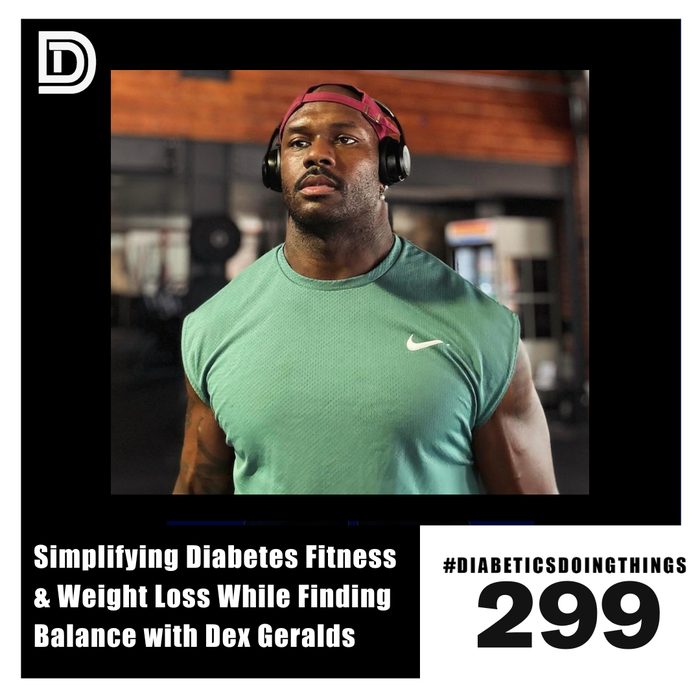

Episode summary
Dex Geralds, a fitness trainer and social media creator, returns to the show after being re-diagnosed with LADA and type 1 diabetes, following an earlier misdiagnosis of type 2. He describes how starting insulin changed his approach to exercise, how he balances carb-heavy foods like pho and donuts with a walk or skate session, and why he looks for walkable neighborhoods to manage his blood sugar. He and Rob cover fitness myths around diabetes and muscle gain, the role of genetics in diagnosis, and gaps in access to good health information. Dex also talks about burnout from content creation, finding balance through fashion, saxophone, and skateboarding, and why patience and listening matter for reducing diabetes stigma.
Key takeaways
- Dex says starting insulin after his LADA diagnosis made his blood sugar easier to control but requires much more planning around meals, timing, and activity than before.
- Dex pairs carb-heavy foods he loves, like pho and donuts, with a steady walk or skate session so he doesn't need to take as much insulin.
- Dex says insulin is a growth hormone, and none of the clients he trains with diabetes have had trouble building muscle; diet and protein intake matter more.
- Dex says genetics plays a bigger role in diabetes risk than people assume, and some people develop it despite doing everything considered right.
- Dex credits patience, listening, and educating people in the moment, rather than getting frustrated, with chipping away at diabetes stigma.
Show notes
Embecta disclaims any control over, relationship with, or endorsement of, or the accuracy, truthfulness or completeness of the content or view expressed in this Podcast, which are solely those of the speaker and not necessarily those of embecta. embecta does not guarantee the accuracy or reliability of the information provided therein. Any and all comments and post are from members of the public community and do not necessarily reflect the views of embecta.
Simplifying Diabetes Fitness and Weight Loss While Finding Balance with Dex Geralds
In this episode, Rob interviews Dex Geralds, a fitness trainer and social media personality living with Type 1 diabetes. Sponsored by Embecta, the episode delves into Dex's journey from being misdiagnosed with Type 2 diabetes to living with Type 1 diabetes and LADA. They discuss strategies for managing blood sugar with physical activities, the impact of genetics and diet on diabetes, and debunk common misconceptions about fitness and diabetes. Dex also shares insights into balancing life, content creation, and maintaining mental health. The episode underscores the importance of patience, empathy, and small steps in achieving a healthy lifestyle with diabetes.
00:00 Introduction and Sponsor Message
00:35 Welcoming Dex Geralds
01:22 Dex's Diabetes Journey
02:08 Managing Diabetes with Fitness
04:08 Challenges and Adaptations
06:53 Fitness Misconceptions and Diabetes
20:25 Content Creation and Burnout
25:20 Encouragement and Impact
27:07 Exploring Personal Interests
28:50 Connecting Diabetes with Daily Life
31:29 Addressing Diabetes Stigma
35:09 Health Equity and Information Access
36:15 Fitness and Nutrition Basics
37:48 Dopamine and Mental Health
40:54 Fashion and Personal Expression
45:01 Final Thoughts and Advice

Questions this episode answers
Can you build muscle while living with type 1 diabetes?
Dex Geralds says yes. He points out that insulin is a growth hormone, and none of the diabetic clients he trains have had trouble gaining muscle; he says diet, especially protein intake, matters more than the diagnosis.
How does exercise affect blood sugar differently depending on the workout?
Dex says heavy lifting can raise his blood sugar while steady cardio tends to lower it, so he adjusts snacks and insulin based on which kind of workout he's doing.
What is LADA diabetes?
LADA (latent autoimmune diabetes in adults) is the diagnosis Dex Geralds received after originally being told he had type 2 diabetes. He now manages it with insulin, which he says required more day-to-day planning than before.
Does walking after eating help manage blood sugar?
Dex says a steady walk of even a mile or so after a meal helps keep his blood sugar from spiking too much, and it's part of why he chooses to live in walkable neighborhoods.
Full transcript Searchable, with timestamps
Rob Howe: This episode is sponsored by Embecta. Formerly known as BD Diabetes Care, Embecta is now a standalone company solely focused on serving the diabetes community. They are partnering with diabetics doing things to help bring awareness to diabetes stigma by sharing stories from people living with diabetes like the one you're about to hear on this episode. Whether you're a person who has diabetes or you're helping someone else manage it, Embecta wants to empower people to live a life unlimited by diabetes through innovative products and educational resources. You can learn more at www.embecta.com. That's E-M-B-E-C-T-A dot com. Ladies and gentlemen, I'm very excited to present this episode with Dex Geralds. He's been on the podcast before. He's become a good friend of mine on social media and really digs into not only the misdiagnosis around his original type 2 diagnosis, but living with LADA and type 1 diabetes and how his life and his management has changed as a result. but also just talking about life. And towards the end of the conversation, we talk about fashion. We talk about what's on both of our dopamine menus. And this was one of the best conversations I've had recently with a really great guy. And I'm excited to present this episode with the great Dex Geralds. Enjoy. Welcome back to another episode of Diabetics Doing Things. We're telling the amazing stories of people with diabetes from all over the world. Returning to the podcast, my very special guest. You guys know him on social media, Dex Geralds, fitness trainer, person with type 1 diabetes. You've been on the pod before, but this was before your re-diagnosis. So I'm excited to kind of dig into some of that as well today, but welcome to the show.
Dex Geralds: Yeah, thank you for having me again. I'm excited for the conversation. And yeah, I mean, was it been like two, three years since I was on the pod? So yeah, no, I feel excited to get back into it.
Rob Howe: I think even longer than that, maybe. So yeah, it's, it's been a man. Time flies when you're having fun. So yeah, man. So I guess like just for those who maybe are newer listeners and haven't gotten back to that episode, you were sort of this, like in the diabetes community, your story was kind of singular. You were like the fittest guy with type 2 diabetes. That was kind of like the, you know, early on, that's kind of how we got introduced. So now after a re-diagnosis of, of LADA and living with type 1, like let's like, what, how has your life
Dex Geralds: with diabetes changed since that time? Well, since that time it's, it's changed a lot. Like, like even, even today, like before, before I started using insulin to help control my diabetes, you know, I go on walks all the time. I do a massive of myocardial to try to keep my blood sugar down and now it's like I go on a walk for one mile and my blood sugar drops and now I gotta make sure I have snacks handy like I gotta be prepared for anything when I'm anywhere and balancing my blood sugar with that is it's been easier now that I have a way to treat it but also it's kind of been harder too like the activity level that I used to do is it's changed a lot like sometimes I have to stop and I, you know, I drink a Gatorade or I used to go travel and go on these hikes. And now it's, I have to think about certain things, time of the day, am I going to be dehydrated and all this stuff. So it's a lot, a lot going into it. But at the end of the day, once I got the right diagnosis, like my blood sugar is controlled way better than it has been before. So, I mean, it's, it's been, it's been a blessing to be able to manage my diabetes in a different way and improve my health. But also at the same time, it's, it's just a lot more thinking and did I do this or should I do that? Or maybe don't go on this walk today, or I have to wait a little bit before I can do something and it hasn't really changed our relationships with people or anything like that, but it's definitely made it a little bit more difficult to plan out things. So yeah, I mean, it's, it's, I feel good, but planning is a lot longer now.
Rob Howe: We had a guest on the podcast recently who was talking about, he said he had read a stat. I haven't researched it yet, so I've got to confirm it. The average person has 40,000 to 80,000 thoughts a day. Even things that you're not even really registering, like that car is blue or that house is brick or whatever the case. People with diabetes often are double that. So like the amount of thinking you have to do just to plan out a hike or to go to a workout or even to go to sleep is just so much more than the average person. So, yeah, I mean, I think that, you know, when you add in that exogenous insulin and you're already really healthy and we're managing like your fitness and your health and your lifestyle like super well, like that, that throws a lot of curveballs, man. It's like that only constant is change.
Dex Geralds: Yeah, that was, it's, it's still a learning curve that I'm trying to deal with now. And like, I'm like, I've learned certain things to do. And so I don't have to take so much insulin. Like I love pho and a lot of it is rice, like rice noodles or rice paper when I'm having a spring rolls. So now like certain things, like I eat that and then I just go on a long walk. And I know like it's gonna spike me a little bit, but if I keep that walk, well, it's gonna go up. But if I keep that walk steady to like a mile a mile and a half, I can enjoy that. And not have to worry about going too low from taking insulin to eat. So that's like playing around with stuff like that has been a major thing. I love donuts. Every time I go to the beach, I get a donut and then I skate the boardwalk from Santa Monica to Venice. And that like helps out a lot when I'm trying not to take too much insulin. I still haven't figured it out. I mean, I know it's like what one unit insulin per 15 carbs or something like that. But I don't know.
Rob Howe: Everybody's different. So yeah.
Dex Geralds: Oh, yeah. So that's what it was for me. Maybe I need to play around with it. But yeah, sometimes that just, I just thought the word, I mean, like it makes me go a little super fast and I know like with muscle mass and stuff like that, your body processes it a lot, a lot faster. Like diabetes has already had type 2 or type 1, but I'd never imagined that. How many years has it been now? Four, four years, three or four years since I was correctly diagnosed. and I'm still trying to figure out what's the best way for me to manage my diabetes.
Rob Howe: And I think it's really relatable though, because like you are a person who is really in tune with your body. You're obviously, you know, a strength trainer, a personal trainer. So you're helping other people with their fitness as well. You're working out more than the average person. I love that you're talking about walks because, you know, something that we've been talking about a lot on the podcast is, you know, all these like Stanford and Harvard scientists are like studying like the secrets to living longer and like being healthy. And like, turns out it's just like sunlight and walking. And so it's just like, oh, like, could it be that easy? And, you know, in many ways, like for us with diabetes, we know, okay, I'm going to have a high carb, high fat meal, like a donut, like delicious. If I pair that with skating up and down the boardwalk, I can keep my numbers a whole lot cleaner than if I go sit down. That's one thing for me, like, you know, most of my life in my professional life is spent sitting down like I am right now. So if I go have like a really indulgent, high carb meal, and then I'm going to sit down for three hours, like my sugars compared to if I went on a walk or I was like out moving around or, or, you know, to get a workout in, they're so different. And it's just amazing how like the body can like in movement and activity can just help your life with diabetes so much
Dex Geralds: it helps it so much better and my the crazy thing is that i ever thought about as a person living with diabetes is the neighborhood that i choose to live in if it's not walkable like i can't live there because i don't want to like sit down after i eat i want to be able to go off and walk and help control my blood sugar in a certain way and that's like one of the things like people who have functional pancreas the thing I ever have to think about is I need a walkable place because it helps me control my blood sugar better versus someone who just eats dinner and then they throw on Netflix and can chill for the rest of the day and feel just fine
Rob Howe: I want to double click on that for a minute because I think in a lot of ways because those things are like the blood sugar, like glucose excursions are happening for people who don't have diabetes, right? And their pancreas just like adjusts and like gives them gives them insulin quick and, you know, absorbs it quicker than than our bodies do. But like they don't know that's happening for the most part. Like there's no awareness because they don't have the number. They're not doing the math. And so like in a lot of ways, that burden can be an advantage. it's like early on you're like oh well if i eat a big dinner and then i sit down you know i see how my body responds differently to that than you know if i ate a different chose a different meal or if i had an activity after early on in my life with diabetes i remember like going to basketball camp and like at sports camp you're playing sports all day long so i remember i would only use basal insulin during those sport camp weeks and i would eat and drink a ton of gatorade and like eat a ton of carbs, but my body was just like processing so much and I was burning so many calories. I was also like honeymooning at that point as well. So like I was still probably making a little bit of insulin, but I just remember like it was, it was a really like eyeopening moment for me of like, oh, well in some cases, like if I'm the more active I am, the better I process carbs and like the better I absorb insulin, like this could be a nice, like, you know, a nice mix for me compared to when I'm sitting down all day or when I'm on like a plane or I'm in a meeting and you know, we've got like every plain meal is like the highest carb ratio possible. Right. I don't know. It's like, they just rig it up that way. So it's like, I'm going to like, Oh man, I've got a dose like way more insulin. Cause I'm just going to be sitting here for the next couple hours because they typically frown upon people doing lunges up and down the, we got to change that. We got to change that. But so I guess like, you know, I don't know. You, you're, you're a trainer. So you're training people with diabetes, but also without diabetes. So I guess like, how do you like, what kind of baseline knowledge like does a typical client come to you with from like a
Dex Geralds: fitness perspective? I don't know. I've learned over the years that a lot of people don't know much about fitness whatsoever. They don't know much about dieting or like the right food to eat. So I do find that people living with diabetes tend to have a little bit more knowledge just from research about how their body like processes process things and what you should eat to gain muscle or how you should eat to lose fat compared to my clients who've never had any issues with or chronic illnesses or anything like that yeah i mean i think part of the reason why i'm still employed is is even though the internet can give you tons of information like sometimes they give you a lot of bad information and a lot of people come to me confused about what they hear like i always get, oh, I've seen on TikTok that if you do 100 pushups a day and that's all you have to do, you don't have to do anything else and you'll get strong or something like that. Well, kind of, but there's more to it than that. So yeah, I mean, yeah. So like the people I know with any chronic illness, like I work with other people who aren't just diabetic, but have other issues with their body as well. They always seem to be a little bit more in tune with their body because you have to versus the people who are and i don't want to say healthy or something like that but the people who don't have yeah exactly no reason they don't have to deal with that so their knowledge level isn't up to speed as someone living with a chronic illness
Rob Howe: it's interesting to kind of frame it that way as a as a gift to like what's going on in your body and like more being more in tune and more intuitive i know it's not the same for everyone and like It can be obviously extremely challenging and heavy. And we've talked a lot about diabetes distress on the podcast. But for people, again, when I read stats like eight out of 10 people with prediabetes don't even know that they have it because they, for one reason or another, don't need to, or their doctor hasn't given them any information or they haven't been going or whatever the case may be. That diagnosis can be a real gift early on in your life in many cases, learning about like inputs and outputs and how things are, are, you know, happening inside your body. You talked about some like misinformation on the internet. So like there's, you know, back in the day that you like, don't believe everything you read on the internet. It's like, now it's like, don't believe everything you hear on TikTok, no matter how good it sounds. I want to talk a little bit about some misconceptions about fitness and diabetes, because I I've seen a lot that people are worried about like that they can't gain muscle on diabetes, So they can't lose weight if they're taking insulin. So I'd love to hear your perspective on some of those common questions you get from people with diabetes who are getting into fitness or maybe getting a trainer for the first time and some of the questions that they have.
Dex Geralds: Yeah, like I think one of the biggest misconceptions about living with diabetes and gaining muscles is insulin actually is a growth hormone and it helps you gain muscle. So I don't know where that really came from other than the fact that living with diabetes, it is hard to work out just because you have to manage your blood sugars in a different way. But with all the diabetics that I work with, we've never had a single issue with gaining muscle. And mostly it's because of your diet. You should be eating one gram of protein per pound if you want to gain muscle. And protein's great because it doesn't affect us as much as like carbs does. And that also is, it takes the longest for your body to break down. So it speeds up your metabolism too. But you're getting benefits of adding muscle and losing fat at the same time. So I don't know where that came from with the whole diabetes. People living with diabetes can't gain muscle. What was the other one?
Rob Howe: The other one I think is on weight because, you know, I think you're right. Insulin is a growth hormone. And so it does make it like easier metabolically to gain muscle sometimes. But I think also people associate it with gaining weight. And so like losing weight with diabetes can be hard, I think. And I think especially with women with diabetes, there's so many like body issues and misinformation and bad like toxic diet culture out there. I think a lot of that plays into it as well.
Dex Geralds: Yeah, for sure. Especially diet culture. someone told me recently like when you're eating like whole foods and you're eating like meat and you're not really eating processed stuff people call that dieting but that's actually how we should be eating for the most part it's probably different for us because we need to get sugar from time to time but if you still stay in a calorie deficit and you still work out just like a regular person you can still lose weight I think I think the weight gain comes from the fact that again it's it hard to work out as a diabetic and i know for me my diet changed a lot once i started taking insulin there was things i would never touch when i thought i was type 2 that i'm eating now and i think that might be something that other people living with diabetes uh those things happen where you might start eating things that uh you never previously ate before so that's going to be a a little bit of weight gain. Yeah, I think those factors can contribute to weight gain, but I think if you still, well, I know if you still monitor what you're eating, what you put in your body, which I think most of us do as diabetics, we need to know how much carbs that we're actually eating. So that's something you just have to live with. And if you know how much protein you're putting in your body and how many calories you're eating per day with your activity level, you still can lose weight. I don't think it's too much of an issue. And I know tons of runners who have no issues with gaining weight at all. If anything, they're trying to gain weight because of all the fat they lose through their running. So, yeah, we just have to be a little bit more diligent about it. When exercising is making sure you're in a good place and you'll lose weight.
Rob Howe: I think it's interesting you talked about it's hard to work out with diabetes because it really is. But I also want to normalize for people with diabetes who are listening to this, who have been trying to exercise or working on or having obstacles or encountering obstacles when they're exercising. It's also hard for regular people to exercise. You know, there's there's a reason that, you know, so many a high percentage of people in America are overweight. Like our lifestyle today in 2024 is not as walkable like you were talking about. It's not as labor intensive. It's more sedentary. We're sitting down during the day at work. We're sitting down when we get home. watching TV. And, you know, I had this guy that I worked with 10 or 12 years ago and he was like, you know, sitting is the new smoking. And he would always be like trying to do walking meetings. And he was really ahead of the curve. He was kind of, everybody kind of looked at him crazy at the time, but you know, he was really all about like trying to not sit so much. And the only difference there is like, it just takes extra effort for people with diabetes and extra preparation because, you know, I'm sure you have, and you do a really great job of this through your content creation. So I want to talk about that a little bit too. But like, I want to normalize, like, I also go to basketball games or go to the gym and I'll have a low blood sugar and I'll have to step out and drink a sweet drink or eat some gummy bears or something because every now and then, even the best preparation isn't the right thing.
Dex Geralds: Right. And like, especially living with diabetes, like we have to do extra prep anyway. So for me, it's just, it's just, like you said, I just try to normalize the fact that like when I work out, these things can happen. My blood sugar can go up from lifting too much heavy weight and it can go down if I'm doing too much steady cardio. So I just expect those things to happen and I'm fair for them. There's going to be days where I feel lousy, but I'm going to feel better as long as I'm still going to the gym and being active and trying to do the things I can do that make my blood sugar more manageable. Well said. I think, you know, just
Rob Howe: understanding how your body reacts to different exercise too. And like having that kind of beginner's mind and like curious mind about it because, you know, we're, we're adults. We don't necessarily, it's not like when we're like kids in high school or whatever here in the U S like you basically play one sport you're doing, like you have regular practices and those things. Like, I think it's really important for people to find a mix of things that they like to do, whether cardio or strength training, just to keep it interesting and entertaining.
Dex Geralds: yeah i'd tell clients that all the time like exercise it shouldn't always feel difficult or hard you shouldn't have to always force yourself to go somewhere and lift weights or anything like that like if you can find something like brazilian jiu-jitsu or like a roller blade or roller skate or something like that that's activity that's only going to benefit you your heart health and all that stuff like never just go on the internet see somebody you admire doing want something and then you do it, you realize you hate it and you want to go through it every day. Find something that, take your time to find something that's going to be useful for you or something you're excited to do all the time. I couldn't agree more. I think, and even as
Rob Howe: somebody like who was a competitive athlete for, you know, many, most of my life, like even now learning about the longevity and like the impact that a small, like a short, slow walk can have on your cardio capacity and like the impact of, you know, cardio zones and, you know, you don't have to go all out all the time to be a serious, you know, training person. So, you know, I think finding that balance to where you're doing something that is going to let you do something tomorrow and be interested in something tomorrow. I think that showing up is, and wanting to show up and feeling energized to do that will take you a lot further than, you know, burning yourself out over one thing. Exactly. So let's talk content creator because, you know, you're, you're a busy guy. You've, you've got your, you know, your personal life, you got your work life, your training clients, both in person and virtually, and you are living with diabetes and you're creating content about fitness in general and fitness and diabetes. Like, how do you, you know, how do you find the time like creatively to stimulate, stimulate yourself to create that
Dex Geralds: content in the past it was it was a little more easier i'm doing pretty well with my clientele now like at one point i had 15 private clients and i was still coaching like six crossfit classes a week uh so now like as long as with content creation i usually try to find some time on the weekend usually a sunday after a client i'll try to film a quick workout or i got some new stuff come in pretty soon that I've been playing around with. I think I finally get it right. That's more of fitness and diabetes together versus this one or the other. Yeah, like, I don't know. I felt burnt out at the beginning of the year. Let's talk about it. The internet gets to me sometimes with like a lot of the images I see, I don't want to see. And so I just won't even go to Instagram or TikTok and, and then I get on there and then you create something that doesn't give any views or like, do you really put time in? Or I'm like, I'm editing this video. Like this is a sick transition and all that. And then I got like eight likes. Like a video I just posted recently, yesterday has, doesn't have every like, so it didn't which is fine. Like as long as people are seeing the information and using it, that's what I get excited about. But I think we all have that reward or that dopamine hit where you see those likes coming in or the comments and stuff like that. But now like as the year starting to wrap up and starting to get more into content creation again and trying to be a little bit more diligent on answering messages and all that stuff. Like for a while, I just didn't have the energy to do any of that. And now it's like, okay, some people are reached out to me. They're asking me questions. I can make content that they're off these questions about diabetes and fitness and feel good about it because I'm actually helping someone do it.
Rob Howe: Man, I love this conversation because I felt very similar. You know, like there's all in our life, we have this like seasonality, you know, in the U.S., right? We went to school. We have like back to school in August. And then there's like Thanksgiving break and Christmas break and then spring break and then summer break. And you have these like structured time periods where you kind of know that you're going to get time off or there's a, you know, there's finals week. So you're like studying really hard and then you kind of go away and it's all wrapped around school. Oh, I lost you here.
Dex Geralds: About that phone call.
Rob Howe: Yep. You're good. So as adults, like we don't really get that. And I think with constant creation too, there's no like weekend. Everybody's checking the apps. like every single day all the time, you know? And so there, and I also think like, you know, you start to see things that you don't want to see. You're like, why am I seeing this? Or like, or this is making me feel a certain way. And, you know, when you really double click on it, it's like, oh, well, these apps are incentivized to really make us upset and, you know, and to keep us angry and to keep us like, you know, sick or whatever the case may be. And so you start to be like, well, man, I don't really want that. Like, what am I doing here? And so that burnout is real. and I definitely feel it. And something that I have to credit my wife for because she's also a content creator and she was like, you know what? Like my rule is like, I just can't care about this. Like I can't get wrapped up because it's like every time I put like a lot of effort into a piece of content, it never like the return on like user engagement is like never the same. But if I put like no effort into it at all and I just like put some dumb little thing up, it like goes crazy. So you never can really tell. But if you like relieve yourself of having that expectation that it's going to do something crazy. Like I found that it definitely helps me a little bit.
Dex Geralds: Yeah. I like lately there's like, I've been doing fashion posts and like trying to get into like a little bit more things that I enjoy. I just don't want my pace to be always focused on fitness and diabetes. Like sometimes I'll get some of these other content creators and I'm like, I don't know how you can find so much things in your world that connect to diabetes. Like I don't, I don't always want to think about what I had to live with and I don't want to have to post it all the time. I want to post myself having fun doing other things. And that's been helping a lot with getting me back in the groove of, of posting regularly and then making these videos and stuff. But yeah, like, like your wife said, like, I just post it and forget it for the most part. Unless it's time to mention it. Send it. I'll go right back home and make this. Exactly. exactly and i mean i always try to get my best effort with anything i do so i know the quality it'd be well but yeah yeah like if the likes aren't there the likes aren't there but the
Rob Howe: information is being received by someone i do want to encourage you on that though because i i also have felt even more recently like asking bigger questions like am i doing the right thing like is all this work like the right stuff because it takes effort it takes time it takes energy am I having an impact and I had a couple of like really independent I don't know they weren't really signs but they were like you know inquiries or comments or like people that I met or I encountered because of what I was doing and none of them are going to like change my life like or like you know any kind of like material benefit but it was you know one of them was like a kid in a small town in louisiana who got diagnosed with diabetes and loves basketball and is in the foster care system and somebody found like through diabetes and basketball or whatever kind of searching they were doing they found me and i'm able to talk to them so i just want to encourage you like there will be even though you're exactly right the amount of people that create can find things in their life to connect to diabetes or fitness or like anything else where they like really niche
Dex Geralds: down i admire people like that because it's hard yeah so like i can't i tried and like right it's incredible the way they can i mean that's why you call call us content creators because they really are great at creating content centered around diabetes but i will say i'll tell you
Rob Howe: like you continuing to do it will somebody somewhere at some point will find it and it could be like the difference in their in their life with diabetes or their life in general so you know i encourage you keep doing what you do and you do a great job thank you in that same vein though i think you you touched on something interesting which is like as creators we kind of are known for like one or two things and people are like multifaceted and there's a lot of different parts of them so like for you exploring whether it's fashion or it's anime or it's music or like you're kind of like making uh conversations about festivals a few weeks ago like those are all things that you enjoy doing so like as you're sharing and opening up those parts of your life with diabetes, like how, how does that come up for you?
Dex Geralds: Yeah. So I like this past year at Coachella for the last few years I'm at the Coachella. I went both weekends. I'm very blessed to have clients who work at the music industry. So I don't really pay for tickets all that much. Nice. Huge. Oh, when I go to festivals, my blood sugar is perfect. Like the lines, it's a little squiggly across, like, like my panker wrist works. It's probably cause all the walking and the dancing and all that stuff. And I wanted to create content based off of festivals, but when I'm there, I'm so into it. I don't ever really pull my phone out all that often to like actually do anything like that. So that's something, that's something I actually wanted to start trying to do when I'm at shows and concerts. It's trying to like connect how I can show my blood sugar when I'm at those things. And then, yeah, like a lot of the other things that I really like, skateboarding or longboarding has been big for me and my mental health as of the last three years. and I was telling you with like I like to go eat donuts every now and then so when I go to the beach my favorite donut shop is over there and I'm just thought sidecar donuts for anybody in LA who must have tried it I get the salt and butter and then I get to go straight to the border off and I'm going back and forth on my skateboard in Venice and now that I'm talking about it with you now I understand how these people are able to connect diabetes with whatever whatever they're doing yeah and i don't know i picked up the saxophone again after i think 18 years so so we're around there so that's been pretty fun like relearning how to create music and hopefully get back to the level of being able to play jazz music like i have been before um and posting about that has like kind of got me back in the groove into trying to post more often and and beating the algorithm and all that stuff that it takes to have your stuff pushed out by instagram and tiktok and
Rob Howe: all that stuff you gotta feed the beast man it's so tough i it's interesting though because like you know you're sharing this part of your life like it's it's fun you talked about and and i experienced this challenge as well because like i love to travel and that was one of kind of the things like with my content like i always felt more inspired to to create content when i was going somewhere new um but now kind of like you i'm like oh i really want to focus on being in the moment like experiencing this new place and like you know really enjoying it because that makes me feel good but then it's like oh i went to this thing i totally forgot to like make anything yeah it's like opportunity there yeah people expect you know or like that's that will be good would be good content and it's like oh well now i used to kind of beat myself up about it and now i'm just like oh well like we'll do something else another time like and you know at least the got the most important part right which is just to enjoy it exactly uh but i like i figured
Dex Geralds: I was talking to another person with diabetes. And I'm going to go to Coachella and every person I see with a CGM, I'm going to take a picture or video of didn't see a single person with a CGM this past year at Coachella. The year before that, when I was thinking about that, every person I want to go see, there was someone there with a CGM. And I'm like, oh, that's crazy. The fact that now I want to put effort into it. I can't find a single person. You like reverse manifested it. It just like. Exactly. hopefully i'm going to a festival in san francisco at the end of september so hopefully i can put
Rob Howe: that use there yeah man i think there's like you were talking about like finding the flat line like being outside dancing like also having fun i have this weird like i'm not i'm never really focused on my blood sugars when i'm doing something i really love to do and i think as a result sometimes just that alignment you get if you're out doing what you would love to do you're really focused on it, like everything else kind of just works out. And if your sugars aren't exactly perfect, you're not really tied up with that. So I think that's always a really interesting concept.
Dex Geralds: Big time.
Rob Howe: All right. So you have a very unique perspective because you were, you know, very out in the community as a person living with type 2 diabetes and, and then the re-diagnosis, we had Mila Clark on the podcast who also went through a similar re-diagnosis.
Dex Geralds: I love Mila. She's awesome.
Rob Howe: it's just an a1 friend of the pod since since man way back and like we taught we're talking about stigma what do you wish like more people knew about diabetes because you are also encountering a lot of people like in the algorithm i'm sure in the fitness world who don't live with diabetes and have like their own preconceived notions about diabetes but like for you like what do
Dex Geralds: you wish more people knew i wish people knew like how much of genetics come into play when people are diagnosed with diabetes, not even just type 1, but type 2 as well. Like I have a client, he's from the Netherlands, Amsterdam, and you would look at him and think he's super fit, but right now he's pre-diabetic and mostly because his family has had diabetes throughout the year. So like your genetic blueprint changes over time when family member after family member has diabetes. And a lot of times I get on the internet and I watch these on their podcasts about fitness and stuff. And these people get it wrong. They're always talking about like these, these, the factors of not exercising and not eating healthily, obviously for anybody, those things can change your body or have a negative impact on your body. But there's some people who do all those things all the time and still they can't escape their fate because it's imprinted in their DNA. So like, I wish people would take the time to actually like listen to someone who has type 2 diabetes or who are overweight or something like that. And they've learned that it's not always because they're amazing. That's how they got it. And there's other factors, environment. Some people don't have access to high quality food. So they do what they can. They eat whatever's in the area, which isn't always good. They call it a food desert. to something like that where all you have is like fast food and there's not very many grocery stores there and they carry really good high quality food yeah i don't know it's it's i get where type 1 diabetics that i've met in the past get frustrated because they'll talk to someone about diabetes and that person only knows about type 2 and then they'll say something about their diet and stuff like that and i can get the frustration with that but i think if that ever comes up in conversation, just educate the person. So when they have another conversation with the person lived with diabetes, they won't have to have the same response as you had because this person now knows what's going on with everyone's body. Yeah, I just, I just, we had a little bit more patience with each other to figure out these stigmas and have a little bit more empathy towards each other. And I said that'll go a long way with getting rid of some of these stigmas that surrounds the diabetes.
Rob Howe: man you you said it i think you know just in general the taking the time to really listen to someone is something we could all do a whole lot better to do not everything requires a response right away and you know i think we're just so quick to try to solve problems that aren't really ours to solve or or offer opinions that aren't really ours to offer is that and you know we can just learn so much more from each other if we just listen exactly i also want to touch on something i I mean, because you talked about genetics, you talked about access to quality food and food deserts, something that we've seen. And I'd love your perspective on this because we kind of touched on it earlier about knowledge of like fitness or working out or gaining muscle. But like health equity to me starts with information and access to information. And so many people like diabetes is super complex. And most of what the average person knows about diabetes is either misinformation or even, you know, related to stigma or like just jokes or things that they've heard. And it can be really hard to get them to the right information. And if you don't have a great relationship with your doctor or you don't have an endocrinologist because there's only 8,000 in the U.S., you know, you don't know where to go. And I think a lot of people, when they don't know what to do or they don't know where to go, they kind of just opt out. And they say, well, like, it must not be for me. This must just have to be the way that it is. so like you know for you when you get clients who are coming to you and they don't know about fitness like do you you know you start with the basics like how do you how do you get somebody who really has no baseline knowledge of exercise or the proper nutrition and diet like what's what
Dex Geralds: are the first steps that you take with a client like that yeah so like for me like we will have discussions about what a person should eat to be healthy like what kind of movements they should do Every session is a learning experience, not only through movement, but through how to eat healthy. I never want to give too much information and people get frustrated with the information overload. So it's always just these small steps to try to get them to a certain point. A lot of times, changing your diet is hard, especially when you eat a certain way for so long. Your body gets these dopamine hits from whatever you're eating. And when you try to cut out certain things, it creates that kind of like a drug. So with, with movement and dieting, it's just, we take our time. We do what we can. And then once that's good, then we do a little bit more and we do a little bit more and we do a little bit more. And to the point where I like for my clients to go back to their family or their friends and discuss about what they just learned to someone else. So they retain the information and then they're giving good information to somebody else as well. And hopefully, you know, through time and conversation, a lot of this misinformation that we have on day to day will change and people will know exactly what to look for and exactly what not to look for.
Rob Howe: Great advice. I think that starting small and like not getting the information overload is a great advice as well, just because there's so, so much you can do and it can be super overwhelming. And that's with fitness or with diabetes or what have you, like start small. And you've talked a lot about dopamine today. And so I kind of want to tap into that as well because I also am a recovering dopamine fiend of getting caught up in the burnout of technology and really being intentional about how I start my day so that I can feel better in my head, struggling with mental health. And I had a post that went out today about mental health and my mental health checklist, which was cool. But I read this book called Dopamine Nation and ultimately the takeaway was our brains are not wired for the abundance of today. Like we can literally think of something and order it and have it delivered. Somebody could be listening to this podcast and order Sidecar Donut and have it delivered before the podcast is even over. And so for you, there's a trend right now on social media called like dopamine menu. So like the things that you have in your life that give you the dopamine that you want and like crave. What is on Dexgerald dopamine menu?
Dex Geralds: It's definitely live shows, content. I get so excited about shows. And I mean, there's a point in my life where I was going to two or three shows a week. I'd actually calm down a little bit. That's like one big thing food-wise. Talked about it a little bit earlier, but I love pho. I love it so much. And, you know, all the starch is probably not always the best, but I've learned how to eat it and not have that issue being at the beach. That's probably the biggest dopamine hit I could get. I worked at an event. I worked at an event at the beach called Painkiller two weeks ago. I think I was out there for eight or nine hours. And one day I woke up and I felt so great. Like, I don't know. I'm about to get too personal. I feel like I'm always going through breakouts. But she went through a breakup earlier this summer. And like, it really messed with me. Like to the point where I went to a coffee shop last week. And the barista there, I was like, it's nice to see you happy again. And that was right after the beat. Yeah, there.
Rob Howe: I was talking to you like that.
Dex Geralds: I didn't even realize, like, I was going through it. like that hard, but, but yeah, the beast is definitely, that's probably the biggest over me hit I could get. And if I'm there with my longboard or really gets me going and if I'm outside all day, that's like the perfect situation for me to have my mental health where I want it to be.
Rob Howe: Hey man, it sounds like on every, on every front, California is the right place for you, man. You got it all right there. And yeah, I mean, we can talk about it. I think it's, it's something that obviously like this podcast is not medical advice and we're not, you know, advising that, But I think finding the balance of, and I think the reason that I really like this dopamine menu thing is because it looks different for everyone. But like, if you had a day with all of those things you just mentioned in them, like how happy you would be if that happened, you know? And it's really simple. Like the things that give you the most dopamine in life are not these huge like geek experiences. and i think or even like material possessions like some pho the beach a show a microdose a skateboard like you know like now that's like a pretty regular california day for most
Dex Geralds: you should shift i didn't realize it until now already it really is i guess i would actually add a shopping like i think you you and i are both in the fashion oh i am talk about it but
Rob Howe: we put that shit on bro we have to do it i think it's like the ultimate form of expression
Dex Geralds: Like it's the first thing people notice when you walk into any room or any situation, how you look. And then lately I've just really been over fashion. Like everything I watch on YouTube is about fashion. I know about all the fall trends already. Like when I'm going to buy a suit and I've got a cowboy hat. Let's go. These are looking good. I don't have to go out to Texas sometime with that cowboy hat.
Rob Howe: Yeah, man. You know, everybody wears clothes. you know so in a way like you said it's the it's the ultimate form of individual expression people look at you and talk to you differently based on like what and think of you differently based on what you are wearing you know so what a cool thing to like you know get to think outside the box on and i don't know i'm really into like the classics and like textiles and things lately i basically like dressing like a grandpa but i love it's it's awesome man i'm just having a blast
Dex Geralds: what do they call that there's like uh there's a term for that oh yeah it might just be like norm
Rob Howe: core or something like that or just like but i don't know i feel sort of geriatric but like the other days i so like this summer i was shopping for like one of my favorite designers is jerry lorenzo from fear of god yeah he did a collab a couple years ago with uh zegna with Ermenegildo Zegna the italian fashion house like amazing suits and like all this stuff and you know like it was it was fear of god it was like five grand for for i'm not i'm like you know i'm not not doing that well but i was like oh i wonder if because one of my really good friends is big into vintage and has gotten my wife and i into like more sustainable fashion so i got on ebay and i found some like 80s jackets zegna jackets that like basically never been worn i got one for like 15 dollars and it even has like a tag on the inside of who ordered it, the shop that cut it, like the date on it. It was super sick. And then I got it like tailored to Fitney and it looks so sick, man. And it's like, okay, cool. Now I have this like Italian suit that, you know, nobody was ever wearing and looks just, you know, close enough to the Jerry Lorenzo collab. It's the same brand, same fabric. And I'm like, this is a cool journey for me to go on. Like now I know, now I've got this like suit. Like I don't wear suits very often, but now I can. Like let's just, let's express that and see what that's all about.
Dex Geralds: And it's even cooler because it's vintage. Right. A lot of people aren't wearing that right now. So yeah, that's awesome. I actually love that like vintage shopping is a big thing now. It seems like a lot of the fast fashion stuff is kind of getting pushed out a little bit. And it seems like people are really going into these like vintage stores and finding really good pieces. and which is great because i think clothing is like one of the number one polluters in the world like they don't they don't break down and yeah i don't know i like yeah i've seen getting getting it to myself i spent a lot of money on good piece that i know i'm gonna have for a while but like
Rob Howe: the vintage shopping looks pretty cool it's neat like and you can still do that like there's still nice vintage stuff right like you can get and you know sometimes you save money on it and sometimes it's like okay well i'm just like giving this thing more life you know and it's like the kids the the gen z kids are like big into sustainability and i think they're probably like gonna take a lot better care of the world because they know a lot more now earlier than than you know we did when you know we were coming up because i don't know i've gotten the videos on social media too of like the giant like wastelands of clothes in asia and stuff like in rivers and things like that it's like really bad for the earth so yeah uh i'm i think it's cool too like plus like if you put it you put vintage in front of anything now like people so the big side well cool man well i i'm glad we talked about clothes i don't get to talk about clothes very much on the podcast so keep keep doing the work i see you out there putting in the hours keep it up man but yeah guys thank you for listening to this episode you can follow dex on instagram at dex gerald we'll tag you in the show notes anything else that you want to leave
Dex Geralds: the listeners with but you know before we go uh you know just keep doing what you can i think the biggest thing I learned this summer is that there's always going to be highs and it's all going to be lows. It's like our blood sugar and you got to keep trying to find balance. She can't get too high off the highs. You can't get too low off the lows and keep pushing through and things will work
Rob Howe: out. Great advice. All right, man. Thank you again for the time. Yeah, no, thanks for having me again.
About Dex
Dex Geralds is a fitness trainer and social media creator living with type 1 diabetes and LADA, after an earlier misdiagnosis of type 2 diabetes. He trains clients in person and virtually and posts about fitness, diabetes, and fashion online.