

Dexcom CEO on G8, Stolen Sensors, and the Truth from their New Advisory Council

Episode summary
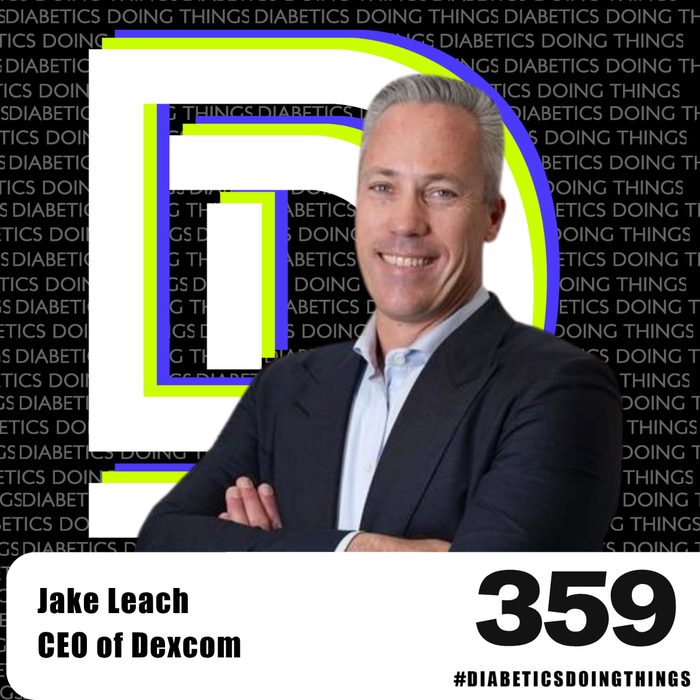
Jake Leach became Dexcom's CEO on January 1, 2026, after 22 years at the company, most recently as chief commercial officer. He talks about his first 90 days setting priorities around customer listening, user experience, and international expansion. He describes launching a public Customer Advisory Council and how it helped Dexcom respond when sensors meant for destruction were stolen and resold to patients. He shares CONNECT trial results on CGM use in type 2 diabetes without insulin, and previews the upcoming G8 sensor, the Nutrisense acquisition, and Dexcom's long-term plan to reach hundreds of millions of people with diabetes worldwide.
Key takeaways
- Jake Leach says the CONNECT trial found that people with type 2 diabetes not using insulin who wore a Dexcom G7 saw an average 1.6% drop in HbA1c and 5 more hours a day in range, with 97% sensor use over six months.
- Leach says he felt personally betrayed when Dexcom sensors meant for destruction were stolen and resold to patients, and the company moved quickly to notify the FDA and replace affected sensors for free.
- Dexcom's Customer Advisory Council, launched as one of Leach's first acts as CEO, is externally facilitated so members can give unfiltered feedback, and it helped spread word about the stolen-sensor recall.
- Leach previews G8 as half the size of G7, using a new signal and algorithm to automatically adjust for sensor drift over the wear period.
- Dexcom is acquiring Nutrisense to add CGM-guided nutrition coaching and is rolling out a redesigned app, starting with Stelo.
Chapters
- Rob sets up ADA 2026 remote coverage
- Welcoming Dexcom CEO Jake Leach back
- First 90 days: Jake's three CEO priorities
- The Customer Advisory Council goes public
- What the council revealed about communication gaps
- Stolen sensors: Jake's personal reaction
- How the council helped contain the crisis
- CONNECT trial: CGM for non-insulin type 2 users
- 97% adherence and five more hours in range daily
- G8 preview: smaller, smarter, adaptive sensing
- Acquiring Nutrisense and redesigning the app experience
- Optimizing beyond insulin: smart bolus and GLP-1s
- Why CGM and GLP-1s are surprisingly powerful together
- Jake's long-term vision for Dexcom's global impact
- Transparency as the foundation of high-performance culture
Show notes
Rob was at ADA 2026 in spirit — armed with press access and a list of questions unrelated to the usual conference talking points. His first guest from that coverage is Jake Leach, Dexcom's new CEO, who took over the role on January 1st after 22 years at the company. This is Jake's first time on Diabetics Doing Things as CEO. It sounds like two people having a real conversation about what it means to lead a company that millions of people with diabetes depend on every single day.
They get into the research that came out of this year's scientific sessions — specifically, the CONNECT trial, a global randomized controlled study that examined what happens when people with type 2 diabetes who aren't using insulin start using the Dexcom G7. The numbers are striking: an average 1.6% reduction in HbA1C, 5 additional hours per day in range, and 97% sensor utilization over 6 months. That last number might be the most telling — it answers the question the diabetes world has been asking for years about whether people without hypoglycemia risk would actually wear a CGM consistently. Turns out, they will.
Rob also pushes the conversation into territory that most executive interviews don't touch. When Dexcom products intended for destruction were stolen and resold to patients, Jake had to go from leading conference sessions to serving as something closer to a chief detective. His candid answer about feeling genuinely betrayed — and how the newly launched Customer Advisory Council became an unexpected asset in getting the word out — is one of the more honest moments you'll hear from a medical device CEO. The council itself, publicly announced and facilitated externally to get truly unfiltered feedback, is something Jake stood up as one of his first acts as CEO.
They close on the bigger picture: G8 on the horizon (half the size of G7, with adaptive sensor technology that auto-corrects signal drift), the Nutrisense acquisition adding nutrition coaching to the platform, and where Jake sees Dexcom going as it scales toward serving hundreds of millions of people globally. If you've ever wondered what the person at the top of your CGM company is actually thinking about, this episode gives you a pretty clear answer.
Chapters:
00:00 Rob sets up ADA 2026 remote coverage
01:46 Welcoming Dexcom CEO Jake Leach back
02:30 First 90 days: Jake's three CEO priorities
04:39 The Customer Advisory Council goes public
06:47 What the council revealed about communication gaps
08:44 Stolen sensors: Jake's personal reaction
10:39 How the council helped contain the crisis
11:20 CONNECT trial: CGM for non-insulin type 2 users
15:16 97% adherence and five more hours in range daily
16:16 G8 preview: smaller, smarter, adaptive sensing
16:44 Acquiring Nutrisense and redesigning the app experience
19:52 Optimizing beyond insulin: smart bolus and GLP-1s
21:13 Why CGM and GLP-1s are surprisingly powerful together
22:27 Jake's long-term vision for Dexcom's global impact
24:14 Transparency as the foundation of high-performance culture
Resources:
Dexcom — dexcom.com | Follow Jake and the team for updates on G8, Stello, and the Customer Advisory Council findings
CONNECT Trial — The full study results from ADA 2026 Scientific Sessions.
Questions this episode answers
What did the Dexcom CONNECT trial find?
Jake Leach says the global randomized trial compared Dexcom G7 users to a standard-of-care group among people with type 2 diabetes not on insulin. The G7 group averaged a 1.6% HbA1c reduction, 5 more hours a day in range, and 97% sensor utilization over six months.
What happened with the stolen Dexcom sensors?
Leach says Dexcom product intended for destruction was stolen and resold to patients. Dexcom investigated, notified the FDA, and offered free replacements to affected users, while its Customer Advisory Council helped get the word out.
What is the Dexcom Customer Advisory Council?
It's a group of people with type 1 and type 2 diabetes, healthcare providers, and diabetes content creators that Dexcom set up to give honest, externally facilitated feedback. Leach launched it as one of his first moves as CEO and says Dexcom has already acted on some of its findings.
What's new with the Dexcom G8 sensor?
Leach says G8 will be half the size of G7 and will use an additional sensor signal and algorithm to automatically adapt to physiologic drift over the wear period, while still allowing optional finger-stick calibration.
Full transcript Searchable, with timestamps
Rob Howe: What's going on podcast listeners? As many of you know, the American Diabetes Association Conference 2026 Scientific Sessions was last month in New Orleans. And while I didn't go, I did have press access to interview some folks who are behind the scenes. So there's gonna be more of that content coming, talking about research, talking about product launches. And my first guest from that series for ADA 2026 is Dexcom CEO Jake Leach. Last year, he came on the podcast for the first time when he was chief commercial officer. This is his first interview on diabetics doing things as CEO. And Jake talks about all the press releases that were associated with Dexcom. During the conference, we talk a little bit about G8. We talk about some of the Stelo research. We talk about some of the indications that Dexcom has now been approved for, which will affect how people with type 2 diabetes get access to CGM and the impact of CGM on HbA1c outcomes throughout different people living with type 1 and type 2 diabetes. Really interesting stuff. And we also talk about a story that was one of my favorite stories from this year regarding diabetes. And I always want when we have executives on the podcast, as a person who runs businesses myself, you can never know day to day what's going to happen. And sometimes even when you're really prepared for something, surprises will come. So I've taken some of your listener feedback that you've given me about how you don't like the executive interviews that are too scripted or maybe too corporate. So I asked Jake a question about some Dexcom sensors that were stolen and then attempted to be resold to patients. And he had some really cool sound bites from that. So looking forward to sharing that with you guys. Thanks to Dexcom for allowing Jake the time on the podcast. And please enjoy this interview with Dexcom CEO, Jake Leach. Guys, who was MVP of the chat? Okay, very exciting interview today. We're covering some remote coverage from the ADA scientific sessions. And Dexcom CEO, Jake Leach is here on the show. Jake, welcome back. Thanks for having me, Rob. It's a pleasure. So Jake, I actually have been given some feedback even like in the last two weeks from some of my listeners that when I do diabetes professional interviews, I am so focused on asking the tactical questions that I don't personalize them as much. So I was like, OK, that's fair feedback. And I thought, OK, well, what what better way than an interview with you to because you're a pro, you've done the diabetes podcast circuit now for a number of years to steer this conversation outside of like a typical ADA press hit with still hitting our talking points. So you up for that? Sure. Of course. Sounds great. OK, so you were named Dexcom CEO on January 1st of this year after 22 years at the company. Succession is like honestly one of the most challenging times for companies. What was your focus for the first hundred days as taking over the lead of Dexcom?
Jake Leach: Yeah, you know, Rob, it's a great question and something that I've been working on and focusing on. The succession planning has been going on for quite a while. It was a very kind of orderly process working with our previous CEO and our board of directors. And I was absolutely thrilled to be the one that gets to lead Dexcom into the future. And, you know, my focus, my first 90 days, as we called it, was really around making sure I understood and I knew what I wanted to do, what we needed to change. Because Dexcom has been a very successful company and has had a very significant impact on the lives of millions of people around the world. But as I've said before, it feels like we're still just getting started. And one of the things about the stage of company we're at is we're continuing to scale very rapidly in terms of everything. The number of products we make, the number of sensors, the number of patients we serve, the number of patients we support. And we need to continue to enhance that experience. And so I basically right at the beginning of the year rolled out three key initiatives for the company. and it was around making sure we have the best glucose sensing solution for all users, whether it's the patient who uses the product, it's the prescriber who prescribes it, the payer that pays for it, the healthcare system that delivers it, like all of that, we need to be the best. And one of the keys there was we got to make sure we're listening to our customers and we're getting all that feedback. The other thing too is we want to set the standard and experience. That was priority number two, setting that standard, making sure that we are always enhancing that experience and we are the best at it. because I think that really will drive, one, a preference for Dexcom, but also retain customers. And the third one is expand our international market share. We've been very focused in the United States for many years, been the market leader there for a long time, but there's many more people around the world that could benefit from Dexcom CGM. So we're rapidly expanding internationally, both in the markets we are currently in and then also expanding to new markets and driving coverage and access around the globe so more people can benefit.
Rob Howe: Yeah, thank you for that. And I think my next question I have prepared that really dives into that first point, which is listening. And we're also going to talk a little bit about scale and the number of patients that Dexcom is trying to serve and grow towards. But let's start on that listening side of things because it was recently announced this week, a Dexcom Customer Advisory Council. It's people with diabetes, type 1, type 2, some HCPs, CDCESs, and then some of our fellow diabetes creators and diabetes content creators on there. And so having publicly announced council, I felt like was pretty novel. I think that there's probably patient feedback councils of different kinds and HCP feedback councils. But to have one like published on the website and do the release, I felt that was unique. How did that come about? Was that something right away on the listening side that we just need a trusted group of advisors who's going to be honest with us about, you know, what's good and maybe
Jake Leach: what's not? That's exactly what it was, Rob. It was we have a lot of channels that we use today for feedback from customers, but it felt like it was the right time to get together a group of diverse, as you mentioned, it was a diverse group, lots of different perspectives. That was key. We wanted diverse perspectives. And we also wanted people who had networks. So they knew others that they could also collect feedback from and then provide to us. Really, it was a listening session for us. We started it early this year. It was one of the first things I did as the new CEO. And we met multiple times over the past five months. And what we felt was really important was, you know, listening and getting the feedback. And there was many things that we were aware of and many things that were, you know, new information for us, which was quite helpful. And the important part was then publishing what we found, what we talked about, and then what we're doing, the commitments from Dexcom to continue to enhance this experience for all users. And I think it's not just sugarcoat anything. We all like to be told what we do well, but we also really wanted to hear what, you know, where we could improve and you need customers to be able to provide that. And so the council, I think, was a unique space. It was an externally facilitated conversation. So we were able, I felt, to get, you know, really raw, unvarnished feedback, which is what absolutely what we wanted. And we've already started taking action on the newer learnings in there. And we'll continue to do that. And we'll continue with the council, right? This isn't a one and done. We'll continue to evolve it over time and make sure that it's one of our key mechanisms for listening. And I imagine like you go into that
Rob Howe: with some sort of like idea of what's going to come back. Was there anything positive or negative that sort of surprised you or that you learned and were immediately like, oh, yeah, we definitely
Jake Leach: can fix that. Yeah, there was there was a lot of little things that were like, oh, yeah, we can fix that. We fix this. And some of it was the part that was the biggest surprise, though, I guess, was there was there's still a lot of opportunity for us to better communicate things to users. There's many, not many, but there's been a number of times where we've communicated something and it's either misinterpreted. Like our intent is always to improve users experience, reduce the burden of managing diabetes. But sometimes we do things that not on purpose, but ultimately add to a user's burden. And so, you know, we never want to do that on purpose, but sometimes it happens in the way that we show up. And so there are a lot of little learnings, but the biggest one was this one around communication and just making sure that we want to communicating to users about the enhancements we're making to the products. We make a lot of enhancements to the product. We don't always talk about them. And we've made a tremendous number of enhancements to G7 for the time that's been on the market. And we talk about some of them, but we have more opportunity to make sure that that information is conveyed to our entire user base. So that was really good feedback from the council that I didn't realize how things were being misinterpreted at times. And so we want to be really clear with our communication. We'll continue to improve that over time.
Rob Howe: Is some of that just you guys are closer to it than everyone else? And maybe it is a big part
Jake Leach: of it, Rob. Yeah, yeah. We're closer to it. We talk about it every day, every hour, every minute. And as we scaled and we've grown, right, a lot of what we're working through is the scale of our business and how it's growing and the number of, you know, we're now serving millions of customers every day. That's very different than it was years ago. And you have to continue to adapt how you do that to make sure that people are getting that best experience. And so it was quite helpful.
Rob Howe: Yeah. And you talk about the millions of customers that you're serving every day and growing that. And I want to go back to maybe two or three weeks ago. So in my experience, you know, leading small businesses, small companies, like there are still some moments that like really make you scratch your head and just be like, what the hell? Like I had grand plans of what I was going to accomplish today. And now I've got to focus on this. So you guys announced or it was announced in May 2026 that some product which was intended for destruction was stolen and then sold by third parties. And I was reading your quotes in those articles and it seemed like it was something that you definitely like took very seriously, but were also sort of personally upset about. Yes, of course. When you're serving millions of customers, those moments like that, that sort of derail your day, how do you approach those? And what was your response, even just personally, when you heard that news?
Jake Leach: Yeah, I frankly, I was really upset because I felt betrayed by whoever it was that stole it. There's an investigation going on. They can't really comment exactly. But betrayed by that part of the system. That product should never end up in the hands of users. And when we started to see it, we were like, how in the world did that happen? And so, you know, quickly investigated, quickly called the FDA, let them know what was going on, work closely with them. And ultimately had to do a field action to make sure customers, that was the number one thing, is customers who had this product don't use it. We'll get, we'll replace it for free. And then also, you know, make sure those that perpetrated the crime or just see some justice there. It was surprising, like you said, when you're running a company, you don't always know what you're going to be working on. And that was certainly a surprise for us. you know, product that was diverted from recycling into the market and being sold to users. And so we did, you know, kind of figured out the farm source, the company that was doing it, and then how they got the product and all that's kind of been being sorted out right now. But yeah, I was definitely not happy. I'll tell you that.
Rob Howe: Yeah, I guess some days you're leading earnings calls. Other days you're like chief detective. You know, you just never know what you're going to encounter when you're leading a company.
Jake Leach: You don't know. Yeah. But in the end, I think we were able to contain it. We're able to make sure users got the word out. But one of the things we actually did was, you know, the council, we communicated to the council about it, too, to make sure they were able to get the word out across their networks as well. So I think that was a benefit as well.
Rob Howe: Yeah, you talked about, like, adjusting the way that news or updates are communicated. I think that's how I learned about the story. Now, like, seeing the council release, it's like, oh, OK, I see now how, you know, that group is reaching people. Traditional press release may not have reached me in the same amount of time and, you know, at the same moment. So kind of evolving media consumption of users and who they follow and who they trust. Yeah, really interesting. Yeah. Let's talk a little bit about some of the news from the scientific sessions. So your announced results from CONNECT, which is a global randomized controlled trial to establish new standards of care for CGM use for people with diabetes not using insulin. So just quick results, like average of 1.6% hemoglobin A1C reduction. Dexcom G7 group, so Dexcom G7 alone, was responsible for a greater A1C reduction than the medication groups. And then the Dexcom G7 group spent five more hours in time and range per day compared to the control group. So you're talking about scale, you're talking about global, you're talking about access, people living with type 2 diabetes, prediabetes, and sort of the undiagnosed T2D and prediabetes. The opportunity for CGM to increase patient outcomes there is significant. So how are you guys interpreting the data? What was the response internally when you guys started to review these numbers? And, you know, how has the reception been at the conference?
Jake Leach: To start, I would say we were incredibly excited when we first saw the results of the study. It really validated what we've seen in real-world evidence, but also what we knew to be true about the impact CGM can have on this very broad population of people with type 2 diabetes. And within the study was basically a randomized control trial, two arms. One group used CGM for six months. The other group did their normal standard of care, which was basically finger sticks. And I think the average was about three finger sticks a week for these folks. So they're not really getting glucose feedback. They are on lots of different types of medications. They've covered the whole gamut from GLP-1s to metformin to SGLT-2s and a few others. And again, combinations of those different glucose-lowering medications. So it was a big cohort and we saw phenomenal results in both the glucose outcomes. You mentioned the A1C reductions, which were very significant. One of my favorite stats was the five hours more every day on average time and range. So that is making some very significant impact for those users being in that normal range so much more frequently during the day. And then also the other thing that was really great to see was the utilization. We saw on average the utilization was 97%. That means that people over that six-month period were wearing these sensors 97% of the time, which is a very compelling piece of data because there has been some question of, well, someone with type 2 diabetes not using insulin, so, you know, likely not suffering from hypoglycemia or at risk for hypoglycemia, would they use CGM all the time? And I think this study, without a doubt, proves that, yes, they love using the product. And at the end of the study, we had the patients want to continue using it. And so we have an extension running now that's another six months of CGM usable track users and see the improvements. But the improvements were quick in the first four weeks. They all started improving pretty dramatically and then continue to improve. And it was sustained throughout that whole six month period. And so it's been really well received here. We did a big scientific session yesterday in the afternoon. we presented the data. One of our primary investigators, Tom Martin, presented it. The study was done at 21 clinical sites across the United States in primary care. So all of this is primary care, which is where the vast majority of people with diabetes are treated and not endocrinology, right? So we felt that was an important aspect of the study to show the success you can have in primary care using this product. And we do feel that this evidence, it's level A evidence that will support access and reimbursement for CGM for this population around the world. Right now in the United States, about 50% of people that have commercial insurance have coverage for CGM if they have diabetes, but there's still 50% that don't. So we feel like this data will help move the needle on that coverage. And then Medicare also doesn't cover CGM right now for anyone who doesn't use insulin with diabetes. So there's a big population that could benefit here. And I think we're on the cusp of a decision there for coverage. And so we think Connect just further reinforces the evidence that we've already generated. But this one is, you know, the best evidence we've seen from a strength perspective.
Rob Howe: Yeah, I think you nailed it also when you were saying that there was always that adherence question is that people who don't suffer, have a need for acute hypoglycemia monitoring, will they use CGM? But then also like the disparity going from three to five finger sticks a week to, you know, 97% TGM 24-7 access on your phone or your watch, like that's a dramatic difference. And so then to see like the awareness of your glucose levels and then how that correlates to more time and range, a dramatic amount of time and range, you know, thinking like in the terms of a workday, if your workday is eight hours and now five of those hours are more time and range, like what that can do to your quality of life seems pretty dramatic.
Jake Leach: You got it. The patient reported outcomes from the study we reported out on those yesterday, well, a subset of them. And yeah, I mean, the diabetes distress, worrying about diabetes, confidence and being able to manage diabetes, all of those things improve dramatically in the CGM group, which is not a surprise, but just further reinforcement of what we know.
Rob Howe: Thank you for that. And so, I mean, that's on G7 and preparing for the G8 launch here and it's been announced recently. What are you excited about? You talked about experience. You talk about listening. Like, how is that going into the next product that customers are going to see in the G8?
Jake Leach: One of the most amazing things of being part of Dexcom for so long is I've got to see all of our product innovation, but been able to be a part of it and been able to see how it impacts.
Rob Howe: Don't step on my next question for you. Don't step on my last question. I got to talk about that.
Jake Leach: Yeah, so it's, I mean, it's been pretty incredible to be a part of it. And we just keep pushing the envelope on what we can do. And so we mentioned we acquired a company called Nutrisense, the process of acquiring them, which is really adds in some really exciting nutrition coaching that's guided by CGM for our users experience. experience they've been a partner for a long time but that's an example of one of the things we can do on the software side to really drive engagement and drive outcomes for users and then on the hardware side like you mentioned g8 that's a whole new platform for us you know it'll be our eighth generation of platform each one we do we make significant strides in ease of use reliability accuracy of the product g8 is a pretty big step in glucose performance that really further refines that and gets, you know, less outlier readings, just more consistency. It's technology. We've been in the works for a very long time. It's an algorithm and electronics technology that allows us to measure an additional signal from the sensor and adapt the sensor over the whole time of sensor wear. Right now we factor calibrate everything. So we know its response to glucose in the factory. But then once it's inserted, there's some physiologic kind of effects that can cause some more variability in your sensor. And that's one of the things we've seen. Some people calibrate their sensors occasionally with a finger stick you can think about g8 as being able to you know automatically adapt the sensor so you'll still be able to calibrate if you want we won't remove that feature because some some customers love it and so we'll keep it but obviously not required and g8 will do an even better job of adapting over the sensor wear period so excited about that it's half the size i mean g7 is already tiny but man it is noticeably smaller it's half the size for me it's always the thinness of the device it's a super super thin and then also a lot smaller footprint on the body. So nice to be able to wear it in different spots, move it around. The other thing about G8 is we'll continue to enhance the sensor and the software experience. We're ready to keep doing it on G7 as well. We have a brand new app we're launching for Stelo and we just started the limited launch in a cohort of users, but we'll bring it to all Stelo users here shortly. That is a complete redesign. We're going to take a lot of that and move it across the rest of the portfolio. It's kind of a new refreshed design language. And I think it is much more reflective of some of the more commonly used and loved consumer technology apps. So we got that. And then also there's a bunch of new functionality built into.
Rob Howe: That's exciting. Listening to you talking about whether it's NutriSense or the design language, like integrating the CGM and the readings and the app and like adding features to it because it's something you use all the time rather than an additional app or an additional thing and kind of like streamlining that into a more focused experience, more integrated experience seems to be, you know, the trend as you expand access to, I think I heard many years ago now, like a CEO of Wells Fargo maybe talked about, you know, their competitive set was Amazon and Google because that's what their customers were using alongside their, you know, their banking. So if their experience didn't match up with that, then they had work to do and ground to cover. So it sounds like you guys are taking a similar approach where we want this to be as integrated into the language that customers use every day versus something totally different.
Jake Leach: Yeah, it's absolutely the way to look at it. We make a consumer, I mean, it is a medical device, but it's a consumer product. And we need to continue to evolve the experience to match what users are expecting. And that's from reliability, glucose information, all the way through the different experiences you have through the software and all things we can bring. I mean, on top of the nutrition, there is a really important component of diabetes management around medication. and medication adherence and medication optimization. So we've started with technologies focused on insulin optimization. So we've got our smart basal feature for basal users. We have a smart bolus for those that aren't using automated insulin delivery, but are on multiple daily injections of insulin. So we got that technology. And then there's a future here where we're optimizing some of the other medications. Think GLP-1s, think SGLT-2s, helping with getting one adherence, but also getting to the right dose that's optimum for that user. CGM is an unbelievably powerful tool to do that because you have the immediate feedback of how that medication is impacting glucose and for both the user and the physician.
Rob Howe: Well, and like that's, I think, a trend from the conference is seeing more research on GLP-1 and type 1 diabetes, as well as other drugs that are, you know, becoming approved, whether it's GLP-1 and GIP and others. It seems like it's not just going to be insulin being the only hormone that people with diabetes are taking, and it'll be a mix of them in the future.
Jake Leach: In our Connect study, some of the best results in terms of the most improvement in glucose control came in the group that was using GLP-1 alone. They basically were using GLP-1 alone, not looking at glucose readings or not frequently a couple of finger sticks a week. And then you put them on CGM and the results were dramatic in that group. One of the best in terms of glucose control. And I think it really comes, it speaks to the power of the two technologies being used together. CGM and GLP-1s are very complementary because like one works on the amount of food being consumed and how the body's processing it. And the CGM helps really tailor the diet and the type of food and the impact it can have and really educating users on that. And those two things together are pretty powerful.
Rob Howe: Well, Jake, I want to be respectful of time, but I have one last question. You talked about it a little earlier. You've been at Dexcom since 2004. You've been in a variety of roles overseeing, whether it's the first commercial CGM, you know, recently as chief commercial officer. You talked about seeing every iteration of now the eighth product. So you know the culture of Dexcom better than most. I imagine there's a short group of folks who maybe have more experience than you there. So now as the leader of the company, what is your long-term vision for that? You've talked about scale. You've talked about expanding access. You talked about globalization. And how are you putting that vision into action?
Jake Leach: It's a great question. I think for me, a big part of my role is making sure we have the talent we need across the organization and also the right culture to enable the talent to have an impact. And so our goal is always to increase the impact Dexcom has on the lives of users to improve diabetes management, to improve metabolic health. And we're continuing to evolve the culture. The great thing is, having been the company a very long time, our culture has always been very patient-focused, patient-centric. So that's a really fantastic foundation to build on. but we're moving forward we're continuing to make sure that as we scale the business we don't lose track of that patient focus the intent is always there but like I kind of mentioned earlier we don't show up the best right there's opportunities for us to improve and so a big part of that is how the culture works and so we've been making lots of enhancements there around rapidly learning and adapting and improving and so when I think of a high performance culture I think it's one that is always learning and always improving and getting better every day. And that's what Dexcom is going to continue to do so we can basically have the impact that I know we can have in terms of impacting the lives of hundreds of millions of people around the world.
Rob Howe: You know, you said the high performance culture and improving. I think we all often associate those things with like just continuing going up, right? And not the like everyday accountability and work that it takes. You know, I thought like as an athlete, watching film with your whole team or, you know, with your coach one-on-one and seeing all the bad things that you did wrong was like never a positive. You always felt worse, but then you're able to correct it and you're able to do it over time. So like you mentioned, like keeping that at the focus, that progress happens like in those micro moments of like really, you know, making sure you're listening and focusing on the experience. So I think you guys are headed in the right direction now. It's exciting.
Jake Leach: Yeah, I think to do that, transparency is super important. So you got to operate at maximum transparency as an organization and celebrate the learnings, whether they're good, whether you learn about something that you do really well or something that you don't do well that you need to improve. You celebrate those learnings and then you make the changes. And I think we're starting to see that play out in the work that we're doing. And I'm excited to continue it.
Rob Howe: Well, Jake, thank you so much for the time today. And I really appreciate you taking a break from the conference floor and for giving back to Diabetics Doing Things.
Jake Leach: Yeah, thanks, Rob. It's always great to chat and great to catch up. And yeah, I'm going to head back out there and work with our customers.
About Jake
Jake Leach became Dexcom's CEO on January 1, 2026, after 22 years at the company, most recently serving as chief commercial officer. He previously appeared on Diabetics Doing Things in that role before returning for his first interview as CEO.