

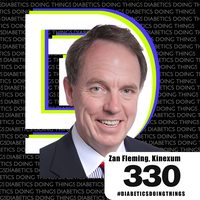
Zan Fleming - Founder and Executive Chairman of Kinexum


Episode summary
Zan Fleming spent years at the National Institutes of Health and then the FDA, where he helped approve some of the first statins and worked through the early insulin analogs. He describes diabetes as a low priority at FDA until landmark trials like the UKPDS and DCCT proved that controlling blood glucose actually reduced complications. Fleming later served at the World Health Organization and now leads Kinexum, advising companies on drug development. He talks with Rob about the daily burden of managing type 1 diabetes, what a practical cure would look like, and his concept of metabesity, the idea that diabetes, heart disease, cancer, and dementia share common root causes. They also discuss GLP-1 drugs and healthy longevity.
Key takeaways
- Zan Fleming says diabetes was considered a low priority at FDA until the UKPDS and DCCT trials proved that controlling blood glucose reduces complications.
- Fleming helped get the first statin approved in about 10 months, far faster than the typical four-year review at the time.
- Fleming says a practical cure for type 1 diabetes would mean treating it like hypothyroidism, a daily pill with no need to constantly check glucose.
- He coined the term metabesity to describe how diabetes, heart disease, cancer, and dementia share the same root causes.
- Fleming says GLP-1 agonists may help type 1 patients manage weight-related insulin resistance, though long-term evidence is still limited.
Chapters
- Introduction to Diabetes Innovation Series
- Zan's Journey in Diabetes Research
- Transforming Diabetes Treatment: A Historical Perspective
- The Evolution of Diabetes Management Tools
- Challenges in Diabetes Management Today
- The Future of Diabetes Treatment: Aiming for a Cure
- Understanding the Drug Approval Process
- Meta-Abesity: A New Perspective on Chronic Diseases
- Innovations in Longevity and Health Span
- The Role of GLP-1 Agonists in Diabetes Management
- Future Directions in Diabetes Research
- Memorable Moments in Drug Proposals
- Conclusion and Future Collaborations
Show notes
In this episode of the Diabetes Innovators Series, the conversation explores the evolution of diabetes treatment, the challenges faced in managing diabetes today, and the future of diabetes research. Zan, an endocrinologist and former FDA executive and Founder and executive chairman of Kinexum, shares insights from his career, including the historical context of diabetes management, the importance of A1C as a marker, and the potential of new treatments like GLP-1 agonists. The discussion also touches on the concept of meta-abesity, the shared root causes of chronic diseases, and the need for a focus on health span rather than just lifespan.
Chapters
00:00 Introduction to Diabetes Innovation Series
03:06 Zan's Journey in Diabetes Research
06:05 Transforming Diabetes Treatment: A Historical Perspective
09:00 The Evolution of Diabetes Management Tools
11:42 Challenges in Diabetes Management Today
14:41 The Future of Diabetes Treatment: Aiming for a Cure
17:57 Understanding the Drug Approval Process
20:32 Meta-Abesity: A New Perspective on Chronic Diseases
23:48 Innovations in Longevity and Health Span
26:27 The Role of GLP-1 Agonists in Diabetes Management
29:29 Future Directions in Diabetes Research
32:29 Memorable Moments in Drug Proposals
35:37 Conclusion and Future Collaborations
Resources:

Questions this episode answers
What is metabesity?
It's Zan Fleming's term for the idea that diabetes, heart disease, cancer, and neurodegenerative diseases like dementia share common root causes, so treating those root causes could lower risk across several chronic diseases at once.
What would a practical cure for type 1 diabetes look like?
Fleming describes it as treating diabetes like hypothyroidism: taking one pill a day and rarely needing to check glucose or worry about hypoglycemia.
Can GLP-1 agonists help people with type 1 diabetes?
Fleming says they're not officially approved for type 1 in the US but are used off-label to help with weight and insulin resistance, and he thinks they may also support beta cell function.
Why did diabetes drug approvals speed up in the 1980s?
Fleming says the UKPDS and DCCT trials gave the FDA a clear marker, A1C, and clinical proof that glucose control mattered, which helped drugs move through review faster, including the first statin in about 10 months.
Full transcript Searchable, with timestamps
Rob Howe: So, Zan, thank you for being here. I'm really pleased to have you as part of this Diabetes Innovator Series that we're doing, the Diabetes Innovation Series here at ADA. What we're going to do to start is just introduce yourself and your title and the company you work for. Good. Well, Rob, good to be here. It's an honor. I go by ZAN, which is short for Alexander.
Zan Fleming: I am an endocrinologist by background and an official at FDA for a number of years. But right now, I'm the founder and executive chairman of Kinexum and also the president of Catala Sensitive, which we might talk about later on, our pro bono, not-for-profit working situation.
Rob Howe: Well, Zan, thank you for being here today. And before we hit record, we were kind of talking about when you started at FDA and the sort of changing mindset in the public around diabetes. So let's talk a little bit about that time in researching you for this series. You worked at the FDA on improving drugs like metformin and statins and other drugs that are widespread today and used by millions of people. How do you, when you think back on those years at FDA, what comes to mind?
Zan Fleming: Well, I mentioned that at the time that I was first at NIH, then went on to FDA, diabetes was really a backbone. And this is about the time you were born. I went up to be at NIH at the early age. And then one day somebody asked, actually, a colleague of mine from medical school, if you come up to FDA just to help out because they were really getting busy. Long story short, what I thought would be a sabbatical was a career. But just at this time, we had these landmark studies that were coming out. First, the UKPDS, and then the DCCT, Diabetes Control and Complications Trial. And these were the trials that revolutionized diabetes. Because up until then, there was a debate as to whether it made any difference to control glucose. Can you imagine? I mean, incredible. As I've seen, people just let it rip. And of course, you know how it goes when you do that. People take terrible complications. But when I came to the FDA, again, thinking it would be a temporary thing, there was really very little for diabetes in general. We had sulfonylurea agents for type 2 diabetes, and we had insulin for both types. 1 and type 2 diabetes. And these are actually not modern insulin that we have now. So I just was muchier than good. I walked into a couple of things. Number one, this major change in how diabetes was looked at and subsequently an explosion in the development of products for diabetes. And that started with insulin analogs, but it went on to other things. Long story. But I also walked into FDA when it was changing. It was radically changing from also a bad water. So a place where people who couldn't get any other job went to find work and a wonderful opportunity. It was when FDA really started to get its act together. And I walked into the approval, the first step. A lot of the legwork had been done before I got there. But I got a lot of credit for approving the drug. And I set the all-time record for getting the drug approved at that time because then drugs typically took four years to be approved on average after the new drug application was submitted. So we did it in about 10 months. It was, again, sheer dumb luck because I didn't know to do anything different, but just to get it done. And I encouraged my colleagues who were also involved in this year to get it done.
Rob Howe: And we did. But how do you, in an organization like that, it's sort of at an inflection point, like you said, in the disease state with diabetes and heart disease, and then also in the institution where there's a lot of change. And you sort of as an outsider, not knowing what you don't know, right? You're just kind of pushing forward and managed to get something done at a rate that had never been done before. How did you, in the day-to-day, what did that look like? Well, of course, in real time, you don't see it.
Zan Fleming: happen as fast as you might recall, but it was an exciting time. I knew that this was going to be a huge drug. I didn't have any idea how big the statins would be. Eventually, a good part of the American population would be on one statin or another. And indeed, I didn't take it myself, even though I didn't have any major risk factors for cardiovascular disease. But it was an exciting time because we had these new drugs coming through, not just for managing diabetes, but for managing cardiovascular things. And there were certainly challenges. We had some very tough periods where we even had to recall the first colitisome that was approved. So it was not totally smooth sailing, but it was a very exciting time. And in part because of that sheer dumb luck of having the first statin with you and doing it at record time, the agency gave me all kinds of opportunities. I was stationed at the WHO in Geneva for a year and a half. And that was a life-changing experience through my family. And then the opportunity to represent the agency various expert working groups, politically, was another wonderful opportunity. So again, one thing led to another, but it turned out to be a wonderful 12 years
Rob Howe: You mentioned that at the time when you joined FDA, diabetes was the backwater. It was not in the forefront. It was not thought of or prioritized at the agency. What do you think drove the interest and got us from where we were then 40 years ago to where we are today here at FDA Scientific Sessions? So about half of the Scientific Sessions have taken place before that. Now, more so. So what do you think, I don't know, what were the drivers, the catalysts of that at that time?
Zan Fleming: Well, again, it was having a way of moving the needle and knowing that it made sense to do so. About this time, we also started using hemoglobin A1C as a marker. I hadn't done it. There was no marker before. Well, you could prick your finger if you really wanted to get a trouble, and very few people did. And you would put it on a strip and you would put it, you would compare it on a piece of paper. or the way it was often done, it was just to test your urine. And it was either 1 plus or 3 plus. And so it was 1 plus that you had a glucose, probably 180. So it was very crude. The A1C itself revolutionized the care of diabetes in general. It gave us the way of approving drugs and doing so with some confidence that there was going to be an improvement in clinical outcomes. Because again, we had both the UK PDS, which was done in type 2 patients, and DCCT, which was done in type 1 patients. They showed this clear correlation of place into control as reflected by A1C complications. cardiovascular complications, and then probably cardiovascular complications. So we had the mandate, and then we had the tool, and we started having more and more tools to control nutrients, and that started with better insulin analogs. The first insulin analog was Humalog, and that came about from Eli Lilly, And it was a very important addition to the armamentarium. And then later we had the fast-acting insulin analogs. And that was, again, an improvement. So we've made a lot of progress. And again, it's because we know why it matters. We know how to make a difference. We have the ability to make a difference. And yet, we're not anywhere near where we need to be. both for many people and certainly the adverse. We're just not controlling glucose and other risks.
Rob Howe: Let's talk about that a little bit, because I think you mentioned Humalog, which I still take today, still widely used and prescribed. And the mindset shift from we don't know what actual glycemic control will do for your long-term health versus today. Not only are we talking about, you know, this year, not only time and range measuring, you know, time and the range of blood sugars on a CGM, but now time and tight range, even taking that to the next phase. And I think some patients have felt that we're moving maybe too fast on that, where it's like, you know, we just got time and range. And that's a measure for me to like, you know, feel good. It's information, but, you know, sometimes can have a little bit of shame associated with it if you're not in the range that you want to be in. And now to even dial it in even more. So what comes to mind for you? Why are we not where we should be in, even though we've got amazing technology and we've got improved access, we've got better coverage. What are the things that are the obstacles that are providing us?
Zan Fleming: Well, first of all, it's not understandable that folks with diabetes feel worn out. and even feel like they can't even keep up with the technology. As you well know, we now have closed-loop insulin systems, and that's a great advance, but it's also a heck of a lot of work for any sense. Not everybody wants to sign up. So that's one of the big problems. If we can get closer and closer to good overall glycemic control, but it takes more and more energy to get that sort of diminishing improvement. And so what drives me is how do we cure type 1 diabetes? And by cure, I don't mean necessarily that you're totally off insulin or that you don't have occasionally checked your glucose levels. Imagine not having to worry about hypoglycemia. If you could just take a pranity once, you hardly ever needed to check what glucose does. Imagine what your life would be like.
Rob Howe: Yeah, I think, and just the anxiety, mental note coming off of that as well. You know, not having to wonder or have to say, well, I can't go do this spontaneous activity because I've got new experience of wisdom on board.
Zan Fleming: Yeah, and worse still, even though you're at absolutely great control, knowing that at any point in time you could wake up in the street having had a severe hypoglycemia, that is the constant threat of anybody who's on this, particularly people with type 1 diabetes. And that's what I mean by an effective or a practical cure, is that you treat your diabetes like it were hypothyroids. You take a little pill every day, and you more or less forget it. So that's what we need. We've got a lot of things going in terms of better ways of managing diabetes. But the goal should be to get rid of all the technology. not to have to depend on. You've got to look at those and look at normal walks.
Rob Howe: You know, I personally, and I haven't shared this with the podcast yet, so this will be kind of a student for this episode, for the listeners who are tapped into that. I'm now taking a mini medication for cardio for my heart because heart disease runs in my family and diabetes and heart disease are so closely related. And the medication is a one-stayloric pill, just like my hypothyroidism medication. Really simple. And I had this conversation with my cardiologist. I'm like, well, what's the manager? What's the treatment? He's like, oh, just a one-day-to-day pill. I said, well, okay, well, I'm managing my type 1 diabetes that I'm doing. My site changes and my sensor changes and my insulin refills and my carb counting, and I'm really involved in that. And I'm lucky to have the opportunity to get really great results from it. But if all we're doing is adding one more pill to the mix, sign me up. That's an easy thing to do when you're as practiced as somebody who's living with type 1 diabetes. So the idea of a once-daily pill to do all of the work that we've been doing and that needed all this technology is particularly exciting. It's sort of been my brain has a hard time comprehending how impacted that would be.
Zan Fleming: Well, if that drug you've added, this one, that's an SGLT2 inhibitor. That would be an example of something that we didn't expect. It's a drug that was approved for diabetes, for controlling glucose, and for type 2 patients. But it's been found to be very helpful for preventing heart disease and for controlling even heart failure to get started. Now, the problem is it's not approved in the U.S. for type 1 patients. It's been used off-label a lot and for good reason. There's plenty of evidence that makes it a reasonable tablet to be taken. But it's not a cure. What we want is you to be able to take a tablet or it has to be an injection, but one that truly is modifying the entire disease process so that you've got your own secretion of insulin from the pancreas. And the pancreas is an expert in measuring the amount of insulin that puts out. And so you don't get hypoglycemia when you have enough insulin secretion capacity in your pancreas.
Rob Howe: It's funny to think about how accurate the pancreas is in preventing hypoglycemia and regular. Well, it's really mind-blowing when you think about it.
Zan Fleming: The insulin-secreting beta cells make up just a gram of tissue. I mean, that's hardly anything. And yet, they're so important. They make all the difference between the life where you've got to really work at keeping normal and just being able to go left through the test and not worry about your sleep.
Rob Howe: Yeah, it never occurred to me how small they actually make up a...
Zan Fleming: It's just a couple of percent of the weight of the pancreas. I mean, it's just an incredibly small amount of tissue.
Rob Howe: The thyroid is much mature. So I want to, before we close on and move out to the next topic and close on this FDA timeframe, I'd always wondered, like, you know, What would surprise patients, people with diabetes, about what it's like behind the scenes of approving drugs and reviewing the data and the testing and the rigor that goes?
Zan Fleming: People would be amazed. In fact, I would like to work with you someday to produce a series on drug approval process. Yeah, I'm ready. Because people would be amazed. It's more like the man or the human space shot than anything else. It just takes literally thousands of people. Now, FDA is the tip of the iceberg, but to get that evidence, as you know, takes a lot of investigation, starting out with simple studies and people about the disease and then going through this process where for diabetes drugs, you typically need 4 to 10,000 people that are exposed to the drug for up to two or three years. And that in itself is a huge amount of work and money on the order. But at the FDA, you're seeing it. I think people would really be astounded at the number of people who are involved. And it's not just doctors who are looking at the clinic. It's people who understand the main factor and the analytical procedures, the testing that has to occur in animals and other ways. Just roughly speaking, I would say one of the great supporters are literally hundreds of people who touch that application in one way or the other. Now, it would come out of my former division, which has, on the order of 150 people, I don't know if any of you, there might be a dozen or so people from that division involved. but there are many others, disciplines that are arcane, you wouldn't even know they exist, that have to do with making sure the product is not just effective, but safe, and you can count on the quality of the product. And then there are all sorts of people who look at labeling of the drug, make sure that it really is compliant with the standards of labeling. And so the point is, people would be amazed at all is involved in getting a single drug approved. And that's not talking about all the people who were involved from the first time.
Rob Howe: Right. And I mean, I think that's something that I had to learn. And I'll take you up on that. I think it's so surprising. And then it makes sense, too. I think on one hand, as a patient, you know, there's a new I thought every year and it's, you know, it pushes things forward. It's like, well, you know, five years ago, incredibly expensive insulin pub still had a Game Boy screen, calculator screen on it. It's like, well, how can I keep up? But then there's so much safety and so much testing. It has to be able to work through a very different population and be safe, ultimately. So I think it would be very cool to see behind the scenes that they love to do that. You, as I'm researching, you have a term called metabesity that I'd like to talk a little bit about. It refers to a study, sort of a hobby of mine of studying the main killers of the U.S. public, which cancer, disease, diabetes, neurological diseases like Alzheimer's, dementia, and the likelihood that your average person in the U.S. has an 80% chance of dying from one of those. So talk a little bit about your work in longevity and what innovations are you and your peers coming upon me in your work?
Zan Fleming: Well, this is a passion of mine, Rob. I've been out at the agency for about 10 years. I was operating my firm, helping typically small companies, but also supportive companies to develop their products. And it just dawned on me. Why are we putting so much effort in just managing? diseases and why not prevent them? Put more effort into prevention. And then I came to realize that all the major chronic diseases, not just diabetes and cardiovascular disease, but even neurodegenerative disease, dementia, of course, and Parkinson's, and even cancer are driven by the same root causes. Some of the same, they're different in the degree that these drivers are responsible. But the point is, there is this geroscience hypothesis that all these diseases are driven by shared root causes. And if we can treat or deal with root causes, we can actually help to reduce the risk of multiple chronic diseases. And this actually ties in with aging biology, the notion that if you can reduce age-related chronic diseases, you can actually bend the aging process. And so that's become my passion. And I did coin the term metabesity to refer to all these chronic diseases. It's not just an elaborate form of obesity or diabetes. Metabesity refers to all these chronic diseases and cancer that do share these root causes. Now, we more recently evolved towards talking about healthy longevity or increasing health span. Very popular right now. And the reason is, for a couple of reasons, metabesity could be confusing. Some people thought it was just talking about metabolic syndrome or just some form of obesity, but no. What we're trying to do is to increase health span, that is, the period of life free of these chronic diseases and disabilities. and that's really what I think people are interested in. I don't think people are so interested in just living longer if it's going to mean living with chronic diseases or having poor quality of life. So we put the emphasis on healthspan and that can be defined as even a clinical endpoint for trials that could be designed to show that healthspan has actually increased. But also, it just makes sense for people to embrace the idea of, yeah, let's avoid having diabetes and dementia for as long as I can.
Rob Howe: Yeah, the idea of living better or longer, not just focusing on the background. So we use the term targeting healthy longevity or increasing health.
Zan Fleming: And so that led to our, first of all, putting a conference on, going back to the first one in 2017. And we did that in London, of all things. But we came back to the U.S. and got the thing going. It was very successful. And then the pandemic came and we went virtual. And that has led to our putting on sessions every four to eight weeks throughout the year. And the hallmark of our sessions is that we bring people together from diverse disciplines. We call it silo busting. And that's much needed because the people in the geroscience world don't tend to mix with people in the diabetes world. They're vertical. And it's almost amazing. It's like two parallel universes. So that's something we try to change. And not just scientific disciplines, but we bring other important aspects, economics, reimbursement, the things that are needed to ultimately make an environment where there will be investment, innovation, success, and finding ways of helping people like you, not me, because I'm over the point of probably benefiting, but you, Rob, to have a greater custody. And just as an example, that could be something like one of the well-known GLP-1 agents right now. The problem is these agents do have downside. We know that they've decreased muscle mass and bone density, and this is an issue that's being dealt with right here at ADD.
Rob Howe: You mentioned earlier about GLP-2 inhibitors being used for people with type 1 diabetes. There's research coming out at this conference about the GLP-1s. We're going to have someone, as part of the series, talk a little bit about that.
Zan Fleming: Well, that's one of the things I'm going to be very interested in seeing, because I do think there is a role for GW1 eggs and people with type 1 diabetes, for sure. because unfortunately many people with type 1 take on type 2. As they get older, as they use insulin more and more, it's really weight gain because of using insulin, which itself, when used as an injected form, tends to cause weight gain. So it's that vicious cycle. I mean, this is something you know.
Rob Howe: what all you obviously are doing a good job of well i have a lot of genetic and my style factors working in my favor but i think you know for someone that the first time it really occurred to me was one of my friends who is younger than me but had diabetes for much longer and her ability to absorb insulin and her her insulin sensitivity was very low and so because she had been her body had been used to and she often had to switch brands to try to you know help with that so when i think of, well, a GLP-1 agamist would help her be more insulin-absorbed, insulin-sensitive, so she could use less insulin to keep her triggering range and then reverse that feedback loop of the insulin-causing.
Zan Fleming: Well, anybody who has a significant weight problem is a candidate for GLP-1 agonists. So they have type 1 diabetes. And so type 1 patients should not be deprived of insulin. They can benefit from that standpoint alone by reducing the weight. You will reduce some resistance. That will help you to have better long-term outcomes in managing your life and diabetes. But for people who are young and are not overweight, there's a question, is there a role for GLP-1 agonists? Would they help to promote beta cell function or recovery? Is there some long-term benefit from that direction that could be helping, maybe not to fully reverse the loss of beta cells, but there is reasonably that there is going to be at least kind of a tailwind on beta cells by having GLP-1 agonists on board. So this is a prospect that GLP-1 agonists could have more of a role than just controlling weight. They could have more of a role for healthy people in general, even before they become hungry. It's conceivable that we can manage the downside effects like on the bone and on the muscle, that they could help people with a variety of substance addiction. as you know there's evidence that these agents help with things that are upstairs it's really
Rob Howe: fascinating i think like and the more that we are able to study it and that's something i'm learning too like i told you earlier this is my fifth scientific sessions over a number of years you know you the first year the drug gets approved and then the next year you see the first year of research you know the following year was even more and so i think with you know specific of GLP-1, now that it's so widespread, it's approved for so many different, you know, whether it's obesity or kidney or liver, working on type 1 diabetes. It's exciting. I do want to ask you, and I don't know how, you may not be able to answer this exactly right, but you're, so if you were thinking from a longevity, building health span perspective, What would your ideal pharmacological lifestyle or supplement protocol for someone? What would you? And there's so many myriad of factors that would go into that. But what would you think if you were to discuss something?
Zan Fleming: Well, today, what we know is that it makes a big difference on how well you manage your glucose and other metabolic measures. So that's a load breaker. You just got to do what you have to do to control glucose. But then what do you do on top of that, particularly you with your life ahead of you? What other things could be helpful to increase your health speed? I would say GLP-1 agonists look like a potential net benefit. We don't have the long-term evidence we need, but it's not crazy to be thinking about taking that, particularly if you have other reasons to take it, that would be to basically improve your cardiovascular risk. It's a stepwise progression of things that you can do, but they're based on increasingly less evidence. And that's why we're here today to talk about evidence from doing things or trying these things, not jumping to conclusions and taking medicines that may ultimately turn out to be a lot of health.
Rob Howe: Yeah. I think it's really interesting to see how fast those things are moving and being able to be here and have access to the presentations and the research early on, the posters even, just start with ideas and hypotheses and then make their way into it.
Zan Fleming: I would say, Ron, that as fast as things seem to be, it takes a long time. For example, the first GLP-1 agonist was approved in the early 2000s by Amylin, and it was just approved for glucose management. But then it was later on that liraglutide, a longer agonist, GLP-1 agonist was approved first for glucose monitoring, but it was the first agonist to be approved for weight loss. And so it was a GLP-1 agonist, but nobody was excited about it. not many people were using it. It was only relatively recently that we got semaglutide and tirzepatide. And now they suck the oxygen out of the room. It's the biggest therapeutic class in terms of market size in human history. And so you might think, well, things have just accelerated. And in a sense, they are. But also just want to point out It took 20 years before we got here. It started out with this drug class, beginning in the early 2000s. And now we're seeing, finally, we've got what seem to be silver bullets, at least in some ways,
Rob Howe: for controlling weight and buildings. It's really fascinating when you look at it. Timing in everything is such a big part of it. You know, it's got to be the right time.
Zan Fleming: Yeah, and it's also sheer dumb luck because I never would have thought that SGLT2 would be much of a thing, even for diabetes. As it turned out, not only is it a great way to control glucose, but as you know, we now know that it improves cardiovascular outcomes. So we just never know how things are going to go. And again, it comes back to how to get the evidence. Again, that takes a long time, a lot longer and more expensively.
Rob Howe: As we kind of close, I do have one question, a little crazy one. I want to hear, I imagine that there were some pitches or some proposals that came across the desk at the FDA. Let's just call them memorable. What's the most memorable, maybe outside the box?
Zan Fleming: I have so many memories, but a specific one that stands out would say, in those days, we didn't have this formality where you submitted a meeting request. It took suddenly two days to actually have the meeting. People could just walk into my office. And of course, that's no honor that Teddy Sebastian was here either. One day, a gentleman from an Eastern European country came in and said he had a cure for diabetic ulcers. And I said, well, wow, that's great. Tell me more. And he said, well, I've actually brought it right here with me. and he took a jar out of a paper bag and it had this submission. And he said, well, this is it. We have formulated this product and it really works. And long story short, it didn't go very far, if at all. But it stands out as one case where there was a disconnect between sort of the thought that you could just do anything and get it approved. walk it right in the door and put it on your desk. So that does stand out.
Rob Howe: That's a wild case. I like it. Zan, thank you, man. Thank you for being here. It was great to meet you. You're a great interviewer as well. You got a great voice for me. And yeah, thank you for being here and being part of the Diabetes Innovators Series on Diabetics Doing Things. And look forward to the next time we can have you on.
Zan Fleming: Look forward to that prevention. We're recording now, so we got to make it happen.
About Zan
Zan Fleming is an endocrinologist and former FDA executive who worked on early statin and insulin analog approvals and later served at the World Health Organization. He now serves as founder and executive chairman of Kinexum, advising companies on drug development, and is known for his work on metabesity and healthy longevity.