

Help T1Ds in Myanmar with Jerry Gore Action 4 Diabetes

Episode summary
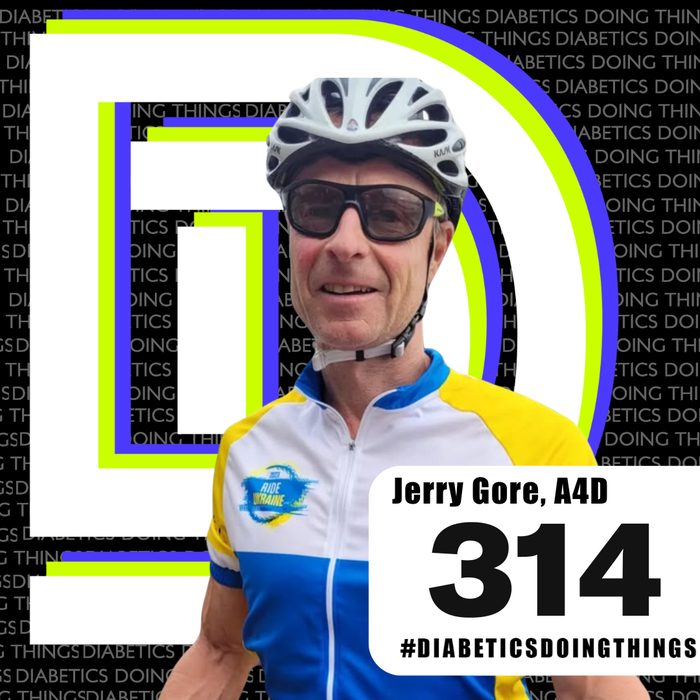
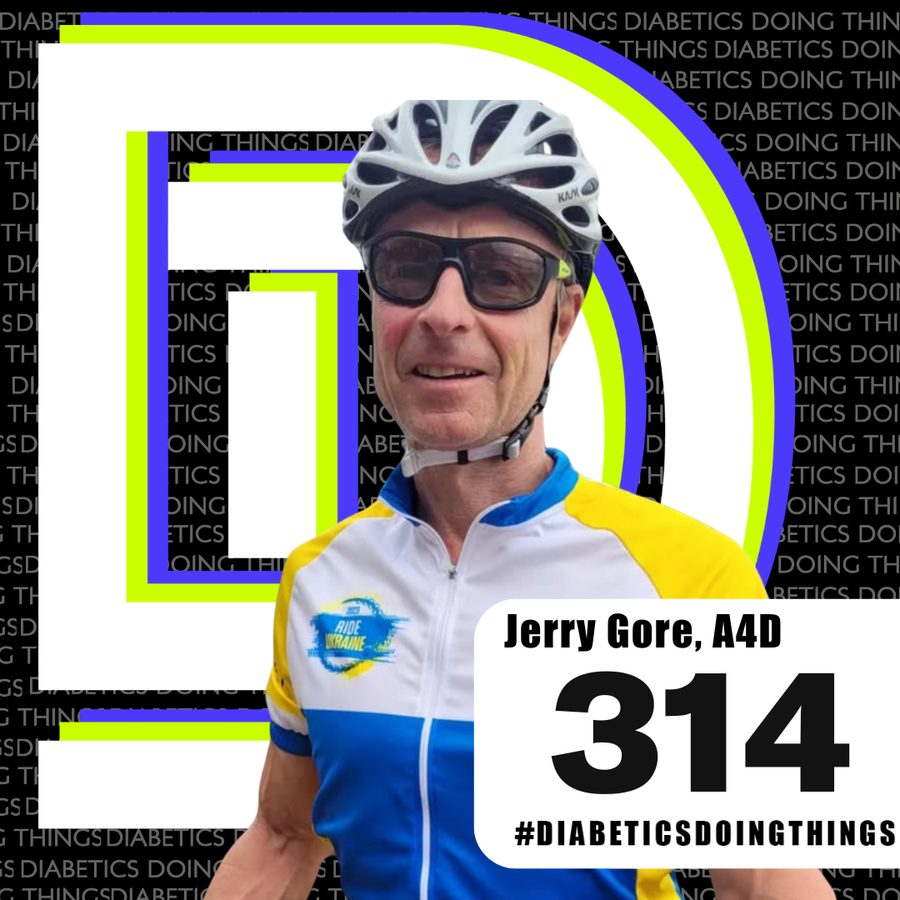
Jerry Gore is a type 1 diabetic from the UK and co-founder of Action for Diabetes (A4D), a charity supporting young people with type 1 diabetes across Southeast Asia. He joins Rob Howe to discuss the aftermath of the April 2025 earthquake near Mandalay, which destroyed clinics, insulin stocks, and homes for the 335 type 1 diabetics A4D supports in Myanmar. Gore describes daily life managing diabetes without electricity, clean water, or reliable medical care, and the urgent push to get insulin and test strips to displaced families before supplies run out. He also traces A4D's growth from 20 children in Yangon in 2015 to nearly 1,000 patients across seven countries, and explains why peer support and personal motivation matter as much as medication in keeping people alive.
Key takeaways
- Jerry says the April 2025 earthquake near Mandalay destroyed A4D's partner clinics and insulin stocks for the 335 type 1 diabetics the charity supports in Myanmar.
- Without electricity, families store insulin in clay pots buried under raised huts, and children as young as four or five retrieve it themselves, Jerry says.
- Jerry says A4D grew from 20 children in Yangon in 2015 to nearly 1,000 patients across seven Southeast Asian countries.
- Donations fund insulin and test strips meant to carry patients through the next six to twelve months, since Jerry says recovery from the earthquake will take years, not months.
- Jerry says peer support, like meeting other type 1s at camps and conferences, lowers diabetes distress and keeps him motivated to manage his own condition.
Chapters
- Introduction to Action for Diabetes and the Crisis in Myanmar
- Understanding the Living Conditions in Myanmar
- The Day-to-Day Life of a Type 1 Diabetic in Myanmar
- Impact of the Earthquake on Diabetes Care
- Current Situation and Urgent Needs
- How to Help and Get Involved
- Success Stories and Achievements of Action for Diabetes
- The Importance of Sustainable Support
- Reflections on the Diabetes Community and Global Disparities
- Future Goals and Expansion of Action for Diabetes
- Tipping Points in Diabetes Awareness
- The Power of Community and Motivation
- Connecting Through Shared Experiences
- Advancements in Diabetes Management
- Supporting Diabetes Initiatives
Show notes
In this episode, Rob Howe speaks with Jerry Gore, co-founder of Action for Diabetes, about the dire situation for people with type 1 diabetes in Myanmar following a devastating earthquake. They discuss the challenges faced by diabetics in the region, the urgent need for insulin and medical supplies, and the efforts of Action for Diabetes to provide support. Jerry shares personal stories of resilience and hope, highlighting the importance of community and motivation in managing diabetes. The conversation emphasizes the need for donations and support to help those affected by the crisis.
Donation links:
https://www.justgiving.com/campaign/myanmar-earthquakefundraiser
https://give.asia/campaign/a4d-myanmar-earthquakefundraiser#/donations
Chapters
00:00 Introduction to Action for Diabetes and the Crisis in Myanmar
03:03 Understanding the Living Conditions in Myanmar
06:02 The Day-to-Day Life of a Type 1 Diabetic in Myanmar
09:04 Impact of the Earthquake on Diabetes Care
12:14 Current Situation and Urgent Needs
14:50 How to Help and Get Involved
17:57 Success Stories and Achievements of Action for Diabetes
21:08 The Importance of Sustainable Support
23:49 Reflections on the Diabetes Community and Global Disparities
27:13 Future Goals and Expansion of Action for Diabetes
33:14 Tipping Points in Diabetes Awareness
36:35 The Power of Community and Motivation
42:28 Connecting Through Shared Experiences
44:30 Advancements in Diabetes Management
46:32 Supporting Diabetes Initiatives
Resources:
Questions this episode answers
How did the 2025 Myanmar earthquake affect people with type 1 diabetes?
Jerry Gore says the earthquake destroyed the clinics and insulin stocks Action for Diabetes relies on in the Mandalay, Sagaing, and Nay Pyi Taw regions, cutting off supply to 147 type 1 diabetics in the hardest-hit areas while families were displaced by flooding and heavy rain.
How do people with type 1 diabetes in Myanmar store and access insulin?
Without electricity or fridges, families keep insulin in clay pots buried under their raised homes, and children retrieve it themselves to draw up a mixed insulin dose before injecting, Jerry Gore explains.
How can someone help Action for Diabetes' Myanmar earthquake relief?
Donations can be made through the JustGiving and GiveAsia campaign links in the show notes, which fund insulin and test strips meant to last affected patients six to twelve months.
What is Action for Diabetes and where does it work?
Action for Diabetes (A4D) is a charity Jerry Gore co-founded in 2015 with Charlie Toomey that now supports nearly 1,000 children and young adults with type 1 diabetes across Cambodia, Laos, Malaysia, Myanmar, the Philippines, Thailand, and Vietnam.
Full transcript Searchable, with timestamps
Rob Howe: What's up, podcast fans? It's been a while since I've been on the feed here, but we've been doing a lot of work behind the scenes of diabetics doing things. Got an awesome event coming soon on April 30th, Exercise and T1D, Learning from the Experts. I will also be there. It'll be our first live panel and it will also exist as a podcast after. but today's episode was originally unplanned but because of the earthquake and the fallout from the earthquake in Myanmar in Thailand we went ahead and adjusted the schedule and brought back the podcast a little bit early so this episode is with Jerry Gore who is a person with T1D from the UK and is one of the co-founders of Action for Diabetes which supports T1Ds in Myanmar and unfortunately after the fallout of the recent earthquake and Jerry gets into this on the episode the insulin supply has been interrupted in Myanmar and the supply is dwindling however they got some connections and some help to get insulin there but they need your support so I've included links in the bio or included links in the show notes to justgiving.com and to give Asia. So you can donate on either of those links to support this episode. As you guys know, Diabetics Doing Things is supported by sponsors and this episode and all of our 2025 episodes are brought to you by Type Zero. Type Zero makes products for people with diabetes with no sugar and no junk. You can check them out at typezerohealth.com and even the Rob Howe stack, which includes protein, hydration, pre-workout, and creatine, which you can get all in one easy to ask us bundle. Use code Rob Howe at the checkout to save 15% on your purchases at type zero. Okay, let's get back to the episode. Hello, and welcome back to another episode of Diabetics Doing Things. We are telling the amazing stories of people with diabetes all over the world. And over the years, we have shared many projects from people that I categorize as diabetes creators. And those are people who see an opportunity or a gap that they can meet in the world, and then they bring that change to life. And my guest today is Jerry Gore. And Jerry is from the UK, and he's going to tell us about he's the co-founder of Action for Diabetes and lives with type 1 diabetes. And he is here because we have an emergency call to action. The earthquakes in early April 2025, Myanmar and in parts of Thailand, have caused a tremendous distress on the diabetes community that is supported by Action for Diabetes in Myanmar. And so Jerry is here to tell us a little bit about what you can do as a listener to support the work on the ground to get insulin to people who need it most in Myanmar. So first of all, Jerry, welcome to the show.
Jerry Gore: Thank you.
Rob Howe: And I'm really glad that you reached out and we were able to make this connection. And you are the first interview of 2025. I took Q125 off, but I can think of no better reason than to come to support our brothers and sisters with diabetes in Myanmar. So tell us a little bit about the situation there on the ground following the large earthquake in early April.
Jerry Gore: Okay, well, first of all, thank you very much for inviting me. It's a real pleasure to be here. I've heard so many things and read so many things about diabetes, diabetics doing things. I think it's brilliant. So well done to you and the whole team. Just to kind of get people focused on the country and what we're dealing with. So Myanmar is a country of 54 million people. It's located in Southeast Asia, just to the west of Thailand. So a lot of people kind of know where Thailand is, just to the west of that. and in Myanmar in total, the number of diagnosed T1Ds, type 1 diabetics in the country, about 540 people. That's not very much, basically because we're talking about a very poor country that doesn't have the screening that we enjoy and profit from in the Western world. so the number of t1d's on our action for diabetes program on our clinic support program is 335 in eight sites spread all over the country and miyamara is an amazing country it goes from the himalaya with 6 000 meter peaks all the way down to the sea and the delta right in the southern part of the country. Imagine a long strip of land from the Himalaya, very high mountains, freezing temperatures, all the way down to the sea and sweltering plus 40 degrees centigrade. So really, really hot. In Myanmar, we have about a thousand users accessing our Hello Type 1 website and Facebook page. So this is our educational platform. And we use this Hello Type 1 platform to broadcast information about what's going on. So the earthquake that affected Myanmar and countries all around it, I mean, the centre of this earthquake was in the middle of the country, situated around a big city called Mandalay. And the area where we have clinics and where we have hospitals were literally like 10 miles from the epicentre, which recorded 7.7 on the Richter scale. Bear in mind, even in Bangkok, over 830 miles away, huge buildings were either shaken or even knocked to the ground. So you can imagine 10 miles from the epicenter, the devastation was huge, especially given these are very poor regions and the buildings can't withstand such a shock. So we had 140.
Rob Howe: And Jerry, I want to tap in on that a little bit because I've just returned from Bangkok. And while there certainly is an income disparity and there are obviously people who are very poor and live differently than we do in the West in Thailand and in Bangkok. I want to tap in because Bangkok is still a very large metropolitan city. city. And I want to talk a little bit about Mandalay and the conditions that the people that you serve sort of live in, just to paint a picture for our viewers, because something I heard recently, you know, the poorest fifth of the world's population, so the poorest 20 percent, live in basically the economic equivalent of the Middle Ages. So, you know, there is a large disparity between how we are very used to living in the Western world and how our brothers and sisters live in the poorest 20%. So paint a little picture for how are the people that D4A serves in Myanmar, how are they living on a day-to-day basis?
Jerry Gore: So they are living probably as we did, like maybe 200 years ago. So there's a lot of crops growing locally and these are brought to market. People then come to market and they'll buy their food. And things like sanitation, regular clean food, clean water, these are all at a very low state. Now, that's partly because of the economic development or lack of the country, partly also because we're talking about a country in a civil war. And I'm not going to get into the politics of this, but basically this is a country where the military control and there's an uprising by the civilians. So we've got that going on, on top of an already impoverished country, and then the earthquake. It's pretty much like a triple whammy of things that have hit this country. So people are living without air conditioning, in 100% humidity, stifling heat. They're having to get water wherever they can, and they pretty much purify it by just boiling it. So medical facilities are really rare and badly equipped. And you'll see as many horse-drawn carts and chugging like motorbikes or scooters, as you will, actual cars. And those cars themselves are very beat up and run down. So it's, you know, people walk around with very, with inadequate clothing. A lot of people don't have proper shoes and clothing. Yet, like you've got in Thailand, if you went to Thailand, you go, this is first world. This is super modern. It's got everything. You go into the outer regions of Thailand, and then it starts changing a lot. And that's the same to a degree in Myanmar. So Yangon in the south is the capital, but if you go further north into the center and then the north of the region, it becomes very broken, very rural. The basic things that we take for granted in the Western world, like clean food and water, those are just not always possible to find.
Rob Howe: Thank you for that. And I think, you know, when you had first emailed me about A4D and the work that you're doing in Myanmar, when we think of the diabetes community, I think we take things for granted like hospital systems and getting connected with nonprofits. And while getting a diabetes diagnosis is never a thing that you look forward to, we certainly have advantages that our more rural populations across the world or more emerging nation populations don't enjoy. So what is the day-to-day life for someone who's diagnosed with diabetes? If they're fortunate enough to get a diagnosis, what are those sort of opening days like?
Jerry Gore: So it's completely and utterly different from T1D's experience in the Western world. So often people are living in rural communities. I've been in communities in Myanmar where the villages are in thatched huts and water is taken communally from a rusty bucket, which is dropped down into a hole in the ground, and that well becomes the local water for the whole community. So, you know, we've got T1Ds who are living in thatched accommodation. So every day, you know, to get access to the insulin, they don't have electricity, they don't have fridges, so they're going to keep the insulin in clay pots. These children, some of them as young as four or five, They have to scrabble underneath the house, which are always raised because of flooding. There might be spiders there, snakes, rats. They get the earthen pot out. They pull out the insulin. They draw up Mixtard. It's a mix of slow and fast-acting insulin. That's all we can afford to give them. And they pull it down into syringes, and then they inject. And that's the start of a type 1 day in a country like Myanmar. So, you know, when you're first diagnosed, it's normally because the child or the young person is in DKA, diabetic ketoacidosis. They're dying. The local, I'm going to call them caregivers, not caregivers, but the people in the community who look after the medical welfare of the community, they will try and give them herbal remedies and the child is or the young person is not responding. And eventually, if they can, they'll get them to some sort of a hospital, which might be up to 700 kilometers away. They'll get them there. And then hopefully, if we've got our resorters in place, they'll get to an A4D healthcare professional who's been educated in how to care for and recognize the signs of type 1 diabetes. And then they'll start to administer insulin. they'll keep them under watch for maybe two or three days and then they're sent home often on the back of a scooter in in boiling temperatures with their insulin closely guarded and kept as i said in clay pots we give them bgms blood glucose meters and we give them um up to four strips a day so that's four tests a day and in some of the very remote areas and sometimes that's down to two strips a day. We give them education, we give them support, and as much as we can, we try to increase their knowledge and the knowledge of the caregivers around them, their parents and friends and family, and the healthcare professionals who look after them to keep these children alive. And, you know, the reason I got into this work was because I had my own tipping point in 2006 when I was climbing the biggest wall in Africa, which happened to be in Madagascar. And there's the same story there. In a country like Myanmar or Madagascar, if a child gets type 1 diabetes, it's basically a death sentence. That's the end of the story. And that's what we're trying to change. So with education and support and medication, the child can live a full and long life. But as you can imagine we're under really difficult, challenging conditions anyway. And then you throw in a huge earthquake like we've just had and it becomes, yeah, really desperate.
Rob Howe: Well, and then that's if there's no interruptions to, you know, the supply chain or to the infrastructure, like we have this large destabilizing event, right? So, you know, now, And you when I was in Bangkok at the International Diabetes Federation Congress, you sent me a note saying all the work that you and A4D have been fortunate enough to do and has reached the people you've been able to support is now in jeopardy because of the earthquake and disrupting the insulin supply. Now, what was at least a start and a real step in the right direction supporting these people is in jeopardy because of the supply interruption from this large earthquake. So what is the situation now for the people under the care of A4D?
Jerry Gore: Well, the good news is that despite the fact that our clinics or the clinics that partner with us and the hospitals that partner with us, despite the fact that these have been destroyed, and along with that, all our stocks of insulin and hence the urgency of this crisis. Of the 147 type 1 diabetics on our program in this affected region, Mandalay, Sagaing and Nay Pyi Taw, 80% of those have been contacted. So 80% of the 140 T1Ds have been contacted. 66 of those on our clinic support program, insulin program, now have between one month and two months supply of insulin. And just 10% of those on our clinic support program have less than one month of insulin. This was our most urgent group in the last few weeks that we've been really keen to contact. Now, that's the good news. The bad news is that there's still many who haven't been contacted. And also just getting insulin to people is difficult because of this earthquake, because of the road networks, and because of the chaos within the country because of the earthquake. There's another factor that's really affected things, and that's in the last two weeks since the storm, since the earthquake, they've had a lot of bad weather. So heavy, heavy rain. So many of those have been displaced, and that's pretty much almost all of them have been displaced because people are living in tents and under shelter. And to give you an idea, we know one of the girls that we support is living out of the back of a truck with her family, and she describes herself as one of the lucky ones another one just to kind of give you an idea of the urgency and and how bad the situation is one of the young p1ds that we we look after her grandfather um well she was involved with her family in pulling her grandfather out from under a collapsed condominium that same day they had to bury him and that was because there was no sanitation there was no way to keep the body and uh so they they found the grandfather um and then they had to bury him the same same day so you know there's no there's no time really to mourn the loss of um close family and and friends um so far we've had just one death and we're very you know we we've worked really hard to to to keep the deaths now we've had one death uh one of the the type 1 diabetics on our program, the young man from Sagaing, and he was actually in a mosque praying when it clapped on him. Again, to kind of give you an idea of how exasperated and traumatized these people are, his mother was so devastated by the loss of her son that when we contacted her through one of our doctors, the mother was unable to express what support or help she needed. All she could see, all she could do was repeat over and over again that her son was now dead. And I think it's this sort of shock and devastation that is so tragic. And people are just literally recovering from like, yeah, sort of a end of the world type situation. And they're having to now live the reality of a destroyed country. Yeah. And I think just the lack of
Rob Howe: time to spend grieving and having to move forward so quickly just really resonates. It's like this is such a disrupting event and so many people are affected in so many different ways without really time to stop and take it all in. We're working with suppliers and our partners on the
Jerry Gore: ground to provide support through medical supplies, humanitarian aid, a mixture of shelters, water, some basic food requests and just trying to keep people alive. So, yeah, as I mentioned, development's really slow because there's so much infrastructure that's just been destroyed. But our coordinators on the ground are literally working 24-7 and they're still trying to find all the bodies. They're still trying to support people and contact everyone on our clinic support program who needs insulin.
Rob Howe: Well, and you had mentioned in your email to me, because my question then was, all right, well, how can people who want to support or want to help, how can they get involved? And we have two links, one through JustGiving and one through GiveAsia that I will link in the show notes for our listeners, because this is a way where even a small amount can go a really long way to support someone who by name, basically, with the number of people that A4D is supporting and helping in Myanmar, a small donation can go a long way. And I think when we talk about diabetes community, awareness and advocacy are huge parts of that and normalizing the diabetes experience and educating the general public. But there's also the third A is action, Like, what can we do to take action for someone who desperately needs it? And, you know, that's what really resonated with me about your story, even prior to, you know, the earthquake is that, you know, this was, there was a real need. Like you said, you were climbing the steepest rock face and learned about the insulin crisis and diabetes crisis in Myanmar. And now 10 years later, you've been able to support people and, you know, really like give life to people in a region that otherwise worst case scenario obviously could would be dead you know and i think the ripple effects of that and and so for anyone listening who's like you know i'm supporting other diabetes work and i've you know i'm i want to champion the community but like i want to make sure i'm focusing on things that really drive action you know when when someone like this who you know otherwise would be forgotten and or is even just untrackable by the system you Now we've identified them and we're able to give them a new lease on life. And the effects of that will be felt in that region for many years to come as they give back. And so I think that's like when you think of the fork in the road of you're diagnosed with diabetes in a third world or emerging country or in an extremely rural place with bad infrastructure or with a government that's not stable, health care that's not stable and you're able to find the information and the access to the medication that you need to live now you can be the change in your own community for the next person and so even 10 years in it's just the beginning of what could be lifelong generational change for people with diabetes in a part of the world that you know is is not in the forefront
Jerry Gore: oh for sure um just before i get on to actually what we have achieved within those 10 years because I'd really like to cover that. I want to make the final point. One of the reasons there's this urgent need of donations for Myanmar is to purchase insulin test strips, because what we're trying to do is get the T1Ds that we support in the country to have a stable supply for the next six to 12 months, because getting over this earthquake is not a question of months, it's a question of years. So that's our main thing. And of course, prices have already shut off a lot since COVID. But now, with the recent issues with importation permits, it's made the situation even more challenging. And with the earthquake, we're expecting further price rises and hikes in the cost of living. So, yeah, if people really can help with those donation links that you mentioned, Rob, that would really be excellent. But, you know, let's focus on some good news. And that That is, A4D was set up, same as year as diabetics doing things, 2015. So, Charlie Toomey, we were, Charles and I were both in the Royal Marines. So, think of like Green Berets in America. We did officer training together. And then we were in 4-5 Commando Royal Marines. We did our first tours of duty together. And that's how we developed our relationship. This is, you're talking about like 1981, 1982. We've kept in touch. We've gone our separate ways in terms of the countries and where we live. But Charlie, once he left the Marines, he then got into, he did an MBA and then started working for Eli Lilly in Thailand. And that's where he got his knowledge of insulin and type 1 diabetes. He's not type 1 himself, but he was tracking me in the early thousands when I was doing climbs and expeditions to raise money for children, bovorous children with type 1. And to cut a long story short, we started in Yangon in Myanmar with 20 children in 2015. And now we look after just under 1,000. It's actually 970 children and young people partnering with 37 hospitals and clinics in seven countries in Southeast Asia. Those countries being Cambodia, Laos, Malaysia, Myanmar, Philippines, Thailand, and Vietnam. So, you know, we've grown a lot. We're growing all the time. There's a lot of work to do. But we start from the basis that, you know, we all know that type 1 is fatal if untreated. And disadvantaged children and young people in Southeast Asia still suffer because of limited access to health care. And that's what we're trying to change. And we're making good inroads with that. We're partnering with a lot of governments, NGOs, health care professionals, industry players. And it's through these partnerships that we're able to grow. And one of our key points really is sustainability because you have a child on your program. If you can't keep giving that child or young person insulin until they're in the adult world and they can fend for themselves, then they're going to die. So you've got to be, all your work has to be sustainable. And we have to continue to supply and to maintain that supply. And that's how we set the NGO up. And that's how it's run. It was at first a UK registered charity, but we've kind of developed on from that now into like this international non-government organization. organization and that's why you know when you went to that conference the idf conference in in bangkok last last week that's why you would have seen us there because we're regularly at the conferences spreading the word giving the research back that we've that we've um got from the work that we do because we monitor every strip that we give out every drop of insulin that we donate We monitor it all. It's all tracked. And we've run or developed research papers, the first ever in this part of the world, on these young people and how they're developing. And it's just a really positive story because, you know, I could tell you about Churi. So Churi is this lovely 21, 22-year-old girl in Yangon in Myanmar. And she was one of the first on our program. She's still on a Mixtard two injections and four test strips a day. And her HbA1c is 6.8. Now, does 6.8 mean anything?
Rob Howe: Yeah, that's how we measure it here. Okay, fine. Yeah, average glucose of like 130 milligrams per deciliter. Yeah, yeah.
Jerry Gore: So she's on 6.8% HbA1c. And frankly, you know, that's excellent. I mean, you don't have to look too far at the average HbA1cs for young people in the States, in Canada, in England, in France, in Germany. That's pretty much excellent. And she's doing that in all the conditions that we've just described. She actually looks after her mother. She cycles to – she's studying at university. She's on one of our educational programs. She cycles to university every day. And she comes home, looks after her mother, and then starts knitting. And she sells her clothing for just a very small amount of money. But that allows her to feed her mother and to keep the household afloat. And she does all of that. She's a tiny lady, but very strong. And I'm always buoyed up when I hear stories like this, because it just shows you what you can do with very little.
Rob Howe: well and i think that's where you know it can it can be sometimes challenging where you're like well what can i do you're sitting here and you want to help you want to get involved there's so many different issues that you can address but you know it's it sounds like you know when you're able to find a way where you can make a real difference in someone's life even just providing them the basics allows them to support their family to treat themselves and manage their chronic illness in a way that allows them to be who they want to be, you know, for even whatever small donations you can come up with as an individual, like that's encouraging, right? I think we want to be part of that. And, you know, I think for people like me over here where, you know, sometimes it gets to be annoying to have to, you know, wait in line at the pharmacy or to write an appeal to your insurance company or to, you know, get a report that's less than ideal from your endocrinologist. But, you know, there are people out there who are just thriving and surviving on the bare minimum and we can help them to get a little bit better. And I think that gives me perspective. Yeah, totally. And no, I was just going to say, like, that was what was so encouraging for me coming out of the Congress last week, which is, you know, in this conference, we're all, you know, we're all in the same room. We all appear to be the same way. And our day-to-day lives for many of us are just totally different. And whether that's cultural acceptance or general knowledge or access to health care, access to medication, there's just so many hurdles that we often don't think of until we're able to be in the same room together or until we're able to have a conversation like this. So that kind of comes to me. I know you shared a little bit earlier, but for you and your team, how did you decide that Southeast Asia was where you could have the biggest impact? Because now 10 years since you've founded and started your work, supporting over 100 kids and kids and adults with diabetes in these areas, the need is great and there's still more opportunity. How did you land that Southeast Asia was going to be the place where you started your work?
Jerry Gore: It's a great question. I'm going to start with our tipping points, basically. So my tipping point was in 2006 in Madagascar, as I mentioned to you before. Charlie Toomey, my co-founder, his tipping point was in 2014. He had a conversation with a doctor in a small hospital in southern Myanmar. And now Charlie works or worked then. He was CEO for a company called DKSH. They're like logistical pharmacy suppliers. And he was doing some research, Southern Myanmar in the Delta. And he said, had she, this doctor, had she seen many, many cases of type 1 diabetes? And she replied, we don't have type 1 diabetes in this country. And this led Charlie to further investigate on this unlikely phenomena. And the outcome that was revealed was there was only 20 diagnosed cases that could be accounted for in the whole country. So these were all children and no adults who were identified. And this indicated a huge underdiagnosis of the condition. I mean, it's not rocket science. And that's not to mention minimal access to medical supplies and a very limited number of healthcare professionals with any experience in diagnosing or managing this condition. And, you know, the reason that he thought to ask the question about T1D was because his awareness of it, you know, like I said, his first job was with Eli Lilly. And that had raised his awareness and also through his interaction with me because he'd been following my expeditions. He'd been following what I'd been doing. I'd been working for various charities, raising money for impoverished children. And he knew about T1D and he knew how much I struggled with it. And yet I was living life to the field. I was living a full life, pushing the boundaries and climbing some of the most challenging mountains on the planet. I do all the different disciplines, but one of my things is new routes on big walls. So that's like El Capitan in Yosemite, where you live on the wall in those hanging portaledges or hanging tents called portaledges. But Jolly saw all that. He saw what I was doing with it. And how I was inspiring others through my actions and my mantra, which is Type 1 diabetes is not an excuse to live a fulfilled life. And so we started talking. He's had all his health care and all his business contacts in Southeast Asia. He'd already been living in the country for many years. He's married and he's got a number of children. We put it together and work from there.
Rob Howe: It's amazing how far you can go. Do you reflect like 10 years in? I know for me, with diabetics doing things, the reflections that I have are how different my life is since I discovered the diabetes community and how this entire advocacy world was happening without me knowing. When you reflect on the first 10 years and the difference between 2015 and today, what comes up for you?
Jerry Gore: Well, the first thing I've got to say is motivation for my own condition. So to me, we talk about diabetes being a medical condition. It's almost like a psychological condition. It's all about your brain. Because if you're motivated, you will test, you will control, you will inject, and you will generally, you know, manage your blood sugars. If you're not motivated, you know, I know people just go, you know, it's not for me. I'm just going to not do anything. And guess what? Five years' time, they go blind or they have a, you know, major DKA attack or something like that. So, you know, it's a condition that requires minute by minute, hour by hour surveillance. and that's all about motivation. And when I give back, I get a lot of that motivation myself because I can see how much these people are struggling just to live and survive. And I go, do you know what, Jerry? You owe it to yourself and to them and to your family to do everything that you can do to survive yourself. Personally, it's really important. And then also I think, to me, it's all about peer-to-peer support i've learned so much from talking to other type ones every time i read about say the stuff that you write about i can still remember your your article about your your food and what you eat on a day-to-day basis and i go thank goodness i'm not the only weird one right and you know you read stuff like that and to use your word it normalizes the condition and that's what you want and when you're in i remember the first i i joined a group called mad mountains for active diabetics run by a lady called nikki wallace and our first mad group was in north wales um in like 2003 so you can imagine there's 30 diabetics in type ones in a restaurant and we're all injecting together we're all shooting up injecting and everybody around us you could hear him going god it's a it's a it's a drug pushers convention right and um and it was just so funny because you're all there you're all together you're all supporting each other and of course we're all in bunk bed accommodation because we're staying at an outward bound center and of course you put 30 diabetics together you're going to have some hypos in the night right and of course we did. And then suddenly people are up and they're administering and helping others. And we're working together and learning together. And just in that first mad, mad interactive diabetic camp or meet that we had, I learned so much about how to do the things that I love, like climbing, walking, skiing with type 1 diabetes. So it's really helped me. And it's encouraged me to give back. And I also have this thing about you give back and you feel good about yourself and if you feel good about yourself you tend to do better things and more
Rob Howe: of them does that does that make sense yeah i mean you could be just reading from my thoughts about the same thing i think the momentum and the positive feelings that you get are kind of reciprocal you know like you because you have connected because you feel better because you learn more, you continue to do more and you continue to show up. It's like a flywheel sort of turning where you connect with someone, you give them assistance or you give them, you know, again, to use my word, normalizing what they're going through. And then they go do the same thing maybe for someone else. And like the ripple effects of that, I think are what really keep me going is like, there is some magic to the first time you're with five other people in a restaurant injecting. And then the other side of it is like, you know, when you're in a room and you hear an insulin pump or a CGM beep that isn't yours and like how you've been that person, you have that panicky feeling when you think that your devices are going off, but it's someone else and you can accept them as they are. I think that's to me what keeps me coming back is Like I lived for a long time in this world thinking I was the only one dealing with what I was going through. And getting involved in the community has totally changed my perspective on that. And, you know, you can look at the clinical data, you know, and it's reflected there. My outcomes are better. My diabetes distress is lower. my sense of community. And for me, like the purpose I found in my life is greater now because of that. And without the community, without, you know, even conversations like, yeah, I read Rob's email about the weird food habits that I had at one point. And that seemed normal to me. That's great. Otherwise, it's like, because it's hard to explain to people who aren't going through
Jerry Gore: it. Yeah, yeah. No, no, totally. And you can imagine when there's only like 500 supposedly type ones in a country of 54 million, when you put kids with type 1 in touch with other kids through the clinics, through the hospitals that we partner, they're so relieved. And their caregivers, their parents are so relieved. Okay, so we're not totally weird. We're not like the only people on the planet. There's actually other people like us. And the relief is visible, you know. And it's just such a rewarding thing. Because these poor little kids and the young people, we look after people up to 25, 26 years old, you know, just to get them in contact with people of the same sort of age who've got the same condition. And they start babbling away. And it's all local language stuff. And my Burmese is really pretty rough, right? But they all babble away in their own language and they're just so keen and happy to talk to the same people, the same language. And yeah, it's a really positive experience.
Rob Howe: It's so funny how no matter how different our day-to-day lives are, no matter how different our cultures are, you see the same benefits. I've seen the lights come on for people who are having conversations with each other about diabetes for the first time and felt that they were alone and feeling accepted. So that's so encouraging to me that no matter where we are, that was another thing coming away from the Congress. We have this one thing in common, this very challenging, but unique in its own way, lived experience. And to be able to share that with someone where you basically have no other things in common as a foundation or a conversation takes you a long way. It's like, man, we're way more alike than we ever would have thought. Yeah, no, totally.
Jerry Gore: And I think the good thing is that there's a lot of strides and movements to control this condition and to get to grips with it. There's a lot of tech involved now, and the insulins themselves have really moved on. But I mean, just to kind of put it in perspective, where if people listening to this podcast, they're probably used to like a 4mm or a 5mm needle. Our kids are still using syringes, so they've got to pull down their insulin with a long, like, two- or three-inch needle, right? And, of course, you know, that just makes it even more harder to actually do that. But these kids will do it, and they won't cry. They won't scream. They'll just get on with it because they know that, you know, without this insulin, they're not going to live. They're all bringing on to their lives. And that zest for life, that sort of striving to live, you can see it so strong in these people. And I love it. And it makes me want to strive harder and just not take anything for granted. I mean, the fact that I can just go into a fridge and open up, you know, I mean, as much insulin as I want. I've got plenty of needles. I've got whatever I need. And it's just such a privilege.
Rob Howe: It is. And, you know, I think for me, just learning about, you know, what other people are going through is and being able to help. And, you know, we have those links that are in the show notes if this is particularly inspiring to you. But I think, you know, obviously beyond the immediate acute needs, where can, you know, our listeners go to support the continued work of A4D?
Jerry Gore: Well, if they happen to live in Southeast Asia, definitely get in contact with us. We run grants. We're also always looking for techies as well, IT techies, because our Hello Type 1 platform, it's in local languages or local language in all the countries where we operate. And it's a vast resource because it's, you know, and it's the only resource in that part of the world for Type 1s. for caregivers and for healthcare professionals. And it's all there. But, you know, it's expanding exponentially. It's really growing. A lot of people contacting us now. We reckon we're in touch or reaching almost, well, more than 41,000 type ones in Southeast Asia. So it's, you know, it's a big platform. So if people are interested in supporting, get in contact with us, either through action4diabetes.org, the website, or through Hello Type 1, which is our educational platform. And if you want to reach out to me personally, jerrygore.com is my website, but you probably don't want to reach out to me. You want to reach out to people at Action for Diabetes. I'll tell you one thing I am doing. I'm really into cycle touring now, and I'm into fundraising through cycle challenges. So if people are into bikepacking and they want to do some long distance endurance challenges, A4D, they should get in contact.
Rob Howe: jerry i want to thank you for your time i know it's late um and for your willpower to continue to follow up with me and for all that you and A4D are doing for people with diabetes across the world and we're thinking of myanmar and really looking forward to hearing positive momentum and resolution from this current situation brilliant and thank you so much for the opportunity
Jerry Gore: I really appreciate it.
Rob Howe: Of course. Really, really happy to do it. So I'll let you get about the rest of your night. But it's a pleasure speaking for the first time. And I know we will definitely speak again in the future.
About Jerry
Jerry Gore is a mountaineer from the UK who lives with type 1 diabetes. He co-founded Action for Diabetes (A4D) in 2015 with Charlie Toomey, and the charity now supports nearly 1,000 young people with type 1 diabetes across seven Southeast Asian countries.