

What is Medtronic Diabetes & Abbott Partnership all about? - Ali Dianaty & Dr. Anila Bindal

Episode summary
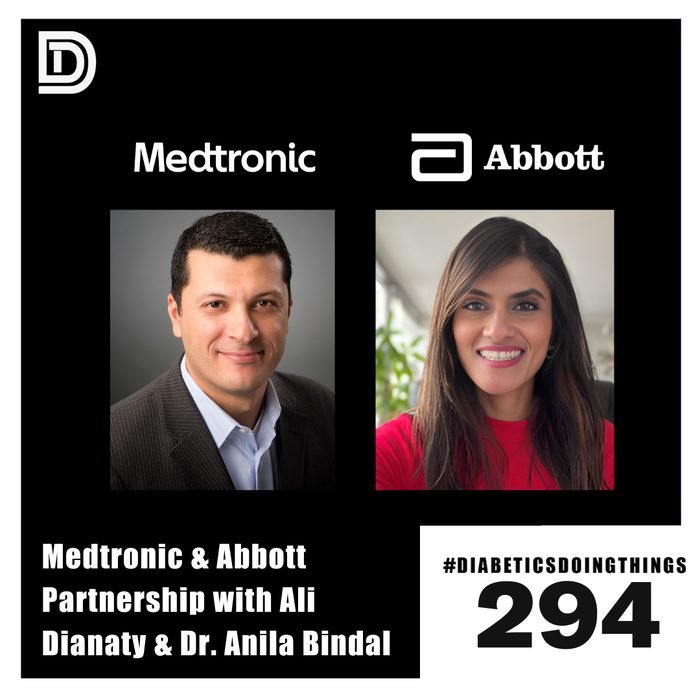
On August 7, Medtronic and Abbott announced a partnership to build a CGM based on Abbott's Freestyle Libre 3 technology that works exclusively with Medtronic's insulin delivery systems, including the MiniMed 780G and InPen. Host Rob Howe reads both companies' press releases, then talks with Ali Dianaty, senior vice president at Medtronic Diabetes, and Dr. Anila Bindal, associate medical director at Abbott's Diabetes Care business. They explain how two longtime competitors found common ground once their strategies aligned, what patients can expect as the integration rolls out across Medtronic's automated insulin delivery and smart MDI systems, and why both companies expect a relatively smooth FDA path since the underlying devices are already approved. They also cover market reaction and what more CGM choice could mean for people with diabetes worldwide.
Key takeaways
- Medtronic and Abbott announced on August 7 that Abbott will build a CGM based on Freestyle Libre 3 technology that works exclusively with Medtronic's insulin delivery devices.
- Ali Dianaty says the deal came together once Medtronic's AID install base and Abbott's CGM install base aligned strategically, after years of informal talks between the companies.
- Dr. Anila Bindal says Abbott wants Libre to become the most connected CGM in the world so patients can choose the delivery system that fits their life.
- Ali Dianaty says Libre sensors are already 510(k) devices, so he expects a relatively straightforward FDA pathway since both companies' products are already approved.
- Rob Howe notes Medtronic's stock rose about 11% and Abbott's about 7-8% in the month following the announcement.
Show notes
Medtronic and Abbott Join Forces: Groundbreaking CGM Partnership for Diabetes Care
In this episode of 'Diabetics Doing Things,' we delve into the surprising partnership between industry giants Medtronic and Abbott. On August 7th, they announced their collaboration on a Continuous Glucose Monitoring (CGM) system, combining Abbott's advanced Freestyle Libre 3 technology with Medtronic's insulin delivery devices.
We discuss the press releases from both companies, the strategic alignment that led to this partnership, and hear insights from Ali Dianaty, Senior VP at Medtronic Diabetes, and Dr. Anila Bindal, Associate Medical Director at Abbott's Diabetes Care.
This episode covers the potential impact on diabetes care, market reactions, and what this means for patients globally.
00:00 Introduction and Episode Overview
00:18 Breaking News: Medtronic and Abbott Partnership
00:53 Reading the Official Press Releases
04:47 Interview with Industry Experts
05:43 Impact on the Diabetes Community
10:14 Future Expectations and Patient Benefits
18:11 Closing Thoughts and Final Remarks
Questions this episode answers
What is the Medtronic and Abbott CGM partnership?
Announced August 7, it's a deal where Abbott builds a continuous glucose monitor based on its Freestyle Libre 3 technology that will work exclusively with Medtronic's insulin delivery devices, including automated insulin delivery systems and smart insulin pens.
Will the new CGM work with the MiniMed 780G?
Yes, eventually. The companies plan to integrate the Abbott-built sensor with Medtronic's AID systems like the MiniMed 780G and its InPen smart insulin pen, though no commercial availability date was given.
Is this different from Medtronic's Simplera CGM?
Yes. Medtronic also received FDA approval for its own Simplera CGM the same week. Ali Dianaty says Simplera will eventually connect to the MiniMed 780G separately from the Abbott-built sensor, giving patients another option.
Why do Medtronic and Abbott expect a fast FDA approval?
Ali Dianaty says it's because Libre sensors are already cleared as 510(k) devices and both companies' underlying products are already approved, so the integration shouldn't require extensive new clinical data.
Full transcript Searchable, with timestamps
Rob Howe: Welcome back to another episode of Diabetics Doing Things. We are telling the amazing stories of people with diabetes from all over the world. And occasionally we get some industry updates that are relevant to our lives with diabetes. And sometimes we get a little extra scoop on it. And this is one of those times. On August 7th, Medtronic and Abbott announced that they are going to be working together on a CGM that will come as part of Abbott's product line, so very similar to the Freestyle Libre 3, but will be operated with Medtronic's AID system. So imagine the 780G system, MiniMed 780G system working alongside the Freestyle Libre 3 together, which is pretty exciting. So I think this kind of came as a big surprise to most of the industry. What I'm going to do today is I'm going to read the actual press release first, just so that you guys get the information that's out there. And then I have some audio that I recorded with Ali Dianaty, who's been on the podcast before, is the Senior Vice President of Research and Development, Clinical Regulatory and Operations at Medtronic Diabetes, and Dr. Anila Bindal, who is the Associate Medical Director of Abbott's Diabetes Care Business in the United States. So they come on the podcast. I honestly, the way I recorded it was very different. And I thought it was just, I wasn't prepared necessarily for a total interview. So it's been recorded secondhand, but it actually sounds pretty good. So I'm really happy that we're able to use that audio. So here is the PR newswire. And it says Abbott enters global partnership to connect its world leading continuous glucose monitoring system with Medtronic's insulin delivery devices. Abbott announced today a global partnership with Medtronic to collaborate on an integrated continuous glucose monitoring system based on Abbott's most advanced world-leading freestyle Libre technology that will connect with Medtronic's automated insulin delivery and smart insulin pen systems. The integration of Abbott's CGM sensor with Medtronic's AID algorithms will enable automatic adjustments of insulin to keep glucose and range. The CGM sensor, designed to work exclusively with Medtronic devices, will be developed by Abbott and sold by Medtronic. AID systems improve health outcomes while reducing the burden of constant decision-making for people with diabetes who use intensive insulin as part of their overall therapy. AID systems can benefit people with both type 1 and type 2 diabetes who require multiple daily injections of rapid-acting insulin, currently estimated at more than 11 million people globally. Financial terms of the partnership and timing for commercial availability were not disclosed. This collaboration with Medtronic is the latest in a series of Abbott partnerships aimed at improving and streamlining at diabetes care, giving people more choices to confidently administer their insulin. So that's the Abbott press release, and I'll also read the Medtronic press release. Medtronic is excited to announce a global partnership with Abbott to expand CGM options for people living with diabetes. Under this unique agreement, the companies will collaborate on an integrated CGM based on Abbott's most advanced CGM platform. Abbott will supply Medtronic with a CGM that will work exclusively with Medtronic's smart dosing devices and software across both automated insulin delivery and smart MDI systems. These systems, including the Abbott based CGM will be sold exclusively by Medtronic. Medtronic expects the original equipment manufacturer agreement to be accretive to diabetes revenue and neutral to diabetes gross margin. Additional financial terms of the partnership and timing for commercial availability were not disclosed. Medtronic continues to advance its pipeline for people requiring intensive insulin delivery, including next generation durable and patch automated insulin delivery systems, smart pens cgms algorithms software and services and will continue to expand therapy indications then we have a couple of quotes from from Que Dallara and jared watkin but effectively what this both press releases say is that medtronic and abbott are partnering on the CGM. It's going to be made by Abbott and sold by Medtronic to work with InPen and 780G right now, but automated insulin delivery pump systems and smart insulin pens going forward. It doesn't disclose what the commercial terms are, and it doesn't say when the products are actually going to be available. So in this interview, we kind of just regurgitate a little bit more, but you get more information behind the scenes because I think what's really interesting for both of these companies is that historically, they don't really work together that closely. And I think when you look at some of the diabetes manufacturers and med device companies, they work independently. Abbott has sort of been the exception there. They work already with a couple of other automated insulin delivery systems. But Medtronic historically has been very sort of like Apple, where they only really work with their own products. And in a conversation that I had, I was able to ask that question, because I think it's really important for patients to have choice. And they were really concerned about maintaining the good customer experience by keeping all of their products in house. And that I think has changed. And it's interesting for you guys who are more investor-oriented. Since this news, the stock price for Medtronic is up. They're up 11% in the past month. And then Abbott over the past month is also up 7%, almost 8%. And you can see from the time of the announcement to today, the stock price has increased. So the market likes it. I think I like it for people with diabetes. I'm excited to see what these two companies work on together. And again, more choices. Because when we talk about choices, Medtronic also announced on the same day that they got FDA approval of the Simplera CGM, which is currently not the version that was approved does not connect to the MiniMed 780G, but that is next up on the docket. So when you're thinking about what the future looks like, you're going to have a CGM option from Medtronic and a CGM option under this Medtronic and Abbott partnership that will work with Medtronic products. So if you're like me and you wear and love your Medtronic products, more choice and more options are coming your way. Okay, so please enjoy this interview and conversation. I was in my car on my wired headphones, but Ali Dianaty and Dr. Anila Bindal were very generous with their time and gave us some really cool information of what this was like behind the scenes. Enjoy. Yeah. And so first of all, thank you guys for, for being willing to have the discussion. And I know there's a lot of things that like are in the release and there's been a lot of coverage, obviously from the release last week or two weeks ago. Now I've been a part of the Medtronic team for a long time. And I've also worked with, you know, on the Abbott side, just communicating with like mostly like through the PR agency on a couple of things, but this is a huge deal that the two companies are working together and you know what it results in for patients is more choices and more options and you know obviously that's a that's great so you know i think from my perspective outside of just having you guys really kind of not regurgitate but just reinforce what was you know what the release covers like i'd love to talk a little bit about like working together and like how how this process started this has obviously been something that's been to work for a long time and you know how you guys found that kind of common ground to make this thing you know come to life so we have been we've always had an active relationship but with that at least having conversations though we were competitors because there's always a chance that something would work out and so of course this was was that chance we figured out a i would say a pretty creative way of making it work for both companies And, you know, in light of that landed on something to your point, that's super exciting, we think for patients. And so, you know, this was not something that, you know, we woke up one morning and said, Hey, maybe it'd be a good idea. We've been talking about, you know, all kinds of options through the years. And this most recent one, you know, basically came to light, mostly because our strategies align in terms of where we wanted to go. And so they have a very large install base, obviously, as the biggest CGM player out there. And we have a very large AID install base, which is a place where they're trying to also get into. They started from type 2, and now they're moving into type 1 more readily. And that's where we are. We're all insulin dosing. And so the line up there just made sense. And, you know, as I said, after, you know, quite a few months of work to figure out how to get it to go, figure out how to get it to go.
Anila Bindal: All right. I'm just going to do audio then. But so, yeah, and just to add on to that, I know, Abbott, one of the things that we've been really excited about is Abbott is really trying to figure out how to. We know that people that are living with diabetes, when they have more options and they have places, they can really do, they can kind of tailor their devices that they want to use towards what is really going to work for them. And so that's why Abbott is wanting to be the most connected CGM, have delivery technology, be the most connected CGM in the world so that people can try to help manage their diabetes more effectively and just be able to, where patients can kind of find a way to use the systems that don't really let them focus more on living their life rather than trying to think about all of the different decisions you have to do every moment with the lipopathy things as well.
Rob Howe: the next question from the the release that a lot of people have is like what can patients start to expect to see in the coming months obviously in the release it talks about it's an adapted version of the freestyle libre 3 that will be built to work with Medtronic AID systems so as we as we are sort of waiting for the next phase of this like what should patients keep an eye out it's kind of a tougher question because I think the, the, the key thing that we're starting on is the integration now, but our intent is basically to have it available on everything that, that we make. So AID, smart MDI kind of, you name it, it becomes available on, and of course also, you know, our, our future pipeline as well. So to see that it's now part of our family alongside of what's, what will be simpler as well as really the intent. And again, it comes back to allowing people to have the choices they want and make whatever decision they would like to make on how they want their system to work.
Anila Bindal: And I think just to add on to that, I think the other part to sort of look out for and be excited about is really coming back to exactly like Ali said, it's really this partnership really helps to demonstrate how important it is that the dynamic comes together and works together to really keep patients in mind at the forefront and really just think about what it is that people living with diabetes need. And I think this continued progress is really helping to demonstrate that ultimately, you know, I think that's the core. I know Abbott really focuses a lot and I'm thinking a lot about what do people need? How can we help make that happen? And how do we continue to innovate and work together to help make people living with diabetes be the central component of how we're functioning?
Rob Howe: I love that. I think the key term in that is work together, right? And so what we're seeing are like two very large leaders in diabetes in different areas now kind of coming together and serving that overlap. You know, like anytime I look at any sort of partnership, collaboration, merger, right, you look for two companies that are serving different audiences and there's an opportunity to bridge that gap. So I think for patients, though, it's a surprise that, you know, two leaders like this would be able to work together. And I think that's something that as I've gotten a little bit more into the industry, it's a small world. You guys all know each other. You guys meet on a regular basis at conferences and things of that nature. So just for you both professionally, as you look at the impact that this can have, like, and looking back at the last few months of conversations, you know, how exciting is it to be able to kind of, I don't know, push forward into this sort of new area working together? I think it's super exciting. And I think the good news is that it's super exciting for everybody involved, including, of course, the patients. And so for us, you know, people living with type 1 now have, you know, obviously a lot more operative options coming, which is great. And, you know, honestly, Rob, internally, people were shocked that we did it too. It's not like it wasn't a surprise for our own employees to hear that we decided to do this. So, of course, you know, there's a lot of shock and awe to start with, oh, wait, you know, why are we still doing our own sensor? What is going on here? Blah, blah, blah. And, you know, after we worked through, you know, the strategic intent, you know, for both companies, it became very obvious to people why we went ahead and did it. And now it seems pretty clear that sometimes players have to get on the same team to win. And that's what happened here.
Anila Bindal: Yeah, absolutely. And I echo everything Ali said. And then also, you know, I think that ultimately we have Abbott as a leading CGM brand and is really the world leading technology globally for CGM. And then we have Medtronic, who's a global diabetes leader with insulin delivery devices and really bringing together that expertise is something that can really be helpful for people broadly living globally all around the world. And again, it goes back to really keeping patients and people living with diabetes at the forefront. And I think that's something that's really wonderful about the broader diabetes leading technology brands companies is just really trying to think about where do we want to focus our efforts? What do we need to do to make that happen? And so just like Alisa, I know that this was definitely a surprise even if I eyes up as well as many of my colleagues. But ultimately, it makes sense to be able to bring these devices together and help to connect them. So, again, that we can focus on trying to make living with diabetes much easier for people.
Rob Howe: It's encouraging. I think it was a surprise in a good way. It was funny. I was at ADCES with some of the members of the team, and there was a presentation about the MiniMed 780G system. And then immediately the first question after the presentation ended was about this partnership. And I think there's a lot of buzz. And like you said, like two global leaders coming together. For me as a patient, it looks not just like more choice, but more access, more integration. and that is, I think, something that will spur and continue to have sort of ripple effects within the global diabetes community as we continue to get more people on CGM, more people on AID. And as we see the clinical impact of the outcomes on that, that's something to be that for people who aren't currently on AID systems or aren't currently on CGM for one reason or another, to be able to push that forward is extremely exciting.
Anila Bindal: Absolutely. And we know that automated insulin delivery helps with being able to have better health outcomes. And we know that it also can be helpful for somebody to not feel like they have to do with constant, have this burden of constant decision making so that they can really focus on, you know, whether they're working or enjoying activities with family and friends rather than kind of in the back of their mind constantly thinking about what's going on with their blood glucose and should they be getting small boluses or anything of that sort. So we know automated insulin delivery, including like Medtronic, really helps a lot with those health outcomes. And so the more we can work together to try to help make that happen, the better we think that living with diabetes potentially can become. And now with this partnership, Abbott is partnering with four of the main insulin pump companies. And again, really focusing a lot on trying to figure out how to make Libre technology the most connected CGM in the world.
Rob Howe: Very exciting. So, okay, so as our listeners are going to their endo appointments here in the next year or so, and just to keep an eye out on the news, I'm sure there will be big announcements when this plan is fully ready for the market. But to me, it's and then again, this could be my own ignorance, but it seems like because these products are already FDA approved, it should be a relatively straightforward pathway to getting them. Getting them approved for integration again, that could be my own. Yeah, we hope so. One of my big things on my wall is guard against blind optimism. So I have to make sure I'm doing that. But is that is that kind of the way you guys are approaching it? Yeah, we hope so. I mean, the good news is that historically Libre sensors are all 510(k) devices. So that helps in making this a much more straightforward pathway through the FDA. And globally, for that matter, given that both of them, our product and their product are already approved, it's always easier to start from there than new clinical data and everything else that's needed for it. So at this point, we have relatively good certainty and confidence of how that's going to go and we're not expecting surprises. Awesome. Well, any other sort of closing thoughts? I appreciate you guys giving your time this morning. I apologize for the technical difficulties, but anything else to close on that you think would benefit our listener? I mean, from our side, I think we're excited and, you know, really, really happy to be able to offer this option for people alongside of our Simplera sensor. You know, I look forward to continuing to move things forward on automated insulin dosing and smart MDI for people living with type 1.
Anila Bindal: And I think, first, and also, I think they're just really excited to be able to have more choices available for people. And I'd say even for my patients, I'm just really thrilled and excited to know that they can come and talk to their doctor and try to figure out what it is that works best for them and really be able to help make it so that whatever devices or tools that they end up choosing saying really do end up fitting in with their life and they can make sure that they really tailor to their needs. So really, really excited about that. Awesome.
Rob Howe: Well, thank you guys so much, both of you for your time today and for giving your thoughts on this amazing announcement of partnership to our listeners. I really appreciate it.
About Anila
Ali Dianaty is senior vice president of research and development, clinical, regulatory and operations at Medtronic Diabetes. Dr. Anila Bindal is associate medical director of Abbott's Diabetes Care business in the United States.