

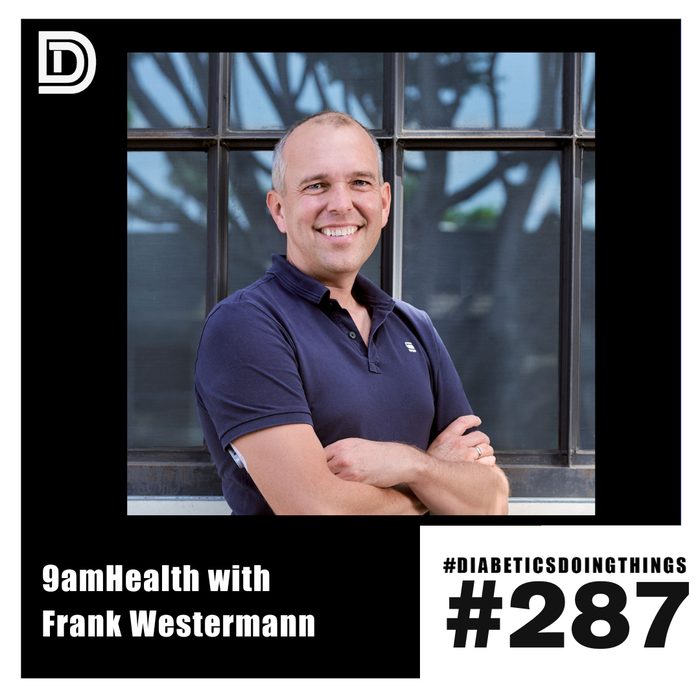
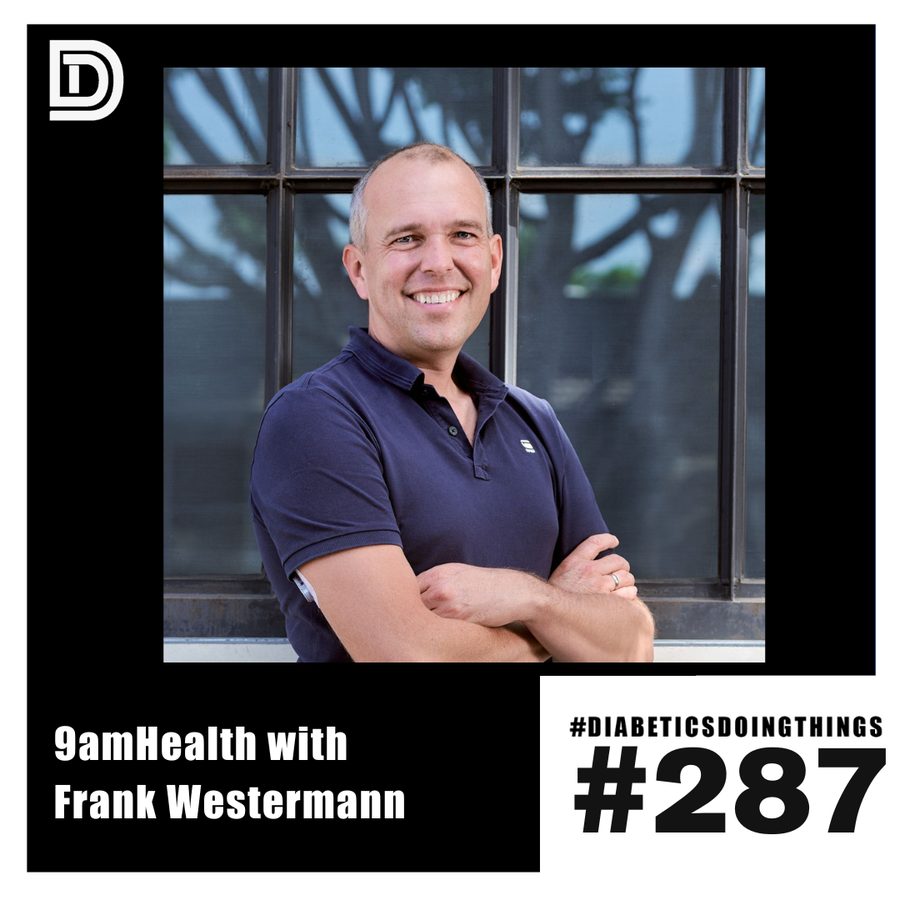
9amHealth with Frank Westermann

Episode summary
Frank Westermann was diagnosed with type 1 diabetes in 1997, right after high school. He later co-founded mySugr, a diabetes logging app, and ten years after that co-founded 9amHealth, a virtual care platform for prediabetes, type 2 diabetes, high blood pressure and high cholesterol. Westermann describes how 9amHealth connects patients to endocrinologists, lipidologists and obesity specialists within hours or days, and sends at-home lab kits or technicians instead of requiring clinic visits. He talks about a Spanish-speaking care team, a cash-pay option under thirty dollars a month, and a patient whose A1C dropped from 9.4 to under 7 on metformin. The conversation also covers reaching underserved communities and where AI can and cannot replace a care team.
Key takeaways
- Frank Westermann was diagnosed with type 1 diabetes in 1997 and later co-founded mySugr before starting 9amHealth.
- 9amHealth treats type 2 diabetes, prediabetes, high blood pressure and high cholesterol, but Westermann says it does not currently treat type 1 diabetes.
- Westermann says patients can see a specialist within hours or days, and at-home lab kits or visiting technicians replace clinic trips.
- Westermann says the cash-pay plan costs under $30 a month, with metformin available for about $5 a month.
- Westermann shared a patient whose A1C fell from 9.4 to under 7 on metformin alone, and later moved to Mounjaro once she regained insurance.
Show notes
In this episode, we talk with Frank Westermann, the Co-Founder of 9amHealth, a virtual care platform focused on providing holistic, specialty-level care for people living with cardio-metabolic conditions like prediabetes, type 2 diabetes, hypertension, and high cholesterol.
Frank shares his personal journey with type 1 diabetes and how that experience led him to co-found 9amHealth, which aims to make it easier for people to access the care and support they need to manage their chronic conditions.
Main Topics Discussed:
Frank's diagnosis with type 1 diabetes and how it shaped his career path (00:00:57)
The evolution from Frank's previous company, MySugr, to the launch of 9am Health (00:04:04)
9amHealth's approach to providing "complete cardiometabolic care" for patients with type 2 diabetes and related conditions (00:06:56)
How 9amHealth is working to address barriers to care in underserved communities (00:14:12)
Patient success stories and the impact of 9amHealth's affordable, accessible care model (00:21:34)
The role of AI and technology in the future of healthcare (00:24:56)
Where to find Frank:
Questions this episode answers
Does 9amHealth treat type 1 diabetes?
No. Westermann says 9amHealth currently only treats type 2 diabetes, prediabetes, and related conditions like high blood pressure and high cholesterol.
How much does 9amHealth cost without insurance?
Westermann says the cash-pay option costs under $30 a month, with generic medications like metformin running about $5 a month.
Can you use 9amHealth without a lab nearby?
Yes. Westermann says 9amHealth ships at-home lab kits or sends a technician to a patient's home or office when no lab is nearby.
Does 9amHealth offer care in Spanish?
Yes. Westermann says the platform and its care team, including doctors, are fully Spanish-speaking, with culturally adapted lifestyle recommendations.
Full transcript Searchable, with timestamps
Rob Howe: Hello and welcome back to another episode of Diabetics Doing Things. We are telling the amazing stories of people with diabetes all over the world. And I'm actually really excited to see, even geographically, where our conversation takes us today. Our guest is Frank Westermann. He's the co-CEO of 9amHealth. And I have seen, and Eric Trey and I have seen over the past few years, a lot of really exciting messaging and content from the 9am platform. and even have friends of ours in the diabetes community who are working at 9 a.m. Frank, thank you so much for coming and joining us on the show today. Thank you so much for inviting me. Well, it's our pleasure. And over the years, we've had the privilege to interview people with diabetes first, but also people with diabetes who are in leadership positions with companies who are in the diabetes space. And so that's usually where we start our interviews is your life with diabetes. So let's kind of start with how it's informed your career and like when you were diagnosed and kind of let the conversation go from there.
Frank Westermann: Sounds great. Yeah. So I think, you know, just like probably for all of us, the diagnosis is pretty life changing. I guess I do the same thing for me. I got diagnosed 27 years ago in 1997. And, you know, I would say like, you know, I had a few ideas. It was right after high school, basically in the summer, wanted to go to a certain university and do stuff, you know. But then I basically spent my summer in the hospital and figuring out my life with diabetes then. And I would say that kind of then, you know, after, you know, it took one or two years to get my life somewhat back on track. I did, you know, I worked, I finished my college. I started to work, you know, as a project manager in the telecom industry. then it took a while you know to realize that like like living with diabetes not just like big pain in the ass but it also you know something that makes me unique you know and gives me kind of the patient perspective and I've started to think through with some friends you know hey let's develop products that are great to use for people with diabetes that they really enjoy to use and help them with their health and make them more engaged and yeah and then it set me basically on the track of, you know, going into, yeah, I don't like to call it the diabetes industry, but at the end of the day, we're working in the diabetes industry. It's kind of interesting
Rob Howe: how the diagnosis of diabetes can change your career path and like inform and you learn about things. We've had guests in the past who were diagnosed as teenagers and had never even really been interested in health or fitness and then gone on to become athletes or bodybuilders or coaches and things of that nature. So, you know, it is kind of an interesting insight. You start to learn a lot about not only, like you said, diabetes being a real pain in the ass to manage for you on the day to day, but also kind of thinking outside of yourself and, you know, thinking that other people are likely having these issues as well. Yeah, for sure. And I think, you know,
Frank Westermann: also the funny thing is that after diagnosis in the first few years, I didn't even want to kind of talk to other people with diabetes because i didn't thought any kind of reason to do it it was most of them were like yeah i mean yeah of course you know we're sad it was mainly depressing conversations i had until i met one of my co-founders at mySugr the company i founded in 2010 and was just really a cool guy frederick and we were connecting on a personal level and not only because we were both living with diabetes and that actually kind of also started the whole process of thinking through, hey, there must be more of us. We do not be only kind of diabetes as kind of something that is so defining the lives in a more negative way, but it's just something we live with and we need to deal with it and try to be better every day.
Rob Howe: Well, let's talk a little bit about that journey from mySugr to today, where we see 9am health kind of growing and evolving. How would you characterize where you started to where you are today and then also where you're going and what the future may look like yeah that's that's great
Frank Westermann: question because i think you know what we're doing right now 9am health certainly kind of builds on top of everything we learned at at mySugr because also today a lot of my my co-founders co-workers we worked together for for 10 years now almost you know and already at mySugr and now at 9am health so when we're starting mySugr imagine year 2010 the iphone was just i don't know one and a half years old. There were no connected devices. And it was just really the beginning of kind of the mobile revolution. And we're thinking, oh, well, instead of writing all our diabetes data into a paper diary, let's develop an app that's really fun and entertaining to use, you know, and by engaging people with diabetes with a therapy, they'll be healthier. And I think we did an amazing job in doing that and started with a gamified diabetes app and it evolved it into like a data hub basically and i think it is still a great company and i'm still super proud of what we have built up there but also kind of it showed in a certain stage that if you if you focus on data and you're not able to prescribe medications and have like deeper clinical and medical impact on the therapy it's always tough you know to keep engagement over a longer period of time and to really kind of individual manage everybody toward better outcomes. And that's what we are now focusing on 9M Health with. You know, we are really able to provide on a specialty level care to people who live a bit broader, not only with diabetes, but with the cardiometabolic syndrome. That means we manage and help people to get more healthy. We live with pre-diabetes, type 2 diabetes, hypertension or high blood pressure, high cholesterol and yeah, we struggle with waste weight, but we are currently focusing on 9amHealth.
Rob Howe: I'm glad you brought up the phrase complete cardiometabolic care, because as we were reviewing the website, preparing for this interview, that was the first time I had heard that phrase used in that way. And something that Eric Trey and I have been talking a lot about over the past few weeks coming out of ATTD 2024 is the five main killers of people in the United States, right? You're looking at cardiovascular disease, you're looking at diabetes and high blood pressure and cancer and Alzheimer's and dementia and liver disease, kidney disease, all of these factors, which are sort of now starting to be addressed by many of the medications and the treatments out there and kind of under this metabolic disease kind of umbrella. So how do you, and how is 9amHealth's like whole body approach to chronic conditions and managing chronic conditions? Like how did that come to be as you guys were, you know, working on the evolution of the platform?
Frank Westermann: Yeah. So I think, you know, first, I think it's important to understand that, you know, 9amHealth health, we do not like, we live with type 1 diabetes. It's different disease. But I always find that kind of the care process is almost the same. So everybody needs to check their glucose levels, their labs, check in with the doctors, take meds and work. But what is clearly different, I think that type 2 diabetes oftentimes comes with high blood pressure, overweight, and high cholesterol. So, and you really need to see the patient holistically and not isolated. I think especially when you're younger, you get diagnosed with type 1 diabetes. it's probably a more isolated problem you have whereas with type 2 diabetes it clearly has got more than you know just your glucose level and that's what we address with our whole body approach we always see a patient and kind of holistically try to really understand kind of where is this patient coming from what other chronic condition this patient live with and then try to kind of find the best way to treat, develop an individual treatment plan and yeah, and just support the patient on the way to get healthier. So is that how you would kind of
Rob Howe: characterize the way 9am health is different from maybe other virtual care platforms or, you know, more of like a primary care virtual platform in that way that you're really addressing
Frank Westermann: the patient journey holistically? Yeah, I think that's certainly one component. And then there's several others, like what we are really mastering is like providing fast access to specialty labor care. So on our platform, our patients get access within a few hours or days to endocrinology, lipidology, obesity care specialists. So where even we here, you know, living in San Diego, very kind of, of course, urban area, but it takes me three to four months to get a new appointment with my endocrinologist. So, and we just, you know, with a finger snap, we get you in front of a specialist who can treat your disease. And then I think, you know, what also makes it very different is that, again, I think that has been kind of the secret of success with mySugr. We, for example, my co-founder also used to type 1 diabetes. There are so many other kind of co-workers who look with diabetes, with chronic conditions, and we develop everything, every product, But every touchpoint we have with our members from like student-lens, from a patient perspective. And we just designed an extremely smooth care process. Where you typically see kind of all these individual components of care. Like taking them with your doctor, doing your labs, picking up your meds. You know, totally disconnect. But we designed the care journey that connects all these thoughts. And makes it really enjoyable to be on that care journey. and I think what's also super important, we design it in a way that fits into your day-to-day life. Just to give you an example, we don't, I mean, getting into appointments really fast or, you know, not needing to go to a lab, but have a lab technician coming to your home or your office to do your labs. These are the things that really help people to kind of stay therapy compliant because we all know, you know, how annoying it is and how fast you can forget kind of your next lab appointment and all these things. Do your labs, you know. And so we want to create really low hurdle to check in, you know, with this individual point in your care journey. And I think we create a reanimating care journey.
Eric Trey: I think you were bringing up the care journey because I think for me, I want to be really specific about the differences between the type 1 care journey and the type 2 care journey and what that kind of looks like at 9 a.m.
Frank Westermann: When you live with type 2 diabetes, It is a lot of times, you know, you have other comorbidities which are as important as your diabetes. And when we talk about the metabolic syndrome, a lot of times, you know, overweight is one of the main factors that is driving type 2 or high blood pressure and high cholesterol. And we try to find the best care plan. And it does not necessarily need to involve a medication. but at least that can start with lifestyle modification, education, and then maybe kind of a set of medications that help you to lose weight, to lower your blood pressure, to get better cholesterol level, and of course also treat your type 2 diabetes. And that is really then the holistic approach that we have.
Eric Trey: So for type 2, the option does exist for like a semaglutide or a, you know, tirzepatide or SGLT2, whatever, all that stuff. You can do that with a type 2. Yeah. Okay. And then for type 1s, what are the options for people with type 1 or 9AM?
Frank Westermann: We currently do not treat type 1. So we only have patients with type 2. But you're exactly right with, you know, what you said earlier, because we had prescribers basically being fully emerged or kind of even developed. They developed our care protocol. So they pre-precrived the medication. They understand the labs. So it's all kind of a very coherent care journey.
Eric Trey: okay so before i let you interrupt me Rob i have one more so type 1s eliminated then i'm thinking about prediabetes so is 9am health an option for people
Frank Westermann: who are living with prediabetes for sure yeah absolutely so that's somehow also where we started so because we have very extensive lifestyle medication programs and we have coaching amazing coaches that really help you to understand kind of your individual problem and they're great to help you be continuously motivated to eat healthier, you know, be more physically active. And then again, you know, if a medication is the right thing to support that journey, we have the prescribers who can give the medication. And I think it's a great setup for pre-diabetes or whatever kind of continue with.
Rob Howe: Well, it's interesting as well for me because earlier you were talking about the barriers, even if they're psychological, to reordering supplies or reordering labs or rescheduling to your endocrinologist. There's been a lot of information published recently about the shortages of endocrinologists, not only here in the States, but also globally. Those are, you know, especially for people living in rural areas or in low-income communities. In the U.S., like one of the things that dramatically impacts your health span and lifespan is the zip code that you're born in. And so, you know, while we, Diabetics, are really making sure that when we highlight tech innovation and pharmacological innovations, we ask, like, how is this going to help those disproportionately affected by type 2 diabetes in these low-income communities? And it sounds like a lot of it is based on the ease of use of engagement within the platform. And like you said, being able to get a conversation going with a care provider within minutes versus having to wait months and then drive a certain number of miles potentially outside of your regular routine. So how are you addressing holistically the breakdown of prediabetes and type 2 diabetes, obesity, heart disease, and other metabolic syndromes in the disproportionately low-income communities in the U.S.?
Frank Westermann: Yeah, I think you were kind of touching on a great point because even if you live in a very rural area, you get access to the best endocrinities of the country, basically. And that is amazing. The next thing is, for example, if there's no lab, we have patients and within a one, two hour drive, there's no lab around them, no doctors. So we are virtual, but we do provide at-home labs or we send out lab kit that you patch on your arm and we get a wet blood sample. So not these kind of dry blood samples. samples so we get a full set of biomarkers with that blood sample and we can provide with the same level of lab accuracy that you get in your stationary Labcorp or Quest lab so and it's sent by mail you send it back by mail so it's very easy everywhere available then our solution is available in spanish our whole care team doctors are fully spanish speaking we we adopt also like Like for example, the lifestyle recommendations tool, kind of food that maybe you as a Mexican would enjoy more or whatnot. So we treat everybody very individual and culturally appropriate. I think another point is when it comes to exit. We are, although it's nothing we are currently kind of emphasizing a lot on, we have a direct to consumer cash pay product. even if you do not have healthcare insurance, we have a very affordable, easy access product that gives you access to great care for less than $30. So where you get to a full care team, you get prescription medication costs, generic medication are very affordable. So we're talking about formant for $5 per month. So the problem is just, I think that people need to know about it. And that is where the real barrier comes into play, not only for 9am health, but I think also for a lot of other companies and services that are out there.
Rob Howe: Yeah, that was my question. And, you know, we have done a lot of work in the last few years in North Texas to try to reach specifically people living with prediabetes, type 2 diabetes in food insecure communities who are not engaged with their health care provider or even the health care system outside of if they go to the emergency room. And so they don't know where they're not plugged into the diabetes community. They're not listening to diabetes podcasts. You know, they don't even have a primary care position in many cases. So, you know, how are you approaching that challenge of finding these patients who, you know, either don't know they're living with metabolic disease or diabetes and or also are just sort of disengaged or disenfranchised because they don't have an endocrinologist around them where they've had negative experiences with the health care system? I probably am very disappointing.
Frank Westermann: To be honest, because I think, you know, it is so hard to engage with the really, really disengage. I think it has certain levels. We can engage with anybody who is Googling and trying to find a solution. They will find us. But I really think for these communities you were talking about, you need to be there in person. You need to talk to the people because a lot of times it's also an issue of trust. And that can only be built. And the best way to build up trust is really to stand in front of somebody and tell them, hey, I'm a doctor. I can help you right now, right here. Because everything else is really, really hard. That's unfortunate.
Rob Howe: It is. And I think that's not a disappointing answer necessarily. I think it's an answer maybe we expected. It's a truth.
Frank Westermann: It is like really the sad truth.
Rob Howe: And we experience it as well. I think, you know, as we're trying to make sure that our messages reach the people that need it most, it's challenging to work around these very real obstacles that are out there. And sometimes I think for me, I default to technology and social media because that's my experience. But maybe something as old fashioned as direct mail is the best way to reach these people in some cases. So it's really, I just am interested in how very tech forward companies are addressing this very non-technical problem to get people to engage with something that they just don't know about.
Frank Westermann: I think, you know, what we do in the company, but also like a lot of the individuals who work for 9amHealth, it's just help the community, help initiatives who work directly with people who struggle to get access or people who are currently having a hard time, you know, like people with diabetes in Ukraine, for example, who have a hard time to get access to sensors, test strips, insulin, and just try to be helpful. But I think that the problem, the real problem is how you do it on scale. And that's where I think so many things have been tried. I think the best way is just really go in person, into the communities and try to help.
Rob Howe: So just to really kind of put a bow on this section, 9am Health offers a lower cost subscription to the platform for around $30 a month, which could include getting prescriptions like metformin at $5 a month for a supply. So all in for someone living with type 2 diabetes, getting the, what we'd call maybe critical diabetes medication and a care team for under about $50 a month.
Frank Westermann: That's right.
Rob Howe: I think that in itself is just a way for people to say, okay, well, if someone asked me on the street, well, what do you know about 9am Health? What do they do? They provide a low cost tech accessible platform to give people with prediabetes and type 2 diabetes a holistic approach to managing their chronic illnesses at an affordable cost compared to the competition. I know you were not born in the U.S., so there are obviously other health systems that have it figured out maybe a lot better than we do, but that's something that I think is really encouraging for people who are really struggling to find the time or the right care partner to help them manage their illness.
Frank Westermann: No, and I still believe that this is an amazing product. But as we were talking earlier, it is really hard to match the need with the product. And I think we are not the only ones who struggle when we address kind of communities who are harder to address that matching process. That's a real problem. And because I even think there are great initiatives out there to provide access to more affordable insulin or in general other medication. But people do not know about it. If they know about it, it's super complicated. And I think the matching, that's where the magic should happen, but that's currently where it falls short. But we at least, you know, we provide that product. So if you want it, if you need it, there can access to it.
Rob Howe: Well, great. Well, I'm really encouraged. I feel like I understand it better now. And so I think for us, like as we are, you know, continuing to add resources to our website and our community that we now know kind of where we could send people who might fit. that need. And I'd love to talk about too, like patient success stories. Do you have any sort of favorite success stories from the 9am health patient community that you guys share maybe internally about, you know, some of the impact that the platform is able to have?
Frank Westermann: Yeah. I mean, overall, that's kind of always our most favorite thing, you know, to see the impact we have on our members' lives. And maybe because we were talking earlier about the direct consumer and cash pay service. Yesterday, we were talking to the patient that she lost her health care insurance. She onboarded into our cash pay product. I think she onboarded with an A1C of 9.4. And so we prescribed her metformin and she was for three months metformin and already her A1C went below 7 to 6.9. And I think metformin is a very, very underestimated drug opinion. It is really cheap and it has big impact. your glucose levels. Then she got access to health care insurance again. And she's now with us for over a year, constantly getting trained by our coaches. And A1C is very stable. She's now on Mounjaro and is doing really well. So, and I think that that's a great example. She's a truck driver, so she can't be on insulin. And I think that's a great example how members' journeys can be and that we are able to cover you throughout different stages with insurance, without insurance and yeah, keep you healthy.
Rob Howe: I think that's a really interesting perspective as well, because when you're engaged with the platform, like you're saying, she didn't have health insurance. She was still able to use the platform from a cash pay perspective and get the generic medication like metformin. And then as she got back on health insurance, she was able to get a more, a newer drug with Mounjaro. And so I think that's really interesting, like being able to track that patient journey and see those outcomes of like folks who do not have insurance coverage versus ones that do and still be able to stay on the same platform versus changing providers or changing pharmacies, which can be very difficult.
Frank Westermann: Yeah, no. And I think one thing, and maybe I forgot to mention earlier, one thing that's really underestimated, and probably you both can relate to that. I think managing our disease, and no matter if type 1 or type 2, you know, I think every chronic disease where you have the multiple check-in stages that you need to go through. We as 9AM Health, we take on that burden of managing your prior authorization, your insurance changes, and all that. Having not to deal with the administrative burden of what we all go through, the big deal. It's so hard to explain it when we pitch to employers or PDMs or whatnot. But as a patient, I think you can all relate to the given that this saves a lot of time. If someone just takes care of that, you know, reminds you, hey, medication will come or now you have a lab appointment. We need a new prior author. We take care of that. You know, so I think that's a big deal.
Rob Howe: As somebody who's been dealing with prior authorizations and appeals a lot this year, I can tell you that, yeah, to have somebody to help with that would be extremely, extremely helpful. I have kind of a last question as we close or as we kind of look towards the future. AI and artificial intelligence and machine learning is extremely buzzworthy in the tech world at the moment, obviously extending into healthcare and extending into diabetes. You know, Apple this week had their large keynote where more AI integration is coming to iPhone and other Apple products. So how do you think AI is going to impact the healthcare industry both this year in 2024 and beyond? And how are you preparing for that at 9 a.m. health?
Frank Westermann: Yeah, so I mean, I find AI fascinating and it will, especially in healthcare, will have a gigantic impact on drug discovery and genetic analytics, like in so many fields. When it comes to 9am health, how we are leveraging AI is currently more to gain efficiency within how we individually kind of manage patients, better understand where they are in this therapy to help our care members, be the doctor or dietitian, make better and prompt decisions. So, and I think there are so many super interesting use cases. And for us, currently, kind of the most interesting use cases are where we can basically leverage AI to free up the time so that our guests have more time to deal with patients, talk to them, and we take care of them versus doing all the administrative work. it's kind of our first step you know and it's very down to earth not fancy fancy approach to ai or first step we are doing but we can clearly foresee that that can go a lot further even to a point i think realistically we'll also soon have ais who can prescribe medication and they kind of guide that whole care process for you so i don't think that will be in a very distant future okay is it
Rob Howe: really interesting because you mentioned earlier going from manually filling out blood sugar logs not that long ago to now being able to engage with an app that is user-friendly and fun and gamified. And now also as CGMs continue to improve and CGM reports are able to be shared with your care team, preparing for appointments just gets a little bit easier as technology continues. And then like you said, there's a not too far distant future where a lot of those interactions can be automated or use AI to help them be more streamlined and improve that patient experience. So it's exciting. And I think also... Go ahead. Yeah.
Frank Westermann: I don't know if you guys are looping, but to me, you know, it feels like AI has been there for forever, you know, the last few years because it's so magical. Not AI, of course, but it's magical automated.
Rob Howe: I do. Yeah. Yeah, I think that actually gives me a different perspective because people say AI when they really mean machine learning and they really mean like algorithms. And I think as people on hybrid closed loop or on looping systems, we understand all too well, like two pieces of technology communicating with each other and making decisions on our behalf. So, you know, just another way that diabetes gives you a little bit more insight to the technology world than we think at first.
Eric Trey: Before you guys get too excited with technology, let's come back to what? There are still some things that it sounds like only humans can do though. So I appreciate you guys being like this part, it needs to be one-on-one patient to care team. And then this part, a machine can do if we put the right information into it. Yeah. Because there are some parts that AI can't take over. Okay. Independence Day, Will Smith scared me straight, ladies and gentlemen. I don't want to live in a world where everything is robots. So please.
Frank Westermann: No, and I 100% agree with you. I mean, I'm still, I'm blown away by the power and almost magic of AI. But I think the empathy that a caregiver can invest and reflect on someone else. You know, it's just an AI, at least for now, you know, cannot do it. I hope an AI will never be able to do it. I fear it can, but yeah, I agree.
Rob Howe: I think, too, there is going to be a component. And you mentioned this earlier, like taking off some of the burden of the tasks and the repetition, which ideally, and I think this is in the not too distant future, whereas right now, AI is being used to create things and generate things where we just haven't, as humans, really adopted or learned the freedom that it's going to give us to be more empathetic, to be more human, and allow the things that we've gotten used to on the tech side, whether it's data entry, or data collection and, you know, email communication, digital communication, those things can now be streamlined and take less time and take less burden so that our people will have more time to connect, more time to think, and more time to feel and connect with each other. And I think that is the, at least the utopian AI universe. I was going to say, if you say so, you know what you
Eric Trey: sound like? You sound like the people who help create like things like Facebook. They're like, oh people will never be lonely again they'll just have these communities on the internet and now we live in an era where people are lonelier than ever so that's true i'm not putting on my tinfoil hat with you today you enjoy your utopian future i will stay here in reality but i don't think i don't
Rob Howe: think the founders of facebook thought that the people that i met the first day of college i would know every important event in their entire life from the history of humanity they did not know Well said.
Eric Trey: They were creating Independence Day. I'm trying to warn you guys. Like, oh, but anyway.
Rob Howe: I love it. Frank, thank you so much for the time today. I learned a lot about 9am health and I'm really interested to continue to work with your team to create more information to help bridge that obstacle of telling the people who need this the most that it exists and how to use it. And so, yeah, I think it's a good learning experience for us. And as we continue our work to try to work on ending diabetes stigma, which we took a pledge to do, I think merging the help within the type 1 and type 2 communities and working collectively together, I think we're going to end up in a much better place. So thank you for the time today and appreciate the work you guys and your teams are doing for people with diabetes. And definitely I want to shout out some of the employees that work at 9am Health who are friends of the podcast as well. So you guys are great.
Frank Westermann: Sophie says hi, by the way. so okay and thank you so much uh guys for inviting i really enjoyed getting to know you guys and talking to you and thank you so much for your interest in here
About Eric
Frank Westermann is the co-founder of 9amHealth, a virtual care platform for cardiometabolic conditions. He was diagnosed with type 1 diabetes in 1997 and previously co-founded mySugr.