

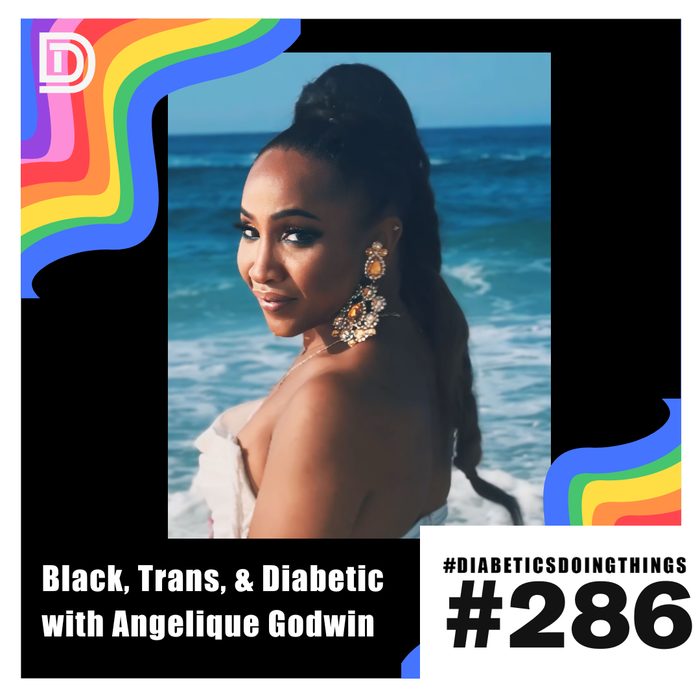
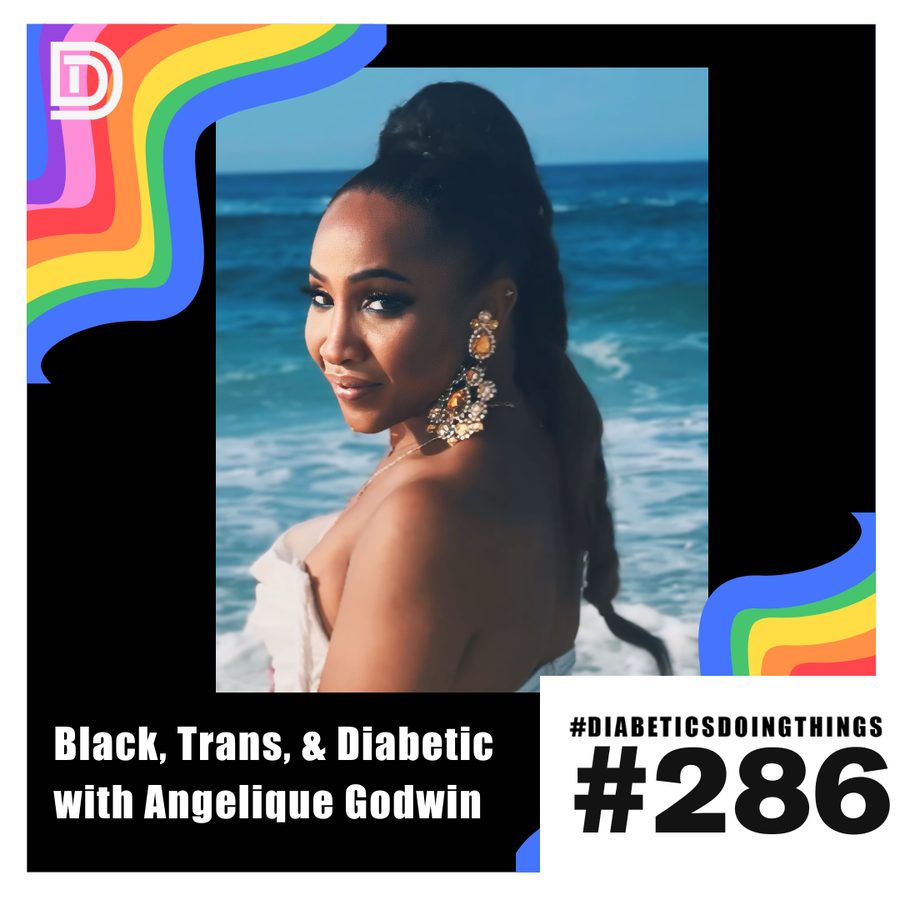
Black, Trans, and Diabetic with Angelique Godwin


Episode summary
Angelique Godwin is a Black transgender woman who was diagnosed with type 1 diabetes in 2021 after years of being told she was prediabetic. During the pandemic her health declined fast: doctors first treated her for type 2 and put her on metformin, which made things worse, and she ended up hospitalized three times before doctors found she was close to DKA and diagnosed type 1. She describes advocating for herself in the hospital, asking for a differential diagnosis, and learning to manage food, stress, and exercise. She also talks about living as a Black trans woman with diabetes, her advocacy work with Equality Florida, and how listeners can support LGBTQ+ people managing chronic conditions.
Key takeaways
- Angelique says she was misdiagnosed and treated for type 2 diabetes with metformin before doctors found she was close to DKA and diagnosed type 1 after a three-day hospital stay.
- She advises patients to ask doctors for a 'differential diagnosis' and to trust their gut when something feels wrong.
- Angelique manages her blood sugar by eating vegetables before carbs, spacing out meals, and switching to Fairlife milk.
- She says stress and panic attacks can spike her blood sugar, and a slow breathing exercise helps her calm down.
- Angelique is the director of transgender equality for Equality Florida and performs as a drag queen, and says focusing on her health after diagnosis opened doors to advocacy work she hadn't imagined.
Show notes
June is Pride Month and to celebrate Pride in the Diabetes community, we are highlighting amazing stories from the LGBTQ+ diabetes community to show that diabetes doesn’t stop you from being who you are and living your best life. Please be welcoming and respectful to our guests and if you feel the need to be bigoted, hateful or discriminatory, we will protect our guests and respond in-kind. Happy Pride!
In this episode, we sit down with Angelique Godwin, a Black, trans woman living with type 1 diabetes. Angelique shares her journey to diagnosis, the challenges she faced navigating the healthcare system, and how she's learned to manage her diabetes while embracing her full identity. We discuss the importance of self-advocacy, the impact of diabetes on mental health, and how the LGBTQ+ community can support those with chronic conditions.
Main Topics Discussed:
- Angelique's path to diagnosis and the obstacles she faced (00:00:00 - 00:06:39)
- The importance of self-advocacy in healthcare (00:06:40 - 00:13:30)
- Managing diabetes through diet, exercise, and mindset shifts (00:13:31 - 00:22:27)
- How diabetes has impacted Angelique's life as a Black, trans woman (00:22:28 - 00:38:22)
- Advice for embracing your full identity while living with a chronic condition (00:38:23 - 00:43:35)
Where to Find Angelique:
- Instagram, Facebook: @dncndiva
- Advocacy work with Equality Florida
Questions this episode answers
What do high and low blood sugar feel like?
Angelique says high blood sugar shows up for her as cotton mouth, unquenchable thirst, and feeling overheated even in a cold room. Low blood sugar makes her hands and feet turn cold, brings on sweating, and gives her a giddy, slowed-down feeling.
Can type 1 diabetes be misdiagnosed as type 2?
Yes. Angelique was initially treated as type 2 and put on metformin, which made her sicker, before she was hospitalized near DKA and diagnosed with type 1. She says Black patients are often assumed to have type 2 based on weight or race instead of being given an antibody test.
What is a differential diagnosis and why ask for one?
Angelique recommends asking a doctor for a differential diagnosis, which forces them to run through every possible explanation and test for it, rather than settling on the first assumption.
How can people support Black transgender people living with diabetes?
Angelique suggests sharing a simple meal or coffee with someone to hear their story, standing up for them even when they're not in the room, and sharing stories like hers to build visibility and understanding.
Full transcript Searchable, with timestamps
Rob Howe: Hi everyone. June is Pride Month, and to celebrate pride in the diabetes community, we are highlighting amazing stories from the LGBTQ plus diabetes community to show that diabetes doesn't have to stop you from being who you are and living your best life. Please be welcoming and respectful to our guests, and if you feel the need to be bigoted, hateful, or discriminatory, we will protect our guests and respond in kind. Happy Pride! Hello and welcome back to another episode of Diabetics Doing Things. We are telling the amazing stories of people with diabetes from all over the world. Very excited to introduce our guest today because occasionally our friends out in the diabetes community in the real world get to introduce folks to us who we may not have come across otherwise. So definitely want to shout out our good friend of the pod, Matt Ball, a.k.a. Maddie Spiceball, for introducing today's guest to us. And I would like to welcome Angelique Young to the show. Welcome to the show.
Angelique Godwin: All right. Yes. Thank you for having me. I'm very glad that we got connected by Maddie. He's one of my favorite humans in Pensacola. So super happy to know him and that he connected me to you.
Rob Howe: It's so interesting, like, you know, meeting people through the diabetes online community and how they come together and like interface in real life. I got to meet Maddie for the first time in person in 2020 in Arizona, like right before COVID. and then we got to be good friends online and then he actually got to come on his way when he was moving to Florida came through Dallas and we got to have dinner with him a couple of years ago so always nice to run into Maddie big shout out Maddie Spiceball love that guy let's talk a little bit about you and learn a little bit about how you came to join the T1D family and about your
Angelique Godwin: story and your diagnosis yeah I have always been pretty thick ever since I was a kid I had a very stocky body. I was always like thick, I guess you could say, in comparison to my siblings who are all like too thick. I've always been monitored because of that. And so probably I want to say about the time I was a freshman in college was the first time I had ever heard this term pre-diabetic, which was weird for me. I was a highly active individual. I did swimming. I did tear. I had a small stint through my early high school life where I was heavyset. I say that gently, like 230 pounds and I was 4'11". And so it was like a whole thing like where I definitely look like somebody who probably should have diabetes according to stereotypical standards, right? People looked at me and like didn't think anything of it. But then I would go to the doctors and they'd be like, oh, well, you're like really healthy and you're like in a good BMI for your size. Like people shouldn't like feel some type of way. And I did pretty well for myself. I stayed active. I lost a lot of weight and got myself like really in shape. And then the pandemic hit. And during that time period, I was still seeing my doctors and they were like, hey, like be careful. You're like encrouching on this zone that you don't want to be in. So like, don't get lost in the sauce, you know? And so I did pretty good for the majority of it. But somewhere around the end of the pandemic, I was working for a mental health facility and I had taken a desk job because the world had gone away from like performing. I also entertain. I'm a drag queen. So I've been performing for 18 years and never had an issue. It was interesting for me to take that position and feel my body kind of stop, you know, like all the activities stop. So my body picked up some weight. I was working third shifts at a hospital. So it was like everything shifted. I just, I felt myself getting more and more lethargic and I really didn't know what it was. No one had really told me what the symptoms are, right? I hadn't had that conversation. So as it progressed, it progressed pretty aggressively. I went from being totally fine to being absolutely sick. It was odd the same time my dad's health declined. I guess the stress and pressure from that, from being in school for my master's and then working full time, like all of the stress and pressure applied to my switching from pre-diabetic to diabetic. I got the sickest I had ever been. And at the same time, they were like, come home, your dad's not going to make it. And so I was there with him. And it's ironic, the day that he passed, I ended up having to go to the emergency room and they couldn't figure out what was wrong with me. We did all these tests and the nurse actually said, I have one more test I want to try. And he went, he got the diabetes test and he pressed my finger and he was like, you need to go to the emergency room. I'm like, right. He's like, you need to leave this urgent care and go to emergency room. He was like, your numbers are sky high. He's like, I don't know what's causing it. I don't know if it's a fluke, but I can't help you here. You need to go there. So I went and I did the whole process of like, you know, drinking a lot of water. I was like, they thought I was type 2. So they put me on metformin and the metformin actually spiraled me out of control. And my body went into like haywire. It was like it didn't know what was wrong. And so I ended up in the hospital again a month later. They were like, oh, it just takes your body some time to get used to the metformin. And I'm like, listen, this is not working. I don't know what y'all are doing, but the metformin, it does make me feel good. It's not like it's just making my situation work. so I ended up going to the hospital one more time and they were like you need to go see a primary care doctor and they were like you need to go and get a couple other tests done and they like prescribed everything but I didn't even make it two weeks before I was back in the emergency room again I had went home and I woke up one morning I couldn't see I was super super sick I was throwing up and I could barely like walk and I made it to the emergency room my brother dropped me off at the emergency room and I woke up three days later in the ICU and I had almost gone into DKA. I don't know if they induced me into like a coma a little bit to help my body like but I literally don't even remember being in the emergency room for the three days that I was there. I went from being in the little office to being in a bed and then I woke up in the ICU and my mom was like at the end of my bed. I thank God for my sister-in-law who like came inside with me every day. I thought she was there for like one day I would like open my eyes and see her and she was like no I was there. We were in the emergency room for three days. You were in there for three whole days, three 24-hour periods, and then they moved you to ICU because they finally had a bed open up. But because it was in the time of COVID, I was in a COVID unit, and I was the only person who didn't have COVID in the COVID unit. So they had me very secluded and away from everybody. It was a life-changing experience. And they were like, no, the doctor came in, the endocrinologist came in, and he was like, you're type 1 diabetic. He's like, how long have you been type 1 diabetic? And I literally said to him, say. because I was like I had no idea they told me pre-diabetes but they barely talked about it you know so it's one of those things that like it was life-changing and I would spend the next week in the ICU learning about how to take care of myself and letting them come and prick me and then prick me and I was like it was like a finger and then your arm fingers in your arm they were like you already tied they're like your hips you're set they're like pricking me everywhere I was like my all 10 fingers I was like do you want my toes next like what's going on um but I'm thankful for I'm thankful for the experience because it really helped me kind of hone in on my health and really pay attention to what I was doing. So that's the day that I joined. That was August of 2024 now. So that was August of 2022 or August of 2021. I think it was.
Rob Howe: Wow. I had no idea that your story had so many like obstacles. And I want to kind of like rewind a little bit and unpack some of it. Because when we talk a lot about on this podcast about like health disparities, especially in the black community around like misdiagnosis. And a couple of years ago, we had a good friend, Dr. Phyllisa Deroze, who's a Ph.D. And she was on being treated for type 2 diabetes for like eight years. And she was requesting a antibody test, which is the test that determines like if you have type 1 or not. And especially in adults with diabetes, like sometimes you can be misdiagnosed just based on like your doctor's experience with, you know, for example, if you're a little overweight or if you're black or brown or if you're over a certain age, the immediate assumption is like high blood sugar equals type 2 diabetes. and yeah there's just so much more to unpack and i think one of the things that we're advocating for here on the podcast is trying to fight against diabetes stigma which you were talking about when you were young even talking to your doctor like hey you're you're at risk for prediabetes you're a little bit heavy set we need to make sure that you're doing the right things and a lot of those things are rooted in stigma whereas like an antibody test which is basically they can run the test based on your normal blood labs if that is added to a regular battery of test, I think a lot of misdiagnoses could be prevented and you wouldn't have to risk your life potentially being in the emergency room three times and then basically on the verge of collapse and waking up three days later after they get your blood sugar in range. Because those are
Angelique Godwin: really life or death situations. Yeah. Yeah. And I'd like to point out, I had to go to three different hospitals, one urgent care and three different hospitals in order to get that for diagnosis, right? And so that's three different cities, three different areas. And I literally traveled. And I think that the biggest thing is you have to advocate for yourself. You have to really push and go somewhere different. Every time I went, somebody told me something different or added something to the mix. And I was like, you know, if it doesn't sound right, if it doesn't feel right, believe that. Trust that gut feeling, that instinct, because that's what saved my life effectively. Me choosing to have my brother bring me to a different hospital rather than going to the one I had went to previously, just because it was, quote unquote, a better hospital, you know? Right. I went there thinking it's a newer hospital, it's bigger. And in that same instance, it never dawned on me that they were looking at me and pre-diagnosing me based on how I look. And that was a wild thing to come to terms with. When I met my final doctor who became my official endocrinologist, it was wild, the difference in the way that they spoke to me. And it took me being with somebody, he was a man of Indian descent who ended up being my doctor, and he was the first person who really looked at me. I had a woman doctor who was Hispanic. I had had a white doctor and I had had a young man who was Hispanic who helped me initially along the way. And it wasn't until that final doctor that really took the time to be like, hey, listen, like this is where we're at. And the conversation was completely different. Also, they really sat with me and explained to me like, hey, listen, like this is what happened. This is how you got here. And they asked the right questions and we had a full conversation and he really wanted to know my story. He didn't just assume anything. He really sat with me, him and his associate. They both sat in the room and really broke it down to me when I woke up that day. And they made sure that I understood where I was and how I got there.
Rob Howe: I want to talk a little bit about advocacy for yourself, because that's something that I think a lot of people struggle with, because it takes courage to tell a doctor, I don't think you're right. I know what's going on with me. So where do you think that that came from, where you really recognize like, hey, this isn't the place for me? Was it the way that, like you said, you weren't able to communicate? Was there some other sixth sense? You mentioned like when you found the right doctor, the way that they talked to you, that they saw you, that they were talking to you, not through you. Where did that sort of innate sense of like self-advocacy come from?
Angelique Godwin: I think having had proper experiences in the back where a doctor really educates you on the situation or the nurse will educate you or they put somebody with you. And when they're sure beyond a reasonable doubt, right, they're going to give you all this stuff. And I had been in emergency room situations where I hate when I'm in the hospital and someone comes in, they look at you, they look at the chart and they say, oh, this is just X, Y, and Z. Go ahead and do whatever. And so I'm the kind of person who I've always been inquisitive. Like I want to know what's going on. So I'm going to ask why, how, where, when. I want you to tell me everything. I'm not going to pay this bill. You know, this is a McDonald's, right? We're not going through and getting our chicken nuggets and french fries and however they come out, they come out, right? This is my life. So I've always been a huge advocate for myself because I want to be able to explain to people what happened to me. I want to be able to tell people what I'm going through and how, if somebody asked me like, oh, you were in the hospital for, you were in an emergency room, what happened? I'm like, I don't know. I went in, they said it was this and I walked out. How many times have we done that, right? You know, when it's a break in a bone, it's clear, it's easy, right? But when it comes to internal health, it's something that you have to really advocate for yourself. And something I learned early on as somebody of color who is navigating the health world through various just other issues, health issues I've worked through, asking for a differential diagnosis. If you're ever in a room and a doctor comes in and they just kind of pass over you, right? And they're lazy. What is it? A laissance fair or whatever about your healthcare, ask for a differential diagnosis. And what that does is that forces them to have to go through all the possible things that it could be. The example that was given to me is like, if you have a headache, right? They're going to say, you know, did you hit your head? You know, did you eat? You know, did you go to the bathroom? Like, they're going to go through all of those different things with you and say, okay, well, these are the things that I could be. These are the things that I can't be. And when you ask for that differential diagnosis, it forces them to go through everything and you can kind of have that conversation and they have to run tests to prove it. You know, they have to actually do that. And that's something that all basic healthcare professionals learn. It's literally a standard of care for them. So it's something they I might skip over because it's easier to just go with the most reasonable explanation. It prevents them from having to do extra work. It prevents them from having to do whatever. So it's easy to come in a room and just assume. But if you really don't feel like that's right, there's been times I've been in the room and I'm like, no, that can't be it. You cannot tell me I'm in too much pain for it to be this. You know, and I'll argue and I'm not leaving until you guys tell me that there's nothing else this could be. There's no way that it can only be this answer. Say you quote unquote run every test, but I'm still in pain. There's no way, right? And so it's okay to say that. I think people feel like they can't say no, that I don't accept that answer. It's okay to ask for a different doctor. It's okay to ask or advocate for yourself and say, no, like, I don't feel like this is okay. Like, please have somebody else explain this to me because you're not taking the time to do it. So find someone. And I think that people don't realize that you can challenge them in that way.
Rob Howe: I really love the way that you frame that because I've been in situations even that are not dire or extremely urgent with doctors where I sort of just can't find my voice. Or I feel like I come in there and if I don't write things down, I forget. Things are moving fast. I'm absorbing a lot of information. And it can be overwhelming. So I love that tactical element. And it's something I navigated away from our screen because I wanted to find a quote that I wrote down. I was reading this book last week. And I found this great quote that I think applies here. It's like sometimes a little friction is all it takes to slow down a torrent of incoming information. And so like, you know, just a little friction. It's not conflict. It's just like, hey, you know, can I can you explain the other things that are going on? Can I get another person in here to talk me through this? I think that is like really positive friction that hopefully our listeners can make actionable if they're having trouble finding their voice in those situations.
Angelique Godwin: Yeah, I think that's a huge thing, like saying that, it reminds me of, even if you're in this situation, right, even if it's any diagnosis you get, when you walk into a hospital and someone says that this is what's wrong with you, I think that there's a point where doctors forget, as humans, we have that fight or flight or fawn response is innate. in even those simple situations, we tend to be like that hearing, oh my God, you might be diabetic. Overpower type 1, type 2, what to do after. And then the information is going in, but it's going right out the other side. The drain is working. Nothing is being held in the net. The holes are now really wide open and you're just hearing, God, I've been diagnosed with something, regardless of what it is, right? So the reality is there's that moment where you have to put your hand over the hole and be like, stop, I need a minute. And that's okay too. Even that, that is such a powerful sentence. Stop, I need a minute. Like, I need a moment. Like, you gotta stop and give me a moment to digest the fact that you just told me I'm diagnosed with something, right? And I think when we're in these situations, we put so much of our care and our power into these professionals because this is their job, right? They're the professional. They're the one who trained for years. We're supposed to just innately believe them. But I think at the end of the day, you have to remember that this is your life and they go home without that diagnosis and you go home with it and all the baggage that it contains so you have to be willing to say stop and end the bill for no other reason the bill the bill is your reason to say stop i need a moment can you i need you to walk out the room and give me a moment to digest i'm i'm paying for this i'm paying for this somehow this room is mine for the next however long because i paid for it so whether i paid for or not, you know, whether it's on my bill or not. This is my bill now, right? So you have that right and you can do that in your personal care. You can do that in urgent care. You can do that in emergency room. You can do that with your specialty care. You have the right to say, stop. I need a moment. And then you have the right to say, no, explain that to me again. When they come in and they get frustrated and you see the frustration on their face, that's even more of a reason for you to be like, no, now I want you to walk out the room, take a lap, go help somebody else and come back because I need you to sit with me and take it seriously. This is my life. This is my forever. When I leave, I'm changed forever from this moment on. And I think that that's such a thing that people don't acknowledge. I've had so many times where I've sat down at home and I'm like, oh my God. Like, and now I can't go back in the office and say like, oh, I need to speak with Dr. Kattan because he said X, Y, and Z. They're going to say make an appointment for three months out. And all I have is a question. I can't email and hope to get a response. I can't call and leave a voicemail. We're not in those times. There's too many people in the world. They're busy. So this is my time. This is about me. This is the one side I get to get as much information as possible. And if you can't give it to me, I'm okay with a nurse coming and sitting with me. I'm okay with the attendant from the counter. Give them the folder, come explain it. And I think that is like really taking up space and like saying, hey, I'm here now. I'm going to maximize my time. I'm not going to leave until I feel like I'm comfortable with the information that's been given to me because I don't want to get back in line. How many times have you left a doctor's appointment, I'm talking to you listeners, and this is myself included, you leave somewhere and you're like, I wish I would have asked that. I wish I would have done
Rob Howe: that. I think back like no one's forcing me out. No one's like hurrying me along. That's me doing that. And so like checking in with yourself and noticing that. I want to get back to, I really like the trajectory we're headed here. This is really fun. So immediately in the days, kind of in weeks, months following your diagnosis, like in your day-to-day life, like how is diabetes showing up for you in your day-to-day management? You talked about it's a prick and a stick every
Angelique Godwin: time, you know, long-acting insulin at night and multiple daily injections. How did diabetes start to show up for you in your day-to-day? I mean, after my diagnosis, it became a big deal for what my intake, right? So the first thing I think most people do is we look at the food we're eating. We look at the drinks that we're drinking. We start to do that. The first thing they said to me was carb counting. But no matter how many times I asked somebody to help me help explain carb counting. No one actually sat with me with a box, right? And I was like, this is how you carb count. Like I had to like Google and YouTube and TikTok and be like, how the hell do I, do I manage this? As a person of color, I'm half Hispanic and half black. So noodles, rice, they're my life. They've been my life. To ask me to cut them out completely, I'm like, they're crazy. And then they're like a cup or like a half a cup or a quarter cup. And I'm like doing the math and I'm like, who can eat this little bit? Like who is surviving out here like this? Somebody please show me. I'm like the, the weekly meal plans. I'm like, I need two meal plans every day. Like I got it. I got to find a way. Right. So then they talk about exercise and how that plays a part and then water intake. And so you start to kind of pan it out and you realize that you don't have to pour your eggs in one basket. And it becomes a thing of healthy kind of balance, expanding my meals. I eat more in a day. I tend to have three meals a day with some snacks in between. And if I can't, I think about it this way. Cup of coffee is going to cost me a meal and a half. So if I get my large cup of coffee, that's my one for the day. And that's like my meal and a half. And then I make sure that for dinner, it's different. And then also showing yourself knowledgeably about the food you're eating, right? So we're talking about vegetables and fruits and how some of them are higher in sugar than the stuff that's on the shelf. So you have to be mindful of this, right? And how you eat. I learned a really interesting thing that I learned was about eating your food in a specific order. When you're eating your, when you want that carb, when you got that set of potatoes there and you want them, you know, you got to eat your green first, then eat your meat and then have your potato. The way that happens is the fruit. That's like the glucose goddess, right? She talks about the, you know, she adds like the vinegar and like different order and shows the different charts and graphs. It's always really interesting. And I think like even before I saw that information, I think innately you kind of know as a person with diabetes, you're like, oh yeah, I know if I have a salad before I have a high carb meal, my numbers are probably like flatter or better. But then when you see like somebody who's teaching that, it's like, oh yeah, the order of the food, it makes sense because your digestion is in order. You know, it's a line, it's linear, which is always interesting. I do want to say like that, that I didn't have it. I did not jump on the train and I was not perfect. I did not. I did not. I'm a girl who likes to have my cookies and my cakes. I'm a baker. I love ice cream. I eat on the regular. And I think I think finding that happy balance of eating what I didn't want to give up everything. I did it for like the first year. Right. I gave up everything and I was miserable. And I'm like, this can't be my life. I can't live like this. I can't not have anything. Right. So finding that happy balance of being able to like eat what I wanted was super important to me and finding different ways to do it. Not eating so much like fast food or like not eating for many fried things like staying away from the breaded things like that. I can still have them, but not in the way I was having. I was having like different forms of fried chicken every day. Like, you know, one was breaded. One was like panko. One was this crumble. One was that. One was flour. Like, I'm like, it's all whatever. Having friends that are gluten-free helped me a lot too. I had to make a lot of my baked goods started to become a lot more gluten-free. But I definitely messed up a lot along the way. There's no way me as I'm 37, I'm going to be 38 this year. I've lived until I was 35 without any issues, right? I was eating whatever I wanted. I was working out, I was doing whatever and I was fine. So there's this part of my brain that was just like, there's no way that I have to change my entire life like this. Can't possibly give it all up. Like, but I think it was good. It came at a great time and it helped to refocus my brain and pay attention to what I was putting in my body. A lot more label reading, a lot more paying attention. No more, you know, garbage stuff. I loved Pop-Tarts, but I had to get rid of them completely. I love certain other like Little Debbie's cupcakes and things like that. those little midnight snacks or whatever no more you know and then portion control for the rest of it i could do three oreos at night for my dessert with a little glass of milk i put from regular milk to Fairlife because Fairlife is ultra filtered and it's the numbers on that whole milk is so terrible and i love a bowl of cereal so i was like i gotta find a way to do it until
Rob Howe: Fairlife has been my lifesaver it's so interesting like when you get diabetes your relationship to serving sizes changes because you're always looking at okay well what's the serving size what's the carb count like what's the fiber what's the sugar it's like oh it's just so many numbers always balancing in your head oh my god you never know yeah and and i think that's that's the thing too like when you're when you're walking around and when you want to have that growth mindset about diabetes new knowledge and like new perspective that you have about what goes into your body you now are suddenly aware of it where before you didn't have to be and i think that's something many people have come on the podcast and talked about that we had a guy years ago who became like a champion bodybuilder because he now all of a sudden got used to measuring all of his food and aware of what was in it and cared about it and caused a lot of change in his life so continuing on on like the gifts that diabetes can bring us like obviously it brought you to maddie and which brought you to us june is pride month and we're highlighting stories from the lgbtq plus diabetes community and i'd love to hear like how in your time with diabetes like diabetes has shown up in the lgbtq community for you like in dating or just talking in the community or like devices and the conversations that you're having with others and how diabetes
Angelique Godwin: has shown up for you in the community it's crazy how you live your whole life and you don't know anybody who technically is diabetic until you say you're diabetic it's like when you you buy a car
Rob Howe: you like i've never seen this car before now you bought it and it's everywhere okay pause pause pause because like because you live in florida i'm not sure where you're from if you're like from the south at all but like what do you call that do you have a name for it the like when you see the
Angelique Godwin: car everywhere oh no i don't i don't have a name for that at all from the north i'm born in the brock new york and then i was working in pennsylvania so like no i don't know anything down here then okay what do you guys call that the first term i heard for it is called spadokas uh anyway i like but like i never heard anybody else describe it that way so like i've brought it up anytime i meet somebody and they say that i'm like do you call it spadokas because i've never met anybody else that called it that because i learned that from i had a basketball coach in florida who called it that so anyway yeah it's exactly right once you like out once you say hey
Rob Howe: i'm i'm diabetic it's amazing how many people you meet well thank you for entertaining that little like side no no i love that no i love that it's like people have like that i i'm meeting a lot of people who are different so that was a huge thing for me too i didn't know aside from one and two i really honestly didn't understand the the complexity and the variety that is withheld within being a diabetic so there's hyper and there's hypo and then on top of it there are people who can use the device, who have like the constant devicing or people who would do the patches or do like the little, they look like little Tide Pods that stick to your body. Yeah, the continuous glucose monitors. Yeah. Yeah. And then I did the Libre for a while. I had that one that was like attached to my arm, which I really loved because it made it better than having to prick myself every five seconds. I still was pricking myself, but just not nearly as much. And even that process, something that I've learned that nobody ever talked about, And I was hoping we might have a moment to even, it might set us back slightly, but symptoms, symptoms and signs that you encounter when you are.
Angelique Godwin: So as a hyper person, somebody, my numbers are naturally higher. So that's why I was always pre-diabetic. One thing I do, I'll never be the 107 girly. That's not going to happen for me. I'm always going to be like a 110, 115, 120, 130. Like those are my normal numbers. And so getting there is always like my place. I do get it down lower, but it never stays. she's never happy in that area she's always happy a little higher so we let her rock where she's happy but the symptoms of knowing so a huge one for me was the cotton mouth cotton mouth is ginormous the unquenchable thirst the inability to feel the temperature in a room it could be i haven't heard that one before it could be 68 degrees in the room and if my numbers are high i feel like i'm on fire my body is hot and the moment i take my insulin the moment my numbers start to drop, I start to feel the temperature in the room. On the other hand, being super, super cold, my fingertips being cold, my toes, everything like that, that's when my numbers are lower. And that's when I call it like the serendipity moment. I get a little silly. I get a little slap happy. I laugh and I feel like everything's moving in slow motion. I know that my numbers are really low. I'm in a bad place. Aside from the sweat, the sweats are the worst. I'm like, oh my god i'm in trouble i know i feel if i feel like my the sweat on my brow and i'm like not
Rob Howe: exercising or i'm not outside i'm like uh-oh we're in trouble here but like i definitely yeah and i'm saying the same as you when my blood sugar is a little bit low like my hands and my feet are extremely cold they just like you know if i if i shook somebody's hand they'd be like what is this
Angelique Godwin: what's going on with this guy is he alive i think people have to pay attention i think it's a little difficult in florida i'm in everywhere with air condition so when i walk in the room and i'm like is anybody hot? And they're like, no, girl, it's freezing in here. And everybody's bundled up like Eskimos. I'm like, oh, no, I need to go check my numbers and go have a moment. Like I can feel my it's not like hot and sweaty. It's just my body's extra warm. And I grew up with like a sensitive body temperature. I would always get nosebleed. So I was always extra hot. So I'm used to being warm. So when I'm in a room and the AC is on and I can't feel it, that's a huge sign for me.
Rob Howe: That's interesting. And you're right. Like I may even need to add this to like our kind of general podcast questions is talking about how does diabetes show up for you in the symptoms? Because for me, like when you're talking about heat and like not feeling the temperature, mine is like kind of stress and tension. Like when my blood sugar is high, I feel like my jaw tightens up, like my whole body tightens up. And then if I am able to get my insulin, then I can kind of relax and breathe. And we've had people on the podcast talking about like just breathing and like breath work can help center you and like lower your blood sugar and like get you back in range, which you know didn't make sense to me for a long time but i'm the type of person that when i'm stressed out i stop breathing i like tense up and i like i get stressed and i hold on tight and i stop breathing and like it's so interesting how like the symptoms of diabetes like show up
Angelique Godwin: differently for people there yeah so that's been like a huge connector for me so anybody that i know that has diabetes like we talked about this that's like a conversation somebody will look at me and they'll be like you okay and i'm like nope and the fact that you just had to ask me by looking met me that lets me know that I'm not and so I have a lot of friends who are like that well you just said something that it made me think about another friend of mine and I have something else that we talk about but I brain farted going back to that one but we'll come back to it but anyway yeah and in life like the more people I meet the more we have that conversation I'm like does this happen to you like do you experience this even Maddie like we talk sometimes and I'm like we'll check each other's numbers and I think that's kind of fun too like being able to go to people be like how are you doing today like are you doing good like are you good like I quit drinking completely for a year and a half. I was like, I can't. I was trying to maintain it. But even going out and having one, your pancreas being a huge, huge, huge deciding factor in how your body reacts. That was something I didn't know. But stress. Okay. Yeah, no, no. Stress. So you said it shows up to you in stress, anxiety for me. I have anxiety severely. So when I'm having a root, when I'm having an anxiety attack or even a panic attack at some time, they both can set off my diabetes completely changed my whole world upside down in an instant just because of that so learning that your pancreas can be activated by anything you could drink a cup of coffee soda something with a little bite of a candy bar it could be stress stress is such a huge factor for us any little bit of stress can truly like make us just spiral down all of those symptoms and once those symptoms start your body is now used to it and that was the heart the psychology behind it your body starts to feel that and immediately goes, oh, we're in overdrive. This is the red flag. Even if it's not, even if it's unintentional, it just wants that snowball happens. Your body wants that. So learning that from other people has been really cool. But I do believe in the breathing aspects of it. As somebody who studies psychology, breathing exercises are really good. There's one that I do that's called the 4-5-9. And you inhale for four seconds, you hold for five, and then you exhale for nine. And it's like you do that three times at least if you can do it more great. But after three or four of those, I feel my whole body has decompressed.
Rob Howe: Isn't that so crazy? Like, because, you know, again, I was a person who lived throughout the world without without basically any knowledge of like the breath and how the breath moves the body. And I had been around some people who were into yoga, but it never really resonated with me. And the four, five, nine or the deep breath and then like a little breath and then, you know, letting that out. it's so amazing how just a little focus on the breath or counting 10 breaths again that's like a very like a guided meditation principle and like practice is just count 10 breaths and i find that if you can do that whether it's four five nine or counting 10 breaths or just in and out like consciously doing that the benefits that that can give to you and your brain and your body like centering yourself in your body is so beneficial and it's so simple it's so it's so crazy how like the same thing with like if your blood sugar is a little bit high go for a five minute walk outside it can't be that easy but it really is it is it is just moving the movement i've um i got an apple watch specifically because i wanted to monitor my movement more because i was like i'm not taking enough steps in the day i work from home i'm at a computer or i sit down a lot and so i sometimes will forget to get up and go so having that little goal every day of hitting like a certain amount of steps has helped me be like okay so after a meal i'll go for walk or like if somebody says something, I'm like, you know, let me go to Walmart and do my grocery shopping because walking up and down the aisle is a great way to help alleviate that. Oh, there's like in the online community, like going to Target is like a surefire way to get a low blood sugar because you're going to be walking up and down, carrying things. It's great. Especially when you don't know where you want. Exactly. Yeah. You're just wandering. You're getting those steps in. So I want to talk to a little bit about like you live as a black trans diabetic woman which makes you part of like the most vulnerable populations in the united states so target within a target within a target i like just filtering down filtering down filtering down right and and so like i i pulled some statistics for this conversation just for our listeners so you know black transgender women face disproportionate levels of violence black transgender women face higher rates of unemployment and poverty and we talked already about your health disparities like again like filtering down like we know that black and brown communities face health disparities. LGBTQ communities face health disparities. And like having both of those in one place, plus the diabetes, like really puts you in an at-risk population. So for people like me who don't, aren't any of those three things and who maybe haven't even encountered too many Black people of color who are in the LGBTQ community, like how can we be better allies? How can our listeners be better allies to our trans brothers and sisters, especially ones with diabetes?
Angelique Godwin: I hate to be like stereotypical, but if you see something, say something. Kindness is free. And I think that if you meet somebody, I have a huge role. I do a lot of motivational speaking and I speak to a lot of different companies or organizations, like their ERGs or like their pride groups within the company's DEI programs that are still available and running. I speak to them. And one of my favorite things to do is that if you're curious about this community or if you're curious about this particular group of people, I say a cup of coffee or a small meal. Have a cup of coffee with them or a small meal with them and just talk to them and hear their story. A lot of people in this world live unheard. And I think the greatest way for you to understand as a listener, as somebody who wants to take that step into that direction, is to make a friend. And the simplest way to do that is to literally have a conversation. And a lot of times people dismiss like a cup of coffee. I don't care if it's a cup of water, if it's a can of Coke, But if you sit down with them and you have this moment, it really does open up the world for you. And you now get to meet somebody and you have a wonderful story to tell. And it's actually telling and sharing our stories that even if you're listening to this podcast and you don't know a Black trans woman, you now know me. Feel free to tell my story. Tell people about what I've gone through and what I've done or the experiences that I've had. Share that and lead them back to this podcast, right? Because if you do that, you're helping the education and the understanding of a very, very small group of people expand. By doing that, you're giving us visibility. By doing that, you're helping people realize that not only are we real, but we're human. And you're giving that experience. So I always tell people, if you have the opportunity to meet somebody, take a moment to speak with them. Even if you can have just a small five-minute conversation, that's life-changing because it gives them a moment to share their story. and now their story lives on through you and how you share and how you bring that to other people. So that's the simplest thing you can do. Outside for that, advocate them. When you're in these doctor's offices and you're in these emergency rooms, when you're at these jobs and you see them and you're working with somebody and you see that they're going through a hard time, that's what I mean by see something, say something. Be like, hey, listen, their job is no different than me. Stand up for them. Be like, hey, they're doing a great job. Or even giving them that, being a solid person for them, being a support system. It's huge. It's so easy. And it's so crazy to think, like we were talking about with IBDV, it can't be that simple. It truly is. Just being there and showing your support for them and standing up for them in spaces, especially in rooms where they're not in. I think that that's like the biggest thing is being like, it's one thing to do it when they're in the room. It's another thing to stand up for them when they're not in the room or when there's other people not in the room. Standing up for the community as a whole, you know, it's super important and imperative that people do that because the more you do that, the more it becomes commonplace and the more commonplace it becomes, the easier it becomes for everybody.
Rob Howe: I love that you said that because, you know, in the diabetes community, there's a lot of people in it and they come from a lot of different walks of life. But if you're in it, if you're part of a community, you know the benefits of exactly what you just said, of being seen, being understood, of not having to explain who you are and having people go to bat for you and having people support you. Even if it's just a cup of coffee or a pat on the back or just saying, hey, I see you. I'm here to support you. So I think when you're in a situation or if you're stretching yourself and you're trying to bring more people into your community and you're trying to grow and grow yourself, remember how you've benefited from those same things and what they've added to your life. You can be that for somebody else. And I think that's what I would want people to take away because there are still, even in the diabetes community, even this year in 2024, there are bigoted comments. There are hateful, you know, people who need to be educated. They need to be, need to be shown that there's more to life than one lived experience. And, and as a community, you have to bring people in and you have to make room for them and make space for them and advocate for them because we've all seen the benefits of that in our own lives. We talked a little bit about like when you raise your hand and you're out as a diabetic, it's like that law of attraction. It's like I have diabetes and now all of a sudden people with diabetes come to you. Something that we talk about is on this podcast a lot is like, you know, it's diabetics doing things. Diabetes is difficult. It's hard. There are challenges, but you can be who you want to be with diabetes. So I'd love to hear from you. Encouragement to people out there who want to embrace their full selves with diabetes and who want to make sure that they're, you know, living their truth and taking space as themselves in the world. What advice would you have for those people? My advice is honestly, it's a little
Angelique Godwin: wild. It's a little bit of a stress and everybody might not be able to do it, but I encourage you to try to double down on yourself. I think that there's a beauty in the acknowledgement of what diabetes did for me. It made me work on me. It made me focus on me. It made me put me first. In a world where we put a lot of other people first, I didn't do that this time. Once I got that diagnosis, I realized that I had to put me first. I can't take care of anybody if I'm in the hospital every week. I can't take care of myself. I can't accomplish my dreams and my goals if I'm doing that. So the first and foremost, take care of yourself. Choose you because at the end of the day, nobody else is going to do it for you. Even if somebody did, even if you're blessed to have a partner or a parent or a sibling who's willing to step up or even a best friend and do that for you, think about that. You're asking other people to give up their lives and take care of you. When this is your life. You only get one. You're one shot to do it right. So take care of yourself and then utilize that. I mean, my journey was crazy. Two years ago, I was working in a network marketing industry that I love because it allowed me to work from home with my family. It was a really awesome experience. But I was in a bubble and I couldn't do anything outside of that. And so I got into activism and advocacy and I quit drinking for a year and a half. I was sober for 18 months. And I really focused on myself and brought myself into a healthy space. And that changed my life. It attracted a whole different line of people. And from that, I became an advocate, not only for Black trans women, but for diabetics and for people who are in the community and for people who are looking to just feel safe in the state of Florida, right? And that brought me into so many other rooms. And honestly, I do owe it to that because had I stayed in that place that I was in when I got diagnosed, that dark place where I was, you know, drinking my problems away and being upset about having another diagnosis on my life or having another obstacle to overcome, right? It's easy to fall into the darkness, but I think in that same hand, the beauty of it was it made me realize that I had to take control of my life. I had to do that and in doing that, it opened up so many other doors because I was focused on me and my attention and now I'm doing things that I never thought imaginable to use. Two years in my hospital bed, I would have never thought that I'd be the director of transgender equality for the largest nonprofit for LGBTQIA rights, right? I would have never. It wasn't on my bingo card ever. It was nothing I even dreamed of. But being open and being healthy and having those conversations, walking into those doors, I've met so many people who are inspired by me. And now I'm somebody who is making change and doing things on an exponential level. And diabetes is not a hinder to me. It's not stopping me. It doesn't prevent me from getting on planes or having conversations or walking into rooms. And I get to do things and I'm proud to wear it as a badge of honor. I don't ever want to hide it. I don't ever want it to be something. I'm not ashamed of it. It's something that truly helped me be a better person. So I say double down on yourself. If you could tell you're like two years ago, back two years. What do you what impact do you think it would have on you to be able to hear what you just said? Like if you process. Yeah, because it doesn't happen all at once, right? You know, not at all. Not even like I said, it was a journey. It took time. You know, my first year or actually the first six months of my diagnosis, I was hard on myself. I tried to make the biggest jump possible, the quickest I could. And I had to really be patient with myself and with my body because I had to learn the flow of my body. I think the best analogy I can give is that your body is a river and it is sometimes it's going to move fast and sometimes it's going to be slow and sometimes there's a ebb and flow to it. Things are going to change over time. You can't change the river flow, right? So you have to flow with it. And the only way you're going to do that is if you pay attention to it. If you actually ride in the river, you can you can walk alongside it if you want to, but you're never going to get to experience the way that you're in the river. You have to be willing to go with it as it goes. And the only way you do that is to know yourself. You have to learn your body. You have to learn the signs and the symptoms of how your body responds to diabetes.
Rob Howe: Well said. I'm so glad that we made time today. I know that the scheduling has been a little bit challenging. But Angelique, I'm walking away from this conversation extremely. My cup is full. I'm inspired. This was excellent. Shout out Maddie Spiceball for making this happen. I can't wait to get home and hug you. Just a top tier guy in every way. So Angelique, if people are looking to connect with you online, where can we direct them?
Angelique Godwin: All of my social media is usually under the Dancing Diva title. So it's D-N-C-N-Diva. I'm on Instagram. On Facebook, you can find me under Angelique Young. Cavalier is my drag family name. So but if you look for Angelique Young, I'm the only one. I think other than that, I work for Equality Florida. So if you guys have any interest in supporting the movement in Florida and helping out the specifically the transgender people here and residents of Florida, please do feel free to contact me through there as well. I love the work that I do and I'm happy that life has brought me
Rob Howe: here. Well, we will absolutely include all those links in the show notes for our listeners. And Angelique, again, thank you so much for your time today and for all that you do for people
Angelique Godwin: with diabetes. Thank you so much. It's so glad to be here.
About Angelique
Angelique Godwin is a Black transgender woman living with type 1 diabetes, diagnosed as an adult after a near-DKA hospitalization. She works as a motivational speaker and advocate, serves as director of transgender equality for Equality Florida, and performs as a drag queen.