

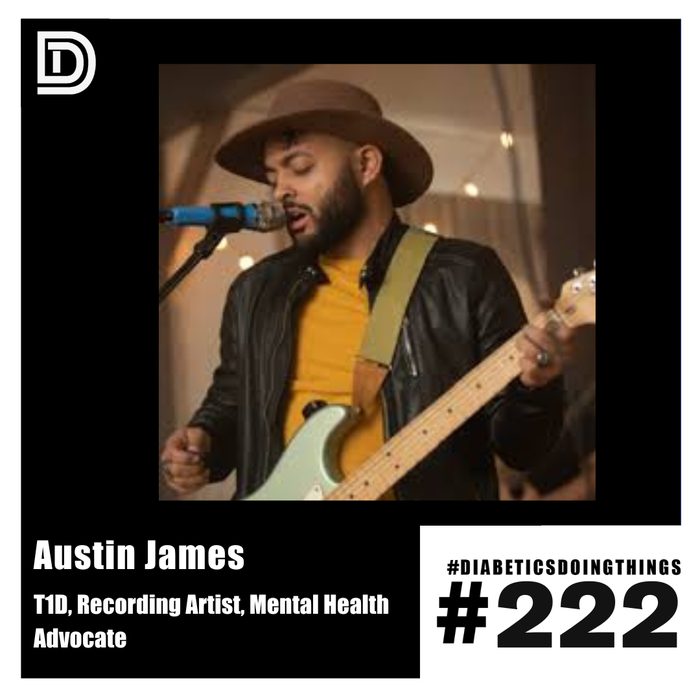
Austin James, T1D Recording Artist

Episode summary
Austin James is a musician and recording artist, classically trained in violin, who was diagnosed with type 1 diabetes at 17 during his senior year of high school while playing soccer and basketball. He kept his diabetes private for years, rationing insulin before he had full insurance coverage, until getting a Freestyle Libre CGM in 2019 changed his life and led him to go public, eventually becoming the face of an Abbott ad campaign. He talks about playing music and basketball with diabetes, a recent fibromyalgia diagnosis, a mental health breakdown at 30, and losing his sister in 2009, which is when he started writing songs. He also discusses representing Black and brown communities in diabetes care and handling online hate.
Key takeaways
- Austin James was diagnosed with type 1 diabetes at 17, his senior year of high school, after testing his blood sugar on a friend's glucose meter and getting a reading of 600.
- He rationed insulin in college before he could get full insurance coverage.
- Austin says getting the Freestyle Libre 14-day CGM in 2019 took away the pain of constant finger pricks and pushed him to start sharing his diabetes story publicly.
- He was later diagnosed with fibromyalgia and says the fatigue and lactic acid buildup make playing basketball and performing harder.
- Austin says a complete mental breakdown at 30 led him into therapy and medication, and that losing his sister in 2009 is what first got him writing songs.
Show notes
On this episode of Diabetics Doing Things, Rob is reunited with musician and face of the Freestyle Libre, Austin James! Austin and Rob originally met during the pandemic as a part of the @beyondtype1 Imagine Spotlights Series. Rob and Eritrea talk to Austin about:
Testing on a friend’s glucose machine (and raising some eyebrows) leading to a T1D diagnosis.
Life as a musician starting early including being classically trained in violin
CGM access and becoming the face of nationwide Freestlye Libre ads
The importance of CGM access and representing black and brown communities
When T1D leads to another chronic illness diagnosis
Mental health as a POC with Type One Diabetes
We want to hear from you. Send your questions, comments, queries, and general diabetes concerns to THE MAILBAG at mailbag@diabeticsdoingthings.com!
Questions this episode answers
When was Austin James diagnosed with type 1 diabetes?
Austin James was diagnosed at 17, during his senior year of high school, after noticing frequent urination and weight loss and testing his blood sugar on a friend's glucose meter, which read 600.
Why is Austin James known as the face of a Freestyle Libre ad campaign?
After the Freestyle Libre 14-day CGM changed how he managed his diabetes in 2019, Austin James started sharing his story publicly and became the face of a national Abbott ad campaign for the device.
Does Austin James have other health conditions besides type 1 diabetes?
Yes. Austin James says he was recently diagnosed with fibromyalgia, which causes fatigue, chronic migraines, and lactic acid buildup that makes exercise and performing harder.
What does Austin James say about representing Black and brown communities in diabetes care?
Austin James says visibility matters because diabetes technology like CGMs is often treated as out of reach in Black and brown communities, and he wants access measured by time in range for everyone, not treated as a luxury.
Full transcript Searchable, with timestamps
Rob Howe: Hello and welcome back to another episode of Diabetics Doing Things. We are telling the amazing stories of people with diabetes from all over the world. Very excited to finally have this guest on the podcast because he and I did an interview a few years ago as part of Beyond Type 1's Imagine Spotlights campaign during the summer of 2021. But it's been a little while and I'm super psyched that we were able to get him on the podcast today. Mr. Austin James, welcome to the show.
Austin James: Thank you so much for having me, Rob.
Rob Howe: And Austin is one of our amazing people with diabetes who is an artist and a musical artist and recording artist. And there are other people with diabetes that we've had on the podcast that are recording artists. And I'm always so interested in the stories, not only that they interact with fans like after shows and on the road, but just managing your diabetes as an artist and, you know, kind of dealing with the highs and lows of being on the road and traveling a lot and being out late and working late in the studio. So really excited to dig into that. But let's start where we always start. And let's get into diagnosis, because I know you and I were kind of diagnosed at the same age. So tell us like, you know, when when you've got that news that you, Austin James, are now
Austin James: living with type 1 diabetes, what was that like? Yeah, I mean, I was 17. So it was my senior year of high school finishing up and yeah, I got diagnosed. I was, you know, the classic signs of frequent urination, the horrible weight loss, which was, which was really tough on me, especially being an athlete, a dual athlete with soccer and basketball. And it affected both of those seasons my senior year, but it was, it was tough. It was, it was a tough diagnosis and it It was an overnight change, but I had a good support system with my family, with my mother especially. And I took on pretty much all the responsibility by myself. I was old enough to understand and didn't quite understand at the time why I had it or how. But as I learned, you know, it's just one of those things kind of living inside me. And yeah, here I am today doing this.
Rob Howe: Yeah. It's always funny, like looking back, you know, cause you, you know, I was an athlete as well and just like the adjustments that you have to make. And then also understanding that there's nothing that you did to cause it. Right. And I think that those are always like, there's a lot of questions and I, and often, you know, living with diabetes, we're left with more questions than answers and they sort of get answered over time. So like learning about different kinds of diabetes and different technology and, you know, people back, back when we were diagnosed where it was like, oh, maybe it was the flu that kicked off this chronic illness. And that now we're learning, you know, more about all of those kinds of tragic events that are happening inside of our body. But something that really like jumped out to me because we were diagnosed very similar ages. I was 16 and you were 17, your senior year of high school. What was the reaction like around you? Like at school, what did you, you know, how did it, how did you like address it with your friends and peers? Like right from the beginning, do you remember?
Austin James: yeah so fortunately i my friend chris he was in the grade below me so he was a junior he was a type 1 diabetic and i i don't i don't advocate using other people's you know diabetic supplies whatever but you know i ended up testing my my blood sugar at school and it was got 600 so just a little yeah just just a little bit so but it was nice to have somebody else that had type 1 diabetes so it wasn't so much a huge huge deal because people had already gotten used to him having it but it was kind of like oh that's pretty random them. But no, I mean, I didn't, I didn't feel out of place. I think I was more embarrassed than
Rob Howe: anything. Cause I didn't understand why. Yeah. And I think like it can be very isolating. So it's good that you had, you know, somebody that's around and kind of explain it. And, and also, you know, of all of the self-diagnosis stories, like usually it's like a parent who's a nurse or something, but man, I, I keep saying this and I'm going to continue saying it. A friend with diabetes is a friend indeed, because you never know when you're going to need to test your blood sugar, you know, just like, or, you know, they could be the difference between you going to the hospital or like, you know, getting a diagnosis, you know, at the right time. So shout out to everybody's friends with diabetes. Absolutely. So let's talk a little bit about like your life as a musician. You've been a musician like your whole life, basically kind of like, you know, since you were five and you're also classically trained in violin. So, you know, how has music helped you navigate the frustrating and often difficult life with diabetes? Is that, you know, would you say it's like your safe space that you're able to go or, you know, how did that
Austin James: start to manifest itself? Yeah, absolutely. I mean, it's my, it's the one place where I feel completely honest not that not that I'm not you know living an honest life outside of music but it's it's where I can express myself in the most honest way and you know I never I never really got into the whole journaling thing because I would I would I would write and it would turn into a song so it was my way to kind of help myself understand what I was going through to to get through those those highs and lows I guess pun intended there but it was music has music has definitely given me a a healthy outlet whether or not the music is sad or not. It's part of my journey and it's a tool and it's a gift that I've been given in order to help me kind of understand the world in a different way.
Rob Howe: Well, and I know I think a lot of people with diabetes, whether the song maybe overtly mentions it or not, probably connect themselves to those feelings and to those emotions that are coming through the music from your life with diabetes and kind of like translate it into something
Austin James: they can connect to. Absolutely. And I, you know, I've never, I've never kind of been overt in my lyrics with, with diabetes, because I try to, you know, with my own writing, I try to be as, as universal as possible so that people can kind of draw their own conclusions and meanings from my songs. But, you know, if I'm doing a songwriter session and, and able to talk about the song, that's when I can really share my story and how my diabetes and my music connect.
Rob Howe: And with that too, like when, you know, and now you're very outspoken, outspoken about your diabetes and, you know, you're out in the community, you're the face of an Abbott campaign, which we're going to talk about later on, but was it always that way with you? Did that, Did you feel like you were able to, from day one, able to share that? Or was that something that you grew into?
Austin James: It's certainly something I grew into. Like I said before, I was pretty embarrassed about it, pretty low key. It was hard getting through my senior year of high school, but also through college as well. Because this was pre-Obamacare, so I wasn't on my parents' insurance. I had to hustle to get my insulin. I was rationing. So that was, that was really, it was a really tough few years there. So I kept it as hush hush as possible. And, you know, all I wanted to do is, you know, go to my classes and party after on the weekends. I wasn't able to do those things safely. You know, I was, I was tired of the finger pricks and all this and that. But then just a few years ago, right before the end of 2018, beginning of 2019, I was finally able to get that Freestyle Libre, the 14-day system, the first one. And it literally changed my life. I was able to get the feeling back in my fingers and play music without all the pain. And I was just kind of invigorated. And I was like, I got to share this. Here I am sharing my music, but I'm not sharing my story like I could be helping people and um I just did a video on my Instagram of me doing I think a site change and a couple really amazing people that have become lifelong friends of mine
Rob Howe: reached out to me and kind of the rest is history it's always cool to hear like what other people's like moment that they sort of came out to the diabetes community, right? Because, uh, like you, I kind of lived my first 10 years of diabetes, like really closed off and kind of managing it myself. And I, Eritrea and I did an interview recently where we were talking about, you know, when you're high and you're low and somebody asks you an annoying question, like sometimes you like real quickly shut them down or like, you know, bite their head off. And I was certainly guilty of that. Like anytime anyone was like asking me about things, I felt like, no, no, no, don't look at me. I'm going to do this myself. And, and then it kind of, I had this moment, kind of very similar to you where I thought, well, me holding this story internally is not helping anyone. And maybe my story could, could help someone else out there who's feeling alone. And just, just like you, I know, Instagram didn't have videos at the time that I did it, but yeah, putting up, putting, putting yourself out there and saying, Hey, raising your hand, I have diabetes and I do all these other things. It's such a powerful moment for people. Was that, you know, just the, you know, going from the finger sticks to the CGM, to the site change, like that was, that was the catalyst for you of really like getting more out there in the diabetes community. It really was. I mean, I,
Austin James: regrettably, so I had stopped really like finger pricking like I was supposed to, cause it was just so painful. So, I mean, I, I was, I had already built up some, you know, really several layers of calluses on my fingertips from playing the guitar, especially. And I was also playing violin. So I was, I was kind of losing a little finesse there. And I had to prick the pads of my fingers. Dude, that was so painful. I was like, this is horrendous. I hate diabetes. I hate this life. Like, I'm not gonna finger prick. And here I am trying to pretend like I can trust my body completely. And, you know, it was, it was, it was, it was tough. It was really tough on me. And I, I, my bass player actually had the CGM and said, dude, what is this? What is this? And he told me he's a, he's a type 2 diabetic. And I, I talked to my doctor about it and it probably took me about five or six doctors before I finally got approved for it. That's a whole different story for a whole other time. But yeah, accessibility to technology is kind of a tough thing in insurance right now. But I was able to get on it and literally changed my life.
Rob Howe: I am so grateful for it. Man, you are lucky to have some friends with diabetes and like peers with diabetes around you. It seems like you're just like a walking billboard for the community.
Austin James: That's so awesome. It's wild. I've been, I've been, I've been pretty blessed and lucky with that.
Rob Howe: So, so you mentioned the calluses and as a musician, like, especially as strings musician, like developing calluses is essential to, you know, being able to get the sound that you want to get and keep it consistent. And, you know, with diabetes, like you're just interrupting that. And, and also like having to turn the lancet all the way up to 10, just to, you know, get a little bit of blood out potentially, or moving it down your fingers. What other challenges like this being a musician with diabetes present? I know like being on the road and playing late night shows and, and, you know, even just playing shows in general, like what, what's going on with your body and your blood sugar when those things are happening?
Austin James: I mean, just the, I know, I know playing, you know, playing, especially your bigger shows, you know, your big festivals or, or even being on set, you know, my blood sugar tends to, tends to spike and it's, it's the adrenaline you have in your system. and be really excited about it. And that can be really tough. And you, you have to be careful to not stack your insulin and get those lows, which often happens. So I'll be midway through a set or midday on, uh, you know, on, on, on, on a shoot or something and I'm crashing. I'm like, Oh no, I didn't pay attention. I did too much or I didn't eat enough. but those things are those are probably the biggest challenges and then you know you're trying to suck down some some soda like during a quick set break and and get up there and sing through that or act through that and then you got to talk to your fans after and you're like I need a second sometimes I gotta be like okay hold on one second let me grab something and I'll I'll be I'll be honest about it because you know these days people recognize me from the from the commercial which is still a wild thing. So they're really understanding, which is great, but yeah, it's a multi-layered experience for sure. Being a creative with a performer with,
Rob Howe: with diabetes. Well, and I think too, it just takes a lot of like vulnerability, not just to say, Hey, this is difficult for me, but just to be honest and say, and upfront and say, Hey, I'm, I'm going through something really quick. Like, let me chug this juice box before we move on to the next song, you know, and just being able to, I think it's so important for people, you know, who are seeing you do that, who live with diabetes, because then hopefully they'll have the courage or be able to see, oh, because Austin is honest and has courage about his diabetes, maybe I can do the same thing for me and for myself in my life. And I think those are the things that you don't necessarily see, but I know those things are having an impact and like people are making that
Austin James: connection. Absolutely. And that's, that's been the, probably the greatest part of all of this is just being able to connect with people that I otherwise wouldn't have ever been able to do. And, um, you know, everybody's got their own story, but I feel like with, with us, especially as type 1 diabetics, like there's a really familiar line that kind of goes through all of our stories and connects us all. And it's, it's pretty fascinating to hear everybody's, it's almost like, it's almost like the multiverse. There's a little, there's a little, little, little differences in each story, but it's still, it's still there. It's still us. It's still us in the, in the community. And it's, it's been a wild ride, man. It's been a wild ride.
Rob Howe: Yeah. It continues to be a wild ride for me too. Like I, you know, this has been a, I had a tough diabetes day this week and I was like, man, like just when you think you got to figure it out, like something twists, I could just still throw you a little extra curveball, just to keep you honest.
Austin James: Absolutely. Yeah, it was a tough week for me too. Made some changes lately with, not just medication, but with diet and having those crashes lately. And I usually don't run low. So it's been a challenging week. And then getting back into playing basketball, which I know you are a fantastic player yourself. And playing ball with diabetes, man,
Rob Howe: that's a tough thing let's talk about it because you know thank first of all thank you for the compliment but like i also like i'm just i'm a men's league guy now or like a pickup player now like that's you know my my professional days are behind me but i still have the challenges of you know when you you get there just like you were saying about a performance you're excited your adrenaline's running you're getting on the court you go up high and then you play for a little while and you kind of stay a little bit high but you know as soon as you sit down after it's over you're gonna poke in two arrows straight down so yeah how do you how do you prep for you know what's in the austin james gym bag when you're just having to go play some pickup the gym bag
Austin James: yeah so you know you always got to have those those welch's fruit snacks man that's the that's the go-to a banana before i play has definitely been helping me not just with the potassium because I, you know, I also, um, was recently, goodness, recently diagnosed with fibromyalgia. So my lactic acid buildup is like five times the normal. So that's really tough on my muscles. So I'm eating a banana beforehand to keep and keeping myself hydrated. And then just kind of monitoring my, my glucose levels through it and understanding that, Hey, that high is going to happen and you just gotta ride that out you gotta ride that out so it's about figuring out how to maintain when to eat one of those fruit snacks because you know you're gonna drop and it's just
Rob Howe: man it's here you're you're doing the job of your of your poor dead organ there and it is
Austin James: full-time pancreas right pancreas it's always on my mind so you know it can get frustrating but But at the same time, it keeps me, diabetes has definitely taught me to be just mindful of my body. I have to be mindful. And that's a lot. That's a lot mentally. But at the same time, it's also good to be health conscious 24-7 and know what I'm putting in my body and how much I'm exerting and this, that, and the other. So it's a challenge, but it's what I'm up for.
Rob Howe: Well, and it sounds like recently, you know, being diagnosed with fibromyalgia, like that added another layer of complexity and oftentimes, and I'm, I'm, I'm not a scientist. So I'll, I'll categorize, I'll, I'll give that the caveat always is that I, I am just the podcast guy, but my sister actually is, is thankfully going through her first pregnancy. And so we're going to get a nephew or niece here soon. And that's, that's gonna be really exciting for me. But she also learned like through that process that she carries a recessive trait for fibromyalgia, which is not uncommon among people who have diabetes in their family. So as we kind of are asking those questions, like you were, when you were diagnosed, like why is this happening or where is this coming from? We're kind of understanding that as well. So how, A, like, you know, what were your symptoms kind of like going in and how did, how did you approach that diagnosis and how are things different for you now after being diagnosed with fibromyalgia?
Austin James: Oh goodness. So, you know, I was, I was struggling a lot with obviously the mental health aspects, but you know, brain fog that was kind of moonlighting his memory loss. I was having a hard time getting my thoughts in order. Um, the pain, just the fatigue, the low energy, chronic migraines. I mean, I had, I think, of the 18 symptoms, I had 17 of them. Wow. Just like, what is going on with my body? I felt like I didn't know my body anymore. And I was getting so frustrated and so just worn out, just wanted to give up and like, man, but it's so, it's so connected because I'm already immunocompromised with the diabetes. And, you know, I've always, I've always been so good with my diabetes, never been, you know, hospitalized for it. And, you know, thankfully if I've just always really taken care of myself and prided myself on that, but here I am taking care of that, but I'm getting this other thing that's really tough. And, you know, it's one day I could be out on the court. The next day I have my cane, you know, cause I can't walk. So it's just kind of being gentle with myself and saying, Hey, you know, be grateful for the body you're in, even though sometimes it doesn't work like you want it to.
Rob Howe: Well, and I think too, like listening to your body and being mindful of it, like you, like you said, you're so on top of your diabetes management and then to be able to not feel well and to know and like something else to be wrong and have to learn another hurdle and another, you know, set of symptoms to keep an eye on or medications to take and, you know, different types of preparation while that rhythm like is familiar for somebody managing a chronic illness and an immunocompromised, like it can also be frustrating. So like, how did you, like, did you feel a little bit of relief when you got the diagnosis that it wasn't like just in your head or at least, you know, something else was wrong that could be identified? Yeah, absolutely. And
Austin James: you know, it gives you, it gives you an assurance that you can do something to at least manage it. But then, you know, the optics are tough because at the end of the day, something like fibromyalgia and even diabetes at times can be that invisible illness. So, you know, you got guys on the court making fun of me because, you know, oh, what's wrong with you? Why are you limping around? It's like, well, I mean, I can't move. I got no limit for my today or you know I can barely run up and down the court or you know people at shows saying you know what's you know what's going on you know you seem really low energy and you know it's it's it's hard the optics are tough but you know being able to kind of figure out a pain management treatment has been really helpful and you know it's it's it's at the end of the day it is it is a lot but there's, there's hope there, which is, which is great.
Rob Howe: There is. And I think too, you know, that's a very relatable experience, right? When you, you know, people like to poke fun at things that are different, especially in a pickup game, right? Cause there's like the, there's a little bit of like machismo and masculine, you know, going back and forth. Right. And so, but then you're like, Oh yeah, I live with a really debilitating, painful illness. Like, don't you feel great about making fun of me?
Austin James: throw it at him you know make him feel bad like oh my bad man like that's all good yeah yeah it's
Rob Howe: just hey this is me being honest just like yeah that's sometimes like when i'm really like really feeling myself on the court i like will remember that i have a pump in my like like tights it's like sitting you know just in my pocket basically and it's like they don't have that and they don't know that i do and i just get this is like a little private little flex for myself which is always fun
Austin James: oh yeah it's an interesting moment to just I just want to say because there's a lot of jock stuff going on right now but it's just there's still stigma on the court like I think that that's so like as men you're out here you're sweating you're grunting you're doing all this like athleticism and we still have to be mean to each other so I just for a moment like we got to think like where like why does this stigma exist in that way like I just wish there was more compassion for each other on the basketball court. But I guess y'all go in there with this macho mentality. I don't know.
Eritrea: Yeah, you know, everybody's trying to get, everybody's trying to get their work in, you know. I think it's so interesting though,
Rob Howe: because it is stigma, but also like it's an opportunity. So because if you don't live with diabetes, I try to think of myself before I was diagnosed, I never thought about diabetes at all. And it just wasn't really involved with my life. I knew that there were people around with type 2 diabetes, that there were some people who had diabetes when they were younger, but I didn't really know anything about it. And so I think now as a mature person, a very mature buttoned up basketball playing individual, I can like say, Oh yeah, it's a recognition that this person just doesn't know anything about diabetes. And maybe I can be the example for them and they're just coming from a place of, of lacking information. And so I don't know in my, I also will like throw a couple, like, you know, snap back, you know, quick reactions from time to time i'm not guilty or i'm not i'm not innocent of that but hey you
Austin James: know this is what it is it happens man that testosterone gets going and the Rob Howe wrath is not something i think anybody wants to experience i feel like a lot people don't even know it exists but i'm telling you like it is real between the lines like it cut you know
Eritrea: it just you never know what can happen oh that's funny that's funny oh so yeah let's just let's
Rob Howe: shift back though to kind of like educating and and like being very visible uh you now you've always been i think in a visible like as an artist you've been visible with your diabetes and like been out in the public eye but over the last year or two even more so as the face of the Abbott campaign and i think that a like a every time i'm at a hotel or like a public event with addressable TV because I know about media targeting and I know how that gets placed. Like I'm in the room and they know I have diabetes. So I'm going to get that, I'm going to get that ad. So you follow me around pretty regularly. So what's it like for you to like be somewhere, like see the ad or like, how do people reach out to you and talk to you or like even family members or like friends that don't have diabetes? Like what's it like being the face of a, of a big brand like Abbott?
Austin James: it's it's it's it's insane man i i get i get the messages all the time you know i'm mostly on mostly on instagram because that's where i do the majority of my social media promotion but lots of messages from strangers from family i've been able to connect with some incredible people too i had a grammy award-winning artist reach out to me who is currently on tour with Chris Stapleton, which is incredible. He reached out to me and was just saying, Hey, I saw your ad and you know, it really, it really, you know, kicked me in the butt and got me to wear my CGM again and take care of my diabetes. So that, that meant a lot to me. Wow. Never had that conversation if I wasn't doing what I was doing. And, you know, I've had some pretty incredible connections with a mother had reached out to me and said that her daughter always sees my commercial on tv and says oh I want to I want to be a musician just like Austin and and that was that was an incredible thing because you know I wasn't terribly young when I had diabetes so I don't I can't even imagine how it is for some five or six year old to go through that But to have an example of somebody that's living their dream, that's a big deal for kids to have somebody to look up to and that that person gets to be me. First of all, that's crazy. I never would have thought in a million years that it would be me. But man, at the end of the day, I'm just trying to share my story and help people. And I think that comes across in that ad, even the 30 seconds it's on, you know, just that it's honest. It's me. That's me. That's what I'm going through. This is what I've been through. And this thing has changed my life.
Rob Howe: Well, I think it's so important to be vulnerable and be open about that. And for, you know, like you said, that young girl can see someone who is living the life that she can envision for herself. And it's like, I want to be a musician like Austin. And just that didn't exist. Like, you know, for me, I remember in the early days of Google, like finding that, you know, Adam Morrison played, you know, had played college basketball with diabetes and Chris Dudley played in the NBA with diabetes. And I was like, okay, well, it's possible, but there's no way to reach out to those people. or connect to those people. But now because of social media, we can see that. And, you know, her mom can send you a message and like connect with you and be like, you know, you're able to like cheer them on and encourage them from afar in a way that makes kind of everybody feel good.
Austin James: Yeah. Technology has really changed that. I remember being an eight-year-old and like meeting adults at events, like at diabetes camps, because I was diagnosed when I was really small and like being like, Oh, I want to be whatever such and such as a marathon or such and such can do whatever. So it's just really cool to me that someone like you, Austin, can impact people that you don't even know that whose heart you're touching or whose soul you're inspiring, what four-year-old or 10-year-old is looking at you and is like, that guy, that's the guy that I want to be like when I grow up. So that's completely changed the game. So how inspiring that you get to change things for people who maybe see themselves in you in different ways.
Rob Howe: And I think too, even people that you don't know that live with diabetes who are peers of yours, So you said another Grammy-winning artist saw you, an artist with diabetes, talking about a CGM, and it motivated them to take better care of themselves, which is such a small thing. But what a big impact for that one person especially. We all know the impact that seeing yourself in somebody else with diabetes can have. and that's why it's so important to have musicians and athletes and business people and models and moms and dads and you know and brothers and sisters on the podcast because otherwise like you know what do you do when you're diagnosed with diabetes you look for somebody who's doing the thing that you love or doing the thing that you want to do just so that you can know it's possible and now you can not only find it's possible but you can reach out to those people and you know ask them as many questions as you know they're comfortable answering right but there's great examples in the community all across. And I just, I think it's a really cool, patient empowered shift that, you know, social media has given us and that we're able to, to know you, know you, like I shouldn't really like 10 years ago, we never would have been able to know each other and have, and have these connections and like be inspired by, you know, these inspiring stories. So yeah, it really is cool to see how, you know, putting the story and really putting the power in the patient's story and using their voice can have really big ripple effects.
Austin James: Yeah. And I mean, another important thing to add to that too is just the visibility in the Black and brown communities too, which is really important because diabetes is such an epidemic. You know, folks like Dex and Mila and Kelvin Davis, like myself, we've been able to, you know, have our faces and our voices and our stories shared in those black and brown communities that are often underserved and have less access to, you know, this incredible diabetes technology. and that's probably been the most important thing that I know I've been able to do and I think they would agree with that as well.
Rob Howe: Yeah, we've talked a lot about it on this podcast like that historically diabetes has had a very particular aesthetic when it comes to like marketing and even just like stock photos of people with diabetes are just mostly white. Hella white, super blancos. Super. So yeah, so just to get to see like you guys representing that on a, on a bigger level and like be somebody and also away from stigma, because it's not just like, Oh, look at these black people with diabetes and how bad their life is. It's the exact opposite. It's like, look at these people who represent diabetes in a positive way and in the way that it should be more inclusive and, you know, inclusive of people with different careers. Like, you know, you mentioned you Dex and Mila, all three, all three of you are wildly different and yet you live with the same disease and, you know, can use the same technology. And all, both of those, both of them are friends of the pod. So shout out to Dexamila for sure. It's also important to note that like
Austin James: people of color are not just really like over-impacted by diabetes, but also we don't think that we should be get access to these things. Like for a lot, like you think it's fancy, you think it's out of reach. You think like, this is the BMW of diabetes when really like everyone across the board should have access to CGM because time and range should be the way that we are measuring diabetes for everyone. She's spitting now. Bars right there. Bars. Oh my God. Yeah, that is, I could have said it better myself. That was, that's it. That's it right there.
Rob Howe: Access. Well, we've hit the access. We've hit the access point, which is super important. And I think really close adjacent to that is mental health, which is also an invisible, you know, struggle. and you're not able to see a burden that somebody's carrying, you know, for you, like being a mental health advocate publicly as an artist and as a person with a chronic illnesses, you know, what, what made you, you know, be willing to share that with, with your community, with your fans. And like, what was it that was sort of the catalyst of you deciding that it was really
Austin James: important for you to put that out there? Yeah, that's loaded. That's a big, big question.
Rob Howe: Sorry for springing that on you.
Austin James: Oh, it's all good. So I think being a creative in the way that I was doing it, you know, everything was so, everything that I wrote and played and performed was so inherently personal. So here I am sharing what I'm going through. You know, and I started writing after my sister passed away back in 2009. that's when I really started to write my own songs. The first song I wrote was about her. And so everything was so deeply personal, you know, and I've learned to kind of write about what's going on around me or something that's maybe not even be, you know, connected to me per se. But, God, it was so personal. So I felt like I had no choice but to talk about those mental health connections there and to be vulnerable and candid. Right now, when I was 30, when I turned 30, I had a complete, just out of nowhere, complete mental breakdown. I was almost comatose and I was hospitalized. It was a scary time. I didn't know what was going on. Why am I like this all of a sudden? But there's that chemical aspect to it. And was it connected to my diabetes? That was around the time when I was pretty sick of the finger sticks and I wasn't on the CGM yet. But being able to be, you know, be medicated at the time and, and have a talk therapist and, you know, a good community around me of people that were checking in with me and making sure that I was good because I had always been the one checking in on everybody else. And it was, it was a situation where God, like here I am pouring into everybody else, but who's pouring back into me. And I, and I needed that at the, at that time. And, you know, maybe that was part of that breakdown as well. You know, you, the diabetes, the, just that, the, the, the giving spirit without the reciprocation. And it was, it was, it was a lot. So, you know, I was, I was pretty open about what I went through and, and, you know, I had a photo shoot shortly after that was focused on mental health that connected with a lot of people. And that shoot gave me the confidence to then talk about my diabetes journey and what I'd been through and how it was all connected. So it is difficult to be vulnerable, but it's gotten easier. And now it's just like, hey, this is part of my story. I'm not ashamed to share it. And especially as a man, but a man of color dealing with mental health god the stigma is there through the roof man it's just through the roof and you know a lot of a lot of guys in in my circle are you know hey i don't need therapy oh i'm fine just you know man up you'll be you'll be good you'll be good and it's like nah man it's it's like i'm gonna check in on you because i know that i know that life is hard enough you know and then you throw it's an illness and this that and the other and and and just getting older you throw that all into the mix and now you're going to need your at the end of the
Rob Howe: day you're going to need your people man that's couldn't have said it better i think you know especially you know we were talking about our we're talking about our you know basketball games and like our guys in our you know masculine circles who are you know they're kicking the can down the road i'll get to it later or it's not a priority right now or i'm worried about other stuff, you know, you can't pour from an empty cup. And if you're, you know, if you're constantly pouring that out, I think that's what you were saying with like, what are you taking in? Like, you know, what are you, what is that reciprocation? You got to make sure that you're filling yourself up, whether that's with talk therapy, whether that's even just simple things like sleep and hydration and medication, like making sure that you're taking care of yourself and being mindful of enough to say, wow, I, I feel different. Maybe I, maybe I should reach out and ask a friend. I think I want to be that friend for my people. And it sounds like you're the same way for yours. And I think especially in those alpha male communities where you're not trying to, nobody wants to admit that something's difficult or nobody wants to admit that they need help somewhere and everybody's trying to power through. And I just think that, spoken from a recovering alpha hyper-masculine dude from back in the athlete days, you know, little talk therapy goes a long way and, you know, mindfulness and consistency, I think is another thing. And, and, you know, you talked about aging, which is another thing that's, that's tough. You know, you just wake up some days and you're like, man, I just don't have what I used to have in the tank. And how do I adjust? How do I move forward? And that's just giving yourself a little bit of grace can go a long way. That's exactly what it is. It's that,
Austin James: it's that little bit of grace for sure. Cause man, life's, life's tough. Austin, you said something now that, you know, as a black woman, I just, I really, really hear you. And it was really small, but I heard it and it's like being medicated. And I feel like when you're an African-American person and when you're a person of color, there is not just the stigma of going to the therapy and then getting the medication and then being open about it with your friends and family, because then instances will happen with those friends and family. And then that little comment, we'll go to your little therapy. Then go take your little pill then. And And things like that, though, is just being said in your community when you're trying to be vulnerable and you're trying to help people and be open about your own struggle. So I wonder, I have no idea what it's like to be a man. Thank you, Jesus. But how do you overcome? Like, how how do you continue to be like, no, this is my journey. This is what I'm doing. And I don't care about all the stigma that comes around with it. god i think i had i had this conversation recently you know people people getting at me for being for being soft or sensitive or this that and the other and you know i i had to tell them i was like you know this this would have bothered me a few years ago maybe a couple years ago but I at the end of the day I look at what I've been able to do like I am literally living my dream I am not only living my musician dream I have my own small business I've been able to do some acting I'm in a I'm in a national tv I'm the face of this massive company like those are incredible things that I've gotten to do and it's not like I don't want to make it like a comparing moment like I've been able to do this what have you been able to do but like at the end of the day like in those hyper masculine situations it's like well look what I've done what are you doing you're miserable you're miserable so it's it's it's kind of stepping back and saying well you know what I really can't let this bother me because I'm living my dream and maybe they're having a miserable day or maybe they're going through something but they feel the need to, you know, be a little hateful or be a little upset or whatever. That's on you. I'm not going to exacerbate that situation. You know, prayers for you. Hope your life gets a little bit better. But I, you know, you can't worry about it. You really can't.
Rob Howe: And I totally agree. And I love that perspective. I do think, though, it takes time to get there Because I think what's strange about reaching a lot of people is that you learn that people are wild. And like, you know, that sometimes it's just, you've just reached them at the wrong time. Or, you know, I read this, there's this blog by Paul Graham, who's the founder of Y Combinator. It's called Haters. And it's basically like, haters are super fans that something went wrong with them. Like they should love you, but they don't. And so they just hit them at the wrong time or they're just feeling some type of way. And it takes time because like the first time somebody reaches out and just says something hateful to you, it is a shock. It feels like, like for me, at least it felt like I had done something terribly wrong. And then I, I was like, took me some time with my therapist, like work through some of it. And it was mostly like, I had to work my way to accept it. That like, there was nothing I could do. There's nothing I did that made them feel that way. It's just, it's more on them and, you know, Hey, wish them the best. And I'm just like, not going to let some of that affect me. And also like, you know, this is difficult, especially with diabetes and like, you know, managing it. We talked about just life in general is hard enough. Life with diabetes is extremely difficult, throwing a little like work or family drama, and then you're like really messed up. So I want, I try to have grace for that, but you know, it is a, it is a shocking and like weird thing to get used to when, you know, people come in, like come slide out, you know, coming out the side of their neck talking mad nonsense about you and it's like oh whoa am i
Austin James: bad for being out there publicly trying to help people yeah i mean you know you know i've posted stuff instances of people like hitting up my booking email and talking like wild crazy i got a death threat a couple months ago like just like dude sorry first of all sorry for being on your tv like it's not my fault but um man it's like Kat Williams said man haters need a job too so So I cannot.
Eritrea: No, not Kat Williams. I'll try to admit it to these podcasts.
Rob Howe: This is not the first mention of Kat Williams, I feel like. I feel like it's like the second or third. So it happens. It does happen.
Austin James: Haters need to hate, man. That's it. Feel free to. I love it.
Rob Howe: No, I do too. And I think it's like good to be open about those types of things. I think we're kind of living in an age where, you know, being an influencer or being a content creator or a podcaster or, you know, a public figure is like what some people are like want to do with their lives. And I think it's important to talk about like some of the, you got to get the good. You also have to accept the bad. And, you know, sometimes even with your best intentions, you know, people are going to be upset about something. And that's just, you know, I think when you reach a lot of people, there's going to be some people that just don't vibe with you and that's okay. That's not a reflection to me. I'm like, Hey, there's plenty of other people that you can love and give your, and, and, you know, support and you can just kind of miss me.
Austin James: That's how you know you made it, man. When you got the haters.
Rob Howe: All right. I could do without them though, honestly. So you've got some dates coming up, up, up in the Northeast. It looks like you're going to be doing some, some shows up in Connecticut in February and March. What kind of, what, what are you excited about, you know, sharing your music and on this sort of like spring 2023 tour that you've got going on?
Austin James: Yeah. So just doing those, those are all the local shows getting ready to drop all the national shows this year we're goodness we're gonna be back down in nashville orlando atlanta i believe chicago as well so we'll be around pretty much pretty much everywhere all summer that'll be in the summer so right now it's just some local shows we are in the process of recording our second full length as a band. So we've been doing that. We got a couple of them down so far. So that's been really fun and time consuming. But we're excited. It's going to be a different year. We did about 130 shows last year and that was a lot, never again. So we're kind of focusing on recording this year and throwing shows in when we can. but we will be traveling a little bit more this year.
Rob Howe: Well, very cool. And yeah, I definitely relate. Sometimes I just, I'm too optimistic about doing too many things. And then by the end of it, I'm like, why did I do that to myself? 130 shows is wild. It's a lot.
Austin James: I'm starting to notice this common thread with Rob and our guests where you guys are all delusional, but that's okay because it fully fuels your dreams and you definitely still cross that finish line. So if the delusion gets you gentlemen through, then I'm here for it.
Eritrea: There we go. Hey, you know what? I think it's working pretty well so far, you know? It's not so bad. Yeah, it's not so bad at all, man. It's not so bad at all.
Rob Howe: I do have one kind of like closing question that I want to ask you. And you've done a really great job of this has been an awesome conversation, like around a lot of threads that I didn't even really expect kind of coming into it. But for other young people and people with diabetes or people struggling with chronic illnesses, even young people of color who are dealing with mental illnesses and struggling with that stigma, what advice would you have to them from you, Austin James, for those people who are just trying to keep it together? Wow.
Austin James: I think, you know, this day and age, we have access to so much. and these kids have access to so much for so for these kids like you know find find community find find online community find other people that are dealing with these things and find the right role models it's been interesting seeing a lot of athletes now being so open about mental health and And you're seeing visibility now with athletes like Mark Andrews and the guy in the Chiefs, I forgot the tight end there, that have diabetes. And these people are, the visibility is there now. So it's letting these kids know, like, you have role models right in front of you. You have access to community. So, you know, you play your Among Us and your Roblox. but like also, you know, with parental consent, you know, find a community. There's a lot of communities out there. There's a lot of resources and the technology now is so incredible to be able to, to manage your diabetes, things that I wish I had when I was younger.
Rob Howe: And, you know, even people who are like really into like Roblox or like Fortnite, there's gamer communities with diabetes as well, which is pretty exciting. And I just got introduced to the JDRF game to give community last year. And this is cool, man. Like people are raising big money for diabetes gaming from home. And like that didn't exist before. Like what a cool, what a cool opportunity.
Austin James: You got to hook me up with that, by the way.
Rob Howe: Done. Consider it done. That's an easy intro.
Austin James: I like that.
Rob Howe: Well, yeah. Awesome, man. Thank you so much for all that you do for people with diabetes. We're going to post along with your post when this podcast goes live, your local tour dates. and we'll for sure share out your national tour dates when those go live. But man, thank you for being such a great role model for so many with diabetes and for continuing to share your vulnerable moments as well because I know that as much as we like to think we've all got it figured out, it's really nice to see when somebody at your position is being open with their struggles. And if you don't follow them already, it's Austin James Music on Instagram.
Austin James: So yeah. And Austin James and the Nomads as well.
Rob Howe: Austin James and the Nomads tour dates coming soon.
Austin James: Yes.
Rob Howe: All right. Thank you guys for listening.
Austin James: Thank you.
About Austin
Austin James is a musician and recording artist who was classically trained in violin and has lived with type 1 diabetes since age 17. He became the face of a national Freestyle Libre ad campaign and performs with his band, Austin James and the Nomads.