

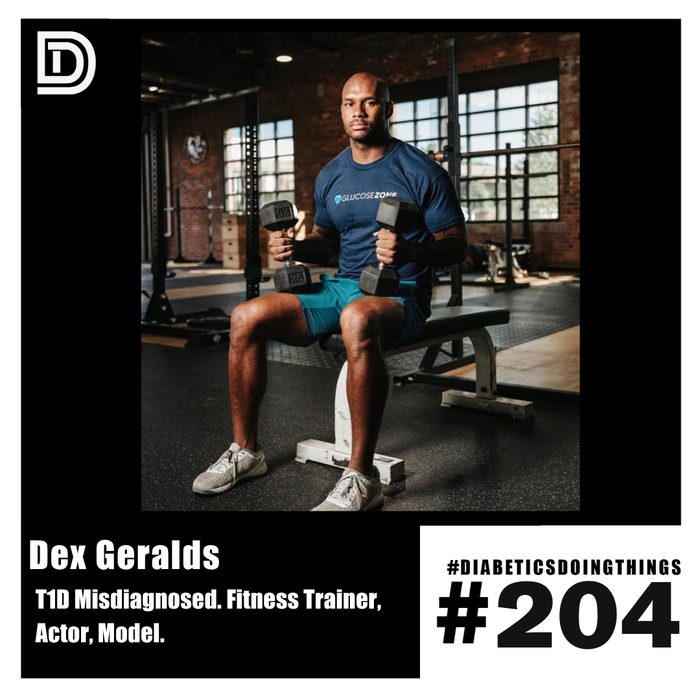
Dex Geralds, T1D Misdiagnosed, Fitness Trainer, Actor, Model


Episode summary
Dex Geralds, a personal trainer and fitness competitor, managed what he thought was type 2 diabetes for a decade before an antibody test through 9am Health showed his beta cells were slowly dying and he actually has type 1 diabetes. Before that he dealt with dehydration, constant fatigue, and blood sugar that stayed high despite heavy exercise and a low carb diet. He talks with Rob and Eritrea about switching to insulin injections, relearning daily management, and how differently his type 2 and type 1 diagnoses were explained to him. They also cover carrying diabetes supplies as a man, his workout content for social media, and his worry about leaving the type 2 community behind.
Key takeaways
- Dex was diagnosed with type 2 diabetes for 10 years before an antibody test through 9am Health showed he actually has type 1 diabetes.
- Dex says he added 30 minutes of steady state cardio most days just to get his blood sugar in range for work.
- Dex says his type 1 education, including carb counting and bolusing, felt more thorough than the pills he was handed at his type 2 diagnosis.
- Dex now carries fruit snacks and extra glucose for lows, something he avoided for 10 years as a type 2 diabetic.
- Dex's note to his younger self: get a second opinion and keep seeking more information.
Show notes
Dex Geralds is back on the pod! Doing double duty as a repeat guest, and as part of both our Misdiagnosed Series and our Creator Series. In this episode, Rob and Eritrea talk to Dex about:
Partnership with 9am Health lead to getting the antibody test and the correct diagnosis
Misdiagnosed as T2D and the physical tolls of that misdiagnosis, like dehydration and fatigue
Carrying your supplies as a male; making your diabetes gear look good instead of breaking fits with cargo shorts
His content creation journey and trying not to feel like he’s abandoning his T2D community
Finding common ground on content for people living with T1D and T2D
Content Creators being the bridge to new treatments, information, and access to certain supplies and innovations
Being 1% better than yesterday and the importance of routine and structure on making your life better
It’s okay to question your diagnosis. Get a second opinion!

Questions this episode answers
Was Dex Geralds misdiagnosed with type 2 diabetes?
Yes. Dex was diagnosed with type 2 diabetes 10 years ago in Boston and managed it that way until an antibody test through 9am Health showed his beta cells were slowly dying, meaning he actually has type 1 diabetes.
What symptoms did Dex have before his correct diagnosis?
He says he was frequently dehydrated and tired and had blood sugar that spiked despite exercising and eating low carb, so he added 30 minutes of steady state cardio most days just to get his numbers in range for work.
How did 9am Health help Dex get diagnosed?
Dex partnered with 9am Health for content, and the company sent someone to his home to draw blood for testing. A follow-up test showed his beta cells were dying slowly, leading to his type 1 diagnosis.
Does Dex still create fitness content for people with type 2 diabetes?
Yes. He says he worried about abandoning the type 2 community after his diagnosis changed, but he is working on making content for both type 1 and type 2 audiences.
Full transcript Searchable, with timestamps
Rob Howe: What up, pod fans? We're back with another episode as part of our Misdiagnosis series. Today, it's a person who's been on the podcast before, Dex Geralds. Originally, he was a type 2 diabetic who was also a personal trainer and fitness competitor. And his story was particularly unique and particularly inspiring for people who often are told because of diabetes stigma that people with type 2 diabetes are overweight, inactive, lazy, etc. And he was really shifting that paradigm. Unfortunately, fortunately, unfortunately, he has been diagnosed as type 1 now. And so as we have been talking about first with Felicia DeRose and now with Dex Geralds, there is a lot of misdiagnosis early on, especially in the black community. uh, Dex comes on and talks about the differences, uh, in his care and his management in diabetes since he was diagnosed as type 1. And also takes us through the process by which he got the antibody test and by working with a new care team as part of that. So really exciting stuff. It's also part of our creator series because Dex is not only misdiagnosed, but he's also a content creator and he makes awesome workout videos basically every day. And he kind of takes us behind the scenes as what his process is like and how he finds the time, energy, and makes the effort to connect with people with diabetes online.
Eritrea Mussa: He has such a unique perspective coming from the type 2 community and now shifting into the type 1 community. Uh, you always hear people think about this episode. And if you're a person living with type 1 or type 2, definitely give him a follow. He's a great person on the internet. Got a super cute smile too. He's so funny. So yeah, check it out.
Rob Howe: Please enjoy this episode with Dex Geralds. Hello, and welcome back to another episode of Diabetics Doing Things. We're telling the amazing stories of people with diabetes from all over the world. And we've got a repeat guest, friend of the pod, Dex Geralds. Welcome to the show,
Dex Geralds: my friend. Thanks. Thanks for having me back. I'm excited to talk about the new things going
Rob Howe: on in my life. Man, and there's some really new things. And it's funny, time flies. Whenever I look back, it's like, oh yeah, it hasn't been that long since we talked to Dex. It's basically just been a whole pandemic since the last time we talked on the podcast. And a lot of things that go along with that. But man, you are, you know, for a long time, for many years, I would send people who came across our profile or our page links to your profile because you exhibited like, you know, the sort of, you're the paradigm of the person who lives with type 2 diabetes, but it's still very active, it's still very fit, still, you know, chasing their dreams and living their dreams. And now, uh, as part of this, uh, misdiagnosed series that we're kind of going through on the pod, uh, turns out really recently that you were misdiagnosed type 2 and actually live with type 1. So I don't, man, walk us through the last two months and what that's been
Dex Geralds: like for you. Yeah. So, um, I partnered up with, um, a digital health company, 9am Health, and what they do is some home tests. So, um, had a guy come in, he, uh, drew my blood, took it back to the labs, labs came back and Molly, the woman I was working with at 9am, uh, asked me a few questions about like where my blood sugar was and like how I was managing it. And she asked if I can do additional tests. And so the guy came back a week later, we did another, another blood test. And then she gave me the results that basically that my beta cells are dying at a slow rate. So yeah, that I was actually type 1 diabetic and kind of changed everything that I've been doing the last decade. Yeah. Yeah. Last decade since I've been diagnosed. else um yeah so now it's learning about how to bolus then um giving myself injections i don't know five to eight times a day and uh yes just managing it's like what diabetes and learning like it's like walking again just relearning how to do um how to manage diabetes so well it's so
Rob Howe: interesting to hear that this came as like a result of a partnership because i know i've seen some posts from 9am health. And I know some friends of ours, friends of the pod work there, like behind the scenes. And so, uh, this is, you know, for all content creators out there, like partnerships can lead to discoveries that you like, didn't even realize. So, um, when you were talking to your care team, like at 9am and kind of looking and reviewing that blood work, you know, do you remember like where, you know, were you having any problems with your keeping your sugars in range? Like, was there anything that changed about like your day-to-day
Dex Geralds: management or was it just the results of the test? Um, yeah, so I was having issues with, um, being in range quite a bit. It seemed like, um, I would be in range for like three to four days. And then after that, I would just have these high numbers and not knowing like I'm exercising, I'm eating low carb, like where is these things coming from? Um, sleeping well, trying to do everything in my power to make sure my blood sugar is in range. So like, I was kind of frustrated, not really knowing what to do. I definitely started exercising more than I already do, because I found that just helped lower my blood sugar. And I just stayed in range better that way, which sucked because just beat up all the time. So yeah, like I was, yeah, I was already frustrated. I didn't really know what to do. So yeah, I mean, luckily, through some higher power, like linked up with 9am and now things are starting to shape up and get better. Did you feel sick? Like, were you experiencing high blood sugar, like headaches, migraines, polyuria, like lots of dehydration? Like, is that kind of what caused you to want to do the testing? Or were you just like, so out of range that you're like, this is just frustrating and I don't want to do this anymore? So like, I'm a super positive person. It's always been that way. Like, I mean, obviously behind me, I'm obsessed with superheroes. So, um, so anytime anyone came up with something new for me to try to see what we can do to help with my blood sugar, I was just ready to jump into it. And, uh, yeah. So like, I like, I'd be dehydrated quite a bit and super tired all the time, which sucks because personal trainer, like I always need to be on when I'm talking to clients and I work a lot, like I work maybe 10 hours a day. So it's, so it was kind of hard to like, uh, trying to function day to day and having these crazy numbers. And, um, so that was that, I guess that was a little frustrating, but like, uh, like I said, I'm pretty positive. So I figured I'll figure it out at some point. I just need to keep trial and error and keep trying, keep trying. Well, and I think too,
Rob Howe: like let's, let's dig into your, you know, some of your like initial fixes, right? You were, you're a personal trainer, you, you know, work out every day in some capacity, right. Whether it's for yourself or, you know, alongside your clients and, you know, obviously creating like fitness content. Uh, but what was that like for you? Like mentally you were like, Hey, I, I have to work out more to keep myself in range. Like that's still like, you know, you're working out way more than the average person and having to tack even more on that. Like just, I don't know, walk me through, you know, as you, and like you said, in your day-to-day life, like having high blood sugars, having sugars out of range, like riding that sort of roller coaster, like really gets in the way of you doing what you do and what you love to do. And like you said, you're really busy and like to work. I don't know, like diabetes became like a bigger burden, like, well, obviously,
Dex Geralds: right? Yeah, like extremely bigger burden. The crazy thing is, I work with type 2 diabetics, and they come exercise, they listen to my advice, and their numbers got better. And I'm still struggling with mine. So that was like another frustrating thing. So yeah, like I don't really like jogging, but I know that steady state cardio helps me drop my blood sugar. So I was doing that quite a bit or rolling, taking a spin class, something like that. And then on top of my regular routine of CrossFit and bodybuilding. So yeah, like I was just not only am I tired all the time because the high blood sugar, but my body's run down because every day, like I wake up and I I got to do 30 minutes of this cardio. So my blood sugar is in range when I get to work. So I can be on point when I'm working with my clients or coaching a class. Yeah. I mean, it's just, it's just kind of crazy to, like I said, just working with my clients and seeing them improve. And then I'm still stuck in the same place and getting worse at some points, man. I can't,
Rob Howe: I can't even imagine how like mentally frustrating that is, but it kind of brings me back to this point of a few years ago, there was a campaign that JDRF did call like T1D that you don't see. Uh, and you know, obviously that was related to, to T1D, but like, I would just say like, there's so much diabetes that goes behind the scenes. Like the average person who follows you on social media, probably is not going to realize that you did 30 minutes of steady state cardio just to make it through the rest of your day. And like, that's, those are the types of hurdles that people with diabetes are dealing with, uh, you know, no matter what type they're managing. And at the same time, you know, you, while you were still living well and doing what you wanted to do, there was, you know, that the underlying misdiagnosis for 10 years. And like you said, you're not all diabetes is the same. It's not created equal, so to speak. So like some people's beta cells, like binary tray is like, just are gone. Peace out real quick. And then other people's like, take a lot longer. Um, and you know, at the same time, you wouldn't, wouldn't necessarily classify like a young person like yourself as maybe a lot of LADA, you know, latent autoimmune diabetes in adults. But I don't know, I guess like after you got that, the, the antibody test and the results from that blood work, like, were you relieved? Were you frustrated? Like what was
Dex Geralds: the kind of what, what state of mind did that find you? No, I was definitely relieved that like, all right. So now I know what the issue is and there's a solution. So yeah, like, like I said, I'm just super positive. And after hearing that, I was like, all right, so what do I have to do? Let me figure this out. And yeah, since then, it's, I mean, it's still a little bit of trial and error. Like I wake up with a lot of lows now. It's crazy to walk down the street, just the block and then have my FreeStyle Libre go off and tell me my blood sugar is low. So like, that's been kind of crazy, especially carrying around fruit snacks. Like I haven't ate fruit snacks in 10 years, but it was just too much sugar. So not that I'm disappointed with the fruit snacks. It's kind of nice to have that in my diet again. But, uh, but yeah, it's just like, now it's just like, I love going to shows. Concerts are my favorite thing. Um, last year I went to 40 shows and now like when I go to shows, I have to make sure I'm prepped just in case, like if I'm dancing too much or something like that, um, I gotta make sure I have some extra glucose on me. And yeah, I mean, yeah. So just, yeah, it's, it's definitely been a process, but it was nice to know what the issue is. So I'm able to manage my diabetes better.
Rob Howe: Man. I'm sure that there are a lot of concert junkies listening to this episode who are, you know, grown adults, like you and I, who like grown man walking into a concert with a bunch of fruit snacks in their pockets or their bags. Like, yeah, I know those are just strange looks people like, are these just like, you know, filled with booze or drugs or something? It's like, now. Sorry. This is strictly medicinal. It's so funny you say that wrong. Cause I always think
Dex Geralds: about like how much of the population is just type 1 diabetic men buying cargo shorts for like, there's gotta be so many of you guys in old Navy, just like, I gotta have these like,
Rob Howe: well, and like, you know, when fanny packs came back in style a few years ago, like that was a huge win for me personally. Cause it's like, okay, cool. Now I don't have to stuff all of my stuff, all of my diabetes supplies in my pocket or like, you know, wear cargo shorts. Like that's just a
Dex Geralds: cursed, a cursed existence. Uh, although cargo shorts are back. So crazy is trying to be stylish and having these fat pockets of like insulin or something like that, just to take, uh, I didn't think about cargo shorts. I've never really been a fan, but they're not cute. Please don't start. Don't start wearing the decks. That's not cute. No, forget I said it. I think we've all struggled
Rob Howe: with that. Like, you know, like, God, like, do I, do I need to brick a fit with some cargo shorts or you know like in this hey like let me take all my stuff out of my pocket so I can take a photo so it doesn't look like I have an entire uh I have an entire pantry on me um what a male struggle
Dex Geralds: though I do think about this a lot and I know it's not to deviate from the conversation but it is something I've always wondered about other than you Rob with like your because sometimes I see Robin he carries like a man purse thing how do you fully embrace guys it's weird but it's fine I don't know maybe I'm a toxic male person but so Dex do you carry like a fanny pack which all in your shorts like you're a personal trainer so like where's your gear dude yeah I mean like day to day like I always have a backpack um I work at a couple different gyms also don't drive so taking the metro and stuff I just carry everything on that um it depends on the situation if I'm going to a festival that's super easy like I could wear a fanny pack or the the little pouch across the chest still looks stylish um okay like tonight the show i'm going to tonight um my pants are pretty baggy so like i probably just stuff them in there and uh do it what about a date what about a first date what are you wearing on a date um on a first date um let me think i just these are the things that i think about when i think about male people with diabetes. I'm like, well, how do you guys like, you know, can't just hide in your purse. Right.
Rob Howe: And you know, like you're trying to make a good first impression, you know, too. So, you know, first impression with diabetes can always be challenging. I think like, that's been a long time since I've been on a first date, but like, you know, you, most of them occur over food. So that usually makes like the diabetes, like conversation a little bit easier. It's like, Hey, I'm going to like give myself a shot here. Like, so we can eat. um and generally i don't know it always worked out fine for me i don't know how does it how
Dex Geralds: has it worked for you dex um so i guess like the last few dates that i went on um i went to a museum so great first date location by the way elite yeah makes you seem brainy i'm i'm articulate i'm smart right and it gives you space to like um separate from who you with give them a little bit space and then come back and talk about something. So definitely recommend for anyone listening out there. Museums are a great first date. This is actually a take that I had years
Rob Howe: ago, like, because a museum, there's so many different elements of it. Like there's a cafe, there's like different, you know, you can go to an art museum, you can go to a science museum, but every museum has something for someone, for everyone. So you get to learn like what you're interested in. And I think that's like a great way to sort of like, you know, skip some like introductory chapters and like really get to know what somebody's like all about and what they're like and like what makes them excited or what makes them bored or whatever so yeah i think if you're really trying to like suss out if a person is is cool or is you know is interested in the same things as you museums are a way to go plus great museum cafes and gift shops yeah you know bring
Dex Geralds: the man purse bring your bring your man purse like this is what decks is because that's what i was trying i was like are you avoiding my question is like what do you what how are we carrying the gear But these are the questions I asked myself about men with diabetes. So I'm sorry to, you know, derail y'all.
Rob Howe: So let's kind of take it back though, a little bit, um, going to shows like that's a, that's a big part of like, like you said, 40 shows. That's like just a little bit less than like once a week. Um, I know you're going to a show tonight. what has changed like now, like besides the gummy bears, like, are you, you know, more present with like your diabetes? Is it, are you now like as, as living as, as a type 1 for the last two months? How is your approach different now than when it was prior when you were just on your oral medication?
Dex Geralds: Yeah, I definitely, I definitely check my blood sugar levels a lot more now, especially like depending on the event, like if it's more of an electronic dancey kind of thing, I really like house music. So like, I'm definitely aware of where my blood sugar is before I get there, when I'm there, if I have drinks and stuff like that. So I'm definitely checking a lot more. Tonight, probably not so dancey, but I am going to a music festival this weekend. So that's going to be, this will be my first festival as with the right diagnosis. So we'll see how it is going to be a long day um it's in pasadena and i think it's going to be like 93 degrees or something like that and i know that like heat and dehydration and all that stuff is going to uh come into play so um yeah like i've just kind of been thinking about how i'm going to prepare for it um i will have my man purse or murse whatever um let's take that with me and
Rob Howe: and wear it with pride what'd you say i said wear it with pride uh don't let the air don't let the
Dex Geralds: air tray of rose gets you down dog. It's okay. Actually, I got a pretty cool fanny pack. Maybe I'll wear that instead. Packers and the picks. I want to see. That's the key though, right? You
Rob Howe: have to like, you know, this is so much like related to diabetes as well, but like you have to kind of make it work for you and you know, it is functional, but I think it also can be fashionable. And you know, that's what I try to do is like most of my, most of my design choices are always utilitarian. It's always like function first, but you know, with diabetes, like there's so much to feel like burdened by and there's so much to feel, uh, you know, overwhelmed by, or so much to feel like it's so clinical. So if you have the chance to at least like make your diabetes life easier, might as well, you know, make it fashion, make it a little, make it a little lux or make it like, you know, identify with your personality.
Dex Geralds: I've definitely noticed that I'm buying more clothes that look like they're from the nineties, just because like fanny packs and all that stuff is in there so wide jeans like you know yeah that's coming jeans for me is it my legs are still big working out so much but uh well i still haven't followed a good pair of wide jeans yet like every all my jeans look like skinny jeans yeah i i'm
Rob Howe: right there with you it's uh i'm kind of glad that we have to not like because dudes with big legs we don't talk about this enough like i even got an ad today that was like uh buff dudes need jeans too is what the ad said i was like okay oh my god i hate you but at the same time like you know you're lifting legs like you're you're active you want to be able to move and you know skinny jeans just weren't designed for that and so it's like you know now we got a little bit of extra room to move uh i saw some there's like the meme going around with like the ryan gosling and steve carell shot from uh crazy stupid love where he's like trying to get him to change his style to be like really 2011. But if he was dressed like that way today, he would be super stylish. So fashion just like, you know, just the windshield wiper keeps turning. That's crazy. That's true. I mean,
Dex Geralds: obviously I really liked that movie, but I didn't even think about it. Yeah. It's so true.
Rob Howe: That movie's a banger. A hundred percent. Fantastic film. Fantastic. Uh, so, okay, let's go back to, you know, you're, you're working with people with diabetes. Uh, you're now, now at least you have gotten the correct diagnosis. You're, uh, getting familiar with the injections and with the long acting insulin, your numbers are way better in range. You know, how are you able to now like talk to your clients about, you know, the different diabetes experiences? Do you also train people with type 1? Like, do you kind of see as, as an advantage, like being able to see both sides of the diabetes equation?
Dex Geralds: Yeah. I mean, it's definitely an advantage. I have not trained like personal train, uh, type 1 diabetic. Yeah. There are a few at my gym. Um, so I talk to them and how they manage, um, their blood sugar levels while they're working out. Um, I know for a couple of times now, especially when I'm at boxing, like I've dropped really low and, um, I'm kind of stupid. I, uh, always try to push through, I guess it's just be an athlete my whole life, but like, not really thinking about it. And like, I had a really bad low, um, probably like a month ago, maybe five weeks ago. But yeah, like, it's just, it's just learning this. And like, I feel like I'm more connected with the diabetic community, like on both sides. And as a personal trainer, and as a person who always wants to help people, like, it's basically a blessing in disguise to be able to relate to both sides of the equation. And And, um, yeah, like it's just, yeah, it's definitely an advantage and something I'm kind of, kind of proud of, I guess, for the most part, like knowing both sides.
Rob Howe: Yeah. I think it's something you should be proud of, especially because like, you know, building that mindset of perseverance, like it's so essential, whatever kind of diabetes you have. And I imagine it's so frustrating that, you know, to be stuck in a situation with your diabetes, where you're following the protocols that your care teams put in place, you're taking your medication, you're doing your exercise, you're like doing all the right things, checking all those boxes. And it doesn't work, you know, because, you know, it's just not the right type of care plan for your diabetes. And then to kind of unlock that, uh, you know, with, with the antibody tests and with the blood work, you know, now at least you have a pathway forward and you, you know, you didn't you're, I think, uh, Felicia DeRose, Dr. Felicia DeRose says like diagnosed, not defeated, like misdiagnosed, not defeated, like still maintaining that positive mindset. um, I don't know. It's super crucial. And I think, you know, we can all do well to learn from it. And at the same time, like if you are really active and like trying in your diabetes management and really putting that effort in and you're not getting the results and you haven't taken
Dex Geralds: that antibody test, I would highly recommend it. Yeah, for sure. For sure. I, um, I like someone recommended it to me like five years ago and I just didn't really think about it. And yeah, Yeah. Like, I think especially, um, as like we talked about earlier, um, in the black community, it seems like a lot of people are being misdiagnosed. And, um, I mean, I guess for a number of different reasons, but like, if you have the opportunity to take the test, like I definitely
Rob Howe: recommend that. Talk to me about like, when, when you got the results back, just like the education process, kind of like from the jump. So like on day one of your type 2 diagnosis, like the education and the prescriptions and like the, the rhetoric that the care team kind of gave you compared to day one as a type 1, do you, did you notice any difference? Like, do you, do you feel like there was less or more support or less or more stigma?
Dex Geralds: It's definitely a big difference. So I was diagnosed as type 2, 10 years ago in Boston. And the moment I was diagnosed, the doctor came in and was like, all right, I want you to take this, this, and this. Um, and that was pretty much it. Didn't really tell me about how to eat or anything like that. Like that's, I ended up buying type 2 diabetes for dummies and like learning from that on how to manage, um, uh, diabetes. But with 9am, the great thing was, um, they were there like every step of the way, every day we talked or we hopped on zoom or something like that and broke down everything, like how to count carbs and how to bolus for that. And so it was definitely a smoother process with the type 1 diagnosis than it was when I was type 2. It's type 2 just seemed like they were trying to give me a Band-Aid. And then with type 1, it was like they were teaching me how to live with type 1 diabetes.
Rob Howe: And that's completely virtual, yeah? So you're able to like communicate with your team like through the platform?
Dex Geralds: Yeah, that was like the really great things. Again, like I'm working, not just in a gym, but like now with like finally starting to embrace the whole social media thing. And so like these partnerships and stuff like that, so I'm brainstorming how to create videos and all that stuff. So it was nice to just have that convenience of either messaging them and them hitting me back within a few hours or hopping on a call every Friday and seeing how everything is going. And so, yeah, like the convenience of what 9am did for me, like definitely helped out a
Rob Howe: lot. You know, it's funny that you mentioned that because, you know, this isn't sponcon for 9am, although I think you are, you're a 9am like sponsored, like it started as like a, like a content engagement, right. And it ended up changing your life. So like, what a huge benefit and like, obviously like benefit of the platform, but you know, we had initially thought of bringing you back on the podcast, uh, just talk about content creators with diabetes and just like what it's like to be creating content, whether, and for you it's fitness, but for other people it's inspirational or educational or whatever the case may be. And like the, the burdens of like having to do way more videos now. And like, you know, I see your, your, uh, like workout videos basically every day. So like, I know that not only are you managing your diabetes and you're working with your clients, but you're also like taking the time, not only to work out for yourself, but to put out videos for your, for your following. And that's a lot, it's a lot to keep in mind and a lot, you know, and it It is work. It really is. And so, you know, it just, it just happened to happen at this time where you also fit into our kind of misdiagnosed content series that we're putting out. So you're kind of like right there at the best of both. So all of that long diatribe to say like, what's it like to be a diabetes content creator? And like, what was the response from your audience when you made the announcement about, you know, no longer being type 2? So first I'd be at a content
Dex Geralds: creator is I'm an introvert. So it's kind of hard sometimes. Like I get a lot of messages on top of text messages and all that stuff. So there's a lot of times where I just want to go on my shell and like be anti-social for a little bit. So that's been kind of an adjustment trying to answer questions that I get from a lot of people. And then again, working, you know, eight to 10 hours a day on top of recording my workouts, which make my workouts probably 30, maybe to an hour longer than what they should take. Um, and then like trying to be creative so that my content, uh, looks good and also like eyes are looking at it. So, um, and again, managing diabetes. So there's just, uh, like, I never really thought about how hectic my days are for the most part. Um, Um, but yeah, like it's just, um, it's kind of, it's tough, but exciting. The fact that like, once I was diagnosed with, um, type 1 diabetes, a lot of people reached out to me and asked them, like, if I have any questions or anything like that. So that was really cool to see, like, again, the other side of the community embracing me as well and like after being a type 2 diabetic the last 10 years and what really kind of sucked though was like I felt like I was abandoning my type 2 diabetics and I really didn't know how to proceed with being a content creator when the whole time that I've started doing this it's always been about type 2 diabetes for the most part I think I'm starting to figure it out like I definitely still have the same knowledge that I've had, um, working with type 2 diabetics and still want to give content to them. Um, but also want to create content for people living with type 1 diabetes and how to like exercise and everything like that. So, yeah, I mean, the process has just been, it's kind of just been crazy. And, um, I don't know. Like, I think, I think I'm enjoying it a lot. Um, definitely just having a lot of new conversations and learning a lot more. and I love data and knowledge. So yeah, now that I really think about it, I actually am enjoying
Rob Howe: the process and everything that's going on. Well, I'm glad that you're, you know, enjoying it and making that progress and like going through it. It's interesting, you know, what you said about like wondering where your position in the diabetes community relative to the type 2 community that you've invested so much time and effort in over the years, because that's actually what I thought about as well. Um, and you know, not only with you, but with other diabetes, type 2 diabetes content creators, you know, there's a high percentage of some of the ones that I was the most familiar with who were all misdiagnosed and who have now recently, uh, been diagnosed with type 1 or, or with LADA or, or with other types of diabetes. And, you know, my first thought obviously was like, well, I'm really glad for them. And I'm really happy that they, that they're going to be able to have better like health and outcomes and like be able to manage their disease better. But also I felt a little bit of sadness for the type 2 community because like they rely on you guys so much and you guys were these like figureheads. And, um, so yeah, I definitely, it's, it's interesting to hear you say like, you know, feeling like kind of abandoning them and like wondering how to continue that forward. But I also think like, even if one of those people saw it, saw your story and were, and went to go get an antibody test and found out that they had a different type of diabetes, like that, that would be a huge win and a huge legacy.
Dex Geralds: yeah well yeah i didn't even think about that um but yeah it's definitely true um wow i mean just kind of crazy that i can help people on so many different levels and it kind of like it's evolving over time so that's really cool yeah i didn't think about that but well that's that's actually one of the reasons
Rob Howe: that i have so much respect for content creators and people who give of themselves for the for people with diabetes because a small thing like you making workout videos and adding 30 minutes to an hour to every workout to like make sure that the video looks good and then spending the time editing it and like spending the time trying to make it unique because shocker spoiler alert for all of you guys listening there's a lot of content creators and a lot of content creators and fitness and a lot of content creators that make cool funny videos so to be able to cut through like takes a lot of work but the benefit of just making of making content for people with diabetes is that somebody could see it at the perfect time and it could give them information that they had no idea about and potentially change their life for the better. So yeah, I mean, just the idea that, you know, talking about antibody tests, you know, it's not going to be in any like top performing content recommendations for people, right? Like, you know, it's not going to be a best practices guide, but that could be like the difference in somebody's like long-term health. And that's powerful. So basically what I'm saying is what you do matters, dude.
Dex Geralds: you're killing it. Thank you. Thank you. Yeah. Um, yeah, I don't know. Now I have like this sense of like pride right now coming over me and I'm like really excited to actually just gave me a bunch of ideas about the content I probably started creating this week. Um, but yeah,
Rob Howe: yeah. Thank you for that. Well, of course, man. And you know, like, like you said, like you've been doing this 10 years, uh, in the type 2 community now, kind of like, you know, it's shifted not by any decision of your own, but like now you're like in that, in that place where, you know, you have a new perspective and a new point of view. And I'm sure, you know, people who are, you know, uh, grateful in the type 1 community to be able to have somebody to talk to, because I think, you know, as we've talked about over the years on this podcast and, you know, even internally, you know, we need, we need black diabetes leaders, uh, and, and you're one of those. And, uh, you know, I'm just, I'm glad that there's somebody, uh, out there, you know, giving up themselves for this community in that way. And, um, yeah, so it's, it's more than just workout videos, people. It's like, it's really life-changing stuff. And I mean, not just to
Dex Geralds: make it continue to blow both of your heads up, but if just one person gets an antibody test because of your content, like that's real work. Right. So I think that it is really, I think that over the last few years, I've really noticed, especially Rob's influence in my life, rolling eyes because yeah because he's constantly just like putting me on to stuff so I think that as content creators we forget that we're the plug like we're putting people on to stuff that they don't even know exists sometimes because they might not have access to it and we're just lucky enough to know about it so that's all I have to say about that all right so I'm sorry go ahead oh I was just gonna say like when I was first diagnosed like 10 years ago there was content creators that I look to for advice and information. And 10 years later, like I'm that person. So yeah,
Rob Howe: it's kind of cool. It's like full circle. It really does. And I think like, I already see it kind of happening again. Like there's new creators like that. You know, when I was diagnosed, there was, you know, some bloggers and some OGs that really laid the groundwork. And then, you know, there's sort of our generation of people. And now there's this new younger generation of people and they do things a little bit differently and they're affecting their people in their own ways. And that's exciting. And, you know, I think again, just like lifting each other up is how I, you know, tend to operate. That's, that's my, that's my typical MO. I just believe that we're stronger together. Um, and yeah, I'm excited to see like the growth and where the next generation will take us and, uh, and the people that they will touch as well. So as we're kind of just digging into this content piece, so, uh, what's your, what's your favorite? Like when you, if you're like okay i'm putting together my content plan for like or you know or i'm putting together my like pitches for what i want to put what i want to make what's your go-to like what's your
Dex Geralds: favorite content to make for your channels um it's just easily like um a workout and how that affects uh blood sugar um i mean that's basically i deal with that every day so it's just kind of easy to create and explain like I know I can get the right information out when I'm doing that um and it's always yeah just a workout video um I try not to do super crazy CrossFit stuff anymore in the videos because I kind of would be more relatable um but yeah every now and then I do like something high skill gymnastics like muscle ups or something like that and um and kind of explain like um especially with high school gymnastics it's kind of crazy my blood sugar always shoots up because their adrenaline um so like i like but yeah and i say before i go crazy talking about crossfit um uh yeah that's usually like that's what i usually like to do is just kind of create a workout video and then hopefully someone can see the workout video and use whatever i did in that video and to help them manage their blood sugars yeah i was gonna say like when you
Rob Howe: put those videos out like, uh, and I see them and, uh, and always hit, you know, smash that like button for sure. But like, what kind of questions do you get where you're like, wow, I really am like opening like up a door for somebody who, or, you know, a light bulb moment kind of coming on, like what kind of like feedback or questions do you get from people
Dex Geralds: with diabetes from those videos? Um, so I guess a lot of it is about the intensity. Um, Um, especially like, like I mentioned earlier that, um, when I need to get my blood sugar to drop or get lower, um, steady state cardio. So a lot of questions about steady state cardio or how weightlifting affects them and like, how can they keep their numbers low? Like weightlifting usually spikes people. So like, um, one of the biggest things is just take longer rest periods between, um, lifting. Um, I've noticed too, that like, if I do low weight, but high reps that actually kind of turns into steady state cardio. So my blood sugar drops. So if you can do a mixture of a, um, like a big lift and then, um, your next lift or movement is something a little bit more intense that kind of helps stay balanced, um, throughout the workout. Um, so those, yeah, those are usually you some of the questions I get. Um, and then the other ones is just like how to simplify things. And like the easiest thing, I'm going to take a two mile walk every day. It's just to take a walk and make it super simple. And a lot of people don't understand the benefits of walking. Um, everyone thinks they need to do something super crazy, which is an issue with social media for me, but, um, but like walking is super. Oh, I love it. Tell me like, let's dig into it. Give
Rob Howe: me the take. What's the take there? Cause I think you're right. Like, you know, we see those crazy. What's the tea? Yeah, spill it.
Dex Geralds: What is a walking tea? Yeah, it's just like, I don't know, like now, especially now that I'm on insulin and everything, and like just one, we don't spend enough time outside. So going outside, getting that fresh air, one, it's going to improve your mood. You're going to feel a lot better. If your numbers are high, your numbers are going to go down. Walking can improve. Cardiovascular. muscular um it can depending on if you're walking up the hill you can improve muscular strength like working out doesn't need to be complicated and i like i see these videos and like these people jumping on these things and moving around or like dancing to the beat and i'm like i don't even myself sometimes like i i don't think i could do some of this stuff so like um yeah it's just like for anyone listening like just add more walking to your life and spend more time outside like this is going to vastly improve especially like being diabetic and like depression comes up so much and like being outside like that's just going to help so much with your mood and like you're probably going to end up being a little bit more active from being outside and ended up end up not just walking but figuring out other things you enjoy when it comes to exercise so yeah it was so funny when you were saying like yeah i see all these people jumping all these things i don't know why but in your mind i could just see the words in your brain being like they
Rob Howe: doing too much they just do it absolutely too much too much like and i never understand like
Dex Geralds: i look at it i'm like they have all these followers and like can their followers do this like i guess maybe it's something that like inspired to be like or something like that but like realistically like in my mind is just messing up fitness for a lot of people because they see that and they think i'm never going to get that what am i doing this is pointless i i know it's about making it accessible to like the average user sorry dr rob but it's like that's what it sounds like to me it's not just like accessibility of like the tools but of the movements themselves and being able to actually do them and for it to not be so overwhelming to somebody who maybe is just getting started you know exactly exactly well one thing one more thing on like people who do the
Rob Howe: most like it's it's so funny you were talking about like social media and it's sort of like it's very everybody's trying to get engagement everybody's trying to like stop people so they and create attention so that they can you know break through somehow so i get that and like i i think that i think we've all probably seen the guy who like will strap a bench to himself or like do the pull-ups or he's like on a treadmill and he's like on the roller on like the the ab dolly or whatever and it's like i feel like at the beginning of his like campaign or whatever you want to call it like he was trying to make fun of it and now people just want him to do crazier and crazier stuff so he has to keep pushing like it's just like this only ends with him like with a car on his back and i just like i'm like worried for my guy uh but what in the evil kenevil like i don't
Dex Geralds: even know what you're talking about i don't want to know stop i will hit you with some links send it i want to see my dms you gotta see it this guy does way too much and they're like
Rob Howe: i'm just waiting for him to get hurt yeah and you know it's a real shame because like he now has that dopamine hit from every time he does a crazy workout like that he goes viral and everybody's like you know laughing at him or hating on him or whatever but like he's getting the views and that's now he's dependent on it so he's gonna be you know he's gonna be on like 10 plyo boxes with a bench strapped to his back doing you know jump rope or something and he's gonna fall over
Dex Geralds: and you know hurt himself so i was like no don't make evil eye on him no everything's gonna be
Rob Howe: fine. But at the same time, so I want to come back to the simple things. And I made a piece of content a couple of months ago, just like a joke, like another stupid walk for my stupid mental health and my stupid diabetes. And like back to viral viral. No, uh, viral viral. No, absolutely not. Um, but you know, diabetes, a lot of people saw it. We'll just leave it at that. And to me, it reminds me of like, you know, everybody's at a different place in their athleticism. Everybody's at a different place in whether they're, you know, diabetes management or their weight management. I think we all can, if we're honest with ourselves, you know, want to be in better shape. We want to be, have healthier habits. We want to have better glucose management. And sometimes we miss the most simple things. And it's kind of like, I don't know if you guys are familiar with like the detective's curse. It's like you get distracted by all these things and it was right there under your nose all along. And it's the simple things. And, you know, I'm learning a lot. I'm actually working on a piece of content right now. Um, from, you know, these PhDs that talk about metabolic health and like what we can learn from their studies of people without diabetes for people with diabetes. But anyway, if you're just getting started, like what Dex is saying, like go for a walk. It doesn't have to be a multiple hours type thing, like just actively reminding yourself to get up, get outside, get some sunshine on your skin, get some fresh air in your lungs, maybe break a sweat. But if you're starting from zero and all you do is start to take a walk every day, that's going to make a measurable impact on your quality of life, not just today, but in the future. Now, that's not the ideal state. Certainly, if you want to be at your peak and you want to be healthier, you're going to need to do more. But it's those simple things sometimes that I think because they're not sexy, because they're not exciting, they're not as easy for people to get on board with. And I think that's another one of those sort of like dichotomies of like, uh, of social media is that we tend to gravitate towards the most exciting, most exceptional, most outrageous thing. And we miss the really valuable things in front of us.
Dex Geralds: All right. I, um, I've read atomic habits a few times now, and, um, I'm rereading it now. And like, it talks about just being 1% better every day. And like that walk is 1% better. And one thing that like really helps me with my walks is I walk to the coffee shop and I walk back to the gym. So like I kind of have a destination when I get there. I know I'm going to have a treat because I like coffee. And that definitely makes it a lot easier for me to complete the task. So like, yeah, for anyone listening, like if you're struggling with moving, try to figure out somewhere you can walk to that's going to bring you joy or give you that dopamine hit and take it from there. Like you can start off just walking around the block and then a month later, walk around two blocks. You're just getting better and better. And then eventually you probably start moving more and doing different exercises.
Rob Howe: I love the idea of a simple reward. Like, I know that's part of atomic habits and like the power of habit is if you can find a way to give yourself something that you like and just view it as a reward. So walk to the coffee shop and in return, you get to buy a cup of coffee that you really enjoy. And then that takes you to the gym. And now you're just checking that off, building that momentum. and the reward that your brain gives you helps you build those habits, make that replicable. And at the same time, routine is hard for me. It's been something that I've been on for the last couple of years, but I also know that the times where I was most happy and most successful in my life, I had a really good structure. And I think that comes from an athlete. We had practice that we had to go to every week. We had specific times where we were required to be there. And now those types of things are good for people. And so if you can become like a master of your own time and give yourself appointments with yourself that you keep, I think that you can really find a lot of success in that.
Dex Geralds: For sure. Yeah, I got to didn't think about it, but as a student athlete, having that structure made life so much easier. Like I knew what I was going to do next and I knew what the outcomes would be if I put in the time and effort for that. um and then now that i'm kind of like a weekend warrior um it's starting to click that like i still have those same routines but it's just in a different way hey man i heard how you said
Rob Howe: weekend warrior and i say it the same way because i like i say it with like a little bit of pain in my voice where i like you know i wish i wasn't i wish i wasn't this person but here i am and you know weekend warriors man i'm if you're listening to this i know a lot of way more weekend warriors this podcast than pro athletes uh that's okay man we're all at a different journey i am i am that weekend warrior i'm like playing basketball i got my 10 a.m basketball game every weekend and i live for that that's like my that's just my like clean slate my chronic stress out the window i'm just gonna go hoop for two hours same thing with my like you know playing golf or whatever like getting outside like go experience you know life outside of the office i'm here for it i too am a
Dex Geralds: weekend warrior but on the weekends i warrior on my couch asleep so i just want to say that for all the people who are not robs and dexes of the world that it's okay like if you're if your battle is a little different ladies and gentlemen that's 100 100 uh dex i want to ask you i've been trying to
Rob Howe: ask better questions like to close out partially because of the content creator piece because i got to get a good video clips of my guests and just deep impactful shit if i want to you know know, get in that algorithm. So here's, here's what I got for you. If you were going to go back in time, like 10 years ago to that before that type 2 diagnosis two months ago, you know, your type 1 diagnosis. So if you could write yourself, your younger self, a note on like a mirror, I don't know if you know, in movies where like the note is on the mirror and the steam makes it appear in the bathroom. It's just like, you know, magical thing. Right. Anyway, just me. All
Dex Geralds: but uh magical creepy I mean yeah definitely creepy definitely you know definitely secret
Rob Howe: but uh yeah if you could do that to your younger self like what what's the thing that you would write to yourself uh and what word would you tell yourself if you could um the one thing I would
Dex Geralds: write to myself is get a second opinion um that's I've discovered through just life in general that like not everything you learn is 100 accurate and um yeah just search for more information um I think that's like the biggest key is just yeah information um like I said earlier like I'm obsessed with information and data and I kind of like use that to do my day-to-day so yeah um 10 years ago, I would tell Dex to seek another doctor and get more tests done. Yeah, man, I couldn't
Rob Howe: agree more. And I think really often, like, I think it takes to, it takes living with a chronic illness for some time to understand that not every physician, not every doctor, not every nurse practitioner, not every diabetes educator is the best at their job or maybe having the best day, you know, cause they're just people. And so that second opinion, uh, could mean the difference between like knowing you have a different type of diabetes or, you know, getting a, getting a different way of approaching things or a different management style. Uh, you know, there's more than one way. So yeah, I'd echo that. I, I, I just sign off on that, that, you know, message to, to younger decks. Like that's, that is for sure, uh, you know, a great way to approach things. uh well dex man i i want to say thank you for for coming back uh on the pod uh it's it's been a pleasure to have you back plus you know you know i just growing out good thing we have air tray here or else we just probably still be deep in the workout but uh man i thank you for all that you do for people with diabetes and uh and for being a great role model for the type 2 community for the last 10 years and uh you know selfishly i'm i'm uh i'm glad that you're on team time team type 1, because if there was ever some sort of like athletic competition between the two, I would hate to have to go against you just because you're a beast, man. So, uh, wow. He's already planning the diabetes Olympics. I am. Hey, why not? But, um, you know, I, I just, uh, it's great to have you in the community as a role model to, to people everywhere. So, you know, thanks for all that you do and keep making that content, man. Although if I ever see you with a crazy like workout, I'm gonna have to call you out on that conversation. Yeah, you definitely,
Dex Geralds: you definitely won't see me strapping things to my body at all um nothing like that but yeah thank you um for having me on the show again it was a great conversation and um i've learned things about myself just from the talk and yeah thank you again so much
About Dex
Dex Geralds is a personal trainer, fitness competitor, and content creator who spent a decade managing what he believed was type 2 diabetes before an antibody test showed he has type 1 diabetes.