

First Podcast of 2022 (Rob's 17th Diaversary)
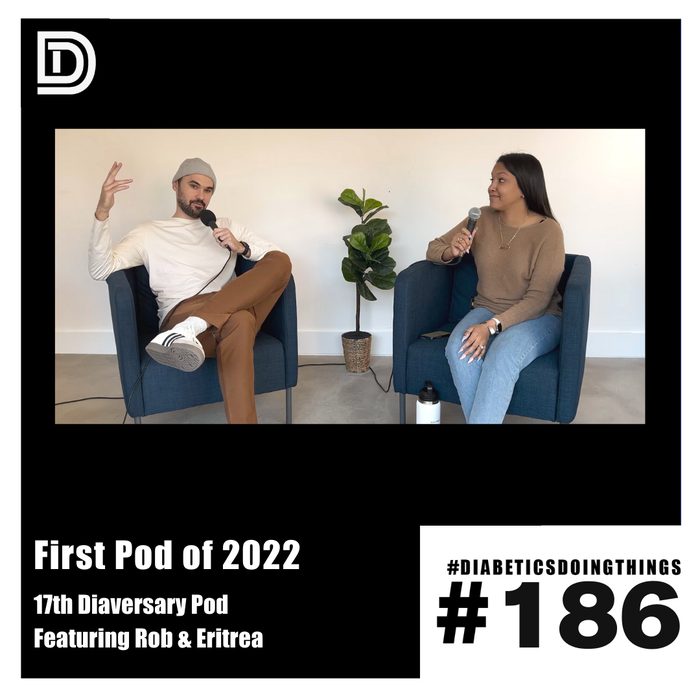

Episode summary
Rob Howe opens 2022 with co-host Eritrea Khan in a new video format for Diabetics Doing Things. Rob marks his 17th diaversary, noting he was diagnosed with type 1 diabetes at 16 and has now lived more of his life with it than without. They discuss why their 2021 post about diabetes and sleep loss outperformed other awareness content, and Rob argues people mostly share things they already agree with. Eritrea talks about growing up Egyptian-American and Muslim, and the privilege of insulin access in the U.S. compared to family abroad. They also cover teenage burnout, a practice Rob calls cosmic insignificance therapy, and processing the loss of close friends in 2021, closing on gratitude for ordinary days.
Key takeaways
- Rob marks his 17th diaversary in this episode, diagnosed at 16, and says he has now lived more of his life with diabetes than without.
- Rob says their most-shared post ever covered diabetes and sleep loss, and he thinks people mostly share content that matches what they already agree with.
- Eritrea says being American gives people with diabetes access many others don't have, recalling a trip to Egypt where another diabetic didn't recognize her Afrezza inhaler.
- Rob and Eritrea both lost close friends in 2021, which they say shaped how they're approaching gratitude in 2022.
- Eritrea says the worst thing that can happen is a bad feeling, and that feelings pass if you give yourself space.
Show notes
We’re back for 2022, in a new video format!
On this episode, Rob, Eritrea chat about:
Rob’s thoughts around his 17th Diaversary
What’s new with Diabetics Doing Things in 2022
The importance of Sleep
People only sharing things they agree with
People with Diabetes deserving respect and dignity
Advice for a young teen with Diabetes adjusting to everyday life
Dealing with loss of people close to you
For the video version of this episode check us out on YouTube: https://youtu.be/iQvQRq2NJiE
Questions this episode answers
How long has Rob Howe had type 1 diabetes?
As of this episode in early 2022, Rob is marking his 17th diaversary. He was diagnosed at 16, which means he has now lived more years with diabetes than without.
Why did Diabetics Doing Things' sleep post get shared so much more than other diabetes awareness posts?
Rob says their most-shared post ever was about hours of sleep lost per year to diabetes. He thinks people are more likely to share content they personally relate to, compared to harder topics like insulin cost, which got far fewer shares.
What is the 'cosmic insignificance therapy' Rob mentions?
Rob describes it as a practice where he reminds himself how few people in history are remembered, which he says paradoxically helps him feel grateful for ordinary days like making lunch for his kids.
What does Eritrea say helps with hard feelings after a diabetes diagnosis?
Eritrea says someone once told her the worst thing that can happen is a bad feeling, and that feelings aren't permanent. She recommends sitting with a feeling and giving yourself space until it passes.
Full transcript Searchable, with timestamps
Rob Howe: Welcome back to Diabetics Doing Things. This is a different type of format that we're going to do this year.
Eritrea Khan: We're new and improved or we're back and improved?
Rob Howe: Back in person. And that way you guys can get more hot takes, social media clips.
Eritrea Khan: More Rob all the time. I don't think the internet really needs that.
Rob Howe: I don't think anybody really needs that. Nobody asked for that for sure. But I don't know. I think a big thing is we've been doing this now. 2022 will make seven years. We'll hit our seven year Diabetics Doing Things anniversary in November. was when I first started 2015 November started building that website so there's a whole lot more podcasts now and that's great especially in the diabetes space I welcome that I think there should be more but a podcast has to be promoted differently now so that's what we're going to do we're going to move with the times
Eritrea Khan: we evolve we grow prices going up
Rob Howe: how fun yeah exactly so this is going to be a little bit of a short form it will also appear on our YouTube channel so if you like to watch podcasts via YouTube those will be on there and you can get these like little tasty clips popping up in your feed on a
Eritrea Khan: regular basis so new in 2022 is video format anything else that we should be looking out for
Rob Howe: yeah i think at the risk of saying keep it locked too many times you got to keep it locked for us we're gonna do we did an experiment in november with national diabetes awareness month where we really dug into some graphics we dug into some research and just sharing a lot of you know graphical and infographics and some research from some of our partners and some of the people that we worked with from the diabetes space, just to continue to raise like top level awareness around life with diabetes. So this year, I don't want to like, we'll actually like launch it appropriately, but we've got a really cool new format of diabetics doing things coming out. It's going to be a little bit more written, going to be a little bit more visual. And I'm really excited to launch that. So that's coming later in Q1. So we've got some pretty cool stuff moving. I'm really excited to share all of the sort of new creative exploration. I, over the years, like I don't want to just do stuff for the sake of doing it. So we're just going to continue to tell the amazing stories of people living with diabetes and just introduce a new format. Yeah. I think we're always
Eritrea Khan: going to focus on the individual perspective, but also we want to speak for like a lot of groups that are sometimes forgotten about or just not talked about in general. So I'm excited to see all of Rob's ideas come to fruition in 2022. And not just my ideas, we actually have two new team
Rob Howe: members joining the team. So we're my God, surprise announcement. I didn't know you were going to tell them today. Well, yeah, I'm not going to out them yet, but they are going to be working behind the scenes and sometimes maybe in front of the camera, you never know, who are just going to help us grow and scale. So there's as the company ages and the demands for content continue to increase. So I don't know. I'm really psyched for 2022. I've come out of a little bit of my just sort of pandemic burnout, diabetes burnout a little bit and feeling good about the future.
Eritrea Khan: In 2021, like you said, just to take it back just a little bit, we did all the graphics in November. We shared so much. I feel like there's just so much that was put out. But I saw there was a huge uptick in a specific, like specific graphics that were being shared a lot. So was there something that you think maybe caused that or?
Rob Howe: Yeah, I mean, I think when you're talking about diabetes awareness, I think what people want other people in their networks and communities to understand. And I mean, specifically like on social media, most people with diabetes don't have a diabetes account, right? Where, uh, where most of their content is centered around diabetes. Like there's regular people.
Eritrea Khan: Oh yeah.
Rob Howe: I mean, you, you're kind of the same way, right? And, and I am a little bit as well, but so when it's national diabetes awareness month and you're trying to teach people who don't have diabetes a little bit about it, you know, you want to share things that are easy to grab onto or that resonate specifically with you. And so like our most shared post ever was a stat that we did about sleep and like hours of sleep lost per year to diabetes. I think it was 180 hours.
Eritrea Khan: 180, yeah. It was the average. It was the average, right?
Rob Howe: So that means that like, you know, people are, you know, even double that is like probably not even like the highest.
Eritrea Khan: And I think people also resonated with it because there was folks who weren't a diabetic but was like a caregiver of a diabetic. And we're like, we're losing sleep too. Don't forget about us. Or the spouses of a diabetic. it because I think I guess we never shout out Erica and Huston but we never really think about like they've they're the ones who have to hear those beeps they'd be having a rollover and be like oh my god this person is not feeling good right now so yeah I mean it's it's sleep is
Rob Howe: universal yeah and I mean speaking of Erica she's a lot like lighter sleeper than I am and so she'll be like your pump's going off and she'll like nudge me she'll have woken up so that's always tough but yeah and I think that speaks also though because there's a couple of our community member friends, Kyleen, as well as Lexi, posted a couple of things about, I think there was two conversations about like diabetes influencer, like the word influencer and things like that. And they got tons of engagement and like lots of conversations. And what I had been thinking, because I was also looking at the performance of some of the other diabetes stats that were going out at the same time during National Diabetes Awareness Month, same hashtag, same all that stuff, same account. and for example the posts about insulin access got a ton of shares relative to our normal content right however they were like 10 of the shares of the sleep one right and what that told me is something that i think like overall about social media in general is people only share things they agree with yeah or that really resonate with them so sleep is something that we all experience not to say that we all don't experience access issues or cost issues right we all do we all been in that pharmacy line and when our insurance doesn't go through for some reason or there's an error we're like whoa whoa whoa but i think people are more comfortable sharing about loss of sleep than they are sharing about money because right there's like some stigma and shame associated with that so anyway people only share things that they agree with or they're more likely to share things that they agree with yeah so share if you agree basically yeah yeah the sleeping ones
Eritrea Khan: a gimme i think you're right that like you said if they birds of a feather we're gonna flock together so just because we're all one community doesn't mean we're facing the same issues so it was interesting that we saw some numbers for some things and different numbers for others but yeah
Rob Howe: it was cool it was our best performing month uh content we've crossed over 15k followers which is great like if you're here hi thanks to all 15 000 of you guys that follow along with us and uh you know again we're just super excited to be here yeah so you so we've been here now you said seven
Eritrea Khan: years but before you were diabetics doing things you were just rob how and you recently like are
Rob Howe: celebrating aren't you like a huge diversity right 17 years yeah 17 years wait is that a huge
Eritrea Khan: to me it is because if you think about it because you were what 15 because you're not to put your age out there grandpa but you're 32 now 33 33 so that means you were what 16 when you were diagnosed so that means you've had diabetes more than half your life yeah i you know it's funny i didn't
Rob Howe: think about that until you just asked it. Yeah. I have officially lived longer with diabetes than without. And I talk about that a lot because I, I remember my life before. Yeah. Not so much like meals that without dosing or testing, you know, but I remember all the stuff that I did and like, those aren't the things that stand out. So I think in that way, I'm very similar to people like you who live basically their whole life with diabetes or whole conscious life. So yeah, really interesting. I don't know. I think 17 years, I went 10 years really without talking about it publicly. And then now for the last seven or so, being more outward. And obviously, like with this platform, it's cool. I think for me, like what was I thinking about in terms of like going into year 17? um i posted this on my instagram but it really made me think because because marie diaz shout out marie friend friend of the pod talked about she posted like a comment like people she asked people for hot takes or something someone posted that some people with chronic illnesses are lazy oh my god oh well like that was not her someone else has posted that oh my goodness and marie like posted into, you know, what do you think or whatever? And so I responded to her and I was like, you know, I've been thinking about this a lot because I see a lot of, I'm very online. I'm in, you know, on Twitter, mostly I see this, but like sometimes on Instagram too, a lot of defeatist, like hard conversations and people sharing and being vulnerable about how difficult diabetes is for all the reasons that it sucks. Yeah. And the thing that always strikes me is that chronic illnesses and diabetes specifically affect so many people and humans are all so different across all these different populations that it makes sense that some people are lazy and some people are not and some people like to strive to be the best that they can be and some people are just doing the best that they can and i don't think that that is for anybody else to comment on yeah and that if you're lazy or if you're identified more as disabled than somebody else or if you don't feel like living beyond or if you don't feel like you know dreaming big for your life and you're just trying to get through the day that is so deserving of respect and dignity and I think that the dignity and the respect is what gets taken away the quickest from people commenting on that and so at year 17 you know google me check my bio I've done a lot of stuff.
Eritrea Khan: Google me.
Rob Howe: Google me, baby.
Eritrea Khan: You crazy.
Rob Howe: Shout out Jay-Z. But that doesn't matter. Treat people with dignity and respect. If you have diabetes, I acknowledge that that sucks, and I wish that you didn't have it. However, my choice that I'm going to make on a daily basis is that 100 years ago, if I had been born any other time within the last 100 years, I'd be dead. You'd be dead. All the people who are involved with this account or the people they care for would be dead. And so that's something to celebrate, that we get another chance. I'm living on borrowed time. You're living on borrowed time. So we have a choice to do what we want with that time and to do the best we can or the bare minimum or whatever that looks like. It's our life to live. And I want people to feel empowered to do that. And so 17 years in, where I'm at, is every day that I wake up is a huge bonus. What a joke that I get to live life. Yeah, no, seriously. How cool is that? So whether you're spending it, you know, packing lunch for your kids, taking them to school or playing in the WNBA or, you know, making $100 million in a startup or whatever, good for you. I'm so psyched that you had the opportunity to do that. And I want to continue to be involved in those stories and give that perspective to people living with diabetes.
Eritrea Khan: I think that's kind of beautiful in a way. I mean, it's very true that if we were born 100 years ago, we would not be alive. But I just want to like take it a step further and let you know that like regionally, we're also very lucky to be born in America. Like as a person who has a lot of family members who don't live in America, I think about how lucky I am every day that I that my parents made the choices that they made to make sure that I was here like to go to Egypt and pull out my Afrezza and have another diabetic who's been diabetic longer than I have be like, like, what is that? And then me explain to them, then be like, that's real. So like, we're also just privileged to be Americans, ultimately. For those of us who are listening, who are living in the United States, or have access to healthcare, because there are some places where diabetes is still called the wasting disease and you just die from it. And that's 2022.
Rob Howe: And like, even in places that know about diabetes, you see like, you know, Sonia Nabeta Foundation does a lot of work in Africa. and you know you hear stories about there's no refrigerator for 100 square miles you know and so you have to go travel to go get insulin or to get test strips so you only get the the government will only provide one test strip per day or per week so you're just living life on vibes about how you feel about your blood sugar you know there's been a lot of conversation recently about like taking CGM breaks yeah and how like kind of crazy that feels because you can't know your blood sugar every second of every day like the privilege like i don't know we're just really lucky there's some
Eritrea Khan: people who live in this country and don't have access to the things that they need and i if they're just doing the bare minimum to get by like i get it i really truly do there's no judgment we should never judge anybody for how they're living their life bringing it back to your comment or what someone said that you know just disabled people are lazy like what a crazy thing to even spout to say like if that's your opinion good for you fam but like these people that are a lot of
Rob Howe: these people believe that that's something that people believe and i and i think uh you know again you and i are very fortunate that we are kind of like people tell you all the time i'm sure oh i don't i didn't know you had diabetes yeah i don't think of you as that way i get the same thing who cares like if you're if you have to actively manage your blood sugar all the time and you have a doctor saying that you should just lower your sugar is like haha like that's so easy to say you know but have some respect for people with diabetes put some respect or just with disabilities
Eritrea Khan: in general like we're all living a really difficult experience even if you have access to everything you need like it's a hard life to live which kind of brings me to my next question to you rob so you were diagnosed 17 years ago and i think we all know that rob's why is basketball right like he wanted to be good at basketball and the only way he could excel at basketball is if he took care of his diabetes but like what else like was there ever anything i mean i just i think about a young 17 year old boy and it's just like if he doesn't have basketball he doesn't have like a sport or something like it must be really easy to get bad feelings and like did you ever get those
Rob Howe: and what was that like yeah basketball did not uh leave me without bad feelings um i mean i was thinking about this the other day because you know with blood sugars going up and down you can and hormones like when you're a teenager and so many people have been on this podcast talking about their teen years and how difficult they were yeah mine weren't super bad because i got tight maybe towards the end of them. And I was like, I already passed a lot of that. But I remember like one or two days in particular where I was just feeling real angsty, like having really dark thoughts and really like depressive thoughts and that being due to like some hormones and some little blood sugar. And it's like, wow, that was just a small moment, but you know, you can make rash decisions based on that or like, you know, that can affect your whole life. And so, you know, if you're out there feeling that way, or you remember your teen years and you were super burnt out or you were like really, really struggling. I get that. That happened for me. And with basketball, yeah, I had that. And that was my thing I wanted to do. But my college years of basketball were not easy. They were full of angst and frustration. And I did a lot of growing up and learned a lot about like really wanting something and like having to work for it. Most of my life prior to that had been pretty easy. You know, I lived in America with a great family and my parents were around and helped me do whatever I wanted to do. And there was an environment there where I could grow and people in my court. And I acknowledge like how lucky I am fortunate I am to have that. And basketball in college forced me to like nut up a little bit. And, um, you know, none of that stuff mattered. It didn't matter where I came from, who my parents were or like whatever. Well, no, but I wonder if it did, right? Like if the
Eritrea Khan: factor is like remove basketball, right? Cause it's like, has Rob Howe always been the ideal diabetic patient? And it kind of sounds like you have been like, yeah. Yeah. I mean, yeah. Why lie? right so it sounds like it was a factor of things like you probably had some really good open communication with your parents or are we lying i don't know no that's right i i think it boils
Rob Howe: down to my personality i'm a rule follower oh okay uh which you know you think about it's like oh rob's an entrepreneur like he's a disruptor or whatever it's like no dude i fall i have followed the rules my whole life like it's and so i've mentioned this before on like panels and things Diabetes resonates with me, and I'm very fortunate that the chronic illness that I drew the lucky card on has fairly straightforward rules and principles that I could grasp onto early enough and fit my lifestyle. Do I like it? No, but I can still, I am capable of doing it. And I know that some people are and some people aren't, and it's different for everybody. But yeah, I have, and I had a great relationship with my endocrinologist. I'm kind of a, a person.
Eritrea Khan: You're an anomaly. It's weird. Like, it sounds like you lucked out and everywhere, like had great parents who let you communicate with them openly, had a good endocrinologist, had a, had a why at a young age. I was set up for success. Yeah. You got lucky.
Rob Howe: I don't know. Hopefully I can help people who maybe didn't get that same experience. So that's the question, right?
Eritrea Khan: So if you're a younger guy and you are struggling with the depression of maybe having diagnosed, been diagnosed a few years, like let's say four to five, and you're just now coming to terms with adulthood, what do you say to a young man? Because I guess I'm not a dude, right? So I don't know what kind of hormones you guys are going through.
Rob Howe: Man, all kinds of hormones. And like the joke that I tell and it always resonates more with parents is when I was 16, I didn't go to diabetes camp because I was too cool and I knew everything. You're a loser. and yeah i mean i i didn't realize what i was missing so the hard thing is like what would i say to myself or what would i say to somebody who's 17 or 16 what what i would say has probably already been said somebody probably told me the right thing but i was too cool and i knew everything and so i didn't really listen and it's not till later in your life where you look back and you're like oh wow somebody probably did tell me that or that perspective was given to me but i just wasn't in the right place to receive it so for me what i would say though because you got to say something is that it's going to be okay. I think every single moment, every single blood sugar, every single event seems so important, but in the grand scheme of things, it's a long life. I wouldn't get too hung up on one thing because the next day you're still going to have to wake up, check your blood sugar, and count your carbs. That's going to be – you're going to have to do that forever. That does get burdensome and cumbersome, but there's also people out there who, you know, it's never been easier to find somebody with diabetes. Like, even if you're just like on TikTok now, you're not even looking for it. It'll just pop up for you. You know? So I think, you know, it's normal. A lot of people have it. There's been amazing people who've gone before you and will come after you and take it one day at a time and cut yourself a break. And for parents, I always remind them to remember what it was like when they were teenagers because even I like only 17 years removed like forget sometimes yeah absolutely and you I'm sure as well like every day if somebody called like called your outfit bad or ugly like you would come home upset like me too like I had I remember not my fit yeah like oh not my fit or like you know hey you had like a fate your face broke out or like you said the wrong thing and then like somebody makes fun of you because when you're a teenager and you're different and diabetes
Eritrea Khan: is a difference oh my god I don't even want to talk about this I feel like I'm being traumatized
Rob Howe: right now yeah see so yeah I would just say like take it take it one day at a time uh someone said
Eritrea Khan: to me a few weeks ago and it really like I can't stop thinking about it but I really wish someone would have told me when I got diagnosed the worst thing that could ever happen in life ever like for any situation is a bad feeling and I was just like oh my god like that's so deep because feelings come and go like it's not even bad feelings like they're not permanent even if when you're because you know I struggle with anxiety and depression and even when I'm depressed like it doesn't stay depressed like you'll find yourself laughing at some stupid thing when you're depressed so i guess that would be my one thing i'd say to someone is just it's just a feeling and you just have to kind of sit with it for a minute and it'll go away but you have to like give it you have to
Rob Howe: give yourself some space space is the right thing and i've been doing something recently so like the last six weeks or four weeks i guess uh called cosmic insignificance therapy what which i know like i'm a super nerd but cosmic insignificance it's just like what is it i've never heard of this well think about it like how many people have lived all of all time you know what i mean and we look at people uh and for me specifically like Michael Jordan, Kobe, LeBron oh the greats steve jobs like okay these great like movers and shakers right there's so few of them there's like you know the likelihood that you're going to even be remotely in that conversation is like less than 0.1 percent no right uh and even still like in 100 years will anybody give a shit about steve jobs probably not you know so even on that on that note like we don't matter at all nope and yet at the same time you matter a ton yep so you can like matter more and less than you think and so whether again back to that like whether you're just getting your kids to school every day or you're you know making lunch for your kids could be the most important thing you ever do yeah Yeah. And even if you never, you know, a few years ago, I started talking about like for many years, I chased immortality and I've stopped that. But I didn't stop giving myself grief about it in my head. So it's like, oh, you're not this or you're not that or hey, you haven't built anything that's going to last or inspire generations to come. And for some reason, we think that that's a failure. So cosmic insignificance therapy is just acknowledging that you don't matter, that it's an accident that you're alive. and think of all the things that had to happen for us to get here today.
Eritrea Khan: I'm not laughing at you. I'm just laughing at the thought of you like sitting in a yoga position saying, I ain't shit. I ain't shit.
Rob Howe: Every day I wake up and I think about my death. And I'm just like, yeah, I have to spend active time thinking about when I'm going to die because that way I don't waste any time.
Eritrea Khan: You know, it's interesting in Islam. We have this thing where when someone dies, you're supposed to look upon their face because their fate is your destiny. and that's a crazy thing to think about because literally like we're all just we will all be there sorry to be so doom and gloom welcome to quarter one of diabetics doing well you know uh we lost
Rob Howe: some people close to us last yeah yeah it was a tough year and um danish and tom were like the two people towards the end of the year and very young people friends of ours taken away and like you said that uh we're gonna be there one day that's like the only guarantee yeah and and so when you think about it, it's not doom and gloom. It's okay. Well, today I have today, today I have an opportunity today. I can be grateful for my relationships, for the things that I do have serotonin versus dopamine, like looking at what you have in front of you. And instead of saying, well, this isn't as significant as Steve Jobs or Justin Bieber or Kim Kardashian, this is what I have and it's beautiful. And again, like, so think about it. Let's just break down you and me for a second for a second uh your parents had to come to an entire new part of the world yeah together yeah no separately separately yeah from different places yeah and speaking different languages yeah and then run into each other and meet and start a life together to have you yeah uh yeah my parents the same thing like you know they they came from different places uh they met in in happenstance a lot of odds against them and then they had to commit to a life together and just, and just, that's just one generation. So even before that, it's wild. And then you have to be here in Dallas Fort Worth and I have to be here in Dallas Fort Worth and you have to come across each other. You started a little diabetes support group or were part of one. And I saw it in Dallas and thought, Hey, well, let's, let's just make friends. And then here we are. So it's weird when you think about how crazy and what honestly, like a miracle it is to be alive at all. Yeah. Uh, it can really shift your perspective. So anyway, that's what I'm going. And this year I'm trying to be a little less hard on myself and take it day by day and just celebrate. Like, hey, you know what? Today we're alive.
Eritrea Khan: That's beautiful. Yeah, no, I think one of my favorite things my dad has always said is leaving your house and coming back is a blessing. Like big, like going to the grocery store and coming home. Oh, man, I want to cry. But yeah, no, it's just I think that we did lose some good people last year. And both of us went through some emotional stuff at the end of the year. And it's kind of given us this resurgence for 2022. And to just be grateful for the platform that we have. And to let other people know, you know, how not bad it is to have diabetes because we do amazing things every day. So, yeah.
Rob Howe: It can not be terrible. Yeah. It can be okay. We can have a little bright spot in those moments. So, thanks for tuning in. I'm excited to spend some time with you guys this year and keep it locked to Diabetics Doing Things.