

Golf and SmartGuard Auto Mode with Medtronic Diabetes Ambassador Kris Leeper

Episode summary
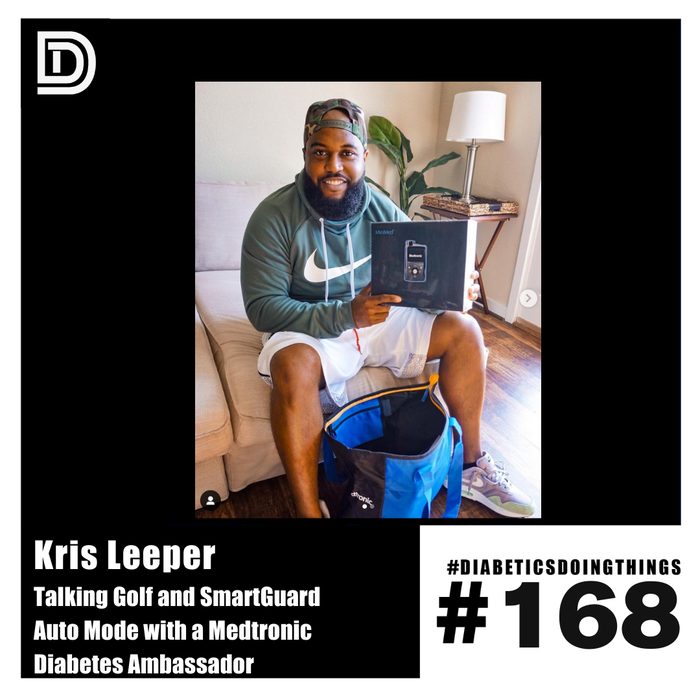
Kris Leeper, a Medtronic Diabetes Ambassador, joins host Rob Howe to talk about living with type 1 diabetes and golf. Leeper was diagnosed at 26 after feeling sick for two and a half months during a work trip and a vacation, before an urgent care visit sent him to the emergency room. He left the hospital with a vial of insulin, syringes, and a prescription, with little guidance on how to actually live with the disease. His wife later pushed him to ask his doctor about insulin pumps after spotting an ad in a waiting room. He now uses a MiniMed 770G with SmartGuard Auto Mode, which he credits with letting him play full rounds of golf without packing snacks or stopping to treat highs and lows. He and his wife also make diabetes content on TikTok and Instagram.
Key takeaways
- Kris Leeper was diagnosed with type 1 diabetes at 26, after feeling sick for about two and a half months before finally going to urgent care.
- He left the hospital with only a vial of insulin, syringes, and a prescription, with no real plan for living with the disease long term.
- His wife spotted an insulin pump ad in a doctor's waiting room and encouraged him to ask about it.
- Kris says SmartGuard Auto Mode on his MiniMed 770G lets him play full rounds of golf without a bag of snacks or stopping to treat highs and lows.
- He once passed out from a low blood sugar after golfing 36 holes in one day and not eating enough.
Show notes
Kris Leeper (@kris.leeper on Instagram) joins the Diabetics Doing Things podcast to talk about:
GOLF and Diabetes
His T1D Diagnosis
How his wife encouraged him to ask his doctor about insulin pumps
How he came to be a Medtronic Diabetes Ambassador
What he thinks of SmartGuard Auto Mode on his MiniMed™ 770G system
Some of the stories behind his hilarious Diabetes TikTok and Reels content
And MORE!
Be sure to give him a follow and keep it locked here for more amazing interviews.
Disclaimer: Rob Howe is a spokesperson for Medtronic Diabetes, this podcast was made possible by Medtronic but Rob’s thoughts and opinions are his own. Kris Leeper is a Medtronic Diabetes Ambassador.
The MiniMed 770G system is for type 1 ages 2 and over. Prescription required. Individual results may vary. WARNING: Do not use SmartGuard Auto Mode for people who require less than 8 units or more than 250 units of insulin/day. For details, please visit https://bit.ly/3edsZwB.

Questions this episode answers
What is SmartGuard Auto Mode?
It's the hybrid closed loop feature on Medtronic's MiniMed 670G and 770G insulin pumps that automatically adjusts insulin delivery using CGM readings.
Can you play golf with an insulin pump?
Yes. Kris Leeper says SmartGuard Auto Mode lets him play a full round of golf without going high or low, after years of packing his golf bag with snacks on an older pump.
How was Kris Leeper diagnosed with type 1 diabetes?
He felt sick for about two and a half months, including during a work trip and a vacation, before an urgent care visit found his blood sugar was dangerously high and sent him to the ER at age 26.
What insulin pump does Kris Leeper use?
He uses the Medtronic MiniMed 770G system with CGM and SmartGuard Auto Mode.
Full transcript Searchable, with timestamps
Rob Howe: What's going on, everybody?
Kris Leeper: Yo, yo, yo, yo, yo. We're back.
Rob Howe: We are. And we got a great episode for you guys today. My man, Kris Leeper, on the pod to talk a little bit about his life with diabetes, his diagnosis story, some of the behind the scenes of he and his wife's amazing reels and TikToks that they make, as well as we're gonna talk a lot about golf because he and I are both big golf nerds. So this is if we haven't talked a lot about golf on the pod, this is a good episode for that. and we also talk about Medtronic 670G and 770G's feature, a SmartGuard auto mode. So we're going to talk about how auto mode works. And Trey gave me the great note that when we start talking about it, we just dive right in without really giving it any intro.
Kris Leeper: So nerdy. You're just like, I'm so excited. And I'm just like, bro, what is this?
Rob Howe: Yeah, I think it's important. We got to tell people what it is. So when we're talking about auto mode, that is the hybrid closed loop feature on the MiniMed 670 and 770G systems from Medtronic. So that's what we're talking about when we talk about auto mode.
Kris Leeper: It sounds really, really cool. I'm not a golfer. I do not have a Medtronic pump, but even if you don't, this is still a really good interview to listen to. I could listen to you guys talk all day. And Kris is just a really awesome guy. Listening to his entire conversation and about his story, I really felt like he's one of those people that really believes that life is only 10% what happens to you and 90% how you react to it because he's just so positive. Like, okay well i wasn't gonna let the lack of information stop me and he has a great support system and his wife you know she's it sounds like an amazing person she's the one that discovered
Rob Howe: or that encouraged him to ask about insulin pumps so all in all it's a really great interview for
Kris Leeper: anybody if you recently got married and want to support your spouse if you're thinking about switching to medtronic anything like that it's a good interview i liked it yeah if you have
Rob Howe: questions about those things uh obviously we can answer them uh but man kris leeper came on the pod, like a true pro and just knocked it out of the park. So he'm on the pod with a syringe and a vial and a Medtronic pump. He did. Yeah. Uh, he talks about when they left the discharge from the hospital, they gave him syringes and vials and a prescription and that was it. And just probably a smack on the back and he, he turned that into something majorly positive. So Kris, thanks for coming on the show and enjoy this interview with Kris Leeper. it has been a while since we did one of these but i'm so excited to announce that this episode is sponsored by medtronic diabetes thanks to medtronic for continuing to support the work we do here at diabetics doing things and enjoy this interview with medtronic ambassador kris leeper hello and welcome back to another episode of diabetics doing things we're telling the amazing stories of people with diabetes from all over the world very special guest today is a guy who who I met through Medtronic and the Medtronic ambassador program. And then we just realized, I think we have a ton of things in common. So Kris Leeper, welcome to the show.
Kris Leeper: Thank you guys. Thank you for having me. This is a, this is a great opportunity to, like I said, further our relationship, Rob. Like I said, I think we, I think diabetes was like the 15th thing that we have in common. I think everything else, like we, we, we flow in line with everything else. And then I was like, oh yeah, he has diabetes. I have diabetes. That's, that's number 15. So.
Rob Howe: Hey, yeah, it was great. It was just like, oh, wow, like I met you like through diabetes. And it's kind of the way that it works sometimes with a lot of people in the community. I'm sure Eritrea feels the same way about some of our diabetes friends online is like you run into people and then you're like, wow, like we do have diabetes in common, but also like all this other cool stuff. So and we're going to talk. I'm excited about talking about that as well today. You and I met through the Medtronic Ambassador Program and you are a Medtronic Ambassador. And I've been a part of that program for a number of years. And I think the first call I was on with you, maybe the second was like a European call, like at 3 a.m. my time.
Kris Leeper: Yeah, it definitely was. Yeah, it definitely was. That was, uh, I was in Virginia at the time and it was, I was at like 4 a.m., 4.30 a.m. And I remember waking up and, um, you know, starting the coffee pot. Cause you know, I figured if I was going to be up at four and have that two hour meeting, like I was going to go ahead and start work right after that. And so I remember starting the coffee pot, you know, still being really quiet, you know, know, trying not to wake the dog up and stir the dog up and, you know, not to disturb my wife. But yeah, that was, that was a whirlwind of times that, you know, it's dark, you know, in my house and it was dark in your house. And it was just an interesting discussion or time to meet
Rob Howe: at like 4.30 AM. It was so tough. It was like, okay, how long is this meeting going to be? Do I like, do I stay up? Do I go back to sleep? Like, cause I was an hour behind you as well. So it was, anyway, I was, I told the Medtronic folks that I was like, I'm going to try to wake up, but I can't guarantee that 3am alarm is going to get me up. Absolutely. But big fun. So Kris, like, let's talk a little bit about your life with diabetes. How did you come to join the T1D
Kris Leeper: family? Oh man, it was, it's crazy. Me and my wife were just talking because I don't know, since we've been in Portland, they kind of walked me or like kind of just reminisced back to my diagnosis. So all the way up until like I went to the hospital and things were going south, like I was in Canada for like two weeks. And I remember having the symptoms, being in Canada for work and feeling awful, feeling terrible and not really able to enjoy my time there. And just like, it was just terrible time. We were walking to restaurants, walking to bars, walking to, you know, just, just enjoying the city. Cause we were there for two weeks and we were just really sightseeing and doing everything that we could to really enjoy our time. And I just felt awful. And then once we got back, you know, I took a vacation with my wife. We went to New York. In New York, we were walking around. We were, you know, we were being, trying to be social. And we're really like just trying to get out there and do things. And I just felt terrible. Like, I just felt like awful. So ended up going back to work after vacation, being in work, going throughout the day really struggling um they was like hey you might want to go to the doctor you might go to the hospital because you just you're not acting like yourself so I finally went to the doctor and this is after like two and a half months of feeling this way like I just just didn't go to the doctor and uh went to the doctor drove myself to um then just like local urgent care and I said hey I started to feel this bad and they checked my blood sugar and they said it was through the roof and they said you have to go to the emergency room like right now like you have to go to the merch room. And luckily the merch room was only like two blocks away from where I was. So it was an easy trip to go from there to there and get checked in. Fast forward a few days, you know, doctor comes in, you have type 1 diabetes and what does that really mean? And I was like, just like, oh my gosh, like my life changed forever. Like, oh my God, like this is crazy. Like the other day I didn't have to worry about any of this stuff you're telling me. Now I have to to do that and I was 26 years old and I'm like this is like in my mind the prime time of my life where I was still young enough to do a bunch of things and learning a bunch of things and experiencing different things as I kind of grew up and I'm like this is this is so different than what I imagined my life would be like and to go through that journey and process to kind of what I knew about diabetes then to what I know now, it's completely like night and day. Like I really thought I was going to die like a few years after that, because I didn't see it being sustainable. Because I walked out of the hospital with a vial of insulin and some needles and a prescription for test strips. And I was like, this is archaic. This is crazy. Like I can't live a life like this for much longer than this. And I remember having tough conversations with my wife. You know, we were newly married. And how do you tell your wife that you're newly married? Like, hey, I know you said yes, just like a couple of years ago, but I don't know if I'll be around a couple more years after this. Like that's a tough scenario to go from starting a career to talking about, you know, will and life insurance and all this other stuff. Cause you just didn't think it was, that was sustainable. Like you just like, Oh my gosh, like this is not, this is not fun. This is
Rob Howe: not interesting at all. And it sounds like, I mean, it sounds like to you, like that you didn't get a lot of great information before that you got, you know, released to the world. Right. And And I think that's very much the case for adults who are diagnosed with diabetes. It brings up two things. Like one, you needed more information and you needed more probably handholding and more like somebody to tell you this is going to be fine, but you got to take care of yourself. But then also you remember your old life. Like, you know, even me, like I was diagnosed at 16. I remember what it was like before, but I sort of now I'm just totally acclimated to always having diabetes. So like you have 26 years prior to that.
Kris Leeper: Yep, absolutely. And it's crazy. like you say that, like, I remember going to an appointment with the doctor and the nurse team, you know, around the hospital and the care unit in the hospital. And it was like a dietician appointment, really. It was like a well, like a wellness check and just a, Hey, how are you doing? You left the hospital, you know, a couple weeks ago, here's how's everything going. And I remember the lady telling me, you know, talk to me about what you eat. Tell me about your daily routine. She's like, wow, you eat too much. Like, like, what do you mean I eat too much? Like I'm 26 years old, like, you know, at the time I was like going to the gym regularly and all like I did, you know, sporting events and playing in rec leagues. And I was, she was like, you eat too much. Like, I'm like, what do you mean? This is how I normally ate. And, you know, I don't, I don't know any different. Like, how do I transition to something like this? And like you said, the information that was given to me was very limited from a, from a closed eye view on how to live a life and be normal with type 1 diabetes. And cause I just didn't see how the two connected. I just didn't
Rob Howe: get it. I just didn't grasp the idea. Well, and I think it takes time to explain, you know, and I think like it's one checkup, one wellness check, one, one time in the hospital, you know, there's, there's a frequency there that you need. Right. And, you know, I think even still, like it's, it's really years before you're used to all of the sort of one-off situations that you're going to have to navigate throughout. But you mentioned that you and your wife were recently married. What was that like on your relationship introducing diabetes to the whole equation?
Kris Leeper: It was funny because my wife received the information and she was fired up day one. She came home and threw a bunch of stuff away that we had in our refrigerator and our cabinets. I'm like, what are you doing? And I just couldn't pull myself away from that. But she was all on board from day one. She was like, okay, if we're going to do this, we're going to do it. She threw a bunch of stuff away. She gave me stuff a bunch of way. Um, and I was like, Oh my gosh, like, this is crazy. And then I remember her cooking like meals shortly after that, that was like low carb or, um, you know, just, just a lot differently than how we ate before. So she was totally on board to, to, to get me there. I just had a hard time accepting it based off the limited feedback I was given from, you know, professionals that you, that you go to and ask about like I felt super uncomfortable about what I was doing what we were told to do because of just a limited like I was just thinking like hey I can't I can do this if I'm motivated to go on a diet or I'm if I really want to get back in shape and you know I can do that from a short period of time and I can really be motivated but to talk about you know lifestyle change at 26 to really dramatically take a turn it's like wow like this is not just a six-month crash course to get in shape. This is, you know, 60 years of, of mind shaping and getting conditioned to change your outlook on a lot of things. So that, that takes a lot.
Rob Howe: Yeah. And I mean, you hit the nail on the head. Like, I think they have to tell you, and if they don't shame on them, but like, this is not going to go away anytime soon. I think, you know, when you're diagnosed as a kid, I think they always try to make your parents feel better to say like the, you know, they think is like a cure is going to happen in 10, 20 years. I think like I was told 20, I know people who have been told 10, you know, and I think they just do that because they're nervous and they don't want to tell you that you're going to have this for your whole life because in those moments you're like fragile, you know? And like you said, it's a, you've never probably at 26, I wasn't really contemplating the rest of my life, you know, and kind of just focused on the moment. And, uh, man, it's, it'll, it'll dramatically make you grow
Kris Leeper: up quick absolutely tell me about it and it's one of those things where we're very similar rob like we're competitive nature we love to be we've been in sports our whole lives like we wanted to know worst case scenario so we can start pulling ourselves out of that and it seems like like like you said the information that you were given or for me wasn't that that worst case scenario this is what you have to do to to change it so it was hey do this do this do this and and just hope for the best. Like, that's not a plan. You know, I'm a planner. I like to think of, of, and really prioritize. And when you tell me certain things, I'm like, well, I can do that, but that doesn't sound like me. That doesn't sound like my life. And it's, and it's crazy to, to always have that stigma attached to it. It was like, how can I do this and be myself in everything that I do going forward. And it's not, not that, but it's just knowing, knowing that you evolve into a better version of yourself with the knowledge that we all are getting now with, with diabetes technology and how to live a life. Um, and that's, what's kind of freed me up to be myself and to do some
Rob Howe: of the things that I've been doing. You know, I mean, you talk a lot about the psychology behind it. I think you lose part of your identity and you also gain a new identity based on your diabetes diagnosis, right? You talked about like eventually coming to terms with it. And like, as you, you know, learn about technology and you learn about lifestyle changes and kind of adjusting to that new normal, what was it? Do you remember what changed that for you or sort of what gave you that confidence or what started you on that path to discover that? It was just gaining the
Kris Leeper: experience, gaining different experiences, learning more about myself and learning my diagnosis and owning it. And it's just, just as I experienced more throughout the day and, you know, had a good day at work or I had a good work trip or whatever else. And I'm like, Hey, I can do this and be successful. Um, because a lot of times we were just talking about this at work though. They, a lot of times, if you don't know somebody, you don't talk about it, you kind of just, your mind makes up a version of what it's supposed to be like. And it's not true. most of the time it's so false of reality but you have to go through it you have to experience you have to talk about it you have to open up about it to really gain understanding and revelation to where you can move forward and move past it if you don't talk about it you don't you know kind of move or face it or address it you're basically just like your mind makes up something and and you're always parallel and paralyzed in fear and and just just always held back from being yourself
Rob Howe: my old man used to say the mind is a terrible thing and it must be stopped somebody but yeah that's that man i i hear you i think those stories we tell ourselves especially in those isolated scenarios they can be you can get real off track real quick uh and you know some of those stories you're just not seeing the whole the whole you know the whole picture so you talked about technology um you left the hospital with a syringe and a vial like, like many of us, uh, what do you use to treat your diabetes now?
Kris Leeper: So right now I have a mini med seven 70 G system, um, with CGM and I'm loving it. I'm loving the, the technology. I'm loving the access to have Bluetooth connectivity on my phone. I am just loving, you know, having the information at my fingertips, you know, I'm loving, uh, making, you know, any adjustments or anything, you know, just been able to live a life where it's not just monotone. And, you know, life is not just like this all the time. Like there's going to be ups, downs, hurdles and everything. And it feels like technology allows me to just have the latest and greatest access to my numbers and what I need to do to live just a normal, better life for myself.
Rob Howe: and you know i mean first of all i couldn't agree more i love being able to check my medtronic numbers on my phone i mean it's just a huge hack especially like when you're in a meeting you don't want to take your pump out of your pocket or whatever the case that's just nice um for you like you know this obviously isn't your first pump do you remember like how you got introduced to insulin pumps and cgm and what those conversations were like and the sort of
Kris Leeper: impact you were able to feel from that? Sure. So, um, yeah, when I went through the first four years of not knowing or seeing one, it was so like, like different for me to even hear that a pump that you'd have to be on you. Like I I've heard you say, like, you thought it'd be surgically implanted. Like I thought that too. Like, I didn't know what it would be like because that just seems so like out of body. Like that just seems like so crazy. So actually my wife saw it, saw like a little doctor infomercial slide in the, in the, in the doctor, you know, waiting room. And she just saw it like a, just a little short clip. And she's like, Hey, I think I saw an insulin pump on the TV and the, and the monitor out there. Like, you know, you probably need to make an appointment just to ask questions, see what it's about. I was like, nah, don't worry about like, I'm good with what I'm doing. You know, I've, I've accepted using pens and from, from MDIs and, and Hey, I'm, I'm made an adjustment already. So I'm right. Yeah. No, no more changes. Yeah. No more changes. So, and, and, you know, it's the wisdom of, of understanding from your significant other is, is next to none. It's the best because she was looking out for me. She was like really trying to provide feedback to just help just, you know, supported me just knowing and getting the information. So went, made an appointment, went to the doctor and, you know, I actually got to see one for, for the first time. I was like, Hey, this isn't as big or as crazy as I thought. I asked a bunch of questions like, how is it, you know, in you and you know, what happens when all this stuff happens and, you know, tell me this, what, what do you do if I want to go play basketball? What happens if I want to go swimming? You know, tell me that. And I was just waiting for a negative response. And, and it wasn't a negative response. It's like, Hey, if you feel like, you know, you can check your blood sugar and have the CGM and you can see the readings on your pump. You can just take your pump off. And if it's only just for an hour or two, like you'll be fine. You just take your blood sugar and resume and keep going. I think that's such an important, I think that's
Rob Howe: an important thing to talk about. Sorry for, for cutting in on you, but like, you know, you know, it is like when you're a young, active person with diabetes and you just think that there can be no one else out there that's worried about the stuff that you need. It's like, okay, well, that may work for somebody, but I like to swim or I like to play basketball. Like I'm different. and and then they're like no dude you can just take this off like here's here's some like you know tights a brand of tights that you can tuck it into or whatever yeah it's fine you're not that special right like our uh our good friend lauren cox uh plays in the wnba with it on so i mean if you can do that we could probably you know get out and play a little sand volleyball she wears it
Kris Leeper: too like she wears it during the game so yeah i mean and you can i mean i haven't played in a professional basketball game before but i mean i do things a lot with just my pump in my pocket or clipped on my my pocket pants or belt clip like it's just super convenient and easy to do whatever you need to do like it really is that easy it's it's so funny like you were talking
Rob Howe: about me thinking that it was surgically implanted and like you know and and there were pumps like that, but they were like one-offs, you know, like way back in the day. And I just remember trying to explain that to my like 70 year old CDCES or I guess CDE at the time. And she was just like this very sweet old lady. And I was like, ma'am, this is not sexy. I'm 19 years old. I don't want, I don't want like a big hole in myself. And she was like, what are you talking about? Here's, and she had the little fake, you know, flesh, you know, it's like that skin. She's like, she put the site on she's like that's it and i was like okay well maybe we can have a conversation
Kris Leeper: then maybe maybe i'm an idiot like i'm curious to like your professional experience like like how did you make the transition and what was it like in that different kind of active lifestyle because i mean you you you were out there you were active like you were you were there i was um
Rob Howe: so i didn't wear my i i wore in college i switched my pump so i was on mdi for my first two years first yeah first two years and that worked pretty well um i gotten used to like the long acting and i um i actually think looking back um for that the way that we practiced and kind of the kind of culture that we had as as a team mdi probably worked better just because you know you didn't have to be disconnected a lot because i was disconnected or i did disconnect during practices and games. Um, just cause I didn't have, I don't know. I just got into the habit of that and it worked, it worked out. I had plenty of lows and highs just like, just like always. I talk a lot about my best days as an athlete were probably my worst days of diabetes control just cause I was pushing myself so hard and didn't have CGM at the time that was really like suitable for that type of activity. Um, so I think like if, if I had been in college today, having CGMs that are pretty durable and having phones and like pumps and tights that are easy to tuck things into, I think I would have worn it, um, at least during practices, if not games. So that's probably if I, if I went back, I think that's probably what I would do. Um, but yeah, it's a good question. And I think like, you know, for me at the time, like my, I wore the, the five 30 paradigm Medtronic Paradigm Revel. And I wore that pump for like eight years. That pump was indestructible. And it just, it never, I think one of them died on me one time and they sent me another one. And then that thing wouldn't quit. It just refused this little Game Boy screen. So let's talk about like active lifestyle, man. Like one of the things that I haven't talked about enough, but I'm really talking about lately, probably because I'm so, you know, just laser focused on trying to bring my handicap down is playing golf and, you know, play, cause I, which I love to do. And especially during the pandemic, it's like one of those only social, like outdoor, like distant, easy things to do on a regular basis. And so that's been a nice rediscovery of the love for golf for me, but many people with diabetes kind of can struggle with, you know, having to fill their entire golf bag up with snacks. And so that's where I think talking a little bit about SmartGuard auto mode, which we don't talk about a ton on the podcast, but I think it's a super important thing for people to know about. I often, and I'd love to hear your perspective on it as well. I can go a whole round of golf with the right conditions without ever going high or low. Absolutely. Absolutely.
Kris Leeper: And there's times where I have, um, I have infusion, not infusion sets, but, um, my glucose meter and test strips like in my golf bag that I keep in there all the time. So I don't forget anything or I'm always unprepared. So there's times where I can go a whole round of golf and not even touch my little safety kit or my snack pack and enjoy myself because I know auto mode is kind of keeping me standing up in the background. Like it's keeping me going where before, because I had the the 630g before 770 and I would I would have a my golf bag full of snacks I had usually something that that got at the turn you know a little power rate or you know something just to you know give me some carbs and I was never like I was always taking like every few holes I was always concerned about my blood sugar like I was like oh let me let me go check it real quick I got some time or we've got we're waiting in front of the group in front of us you know I I got some time. Let me check my blood sugar. Let me eat something really quick. And it was tough to, you know, golf is one of those mind games where you have to stay in the game. And if your game, your head's out of it, you're basically out of it anyway. And I'm a very competitive person. That's how I kind of got into golf. Like I stopped playing other competitive sports. But golf was there, you know, willing and waiting outside of, you know, other competitive sports. So I wanted to be the best I could. Lower my handicap, like you said, Rob. I wanted to really try to compete and challenge myself. So there was times where I could feel my blood sugar getting low or high. And that would take me out of my mental headspace of, of the golf round or practice.
Rob Howe: And like that, that's not just unique to golf, right? That's kind of with everything is like, if you, you know, if you feel your blood sugar dropping and you're in a meeting or you feel like I was asking myself earlier today is like, is my blood sugar high because I'm pissed off or am I pissed off because my blood sugar is high? Like, which one is it? Um, because it really does take you out of it. And ultimately it's like survival at its like core, right. Is your body is in trouble. And of course that becomes the most important thing.
Kris Leeper: Absolutely. So yeah, it was always a, an event when I, before I had seven 70 and, and, and going out to the golf course and really enjoying my time, it was actually a actual physical event where I had to prepare and pack and plan to enjoy myself out there. And a lot of times I I would end up having a low or I would stay high and it was never one or other. It was always like, hey, you know, you could go low and then you'll correct too much and then go high and then spend the back nine all high. With with auto mode, I'm able to to plan, you know, obviously at the very beginning of my round, you know, go to temporary target mode and then really just kind of just monitor it as I go. as I'm walking from hole to hole or I'm in between shots, I just, you know, look at my phone. Yep, I'm good. And we're on to the next hole. We're on to the next shot. I mean, it's really taken a lot of the guesswork out of how I used to manage it when I was on the course, because the 630G had the, the, the, the, um, the basal rate, the percentage. So depending on if you're walking or riding, like I would fluctuate those percentages based off, you know, how hot it was, how cold it was, you know, would I be eating on the course? Would I, would I, you know, be sweating a lot, you know, when you walk? Um, so all that came into fact when I was playing around the golf and I'm like, Hey, I'm thinking about my blood sugar way too much. Like I'm thinking about my diabetes way too much when I'm trying to do this activity. And I'm really like taking myself out of it every so often, knowing that I'm, I'm worrying about my numbers and my body. Well,
Rob Howe: and I mean like that, that headspace and that kind of way of operating, I think that like exercise is hard enough as it is, you know, like it's hard enough to get motivated. It's hard enough to get to the gym. It's hard enough to feel good, you know, or, you know, shake off a work day or what have you, or wake up early. Same thing with like, enjoy like things like golf, which is clearly an entertainment and enjoyment, but also physical exercise. So if the cost of doing something that I enjoy, like I got to do all of this extra stuff. It takes, it robs you some of some of that joy and some of that, uh, you know, those things. And I think that, you know, I mirror your, you know, uh, experience exactly like before CGM, before SmartGuard auto mode, I would have to have a pack. I'd have to stop at seven 11 or stop in the pro shop before my round and make sure that I had enough stuff to make it through. Because I know after four or five holes, I'm gonna start, especially if it's warm, I'm gonna start sweating. I'm gonna be walking and my blood sugar is gonna start to come down. So I need to keep it up, but I don't want to get to go too high. And then are we eating lunch at the turn? Are we eating lunch? You know, like what, how much are we eating? Am I going to have a bunch of insulin on board and I'm going to crash even more. So, you know, it's, it's just been a cool thing, like things that the way, the way I've heard people talk about it before is like one of the biggest advantages of hybrid closed loop systems is it lessens the mental burden of diabetes. And I think what's cool about that in this particular instance is we both know what it was like before we know, like, and then you get to experience and step into that new technology and like new experience. And you're like, Oh, okay, well, this is different. Like I am back to, I checked my blood sugar the same amount of times that my buddy that doesn't have diabetes in the, in the car next to me did. And that's none. Or I could just peek at it on my pump or my phone and just say, okay, well, here we are. We're, we had a nice flat line. And I don't know, just the, the amount of, I just, it feels like a win. Uh, whenever that happens, it's just like, man, I got to do what I wanted to do, not think about diabetes for a long time, not running into any problems. And I feel great. And I just, I don't know, I just, I could ride that high all the time. That's mental health more than anything, really.
Kris Leeper: Well, you said it just as not being taken away from anything. If you're in a meeting or you're, you're having lunch with your, your, your friends, or you're doing something and watching a movie Like you don't want to take yourself out of that situation and go handle a high or low or, you know, just to check your blood sugar. And it allows you to, because golf is a social, you know, we have fun. We're playing with friends or we're playing with people that we work with. Like it's very sociable. And you hate to take yourself out of those situations when a conversation was going so well or a good, you know, problem solving opportunity at work comes up and you can talk about that. And you just always want to be present during those times. And with technology has allowed you to stay within those moments and not have to take you out of those to make sure to adjust and to come back. Like there's so many times where something was going on and I was like, so just so self-conscious, like, oh, I think I'm going low or I think I'm going high. Let me go check my blood sugar. So I had to grab my stuff. You know, I didn't want to check it in front of people. So I went to the bathroom and I went to go check my blood sugar. And I'm like, OK, I'm back. I'm like, what are we talking about? I was talking about something completely different than what I left the conversation.
Rob Howe: That ship sailed and you're, you're jumping in, you know, five, five minutes behind. Right.
Kris Leeper: Right. And it's, and it's crazy that, you know, being some of the ages that we're, we're diagnosed, like some of the spirit experiences that we are accustomed to having and not having to take ourselves out of those and really enjoy them, you know, a hundred percent is, is so key to, to golf and to everything that we do. Cause we never want to make it seem like we're taking ourselves out of a conversation or out of a situation for our diabetes. Like that's the worst
Rob Howe: that is, that is the absolute worst. It's a, it's a, it's a, it feels, it's a burden, you know, you feel like you're, and I think that, you know, from my perspective, at least like, I don't want, I don't want to feel like a burden. I don't want to make people feel like they need to worry about me. I don't like, I don't like any kind of attention like that. And, uh, you know, it's too difficult to under, to explain in a short amount of time. Like if you're in a meeting, like it's a five minute break, like, Hey, like what happened in there? It's like, Oh, how much time you got? Uh, but you know, when you have, otherwise like an alarm will go off, like in a meeting, like like on high and say, okay, well I can just give myself a little bit of, you know, insulin here and we're just going to sit and just do just fine. Nobody has to know. Uh, and it's not that you hide it. It's just like a convenience thing.
Kris Leeper: it is it's well you never want to go into a situation like you have to worry about me like I can handle this I know what I'm doing like I have to like you don't want to announce it you know you just don't want to say oh I got to do this like I tear this and then you know that pops the question I'm like oh my gosh you know was it the was it the cookie that we had I'm so sorry that we had cookies I was like oh my gosh like that's the worst that that is the worst it's like no it's not that it's not that cookie it's not that it's not that like don't say that that's one of the worst things that people say to me it was like like I remember I was at work one time and and um I purposely this was like when I first started pumping and we had like a pretty big lunch for at work like we were having a working lunch so before I checked my blood sugar before nobody saw, you know, came in, we're eating, you know, things were fine and everything like that. And everybody was like, oh man, these cookies are good. You know, this is good. And everybody had a cookie and they were like, just talking how good the cookies were. So I know shortly after, you know, I, you know, had to excuse myself before we started back with work and we, you know, stopped the social aspect of lunch. I, you know, grabbed my stuff, you know, my little, you know, lapel lunch insulated bag and grabbed, went to the bathroom. And, and the first thing this, this lady next to me said, she's like, was it the cookies that, that made you, you know, do that? And I'm like, it's not, it wasn't that. It was the, it was the, okay, let me reset myself before we go into the next phase of the activity. Let me make sure that I'm okay. And then it wasn't, it wasn't that I was worried that I ate too much of a cookie or it wasn't that I would expect my blood sugar to be a thousand. It was just, I wanted to prepare for the next conversation that we were having that was work related that I wanted to make sure I was present there for the whole time. And with auto mode and the technology, it's allowed that burden, like you said, to be released and you can be there and be present the whole time and not have to worry about, oh, am I going to go, am I going to crash? Did I have enough food? Did I, did I bolus enough when I ate this or, or, you know, what's going on with my body to make sure I'm stable throughout this, this present time that I want to be present. and it's like that with golf like you know you're out there you're enjoying the time most of the time you're out there it's super nice outside like it's super pleasant super enjoyable and you want to physically enjoy that like you want to feel the sun you want to feel you know just the natural of of the earth and be normal and not have to take you away from the situation and that's what auto mode does for me and sounds like it does for you too as well it does it's cool i mean uh
Rob Howe: it's, it's one of those things like, Oh, when I don't know about you guys' experience, but when I was diagnosed, they were like, yeah, in the future, you'll have all this stuff and it'll like tell you your blood sugar on your phone. And like, you'll have, it'll be able to control it for you. And it's like, and now all these things are happening. So, you know, you, it checks your blood sugar every five minutes, gives you a micro bolus and you, or not, and you move on. Um, is it perfect? No. I mean, certainly I still have diabetes. Uh, that is clear, but, But it's, I don't know, it has given me back, like you said, the ability to be present in more situations in my life and allow me to really disconnect and enjoy from that sort of chronic stress of living with diabetes, man. It's just like, it's always kind of hanging over. And while there certainly are good aspects to it, I think the community being one, it's just nice to just get a little mental break every now and then.
Kris Leeper: Yeah, I don't know about you guys, but I was very conscious of going low at night or going low like while I played golf throughout the day and then before I was able to eat or to check going low before that and that was a fear of mine for for the longest and I remember I actually passed out one time like I golf we played 36 holes in the day on a Saturday so I was golfing all day and I didn't I ate okay like I didn't eat a bunch but I ate enough just to keep going because we were just on a time clock and I got off all day long, came home like at seven 30, eight o'clock at night. Um, you know, my wife, I had dinner ready. It was just in the microwave. I'd heat it up. Um, so while I was kind of prepping my food, like I could feel myself getting low and actually passed out because of me, not, you know, really eyeing the ball on my numbers and what I was going when I was doing. And that that's always been a fear of mine, like not just understanding and not feeling it enough. And I passed out right, right. My food was, was, I was getting my food out of the microwave, put it on the table and I passed out. And so automotive is really, you know, released that and eliminated that fear of going low and passing out when I'm not keep my eye on the ball. Like when I'm, when I'm enjoying something or I have a timetable and I don't pull myself away to do it, like it has allowed me to, to do that. And there's times where if I wanted to get up and go to the store and come right back and I was going to be gone for like 30 seconds, like I wouldn't grab everything like I would be going out for the day. Like I would just go and I would be okay. You know, if I'm going to spend an hour out and come back, I don't have my monitor with me. I don't have, you know, testers with me. I don't have a snack with me. I know that.
Rob Howe: You're not like tethered to all that stuff. You have a little bit. You're not.
Kris Leeper: Yep, absolutely. And it's definitely done that. It has definitely made life more convenient and easier to just pick up and go, especially when you're not, you know, it's not like that day thing or that plan thing. It's like you're able to be spontaneous and to go out and do a lot of the things that you did before your diagnosis. Like you can just go. But as long as you come back and correct, but you can go and you can do what you need to do. And it doesn't stop you from enjoying the moment. i listen to you guys talk about golf and so first of all i am not a medtronic user i do not golf but i did write this down if golfing brings snacks because i'm really thinking about big old rob and you sir just drinking a juice box on the side of a golf course like what kind of snacks do you guys bring like i don't you know a grown man drinking apple juice box i don't know
Rob Howe: a power eight is key like as most like cart girl like and the car girl is your friend right so like Like, you know, I might, you know, and if I'm feeling, if I'm feeling a little, I mean, just, you know, emotional pie or low, not even blood sugar related, I might get a payday. You know what I'm saying? I might get a Snickers. I'm not, I'm not me when I'm hungry. Um, but you know, I think for me, one of the things like in Texas, especially I'm sure it was like this at times in Virginia. Like if, if I left my gummy bears in my bag and my car, like they would melt. So I would have this like, sometimes I would just have like a burger patty, like a patty of gummies and I just have to like eat it. Like that's when, you know, that's when you know your blood sugar is real low and you got nothing else to treat you with. You're sitting there eating like a whole patty of survival mode. Yeah.
Kris Leeper: Okay. Got it. I know you guys have done this. So have you ever gone to the store just to get low snacks? And I'm sure the, the, the lady that reads you up in the store thinks you're just, I mean, I've done that. and I got in certain looks where it's like, Oh, what is he doing? Like, he's got cookies. He's got gummies. He's got apple juice. I'm like, he's like, it's like, what are you eating?
Rob Howe: It's so interesting how your brain works when you're low because it, it rewards you. It gives you that extra dopamine injection when you get food, which is why food tastes so good. And you get the ultra munchies. Cause your body's like, Hey, we need food to survive. Like you should enjoy this food. wait that's a thing yeah yeah your brain is like just overflowing with dopamine of like get us food now so yeah doritos sound good gummy bears sound good power it sounds good don't give don't give
Kris Leeper: me a bunch of choices i'm gonna take what's what's the weirdest thing you've eaten when you were low kris the weirdest thing the weirdest thing let's see that's a tough one that is a tough one
Rob Howe: oh i know i already know what it is but all the weirdest thing
Kris Leeper: mine's gross i'm not telling you guys until you tell me show me yours i'll show you mine but
Rob Howe: you guys tell me first yeah i feel like i definitely like made a sandwich one time and like didn't have much many much snacks this is probably like in college and i was like just stacking doritos in my peanut butter like just trying to get as many carbs in this one sandwich as i could uh maybe put some gummies in it i don't know like gummy worms i was just trying to put everything in the sandwich that I could. It wasn't a, I'm not proud of it, but that's, that's me. That's wasn't your proudest moment. No, no, for sure. Not, but you know, gotta do what you gotta do. And sometimes though, like early on to my diabetes life, like, especially when I was playing sports, I really didn't eat like a lot of can't, like I ate pretty good. And, uh, you know, especially with diabetes, like trying to keep the diet in line and all that stuff. So if I got low and I was like, man, what rub those hands together. Like, what can I have? Like, what can I have here? Could I eat this whole pint of ice cream? Like, absolutely. Let's get it. Let's get it popping. So yeah, I would kind of like reward myself with sweets when I was low and I was younger. That, that I've definitely done that.
Kris Leeper: So there's like maybe like once a month where it perfectly aligns where you're going low and you're hungry and it's, it's the time, like the time to, to expend yourself a little bit farther and go in. And I've done that. And it happens maybe like once a month, like once a month where the stars align and it happens where I can extend myself a bit and eat all the junk food and stuff and still be pretty okay. This is my moment. All about balance. Yeah. All right. What do you got?
Rob Howe: You've been hyping this up. This better not fall flat here. Okay. So I definitely once made myself
Kris Leeper: a, and I was going to tell you, it's always peanut butter. One of those marshmallow fluff and peanut butter sandwiches and ate it over the sink like a rat in the dark i've been there sad well i like you know i mean first of all marshmallow cream like why does it
Rob Howe: exist i don't know but it's i mean it's good on the sandwiches and peanut butter i can't front it's got to be good the other thing though i once ate like a whole i had like half a bag of doritos uh spicy sweet chili this is in college and i was like oh i don't have any protein like and my I was pretty low so I just dipped them in peanut butter and just ate a bunch of them you're sick Rob you're a sick person I'm not proud of it but I can't it was good you know what I'm saying did I have a stomach ache later I had some heartburn for sure but you know gotta
Kris Leeper: do what you gotta do let me find out you a binge eater let me find out is that is that is I am for
Rob Howe: sure absolutely oh my goodness I have my uh my avalanche foods just like anybody else cashew butter. Ooh, get that away from me. Um, okay. Back to the topic. Uh, Kris, you and your wife have made some pretty funny Tik TOKs and reels. Uh, what's it like to like make diabetes content and like talk to your wife about diabetes content in a, in a diabetes content household. I got to
Kris Leeper: ask cause I live in one. So it's always interesting. And I'll tell you this, Rob, like going through the journey and growing social media, that's how you meet people and stuff. Like, I think I can, for me and I'm sure it's like this for a lot of people that's going to listen to this and people that just have diabetes or in the community like you made diabetes cool like like you made it to where it was kind of normalized oh thanks man I can't take care of that but thank you no no and I think Kris you're doing a disservice here man but it's one of those things where it's like you don't know what it looks like on people and you don't talk about it and that's when we make these videos and we do all this funny stuff or we try to be funny like it's just trying to be normal and try to be regular like you know it's that's what it is like like i'm sure when people hear your story rob about playing professional sports and and living with the diabetes like it's like wow like that can happen like i can do that like that's that's an option for me and if it doesn't have to be professional sports it could be professional whatever that you do in your life 100% but it's one of those things where like wow like if he did it like I probably can do it as well like it's not that far-fetched from from being normal and not stopping to dream not stopping to stop doing what you love and it's it's those things that if you can't laugh at yourself or you can't have fun at yourself like you can't do any of it and that's what it is like it's hoping to break the stigma of diabetes of being a shameful disease and and you know shaming yourself and not feeling good about yourself to just being normal, just, just laughing about it and just really having a fun time about it. So, I mean, there's, there's plenty of content, you know, that is on social media that does that. And I, you know, from the earliest times of social media and stuff and seeing the, you know, I think maybe like the first few times, you know, you Google, like, you know, type 1 diabetes or something. And it's just weird. It used to be weird content that was that was available when it popped up it was just weird and it's like sometimes gross lots of bloody test strips yeah and it was just fine to share you know it's real but that scares a lot of people i'm sure or or just puts a stigma around it like oh my gosh like that's horrible but then when you see contents like like yours and and stuff that we try to do it's like makes it makes it normal like it makes it kind of fun and it makes it you know kind of light and we talk
Rob Howe: about like normalization of a lot of things. And I think, like you said, just seeing somebody else who is dealing with something, whether good or bad. And sometimes like, you know, my content strategist brain, like a lot of times people post things that go bad and that always performs really well because everybody knows what that's like. Cause it goes bad. Like diet, like welcome to diabetes. Something's going to go wrong. And it's all about where, you know, can you manage that obstacle. And I think, you know, my background as an athlete has taught me so much and given me the mentality and the strength. You're like, right now I'm watching last chance you, the basketball version. And I'm just like, inject that into my veins. That's my experience. But like, so it's very top of mind for me. And I just remember being 19, 20, 21 years old, like wanting something super bad and not being able to have it or having someone else in charge of it. And I feel a lot of that about diabetes is like, you can want something all you want. and diabetes has its own mind sometimes and you can prepare the best you can. Uh, you know, we're talking about rounds that go really well and really smooth. And there are rounds that are totally up and down, uh, whether I got to, I wake up early in the morning and I've got a high blood sugar, so I got to treat it. Then I've got insulin on board. Well, I'm going to need a snack. Uh, and that's just that, you know, auto mode just can't fix that. And I think diabetes, it's just a, how strong are you? Are you able to navigate that next obstacle? And I think it helps so much in the community to be able to look left and right, uh, to whether it's an athlete or whether just somebody who talking about diabetes, just a friend you met online to know that somebody else knows what you're going through. And I think that's the thing I look forward to the most about in-person events is you meet people for the first time. And instead of this weird preamble about yourself of 15 minutes of conversation, you get to skip all of it and then just really learn who this person is. And you all at the same time have this thing in common that you both deeply understand. And I think that's just being seen in that way is super healthy. Absolutely. I totally
Kris Leeper: agree. Totally, totally agree. I mean, that's what you said it. That was a mouthful and you said it. Like, that's it. That's what it's about. Like, especially when you, the community is growing, You know, and it's like people are going to going to need that content, that feel good content, because people are going to have diabetes and diabetes is no respect to the persons like like you could be your greatest or your lowest moment. And diabetes could come back and say, OK, here we are. You know, you're at the same step as somebody else. and people need to see that like people need to to be able to google diabetes and see good stories see how struggling stories happen but it's not necessarily going to be your experience or something that you will naturally have to go through like you can have a great experience with diabetes and you can you cannot stop dreaming you cannot stop being that version of yourself like just because you know rob like you can't stop playing basketball just because you know this came up. Like this was an interruption. Yes, it's an interruption, but it's not going to stop you from, from doing some of the things you ought to do. But I think it's important to hear people
Rob Howe: say that and not enough people at the, at the outset of their life with diabetes hear those words. You certainly didn't from your care team in the hospital. Right. Um, absolutely. And it's so, so important. And, you know, I think I'll say it, you know, and I, and I think there's lots of caveats to it for sure. But if you haven't heard it before, hear it now from all three of us is, you know, whatever dreams you have for your life, you can still have, those are still within reach. Diabetes is just going to be a part of it. And, uh, you know, I I'm living proof of that. I think you are too, Kris and Eritrea for sure. It, you know, whatever those dreams are, I mean, and they don't have to be, be an athlete or being famous or whatever those, that, that is just whatever journey you want to go on. But, you know, I, there's been people on this podcast who are amazing moms and amazing providers for their family and entrepreneurs and innovators and just regular people, people with a heart for people and, you know, whatever, whatever you're trying to do. I think like there's so many cool stories of somebody making diabetes work for the life that they want and, uh, you know, making it work no matter how many highs and lows they had, no matter how many times they have to eat a melted bag of gummy bears, uh, cause it'll happen.
Kris Leeper: There's a lot of beauty in that struggle. Like those, those flatline moments that you guys were talking about, I'm sure you appreciate them even more because you have, we have all those highs and lows. So when you get those small breaks, it's like, man, what a great day. I really appreciate it today. I, I, I don't know. I feel like I'm more grateful than the average person because of
Rob Howe: diabetes. And you know, I can't wait to be an old head and like all these young kids are like, well, my blood sugar is the same all the time. Like, Oh, I had, I've been, you know, on the hybrid closed loop and the CGM and it's only one thing. And it like, you know, it connects to my phone and blah, blah, blah. And I'm like, yeah, well you might not believe this, but we used to have to give injections. Like, you know, like it's, so I think it's, it's cool to see like the relationship with the technology at every step. You know, they're going to be people seven 70 in particular and, you know, seven 80 is coming soon, but there's some, like some kid two years old and above who's diagnosed with diabetes today and his mom will never know a world where she can't have access to see his blood sugar on her phone. And, uh, for all of the diabetes parents over the years that had to do all those finger sticks in the middle of the night, uh, to a kid that did not want their finger stick. Uh, then, you know, I think, I think it's just, it's good. Those gradual steps and, uh, Hey man, I'm, I'm just glad to, to have some cool people alongside, along my journey. And, uh, you know, Kris, for sure, man, it's been cool to get to know you and looking forward to continue to work on stuff with you in the future. And hopefully we got to get a golf round, uh, here, here, uh, you know, on the calendar here sometime. I need to take over Kris.
Kris Leeper: I need, I need to see a day in your life, sir. I would love to see that. Yeah. Yeah. Absolutely. I'll definitely give me a few weeks cause I need my golf clubs here and I, and I'm, I'm kicking myself from not having my golf club cause the weather's been beautiful here, but, um, yeah, I would love to love to see what you guys are doing. Love the energy. Rob, you, you, you have been a voice for type 1 diabetics for a while now. And like I said, from my perspective, like it was, it's, when you think about seeing normal people doing diabetic things, I, you know, you think of Rob out, like you think of, of how you've made it seem and look special with your journey with, with professional sports and, and just doing those things. Like you're giving hope to people that, that you don't even know that you're giving hope to. And like, like we were talking earlier, like the content that people see, like they need to see that because it gives hope for the future generation to say, Hey, I can do, don't just what these guys are doing. I can do what Rob is doing. So absolutely. Thanks for having me today, guys. I appreciate the time. I love conversations with good, healthy diabetics and, and just talking and advancing the culture a bit because it's still a stigma and it's still out there. And I love the conversation that, that we all had today.
Rob Howe: Yeah, man. Thank you. I mean, I couldn't, that was a pro sign off, man. You nailed it. But yeah, I mean, for those who want to follow Kris, Kris.leeper on Instagram, we'll definitely share his account on the, on the, on the show notes, but I think it's so important to hear stories from people who live with diabetes and you never know. Thank you for, thank you, Kris, for sharing, you know, all those ins and outs of your journey, because who knows maybe somebody that's listened to every episode up to this point this is the one that resonated with them and i think that's the power of the community and uh i'm just looking forward
Kris Leeper: to uh continuing to be a part of it perfect thanks guys thanks for having you
About Kris
Kris Leeper is a Medtronic Diabetes Ambassador who was diagnosed with type 1 diabetes at 26. He uses a MiniMed 770G system and, with his wife, makes diabetes-focused TikTok and Instagram content. Find him on Instagram at @kris.leeper.