

Hiking My Feelings with Sydney Williams
Episode summary
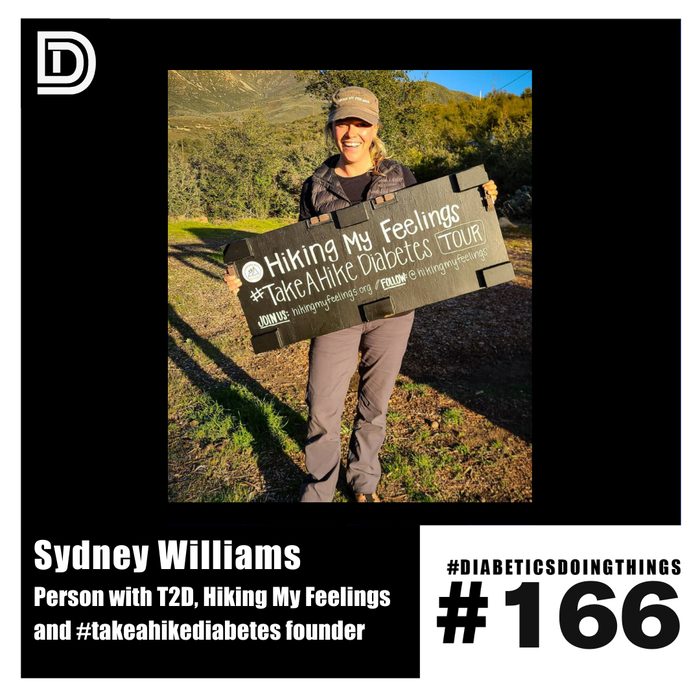
Sydney Williams is the founder of Hiking My Feelings. She was sexually assaulted in college and told no one for eleven years while she built a high-pressure marketing career, drinking heavily and eating to cope. In 2017 she was diagnosed with type 2 diabetes. She started walking, then hiking, and eventually connected her new coping habit to the trauma she had buried. A solo hike on Catalina Island brought the memory to the surface and led her to found Hiking My Feelings and the Take a Hike Diabetes campaign, which aims to log a million hiking miles for diabetes awareness. She and Rob also discuss sexual assault disclosure, family disbelief, and access to care.
Key takeaways
- Sydney says she kept her sexual assault secret for eleven years before telling anyone, starting with her husband.
- Sydney was diagnosed with type 2 diabetes in 2017 and says chronic stress and coping habits like drinking contributed to it.
- She replaced drinking and overeating with hiking, and founded Hiking My Feelings after a hike on Catalina Island connected the two.
- Take a Hike Diabetes is a virtual mileage campaign aiming for one million hiking miles to raise diabetes awareness.
- Sydney says RAINN, the national sexual assault hotline, is a resource for anyone unsure whether what happened to them was assault.
Show notes
CONTENT WARNING: This episode features discussion on sexual assault, rape, depression and suicide, these topics are sensitive and viewer discretion is advised.
Allow us to introduce you to Sydney Williams, the founder of Hiking My Feelings (@hikingmyfeelings on Instagram).
Sydney is the founder, author and former advertising queen introduced to Diabetics Doing Things through Aya Tsuruta, friend of the pod and guest on Episode 155! Hiking My Feelings is also currently hosting a campaign called Take A Hike Diabetes where Sydney and other advocates are working to hike over 1,000,000 miles with Diabetes in order to create awareness of the healing power of nature for people with Diabetes.
Sydney, Rob and Eritrea discuss, among other things:
Sydney’s origin story and diagnosis with Type 2 Diabetes
Sydney’s discovery of hiking and her literal mountaintop experience which allowed her to fully connect with herself, her body, her diabetes and more.
Where Hiking My Feelings came from and what they are doing to spread awareness of the healing power of nature
Background on Take A Hike Diabetes
In-depth discussion on mental health, trauma, stigma, sexual assault.
What’s next for Sydney as she and the team work to hike 1,000,000 miles for Diabetes awareness
Questions this episode answers
What is Hiking My Feelings?
Hiking My Feelings is an organization founded by Sydney Williams that promotes hiking and time outdoors as a tool for mental health healing, which she built after replacing drinking and overeating with hiking following her type 2 diabetes diagnosis.
What is Take a Hike Diabetes?
Take a Hike Diabetes is a Hiking My Feelings campaign aiming to log one million hiking miles with diabetes to raise awareness, tracked through the Kilter app with fitness trackers like Garmin, Strava, and Fitbit.
Did Sydney Williams report her sexual assault?
No. Sydney says she told no one, including police or her family, for eleven years, and first told her husband after they had been together for seven years.
How does Sydney Williams connect her sexual assault and her diabetes diagnosis?
Sydney says the years of drinking and emotional eating she used to cope with unprocessed trauma from her assault contributed to her type 2 diabetes diagnosis, and that healing from one helped her understand the other.
Full transcript Searchable, with timestamps
Rob Howe: What's happening, ladies, gentlemen? I gotta stop doing that. I gotta say, just welcome everyone. We don't have to distinguish, ladies and gentlemen.
Eritrea: Yeah, I was about to say, you're being very, is the word sexist? I don't know what the word is, but we usually don't like Steve Harvey. Just, you know, smile real bit. Hello, everyone. Welcome to the show.
Rob Howe: My man, Steve Harvey. Let's talk a little bit about, I think, our Dallas, Texas, like, quips, like, when I played the DSR on, like, some people messaged me about it. When we talk real, like, did you know anybody in high school with a Steve Harvey line?
Eritrea: haircut where they had like the double fade okay it's like the line yeah man this one this was like a big 2005 thing it was like you had the line and then right behind it you had another line it was something else it was called the steve harvey line one day i want to go on family feud so i can meet steve harvey he can give me the hip-hop hug that's when they like you know they do you know how black people say never mind the hip-hop hug anyway okay no i like that i'm with
Rob Howe: it i've seen i like steve harvey on uh on family feud what's not to like okay we're back on topic We've got an excellent episode today. Our podcast is called Diabetics Doing Things. Our guest today embodies the doing things maybe more than anybody else. Sydney Williams, she's the founder of Hiking My Feelings. They also have a program and a hashtag called Take a Hike Diabetes, which is the diabetes specific piece.
Eritrea: Wow.
Rob Howe: Her story is all encompassing. I mean, we're hitting all the marks. We're checking all the boxes, like Sydney said. I think that we go through a really interesting journey with her. She shares her story in such a intentional and impactful way where she kind of take like she kind of grabs you by the hand and takes you short like on a hike with her towards all of these life events that have impacted her and made her the person that she is.
Eritrea: I have this new trend where for each episode I think of a good quote that it reminds me of. And the whole time that we're talking to her, I'm thinking about the Kanye West quote from his song, Everything I'm Not Made Me Everything I Am. She's just so amazing.
Rob Howe: Common passed on this beat. I made it to a jam.
Eritrea: Get out, please. Rob, how do you say exit the chat?
Rob Howe: One thing that I do want to call out, first of all, is thank you to Aya Tsuruta, a friend of the pod, for recommending Sydney to come on and doing the intro there. uh aya is dope and she did an excellent episode about her work in the outdoors as well that we did during covid last i guess it was last april uh so definitely go check that out willing to in the show notes as well but i also want to make sure that we give you guys a content warning so in today's episode um sydney is going to share a lot of deeply personal stories from her life some of which touch on sexual assault, suicide. We talk about death. There is a lot of grief and mourning there as well. So I want to make sure that we let you guys know beforehand that there is some listener discretion if any of those things are triggers for you that you may find some of our content troubling. But I would encourage you to listen to the message because Sydney really delivers how through hiking her feelings, She changed her entire life and went from a high-powered marketing executive who was living a lifestyle that was not really sustainable, not very healthy, and was super impactful on her mental health in a negative way, to hiking her feelings and discovering this journey for herself that has taken her all across the country so far. And if I'm any judge, I think it's going to take her a whole lot further. So really want to say thank you to Sydney and to the Hiking My Feelings team and all of the community there. I hope you enjoy this episode with Sydney Williams. Hey, everyone. Just wanted to give you a quick content warning. This episode features discussion on sexual assault, rape, depression, and suicide. These topics are sensitive and viewer discretion is advised. All right, we are back. Welcome back to another episode of Diabetics Doing Things. I'm your host, Rob Howe. I'm here with my co-host.
Eritrea: Yo, yo, yo, guys. I'm back. I'm here.
Rob Howe: And we are telling the amazing stories of people with diabetes from all across the world. And today, we're going to talk about somebody who is taking her diabetes all over. And we're very, very excited to introduce you to Sydney Williams, the founder of Hiking My Feelings. Welcome to the show.
Sydney Williams: Thank you. Excited to be here.
Rob Howe: Well, we're excited to have you. It's Good Friday. It's sunny in Texas.
Sydney Williams: Uh, it's a, uh, you know, it's kind of nice.
Rob Howe: Like spring is basically here where, which is, which is always good news. I don't, whatever part of the world you're in, but, uh, I want to back up a little bit and talk about kind of how we got here today. And you and I have, have crossed paths a number of times just in the diabetes world. But the first way we got introduced is from friend of the pod and a former guest, Aya Tsuruta. So, uh, how did you and Aya come across each other?
Sydney Williams: so i had just posted something oh man um i was posting something about our take a hike diabetes campaign in a group on facebook called base camp and it's for people who are working in the outdoor industry or interested in working in the outdoor industry and she commented on the post she's like oh my gosh i live with type 1 i'd love to learn more about this campaign i had like i've never heard of your organization how can i get involved and then she was like just being amazing aya as you know, like just comes with solutions and ideas and like right out the gate. She was like, so I'd love to write for you. Is that a thing? I was like, yes, that's, I was literally, it's so wild. Cause it's one of those things where I was like, okay, I want this to be as inclusive for all people with diabetes as possible. I live with type 2 and I have like yet to meet anybody who in the outdoors has type 1, like in person, like I'm connected with a bunch of people online, but I haven't ever met anybody in person. And so I was like, I was literally like right before I met Aya, I was like, God, it would be so cool if we could get someone who lives with type 1, who's outdoorsy, who wants to like get involved in this. And then here comes Aya. And I was like, it's like the universe was just like plopped you in my lap. This is amazing. Um, so yeah, so she's been writing some really great articles with us. Um, and she's been hosting this incredible, um, interview series called the outdoor type. And it's about people who live with diabetes that are outdoorsy and just like all the precautions that they keep in mind and all the things that they pack and like their favorite snacks in case they go low. I mean, it's just having like, I had just lit up this corner of my life that I didn't
Rob Howe: even know was dark. And I'm just so glad she's here, man. I, uh, in my limited interactions with her, I could, I could say that she has done the same, just an incredibly powerful person and just giving and creative and fun. And I love when she talks about like on Instagram, shares how many snacks she carries on like a two week trek. And I'm like, wow, this, this person has got it going on from a preparation standpoint. Meanwhile, I'm like 2am stumbling around in the dark, trying to find gummy bears in my pantry. She's got it all in her pack, you know, laced up, organized and ready to go. Well, it's very cool. So let's talk a little bit about you and your journey and your, you know, how you came to join the diabetes family, um, and talk about, because your life wasn't always in the outdoors, uh, you know, full-time at least. So let's talk about, you know, transitions, like, you know, understanding and getting through a diabetes
Sydney Williams: diagnosis and then how that continued to change your life, uh, after. Yeah. So pre-diagnosis, I was, uh, on paper, I looked like I had the best life ever and I had it all together, but inside I was dying, literally. And I was a workaholic. I was sick, sad, tired, burned out. I was working at a marketing communications firm based out of the San Francisco headquarters office, but staffed out of working from home in San Diego. And I was leading email marketing for NBCUniversal. I was working on an entire agency rebrand, working on national commercial campaigns. And it was like the height of my career, just like everything, everything I ever thought I wanted, I was achieving. Like I had a big salary. I had great benefits. I had just moved into a new place in San Diego, got a brand new car. I was like checking the boxes of the American dream as it were. Um, and I had been a little bit outdoorsy leading up to that, like growing up, not really. I grew up in Kansas where it's not like the outside doesn't exist, but there's not mountains to climb or a big body of water to play in. So pretty, pretty, uh, uniform geography. Yeah. So my version of being outdoorsy growing up was like, I'll ride my bike around the neighborhood, go to the pool. Um, but I got my first taste of like, what is possible with extreme physical activity in the outdoors when I was on the women's rowing team in the university of Kansas. So that was kind of my first taste of like, what is possible from a mental health perspective when you're pushing yourself
Rob Howe: to these limits physically outside. So why don't we say that a little bit, because I think for, for the, our listeners who are not like elite athletes or, you know, have been part of like a tight knit group, uh, like you are on a crew team. What was that like? You know, you, when did you, that, that mental health aspect, what, what were the cues and how did you, you know, what was that
Sydney Williams: experience like? Well, for, for rowing and especially like I had never rode before I walked onto the team. I was a cheerleader in high school and I did gymnastics, um, as a kid, but I wasn't going to be a cheerleader in college, but I was, I've been in team sports my whole life. And I couldn't see that. I didn't think it would be safe for me to just like stop that going to college. Cause then I would have just been like a party animal, I'm sure more than I was. But so I joined the crew team. And when I did that, like I'm walking onto a division one athletic team. And I was like, I had no idea what I was in for. Like all-star cheerleading. If you've seen like cheer on Netflix. It's pretty intensely physical, but it's like two or three minutes at a time, right? Like this rowing is an extended endurance race. And so we would run the stadiums at the university of Kansas football stadium, just like run up and down the bleachers for conditioning practice. And then we'd go do weights. And then after class, we'd go and do a water workout. And between like two a days and especially like the running part, like I've never been a good runner, but I would just get done. And my legs would be trembling because they've been working so hard. And I would just like, sometimes I'd vomit because I had like, I had pushed my body so hard, but once the trembles subsided in my legs, kind of like got back to normal. Once I caught my breath, once I stopped sweating, like a pig, I was like so clear. And like the rest of the day was my favorite part of the day. I was just like, Oh my God. Like I just like ran all my worries out on that stadium. Um, so that's what it was like. And I was like, Ooh, I like this, but then I didn't make the varsity team. So when I didn't continue rowing, then like my athletic stuff just stopped altogether. Um, that was like, I knew it might be kind of a miracle if I made that team, the varsity team, just because like I was injured my freshman season. I spent a lot of time on the bench. I didn't really have a lot of opportunity to show like what I was capable of. Um, but after that, I was just like, so depressed. Cause I like, I had this vision. I was like, oh my God, I'm a student athlete. Like, cause I was a cheerleader and there was like the thing that comes with that. And then I was like, okay, now I'm like settling into my identity as a student athlete. My grades are the best they've ever been. Cause I'm student athletes are really well resourced academically. Like we had tutors, all kinds of stuff. And then like that rug just got ripped out from underneath me. And that's where the partying really cranked up. That's were drinking really cranked up. Um, and I ended up moving to Florida with my family over spring break. They were like, Hey, can you help us move? And I was like, yeah, sure. That sounds fine. And then I, so I go from Kansas to Florida during spring break and like, it's 30 and freezing at home and it's 72 and spring break, sunny in Florida. And I was like, I'm not going back. No way. And so I just kind of like stepped into this whole new life and I took a year off. I did the gap year. I worked at Walt Disney World, um, and just kind of like tried to fit piece life back together in this gap year while I waited to get in-state tuition and then ended up finishing my degree at the university of South Florida and Tampa. But that first taste was, I mean, it stuck with me. And as I had other experiences, um, in the outdoors, it was kind of like a coming home of sorts because when I was on the rowing team and like, I think a lot of people wax nostalgic about like their time in high school, especially athletes, right? Like if we never go to the Olympics or something, we're like, well, I remember back when I was awesome. Um, but for me, there's a couple's retreat, a movie called couples retreat where John Favreau is like, I did rock in high school. Want to check tape? I always kind of feel like that when I, when I share this story, but for me, like, it wasn't just that I was an athlete and like, that was the cool part of my life for that reason. But for me, like being on the Kansas rowing team was the last good years before I was sexually assaulted. So I do look back at this point in my life. Like I was in the best shape of my life. I was a division one athlete. My grades were exceptional. I wasn't a borderline alcoholic. All of like, everything was just trajectory up, up, up, up, up. And that's like the last time I felt comfortable in my body, familiar with like where my life is going and really excited about what was going on in my life at the time. And so that's kind of like my last memory of what life was like before I experienced sexual assault. So for me, when I say, when I was on the rowing team, it's not like I'm like chip chip away about college athletes, but like a very distinct break and like life pre assault and post assault. And now it's now a days it's more like life before diabetes and life after.
Rob Howe: Well, talk a little, you know, I don't, I don't want to rehash too much of your trauma, but I
Sydney Williams: think, um, Oh, it's a huge part of my story. We're not rehashing anything. It's like, it's so very
Rob Howe: important for me to talk about. Yeah. Well, then let's, let's talk about it. Like, cause I think that there are similarities to events like that with a diagnosis and there is a grief period of mourning your old self. Talk about how you, you know, the, the two
Sydney Williams: different times, obviously in your life that you had to sort of do that. Yeah. So I think for, well, for the assault, first and foremost, like I was drinking the night before I woke up and I was being sexually assaulted. So like, I did not consent. I did not give anybody permission to do that. Um, and because I have been drinking the night before and because I woke up and it was happening and because I didn't fight it, because I thought if I didn't fight it, then I would probably survive it because I didn't want to like get killed or something. I didn't know what was going to happen. Um, because all of that went down the way it did. And just like culturally at the time, there were some pretty high profile sexual assault cases in the news. Um, and the survivors of those assaults were just getting dragged through the mud. Um, and just their whole life was getting turned upside down. In addition to surviving one of the most violent things that can happen to the human body short of being killed. Um, they were like their, their, their experience was being questioned in the public forum. And I was like, well, if that's happening to them, I didn't even like, this didn't even happen with a professional athlete. Like this was just some dude from work. Like who's going to believe me. So I stuffed that down for 11 years before I told anybody. After the assault, I didn't tell my friend whose house it happened at. I didn't go to the hospital, didn't call the police, didn't tell my parents, didn't tell my friends. I told nobody for over a decade. And the first person I told was my husband. And I had been with him for seven years, married for five, when I finally felt safe enough and comfortable enough to talk about it and tell him what happened. And that's why I don't shy away from telling this story ever. it's getting less and less fun to tell because before I was like, oh, I'm making up for lost time. Like who's going to listen to my story now? But now it's, it's, it's less like making up for lost time. And like, I feel this urgency to tell it, but now the urgency to speak about it is really because like, if I didn't hear other survivors talking about what happened to them, I wouldn't be on this planet today. I can assure you that it was through their bravery and their courage to share their stories that I was able to find the language to understand that what happened to me was in fact sexual assault. And it wasn't just like something that happened that didn't feel right. And so for anybody listening who might've had one of those times where it's like, you think back over your life and you're like, yeah, that one just didn't feel right. But because it wasn't violence in an alley with a stranger, the way that we portray assault in the media and in movies, we tend to question whether or not what happened happened. And the answer that I officially arrived at as I was going through my healing journey and understanding how to talk about this was like, you know, after a sexual experience, if you enjoyed it or not even if you enjoyed it, if you consented to it or not, there's no question in your mind. And if there is a question, then you probably did not consent. So for anybody that is struggling with that or trying to find the words of what happened to them, like some great resources in addition to our organization, like RAINN is the national sexual assault hotline. And they have people standing by on chat, on the phone, anywhere, anytime. If you're feeling like, oh God, I had this thing happen. And now I'm just now discovering that maybe this was assault. There's no shame in keeping our stories to ourselves for as long as we need to. I know that if I had shared my story when it happened and I had gotten the reaction that I got from my family, when it happened, I probably would have committed suicide straight up because they were not supportive. They did not believe me. In fact, my father told me that my story was bullshit and that I better come up with a new one because nobody's buying the one I was telling. So for me, the sexual assault piece is a huge part of my journey in general, but also with regards to a type 2 diagnosis, when I didn't get help after the assault, the first thing I did was try to just survive. And so for me, survival was what can I do to avoid the pain? What can I do to avoid the flashbacks? And how do I fall asleep at night? Well, a bottle of wine will help me fall asleep. And a pint of Ben and Jerry's in the morning will help me feel great, greater about myself. And so while we all know that like sugar does not cause diabetes, those kinds of behaviors, drinking a bottle of wine to yourself more often than not each night after work to help you fall asleep, that's probably going to contribute to a type 2 diagnosis. So I don't wanna say it's strictly lifestyle out because we all know that's not the case, but those behaviors definitely contributed to that diagnosis. And more than that, the chronic stress that I lived with for over a decade certainly played a role, but it kind of trained me for how to manage the diabetes diagnosis. Cause like, if I could get through everything I've gotten through leading up to the diabetes diagnosis, like this disease is kind of a piece of cake, right? Like not really at all, but But in comparison, it's not nearly as emotionally taxing as sexual assault was. So I mean, like trauma is trauma. You don't need to compare it. But also everything I had been to up until 2017 when I was diagnosed had kind of prepared me to receive that diagnosis and process it in healthy ways.
Rob Howe: I think, though, when you think about diabetes, because you're right, it's not a cakewalk. But and I'm struggling to make the comparison here. but you knew prior to your diagnosis that something was wrong with your body. You mentioned it. You said, I was sick. I was tired. I was overworked. I was overstressed. When you get that affirmation really from a diagnosis that says, you know what? Something was wrong. Something was going on. There is a way to treat it. I think it opens up possibilities. It's like, oh, okay. It's not just me. There's an answer to the question. And I think maybe that's the parallel that I'm sort
Sydney Williams: of drawing between the two. A hundred percent. And I think, cause for me, like I had in the space between my sexual assault and the type 2 diabetes diagnosis, I had HPV from the rapist. I contracted a sexually transmitted disease that manifested as precancerous cells on my cervix. So I had to have those removed. I had panic attacks leading up to the diagnosis almost every day, if not sometimes twice a day. And so my body was like screaming for help, screaming, screaming, screaming, screaming, screaming, panic attacks. Okay. Well, like take a nap. Don't stress yourself out so much. Like there's, there's such a stigma around mental health and there's such a stigma around diabetes too, but like all the things that had been like my body, just like sending up signals, like pay attention to us down here. Cause I lived those 10 years. I was living like outside of my body. I was basically disassociated, just moving through the world in a really delightful package that looked like she had it all together. But it was to your point, you're a hundred percent, right? Like leading up to the diagnosis, like I had been paddleboarding at the beginning of September is like Labor Day weekend. We went out for a really long paddleboarding session. I didn't bring enough water. It was really hot. I was definitely dehydrated. I thought maybe like some kind of heat stroke or maybe heat exhaustion. And I didn't feel right for like two or three weeks. And then I woke up in September, 2017. And I was like, it felt like somebody took a corset and shoved it in through my belly button, had wrapped it around my intestines. It was like cinching it down to tighten it. And I was like, this doesn't feel right. Like I've been, I've been a little bit like, Oh God, I feel gross. But like, this is like, this is bad. We need to go to the the hospital. And so they had given me some tests to make sure that it wasn't like a virus or a parasite or something. Cause there had been a couple of different outbreaks in San Diego around that time. And then they had done a full blood panel. And so when I got the diabetes, the diabetes diagnosis, like I was confused at first. I was like, well, I was driving to the airport, which is not the time to get that call. Like I'm getting ready to like pull in to like that arrival. No, no, I've got somewhere to be. Yeah. I'm like, I, what are we doing? And so I answered the phone and they told me that I have diabetes. And I was like, first thought was like, don't wreck the car. But then my next thought was like, I guess I can't eat bread anymore. Like I didn't know anything about this disease. All I knew was the stigma. And like, what I knew was diabetes jokes, right. And that only fat, morbidly obese, incredibly lazy people get that. And like, yeah, I was overweight. Yeah. I was not in the best shape and certainly not minding my health at all at that time in my life. But like, I didn't, I didn't see how it was possible for me to get diagnosed. Cause I thought the type 2, especially like that happens later in life. I was 32 when I got diagnosed. So I'm like, what's happening. And then I was just like, well, I mean, you know how to take care of yourself when you were on the rowing team, like you were in incredible shape. You know how to move your body. You know how to nourish it. Like you've done this in healthy ways without doing diet pills, without, you know, working out obsessively. Like there are ways for you to do this. And you have experienced that. And I just took this diagnosis as an opportunity to get back to what I knew instead of, and initially, like initially I didn't even connect the dots on the sexual assault thing for like, well, after a year after I was diagnosed, like it took me a while to get to that point. But when I was first diagnosed, I was just like, well, this is the chance to really step it up. And there's nothing in my way. I was, and that was something that I think we mentioned too. And one of the ways that we intersected, we were talking about access for diabetes, um, as part of a Beyond Type 1 panel. And when I was diagnosed, I had a six figure salary, platinum level healthcare benefits provided by my employer, unlimited time off an incredible boss who was like, go do what you need to do. There was no resistance when I needed to take time off to get labs done, or I just needed a day to like live with diabetes and not be perplexed by everything. And there, and there was fresh, whole healthy food in abundance around me. Like there was nothing in my way to manage this disease as effectively as possible. And I, so knowing that and knowing that that might not be the case for my entire life, I was just like, all right, well, let's hit it and let's hit it hard. Like, let's, let's get on this and make those changes that are going to help you live with this disease in a, in a way that doesn't feel so restrictive. I often talk about people and I use the term type 1, but in this case, I think it applies
Rob Howe: across the board, but like, you know, it's, it's amazing how type 1 or type 2 can turn you into a type a person about your health. and it will, it'll just, I think I've met, you know, whether it's, you know, now world record holding athletes who are like, yeah, when I got diagnosed with diabetes, I didn't care at all about my health. And this is what sort of my gateway to this whole new life for myself. And without diabetes, I wouldn't even be in this, you know, wouldn't even be doing what I'm doing today as my diabetes is going ballistic right now. I don't know if the guests can hear the, the little, the upward beeps, but we're having some highs, but it's all good. That Medtronic is like the Tesla of diabetes. It's silent. I cannot even hear it, Rob.
Eritrea: Okay. Well, that might be my microphone too. We'll see. I like to keep it loud enough so
Rob Howe: that it wakes my sleepy ass up at night if I need to get up. Okay. So let's talk a little bit about the, like you said, you on paper to the casual outside viewer, you had it all and you made a change. You decided that it wasn't for you anymore. Well, you got to tell me about that because that takes courage and I'm sure people close to you were probably shaking their head, blinking the cartoon blinks. Talk about that because you're not at that agency anymore. You're not the high powered media icon that you were working towards. No. And it's, and it's interesting. So my first step, um, was like clean up my nutrition plan.
Sydney Williams: So like out with the frozen pizza and with more vegetables, like less eating like a 12 year old boy and more like a woman living with diabetes. Um, and then I started walking around my neighborhood 30 to 45 minutes every day. Um, and then as that got, as those walks got to be like too easy and going to use easy in air quotes here. Then I graduated to local hiking trails and I was taking my medications as prescribed and the stress, like I attribute my success to my, my success again, air quotes in managing this disease to my doctor, making it really easy to understand. Cause there is just so much information out there. You join a Facebook group, like good luck with your life, right? Like there's just so many opinions about how to manage diabetes. And so my doctor said, you know, there's a lot of things that impact your blood sugar, but I narrow it down to four categories, food, medicine, exercise, and stress. And so there's a lot of things within those subcategories, but I got the first three right away. I crushed it. I was like doctor's orders. I like straight A's and gold stars. Here I am. I'm going to be the best patient you've ever seen. That achiever brain really coming out. Yeah. Oh, and that's the thing. Like I'm a people pleaser recovering now, but like I channeled all of those tendencies into something that was really healthy for me. So that was cool. Um, but it was the stress that, that just kept those numbers elevated. Like I started losing weight as one does when you stop eating like a 12 year old boy and start moving your body, your, your body's going to respond positively in that way. And I did. And that was awesome. And like, as part of the function of my management protocol, like yes, goal achieved, but also blood sugar levels were still elevated. And so I was like, it's the stress. Like I've done everything else. I've seen all these results from all the other changes I've made, but this one just keeps it up. And so I stopped traveling because I was traveling from San Diego up to LA and living at the Sheraton Universal for a couple nights a week when I was working with NBC. And so I stopped travel thinking maybe that would reduce my stress. And it did kind of, but then it went back up because of the other workload I was carrying. And so on the side, I had been working with my friend at her startup. She was launching an all-natural skincare company. and the message behind the product was like listen you don't actually need beauty products to fix you because you're not broken but if you want to use some use ours because one they have no chemicals and they won't kill you and two you're gorgeous exactly the way you are so it's rooted in women's empowerment rooted in social justice um and that was stuff that I really cared about so my thought was I've done everything I can short of quit agency job without a backup plan um and my stress is still kind of through the roof. So maybe if I joined my friend's startup, like I know leaving corporate life or startup life is not a stress reducer. I'm not an idiot, but like, but I thought like, at least this way, it's something that I actually care about. Cause like as, as fun as it is to know who wins the voice before anybody else in the country, that doesn't get me up in the morning. Like I'm not really that psyched about it, but women's empowerment and social justice. Yeah. I'll get up and be stoked about it. So I figured like, it's still going to be stressful. I'm joining as chief marketing officer. And eventually like we labeled me a co-founder too. But if I liked the job, then maybe the stress will be worth it. And that was cute. I made it 95 days on that job. That's when the panic attacks were like through the roof, like at least one a day, if not sometimes twice a day. And for folks that haven't had panic attacks, God bless you. Like, what's your life like? But for those who have, I'm talking like the big ones that just wipe you out for the rest of the day. like full silent screaming, tears pouring out of your face, just like, like that was me a lot. And so I ended up leaving that job. And then that time I didn't have a backup plan. That was when I was like, this is not worth my health. Because at that point, my mental health was starting to suffer as well. I had gotten that pretty well dialed in with the diabetes management stuff as a function of just like this complete wellness journey I was on. But the stress of the startup up was just too much and I couldn't take it. And I had a big ego about it. I was like, I'm the chief marketing officer. I should be able to handle this. And then I was like, a title ain't worth my life. Like I'm done. So I quit no backup plan, no savings to speak of. We are not trust fund babies. Like we're not just sitting on a, and like, it's just, we didn't have anything really. But I was like, I don't know what's next, but it's not this. Um, so I quit. And four days later I was training for the backpacking trip that I had scheduled while I was still working at the startup. I had scheduled a backpacking trip for my birthday. And I was on this mountain four days after I left. And I'm standing at the top and I'm looking at what should be a really great view of San Diego, but it's socked in. It's cloudy. I can't see a thing. So I'm just up there with my thoughts and no beautiful views to distract me in this moment. And I was just really chill. Like I just got done with a yoga class chill. Like I need to take a nap. I'm feeling so calm. And I was like, this does not track. Like I am a newly diagnosed uninsured diabetic. I have no money coming in. I have no backup plan. I don't know what comes next. Like I'm rationing test strips at this point. Like I don't have anything else going on. Why am I so calm? And that was when I realized that thanks to my deep desire to be the best diabetes patient my doctor's ever seen, I had swapped out the coping mechanisms of eating and drinking my feelings with hiking my feelings. So anytime that I was feeling uncomfortable in my body or just uncomfortable with life, like I'd go for a walk and that eventually graduated to hikes. And so now I'm standing at the top of this mountain with a list of things that on paper should terrify and have terrified me in the past and would like probably bring most people to their knees. And I'm like, I feel great. what? I'm hiking my feelings. This is awesome. And so marketing brain, like that's where it started. I was like, Oh wait, like that's a cool way to talk about like mental health and the outdoors. Is anybody using this hashtag? No. Okay. Can I get the Instagram handle? Yes. How about the URL? Uh-huh. Like that's where my brain goes first. And I was like this, I'm onto something. This is going to be dope. And so it started as like a hashtag or a slogan. And then I wrote a blog post about it, about that hike when I got home. And then it just took off. Like I did not anticipate what this would be like. So I went and I did this hike across Catalina Island. And one of the questions I'd asked myself was like, yay for shifting your coping mechanisms. But like, if you were eating and drinking your feelings before, and now you're hiking your feelings, like why were you eating and drinking your feelings to begin with? I'm a deeply in, and unpacking. Yeah. Like deeply introspective person. And like, it was, it felt great. Like a weight was lifted off my shoulders. I was like, Oh cool. I'm hiking my feelings. Yay. And then I was like, but wait a minute. Like we make this so socially acceptable. Like one of the first things I learned as a young girl was like, if you get broken up with, go get yourself some ice cream. Like that's how we cope. And I was like, we teach people like really unhealthy things from a very early age and like drinking is a lifestyle now. So like, no wonder I would just like, I jumped into all this stuff and I was just like, okay, so why was I eating and drinking my feelings to begin with? Let's, let's dig to the root of that. So I'm hiking across this Island. And this was the, I had done a backpacking trip on Catalina Island. Um, in 2016, I did not complete the trail. This was pre-diagnosis. The hardest thing I've ever done. That was 80 pounds ago. Like I was just rolled off the couch and onto the trail, had no experience whatsoever. Frankly, like if anybody had told me that I shouldn't do that hike, I probably would have believed them. And then I wouldn't be sitting here talking to you today. Um, but thankfully I did. And even though it was the hardest thing ever, I learned that I love my body and I was reminded that I could do hard things. And I was like, okay, this feels good. Then diabetes diagnosis, quitting jobs. Now I'm back at the Island doing this hike again for the second time. And my thought was, okay, well, well, if I've done this with some degree of success, I didn't complete the attempt the first time, but if I've done it at my absolute worst physically, what would be possible on the second journey if the hike itself wasn't the hard part? Like backpacking is hard. I'm not going to sugar coat that. And this hike is very hard, but I've done it with no training, no preparation whatsoever. And I've been hiking my butt off now, like literally to the tune of losing 60 pounds. Like what, what's possible for me on this journey if I'm not so concerned about being in the worst pain I've ever been in ever. And I was not ready for what happened. Like it was the biggest emotional unpacking of my life. And that's the metaphor that I use in my book to describe what was happening across this island. And like when I was a competitive skydiver for four years, when I was skydiving, 23 of my friends passed away. And this was the first time that I had to process all of that loss. So I'm just like full waterfall, silent screaming, doubled over, like hands on my knees on the trail, just like giving all of my pain to the earth and just like letting it move through my body. And on the first day, like the first day was a lot of processing. My friends that had passed away and remembering like, who are they? What do they mean to me? How can I honor their memory and keep their, their legacy like alive? And at the end of that first day, I felt like I had lost like 30 pounds, like my, like a weight had been lifted off my shoulders. I felt so good. And then the next day I was like unpacking things about my body or my personality that I've been trying to fix that. Like, these are the things that make me, me, I cannot change them, but I've been trying to change them. Like I got little thumbs. They look like toes for anybody that can't see it. Just my business partner has toe thumbs. Yeah. I have toe thumbs for life. So does Megan Fox. Yes. And so when I found out Megan Fox had them, I was like, okay, cool. Hot girls have toe thumbs. It's fine. But I had these thumbs and like my sister, when I was little, she was like, boys don't like girls with toe thumbs. And I was like, okay. So I walked around with my hands, like my toes, my toes, my thumbs tucked in my fists. So people wouldn't see my horrendous thumbs. And so I'm like unpacking these things. And like, I was like my own hype man up that mountain. I was like, girl, your thumbs are dope. Like, it's not like when you give a thumbs up, people think you're giving the thumbs down and you're pissing them off. Like it's abundantly clear that you're a happy person who's encouraging with your thumbs. And then there was stuff about my hair because I used to straighten it. And now I wear it natural and curly. And I like went through this whole big, like reclaiming of everything that makes Sydney, Sydney. And I was like, oh, okay. And at the top of that mountain, I was like, I feel like super woman. And I stood there and I like power pose and I just felt amazing. And as I went across the Island, so like this last day, there's this like internal monologue that goes through my head all the time. And it's like, you're too fat. You're too stupid. Like all these things that we hear, these messages we internalize. and I unpacked them one by one. And I like, I, I, I listened to like what the voice said. I was like, is this mine? Like, would I talk to myself like that? Knowing that I am my own best friend and I'm my own hype woman. When like, I love myself. Would I ever say that to myself? And I was like, no, I was like, would I ever let my best friend say that to me? I was like, no, would I say that to my best friend? Absolutely not. So that's got to go like, let it, let it ride. And then it's not that easy. That's not how personal growth works. So it comes back. And then I was like, okay, I'm going to pump myself up. So when I heard a negative thing, I like reinforced why it wasn't true. And so by the time I got to the top of that mountain, which is one of the highest points on the Island, I was like, okay, when was the last time I felt this good? Cause I feel so energized in my body. Everything feels amazing. I'm absolutely just like electrified. Like everything's working. My legs hurt. It felt like that when I was rowing, they were trembling because I sprinted up this hill. My lungs are like sore because I'm breathing so hard, but they're functioning. Like I just felt so alive. And then on the way down that mountain, because now we're going like steep down, that's when the dots connected. Like my husband was a little bit ahead of me. I almost completely wiped out and I like stopped. I dug in my poles and I took a deep breath. I was like, get it together, Williams. Like you're not following down this mountain. And it was one of those moments where it's just like a universal two by four smacks you in the face with some like capital T truth. And I was just like, Oh, the last time I felt this goat was right before I was sexually assaulted 12 years ago. And in that moment, I didn't feel scared. I didn't feel sad. I felt free. And that was the beginning of all things, hiking my feelings. Like the, that was like, I had this like slogan in my head and like, I was speaking about it in this way, but that's where it landed. And it landed hard and just whole in my body. And I was like, if anybody is willing to listen to me, tell this story, I want to tell it to as many people as I possibly can. So I got off the Island, I get on the ferry back to the mainland and I send the Catalina Island Conservancy a message. And I was like, listen, I've been on your website. And unless you guys are trying to keep this trail a secret, there is no reason why you shouldn't have a trail ambassador or some kind of program that encourages people to come hike this island? Because I have had two life-changing experiences on this trail. How can I help? And they were like, well, here, let me introduce you to the head of programming for REI in Southern California. I was like, oh, okay, cool. So I get on the phone with REI. They're like, hey, we sell a Trans Catalina Trail Adventure. We'd love to have you come in store and like speak to why people should go to the island and hike across Catalina. Would you be interested? And I was like, yeah. So I tell them my story, the whole thing with like the rape and everything. And they were like, cool. So, uh, we want to start you on a speaking tour around Southern California in October. What do you need for presentations? And I was like, I just got off the Island. Like I'm literally, I, this is not a presentation yet. I'm just telling you my story, fake it till you make it. This is the big dogs. I got this. I was like, so REI, no big deal. Um, if I was going to do like a technical trail review, then I just need a map. And if I was going to do like my whole story, I have some really great photos of me looking like a goddess on this mountain. Either way, I'm, I'm down. This sounds interesting. Like, no, nobody's going to show up. If you could do a technical trail review, we'd like for you to tell the whole story. I was like, like the whole story. And they were like, yeah, I was like, okay, cool. And so we did a speaking tour in 2018. And then, uh, in October, we did three dates. Um, I did a talk on Friday night and then I led a hike on Saturday morning. Cause if I'm going to tell you that hiking helped me heal my mind and body, I don't want to go hanging. Yeah. You gotta come do it. And so we did that and it was awesome. And it was like, after the first one, I was like, this is what I want to do for the rest of my life. How do we make this happen? And then by the end of 2018, my husband and I had sold all of our stuff. We moved out of the house we were renting, um, sold our car, bought a van that's old enough to buy beer. It's a 1998 Chevy van. Um, her name is Ruby honoring my roots of Kansas and my Ruby slippers. because wherever I tap my heels, this van takes me. And then we didn't have anything else lined up though. I was just like, I want to live in a van and go like, go around the country and tell this story. I didn't know how that was going to happen yet. But then Ari, I was like, would you like to do another tour in January? I was like, yes. And so before the second of three stops in January, they're like, Hey, we heard you are living in a van. Would you like to go do this around the country? And I was like, yeah. And they're like, we can't pay you. I was like, I don't care. I'll figure it out. I had credit cards available. And that's the only reason that 2019 happened. So we ended up going around the entire U S we visited 42 states, 12 national parks. We hosted 140 events around the U S talking about how hiking helped me heal my mind and body and then leading hikes the next day. And it was now, especially with COVID and everything, looking back, like everything in 2019 felt so urgent and necessary. Not like we were in a hurry, but like this was important and we, we better just keep following this and make this happen. And it laid one of the most beautiful foundations to build a community only to have it all come crashing down in 2020. But it was, it was some of the most inspirational, difficult, beautiful, tragically sad stuff that I've experienced just in general and the it really kind of paved the way for what we're doing this year and what we want to do in the future, which is just like introduce as many people as possible to the healing power of nature. specifically people in the diabetes community, because I've had such a transformative experience spending time outside and learning about myself when I'm out on the trail like that.
Rob Howe: Now, I want to back up before we talk about take a hike diabetes, because I definitely want to make sure that our listeners are aware of it. You just returned from Catalina Island, like you've been back. And is that for you like a pilgrimage style experience where you go and the you're reminded on that trail of that journey that you've been on and you're able to usher other
Sydney Williams: people through that same style of transformational journey? Yeah, it is. And the cool thing about the event that we just hosted last weekend was it was that the last section of the trail that I didn't complete in 2016. So it was so special one, because that section of the trail is where I had like the big dot connecting moment between assault coping mechanisms and diabetes and just like how trauma manifests in our minds and bodies. And it was a section that I didn't finish. So like from a Sydney walking on the trail with other people perspective, it was so powerful for those two reasons. But also like there was a part of me because I don't know, I say, I usually lead this sentence with, I grew up in Kansas. So I don't know that it's necessarily a Kansas thing, but I grew up in a household, in a society, in a community where if it didn't come out of a doctor's name or doctor's mouth, if it wasn't somebody in a white coat in an office telling you that this is how you heal, then it's not healing and it's not medicine. And so for me to go and have this incredible experience, not once, but twice on this Island, where all I'm doing is walking with only what I need to survive on my back and to come out on the other side of both of those trips, an entirely not new person, but coming home to myself in such a way that I appear to be a new person because nobody's ever actually known me since before the assault, everything that has come out of my mouth or from my brain or my body has been a performance to some extent because I wasn't living in my truth. So to go and have these experiences across the island with other people, one was transformative because these are the sections of the island that are amazing, but also validation that I'm not, pardon my French, bat shit crazy, because I did not understand, like it took me going around the country, telling this story 140 times, and then leading 20 people across this island to really have it land with me that like, no, I'm not making this up. Yes, this is actual healing. And yes, hiking and spending time outdoors is medicine. And other parts of the world know this. There are doctors overseas that have been prescribing nature bathing and forest bathing and spending time outside for centuries. Like this isn't new, but in America, it's like, we're just now waking up to what people call what is now Western medicine, traditional medicine, when really indigenous medicine is traditional medicine, but we've completely departed from that. But this stuff that was traditional indigenous medicine, now we're like, oh, you mean I could go for a walk and feel excellent after? That's so weird. Are you sure? It can't be that easy. Yeah, right. It can't be that easy. And honestly, I know that there are a lot of people who have a very different diabetes journey than the one that I'm on, but this has been the easiest health journey I've ever been on because it is so clear that this isn't for vanity. Every other health journey I've been on has been like, I want to lose 30 pounds in two weeks, which isn't even possible unless I cut off my arm so I can look hot in this dress for an event or something. Like it's always been like, I need to impress someone or look good for something or something outside of myself and just wanting to be the healthiest, happiest version of myself. That's all that this chapter is rooted in. And when people say that self-care is selfish, I use my life as an example of how that is 100% not true because all I've been doing since I got diagnosed is giving all of my care to myself. And now we have this beautiful community as a result of me doing that. So when you say self-care is selfish, I'm like, nah, girl, that ain't true because, because I prioritize myself and my health. Now, all of these people are part of this community are hiking for healing, are understanding the healing power of nature because I took it upon
Rob Howe: myself to do it for myself and then share that with the world. A hundred percent agree. I think the same principles apply with sharing your story about your life with diabetes. And by you, I mean, people who have been on this podcast, people who have connected and been friends with people and, and even just one-on-one interactions in the world, that power of owning and taking ownership of yourself and saying, I still love myself in spite of all of these things. And you should too,
Sydney Williams: you know, those, those are transformative moments. Yes. A hundred percent.
Rob Howe: So talk about take a hike diabetes. Yeah. So one of the things that was really
Sydney Williams: cool, but also sad. So cool because we got to meet so many amazing people in 2019. And as a function of like going around the country, now we're just like our community is expanding. My worldview is expanding. Everything that I know about everything is just opening up as a result of being in motion and not just being stuck in one place. And so it was tremendous for those reasons and terribly troubling for other reasons, one of which being we heard from people all over the country, either in person or in these online conversations that we're now a part of, that they don't feel safe or represented or welcome in the outdoors. And this isn't new. This isn't like something that just started happening in 2019. This has been historically a problem, but now we have this awareness. And while I was doing research about diabetes in America, the people that were saying these things also come from communities with the highest prevalence of diabetes when we break it down by race. And so I was like, well, if I'm sitting here looking around, I'm like, what I just experienced, It's my healing journey in nature. Everyone should be able to do that. Everyone should have access to the outdoors. Everyone should feel safe in the outdoors and everybody should feel represented in the outdoors. How can I help with this? Knowing that I'm a marketing whiz, knowing that I give me a couple sentences, let me run them a couple of times. And then I'm a talking piece for anything that's important, especially stuff that I live with and care about. Like, how can I use all of the skills that I've built, which prior to this point in my life before diabetes, all of my skills, my incredible communication skills, my passion for the work that I do was basically teaching the world how to be sad, sick, and numb. And I was a by-product of the marketing I was doing. I worked with packaged food companies. I worked in the wine industry. I worked with NBC where we want you to sit your butt on your couch and watch all of our programming all day long. Like I wasn't making the world a better place with what I am good at and what I'm passionate about. And so as we went around the country, I was like, oh man, like I've found my lane. Like I love telling this story. I love leading these hikes. And then when I learned about the prevalence of diabetes in America, when broken down by racial groups, I was like, there's, there are some dots that need to be connected here. Like if folks are saying they don't feel safe and happy outside, and they also have the highest prevalence of diabetes, where are the dots and why are they not being connected? Like, this is wild to me. So that's the purpose of the take a hike diabetes campaign. First and foremost, I just want people to give a shit about diabetes. Cause I feel like as a disease state, we don't get the attention that we should. 122 plus million Americans live with this disease. And the fact that we don't like the fact that nobody knows what the blue circle is, even people with diabetes, I didn't know what the blue circle was till Chris Maynard from glucose revival told me about it, to be honest, like, we don't have any kind of unifying symbol, we don't have a pink ribbon, like we do, but like, no broad awareness. So it's like, how can I how can I contribute to that? Because that's what my career has trained me for is awareness and getting people to talk about stuff. So take a high diabetes, one is a mission to get people outside. Our virtual campaign is hosted through a app called Kilter and you pay a registration fee, like you're signing up for a race. You sync your favorite fitness tracker. Right now it's Garmin, Strava, Apple Health, Google Fit, Map My Run and Fitbit are supported. So you sync the apps, they start talking to each other and then every workout, hike, run, walk, rolling workout. If you're in a wheelchair, like we're not picky about what a hike is, it could be anything. Um, then those miles count towards our goal of hiking a million miles for diabetes awareness. I picked a million miles one, cause it sounds pretty baller. And I like having a big hairy goal to go after, but two, when we accomplish this, because we will, because I have no question in my mind that this is possible. I know it's possible when this happens, the diabetes industry can't shy away from a community that hikes a million miles together. Neither can the outdoor industry. I'm sorry. A million miles is a lot of miles. And that is a community that is going to move product. And that is a community that's going to get people to spend money. And it sucks that that's how I have to go about this. I think it's absolute garbage that that's the way I have to say it, but that in the world that we live in, that's what people care about is selling things and making money. So if I get a community of people with diabetes or people who care about diabetes enough to go and make these kinds of moves, then we can just go like stand in the street. This is my vision, a million of us in the street. And we're like, we're hiking. What do you want from us? Like, and make an impact in that way. So we get outside, we're tracking our miles with this virtual hiking thing that lasts all year long. So you can hike any day of the week, all day long if you want. And we have amazing prizes to incentivize participation. And we're not doing it by miles because not everybody can go crush big miles. Like either you don't have time, you're not physically fit or in the condition to do so. So we ask that if you do at least four activities a month, that's like one per week, then you're entered to win these awesome prizes. So we're trying to keep people establishing good habits, not just like bagging a couple of peaks and then calling it good. Um, and then the part that I'm most excited about is our tour that starts, um, like technically now, cause we're starting to make our way around the country, but our first event is in June and we've partnered with three different trail organizations and three different metropolitan areas to showcase and demonstrate that you don't have to travel far to experience the healing power of nature. You can have these experiences in the cities and towns where we work, live and play. So we start in Chicago in June. um the chicago outer belt was established by a attorney from the south side his name's jay ready and he is a civil rights attorney and an environmental attorney and he was diagnosed with prediabetes and he was walking around town and he was like well i can if i can get to there then i'm still on this trail system if i can get to here and so he ended up connecting 220 miles around the city of chicago between existing pedestrian walkways trail systems green spaces Cook County Forest Preserves in the Chicago Parks District. And so all of that trail is accessible by public transportation. So now we're opening up these opportunities for people that might not even have reliable transportation personally. And a lot of people that live in Chicago, you don't have a car in Chicago, unless you're rich, like in a place to park it. So it opens up recreation opportunities to more people around the city. So that's June 1st through the 20th. And we have our partners and sponsors coming out. So like Salomon's donating a pair of shoes every month. Our friends at UST are donating a tent every month. Gossamer gear, which makes our ultralight backpacking equipment, they're donating two backpacks every month. So we have these really cool prizes and these different activations on the trail to encourage people to come walk with us. So of course, we follow COVID protocol. So everything is virtual first. We track it on the virtual campaign. But as restrictions open up, as more people get vaccinated, and we're outside, so being outside is way better than being indoors with each other. Um, you can come walk with us for a block or a mile or a whole day or the whole thing, but along the way we're interviewing and inviting people to join us. So community leaders, organizations, brands, et cetera, that are making the outdoors more inclusive or working to support the local diabetes community, because those are the people that need to meet because this is how we get more trails created. This is how we start having more awareness around diabetes and why people with diabetes should have access to these kinds of things and the positive impact on community health that could happen if more green spaces are created. So we do that in Chicago in June. We're hiking across the state of Michigan in July. So from Lake Michigan over to Detroit, and we're working with the Michigan Trails and Greenways Alliance on that. And they've created a trail system called the Lake to Lake Trail. So they have several different routes to connect all the different lakes that are surrounding the state of Michigan. And then we finish our tour in Washington, D.C. With like a it's like a five day backpacking trip around Washington, D.C. And my hope is I was hoping to go like hang out with the ADA and JDRF and stuff. But like ADA's office doesn't exist anymore because of COVID. Everybody's virtual. So it's like my vision is like I go up and I'm like, knock, knock, Joe. Knock, knock, Kamala. Like, let's go talk about diabetes, right? Like there's so much to be said about just access to insulin and just healthcare in general and all the implications that diabetes has on the American public. So that's the goal. And then moving forward, I haven't told anybody this yet, but I figure this is a great place to talk about it. So we're doing this as a year-long campaign this year because we want to go shake hands and meet people and like lay the foundation again, like we did in 2019. Um, and then moving forward, we'll be hosting take a hike. Diabetes day is a single day global event around the world. Um, starting, I think we might do one this year just because we want to like do it. Cause we said we did, but then officially like next year starting this, um, take a hike diabetes day where we get everybody out all over the world on one day to go take a hike.
Rob Howe: Very cool. Yeah. Yeah. You and I's marketing brains work very similarly.
Sydney Williams: I'm like, I hate that. this is how I have to dissect this, but like, I understand what moves dollars in corporate. So like, if this is, if this helps the diabetes community, awesome. And if not, then I'll go back to the drawing board and figure out something else. I'm a scrappy resourceful lady who's got
Rob Howe: nothing but time. Yeah. Right. And you got plenty of, uh, like headspace clearing activities coming up to, to make sure that you keep everything in line. No, it's very cool. Uh, Sydney, I mean, this has been so educational, I think for us. And for me personally, I was like, I, this went and covered topics that I could not have planned for, um, leading into it and are super important to talk about, not just for people with diabetes, but for people everywhere. So thank you for the work that you're doing. Thank you for being scrappy, uh, and for just being creative and taking ownership of your own life. And, you know, I think that's when we think about diabetics doing things, you know, those are the things that are most important that have the most impact, not only for yourself, but also for people around you. Like you said, like the community of hiking my feelings wouldn't exist had you not had that introspective moment and said, this is for me, this is serving me, this is what I need to be doing for myself, and opening that up, especially with something as all-encompassing as a conversation as mental health. I mean, we covered a lot of different elements of that, whether mental health for you means not having panic attacks, or it means changing your body image, or wanting a better life for yourself, or just more balance or more space or what have you, I think that there's a space for people in organizations like yours. So thanks for all the work that you do.
Sydney Williams: Yeah, thank you. And I think like as a parting gift for anybody that's listening that might be newly diagnosed, to your point, none of this would be possible if I didn't say this for myself, but none of this would have been possible if I wasn't diagnosed either. So receiving this diagnosis, while depending on which one you get, like I used to say, it's not a death sentence, it's an opportunity. And like, ultimately we're all gonna die. So I guess in some ways it could be a death sentence, but the mentality around that, like if, if anything that you've heard today or from any of your guests, you've got a ton of great guests, like a lot for a lot of the people that have been on this pod, like what they come here to share about wouldn't have been possible if they weren't diagnosed. And if they didn't take that into a direction of positivity opportunity versus this is a burden and this is the worst thing that's ever happened. Like definitely sit with that. Cause there's nothing fun about living with this disease, no matter what type you've got. I haven't met a single person with diabetes yet. That's like, you know what I love having diabetes, like that doesn't happen, but there really is a unique opportunity to take really serious control of your health. And now you have an excuse because we can make tons of excuses not to. And that was the biggest thing for me with diabetes was like, there's no excuse for me not to now it's a medical thing. It's not some event. This is like my life and how I want to live it. So there's a, there's always room to change your mind. Couldn't agree more.
Rob Howe: Yeah. Sydney, thank you so much. This has been amazing. Um, you are hiking my feelings on Instagram. Uh, and I'm sure there's a hashtags for, uh, take a hike. Diabetes, uh, we'll include links to all of your, your website and all of your Instagram here in the, uh, in the show notes. But again, thank you for all that you're doing for people with diabetes. And thank you so much for coming on the show.
Sydney Williams: Yes. Thank you for having me. This is lovely.
Rob Howe: Loved it.
About Sydney
Sydney Williams is the founder of Hiking My Feelings and the Take a Hike Diabetes campaign. A former marketing executive, she lives with type 2 diabetes and uses hiking as a tool for mental health and trauma recovery.