

Diabetics Doing the Great Outdoors with Aya Tsuruta
Episode summary
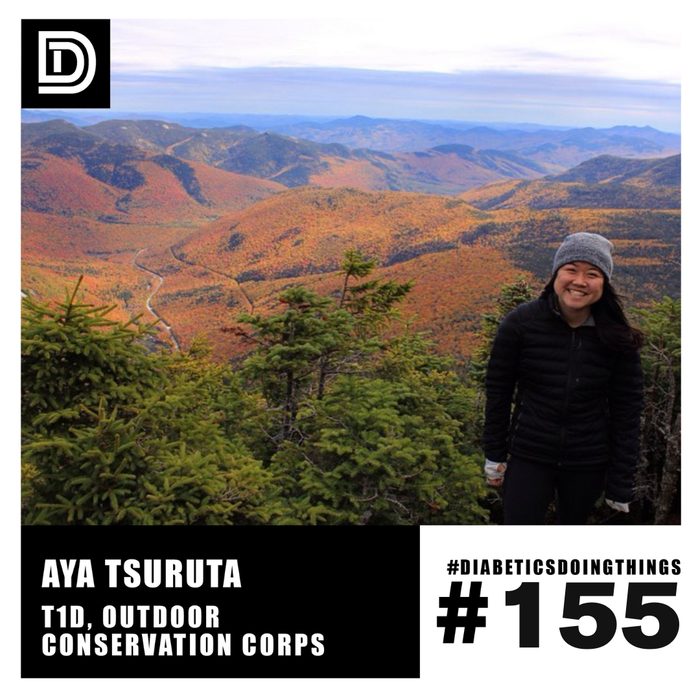
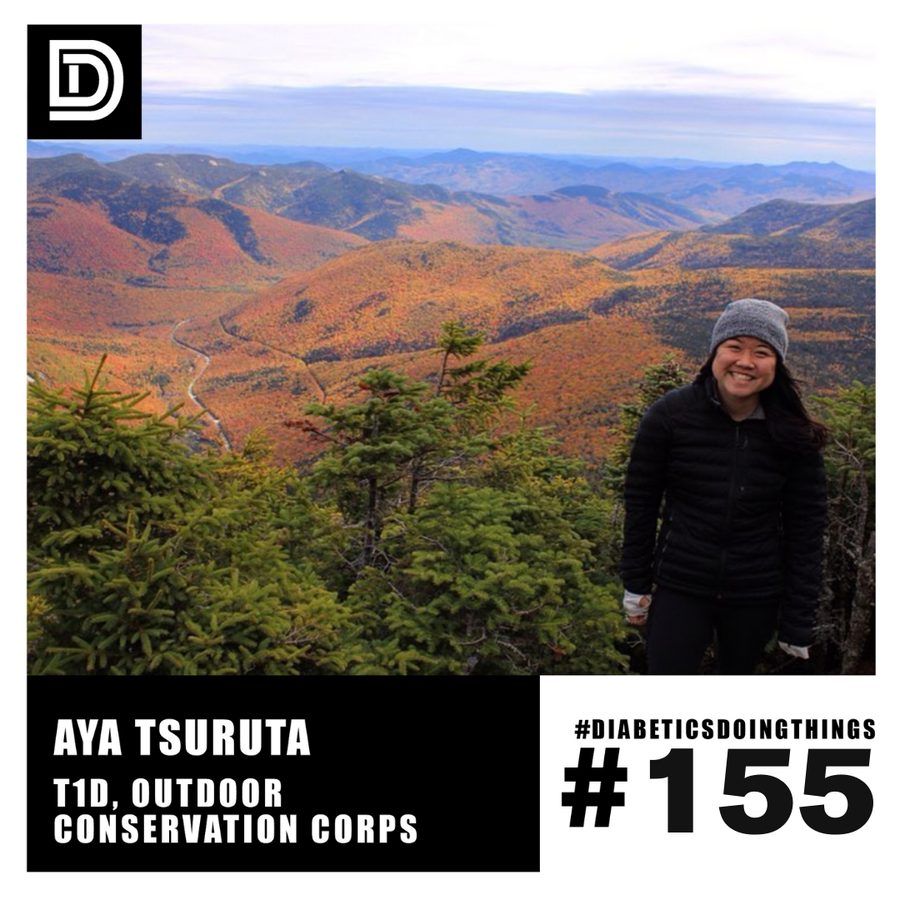
Aya Tsuruta has lived with type 1 diabetes since she was diagnosed at age two, so she has no memory of life without it. After three years in advertising strategy in Boston, she went through two serious burnout episodes that spiraled into mental health struggles. While scrolling Instagram, a targeted ad for outdoor jobs led her to the Utah Conservation Corps, part of AmeriCorps. She now works as a crew leader doing trail maintenance, habitat restoration, and land management in southern Utah, living out of a house in Cedar City between multi-day hitches in the backcountry. She talks about managing insulin and supplies in the desert, keeping her Dexcom and meters working in the cold, and how slowing down during COVID-19 changed her relationship with work.
Key takeaways
- Aya was diagnosed with type 1 diabetes at age two and has no memory of life without it.
- She left a three-year advertising career in Boston after two bouts of burnout affected her mental health.
- A targeted Instagram ad led her to join the Utah Conservation Corps through AmeriCorps.
- On multi-day hitches she packs extra meters, Dexcom supplies, glucagon, and honey, since cold weather has killed her meter batteries before.
- She says being disconnected from work while out on hitches taught her to slow down after years of chronic burnout.
Show notes
Delayed publishing due to COVID-19
On today’s podcast I’m joined from Southern Utah by Aya Tsuruta, a T1D of nearly 24 years who left her career in advertising to make a big jump outside (literally) her comfort zone.
After dealing with a very relatable bout of career and Diabetes burnout, Aya was scrolling through Instagram when she got an ad about careers in the Conservation Corps (part of Americorps). Next thing you know, she was out on her first 12 day “hitch” in the wilderness of the western United States.
Aya and I talk about Diagnoses at a young age, how slowing down during COVID-19 isn’t such a bad thing, and how life’s greatest adventures can be kicked off by good advertising (of all things).
You can follow Aya on Instagram at @tsurutaya and get a firsthand look at the great outdoors through her lens, as well as all the supplies and snacks she takes out with her on the trail to make sure she has everything she needs to treat her Diabetes.
Questions this episode answers
How did Aya Tsuruta get into conservation work?
She saw a targeted Instagram ad for outdoor industry jobs while deciding to leave advertising after burnout, which led her to apply to the Utah Conservation Corps, part of AmeriCorps.
How does Aya manage type 1 diabetes while camping in remote areas for up to 12 days?
She packs extra pump and Dexcom CGM supplies, multiple blood glucose meters, glucagon, honey, and nut butter for fast sugar, plus backup battery packs since cold weather can drain meter batteries.
What is a hitch in conservation corps work?
It's a multi-day stretch, up to 12 days, when crews go into the field for trail maintenance, habitat restoration, and other land management work before returning home.
Where can people follow Aya Tsuruta?
She posts outdoor photos on Instagram at @tsurutaya.
Full transcript Searchable, with timestamps
Rob Howe: Welcome back ladies and gentlemen, it's Rob, this is Diabetics Doing Things. Boy do I have a story for you today and ironically it all started with an ad. So I'd like to introduce you guys to Aya Tsuruta. She works for the Conservation Corps, which is part of AmeriCorps, and she essentially goes out on hitches for up to 12 days at a time in national parks in southern Utah to repair trails and work on conservation of the parks. She's taken an amazing journey growing up on the West Coast, going to the East Coast, back to the middle of the United States and the Western United States and Utah. I'm not doing this story justice. Please put your hands together, wait for this quick ad from the American Diabetes Association, and enjoy this talk with Aya Tsuruta. Hey guys, I'm going to use this ad portion to create a little bit of awareness on something that's very cool, and it's put on by the American Diabetes Association. it's called hashtag health equity now and you can search that on social media it's the american diabetes association's new health equity bill of rights that which provides steps to building a future without unjust health disparities so you can actually go and take action online i did it it's uh if you go to diabetes.org health equity now you can go and they pre-populate an email to your governor and they automatically do that so no matter where you're from you can go to diabetes.org slash health equity now, and you can send the health equity bill of rights to your governor. So I did that. It sent to Governor Greg Abbott, and it just outlines all the health disparities that people with diabetes, especially communities of color, face in the United States, and that we want to vote, and we are creating awareness with our representatives to make sure that they try to change the legislation, provide more opportunities. Number one on that list is the cost of insulin. So if you have diabetes, you should take a minute and contact your governor. Even if you're not in the United States, just put Texas, because that's important to me, diabetes.org slash health equity now and check it out. Hello, and welcome back to another episode of Diabetics Doing Things. We are telling the amazing stories of people with diabetes from all across the world. And I have a very special guest today calling from a very remote location, and we're going to talk a whole lot about that today. Aya Tsuruta, welcome to the show.
Aya Tsuruta: Thanks so much for having me.
Rob Howe: Yeah, thank you for joining us and also going to Extra Links to making sure that you have Wi-Fi for this interview.
Aya Tsuruta: Oh, yeah, absolutely. It feels weird, but great to be connected because I'm usually not so connected to the rest of the world.
Rob Howe: Well, I'm super excited to kind of pick your brain on that as well because it's something that I think about being a very hyper-connected person, almost chronically connected to social media and the internet and the like. Absolutely. But without digging too deep into that just yet, let's talk a little bit about your life with diabetes, and then we can shift over to this super unique story that I'm very excited to share with everyone.
Aya Tsuruta: Sure. Sounds great.
Rob Howe: Great. So let's talk about the – let's go to diagnosis. How did you come to join this type 1 diabetes family?
Aya Tsuruta: Yeah, so I was two years old when I was diagnosed, so I actually don't even remember. um my mom she's an incredible woman she uh I think started to notice that you know the typical things you you think of when you think of a diagnosis like uh going to the bathroom a lot eating a lot um and so she took me to the doctor and actually the first doctor she took me to said I was totally fine um and she being a you know mother's instinct was like I don't think so uh So we went to another doctor and I was diagnosed then. And I think it was February of when I was around two years old. So or when I was two years old, not around. And I've been sort of living with it since then. And I don't really know a life without it. So it's pretty much a big part of who I am.
Rob Howe: Yeah, it's always interesting to talk to people who were diagnosed very young. Because there's so little we remember about the time of our lives in general. And I think the further away we get from it, the more common it is to just not really remember anything. So you've really never known a life without diabetes. And that, you know, hearing it from people such as yourself seems like, you know, there's not a little bit less of a sense of loss at that point.
Aya Tsuruta: Yeah, definitely. I think I've had like, you know, moments of curiosity and, you know, what would it have been like? but I almost feel lucky that I don't know what it's like to not have it. Just because I don't really know what I'm missing. Although I, you know, I can try to imagine. But yeah, I mean, I've had moments where I sort of, you know, gone through even like, you know, like the preteen years, you sort of, I'm sure others have gone through it, but this like denial period of like, ah, I'm a teenager. I'm invincible. I don't have diabetes. What are we talking about?
Rob Howe: It's so hard to be different at that age. and you're going through so much other stuff outside of just diabetes. So, yeah, totally understandable. I think it's a very tough time for most people. I was diagnosed right in the middle of that period at being 16. Fortunately, kind of over the rebellion against my parents, but certainly had some emotional hormonal swings during that time that didn't serve me so well.
Aya Tsuruta: Yeah, definitely was tough during the preteen and teen years. And, I mean, even to this day, like diabetes, I don't think, and it's easy for anyone. So it's definitely been a journey. I've been through a lot of ups and downs throughout my years with this disease, which pretty much is my whole life. But yeah, I learned something new about how to control and just my body every day. So we can only do our best,
Rob Howe: right? That's right. And I think that's super important, especially in times like these where so much seems outside of our control and there's so many other factors and many of us are still sheltering in place or, you know, preferred shelter at home as COVID-19 continues to swoop
Aya Tsuruta: the globe. Yeah, absolutely. Sorry, go ahead. Oh, no, just to say, yeah, having a sense of control is definitely important when it feels like everything's out of control. So hopefully, you know, with all this extra time, other diabetics are also, you know, getting more in with their bodies and having some extra time to really pay attention to what's going on.
Rob Howe: It's been interesting for me. I mean, on that same note, most of my days now are the same, which is usually not the case. I'm kind of an on the go, you know, traveling or, you know, doing different things, doing things all over, you know, where I live in Dallas and with my friends or, you know, with the diabetes community. And I've noticed, and it's been this time, this season of extreme slowdown and a lot of familiarity. And it's been oddly comforting in
Aya Tsuruta: some ways. Yeah. Yeah, definitely. I can totally see that. And the job I'm into, which I know we're going to get into, also sort of helps with that. And it's a big reason why I came out here.
Rob Howe: Yeah. So let's talk about it. First, where are you calling from? And let's give a little bit of context to why you're out there and where this call is taking place. Because it's not
Aya Tsuruta: technically where you live right so I'm currently based out of Cedar City Utah it's in southern Utah about I would say like 40 minutes outside of Zion National Park pretty close to Bryce as well if anyone has been there and maybe like three hours from Las Vegas or so yeah two to three depending on how fast you're going yeah so I'm in Cedar City that's where my office is based out of. I'm currently right now in one of my co-workers homes because they have Wi-Fi. Typically, I'm not home very often, not home in Cedar City. So the house I'm living in, it's a bunch of people who are in my organization, which is a conservation corps. And since we're not home a lot, you know, we don't have sort of those extra things like Wi-Fi and stuff that we wouldn't really need when we're only home for so few days in the month. But yeah, so I am here in Cedar City. We're in Utah working on essentially natural resource and land management, also under the guise of conservation. I'm part of a conservation corps. There are most states have their own conservation corps, and a lot of them either work sort of independently or through AmeriCorps. So our program is through AmeriCorps. And in a nutshell, we're all working with various project partners of different land management agencies. So think National Park Service, Bureau of Land Management, Forest Service, and then a lot of state services or agencies that have a lot of different projects. various projects that have to do with conservation, whether that's trail building or trail maintenance, habitat restoration. There's so many things that go under this sort of umbrella of conservation. And essentially, they hire us to help them with their work, because otherwise, it's usually one person doing all the work. And that can be a lot. And so we go out on what we call hitches. Every every time we go out into the field, it's called a hitch. Um, and we're out there for up to 12 days at a time in a row. Um, so we're working out there, we're camping out there. Um, and then we come back to wherever our homes are. Um, I, I have a house here in Cedar city that I rent out. Like I mentioned, other people, um, love to roam around and just like live out of their cars, which I think is really cool too. Um, although, you know, currently with the COVID situation, I'm sure it hasn't been as fun. Um, but yeah, so we're back for a proportional number of days. Um, and then we go back in the field again. So that's essentially what my life is currently. Um, I'm a crew leader, um, which means that I'll be leading a group of four, um, sort of COVID pending, um, through the summer and, uh, fall seasons. And right now we're in training.
Rob Howe: That's super cool. And I have tons of questions, so I hope you're ready to dig into, to it a little bit. Um, yeah, absolutely. So this, I, I, you know, first of all, my, my, my brain goes to how did you come across this and experience it and learn that this was what you wanted to do? What was your introduction to, uh, you know, getting as a part of the core and
Aya Tsuruta: going on your first hitch? Yeah. So I feel like I've, I've told this story a few times to some friends and family and every time it gets longer. So I'll try to keep it a little bit short. Um, But just so from so for some additional background, I actually like you, Rob, I'm from the advertising world. I was in a I was in a small agency in Boston and I moved into a bigger one. So I spent about three years in the advertising industry and I really loved it. I was in the strategy group, also known as planning, really thought it was interesting work. but unfortunately I had a couple of bouts of pretty serious burnout which sort of spiraled into some mental health issues as well and it really freaked me out it was really scary I had some like you know small mental health things here and there that weren't as serious beforehand but it got pretty bad you know I had to sort of take leaves of absences and it was really starting to affect my work. And so the second time it happened, I sort of really took some time to think and, you know, realized like, I don't know what's going on, but like maybe it's the city, maybe it's the work I'm doing, but I really have to do something different and try something new, especially while I'm young and I have this opportunity to sort of be selfish and focus on myself. And so the irony is I was, while I was doing that thinking, I was just scrolling through Instagram, you know, as we do. Um, yeah. And I, I kid you not, I got a targeted ad. Um, I got a targeted ad that said something like, um, you know, do you want to explore a job in the outdoors? And I sort of went down a rabbit hole. Um, it took me to essentially like a, almost like an Indeed or LinkedIn like job posting page, but for the outdoor industry. Um, and then I saw this, Utah Conservation Corps position. I did, I took a lot of thought, you know, I think I talked to a lot of people, I talked to mentors, I talked to friends. And yeah, so in terms of the decision to do so, you know, I went through the interview and all that, asked a lot of questions. And I think that being a diabetic was actually a huge part of my decision of, of getting here and deciding to do this. At the beginning, it was almost a reason why I might, I would maybe not do it because, you know, being out in the field where the closest medical attention is like a helicopter right away, you know, freaked me out a lot. Even things like, you know, how do I keep my insulin cold in the desert? How do I make sure like, what if I run out of sugar? I can only pack so much honey and like bars and you know all that stuff especially when projects are backcountry and we're backpacking you know like 10 miles into our campsite and our work site so a lot was going through my head when I was applying and thinking about it during my interview what was great is that I expressed some of those concerns I was pretty nervous about bringing it up but I expressed those concerns and the operations director at the time let me know that, you know, oh, like we have this, you know, like stone cooler that you can dig into the ground in the desert and it'll keep your insulin cold. And we've done that before for other members and leaders who are diabetic. And the fact that even like one person had done it before who was a diabetic made me feel so much better. And so that was, that felt good to know that, you know, others had done it before. And then when it came to the actual go time, I had the offer and it was either I said yes or no. That in itself, from a life and career perspective, was a really big deal for me. Um, I feel like for most, or like, if not all my life up until that point, I had a pretty clear trajectory of, um, you know, my parents were, uh, really encouraged, like education went to, you know, university, um, and then made sure I had a stable job right after college was sort of in this corporate world and like climbing the corporate ladder. So going from that to this entirely new, like not even in an office, just like so, so different, like that decision in itself took a lot of thinking. And the way diabetes actually played a part in that, I think it's twofold. One is that I think in general, diabetes has made me sort of try, like it makes you realize like how fragile life is. And so it gives you that sense of like, you know, I'm going to try new things and like life is short, like I want to do something new. So I think that was part of it. But then the more sort of, I don't know if technical or like, I don't know what the right word is, but so my, I'm on my mom's insurance, so this is going to give away my age. um but um so i turn 26 next february um and my mom is a nurse at a kaiser if people are familiar with kaiser it's a big hospital chain on the west coast and i've been so so lucky to be under her insurance um just have saved has saved me so much in terms of costs especially you know with all of our supplies and how that adds up um and you know that insurance compared to the insurance that I would have gotten through this program. It's pretty much the insurance I would have gotten through this program is very minimal. So I felt like this was really my last chance to do something like this. And I still sort of do feel like I think this will probably be my first and last core. That doesn't mean I'm going to leave the industry or anything. But in terms of this specific program, since it is a volunteer program, we get pretty much like a living stipend, not very sustainable for especially for someone with a medical condition that requires a lot of prescriptions and stuff. So the fact that I knew that in one year, I wasn't going to have the financial ability to do something like this, I think was a huge part of my decision. It was like literally now or never. And so that coupled with just the support that I got from friends and mentors, even mentors in the corporate world, I think that was really important to me. I have one mentor who's incredible, works for a credit union in Oregon where my parents live or where I grew up. And he was like, oh, you have to do it. And the fact that someone in the corporate world was telling me, like, it'll be okay and you can make this jump. I think that was really important. So it was, you know, I couldn't do it alone. All of this came from a bunch of different sources, whether that was my diabetes or my friends or my family or mentors. Sorry, that was very long.
Rob Howe: No, no, that was great. And I think honestly, maybe the greatest story ever told that started with, I got an ad, which, you know, just maybe there is some good in the advertising world. Right. Nothing like good targeting, especially coming from a fellow strategist planner. There's nothing better than good targeting. Absolutely. But yeah, like I got to ask, like, again, I still have so many questions of like, you you lived a pretty, I guess I would say like normal, like career, like very similar, very relatable to me, like going straight, kind of doing what you're told, right. Going to doing good at high school, going to college, going, getting a job, like doing well in your career. And, and yet, and then completely shifting and obviously having the need and feeling the call of the wild, I guess is for, for lack of a better term and, uh, needing to change and then seeing support and getting support from, uh, you know, not only your friends and family, but your mentors and your close circle. What was it like? What were the steps like? You just like pack up all your stuff, give it to, you know, leave it at your parents' house and then just hit the road. And from then, like, you know, you're out on these hitches and you're in the wilderness. And I think, you know, even when you and I were scheduling this meeting, I didn't really understand exactly how remote you were going to be until we had to reschedule this interview. And you're like, oh yeah, you know, in four weeks I'll be here. So let me see what I can do with my time? And I was like, Oh, like, this is a serious off the grid type conversation.
Aya Tsuruta: Yeah. Um, that's a great question. How did I do it? Huh? Um, yeah, so I was living in Boston. Um, I packed up almost all of my stuff. My roommates are still there. So I could, lucky that I could leave some of it shipped a lot of it back home to Oregon. Um, Um, another thing is like, I knew I wanted to like live on the West coast really more permanently. So I knew I want to shift everything here, which is why I moved everything from Boston to Oregon. Um, yeah, like logistically, I guess like I had to, like I had to get a car, like I had to get all this gear. Um, there was a giant gear list. Um, so I did a lot of like research and, uh, shopping around that. And then I literally just drove down. I drove down to Utah from Oregon. And it was all sort of just like regular logistical stuff. I was sort of working remotely a little bit to finish up my projects from the agency in the meantime, and then sort of making sure I was mentally prepared for it. I actually met someone in Oregon through another friend who had done a similar core experience. So I talked to him a little bit about it, but I don't know. I feel like I just threw myself in there, I guess.
Rob Howe: Yeah, I think that's such a huge part of it, right? You just kind of have to jump in with both feet and burn the ships, I guess as they say, and go and make it happen for yourself.
Aya Tsuruta: Yeah. I did tell my endo that I was doing this. I was just like, hey, like, yeah, I'm going to be out here. And, you know, they didn't have too much to say. They were just like, you know, that's great. They gave me, they sort of refreshed my memory in terms of, you know, what happens in the case of pump failures. Luckily, I haven't had to deal with that yet. But there wasn't, yeah, there wasn't too much. It was making sure I had all my supplies. I sort of make sure I had more than I needed. That's a big thing on Hitch, too, is just making sure. They always recommend bringing three times the amount of medical supplies that you'll need for anyone across the board. So making sure I had all of that.
Rob Howe: Well, that was going to be one of my next questions as well. Like when you go out on a hitch, you're 12 days with nothing, uh, you know, and very isolated. What is, what does your diabetes pack look like?
Aya Tsuruta: Yeah. Um, a lot of supplies. Um, so let's see, the last hitch I was on was eight days in the field. And so I bring, um, all my pump supplies. I use a Dex, sorry, a tandem pump. And so, you know, you know, catheters, everything, like everything that goes with the pump supplies. I also have a Dexcom CGM, which honestly, I don't even know if I could do this without the CGM. So I'm very, very grateful for Dexcom. But I bring extra Dexcom supplies. um and then I have a glucagon I bring um two two to three meters oh my goodness the first time one of the first times that I went out on hitch um my dexcom was being finicky um and so I had to check my blood sugar using just my meter and it was so cold that all of my meters died I brought like I think I brought four meters um because I'm sort of crazy like that and I overpack and they all died. Luckily, I just kept one in my sleeping bag for a few hours, like close to my body. And, um, it was just the cold that got to the batteries. But now, I mean, now I bring extra batteries cause I know that'll happen. Um, because my tandem and, um, also my phone, I have to like my, my Dexcoms through my phone. I have to bring extra battery packs, um, to make sure that those I'll stay charged. I have one solar one. And then I have one like Mophie. I'm trying to think. And then like so much sugar, so much sugar and bars. Before this, I didn't really rely on honey that much. But honey has sort of been like my secret, you know, sugar thing that works immediately. I bring the honey everywhere. I sometimes go on runs when I'm on hitch too. And the honey just like sits either like in my leggings or like the little bears you know um or I have like a brace that I use my arm that I just strap it on to which has been pretty convenient um and then usually bars for protein last hitch I made a mistake of not bringing like a nut butter nut butters are awesome sometimes I'll just squirt some honey on a spoonful of nut butter um and that'll do it with the protein so yeah a bunch of different sort of tips and tricks I guess that I've been learning throughout of what works and whatnot, what doesn't work or what works better or faster. I think one thing outdoors for me that makes me feel better is just knowing something that works fast because, you know, like it's sort of scary not being near a medical facility. So yeah, and then like insulin, I don't know. I feel like that I should probably honestly have, I should probably have a list, like a checklist if I should be more organized about it. But I sort of just the weekend before Hitch, I lay it all out, count everything. you know, make sure I have it all. And then we sort of go off.
Rob Howe: And, you know, like you said, it's, it's interesting people with diabetes, right? Like you'd think we would need like a very disciplined list and some people do and props to them. Uh, but I'm kind of like you where I just have, I, I'm like, I eyeball it and I'm like, this is enough. And we just kind of go from there. I, uh, I took a four week trip on military bases, uh, when I was playing basketball and I like, I brought about one and a half times is usually usually my, uh, the math that I do is like, okay, if I'm going to be gone this amount of time, I multiply that by one and a half. And then that's the amount of supplies I need. And fortunately I was able to fit it all in like a little kind of roll away, uh, travel bag, uh, and stuff it in my backpack. But I found on that trip is that I had more things to carry than everybody else. So do you find that, you know, as you're kind of living out of a backpack or living out of a tent that you have more to carry and it's a little bit burdensome? Yeah, definitely. Um, it's just
Aya Tsuruta: like an extra checklist item. Luckily, I haven't had to do any backcountry trips so far. They've been, I mean, they've been out there in remote locations, but they've been front country, which pretty much means that we still have our trucks with us and we're not hiking in. So I think some of our summer projects are backcountry. So once we do that, I'll definitely feel like the physical weight of all of that adding up. And so I made sure that all of my other gear that I purchased was like super, super light because, you know, walking with 30 to 40 pounds on your back, you know, plus I think that probably the heaviest thing would be those Dexcom inserters and then also just like the honey and the food, the extra food. But yeah, it's definitely like there's a lot, even like without diabetes, I think there's a lot you have to do to prepare as a core member. You know, you have to be able to sustain yourself out there when there's something, sometimes there's no running water. Like sometimes, you know, there's so many things that we don't have out there. Um, and so we, you always have to be extra prepared. So it definitely is like an extra checklist item. Even when we're, we travel like between the campsite and the work site and every morning, like, you know, making sure I have all my diabetes stuff is, is part of that whole like mental checklist. So, um, yeah, I mean, I guess like relative to people who don't have diabetes, it's probably burdensome, But I feel like I've been doing it my whole life. And I've learned from the times that I've been like, yeah, I'm not going to check this time that like, no, I got to check this time.
Rob Howe: Right. Yeah. Sometimes it's like, oh, well, this is how I feel. But I better make sure just to just really make sure that I've got everything I need.
Aya Tsuruta: Yeah, definitely. I think like one thing that's less like physical, but more mental, I've had to be definitely more open and like communicate sort of what it's like to to have diabetes on Hitch to my other leaders as well. just because I mean you know it's hard to you know understand if if you've never had it before sometimes like I'll take a little bit longer than others because you know I've forgotten something that has to do with you know my diabetes or I'm changing my pump set because it's failed because it failed and towards the beginning I think people didn't really understand like felt like I was just like taking my sweet time but that wasn't the case I just like you know unfortunately during like you know because this is always how it happens but like every time we have to go somewhere my pump fails or like or something happens and so that's something that I've I've realized that it's better to just um just educate as much as possible just so that people do understand because you know most people don't mean harm or anything um they just don't understand um and to them from the outside it just looks like oh like I is just you know taking her time again and making us late
Rob Howe: Yeah. And I think that's always tough, right? It's like most people don't have any experience with diabetes. Um, and you know, I think back even to myself, I have very little going in and for certain didn't have any idea what day-to-day management was like. Um, but I kind of want to shift away a little bit because I think you've done an awesome job of talking about diabetes, uh, as it relates to being isolated and being out, uh, in the wild. But I I'm curious as well as to like your, the rest of your life, like the, your, the whole, your whole person out on the, you know, on these hitches, what's been, I think the most impactful thing for you as you, you know, wake up and you're out in the, you know, on a hitch and you're not going to your corporate job and you're not dealing with emails and we, you know, weekend work and living for the weekend and then redoing it and going back into the office on Monday. What, what has been a, you know, your experience there? And then B, what have you seen out in the wilderness that will, that will like stay with you, uh, you know, long when this is long in the rear view mirror of your
Aya Tsuruta: life? That is a great question. Um, yeah, in terms of the general impact of going from corporate to, to outdoor life um I think before I came here I really struggled to slow down whenever I was doing anything and mostly what I was doing was work so it was just like work work work work work and I loved it which was great but it just I mean there's a reason why I burned out twice and I didn't know how to slow down I really didn't like um I just felt like I always had to be producing and be productive and, you know, achieving something. And that's something that I think my coworkers saw too. And I was really lucky to be in agencies that were great about making sure that we were taking care of ourselves. But even with that, it was all my fault. I got it to myself. So I think being outside really helped me slow down or made me slow down, sort of made me realize like there's not like things aren't ever that urgent especially in the corporate world no offense to anyone people in the corporate world no I I often feel that way so I feel it's it's very relatable right like if if you know this ad doesn't go up oh my gosh like no one's gonna die right um so I think that was one big thing is like slowing down um and a big part of that is that like we actually have time out here um and what I mean by that is you know I don't I'm sure you feel similarly like just in in that that advertising and marketing world but you're sort of like always thinking about work or I was at least um even when I wasn't working I was always thinking about work um or it was so easy to just like hop online when I was home and just finish that one thing which then turned into another thing and spiraled and then you know I was before I knew it I'd be working until 10. And, you know, my bosses definitely did not encourage that. They were great. But that was just, you know, part of what I did here. Like your, our work is so defined. It is maintenanceing trails. It is applying herbicide to make sure that the native species can actually grow and the invasive species do not. And then when we're done, we're done. And the time, our off time is like actual off time. Um, and there's no guilt associated with that. Like I struggled with like guilt for like taking paid time off. Like, I don't know. I was sort of weird.
Rob Howe: No, but I think it's a really real thing. And it's something that I actually was thinking about, uh, about this time last year, actually, because I was in New York and I was there on work and it was during the day. And I was hanging out with one of my really dear friends who, uh, is, is a doctor and she is doing her residency in New York and she's friends with a type 1 diabetic doctor named Mike Natter, who is, is in, worked at the same hospital as she did. So she arranged for us to meet up and I got to meet Mike and we were talking and it occurred to me that their off time as physicians is so much different than mine. As a person who's just an advertising person or a podcast person or an Instagram person, like I can pop up my computer or my phone and work at any time. And when they're outside the hospital, they can't work. That's if they can do research and things like that. And certainly that's a part of it, but it occurred to me that there's clear work-life balance, um, guidelines for them than there was for me. And it made me really think about like what other, uh, industries that was the case. And this, you've certainly stumbled across one that's very, very clear. Like you're, you can, it's, it's very difficult to work from your bed on, you know, herbiciding trails, right? So you're not going to let that creep in and kind
Aya Tsuruta: of infringe upon your private time. Yeah, exactly. Like even if I wanted to, I couldn't work unless I drove out for some reason to back to our, to our work sites. But, um, yeah, so I think that's a big part of having that time that you're devoting to yourself and what you want to do outside of work. And then another big piece of the time is the fact that we're so disconnected when we're out there. Our last two hitches, sometimes we have service, but most times we don't. And I feel like, you know, if I were connected or back when I was connected, like if I, you know, had some extra time, I would just, you know, go online, read articles, like, watch Netflix, like, listen to, like, music or podcasts or whatever. And like, I still do some of that stuff like music and all but when there's this sort of inability to even do that, it really makes you a lot more introspective, because there's not much else you can do. It's both introspective and then also just getting to know those around you, which I think has been really valuable. I've met some really, really awesome people in this program, really cool, strong people who have these amazing stories. And so I think having that time to reflect, sort of force yourself to reflect has been really important in terms of just, you know, getting to know myself more and helping my future self in terms of sort of planning out where I might want to go after this or do after this and how I want to like live my life and what kind of lifestyle. So I think time has been the biggest thing that I appreciate about this program. And then on top of that, you just put in like the beautiful views and all of that. And it's overall just a really
Rob Howe: incredible experience. Well, I'm so glad that you and I were able to get connected and to talk about this because it's something that I probably wouldn't have uncovered on my own and just wouldn't have crossed my path. And I also love that, you know, our paths are very similar, you know, prior to you making that jump. And I can think back at times in my life where there was a clear leap that needed to be made. And I look back on those moments, grateful that I was able to do that. And I am very confident that you will look back on your decision to make the leap and feel very grateful about it as well. And the past that it has led you to, no pun intended, the past that has led you to from there. And, you know, and of course, as always, thank you for sharing this story for, you know, our audience and listeners and people who are living with diabetes and are interested in not only the things that other people with diabetes are doing, but giving them confidence and hope that if they want to have, want to be able to do something that's a little bit different than, you know, the prescribed sort of American Western way of life of going to school, going to work and then dying, uh, then you can, uh, those options are available for them. And there are awesome people like you who are out there doing it. Yeah, absolutely. And thanks
Aya Tsuruta: so much for this opportunity to share my story too. Um, would love to, you know, I'm not nearly as involved in the advocacy and diabetic community online as you are, but I'm really happy to be a resource for anyone. Um, I'm not sure if there's really that many IS Rooters in the United States, So I'm sure you can, you know, Google or maybe we can share my handle or something.
Rob Howe: I was going to say, I would love for you to plug your handle if you're open to it.
Aya Tsuruta: Yeah. So on Instagram, you can find me at Tsurutaya. So it's pretty much my last name and first name. Should I spell it out? Maybe I guess because it's T-S-U-R-U-T-A-Y-A. so that's my last name and my first name combined you'll see an account with a ton of outdoor photos so that's me, it should be public but yeah, please reach out if anyone has questions about the industry my decision, like how diabetes has played a role and even if you've been meaning to do a long hike and feel uncomfortable doing that because of your diabetes I'm more than happy to talk about some of my tricks that I use out here when we're not as close to medical attention and as we would like to be.
Rob Howe: Well, I definitely will include your links to your profile in the show notes. And I know that people will want to reach out and talk to you as well. So again, thanks so much for sharing your story and for going outside your normal routine when you're off of your hitch to get Wi-Fi and to talk to us. It was so great to meet you. And I look forward to continuing to follow you and learn about your story and be connected.
Aya Tsuruta: Awesome. Thanks so much, Rob.
Rob Howe: Thanks, Aya.
Aya Tsuruta: Great.
Rob Howe: Hey guys, I'm going to use this ad portion to create a little bit of awareness on something that's very cool and it's put on by the American Diabetes Association. It's called hashtag health equity now and you can search that on social media. It's the American Diabetes Association's new health equity bill of rights, which provides steps to building a future without unjust health disparities. So you can actually go and take action online. I did it. it's uh if you go to diabetes.org slash health equity now you can go and they pre-populate an email to your governor and they automatically do that so no matter where you're from you can go to diabetes.org slash health equity now and you can send the health equity bill of rights to your governor so i did that it sent to governor greg abbott and it just outlines all the health disparities that people with diabetes especially communities of color face in the united states and that we want to vote and we are creating awareness with our representatives to make sure that they try to change the legislation, provide more opportunities. Number one on that list is the cost of insulin. So if you have diabetes, you should take a minute and contact your governor. Even if you're not in the United States, just put Texas because that's important to me, diabetes.org slash health equity now and check it out.
About Aya
Aya Tsuruta is a crew leader with the Utah Conservation Corps, an AmeriCorps program doing trail maintenance and habitat restoration in southern Utah. She has lived with type 1 diabetes since being diagnosed at age two, and previously worked in advertising strategy in Boston.