

Diabetes Letterboards with Greta Ehlers
Episode summary
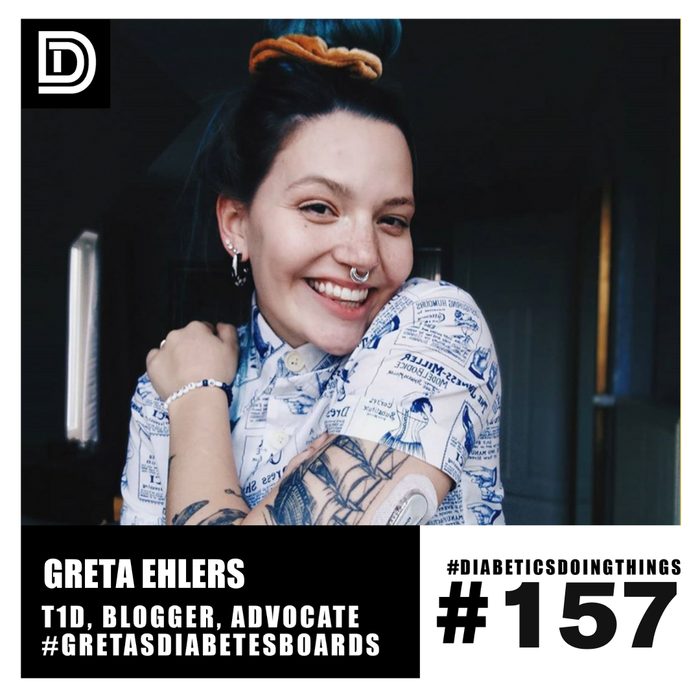
Greta Ehlers lives with type 1 diabetes in Sweden, diagnosed at age 10. She skipped diabetes camps as a kid and had no friends with T1D until she started an Instagram account about two and a half years before this conversation. She created Greta's Diabetes Boards, letterboards paired with research-based captions on topics like mental health, menstruation, and misinformation. She studies strategic communication and wants to work as a diabetes advocate or patient ambassador. She talks about healthcare differences between Germany, Austria, and Sweden, where insulin and her Dexcom are free. She also describes a mix-up over her name: she used a Scottish nickname, Greta McEvers, for years before switching back to her real name. Recorded in March 2020, as Sweden entered early COVID-19 restrictions.
Key takeaways
- Greta Ehlers started Greta's Diabetes Boards about two and a half years before this interview, posting research-backed letterboards on topics like mental health and misinformation.
- She always cites her sources in her captions so people who share her posts, sometimes thousands of them, can trust the information and find the original study.
- Greta says in Sweden insulin and her Dexcom are free, and getting a CGM there took far less paperwork than it did when she lived in Germany.
- She is working on boards about diabetes and alcohol, diabetes and sex, and diabulimia because, she says, her doctors never brought up those topics.
- Her board on diabetes and menstruation got the most private messages from people who told her no one had explained that to them before.
Show notes
Delayed Publishing Due to COVID-19
Greta Ehlers, (@gretastypeone on Instagram) lives with T1D in Sweden.
I’ve followed Greta for a number of years now, and over the past 2 years or so, has been sharing #GretasDiabetesBoards
Greta joined the podcast in March 2020 and we talk about:
Traveling in Europe (sometimes under an assumed name!)
Healthcare differences in Sweden & Germany compared to the U.S.
The backstory behind #gretasdiabetesboards and how she comes up with her topics
What she’s been doing during quarantine
The importance of citing your sources and stopping the spread of misinformation
And Greta gives us a preview of her upcoming letterboards
Be sure to check out Greta on Instagram, and share #gretasletterboards
Questions this episode answers
Does Greta Ehlers get free insulin and a Dexcom in Sweden?
Yes. She says in Sweden insulin doesn't cost her anything and she gets her Dexcom for free, a sharp contrast to the hoops she had to jump through to get a CGM approved in Germany.
What are Greta's Diabetes Boards?
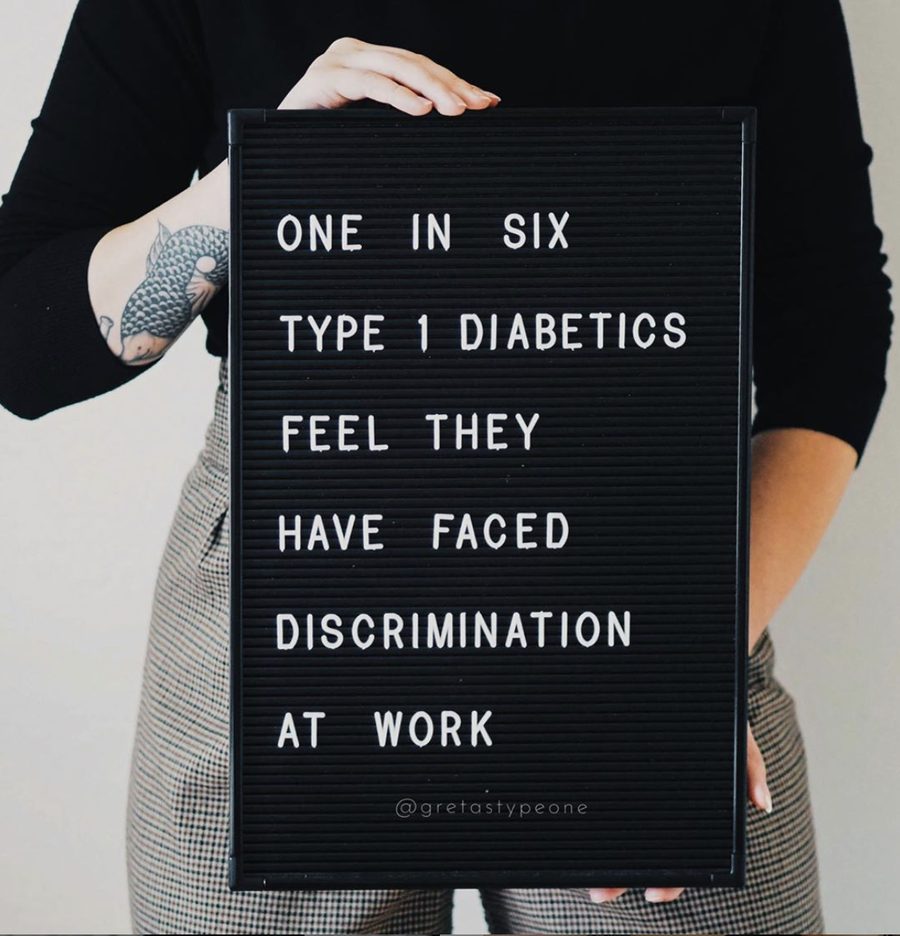
They are letterboards Greta Ehlers writes and photographs, each covering a research-based diabetes topic, with the source study linked in the Instagram caption.
Why does Greta Ehlers cite her sources on every post?
She says once a post gets shared by thousands of people, she wants to be sure the information is accurate, so she links to the original research behind each board.
What topics is Greta Ehlers planning to cover in future letterboards?
She mentions upcoming boards on diabetes and alcohol, diabetes and sex, diabulimia, and diabetes and pregnancy, several of them topics she says her own doctors never discussed with her.
Full transcript Searchable, with timestamps
Rob Howe: Welcome back to another episode of Diabetics Doing Things. We are telling the amazing stories of people living with diabetes all across the world. My guest today is Greta Ehlers. And Greta, I hope I pronounced that correctly. You may know her as Greta McEvers because that's what I knew her as prior to this interview. But Greta tells an amazing story right off the bat. So if you can bear and grit your teeth through me awkwardly getting her name incorrect, then you are in for one great intro story. So you may have seen Greta's Diabetes Boards on social media. Greta creates letter boards with research that she's done about diabetes, and then she posts it on social media. I saw it for the first time maybe a year, year and a half ago when a board was really, really circulating. I believe it was about mental health. So if you want to check those out, hashtag Greta's Diabetes Boards on Instagram is a great way to index them and see them all together. Anyhow, Greta and I have a great conversation from back in March of 2020. I'm almost through with the backlog of my interviews. I really hope you enjoyed this interview with Greta Ehlers. Everyone, before we get to this interview, I just want to let you know that we have a new newsletter that is going out every single month. It's called The Drip, and I'm super proud of all the hard work that Eritrea has put into it. It's basically a monthly roundup of what I've been thinking and a little bit of a just background on what's going on with me, as well as all the things we've been up to at Diabetics Doing Things. If you don't know, on Mondays, twice a month, we're doing a Doing Things Day takeover. So twice a month on Monday is Doing Things Day on Diabetics Doing Things Instagram. That's where we're giving the Instagram login and letting someone take over to tell us about their day. We've had people from all over the world. We've had people from Lebanon, people from Gaza. So we're going places we've never been and we're covering topics we've never covered. We've also done two takeovers here in the United States. So some at home, some away, ultimately trying to showcase a lot of different perspectives and diverse perspectives of life with diabetes. So if you want to catch a roundup of all that stuff, subscribe on diabeticsdoingthings.com to The Drip and just have a little bit of fun in your inbox from a diabetes perspective. Okay, let's get back to the episode. Welcome back to another episode of Diabetics Doing Things. We're telling the amazing stories of people with diabetes from all over the world. And the key word is all over the world today because my guest on the pod, calling all the way from the south of Sweden, Ms. Greta McEvers. Welcome to the show.
Greta Ehlers: I'm actually, I don't, okay, I have to interrupt you here actually. Of course, do it. I'm so sorry. You probably have to cut that or maybe we just do it again because that's actually not my real name.
Rob Howe: Oh.
Greta Ehlers: Yeah. It's so, okay, I can tell you the background story in like in a one minute nutshell. Perfect. Perfect. I guess we just do it all over again. When I traveled in Scotland, no one could pronounce my last name, which is a German last name, and we call it ELS or ELS in Swedish, and no one, non-English speaking person, like, gets it. So they would always call me Evers, and then, like, my parents told me, oh, now that you're in Scotland, you should just call yourself Maciverse because then everyone will understand. And that's just how it's been the last, I don't know, eight years. And I had it on my Facebook. I had it on my Instagram. And then, like, it's so weird because then when, like, my Instagram started getting bigger and, I don't know, I got, like, some jobs. My girlfriend was like, girl, you've got to change your name so that people actually know your real name. And I was like, okay, yeah, that's true. So now I changed it like three weeks ago when I was supposed to travel to Stockholm and they booked a hotel room to Greta McEverest, which obviously isn't my real last name. So I'm working on that, but maybe.
Rob Howe: Well, I think this is a great, this is like the most interesting start to the pod I could have ever hoped for. So I want to keep this in if you'll allow it, because what a funny story. What a unique thing.
Greta Ehlers: Yeah. All right. There you go.
Rob Howe: just so just so you know so that's your honorary scottish last name i love it the amazing story behind my last name well uh well that's awesome what a cool way to uh to introduce this episode um so you are a person with diabetes uh and i'd love to hear a little bit of a story of uh of your diagnosis and you know what kind of spurred you on to create your Instagram presence with Greta's Type 1. So wherever you want to start.
Greta Ehlers: I guess we got to start when I was about 10 years old, because that's when I got my diagnosis. And I have to admit that I actually don't remember too much about too much of what happened afterwards. Like, my parents always were great support. And they made it really easy for me with like accepting my diagnosis and getting to live with my diagnosis getting to live with injections and finger pricks and all that so my diagnosis story isn't particularly interesting i guess because i think there's not that much which changed afterwards which is for me quite great actually but that's that's how it all started about 15 years ago and growing up with type 1 diabetes I actually never had any friends with type 1 my hospital organized these summer camps for people or like kids living with type 1 diabetes but I always thought they sound rather boring and I really never got the fact or like I never got why should I spend my summer with people sharing the same disease right so I never went to these which which means that I never had any friends with type 1 and about two and a half years ago I started my Instagram and I think in the beginning it was was more just like connecting to other people and I mean the online community is great so I met a lot of people online very quickly and yeah now I'm here doing my boards and connecting to people and I love it it was one of the best decisions I could have possibly made because I think things I learned from the online community they're so valuable to me living with
Rob Howe: type 1 diabetes. Yeah. And I want to focus on a couple of things from that as well. Um, a, I think you're totally right. The community is full of so much encouragement and useful advice and problem solving. It's just been, you know, for my own life as well, like a super, uh, you know, thing I didn't expect to happen, uh, is to have a bunch of friends with diabetes because the second thing I'd like to focus on is very similar to you. I never went to diabetes camps or, you know, activities as a kid because I didn't think they sounded fun. I thought I was too cool. And the joke that I say is that I knew everything. So I sort of missed out on that. I didn't really have any friends with diabetes very similar to you. So since getting involved, like you said, you're able to get a lot of friends with diabetes really quickly. What do you think has made the most impact on your life since joining that community and kind of opting in?
Greta Ehlers: i think it's i i never really had a plan of what i want to do when i graduate and stuff like that from university but now i feel like that's exactly what i want to do like i want to work somehow with type 1 diabetes raising awareness and i think instagram has been a great opportunity for that apart from the fact that it obviously gave me a lot of great friends.
Rob Howe: So you're actually now considering a career in diabetes care and diabetes education.
Greta Ehlers: Yeah, exactly. So I study strategic communication. So I work with brand communication and public relations and things like that. And I think there's still a lot to do when it comes to diabetes. And I would love to use my knowledge and my skills to actually use it and work as a, I don't know, patient ambassador or advocate.
Rob Howe: Yeah. Well, and I think you're an awesome advocate. And it's interesting that your, you know, your background and your studies is in strategic communication, because I think we can start talking about it now. Your Greta's diabetes boards are one of the more unique and shareable and impactful types of content that I've seen, you know, in the diabetes community in quite some time. They definitely stand out. I know you, you started them maybe, this is my research here, uh, started them maybe, um, August of last year, like last end of last summer.
Greta Ehlers: yeah where did the idea come from exactly so there's a couple of reasons i think i started with that one is that instagram is great and it provides you with a lot of great information but at the same time there's a lot of false information and fake information and you should not always maybe believe everything you read on social media and I obviously I'm very interested in research otherwise I guess I wouldn't study a master's degree and I just somehow wanted to combine like research-based information with raising awareness about type 1 diabetes and on top of that I think it's very hard to it's very hard to get people's attention online and just posting a selfie with a very important caption wasn't really the right way to do it for me and I think I actually had one of these letter boards at home because I don't know they've been very they've been a thing I think last year everyone had these boards at home and I had this board in my in my flat and I didn't really know what to write on these i don't know like carpe diem great day and i was like that's not really my thing so i could use that for for instagram actually and i i often see i just thought
Rob Howe: yeah i'm sorry for interrupting i often see like new parents uh with their babies or whatever but like two months old and they'll put it on the little letter board right yeah exactly yeah exactly
Greta Ehlers: these are really cute I like these but I was like I could use these for actually providing information and I think I just started playing around um and I think the very very first letterboard I I ever uploaded I think it's been a bit of a different design but it was about um playing an instrument with type 1 diabetes and it got I don't know it just got nice feedback and people really seem to like and I was like okay so that's something people enjoy because you see the information on the picture but then if you're interested you can read more
Rob Howe: about it in the caption right because you can see and I think that's one of the more impactful things about your boards as well as it has like really cool information in the image so if somebody shares it um you know on their in their story or somewhere else like there's important information the image but then also in the caption like where it comes from
Greta Ehlers: yes so and it's very important for me to always uh state my sources so all the boards i write um are research based because i have access to to research journals through my university so i was like okay if people are interested in the original study behind these boards they can actually find that information and read the study themselves if they want to. Which is really, this is like, some people have told me that they really appreciate it, that I actually state where all the information comes from.
Rob Howe: And I think that's really interesting as well, because then you're citing your sources. Do you find that people, you know, in the comments or in messages are asking about, you know, for more information on the research?
Greta Ehlers: I think since I always copy-paste the link, but I had some people telling me that they think it's great that I put all the information in. And I think at some point also, when it comes to the level where actually thousands of people share your posts, you kind of want to make sure that the information is actually true.
Rob Howe: yeah and i think that's you know a big you're talking a lot about uh misinformation and i think right now that's really relevant as well with with the covid19 and coronavirus um you're not able to just fact check in real time what uh what people are sharing so you know for you to be able to cite those sources and share them you know that people are going to share these uh but having useful pieces of information that have scientific backing is you know super important exactly i agree so uh your first what do you remember which one your first one was
Greta Ehlers: i think the first one i mean i i've i've played around some with the design because now i just kind of i don't know i like when every every picture looks like similar so no i i just like I hold the boards which is actually um great because it happens occasionally that people uh just like I don't know crop my pictures and put their own like water stamp and stuff watermark on it um which I don't appreciate too much to be honest but since you always see my arms on the pictures with my tattoos um and that's actually a funny story my a teacher from university i had two years ago texted me the other day that a friend of hers shared my picture and she recognized
Rob Howe: me because of my tattoos oh wow uh so she saw the picture like new and knew it was yours but somebody
Greta Ehlers: else had shared it yeah exactly because she saw she saw my my tattoos on my arm and she was like oh that's Greta so she texted me she was like I saw that somebody shared it from my family and I I'm I'm pretty sure it's you isn't it so it's it's great how they like I don't know I think they live in Australia so it's not even
Rob Howe: close to Sweden right and so you know people that you just know through the diabetes community recognize your work. Yeah. So what was the, because I remember seeing the one, I believe it was about diabetes and mental health potentially, that really kind of went, I guess, viral in the community. You know, a lot of people sharing it, you know, all over the web. What was that, you know, response like when you saw how impactful it could be?
Greta Ehlers: it's it's crazy because i think and i guess that's what every everyone says but i was never planning on and becoming that big like on the account becoming that popular like in the beginning i was literally like uploading pictures of my food and my blood sugar and i was like well today's been shit here's my food and I really I really enjoy it and I put a lot of work into it and I think it's great that people that people will share it all over the world at the same time I think I don't really I don't really realize how how how many people it actually like I don't know I think it got like sometimes people they like it got shared by I don't know 1000 people and
Rob Howe: that's such an abstract number for me. Right. Because like a thousand people sharing, um, your, you know, your post, right. Like it just, it's just, you don't really have anything to
Greta Ehlers: compare it to. Right. No, it's, it's crazy. It's, it's amazing. I'm really happy every time someone shares or I don't know, they sent me a message and they're like, okay, um, I just wonder whether it's okay if I share your picture and stuff like that. And I'm like, of course, that's
Rob Howe: exactly what I want. So, you know, for you, how do you develop some of your topics? What are, what is your process for putting those together? I think it started out with like things which
Greta Ehlers: actually affect me personally. Like I did one letter board about diabetes and menstruation, which is something my doctors never ever have talked about so I'm trying to write about topics which maybe still are considered as like taboo topics or which are not discussed by any doctors or diabetes nurses and then I guess I just try to find whether there are any research studies about it and then sometimes you read the sources or the references in the studies and then you you read that they did like some research about other topics so i guess it's a mix between what i personally think is important and topics where there's actually research about and of course if there are people who are interested in a specific topic Like, I'm always happy for suggestions. So I did that the other day in my story, and I was like, okay, guys, but what are you actually interested in? And then I got a lot of great responses, and I'm like, okay, but now I can look whether there's some research about these topics people actually want to see.
Rob Howe: Right. So, you know, when you're, how much time do you think you're spending when you're doing this research on one Greta's letter board, one Greta's diabetes board? How, how many, how much time and research generally goes into something like that?
Greta Ehlers: I guess, so there's like three steps. There's like coming up with the topic, doing some research, finding a caption, which is actually, which fits on the board. and then writing the actual article. And I guess I almost never do it all in one day. I usually, like, I don't know, sometimes I have an ID, I think, I don't know, in December, and then I write something about it in March because, I don't know, I was focusing on other things. But I guess all in all, it's maybe, I don't know, I guess maybe five to ten hours.
Rob Howe: Yeah, so you're putting a lot of time and really making sure that the content that you're putting out is research-based, backed in science, and can really be helpful.
Greta Ehlers: Exactly.
Rob Howe: Cool. Well, thank you so much for sharing about that. I think I'm just very interested whenever people have passion projects and find something really cool and unique, like what their process is about that. but earlier when we were talking about your your name change it made me realize that you have traveled around Europe it seemed like quite a bit have you ever you know can you talk a little bit about what that was like with diabetes and how you know different countries or different places that you've lived or visited have what challenges or you know how how diabetes was different there than where you're living currently?
Greta Ehlers: So I think I'm actually born in Germany. I did my bachelor's degree in Vienna and Austria, and now I'm in Sweden. And I think the healthcare system, I mean, it's a bit different, but it's also quite similar because we're talking central to Northern Europe.
Rob Howe: Right.
Greta Ehlers: So this has actually never really been an issue. I think I'm very privileged here, for example, because in Sweden insulin doesn't cost anything, and I also get my Dexcom for free.
Rob Howe: right so obviously like the advantage of that of that compared to the u.s where you know we have a very very different and very flawed health care system which currently uh with coronavirus and covid19 is being uh sort of on full display for the world to see so how how are things different obviously in sweden you're you know able to get your sensors and your insulin for free when you were traveling other other places did you ever have any uh you know issues with that
Greta Ehlers: no actually not because i think i've been traveling i've also been traveling outside europe but then i wasn't i always took all my things with me so i guess it's a big difference whether you actually travel around for i don't know one two three months or whether you actually live somewhere and you have to go see your nurse and go get your prescriptions um i think in germany and in sweden my my healthcare teams have both been really great um and i never i never really had any issues i think i'm i'm very happy with that and i think when i traveled i always just made sure that I had enough I don't know test strips and enough insulin vials and and so on um I just well actually it's a big difference when it comes to I remember when I wanted to get the Dexcom back in Germany and they were making such a fuss about it and you have to I don't know send in diary with all your blood sugar documentation telling them why you need a CGM and I feel like maybe Sweden is like a step ahead when it comes to these things
Rob Howe: right because you can you have access to a CGM without really having to answer a bunch of
Greta Ehlers: questions or jump through a lot of hoops yeah exactly I mean I was telling them I was like so I've been on the Dexcom G6 um how easy is it for me to get here and they were like well, if you already have it, why should you change anything? And then they just send it to me four days later. So that was great.
Rob Howe: Yeah, that sounds awesome. I hope that one day I'll be able to have that experience. That's pretty impressive.
Greta Ehlers: Yeah, I hope so too.
Rob Howe: So kind of on the same topic as healthcare, earlier before we started recording, we were talking about kind of self-quarantining and social distancing. tell us a little bit about what life is like in Sweden right now with coronavirus
Greta Ehlers: so I think since Sweden doesn't have a lot of big cities we have Stockholm which is about five hours drive from where I live and I think here I don't think there's a lot of panic going on although I went grocery shopping today and there was no toilet paper no pasta and no rice other than that I think it's quite I think it's quite okay like they closed our university so we have online lectures but I don't know I think it's quite okay here I don't really know what's going on in Stockholm. But I hear different things from my parents back in Germany. So I don't know, maybe it has to do with the fact that, yeah, that we basically, it feels like I'm on the countryside. I mean, we have Lund, which is like the student city with a lot of people. But I think if you just like practice social distancing the way you're supposed to or recommend it to i think it's quite easy to manage actually yeah and it's uh it's kind of
Rob Howe: funny too uh you know we were talking about this before like podcasting is the perfect form of social distancing right you just two people in separate rooms nowhere near each other having a
Greta Ehlers: conversation it's perfect it's great i was also like now i actually have a lot of time to create new letter boards because all it requires is myself and the board and i don't know a computer so i guess maybe some of us can use these like days to actually come up with some new great ideas
Rob Howe: yeah and i think too it's uh there's all these things going around about amazing things that have come out of times from quarantine uh where they people say shakespeare wrote king lear when he was uh in quarantine and sir isaac newton discovered yeah i've also read that so uh can you give us a hint as to what the subject matter around your your next letter board is going to be
Greta Ehlers: um there's a couple of ideas i'm actually working on um i have one about diabetes and alcohol there were some people who told me that they would like to read something about that I think it could be helpful for a lot of teenagers for example I was also writing I think I don't know maybe two months ago I was writing an article about how diabetes can affect a woman's sex life and I'm definitely writing something like that about men because I feel like everyone's affected so there should be both sides maybe yeah and I think
Rob Howe: that's also something that doesn't really get talked about as much um it would be no exactly
Greta Ehlers: no these I think that's the great thing that I'm learning a lot about myself doing these boards and doing all this research because I don't know my doctors never told me anything like that
Rob Howe: yeah and i was i was gonna say as well i'm sorry i i uh i was gonna say as well when you were talking about drinking i remember when i was a teenager and i was diagnosed um my doctors told me that alcohol was so dangerous for me i'd never be able to drink it and i remember like
Greta Ehlers: that was their strategy exactly so um that's i don't know but i guess maybe the problem is that I think my diabetes doctors and nurses, they've never been type 1 themselves. So, I don't know, they never really gave me any good real-life hacks, I would say. And also, I'm definitely going to do one about, like, diabulimia. and I guess and that's actually something a lot of people wanted to read about is like I don't know something about diabetes and pregnancy so these are the things I have in mind it's interesting
Rob Howe: to me you know all the things that you listed are really essential parts to being a human right you talked about drinking you talked about sex you talked about pregnancy you talked about diabulimia, like all these things are, you know, just very close to just the human existence, right? And not outside the norm for people without diabetes, like people without a chronic illness don't think twice about most of those things. And I think that's really important to share that information because there's so much more than just managing blood sugars that goes into that goes into diabetes. And so I think, you know, having people like you with a unique science-based perspective, kind of providing the middle ground between like what your parents tell you and what your doctor tells you. And like, here's a real person who's done the research. I think that's super important. So yeah, I'm so glad you're doing that.
Greta Ehlers: Thank you. Yeah, I'll see what I do. But I think it's, it really depends on the topic, but I'm always going back to the menstruation board but um I think this is the board where most people actually messaged me privately and telling me that uh it explains a lot for them and that they're really happy about like for this information because no one else had told them before um and I think that's actually a problem because if I'm I don't know know, a teenager and I'm going to see a, I don't know, a doctor two, three, four times a year. And they never tell me anything like that. I think there are a lot of people who wish they knew earlier.
Rob Howe: And why do you think, and you know, because I think it's a really relevant insight, right? Is you don't hear all of these intricate details about a life with diabetes and there certainly you can't learn it all in one day it's like over a long period of time but like you said you see your doctor regularly and you never talk about these things why do you think that is
Greta Ehlers: i think when it comes to these i don't know like sensitive topics or i don't know for me they're not sensitive but I guess for a lot of other people they are it's not something that you as a I don't know teenager with type 1 diabetes you don't want to actively ask that but then if your doctor doesn't bring it up I guess it's just nothing you ever talk about and then I think maybe a lot of I don't know maybe a lot of doctors or nurses It depends on the country. I don't know whether all these people have all this information.
Rob Howe: Yeah, it's really interesting, you know, because there's so much. And I think specifically in the U.S., endocrinologists often seem almost more than 90 percent of their patients live with type 2 diabetes, which has a lot of different, obviously, treatment considerations and medicine and different age groups and different hurdles to overcome. um so when people with type 1 who are young like you said it's it can be embarrassing to ask an adult about sex and drinking when you're you know 18 years old or even younger exactly um and kind of like defeating that stigma i think is really important so um you know i'm glad that you know there's those boards are going to continue to make the rounds and i'm sure if there's one about drinking or sex it's going to like go all the way around instagram and uh all the big accounts will be sharing and hopefully they'll be tagging you and giving you credit because it's, you certainly deserve it.
Greta Ehlers: Thank you. Yeah, most people actually do. I guess there will always be a few exceptions, but I won't stop. So it won't keep me from doing the thing.
Rob Howe: Good. I'm so glad you're from doing your things. Yeah, I love it. So, you know, what's next for you? What's obviously right now, you guys are like quarantined and kind of away from university. What can we, you know, where can we follow you online and find, uh, you know, the, the amazing journey and letter boards from Greta.
Greta Ehlers: You can find me, I think my main channel is actually Instagram. So you can find me on Instagram under Greta's type 1, which is all letters and no numbers. And I guess I'll see. I think once everyone stops worrying about Corona, once all this is over, which hopefully is soon I guess I have a lot of nice events planned and I mean it's really sad that all of these things got cancelled or postponed but I think once all this is over you'll hopefully see a lot more
Rob Howe: Yeah I'm kind of hopeful too is like we're in this very weird time, a lot of uncertainty. And I think the thing we need now more than ever is community and people to share what we're going through with. And I'm just glad that social media was able to allow you and I to meet and find this awesome diabetes community of super supportive people from all over the world. And I'm just grateful that we can share some time together in a time that's otherwise not a whole lot to feel good about sometimes, especially with all of the sickness and the economic global crises that are going down. I think it's public health. Hopefully we can find a silver lining and some good news once we've reached the end of this terrible pandemic.
Greta Ehlers: Definitely.
Rob Howe: Well, Greta, thank you so much for taking the time for coming on today.
Greta Ehlers: Thank you so much for inviting me.
Rob Howe: Of course, yeah. Thank you. I'm always a huge, it's always interesting to try to coordinate call times with over in the UK and Europe and Australia. But that's one of my favorite things is being able to connect people globally and meet new friends from Europe and all over who are living with diabetes as well. So thank you. Thank you for listening. If you are listening to this episode, thank you so much for supporting diabetics doing things you listening to this episode and to this content and supporting me over the years can has continued to allow me to do this and do this work. And I just really love it. If you haven't subscribed to the drip, head to diabeticsdoingthings.com. Subscribe today. That's going to be in your inbox on the first of every month. And if you are living in the United States and you have not registered to vote, please do so ASAP for the November 3rd election. Okay. You guys have an awesome day.
About Greta
Greta Ehlers lives with type 1 diabetes in Sweden and was diagnosed at age 10. She studies strategic communication and created Greta's Diabetes Boards, an Instagram project pairing letterboards with research-based diabetes information.