

Diabetics Doing Things LIVE JDRF AZ with Glitter Glucose
Episode summary
Paloma Guerrero, known online as Glitter Glucose, was diagnosed with type 1 diabetes almost seven years earlier, after a primary care doctor sent her home with insulin and a six-month follow-up and little else. A pharmacist ended up teaching her how to draw up her first dose, and she only got real care once her sister, then in nursing school, pushed her to see an endocrinologist. Recorded live at a JDRF Arizona event in Phoenix, Rob Howe and Paloma talk about building online diabetes communities, handling unsolicited advice, how brands approach her for partnerships, and what a typical workday looks like for a diabetes influencer. They also cover the isolation of a new diagnosis and how social media turned it into friendship.
Key takeaways
- Paloma says her primary care doctor sent her home with insulin and a six-month follow-up with no real diabetes education, until her sister, a nursing student, pushed her to see an endocrinologist.
- A pharmacist, not her doctor, first showed Paloma how to draw up and inject insulin.
- Paloma says she resisted getting a CGM at first but now wears a Libre sensor and believes every person with diabetes needs one.
- Rob says a study presented at an ADA session found people who engage with diabetes blogs and social media reported better A1C outcomes than those who don't.
- Paloma says she turns down more brand deals than she accepts, only partnering with companies she thinks will genuinely benefit her followers.
Show notes
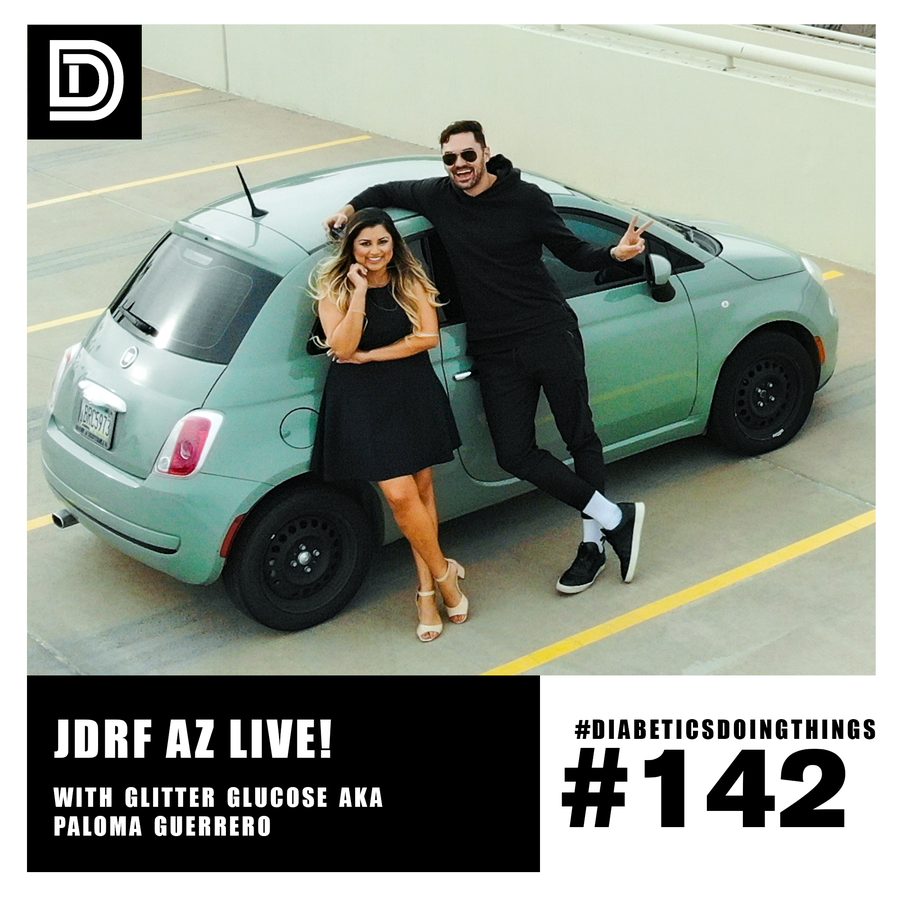
Since COVID-19 has us all social distancing, I’ve been missing events where I get to be around lots of people with Diabetes. One of the most recent events was in Phoenix, Arizona and JDRF AZ. They brought me in for two sessions, the first of which was a LIVE podcast interview with one of my personal favorite Diabetes influencers Glitter Glucose aka Paloma Guerrero.
Paloma was on the podcast back in 2017, and we have become great online friends ever since. In this podcast we share many of the stories from the Diabetes online community over the years, and Paloma gives us a behind the scenes look at the life of a Diabetes influencer!
These times can feel really isolating, so I’m glad that I have these recordings of what it’s like to be in such a supportive community.
Can’t wait until the next one! Until then, stay safe :)
Questions this episode answers
Who is Glitter Glucose?
Glitter Glucose is the online persona of Paloma Guerrero, a type 1 diabetes advocate and social media influencer based in Arizona who has lived with the condition for almost seven years.
What happened when Paloma Guerrero was diagnosed with type 1 diabetes?
Her primary care doctor diagnosed her, sent her to the pharmacy for insulin, and said he'd see her again in six months. A pharmacist ended up teaching her to use a syringe and vial, and she got proper care only after her sister urged her to see an endocrinologist.
Does Paloma Guerrero recommend using a CGM?
Yes. She says she initially resisted getting one but now wears a Libre sensor and says every person with diabetes needs a CGM.
How does Paloma Guerrero decide which brands to work with?
She says she says no far more often than yes, and only partners with brands she thinks will actually benefit the people who follow her, not just ones offering money.
Full transcript Searchable, with timestamps
Rob Howe: Hello ladies and gentlemen, Rob here again. Just a friendly reminder that if it is still March 2020 and you're listening to this episode in present time, I hope that you are at home and socially distant to help quell the spread of coronavirus. So that's the PSA. What's coming at you is something that I've been trying to do for a while and have made the decision to do a lot in 2020. Unfortunately, a lot of the events that I was going to do this at have been postponed, but don't worry, we'll continue to do them. Is a one-on-one interview with a local person with diabetes, local to a JDRF chapter, who also has a story to tell and has a sort of social media following. So this episode is with Paloma Guerrero, Glitter Glucose, as you guys know her, the queen of Instagram herself. And she and I sit down one-on-one for a little fireside chat at the JDRF Phoenix chapter, JDRF Arizona chapter, back in February. So this is a really cool episode. I did not expect this to be as fun and entertaining as it ended up being, but that's a little bit of what life with Paloma is like. Just always fun, bright, and full of energy and laughs. So I hope you guys enjoy this. This episode is presented without a sponsor. Again, I'm going to ask you guys to do your best to support diabetic-owned businesses during this time. Small business is being hit really hard in the United States. So if there's a way for you to support your favorite diabetic-owned businesses, please do so. I know there are a ton of them. Plus, we're still going to need tape. We're still going to need low snacks. We're still going to need pre-workout. We're still going to need designs to keep our pumps looking sharp and our CGMs matching our aesthetic. So please support a diabetic-owned business in lieu of a sponsorship of this episode. I hope you guys enjoy Paloma and I's chat. And if you are a fan of these live episodes, bring me to your JDRF chapter. Bring me to your ADA event. Let's make it happen. I'm doing more of these. Live podcasts are where it's at once we can all be in the same room again together. So if you want more of these, please get me in touch with your JDRF outreach manager, outreach coordinator, whoever, and let's make this thing happen. Okay. Enjoy this episode. Thank you guys for coming. My name is Rob Howe. I came here from Dallas today. So thanks to Wendy and you guys' awesome JDRF chapter for bringing me here. My podcast is called Diabetics Doing Things. I started it about five years ago. And my very special guest from the Phoenix area is Paloma Guerrero. Glitter Glucose, as many of you guys know her as. And today we're going to have a really just frank conversation about diabetes in social media and the just things that we've learned, the impact that it's had on our lives. And this episode will also be available on the Diabetics Doing Things podcast after today. So people who are not here can still benefit from the conversation we have today. And we'll definitely have time for Q&A at the end of the presentation. So, you can still hear me? Sorry. A little technical difficulties here with this hoodie that I insist on wearing.
Audience Member: So, cool.
Rob Howe: I'll give you a little bit of background on myself just so that you know that I have I guess. Fifteen years ago, I was a 6'5", very skinny kid, peeing a lot, losing weight rapidly, real tired, starting to sound familiar. I went out on New Year's Eve with a bunch of my friends and I think I peed 27 times because I started to keep count and I remember feeling really good about myself because I was chugging water and I was like wow I'm an athlete hydrated I am my coach is gonna be so high but this is so good and then the next morning I woke up and I was nauseous and my mom was like we got to go to the doctor and of course you know after that learned that I had diabetes type 1 diabetes and something that I didn't know at the time was that I had an awesome diagnosis experience, like one of the best ones that you can have. And in 2015, I started this podcast and I got to learn that my diagnosis experience was not the same as everyone else's. And one of the people who first made that really clear to me is Paloma. So today when J.D. asked asked me what sessions I'd like to do. I said, well, hey, I think there'd be no better opportunity than to interview one of Arizona's diabetes social media. So today we're going to talk a little bit about that. So yeah, I don't know. That's where I feel like we're going to get started. But Paloma, why don't you just, for those who don't know you, let's give, what's the, what's the elevator pitch?
Paloma Guerrero: So I'm Paloma, and I've been living with type 1 diabetes for almost seven years. and when I was diagnosed I felt so sad so alone I thought my life was over I felt like I was the only person on this earth living with type 1 and I just felt so isolated and finally after the two years I thought I'm tired of feeling like this I want better for my life I want better for myself and I created the persona of glitter glucose which was something that I felt allowed me to just speak freely about my diagnosis and what I was living with and thankfully there were thousands of people online who wanted to talk back with me and basically everything I've learned about diabetes is from my diabetes online and I just give them so much credit for how happy and healthy that I am today. And let's talk a little bit about this
Rob Howe: because I frequently call this time that we live in today the T1D renaissance. And that sort of just comes from a lot of different conversations I've had with people about, you saw out there at the vendor row and resource row, all the technology that's available for people with diabetes. Things that they told me when I was diagnosed were going to come and be available, CGMs linking to pumps and hybrid closed loop. There was a loop session in here earlier. Those things are available now. And on the other side, there's this community side of things with social media and just the rise of technology where we all have super powerful computers in our pockets that we never leave home without. I can't imagine the last time I left the house without my phone, I broke out in a sweat and had a mild anxiety attack. So we're very dependent on this technology. And there's a lot of rhetoric in the media about the downsides of social media. But I think one of the really big positives is this diabetes community that we've discovered and become a part of over the last few years. So for me, one of the things that I hear and I read at an ADA session, hopefully I don't get struck by lightning for mentioning ADA at a JDRF conference, but like, well, you know, there's a storm out there. It's raining in the valley. Like, so anything's possible at this point. And the study was a very simple survey that asked people, are you involved with diabetes blogs and social media, yes or no? And then what is your A1C? And 100% of the people who answered yes to the first one, that they were involved in diabetes blogs and social media, had a better A1C outcome than those who answered no. So it was right off the bat, and I am an idiot, like notable moron. So I was like in this scientific session going through all these boards, like this is way over my head, way above my pay grade, but I understand blogs and social media I understand this so and I've also seen it in my own life and so let's talk a little bit about that like where were you what was you let's talk about those days where you decided that you're going to be opt-in share your story and be a part of this diabetes community what were you going through personal life like diabetes wise what was happening I mean it's even
Paloma Guerrero: hard to think back about that time because it's probably one of the worst times of my life and just you know feeling so alone like no one understands you it's tough and I don't even know what moment I thought you know I need help I just was tired of feeling like SHIT all the time and thought what can I do I need help my doctor as Rob knows was not helpful in the slightest and I'll keep it short but I was diagnosed by my primary care and I you know had all the same symptoms as Rob peeing all the time super thirsty and all these symptoms are things that we can make excuses for you know I live in Arizona obviously I'm thirsty or you know a little bit of mild weight loss like right right right that I was probably happy about you know so I was having all those symptoms I googled everything it said type 1 diabetes and I didn't know anything about diabetes I thought diabetes meant I was fat I was lazy I ate too much sugar which as we all know is not the case so I went to the doctor and said I think I have diabetes he checked my blood sugar he's like you do go to the pharmacy and get insulin and I'll see you in six months so I was like okay this isn't like that big of a deal I guess if my doctor just sent me to go get insulin on my own and I remember like the going to the pharmacy and the pharmacist must have seen the look on my face when I got there because she was like do you know how to use this like I've never used a syringe or a vial and she actually took me into her back office and showed me how to draw insulin so with that kind of management and education and care of course I wasn't going to feel very good and at luckily at this time my sister was in nursing school and was starting to pick up on the idea like um I think we're not doing everything we can and I remember I went to my primary care and said um can I see an endo he's like I don't think you need it and I was like no just like refer me to an endo I went to the endo and she's like what's happening like you haven't been properly managed in the slightest you've been neglected and that's when I was like okay this is the beginning of my life turning
Rob Howe: around and that was hearing that for the first time a few years ago right Rob about the story so yeah we you've been on the podcast before one of the first episodes and hearing that story for me was like totally foreign I had that my experience was not like that at all so I started to learn as I started to interview more people that a diagnosis experience runs the gamut. It could be location-based, like people who are diagnosed in more rural areas or their primary care physician or at a hospital, especially if you're an adult versus a child. JDRF was present in my life with diabetes from day one because I was diagnosed at a children's hospital. I was 16, so I was kind of on the like, you know, starting to become an adult, but they were there from day one and and I when people ask me like how to get involved in the diabetes community I always say start with JDRF and start with your local chapter because of like you guys are here in this room like we're here all day today there's kids teens parents caretakers and we're here to learn more about diabetes so I got to give you guys props today for because you're like in the 1 percent of people with diabetes you're here on the weekend learning trying to better your life try to learn and connect with the community which is super, super important. But there's an entire other segment of people with diabetes who aren't here today and will never make it to this event necessarily. So for me, I was like, okay, well, how do we spread awareness about the different stories of people with diabetes and how they get diagnosed? So, you know, because I felt the exact opposite. I went in and like right at the very minute, like I have, and I always say this, and I'll say this in my presentation later today, hey, the first thing my doctors told me after I made it through, got it out of the emergency room, I got it put into the hospital, the endocrine care team came to me and said, hey, no matter what your dreams are for your life, they're still within reach as long as you take care of your diabetes. And for me, all I want to do is play basketball. I was like 16 years old and starting to kind of get pretty good. A lot of my friends teased me that I wasn't any good before I got diabetes, but afterwards it was like when I kind of went way up. and I remember this very beautiful nurse and maybe I was just 16 and just hormonal but she like gave me my first like dose of insulin I just like felt so good I was like yes whatever that is like give me more of that like that's that that's what's wrong I know that's what's wrong and they told me that though and so I filtered everything through okay what I want is to be an athlete I wanted to play college and professional basketball and that's what I wanted more than anything else, typical 16 year old. But the way through, the way to that was through diabetes care and management. And my doctors and their care team knew that if they dangled that cookie out or that carrot out for me that I could do what I wanted to do, that I would be more likely to stick with it. So if you take nothing else from today, like your dreams are valid, your child's dreams are valid, you will have to take care of your diabetes because there is not a cure yet, but organizations like JDRF are pushing towards that. but for now it is possible there are people doing things and so that was one of the reasons why I started this podcast is when we get home from the hospital usually one of the first things we do or sometimes we're in the room now with on our phones like Google hit the Google machine what do I like to do and then I try to find people with diabetes who are doing that for me in 2005 in the early days of Google which was like weird to think it's maybe ask Jeeves where my ass Jeevers at Yeah, there we go. Matt Vandervecht, who's back there, mentioned MapQuest yesterday, which was a fun thing from the past as well. Print out a MapQuest map. But all that to say is when people get home from their hospital or from their urgent care or wherever they get diagnosed, and they're looking for people doing things with diabetes, hopefully they find people
Paloma Guerrero: who've been on this podcast. I think me and Rob share this similar message that you don't want to get home from this traumatic experience in Google and see like all the bad things. I hope that they find my page which is bright and girly and fun and they find Rob's page which is about people getting out there living their lives and following their dreams. So let's talk a little bit about when
Rob Howe: you you know we talked about what was going on with your provider team. When you opted in and started to share your story what was there a moment or a moment that you remember or like a particular comment or a conversation that said hey I'm doing the right things like this is the
Paloma Guerrero: right place for me if you looked in my phone screenshots like I have screenshots from like 2015 2016 of people just being so sweet and so kind and I relate a lot to the little girls and so I have such a soft spot for those people and you know I created like for me what was important is that I didn't want to lose myself. I've always been girly and into fashion, and I didn't want, like, to be blanketed by, like, a medical disease, and so I wanted to shine through that, and I created, you know, my merchandise and such, and actually Vivian, a little girl from Houston, Texas, she is a little blonde, like, four-year-old wearing my shirt. That moment in my life is a moment I'm never going to forget because it's like I'm an adult I can deal with this you know I'm strong but seeing like a four-year-old who does the same things as me that was powerful
Rob Howe: and it's pretty amazing like at events like this we were just in the teen room so if you guys have kids who are here hey they were great because you never know what you're gonna get when you go in the teen room like as you know some days like my mom dragged me here like I don't want to be here like you know don't talk to me you're old but they were very cool and one of the things that always surprises me is how much diet fast diabetes makes you grow up because these kids are as you guys know they're on their own most of the day when they go to school or wherever they're going they have to make the decisions on their own and there's a little data scientists they're just back there taking real-world feedback applying math and different systems and like thinking about other qualitative data and then they're given themselves a dose and they're making adjustments. And I'm just so blown away by that. And being able and having access to that has been one of the biggest pleasures, I think, of going around and being able to be involved in the diabetes community. Because I didn't have that. I like to tell people I was way too cool and knew everything. So I never went to diabetes camp. Classic 16-year-old dude. All I wanted to do was play basketball and people leave me alone. but when when you see people who are have been impacted by someone sharing their story I think your story matters because it could be it may be today it may be 10 years from now somebody stumbles across a post or you know is looking for a person and they find them and that makes a huge difference in their life and for me my goal from the start for this podcast was help one person. And so I committed to doing 10 episodes. I learned that on iTunes at the time, and this is probably way different now because podcasts are everywhere, but at the time, 90% of the podcasts on iTunes only had three episodes because people get excited, they start it, and then they stop. And so I was like, okay, cool. Well, I'm going to beat three. I'm going to do 10. I'll do 10 episodes, and if one person says that something that they listen to helped them, then I'll keep doing it. Some days that person is me. Today I'll leave here today and I'll get on the plane and I'll sit down and I my cup will be so full of support, community, love, acceptance and that helps me and then also hopefully somebody today will take something positive out of you know one of these sessions and help you know their life with diabetes. So yeah with that I think the first thing like somebody reached out one person reached out in common she was like this was fun and I was like, yeah, this counts. We're going to keep on. I'll keep going. I can relate with that because
Paloma Guerrero: I started my Instagram so that I could benefit, so that I can learn. But it ended up quickly switching to, this is a community. We're all filling each other's cup and let's just keep it
Rob Howe: going. And I think that's, you know, going back to the positivity of this community, people ask like how to get started. Usually the place where most people start is by searching hashtag diabetes and just kind of going through. I'm seeing some heads nod in here. Also there are friends of mine I'm looking at the audience from the internet that I've never met in person who I like know because they tag me in their 69 blood sugars all the time because I told you earlier I warned you I'm an idiot and a moron so I love to laugh about dumb stuff. But for people who are interested in getting started like where how did you start that process I started googling and JDRF was one of the
Paloma Guerrero: first things that came up this event here like five years ago was the my first intro into the real life diabetes world and I mentioned this in the teen session but I remember the first time I saw someone else wearing the t-slim I'm like that's so weird like I've only seen that on my body like Like, what are you having? Why is it on your body? Like, this is my thing. And I remember, like, the first time I had a meal with someone who had to check their blood sugar first. And, you know, I remember, you know, back before I had a CGM, like, sitting down to eat, having to open my case, pricking my finger, getting the blood. That was something that I was never happy or excited to do. But seeing someone else near me and do the same thing, my heart was so full. like it just it's indescribable how good it feels to have someone understand you
Rob Howe: it is and I think I mean as much as I wish I could just retweet that like in this in real life but that's that's like an internet thing so let's give that a round of applause how about that there we go um for me I remember like being in the in the room with your kids earlier in the teens we probably had like 15 alarms go off in 45 minutes um and so we were talking about like turn up the volume. Like this is the place where we don't have to have that like you know I think it's a human reaction to be like like you know and not want to draw attention to yourself and they were talking about stories where alarms go off in class and you know if this may shock some of you but teens are mean to each other like hey yeah you could not pay me enough money to go back to seventh grade because I was tripping over my feet I was growing like every minute pretty much and people made fun of me a lot so you forget that like every day is life or death like about what your friends think about you and these moments can be really hard to get over. But in that room right now with all those alarms going off, people are like throwing juice boxes at each other and helping each other out. And the power of that I think is like tangible today. But that same energy and that same response is taking place online almost all the time. And which is the reason I'm here today. It's a reason that you're here.
Paloma Guerrero: How we know each other. It's how we know each other. I have so many people in this room that I love and care about and I met them online. And I remember you mentioned kind of before you had a
Rob Howe: CGM, one of my podcast guests works for advocacy for the ADA. So we were talking about her job. And we had this great episode. We hang up the interview or whatever, and we stopped the recording. And she goes, hey, Rob, I've been listening to your podcast, and you keep talking about how you don't have a CGM. And she's like, I'm here to tell you that that's dumb. And I was like, okay. So I had not, my philosophy on life up to that point, it was pretty much, If it ain't broke, don't fix it. I had a strong A1C. You know, I felt like my diabetes management was kind of under control, but she's like, no, no, this will change your life. And she was right. So she helped me get in touch with my, one of my reps and I got a CGM because of a person who I never would have known otherwise, who made me get over my own fears and my own comfortability and made a huge difference in my life. I remember playing my first basketball game with a CGM on and I always wondered what happened. And then I got to see it on the little chart afterwards on my phone and I was like wow this is unbelievable I have like validation for how I feel and I can plan better next time all because of telling my story and connecting with people so you never know like it could be an event like this it could be just a weird interaction or it could be somebody who's a diabetes expert or guru sharing some secrets um no I remember there I remember seeing a cgm on
Paloma Guerrero: somebody online I had no idea what it was I didn't know what a dexcom was and I saw it on someone I'm like what is that what are they wearing like why don't I know about this like should I have this and yeah two years later I wear the Libre but also I was like I don't want this I already wear insulin pump I don't need anything else but I 1000% feel like every person with diabetes needs
Rob Howe: a CGM it's life changing and something that um JDRF talks about a lot when they're doing hospital visits for newly diagnosed is the relationship between. So you have your caregiver, care provider, your medical team. For kids, you have parents. And as you guys know, I thought, because every time we make a joke about the kids, you guys laugh. Being a kid's tough, especially if you don't have diabetes. If you're a teenager, there's a lot of like, you don't understand me, mom. You'll never understand what I'm going through. Very teen angst. That was my best teen voice. Did that work? Okay, great. But having somebody in between who's not your doctor, who's not your mom, who's not your dad, but has diabetes can be a huge, it's just a life hack. It's like steroids for your care team because then they can ask Paloma about her CGM. What is it? Does she like it? They can learn about things from me. They can learn, you know, if they're interested in exercise, Matt and his team and other people like him are available to learn about diabetes strategies. And that didn't exist five years ago. And now it's just, like I said, it's just an ultimate, like, pouring gasoline on the fire of, like, what's the quickest way to finding balance with the life of diabetes is having real people that you can ask and get feedback from. Parents, too. You know, we are sounding boards for all kinds of people. Sometimes they don't have diabetes, but they have somebody in their life that does. And, you know, sometimes talking about diabetes all day can get a little bit old. I have diabetes. I have this diabetes podcast. I wear this diabetes sweatshirt. You know, occasionally that gets a little bit much to handle, but what really helps me get through it is knowing other people that are going through the same thing.
Paloma Guerrero: For sure. I think me and Rob have kind of a similar path. We used to talk about diabetes online. Like, that's all we would talk about. and at some point you know it was really great we connected with her followers but at some point even my followers were like okay we get it like we all have diabetes like what else about you and it's like diabetes brought us together but it's not you know why we're sticking around we're friends because you know we like this same music or this fashion or whatever makeup it may be 69 jokes that's what right but no I think it's important to find a reason to connect and feel like I have that but I don't have to talk to you about like diabetes diabetes diabetes all day for
Rob Howe: us to be friends and connect do you remember like the first time so obviously like you like you said we all have diabetes what what are some of the interactions that stand out for you they're like wow these people are my friends they're not just other people with diabetes like I really connect
Paloma Guerrero: with them well my mom always makes fun of this because I'll post like a pic like I would post a picture about me talking about diabetes and everyone's like but how'd you curl your hair and i'm like okay i guess we're moving on from that and people with diabetes curl their hair right yes and also you know brands that i my job is to be you know online and on social media and brands that i work with you know slowly the diabetes brands started going to the background and um big mainstream brands i mean my biggest company that i've ever worked with is crest toothpaste and at first I thought like does this make sense and I thought about it like people with diabetes brush their teeth too you know some of you guys
Rob Howe: maybe not yeah I think it's a it's really interesting that this brought us all together it's like you'll probably heard it today JDRF does it talks about a lot it's like the best club you never wanted to be a part of but there's other things like we're people outside of that I think that's something that both Paloma and I really strive for is, yes, we have diabetes, but my goal for my life, even before I had it, was not to be an awesome person with diabetes. It was to do XYZ. And so I tried to manage, like, A, prioritize my care and, you know, connect with people and learn from people in the community, but also prioritize living my life. And sometimes that means I talk more about diabetes. Sometimes that means I don't say that I have diabetes when I want to go skydiving, because I'm going to jump out of that plane and whatever happens, happens at that point. Plenty of funny stories around that because I had my insulin pump tucked into my compression gear underneath the flight suit, got a low alarm as we're getting on the plane, chugged some orange juice. Yeah, wild. Don't recommend that. It's maybe off-label treatment. So for you guys, I'd love to, we have about 15 minutes left in this session. I'd love to get some Q&A maybe about where to get started. any questions that you guys have for us. Otherwise, I can just keep rambling because this is what I do. Usually, I'll tell you guys how this works. One person asks, and then everybody gets confident, and then we all ask. So thank you for asking first. Hello. Yeah, so the question is, how do you start a podcast? I'll also lump in social media in there. So the advice that I give typically is just get started. Again, and changing your metrics. Like, we just passed a million downloads on the podcast all the time at the end of last year. And that sounds great. Like, when you start off day one, yeah, I want a million downloads. Heck, yeah, that sounds awesome. But helping one person with the goal from the start, and so that helped me in the beginning. So I would say, like, everybody here, a couple different things. Number one, your story matters. You know how many times I've talked to people coming on the podcast, and like, I don't know if I'm that interesting, and those episodes were like, almost every time someone tells me that, those episodes are the most played and most downloaded, because everybody's story matters, and it could matter to somebody that you don't even know at this point, or you don't even know is going to see you, so I would say like, vulnerability is hard sometimes, especially talking about struggles, specifically around like, alpha male dudes, I have a lot of dudes with diabetes that follow me, and don't talk about it at all, they like, don't want people to know they follow me and all this stuff. But every now and then they'll... They don't follow me. Yeah, well. They should. They should. They just don't have as many questions about hair, I think, probably. But they should. Whatever you guys... Whatever the weather curled my hair super crazy this morning, I can do some content about that. But yeah, so I would say your story matters. Start with one. If it's a podcast, great. It's super easy to start a podcast today. Way easier than it was five years ago. Just Google it. hit that Google machine, or if it's YouTube, or it's TikTok, or it's just writing a blog, or, you know, we have snail mail out there. Organizations like Beyond Type 1 can connect you with a, like, a pen pal, which sounds antiquated, but it's, like, super impactful, and, like, also, there's a pen pal story. These pen pals got married. They, like, met each other. One was from Cleveland, and one was from the England, and they got married. Yeah, Sid and Andrew, they just had their first baby, so it's, like you never know what opting into this community could do for your life.
Paloma Guerrero: Yeah.
Rob Howe: Always be closing. You know, it's just coffee, no coffee till I'm closing deals, baby. No, I have this, I'll let Paloma handle it. I'm a jokester. So yeah, I get on my big 90s phone and I wear like a wide lapel suit and I'm just Alec Baldwin, just like you know f you that's my name and like hey i'm there oh my gosh no me and rob often talk
Paloma Guerrero: about business together um i feel like i have built my brand up to be you know the whole reason i am who i am and have what i have is because of the people that follow me so there's no way i would ever compromise what these people have given me for money or for a brand that doesn't make sense so I say no way more than I say yes but I also reach out to people who I think are a good fit for me so I love Dillard's we went yesterday we went to Dillard's yesterday I have been trying to get dillard's to notice me forever and finally i have penetrated slightly into the whole dillard's
Rob Howe: world so we've got a mole in dillard's we've been there the time is coming the day of reckoning is
Paloma Guerrero: coming dillard's but the way i go about it is what can i offer this company because at the end of the day it's not really about me they are in the reason they're reaching out to me is because the eyes that are on me. So it's like, okay, what does it make sense? How is this going to benefit my followers? Are they even going to care to see this? Will this help them? And that's step one.
Rob Howe: Yeah, I think my serious answer is my professional background and what I, my career is advertising. So I know how to talk to brands. I believe that all brands should be bled dry of their money and given to creators. No, I don't really do that. But I know how to, I know how to sell the advertising piece. I try to find brands that not only are right for me, even with the hoodies that I made, I was telling somebody earlier, I spent a lot of time making sure that this was a hoodie that I would be comfortable wearing. And I didn't want to create something or be a part of something that didn't feel authentic to me. Because again, I didn't want to sell something, didn't want to sell myself out for money. And, you know, I think that there's a lot to be said about authenticity and transparency. So I love Paloma shares a lot of emails when she turns companies down. So every time I turn down a company, I always think of Paloma. So it's funny. It's like, you know, being nice, like, hey, this isn't right for me. But also, like, hey, like, I would love to work with this company. A lot of them is just cold outreach and just, like, sticking with it. There's really no magic formula to this or diabetes. It's, like, just doing the good things. Step by step. Step by step, day by day. Stay hydrated. That's a big part of it. Get a good night's sleep. You know, the basics.
Paloma Guerrero: Yeah.
Rob Howe: Great. So for those listening at home, the question is like, how do we navigate, you know, good advice from bad advice and then also when you're dealing with people uh and you're sharing your story how do you you know make sure that it's like this is what works for me not necessarily if somebody disagrees you know how do you handle that how do you handle people like that well
Paloma Guerrero: technically i don't follow advice i'm just watching what other people's are what other people are doing and thinking could that help me are there baby steps i can take and see you know without putting myself in a bad position and I definitely don't give any medical advice because I'm no professional I'm not in a position to be able to give medical advice but we all do receive unsolicited advice about a cure or this pill helps this or if you get you guys take your cinnamon
Rob Howe: this morning right right we should have been hanging out the front yeah I think there's a so regarding unsolicited advice or you know when you use a hashtag sometimes people are just commenting and making ignorant comments. There's a few things that I like to remember. I remember when the doctor told me I have type 1 diabetes and I remember what I thought and I had no idea what that meant. So my experience in my life up to that point, I had never come across type 1 diabetes. I knew maybe one person that had it but nothing about what their life was like. So I try to make sure that I judge like, okay, is this person just new? And like see where they are. I try not to compare my day of like, you know, 15 years and now five years in the diabetes community with their knowledge. So there's that. On the other side, it's like, yeah, I also try not to give medical advice. There are amazing diabetes health coaches for all different walks of life. There's one right behind you who can help you make strategies to achieve better outcomes and live the life that you want. I'm not necessarily one of those, but I point people to those people a lot who are looking for that. And one time, this guy commented on a post that I made about Slurpees, and he was like, why don't you just have the Slurpee, bro? And I was like, I didn't want the Slurpee, dude. Unfollow. And he got all upset. And so I was like, unfollow me, dude. And if he ever runs into me, then I'll, you know, maybe we can talk about it or not. I don't know. But yeah, it's like sometimes people, it's just like, this is a public profile. I'm here to help people. And hopefully, most people, I'd say like 99.9% of the feedback, comments, community are positive. And try not to let the one negative really throw a wrench in your system. Also, one of the benefits, I think, on at least Instagram, I know probably on Twitter and Facebook, there's always like a little bit of like the gurus and maybe some questionable tactics or like, you know, things. But for the most part, I'd say like Instagram is very positive. There's a lot of people you can ask about things. And reputation goes a long way. A recommendation from somebody like Paloma or in a lot of the other people in this room, like Matt, myself, we have put time in to make sure that the things that we're recommending are right for people and good. So they're a good sounding board. For parents, ask questions. If you guys are getting sold something or a doctor's pushing or you came across something and need more information, you have direct access to a lot of people who have a lot of knowledge and put a lot of time in. So it's a good way to just at least get some advice from the sounding board. Great question. Yawn, bad body language back there. I'm just kidding. Sorry, that's just my...
Paloma Guerrero: I thought she was gonna ask a question.
Rob Howe: Yes, we got her to ask a question. This is so good. I think we have like 167. So my schedule is not as... I'm not a very disciplined person sometimes. So I kind of, I don't know, it's just a weird, honest thing.
Paloma Guerrero: What episode was I like in the beginning?
Rob Howe: I think you were like 15, I think. So 15. And this will be like 175 probably.
Paloma Guerrero: I remember the first time, me and Rob have come up in this community at the same time. I remember I got off of work and had to do the podcast.
Rob Howe: You still had your day job.
Paloma Guerrero: Yes, I was working in retail and had to make time and come home and record this and now like this is my life. So my life has done a one whatever it is change.
Rob Howe: Yeah, me too. I think like since I started I had a job. I quit my job. I started my own agency.
Paloma Guerrero: I think like we had a we had a hard time coordinating because we both had day jobs.
Rob Howe: Yeah, and I think about that too is like in the beginning it was easy. I had no listeners. I had no guests. I had no employees and like now it's like I still have those things but now I have like all of that
Paloma Guerrero: it's like it's sometimes up to the back. And our cats made an appearance on the podcast too.
Rob Howe: People love cats. I don't know if you guys know this. Pro tip social media cats. Big shout out Michael J. Fox. My cat. My guy. I want to share the question.
Audience Member: This is a question for someone about what is a special aid for a person who's a person who's a person?
Rob Howe: Great question. I'm going to repeat the question. What is a typical day like for a social media influencer?
Paloma Guerrero: I'm so glad you asked because so many people think it's just about taking pretty pictures and posting it up, but my days are start to finish. I wake up, check emails, I'm talking with people from the East Coast, so they're already awake. I have deadlines. I'm negotiating. I'm planning. I'm planning events. and the posting pictures part of it is such a small part. But actually, that's fun for me because my background before this was in fashion. So like I said, I didn't want to lose that. So I have a professional photographer who shoots all my photos. And for a photo shoot day, I need six outfits. I need to put top to bottom my hair, my outfit, what products I'm going to be promoting, what message I want to send. and these are like I have my pictures set up for three months from now um and you know I make a Pinterest board with my photographer she doesn't have diabetes so she doesn't you know she just follows my lead sometimes she'll like see like my site or something for my insulin pump she's like should we use this as a prop I'm like that's a cartridge like it doesn't make sense but um yeah Yeah, most of the time I'm on my computer, I'm on the phone, I'm talking with brands, seeing how we can spread the message. I'm talking with, you know, our local hospital, how I can go in and talk to the teens. I work a lot with the Latino community, which unfortunately in the Valley is not really online. So I speak Spanish, so I use that in my everyday. But really at the core of it, I'm just a girl who happens to have diabetes, and I want people to know what diabetes really looks like. And, you know, I, when I first was diagnosed, I hated telling someone that I had diabetes because immediately that word diabetes had like such a negative connotation to it. And so I always felt on edge. So when I would say I had diabetes, people would like, I immediately had to defend myself. It's not what you think. It's not the stereotype. It's not what you've seen on TV. And at the end of the day, all I'm trying to do is show people what the truth is with diabetes and what it really looks like
Rob Howe: and I will give Paloma a ton of credit um and then she did not pay me to say this but you can it's easy to look at Paloma's profile and take it at face value it's like this is a pretty pretty girl taking pretty pictures and it's all glitter and sparkles and it's like oh it seems like that's probably a persona it's not that is actually who Paloma is like it's very authentic, very genuine, and that's why people have such a strong relationship with her. She, I mean, and no offense to my followers, I love you guys, but she loves them more than I love you guys, so no offense. I still love you guys. You're awesome, but the relationship that Paloma has with her community is very personal. It has a, it's very transparent and very open, and I think
Paloma Guerrero: that's why she's so good at what she does. Thank you. Oh my gosh, that's so sweet, but no, I feel like like lee right here like i feel like i know you you know i've seen your face pop up i post something i know you're going to be there to support me and i feel that way about so many people who follow me um i'm like these are my friends like when i talk to someone who doesn't know about really what i do like i don't say my followers i'm like oh my friends and they're like oh how do you know that person in new zealand i'm like well kind of my friend you know um but like I said I would not be who I am today and this happy and this healthy if I didn't have all these people surrounding me. Thanks for the nice words Rob.
Rob Howe: What would you offer if you would be proudest moment or milestone with your brain? Proudest moment or milestone with your brain? You have one yet? Go ahead I'll think about mine.
Paloma Guerrero: um well i'm not married anymore but when i didn't get married um i posted a photo checking my blood sugar in my wedding dress and that was just like whatever you know this is what i do but when i posted it the amount of moms around the world who were like bawling and telling me like you know they see their little girl and worry and wonder are they going to be okay are they gonna find someone to love them are they gonna you know thrive and and wear the white wedding dress and all that and when they saw my photo they saw their daughter and that was just
Rob Howe: life changing for me that's really beautiful um I'm gonna share something that's much more stupid. There's been some awesome, make no mistake, I live an insanely cool, wild, stupid, dumb life that because of people of the view and diabetes has given me this amazing focus for helping people and I'm very grateful for that. Would I give it back? Yeah, absolutely. If anybody wants to buy it, I'll do it. You can have it. But I was on a panel like this a little over a year ago and somebody asked a question like what are your favorite things like what your favorite moments and I was feeling a little spicy and so I said you know I love when people share their 69 blood sugars with me that makes me laugh like before like a week before one of my friends who I actually my actual friend in person that I know put his 69 blood sugar on my wall on Facebook Facebook too guys but it's so it was like not a public thing not like diabetes community related just like a funny And it made me laugh so much. I just liked it. And I commented nice, of course. And so that panel went live. That day, one of the panelists, Chris Ruden, had a 69 blood sugar and posted it. I posted the podcast. Since then, over 2,500 people have tagged me in their 69 blood sugars. And I've made some sort of weird stained it's been a while joke or Fast and the Furious joke. And Dave is back there as one of my 69 MVPs for sure. and it's stupid and like let's be let's be real hypoglycemia is scary uh and like you know i there was a like a viral post from another podcast the beta cell podcast last week about like every night somebody with diabetes goes to sleep and we want we don't know if we're going to wake up like that but i mean pretty much everybody does that but diabetes is like a lot of risk right and you can choose to live in fear uh and i have chosen to banish fear from my life and uh so my rules are uh tag me or treat then tag uh so fix that low blood sugar let's have a laugh and i for sure will share it and make some dumb joke um because that is who i am uh and i think that's just like i don't know that makes me feel so close to people who are like you know what my daughter had a 69 blood sugar today on her Dexcom Share and i'm gonna share it with you because i think it's dumb and i and you know i don't get to laugh about diabetes very much and here we are so that's my
Paloma Guerrero: When you first told me about that, I was like, I'm not participating in that. And then one day you got me. I shared it. I shared it.
Rob Howe: I win people over all the time. They roll their eyes. They think it's dumb. I also do. But when you catch that 69, people's friends are like, hey, you need to tag Rob Howe in that. People send me screenshots of text message conversations. I don't know. So to me, that was just like, I might as well have been beamed up to space after that, man. Like, I found my purpose. I was living on cloud nine. I think we're coming up on time. We have two minutes. So maybe we can take one last question before we wrap up, if anybody has one. Yeah. Yeah, so you guys talk a lot about how, you know, good social media is to bring that together to this idea. but I assume, this is so rare, most of your friends don't have diabetes. They don't know about diabetes. But what advice would you give someone to bring someone into your world? Do you want to tell them why or why do I'm considered person by person? So just in general advice on that? First of all, great question. So yeah, most of my friends don't have diabetes in the real world. Most of my physical interactions, like people who are actually in my, none of my employees have diabetes. Like, none of my business partner is with me every day. He doesn't have diabetes. But the thing I like the most about it, I think, is that it lets your friends off the hook, in a way, to be your support system. Because you have this, like, online support system of people who are knowing what you're going through. And that has made me more patient. It's made me more, given me a lot more room for people that don't know anything about diabetes to make mistakes or to ask questions. It's given me a capacity to be a better friend to them in that way. because I, for a long time, 10 years, for 10 years, I didn't talk about diabetes. One of my teammates in college who was a very sweet guy, I like blew up at him one day for asking a very simple question about testing my blood sugar. And I was very rude, and like I still think about that interaction. And we were fine after that. We moved past it. We were 18. But I remember that moment for people who are new, and they come in, or people that I interact with that don't have diabetes. And I think it's like, you know, I know none of my friends are like, oh, man, Rob talks about diabetes too much, blah, blah, blah. But they care. They care. And they learn a lot. I'm like, oh, I didn't know. Some of my friends are like, wow, I didn't know that you did that. And they spend a lot of time with me. And so I think, you know, Stanford recently did a study. It's like we make 180 extra decisions a day if you have type 1 diabetes than an average person. And that's just related to diabetes care. And so those types of things are like wow like I didn't realize that you You know after you know before a meeting you got to figure out what your blood sugar is So it doesn't you know bottom out or before you know how do you do this when you travel? What's you know? How do you go through a metal detector with your pump? And how do you exercise like you know? I never even considered that And I think that's the cool part for me is like when I get to share like really Intricate details about a life with diabetes to somebody who doesn't know that that happens and they're like wow Like I didn't know that I took that for granted for myself because I don't have to manage I think that's a that's where I would start it's a long yeah it's eye-opening for them and I think
Paloma Guerrero: not only does it allow them to appreciate you know assess people but I think it makes them more patient and think about others and be more empathetic just in general in the world because you never know what people are dealing with like I could you know you might see me you might see Robin think everything's all good our life's easy and you know we get down to the nitty-gritty of diabetes and people are like wow I didn't know that so hopefully by educating them they not only look at us differently but they just look at the world differently yeah and I guess the way that
Rob Howe: I'll that I'll close is my life is better because I opted in and told my story I have that are in this room and all around the world and all around the country that have made it easy to easier to share my burden diabetes is still hard you know I still sometimes will go to the gym and I'll be like, hey, yeah, I made it to the gym, and I have a little blood sugar. It's like, oh, I don't have my orange juice. I got to go down to the gym. It's like, oh, you know, 45 minutes go by, and it's like, wow, diabetes sucks. For sure it does. That's OK to say that it's super great, but it can be. And there are people that know what you're going through and can help. And I thank you guys for bringing it up today and for continuing to support all the stuff we do. Definitely follow Paloma, if you don't already, at Glitter Glucose. And my podcast is Diabetics Doing Things, and I'm Rob Howe on Instagram, RobHowe21, but I'm very online. It's easy to find me. I'll talk to somebody and yeah.
Paloma Guerrero: Thank you guys.
Rob Howe: Thank you. So there it is, another live episode in the books. If you, again, would like me to come do one of these at your local chapter, at your event, get in touch. Let's make it happen. I'm a very easy person to find. You found this podcast. You can find me online or send me an email rob at diabeticsdoingthings.com. I'm planning on doing much more of these in the future once these events get rescheduled. So be on the lookout for more live pods coming your way 2020. And in the meantime, stay safe, wash those hands, wipe those butts. We'll talk soon.
About Audience
Paloma Guerrero is a type 1 diabetes advocate from Arizona known online as Glitter Glucose. She has lived with type 1 diabetes for almost seven years and works as a social media influencer within the diabetes community.