

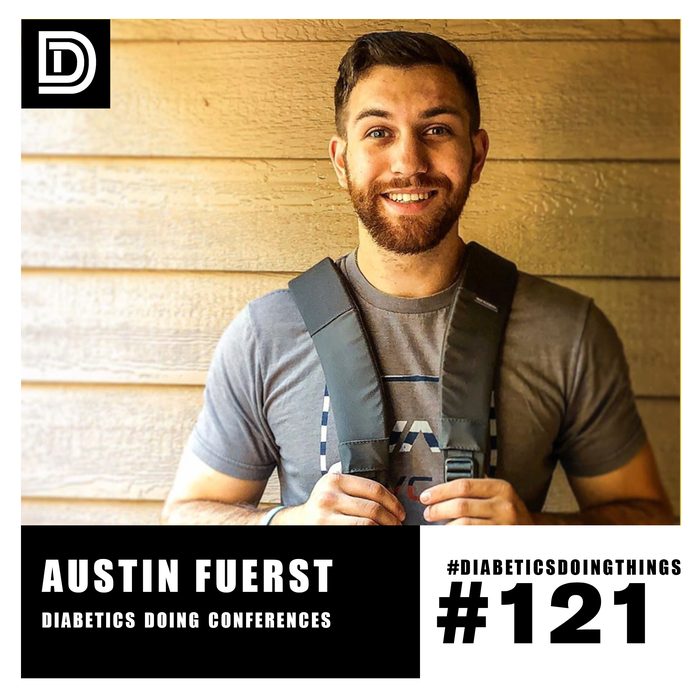
Diabetics Doing Conferences with Austin Fuerst
Episode summary
Austin Fuerst, known as Everyday T1D on Instagram, has lived with type 1 diabetes since early childhood and grew up in the Dallas area, where he and Rob Howe met and became close through diabetes events. Recorded on the floor of AADE 2019 in Houston, the conversation covers Austin's early independence with shots and carb counting, a rough stretch in middle school when he hid his blood sugar numbers from his parents, and how Camp Sweeney changed his relationship with the disease. He talks about starting his Instagram page on a whim while bored at a marketing job, being nominated for Male Diabetes Influencer of the Year at the Myabetic Awards, and meeting the people behind the companies that make his diabetes supplies.
Key takeaways
- Austin's parents let him give himself shots at age four and count his own carbs at age five, which he says built lifelong confidence in managing his own care.
- In middle school, Austin told his parents fake blood sugar numbers until an A1C of 12 exposed it, which he calls the biggest trouble he ever got into.
- Austin says Camp Sweeney was the best thing he ever did because it connected him with other kids who understood what he was going through.
- He started Everyday T1D on a whim while working a marketing job he hated, and says his first logo was "awful."
- Austin was nominated for Male Diabetes Influencer of the Year at the 2019 Myabetic Diabetes Awards.
Show notes
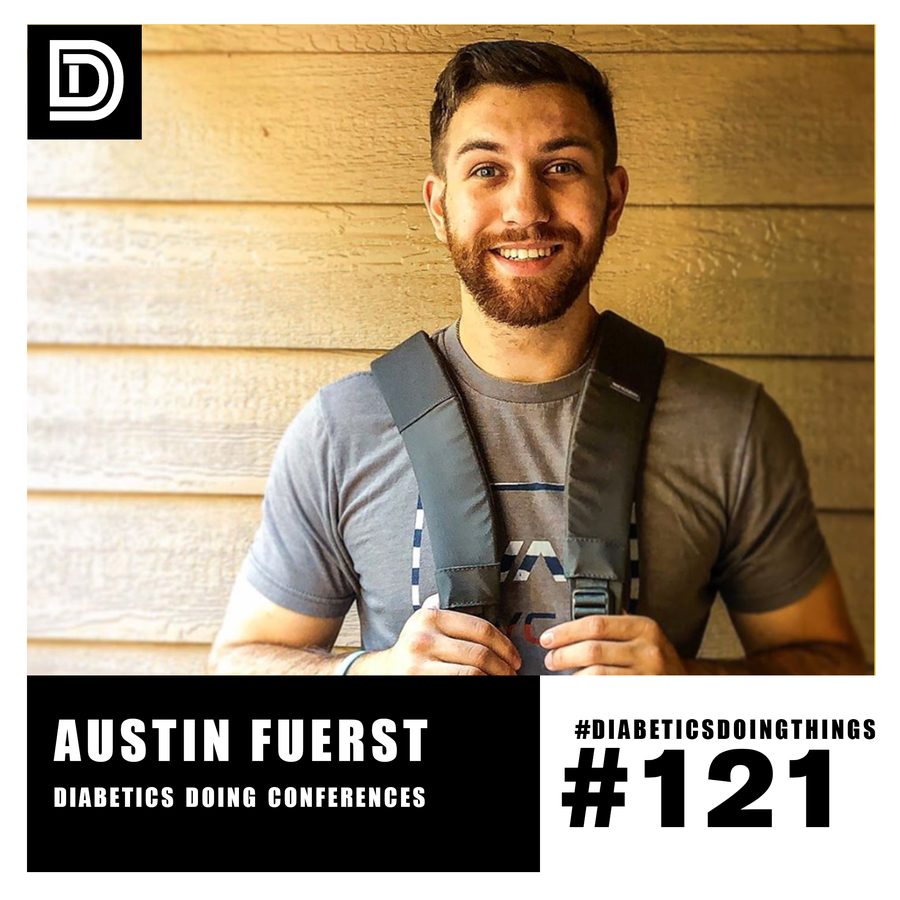
Austin Fuerst (@everyday_T1D on Instagram) and I sat down for a chat on the event floor of the American Association of Diabetes Educators 2019 conference in Houston Texas.
Austin has been T1D for 21 years, and has been sharing his Diabetes journey through Instagram since 2016. He and I both live in Dallas Texas and have been side by side at many events in Dallas over the years. I give him a hard time, but I really see him as a little brother, a very kind, thoughtful young man with a heart for helping people with Diabetes.
In this interview we dig in to what it’s like to be behind the scenes at large events like this, and goals Austin has for the Diabetes community and share some funny stories along the way. Be sure to give him a follow on Instagram.
This episode is sponsored by Skin Grip. Visit www.theskingrip.com and use code DDT at checkout to save 15% on Skin Grip adhesives! Support T1D founders, and support companies who support T1D Initiatives. I love Skin Grip so if you try it, let me know what you think!
Questions this episode answers
How old was Austin Fuerst when he was diagnosed with type 1 diabetes?
Austin says he was diagnosed as a toddler, around age two, and had lived with type 1 diabetes for 21 years by the time of this 2019 episode.
What is Camp Sweeney?
Camp Sweeney is the diabetes camp Austin attended from early childhood through his teens. He calls it the best thing he ever did because it let him meet other kids with type 1 and take a break from managing the disease on his own.
What is Everyday T1D?
Everyday T1D is Austin Fuerst's Instagram page, started on impulse while he was on a break from school and bored at a marketing job, where he shares his daily life and struggles with type 1 diabetes.
What insulin pump does Austin describe from his childhood?
He describes the Deltec Cozmo, an older pump with a built-in food menu that calculated carb counts for specific restaurant meals and had an attachable blood glucose meter.
Full transcript Searchable, with timestamps
Rob Howe: Welcome to the Diabetics Doing Things podcast. We've been telling the amazing stories of type 1 diabetics all across the world since 2015, and we have over a thousand years of living with T1D on the podcast. The interviews range from incredible feats to everyday victories, and we celebrate them all just the same. thanks for listening and if you want to get involved even further just send me an email at rob at diabeticsdoingthings.com you're getting out there you're more active or maybe you're just active all the time and it feels better because it's warm outside and it's not cold when you have to go to the gym but you also want to get the most life out of your sensors because let's face it, they're expensive. So you need to try SkinGrip adhesive patches. They're water resistant, latex free, and hypoallergenic, which is great because if you've worn other tapes, you know how irritating they can be in your skin. SkinGrip set out to fix all that. They have patches designed for Dexcom, Medtronic, Freestyle Libre, Omnipod, and various other patches for pump infusion sets. You can check them all out at theskingrip.com. We know there are tons of tape options out there and you need to pick the one that's best suited for your active lifestyle and you can save money. Listeners of this podcast can get 15% off their order if they use code DDT for diabetics doing things. Nice. If you order from theskingrip.com, that's T-H-E skingrip.com. 15% off your order if you use code DDT. What's going on everybody? Rob Howe here. Before we get into today's episode with Austin first, I just want to give you guys a little bit of an update on what's been going on with diabetics doing things. So as you guys may have noticed, we haven't posted any new episodes for most of summer since about June. I haven't posted any new episodes. We still have episodes of Tools of Type 1s left to go. So I'm going to post about 20 of those here in the next few weeks. So be on the lookout for new Tools of Type 1s content. But ultimately, I just was in a creative place where I felt a little bit burnt out and I was busy with some other projects, both on my agency business side and then traveling and speaking at various JDRF Type 1 Nation events, at a couple ADA diabetes camps, as well as my second ADA conference and AADE. So you kind of get the picture of me traveling all around. If you follow me on Instagram, you have seen that I've been kind of around everywhere. And just a lot of stuff going on in my personal life as well. So it took a few months just to have some balance. And I think definitely feel refocused on the podcast. and I've been accumulating a lot of contacts and people that I want to feature on the podcast here for the remainder of the year. So we are going strong. Diabetics Doing Things is not going anywhere. And actually, I am going to host the first ever Myabetic Diabetes Awards in Los Angeles this fall. So we will be supporting diabetic creators, YouTubers, Instagrammers, podcasters, and I get to be the host for that. So that's going to be a ton of fun and I'm really looking forward to it. I've also been working with some really awesome diabetes companies behind the scenes and you may never see some of the things that I've been working on with them, but just know that they are for the benefit of people with diabetes. I also have gotten to meet a staggering number of type 1 founders and entrepreneurs, which is my soft spot, I think, in the diabetes community. Those are my people and I'm going to be creating a lot of content for you guys around people with diabetes who are starting their own companies and working through a world where insurance and costs are very volatile. And I'm going to be telling those stories so that maybe you guys can glean a little bit from that and maybe, who knows, someone can hear it and be encouraged to start their own business. But first, I want to give you guys a little background on my buddy Austin who's coming up in this episode. He's Everyday T1D on Instagram. His name's Austin Fuerst. He's a good friend of mine. I give him a hard time, but I really do have a lot of love for him. He's like my little brother in diabetes, and he and I both live in Dallas, so we get to go to various events around the Dallas Fort Worth Metroplex together, and when we travel for various diabetes events, we're often flying on the same airports and planes and things like that. So I get to run into him everywhere, and he's just my figuratively, wow, learned to talk, figuratively and literally little brother in diabetes. So he's had type 1 for 21 years. He's an amazing resource, and I really like his perspective on highs and lows of everyday T1D. So without further ado, Everyday T1D, Diabetics Doing Conferences, live from the AADE conference for Austin Fuerst. Welcome back to the Diabetics Doing Things podcast. We're on site at AADE 2019 here in Houston, Texas. And I'm sitting here with Austin first. What's going on, man?
Austin Fuerst: Not much. Just enjoying the awesome environment that's out here in AADE 2019.
Rob Howe: It's pretty cool, right? Have you ever been to an event like this?
Austin Fuerst: No, I haven't. It's my first time being able to actually come to something as big as this. I've done a lot of other summits and different speaking engagements with that. but this is the biggest thing I've been to.
Rob Howe: Yeah, and I think, like, I may be the only person that says this, but this is, I think, the second biggest diabetes conference in the world behind ADA. And this is my second year here. I spoke last year in Baltimore. And this year, last night I was reffing the mySugr basketball game, so that was a lot of fun just to be on the sidelines. So I'm super excited to have you here. We actually flew down from Dallas yesterday with Jerry Brzozowski in his plane. What was that like?
Austin Fuerst: It was awesome. I thought it was a lot different than I expected it to be because I've never been in a plane that small before. But it was pretty smooth, no issues, because you hear all these little plane instances. And so that's what you immediately think of. But he's a great pilot, and it's a huge misconception. I got a lot of replies on social media because people are like, oh, I didn't know Diabetics could actually fly planes. But they can, as long as you go through the proper procedures, then you can fly private.
Rob Howe: Yeah. And like there's like I think it's small passenger aircraft. I think there's some sort of classification there. I'll defer to the experts. We'll talk about Jerry. I'm going to try to interview Jerry this weekend as well so we can talk a little bit about what that's like. Because actually I got an email today asking about from a woman whose husband is a pilot and he's diagnosed at age 32. So lots of good stuff there.
Austin Fuerst: Yeah.
Rob Howe: um before we get too deep into just chatting uh you've been on this podcast before in tools of type ones yes um you've never been on the long form end of it even though you and i are pretty good friends we live literally 50 miles max maybe 20 miles from each other and honestly i just think you're not interesting so that's why i never asked you you know most people don't i just kind of you just kind of exist yeah i'm like a cactus no one really likes me but you know that's not true i'm already calling BS on that. Uh, never know. So talk to me really quick. I mean, I don't want
Austin Fuerst: to spend too much time on, uh, yesteryear in the past. However, you were diagnosed very young.
Rob Howe: Yes. I was diagnosed at the age of two. So, I mean, let's talk a little bit about your early life with diabetes and you know, your family, uh, you know, you and I have had conversations with that offline before, but I think, you know, sharing that, I think that perspective now as a, a young man, you know, you'll be 25 or you're 24 now, you'll be 25 soon. You know, your first 20 years of diabetes and, you know, really your life is just getting started. So what do you remember about the early days and what was your life like?
Austin Fuerst: So when I was first diagnosed, I don't really remember much. A lot of it is what my parents have filled me in on. And there are things like I was a great patient, apparently. I didn't really cry or cake or scream whenever I needed.
Rob Howe: A big flex.
Austin Fuerst: Yeah, it was great. My mom would love that. Mom, if you're listening, you're welcome.
Rob Howe: If your mom doesn't listen to this podcast, I'm going to take it as a personal affront. Hi, Mrs. First.
Austin Fuerst: She likes you. She'll listen to it. I don't remember much from my early, early years, But as I got older, around four is when I wanted to learn how to give myself shots. So my parents gave me the ability to give myself shots. They would obviously dose for me because I didn't have that ability yet. But so I started giving myself shots at the age of four. And then when I turned five, I wanted to learn how to count carbs and dose my insulin. And so that's what they taught me. And so from a very early age, they gave me the ability to be independent with my diabetes. and let me kind of take the reins as much as a five-year-old can.
Rob Howe: And I've heard you talk and answer questions at events before about that type of mentality. How important do you think it is to give kids the freedom, and especially if they're asking, if they're interested. Obviously, it depends on the child. But how important was it for you at that age to be able to be independent?
Austin Fuerst: It was, I think it was a huge mindset trend that has continued in my life from that day forward because it gives me the ability to know and have faith and trust in myself that I have the ability to do this and take care of myself and control this disease, especially from a very young age. It's a very strong mental game, that world of living with diabetes. So I think it was really, really important having that mindset and the capability. And so from my observations, I've noticed a lot of times parents are caregivers by trade, and they want to take care of their kids. But there are different ways to take care of your kid, and one of those ways is preparing them for the future Sure. Because when they turn 18, they're not in the house. Right. They, and so if you take care of them from day one to day 18 or year 18, I guess, then when they're on their own, they're going to be like, oh, how do I do this? Right. And so I think it's really important to prepare rather than, yeah, then overly kind of coddle them or baby them. Yeah, definitely. It's interesting.
Rob Howe: I've spent for the first time, and I know I want to hear your thoughts on diabetes camp, But for the first time this year, this summer, I was at Camp Colorado and then Camp Montana with the American Diabetes Association. And, you know, you as a kid went to Camp Sweeney really all the way through. And a big part of their program is independence. And it's also like independence from your parents and kind of getting out of the house and giving them a little bit of a break as well. What are your thoughts on like Diabetes Camp for kids and like the impact that it had on your life? and the friends that you made as well as just the learning things and the community aspect?
Austin Fuerst: So going to diabetes camp was probably the best thing I ever did. I was always very independent with my diabetes, but I never met really any other diabetics my age. and so the ability to go to this place for x amount of time was huge in it in order to find people that your own age that are going through exactly what you're going through and know how you feel about these things it was amazing because a lot of time with diabetes it's i talk about it all the time it's an invisible disease if you look at me you don't know i have diabetes. If you look, Rob, you don't know he has diabetes. And so it can be very isolating. And that can lead to burnout, depression, and a lot of other things that are not the greatest mindset or things that happen. And so it was really, really cool to meet all these friends and a lot of these people, because when you meet someone with diabetes, you instantly have that connection with them. It's like, unless, I mean, regardless of what kind of person they are, where their background who they're from um you have just that immediate connection and you can really have strong bond and so to have that from a young age when i could email or text or call all these people have had an issue or i i needed someone to lean on because i was going through diabetes burnout is huge and it's it's really cool to be able to rely on and like i can text you or call you if i need anything it's it's awesome it's a game changer well i blocked your
Rob Howe: number. So, um, no, but I agree with you. I think, uh, especially in the days before social media, because it's really only been in the last five years or so where that's been available and to connect with people who were outside. I think before that last 10 years in the blog world, five years in social media, what have you. Um, so now that kind of transitioned me into my question for you, like with your life with diabetes over the years, uh, obviously now you have everyday T1D, your platform for living your life with diabetes. Did you, I mean, A, there's no way to ask like, oh, did you ever think you would make it to this point or whatever because that didn't exist and there's no way you could have planned it. But from the day one, you starting Everyday T1D to today and even before that, like how's your life with diabetes changed and your relationship with diabetes changed over the years?
Austin Fuerst: so diabetes has been um as if you look at a dexcom chart it's been a roller coaster so when i was around early high school or yeah early high school late middle school that was probably the hardest time for me in diabetes i would just check my blood or i wouldn't even check my blood sugar i would just tell my parents what i thought they wanted to hear number wise they bake oh austin what's your blood sugar i'll be go i was 120 and then dinner what austin what's your blood sugar oh i was 83 and they bake oh he's doing great and at the time i had an insulin pump called the Deltec Cozmo which was the best insulin pump ever it's an incredible name yeah it's awesome
Rob Howe: i miss it but you talked about that before but i i want to i want you to continue on this but like
Austin Fuerst: what made that Deltec pump so good so the Deltec pump was really really cool one because it was unique and it looked different from uh the Medtronic and the Animas pumps which were just like little boxes this one had a contour and was a curvature it was awesome but the real thing that set it apart was that it had a built-in food menu so I could use the at the time it was like infrared system loading to put on different like restaurants or foods and it had a stock menu too but so i could put in say chick-fil-a and i'd go into the menu go to the food menu go to chick-fil-a and then find the meal that i was about to eat and it would have the carb count for me and i'd press the enter button and it would add it to that carb count to the bullet screen and then it also had an attachable meter it was a freestyle meter i believe and it was like super thin, just kind of screwed on the back and you could test your blood sugar on that and it would go straight to the pump. So it was basically the kind of like the Omnipod is now, but it was,
Rob Howe: it was awesome. That was a game changer for me. Yeah. It's always funny, interesting to hear you talk about older technology because most people like myself, I didn't even know that that existed and how would I, I was diagnosed after it was already like out of commission. So it's kind of cool to just see like things that were around that were a big deal to you that I'll never know about. So yeah, anyway, I interrupted you. You were talking about that pump as part of your diabetes
Austin Fuerst: journey. Yeah. So that pump was so cool, but I was at the age that I, I was going through that hard time of diabetes, that, that, um, kind of puberty age where I just, I didn't want to have diabetes. I didn't want to be different. My voice was already cracking at enough as was, and I was just a weird kid.
Rob Howe: Yeah, puberty was tough for me too, bro. I get it.
Austin Fuerst: I'm still a weird kid.
Rob Howe: Yeah, you are.
Austin Fuerst: Still going for puberty 10 years later.
Rob Howe: That's true too.
Austin Fuerst: But so I just didn't want to be different. I didn't want diabetes to keep me from doing things. Diabetics doing things? Yeah, exactly. But it was more like if I wanted to spend the night at a friend's house, I couldn't do that because my friend's parents didn't want to have to take care of me. So that was really, really tough for me.
Rob Howe: I mean, I feel like in some ways, whether they actually experience that or not, or like the anxiety of being, because it really is rejection, right?
Austin Fuerst: Yeah.
Rob Howe: Or somebody who doesn't want to take on the responsibility and you feel like a burden.
Austin Fuerst: Yeah.
Rob Howe: Which I think is easy to slip into.
Austin Fuerst: Yes.
Rob Howe: Both in career places or chasing dreams or playing sports or whatever the case is, feeling different feels uncomfortable and a lot of times negative. How'd you deal with that?
Austin Fuerst: so at the time I I didn't deal with it very well I just kind of made it worse in a way because I just rejected the fact that I had diabetes I'm like oh yeah if I pretend I don't have diabetes then I won't have it it's like saying putting your hand over your eyes and saying if I close my eyes no one can see me but obviously I'm standing right there and so it was a really unhealthy way of coping with it and it got to the point where i went to the endo and they're like hey so uh your a1c is like 12 like what's going on man these numbers don't match up and i mean you can lie to your parents as much as you want but you can't no you can't beat numbers i mean yeah numbers don't lie so that was a really um big awakening one because got caught and I'm so I was a really good kid and like I didn't get in trouble at all until that was like the most trouble I've ever been in but what was really hard was how disappointed my parents were because they had taught me everything I knew and and I raised me to be the best diabetic I could be I guess the best person I could be as most parents do but I had let them down because I They felt like I kind of betrayed them and was lying to them about my numbers and all that. And so that was really, really tough because regardless of your numbers, that isn't going to change the fact that your parents love you. You know, it's something that is not a determining factor. Like my parents will only love me if my blood sugar is between 100 and 150.
Rob Howe: Yeah, but you kind of assign a self-worth to your blood sugars. I think that's something that even as adults, a lot of people are guilty of is that if they go through even just a day or a short amount of time with a blood sugar, they have negative feelings with it. You know, you can it can be a day ruiner. And certainly I have high blood sugars had one bad one yesterday that I felt crappy from. I felt like shit. Yeah. And so but I think it's, again, your mindset. And Chris Rudin talked about that on this podcast not long ago is like, you know, whatever relationship you have with a high blood sugar. And so how do you, you know, a lot of people, I think, worry about or they talk about teens with diabetes with exactly what you're talking about, kind of rejecting the idea that they have it. And, you know, I like the metaphor you use of, like, closing your eyes and pretending you're invisible.
Austin Fuerst: Yeah.
Rob Howe: It doesn't change the fact that you're actually here. So when did things start to change for you?
Austin Fuerst: So it got to change when I started getting into high school. And, again, this goes back to Camp Sweeney. so I was middle school like elementary school through middle school I just went because it was so fun I didn't have to worry about diabetes I could just kind of do whatever and the really cool thing is they literally take diabetes out of the equation they have a medical professional staff and doctors that do all the dosing all the all the testing all everything so you don't have to think about diabetes all you have to do is check your blood sugar in your cabin and make sure you You tell someone when you're low or when you're high, they'll check your blood sugar and take care of you, which is awesome. And so I just went because it was a break from diabetes. It was really cool. But once I got into high school and kind of got into an older, I guess, mental capacity, I realized.
Rob Howe: Starting to grow up.
Austin Fuerst: Yeah, there you go. So I realized that what they were not preaching, but what was being taught is that diabetes isn't a defining factor of you. And the ways that you can cope with it are not necessarily by rejecting it, but by looking for help and hope through friendships. because if you have a friend with diabetes, they get you, and they can help you through those tough times and those dark ages that you're going through.
Rob Howe: Do you remember your first real friend with diabetes? Maybe you met at camp and were pen pals or email. I know you have a lot of friends who are type 1 that you're still close with. And I think it's hard to explain. I mean, I'm sure there are people who listen to this podcast or who are on social media who are starting to connect with the community, but they don't have a face-to-face diabetes friend, a diabody, or whatever you call it. What do you, what was that like? And how do you explain that? Because it really is a, you sort of just know this person intimately. I mean, it's the same thing with any sort of inclusivity or any sort of community where you have a representation of someone like you. So that you just know right away this person or these people at camp, for example. I was at Montana, at Cape of Montana earlier this week for, I guess, summer 2019. um, for those who are listening in the future, but you know, there's 150 kids in a room and they all have diabetes and they all know exactly what they're going through. And there's alarms going off all the time. There's kids checking their blood sugar left and right. And there's med staff giving snacks for Lowe's and it just feels good. You know, there's just, everybody knows what's going on. It's super normal. It's real normalized. And you know, there's, there's no stigma. This kid came out to me. Uh, it's like a little skater punk kid. It was dope. Um, was like, this is the only place where I feel like a person and I was sitting down, but man, it just floored me. And I just felt that I was like, you know, he really struggles. I could see like in the real world, cause there's no other kids with diabetes at the school and you can feel really isolated. Yeah, definitely. So who's your friend? Who was your first one? So I had, I had a few, um,
Austin Fuerst: from what I remember. Cause when I first started going, I was six or seven, I think, uh, I was a little little dude but um there are two people that come to mind one was a kid that's my age maybe a little younger than me his name is Hayden Austin he's actually one of the um assistant program directors at Camp Sweeney now which just shows you how impactful that is that he went on to people stick around yeah stick around and now he's basically helping run the camp which is amazing but he he and I got along very very well we're both I grew up playing instruments and music. I played guitar for 15 years and so he was very musical with me and so we got the chance to connect over that along with diabetes and so both of those we just mashed together and became really really close and he's one of my favorite people till today. The next person was a little bit older than me and he was something that someone that I really looked up to. His name was uh john casamedes he's a really really cool good cool person and uh till today he still texts me and calls me every once in a while and just checks up on me which is really cool because i was that annoying little kid that would just come up to you and just like poke you until like you'd finally
Rob Howe: turn around and i'd be like hi and then i run away are you are you saying that you're not like that
Austin Fuerst: now i'm i plead fifth i'm sorry i'm sorry i'm just roasting you on this podcast that's just i don't
Rob Howe: You know, I got to have a big brother mentality. Now people know what it's like when we hang out in real life.
Austin Fuerst: Yeah, now they know what's really going on.
Rob Howe: Talk to me a little bit, like now that you're everyday T1D, you have been going to different events, you've made significant traction, you're helping a lot of people, you're interacting with a lot of people in the community. What does that feel like for you to have, like, kind of a little bit of validation from something that's been a passion project for years, for many years?
Austin Fuerst: Yeah, it's been a journey. I did not expect any of this to come about when I started this page.
Rob Howe: What means you start the page?
Austin Fuerst: So at the time, I was taking a break from school and I was working for a marketing firm. And I was just sitting at my desk for eight hours a day doing nothing and waiting for my boss to tell me what to do.
Rob Howe: Wow, you sound like a great employee.
Austin Fuerst: It was great. It was, I hated that job. but so I all my friends were off at school doing great things and I was just like at home I was like all right this kind of sucks and so my only schedule was work and then the gym and so I needed something to an outlet in order to help someone because I've always been passionate about educating and encouraging people with diabetes whether I was going through a rough time or not is something I've always wanted to do. And so I was like, you know what? I mean, I was just sitting up, and I woke up one night, and I just came up with the name. I'm like, that's kind of cool. And I sat on it for probably two or three weeks before I did anything with it. And then I was like, you know what? I'll just start this page and see where it goes. And the first, like, if you go back into the very beginning, it's still there. My very first logo was the worst thing you'll ever see.
Rob Howe: Yeah, it was pretty bad.
Austin Fuerst: But it was like three or four different symbols just like Photoshopped all into one.
Rob Howe: But let's use that as an example, though. Because your logo, your first logo was terrible.
Austin Fuerst: It was awful.
Rob Howe: Yeah. And yet, you still are sitting here at AADE 2019. And you still have done all these things up to this point. And have touched so many people's lives. And a lot of opportunities because of it. So, people out there, I think that they are afraid of making mistakes. We talked a little bit about this yesterday. There's fear-based things with people. and fear of looking bad or looking sillier. But at least you're able to look at now. Look how far you've come. It's good. You get to see the progress, and you get to still laugh at it. I would hide that post if I were you. Whatever.
Austin Fuerst: That's just me.
Rob Howe: It's out there now.
Austin Fuerst: No, and I think that's one of the things that makes me unique is how honest and transparent I am. Whatever I post is going to stay up there. I'm not going to take anything down whether someone doesn't like it or not. I hope everybody likes it. but I think that's something that helped me get to where I am today because it initially started with just literally gym selfies, and I was like, yeah, my blood sugar sucked today. It was just a bad day.
Rob Howe: It's still a healthy amount of gym selfies.
Austin Fuerst: Yeah.
Rob Howe: They're better now. They're better gym selfies. They're more accomplished. I'm surprised. You guys can't see us right now, but he's wearing sleeves today,
Austin Fuerst: so this is a big moment.
Rob Howe: Don't tell them. All right. I'm sorry. I didn't want to give him a peek behind the curtain. So, you know, you started, you're transparent, you are this real guy, a very relatable, I think, account for young people, especially people who are like us, who like to be active, you know, and are concerned about their diabetes, have lots of questions. And I think also you share the highs as well and the lows and the, you know, when your pump breaks and, you know, different things happen. I think, you know, you talking through normalizing those types of situations is really important because you can see going through diabetes social media, you can just go look sometimes and feel like, you know, you're the only one that's having tough times with blood sugars. And so I think what you do is super positive. And by the way, you've been nominated for the, one of the first ever, uh, in the category for, I guess, uh, diet male diabetes influencer on Instagram, male diabetes influencer of the year, uh, at the Myabetic Awards. So congratulations. Thank you. The Diabetes Awards 2019. So what did it, you know, when you got that, the email and the corresponding invitation that you were nominated and recognized for the work
Austin Fuerst: that you've been doing, how'd that feel? What did that, what was that like? It was really cool. It's, it was, it was really cool to have that affirmation because, I mean, nowadays it's, one it's always good to have affirmation of what you're doing but with social media it's it's really easy to get carried away with the likes and the analytics and how everything's doing and so like back in the day when i first started if i got like 15 or 20 likes that's a win for me i killed it that was amazing and nowadays my average is much much higher than that and so if I put something up that doesn't perform up to those standards and I'm like, oh, that's, that sucks. Yeah. I posted a meetup graphic yesterday and it bombed. I got like a hundred likes like terrible people just don't like us. I guess not. But, uh, so it's, it's really cool to, um, and it's important to have that mindset that just because it didn't perform well on, on paper or in, in the analytics, people still have seen that, that may have not seen that before. that might be something that someone needed to see that day. Yeah. Because, I mean, there are still people that haven't seen me ever. People still haven't heard of me. And so when people can see that post, it's like, wow, like that resonated with me. That's my goal. I want to be so real and so transparent that people are like, yeah, that was literally me today or that was me last week. Yeah. And so it's really cool to see those efforts recognized in a firm, which is unbelievable.
Rob Howe: It's cool, right? And I think here, especially, we're behind the scenes, and you may want to talk about, I'm not sure how you feel about this event. I mean, it's pretty large, and it's the first event of its kind that you've been to, if I'm not mistaken. What's it like to be kind of behind the scenes and meeting some of the people behind the companies that are really powering the world of diabetes and kind of getting to be that person and say, hey, you know, I'm Austin Fuerst, I'm Everyday T1D, and this is my mission, my goal, and my platform.
Austin Fuerst: It's really cool. When I first got here on Friday?
Rob Howe: Yeah, we got here Friday.
Austin Fuerst: Words are hard. Days are hard. It's been a long 24 hours. It's been a long day. But it's really, really cool. I was really intimidated at first because these are all like the high-powered companies, high-powered people, whether it be Tandem, Metronic, Dexcom, Afrezza, whatever it is, they're all here. And so a lot of people know who I am on Instagram, but there are a ton more that don't. And so it was really cool to actually have an intimate conversation with these people who run these companies and produce these products to help better the lives of type 1 diabetics like you and me and 90% of the other people that are here.
Rob Howe: That's right. And I think like when you're talking about improving the lives of people with diabetes and you get to see, you know, these companies that we're all very familiar with, but then you actually get to meet the faces behind them. I think it's easy for us to say like, oh, well, this company doesn't really respond. They don't respond to my stories. They don't, you know, they don't know what I'm going through. And it's kind of cool to meet people behind it.
Austin Fuerst: Yes.
Rob Howe: And see that they really do. And they really are thinking about people like us.
Austin Fuerst: Yeah. It's really good to put a face to a name. So, like, I'm usually that guy. I tag. They're like, oh, God. Everyday T1D tagged me in a post again.
Rob Howe: Yeah.
Austin Fuerst: I hate him. Because I do it way too much. But it's really cool to be like, hey, so like my name is Austin. I run everyday T1D. And they're like, oh, I've seen your stuff. And that's like, oh, what?
Rob Howe: That's cool, right?
Austin Fuerst: Yeah, it's really encouraging because a lot of times like, again, sometimes they don't reply because they've got things to do. People see, meetings to be in. And so it's cool to know that all these companies, they do see the struggles that we post about or things that we're going through. And they're building solutions for us. you know and i think they have the future of diabetes in mind and really are focused on patient care it's nice to see and again like you said it's easy to lump everybody in with one company but like you know to meet the people behind it it's really cool uh and also this world is really small like i was just messaging today with diabetic danica from youtube uh and she was at camp montana last week that's great so i get to run into people that i know from the internet almost everywhere i go in the world of diabetes which is really cool to see yeah it's it's really fun like i was just walking through one of the the aisles for the booths someone goes austin i turn around i'm like who said that and then someone came up and like hi i don't you don't know me but i follow you and it's like that's awesome like that's so cool people recognize you and what you're doing your efforts and a lot of times because in real life we don't get that that interaction people don't know me in the real world as everyday t1d i'm just a normal college student that's trying to survive, you know? And so it's really cool to be like in an
Rob Howe: environment where people will recognize you. Is that, uh, you know, people talk about Instagram versus real life. Uh, what's your take on that? Like, you know, these people, I mean, you're, I think you're very real through your content, very transparent. Like you said, when you meet people that you don't know and like, couldn't even place an Instagram name for, you know, from what's it feel like to be like, you know, does this person know you and they remember stuff
Austin Fuerst: about you how does that feel so whenever I meet someone in real life whether they know me or not I try to I'm just me that's the only person I know how to be I can't be like oh yeah I don't have the face for everyday T1D I don't have face for Austin I can be a little bit more enthusiastic with everyday T1D Austin is kind of just more chill Austin plays a lot of guitar yes but so So it's something I, no matter who I'm meeting, whether it's someone that I'm meeting at school or someone I'm meeting at one of these conferences, I always bring up diabetes in some form or fashion because it's something that's part of me and part of my life and I want to be who I am without it.
Rob Howe: But your relationship changed with it, right? And you talked about this earlier about Camp Sweeney. How did you become more comfortable with that relationship?
Austin Fuerst: it? I think it took a lot of self-reflection with, which I'm still really bad at. But it's something that you can improve on and something that I think it's healthy to know how to do, whether that be meditation or just writing your thoughts on a journal, which is what I did a lot when I was younger about, especially, specifically about diabetes. Because I, I didn't know why I had diabetes. I didn't know what the purpose was and how I could make it not suck. Because, I mean, diabetes just sucks in general. I mean, I didn't know a way I could make it suck
Rob Howe: less until I got to Camp Sweeney. Is that a sponsored message from mySugr that you just
Austin Fuerst: didn't make diabetes suck less? Registered trademark. I forgot that I was there. We're also
Rob Howe: like 10 feet away from their booth so shout out mySugr for and and Scott Johnson for the basketball tournament that brought austin and i here to AADE uh that's a good that's a good transition i think to what's next for you what are you what are you looking forward to what are you uh what are you hopeful for what is uh what's as we follow you on this journey what can we expect from the world of
Austin Fuerst: everyday tnd what can be expected from me i'm still trying to figure that out no um so i'm i'm I'm currently in my senior year at TWU, which is Texas Woman's University up in North Texas. Big shout out, Denton, Texas.
Rob Howe: Men can go there, apparently.
Austin Fuerst: Yeah. So I'm in my senior year studying nutrition. I will be at UT Southwestern getting my master's in clinical nutrition eventually at some point. But right now I'm just trying to get through and figure out a way I can best serve this community in a capacity that will benefit everybody. So that's working with a diabetes company or just upping the amount I post and the content that I have. I have a few really cool opportunities coming up about it's going to be a diabetes university kind of an online learning course with kind of tips tricks and just life in general of the things that I've learned and I've experienced over my lifetime with type 1 diabetes because I've been through it all I was diagnosed at the age of two I'm 24 if you're over 30 I can't help you but I
Rob Howe: can try you're right you can't help me you're long gone man you're lost cause but so um hopefully
Austin Fuerst: that'll be a really cool thing to do or thing to produce and hopefully that people it'll help people be able to navigate diabetes a little bit easier whether it's um things that are on my social media or someone else's or not um i'm hoping that that will be a beneficial thing to to share that's
Rob Howe: super cool man well i'm uh obviously i give you a hard time but i'm really glad i know you and i'm glad you came on this trip with me man it was like a no-brainer when they were like yeah you can bring a guest uh who's going to be interested in the conference i actually asked erica my fiance now very very official if she wanted to come she said no so uh she doesn't like you either no no she really doesn't but uh yeah man it's been very cool to be a part of this journey like back when we met like 2017, to where we are now. And, you know, multiple trips and multiple Uber rides from airports to different events. I think I'm really just glad that you're part of this community and that I get to know you. And I'm very fortunate to get to go to meetups with you all the time.
Austin Fuerst: I appreciate that. You know, I think more, one thing I can for sure bank on is more Rob and Austin Instagram nonsense.
Rob Howe: Definitely. You want to know the very first thing when I first saw you before I could even talk?
Austin Fuerst: Oh, boy. I don't know. Yeah.
Rob Howe: I recognized your face and then I saw you stand up like, oh, no, he's tall. He's not going to be a good person. But you proved me wrong.
Austin Fuerst: It's true.
Rob Howe: Tall people are evil. They're bad people.
Austin Fuerst: And touristly bad.
Rob Howe: All right. Well, follow Austin Everyday T1D on Instagram and shoot him a message. Tell him that you heard this podcast and that you liked his stuff. And we'll be coming at you on Instagram live. You guys won't hear this until after AADE, but hopefully we'll glean in some more cool up-to-date information on the diabetes world from AADE 2019. So I'm going to do something that I haven't asked before. If you're listening to this podcast, A, I would love it if you would subscribe to the podcast just so you get the notifications whenever we publish new episodes. Because if you've been listening for a while, you know I don't always publish them consistently. recently sometimes I'll publish five in a week sometimes it'll be only a couple in a month and you need to know when these episodes drop so be sure to subscribe and if you like the podcast be sure to go to your preferred platform like iTunes and leave a review I would love to boost my reviews and I've never asked you guys to do that before so I figured you don't ASK you don't GET I would love a review from you so I want to hear from you there also we are now available on Spotify. Turns out I was just submitting it to Spotify incorrectly, but I corrected that. So now we're on Spotify. So if that's your preferred listening platform, be sure to subscribe on there. Also just want to let you know that in 2019, we have an awesome new program coming called Tools of Type 1s. It's going to be on this podcast, so you don't have to subscribe anywhere new, but it's going to be an entirely new form of programming with some of your favorite Type 1 personalities. So they're going to be two a week starting January 8th. Be sure to tune in and I'm going to blast all the messaging I can all around. So be sure to listen to Tools of Type 1s launching January 8th and thank you for continuing to listen to this podcast.
About Austin
Austin Fuerst runs Everyday T1D on Instagram, where he has shared his life with type 1 diabetes since 2016. He has lived with type 1 for 21 years, lives in the Dallas area, and was a nutrition student at Texas Woman's University at the time of this episode.