

Diabetics Doing GlucoseZone with Charlie O'Connell
Episode summary
Charlie O'Connell was diagnosed with type 1 diabetes as a high school senior, just before arriving at the University of Pennsylvania to play football. He describes managing wild blood sugar swings alone during practices, with no real guidance from coaches or doctors, and how fear of lows eventually pushed him away from exercise after college. A trip to South Sudan with a friend's nonprofit forced him to relearn his own diabetes management and reconnected him with activity. That led him to spend years studying how exercise affects glucose, and he eventually identified six variables that always come into play during a workout. He founded FitScript, which became GlucoseZone, and talks through a clinical study with Yale New Haven Health and plans for type 1 programming with Christel Oerum of Diabetes Strong.
Key takeaways
- Charlie O'Connell was diagnosed with type 1 diabetes right before his first football season at the University of Pennsylvania and had no real support managing blood sugar during practice.
- He stopped exercising after college because the fear of hypoglycemia had taken over his relationship with activity.
- A trip to South Sudan, where he had almost no food or carbs to count, forced him to rethink how he managed insulin around activity.
- Charlie says GlucoseZone tracks six variables during exercise: glucose level, heart rate zone, insulin and hormone presence, time of day, activity type, and food intake.
- Charlie says a clinical study with Yale New Haven Health found patients on GlucoseZone averaged a two-point A1C drop, lost about 10 pounds, and dropped a full diabetes medication.
Show notes
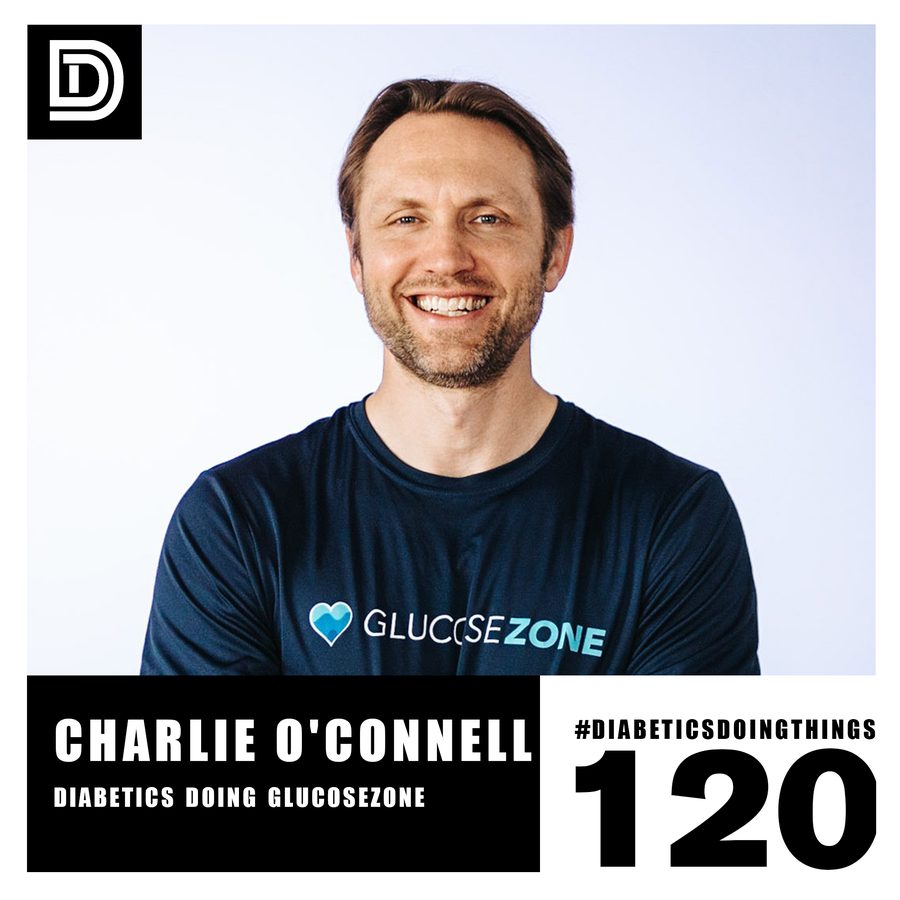
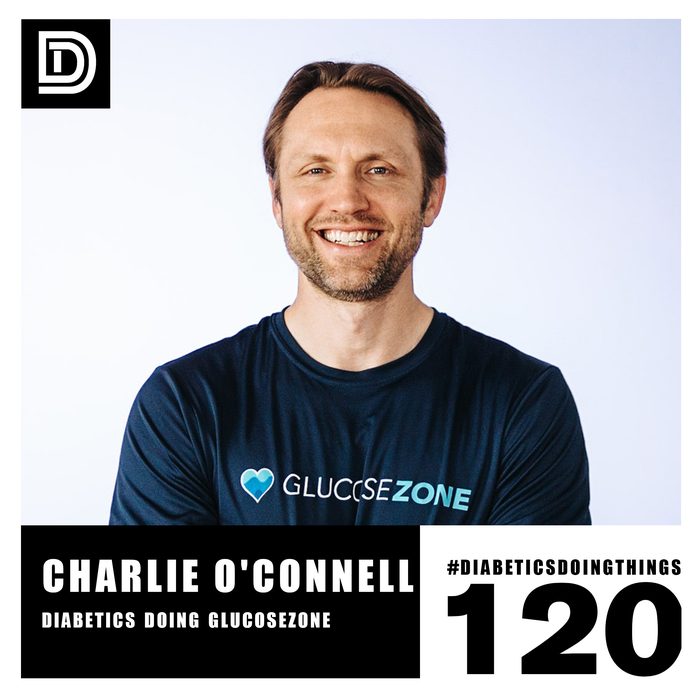
Charlie O’Connell (@Type1CEO on Instagram) is the CEO and founder of GlucoseZone, the first exercise program designed for people living with Diabetes.
Charlie takes us through his life as an athlete, both before and after he was diagnosed. He takes us through what it was like going through his first college football season at the University of Pennsylvania, because it was also his first season with Type-1 Diabetes.
Charlie and I share war stories about being athletes, and share many philosophies on competition, preparation, etc., but what’s most interesting to me is Charlie’s story as a Type 1 Diabetic entrepreneur.
After leaving his job, Charlie went to Africa on a mission to “find himself” he had no way of knowing it would lead him to his true purpose, to help people with Diabetes find success in exercise and fitness.
That led Charlie on a wild journey to found Fitscript, which has evolved into GlucoseZone. Check out Charlie’s story and let us know what you think!
GlucoseZone has sponsored this podcast, and is offering listeners a 7-day Free Trial of the entire GlucoseZone platform when you use code: ROBHOWE. Check them out!
Questions this episode answers
What is GlucoseZone?
GlucoseZone is a fitness platform founded by Charlie O'Connell that gives people with diabetes exercise guidance based on real-time blood sugar, heart rate, insulin presence, time of day, activity type, and food intake.
How did Charlie O'Connell come up with the idea for GlucoseZone?
After a trip to South Sudan forced him to manage his diabetes without carb counting, Charlie spent years studying how exercise affects glucose and built an algorithm around it, founding FitScript (later GlucoseZone) in 2012.
Can exercise help manage type 2 diabetes?
Charlie says in a clinical study with Yale New Haven Health, patients with type 2 diabetes who used GlucoseZone instead of adding more medication saw an average two-point A1C drop, lost about 10 pounds, and reduced their drug therapy by one full medication.
Is there a discount code for GlucoseZone?
The podcast offers a seven-day free trial of the full GlucoseZone platform with the code ROBHOWE at GlucoseZone.com.
Full transcript Searchable, with timestamps
Rob Howe: Welcome to the Diabetics Doing Things podcast. We've been telling the amazing stories of type 1 diabetics all across the world since 2015, and we have over a thousand years of living with T1D on the podcast. The interviews range from incredible feats to everyday victories, and we celebrate them all just the same. Thanks for listening. And if you want to get involved even further, just send me an email at rob at diabeticsdoingthings.com. This episode is brought to you by Glucose Zone, the first exercise program designed specifically for people living with diabetes. Their online platform is designed for all fitness levels and diabetes types, type 1 or type 2, or even if you're in one of the other fringe versions, and allows you to stream a variety of workouts and exercise routines that fit your schedule. That's big for me. I don't always make it to the gym, but I need a way to work out. And if you have an online platform, I'm currently taking another class right now to try to make me more mobile. This is the way to do it. Glucose Zone has certified diabetes coaches that can help you succeed with exercise and diabetes. Now, what's in it for you? Well, if you use code ROBHOWE, that's me, ROBHOWE, all one word, at GlucoseZone.com, you can get a seven-day trial of the full Glucose Zone platform absolutely free. So no risk to you. I'm all about supporting businesses who are focused on improving the lives of people with diabetes and are also committed to supporting diabetes creators like me. So go check out GlucoseZone.com and get on the road to seeing the fitness and exercise results you want and manage your diabetes successfully. Welcome. Welcome back to Diabetics Doing Things. We are telling the amazing stories of people with diabetes all over the world. My very special guest, very excited to welcome Charlie O'Connell. Welcome to the show, sir.
Charlie O'Connell: Thanks, Rob. I'm happy to be here.
Rob Howe: And Charlie, you are the CEO of Glucose Zone and also a founder of FitScript. And you're joining us and you've been type 1 diabetes since you were a senior in high school. Why don't you tell us a little bit about yourself, and then let's start, as we always do, with diagnosis.
Charlie O'Connell: Sure. So thanks so much, Rob, for inviting me to be on the show. I'm always interested to meet other people living with diabetes that are engaged in helping other people. And generally speaking, anyone who has a passion for fitness, definitely I can vibe with. So I'm happy to be here. And, you know, I guess starting at the beginning is always the best place to start. So I was diagnosed with type 1 diabetes at a fairly strange point in my life. I was lucky enough to be a very successful high school athlete and was lucky enough to be recruited to play sports in college. and just the way it worked out for me, I was diagnosed with type 1 diabetes in between actually committing to going to the University of Pennsylvania and actually going.
Rob Howe: Wow.
Charlie O'Connell: And just the way it worked out, my first experience with managing type 1 on my own in a competitive athletic environment was the very first day of football practice
Rob Howe: my freshman year at the University of Pennsylvania. Wow. So the stakes, the stakes were high.
Charlie O'Connell: The stakes were high and it was a total disaster. You know, very, very basic type 1 diabetes management scenarios. Like, you know, breakfast is at 7 a.m. Practice starts at 8 a.m. How much do bolus for the bacon, and egg and cheese that they've made available. You know, just really, really basic type 1 management scenarios that I had, you know, I was totally on my own with. And what was really ironic about that whole situation was UPenn is an amazing, amazing university and institution with the finest doctors and trainers available. And nobody had the first clue how to help me. Um, and, you know, I would just go through this experience of, you know, it'd be two o'clock in the afternoon and my blood sugar would be 290 and it was time to do tackling drills. You know, what do you do?
Rob Howe: Right.
Charlie O'Connell: Or the very next day it's 10 AM, my blood sugar is 51 and it's time to do wind sprints. You know, what, what do you do with that? and the reality was was nobody knew what to do and that was a very frustrating experience for me you know I persevered through it and ultimately I you know I loved my experience at Penn I played football at Penn for three years I won an Ivy League championship with the Penn Quakers in 1998. I also did track and field at Penn, and I was lucky enough to win an Ivy League championship in track and field as well, my senior year in 2001. And, you know, that whole experience was really a defining time in my life. You know, the way that we ended up dealing with all of these highs and lows was literally there was a section of the training room that was essentially created for me and there was a little refrigerator with a name on it that said Charlie only and when you opened up the refrigerator there was everything from maple syrup to vials of insulin and syringes. And, you know, everything was responsive. Nothing was proactive. Right. And, you know, as you know, Rob, you know, competing in a division one, you know, NCAA sports is hard enough. When you have something like type 1 diabetes, and in my case, you know, new diagnosis of type 1 diabetes, that was very, very challenging. And, you know, what ended up happening for me was I graduated from Penn and got a job in New York City. and basically very quickly within a year of moving from Philadelphia to New York, I more or less stopped exercising. And I went through a period of my life where it wasn't worth it to me to put myself through the anxiety and the fear of what was going on with my blood sugar levels to really pursue an active lifestyle.
Rob Howe: And I think, I don't want to, I apologize, I don't want to step on you there. I think that's something, I think that fear and that anxiety and that really inconvenience as well is something that a lot of people, regardless of their athletic ability or athletic skill level or competitive level, experience fairly regularly. And I think, especially as athletes, when so much of your identity is wrapped around the sport that you play or being physically fit, I imagine that had some spiraling effects.
Charlie O'Connell: Oh, totally. And, you know, what happened for me was, in a weird way, once I graduated from Penn and stopped competing, I actually kind of lost the reason for why I was putting myself through that fear and anxiety. You know, when I was in college and when I was in the heat of competition and really had a very focused goal, that in a weird way served as the reason why I was putting myself through these really terrible emotional day-to-day occurrences, you know, emotional and physical highs and lows. and once I stopped having that as a motivation I really lost motivation for for exercising because as everybody living with type 1 diabetes knows if you're on hypoglycemic experience that can literally scar you for life from a emotional and physical standpoint and so and And for me, you know, that really was the case. And, you know, the bottom line, what happened was I had a busy life going on. I was very, very lucky. I had a great job in New York. You know, I was in New York in my 20s. There was plenty of other things that I could do with my time besides pursue, you know, a really active lifestyle. And I made that decision. and essentially what happened was fast forward um i got to be about 30 years old and i reflected on my whole like you know when you it's a funny thing rob i i assume you're about to turn 30 here yeah i turned when you're about to okay yeah so you know when you turn 30 you kind of have like this whole reflection period. You're like, oh my God, what am I doing with my life? You know, and for me, I really reflected on my whole experience at Penn. And what I was able to kind of realize was, and this is really just through maturity more than anything else, It wasn't so much that diabetes had hindered my athletics as much as athletics had helped my diabetes. And when I was honest with myself and honestly reflected on my whole situation, the time I felt the best, the time I felt the most confident, the time I had the best diabetes results was when I was really active. you know to the level of like two sports division one active right the problem for me was i had come to associate the fear of hypoglycemia with exercise and that fear had just totally come to dominate my relationship with activity and i made a decision in my life that you know what Like, I can't actually live like this anymore.
Rob Howe: Right.
Charlie O'Connell: I was able to reflect on the whole situation and be like, you know what? I cannot allow this anxiety and this fear and these emotions to dominate my relationship with something that I love. Because, you know, down the real me, I love sports. I love being active. I love all kinds of sports. You know, I'm a total. Now I'm a golf. I'm obsessed with golf now. You know, I love to be active. And I had this realization of I can't let these emotions dominate my relationships anymore with fitness. And, you know, that was a long time coming. I had periods of inactivity. I had periods of extreme travel, you know, that ultimately kind of led me to that point.
Rob Howe: Um, and so I want to focus to, I apologize. Sorry. I'm stepping on you again before, before we get to kind of how you change that relationship, because I think those steps, I really want to hear like, you know, the actual steps that you went through. I want to go back a little bit because the environment of, and you, and you mentioned that I, you know, kind of know what it's like. And I'd like for our viewers to get at least a little bit of a, of what your experience is like at the division one level. Um, yeah. And, and just kind of framing kind of where this came from that, like talk a little bit about what type of environment that was to step into, because I think a, the time in your life that, uh, where you were diagnosed is something that I'm, uh, I have a lot of passion for because when you're a kid and you're, and you sign with, you know, in, in some cases, your dream school, and you're about to go live your dream of being a college athlete, you have a lot of mental expectations just going into that. And then when you get there and it's so much more difficult than you ever could have imagined. And it's so much more, it requires so much more attention and dedication. And there's all these other factors. You're either away from home, you're experiencing new friends and new classes and responsibilities. And yet your primary job is to perform as an athlete. And throwing a type 1 diabetes diagnosis us into that and having your first experience at the college level be also your first experience as an athlete with diabetes, like that level of stress, I imagine there were some like very low and very frustrating moments for you during that time.
Charlie O'Connell: Yeah. Well, yes. I mean, and everybody living with diabetes, I'm sure can relate to what I went through, you know, in my case, I had to, I had two real issues that I had to deal with. The first issue was from an internal perspective, I went from being the most confident, the thing that I was the most confident in was my physicality, you know, like all basically arrogant, you know, 18-year-old successful high school sports athletes, the thing that I had the most confidence in was my physicality. Like, I felt the most confident when I was actually on the field competing. And all of my sense of value and worth came from that. you know and basically i thought that i was hot shit sure yeah and i think you at some point i think what a lot of people maybe don't don't read into sometimes is at some point to be the best at those you kind of have to have that alpha machismo mr mr america type wonder boy attitude have to there's no question about it to compete at a high level especially at that age range you know 18 to 23 years old for me that my that world crashed crashed and burned and I went from basically in a moment I went from being the most you know my physicality being the thing I was the most confident to actually that was the least confident that I was in now you know I was in a total confidence crisis walking into that situation because I just you know it was a hard fact of life was my confidence really was I basically had to learn how to be confident through other means besides my physical abilities because I was actually in a confidence crisis with my physical abilities because I had no idea what was going on you know And anybody who's had their blood sugar go from 220 to 40 in the middle of an athletic competition knows how that feels. And that was very challenging for me.
Rob Howe: Or vice versa.
Charlie O'Connell: Of course, I would do like everybody else with type 1 diabetes. I would basically overreact and end up with chronic hyperglycemia.
Rob Howe: Yep.
Charlie O'Connell: you know and like in this situation where it's like my blood sugar was 200 and i'm still eating a snickers bar before practice you know just in in crisis mode and lack of confidence so that was one thing that i had to really deal with and um in my case i really buried those feelings down In a weird way, like the thing that I was most scared of was people thinking that I was scared. And I really buried those feelings of fear, anxiety, how am I going to do this, down, like deep, deep down. and the thing about when you bury feelings like that deep down what they actually do is just really take deep root and you know I had to confront that much later in life but at the time that was how I dealt with it it was just like I mean I'll never forget when I was actually diagnosed with type 1 and I was in a terrible physical state. You know, in the emergency room, in the critical care condition room, I had lost like 55 pounds. I had a blood sugar of 1,100 when I actually checked into the emergency room. You know, I was full of fear and I spent the night in the hospital. I'll never forget this. In the hospital room, in the critical care condition wing, at like two o'clock in the morning, just freaked out. And what is happening to me? And so fearful. And I made it, I was talking to myself. And I basically said to myself, you're not, you're Charlie O. You're not going to let anybody know that you're scared. That was like the thing that I prided myself on more than anything else. Like everybody else is scared. I'm not scared. And here I was frightened to death. And basically what happened was I made a pact with myself. I said, I'm not going to let anybody know how this is bothering me. And the next morning the doctors came in and my mother came in and my father came in and they were like, Charlie, how are you doing? and I literally said, I'm good. I'm fine. And they were like, really? And I was like, yeah, I'm totally good. When can we get out of here? And that was not the right way to handle that in retrospect. Because ultimately I just buried those feelings down and had to work through them much later in life.
Rob Howe: And it sounds like that was what you recognize And as we kind of shifted and went back and talked a little bit more about it, that's where that fear came from, really from day one, starting off that relationship with fear and kind of burying it and not dealing with it. And I think it's easy to do as an athlete in your position is like you kind of have to say, well, right now I'm focused on my performance. I'm focused on the task at hand. I'll deal with this later when I have time. And so let's go back to kind of where you were in your story. You're coming up on 30. you're focusing on changing that relationship. What were the steps that you took that, you know, replaced that fear and change that emotion and that relationship that you had with exercise?
Charlie O'Connell: So it's a, it's a kind of a long story that I'm going to, I'm going to tell quickly, but basically what happened was I was very lucky. The company that I worked for in my twenties was very lucky. basically I joined it as a startup and went through seven years with that company until it was acquired. And that was an amazing business experience journey for me that definitely laid the foundation for what I'm doing now. But when that company was acquired, I was promptly fired by the acquiring company. And that was like the best thing that ever happened to me in my life. and it's funny how things like that work out but basically what happened was I got a severance package I was right around I was like 29 years old and I was itching for an adventure and what I ended up doing was connecting I basically had enough sky miles built up that I could do a round-trip ticket anywhere around the world for free and I had a three-month severance package where I was going to get paid for three months. And so literally what I did was I connected with a college friend of mine who was a great friend of mine, and he was South Sudanese. And he had started a nonprofit organization called Kush. And what Kush was doing was on-the-ground work in South Sudan and specifically working in crisis areas of the Sudan. And he had gotten money from the Brookings Institution to conduct a water security survey of this one particular part of Sudan that was under military conflict. and he was going to be going there and he needed somebody with crisis management experience. And without going into the long story, the previous company that I had worked for was a crisis management company. So I had literally the experience of having traveled to over 20 countries responding to emergencies. And I said, what the hell? I don't have a job. and I'm looking for an adventure, so I said, sure, I will join you. And literally what I did was I flew from New York JFK to Amsterdam. I spent about a week in Amsterdam doing all the things in Amsterdam you're not supposed to do. And I flew from Amsterdam to Nairobi, Kenya, where I met up with my friend Daniel and two other guys. and then from Nairobi, Kenya, we flew to Juba, South Sudan. And then from Juba, South Sudan, we got in a little Cessna airplane and we flew 2,000 kilometers due north into the Sudanese bush. And we landed in this place called Abyei. And Abyei is right in the middle of Sudan and it is where the conflict between North Sudan and South Sudan has been fought for the last 20 years. It's an area that's about the size of Connecticut. And the reason why there's been a war in Sudan for the last 30 years is 80% of the oil that exists in all of Sudan and South Sudan exists in this one area called Abyei, which is the size of Connecticut. and that is what the war in sudan has been about for the last 30 years and daniel had gotten this money from the brookings institute to conduct a water security survey to basically analyze what were the water security issues for the villagers and the native people who lived in that area that were susceptible to this conflict. And there we were. And Abyei is a very strange place. The best way I can describe Abyei is Abyei is like the place where Han Solo met Luke Skywalker. It is totally out in the middle of nowhere. It's this bizarre situation of Arab traders on camels and Chinese oil workers driving hummers on the same street. This is a very, very strange place. And so the bottom line is that's really actually where my glucose zone journey started, because what happened was we got to Abyei and we started conducting this water security survey and very quickly realized that there was no water and there was no food. And very, very quickly, I started to get into diabetes crisis mode where there literally was no water and there literally was no food. So we were staying in this little bush pump and we were eating one meal a day. And the only thing we were eating was this, basically this form of goat curry. And we were eating it at 10 o'clock at night after the stars. And very quickly, within 10 to 12 days, I was in total diabetes crisis mode. And basically the crisis mode that I was in was I could not get my blood sugar below 300. And I couldn't figure out why. Because up until that point, my whole understanding of diabetes had been count carbs, give insulin.
Rob Howe: Right.
Charlie O'Connell: In this case, there were no carbs. And, you know, I was just totally perplexed. I was like, I don't know how to deal with this situation. The other thing that was confusing me was this particular area of Sudan, since you're a basketball guy, Rob, you'll know who this is. Do you know who Manute Bol is?
Rob Howe: I do, yes.
Charlie O'Connell: All right, so this is Manute Bol's hometown. And literally every single man in Abyei is over seven feet tall. And part of what was really confusing me with my diabetes experience was I don't get how everybody here is seven feet tall, basically has perfect teeth, very strong. they're surviving in these crazy environments you know never went below 105 degrees and all they're eating is this one meal of goat curry and I was just perplexed I was like how is this happening what is going on here and basically what happened was one night while sitting around the campfire and my blood sugar being like 400, I realized the reason why everybody here is seven feet tall, has perfect teeth and perfect skin and can hike 10 miles through the bush is because all they're eating is this goat curry. And I basically just accepted that there was something in this goat curry that was providing all the nutrients necessary for life. And I didn't understand it at the time, but I basically accepted that one way or another, this goat curry was providing a source of glucose and carbohydrate. And I accepted that kind of on faith, but really more because I didn't really have any other choice. And I started giving myself insulin without understanding why. And, you know, basically started, got my blood sugars down into a healthy range. And then I went through this really kind of amazing experience where for the next three months, I traveled around East Africa. and I was in South Sudan, Kenya, Uganda, and Ethiopia. And I just got totally reconnected with a physical life. And after three months, I more or less ran out of money and it was time for me to go home. And I flew home and when I got back to the United States, I said to myself, you know what? I cannot live with this relationship anymore, this fear-based relationship with activity. I got to figure this out for myself. And I literally started on a three-year life redo where the first thing that I did was I got a job as an assistant coach on a JV basketball team at a local high school, which was a very humbling experience, by the way, you know, coming from who I thought that I was, and embarked on this personal journey of fitness and really just trying to figure out why. Why are my blood sugars dropping in certain circumstances? And why are they going up in others? And for three years, I was on a real journey, literally scouring the internet at 2 o'clock in the morning in my underwear, looking up on Wikipedia what is glycolysis? What is gluconeogenesis? These terms that I had heard a thousand times and I had no idea what they meant. And I started putting some things together and I started putting together some relationships that I could start to count on and started developing an algorithm for myself for controlling my diabetes during exercise. And what ended up happening was I actually went to a doctor's appointment and I had the best A1C result I had ever had. You know, and this was 13, 14 years into having diabetes. And the doctor was like, wow Charlie this is awesome um you know how did you do this I said well to be honest you know I've really figured out some things about exercise that have enabled me to let go of the fear of hypoglycemia and by letting go of that fear of hypoglycemia that's enabled me to have much better control and the doctor at that point said wow that's great have you ever thought of helping anybody else with diabetes and exercise because that's all anybody talks about when they come in here and it was just the way that she said that that's all anybody else talks about when they come in here that i had this total switch in mentality of this is not a me problem yeah this is a we this is a we problem and i left that doctor's appointment with just this whole sense of, wait a second, if this took me three years of scouring the internet, and I love exercise, I'm confident in my exercise, I'm passionate about it, what about just like the regular
Rob Howe: person who just wants to go to a thin class and not have to chug a Gatorade? And I think that's something that I think about a lot, because of my athletic background, I also get a lot of questions, and it's probably the most popular questions I get through social media are about exercise. And, you know, I think that I think about is that exercise is hard enough for people without diabetes. And, you know, it's hard enough for people, you know, the numbers speak for themselves, right? The obesity rate in America, heart disease, and all the other associative, you know, conditions with, you know, we eat, we don't eat right. We don't exercise as a culture pretty much. Uh, and so then to have someone with diabetes is like they've, they already have overcome the primary obstacle and they made it to their spin class or they made it to their weightlifting class or whatever the case may be. But then they have a hyper or a hypoglycemic incident, which causes them to have to either stop their workout completely and treat, or just gives them a defeated sense that like, you know, whatever I do, like diabetes is still here. Maybe it's fear-based like you were talking about. Those are tough things to overcome. How, you know, for you, like you said, this is not a me problem. This is not a you and I problem. This is a huge problem. How did you approach that? Just a reminder that this episode is brought to you by Glucose Zone, the first exercise program designed specifically for people living with diabetes. If you use code ROBHOWE, R-O-B-H-O-W-E, all one word, at GlucoseZone.com, you can get a seven-day trial of the full glucose zone platform absolutely free. No risk to you. Just visit www.glucosezone.com for more information.
Charlie O'Connell: So I took a, what I ended up doing is basically identifying the variables that cause changes to glucose levels. And, you know, using myself as essentially a laboratory, I started really honing in on what are the things, what are the actual variables that cause changes to my glucose level? And through a lot of personal kind of just experimentation, I was able to start identifying these variables in a very clear way. And what ended up happening was after that doctor's appointment, And my whole sense of like purpose kind of clarified for me where I was like, you know what, my whole entrepreneurial spirit, my professional background just kicked in. And I was like, you know what, this is what I want to do. I want to help people with diabetes have success with exercise. And so what I did was I put together a business plan. This was back in 2012 and pitched it to an organization called Connecticut Innovations. Connecticut Innovations is the state of Connecticut's investment bank. And they had a competition that was basically like a Shark Tank style competition for ideas. And I won the competition. and what I had pitched was exercise support for people with diabetes as a you know something that was missing in the treatment paradigm of diabetes and with that $25,000 I then was able to raise another $50,000 through a great friend of mine who was a teammate with me at the University in Pennsylvania, a guy named Kendall Hockman, who was an amazing guy. Kendall is a very, very successful New York financial guy. And he had seen what I went through in our experience together at Penn. And, you know, as an amazing friend and really visionary person, he was like, hell yeah, I want to get in on this. And so with the 25,000 from Connecticut Innovations and then the 50,000 from Kendall, I founded FitScript. And the first thing that we did was we built a very unique fitness facility. It's called our GlucoseZone Laboratory. And it's a fitness facility that's dedicated exclusively to diabetes. And you can't come there if you don't have diabetes. And what I started doing was networking with local doctors, reaching out to the healthcare provider community here in Connecticut, letting them know that if they had any patients who needed help getting exercise, this was a resource that could be available for them. The other thing that we did was we built a very small multimedia broadcasting studio. and the reason the thinking behind originally that was this is back in 2013 if you googled diabetes and exercise back in 2013 google would come back with like a hundred million web md articles yeah and there was i immediately recognized from a marketing perspective was like There's no way to crack that. But what was really weird was if you search for video about exercising diabetes, there was nothing. It was literally like crickets on the Internet for videos about diabetes and exercise. And, you know, we had some foresight to basically realize two things. Number one, nobody likes reading articles anyways. People hate reading articles. And the second thing was everything was moving to video. So especially if you're using the term how to. So we just put those two things together. We're like, you know what? Let's start creating exercise for diabetes videos. Now here we are, you know, fast forward six years later, if you Google diabetes and exercise, or definitely if you search YouTube diabetes and exercise, now our content dominates the first couple pages of search results. And that has enabled us to do two things. First off, reach a global audience of a couple million people. Number two, learn how to actually create content, video-based content, that people with diabetes can follow and have success with. And so what we did was we took the combination of our fitness laboratory, where we have now conducted several thousand, probably approaching on an order now of 10,000 actual exercise sessions with people living with diabetes, where we have meticulously documented the correlating variables that impact glucose levels during those exercise sessions. So when you come here to a glucose zone, we're not just tracking how many push-ups did you do. We're tracking what was your glucose level, what was your heart rate level, what was the presence of insulin, what was the presence of counter-regulatory hormones, what was the time of day, what was the food and the nutrition that you had consumed before or during that. and meticulously documented that to essentially create an algorithmic approach to exercise guidance based on real-time blood sugar. And what we did was through those sessions, you know, really built on originally my personal kind of experience, but then reinforced over and over and over again, we've identified six variables that are always present when a person with diabetes is exercising. And those six variables are, what is your actual glucose level right now? What is the heart rate level that you're exercising in? There is a relationship between your heart rate level and the sources of energy that your body is designed to provide when you exercise. What is the presence of insulin and counter-regulatory hormones? That's the third variable. What is the time of day? The time of day, the fourth variable is one of the most important variables to understand with managing your diabetes. If you are going for a 7 a.m. jog like I did this morning, your management strategy is going to be totally different than if you're going for a jog at 7 p.m., just as an example. The fifth variable is the type of activity. You know, what are you actually doing? Are you doing weightlifting? Are you using a cardio machine, like a spin bike or a treadmill? Is it a high-intensity interval training? And then the last variable is food and nutrition. Those six variables are always present no matter what when a person with diabetes exercises. Now, there are other variables, like, for example, if you're sick, right? If you're sick or under the weather, that definitely can be a seventh variable. But what we've been able to do is identify these six as always present, no matter what. and we now have an algorithmic approach to helping people based on their type of diabetes and what their goal is and so for people with type 1 diabetes our primary goal is to help them eliminate fluctuations in glucose levels during and after exercise For people with type 2 diabetes, our goal is to help them use exercise as a fundamental therapy for the reduction, reversal, and control of their diabetes. And that came out of, basically, that is really now what is fueling our global growth. So what happened was early on, I reached out to the healthcare community and basically they started sending people with type 1 diabetes to our facility. And they were like the worst of the worst cases of type 1 diabetes where basically the doctors were like, look, we've tried everything. Nothing is working. We might as well send you to this guy, Charlie, because there's nothing really to lose at this point. and started having success, helping people with some very, very challenging type 1 issues start gaining control of their type 1 during exercise. And what ended up happening was very early on in that process, one of the doctors that we were working with and who had seen success with their type 1 patients basically said to me, And, you know, not for nothing, Charlie, but my husband has had type 2 diabetes for 20 years. And your program sounds exactly like what he needs, basically. And I've been trying to get him to exercise forever with no luck. Have you ever considered helping somebody with type 2? And I said, sure. and basically she said well okay if you can help my husband then i'll think about sending some other type twos to your program so six months went by and i didn't hear anything from the husband and i called the doctor back hi charlie you know i haven't heard anything from your husband and basically a week later i got this very grumpy phone call like the most classic grumpy you know is this Charlie O'Connell? My wife said I need to call you. You know, basically like the most resistant person possible.
Rob Howe: Okay.
Charlie O'Connell: And what ended up happening was he came in, and what we did was we took the algorithm that we were using to help type 1s eliminate fluctuations in their glucose levels, and we just reverse applied it to this guy with type 2 diabetes to select exercise to get to a desired glucose level. So what that means is for people with type 1 diabetes, the whole goal is to have steady glucose levels, right?
Rob Howe: Right.
Charlie O'Connell: So if your glucose level is 150 when you start, the best possible outcome is when you end, it's 150. right? And you're trying to avoid situations where your number goes from 150 to 80. And there are certain exercises, there are certain exercise scenarios that cause that to happen. So for type 1, we educate and then create a way for people to not have that happen. But for type 2, that's actually a therapy. And so what we did was we just said, wow, we know which types of exercise and which type of exercise scenario causes these drops or causes these rises. Let's just choose that exercise scenario for this guy with type 2. And basically what happened was six months later, the guy had lost 57 pounds and his A1C had dropped below six for the first time in 18 years. And his doctor took him off of diabetes medication. And it was at that moment that it became very clear to me that this was not just like a little specialty kind of personal training gig that I had set up. You know, this was actually a therapeutic opportunity. And right around that time, smartphones were, you know, Fitbits were coming onto the scene. it was very clear to me that you could offer guidance through a smartphone based on real-time biometrics and that has now become a term there's now an industry that exists it's called digital therapeutics that term has really only been around for about a year but we were doing digital therapeutics back in 2013-2014 we just didn't know it and it was really at that moment where I was then like, you know what? I'm all in on this. And that didn't mean that I was working full time for FitScript, but I still had two other jobs. And I went a long time making $20 here, $40 there, just basically being open and available for opportunities. But from a commitment perspective and a passion perspective, I was all in. I was like, you know what? But my goal right now in my life is to help other people. And every single time I help somebody else, I feel a little better about myself. And this is totally a missing link in diabetes.
Rob Howe: Well, and I think, you know, just thinking through all that you've been through personally, as well as on a business perspective, for the end result to be so positive, not only for people with type 1, like you said, to have steady blood sugars throughout workouts, before and after exercise, but also to, you know, actually clinically reverse type 2 diabetes in some cases. I mean, that's got to give you that. I mean, that's the reason you get out of bed in the morning and punch the clock, right? And that's why you're like you, we were talking about kind of before the call, the true nature of being an entrepreneur, you know, is the hustle and really pushing forward. And then to see that type of result, I mean, you know, to see those results, I imagine your emotional response was just, you know, kind of everything coming to a head after being diagnosed, going and overcoming that fear, really drastically altering the trajectory of your life and to have it result in positive outcomes for people with diabetes. I mean, I can't imagine the feeling of that. It's got to be super positive.
Charlie O'Connell: It is. It's definitely super positive. And it's fun talking to somebody like you, Rob, who can kind of get it and understand both personally and professionally what that opportunity represents. You know, as I mentioned before we started talking, I had to commit, nothing is easy. Like this definitely was not easy. And I founded this company in 2012. I didn't actually work full time for FitScript until September of 2017. and for those five years I was working two other jobs. I also had a daughter. I'm so lucky right now. I have two daughters. I have a five-year-old and a two-year-old. I was supporting my wife, my daughter, myself with two other part-time jobs and then basically doing FitScript all day on the weekends and seeing people at nighttime. so it's a it is a serious hustle and you know the reason what triggered my working full-time for fit script was we raised three million dollars of investment in venture capital to take this concept of digital therapeutics and actually develop it into a real commercially available, you know, actual business opportunity. And when we raised the $3 million, basically part of the conditions of the raise was, you know, Charlie could no longer be working as a high school track and field coach.
Rob Howe: Right.
Charlie O'Connell: You know, Charlie could no longer be doing group fitness classes at the edge.
Rob Howe: Right.
Charlie O'Connell: Like, you know, this is serious. But I'm joking, but I'm not. You know, it's like, and I would share that I would encourage anybody that is a patient entrepreneur, like number one, get another job right now. If you have a passion for something, just immediately set it in your head. I need another job to actually support my life. And the reason why I say that is if you are relying on income from your idea, you are inherently going to be limited in the possibility of that idea. Because you're going to be freaking out about paying the rent or paying for your diabetes supplies or paying for your kids' stuff or whatever. and if you have a basically the better your idea is the longer it actually takes for it to take shape and you know i heard some really great advice a long time ago is that if you have a seed that is going to result in a really really big tall tree it takes a long time for that tree to grow and you know you have to have that perspective if you have an amazing idea you can't be staring at the little sapling you know two years into it right because guess what a 100 foot tall oak tree takes 200 years to grow you know and if you have an idea a transformative idea that's going to help millions of people, you can't be staring two years into it like, oh my God, I need to cut this tree down right now so that I can make money off of it.
Rob Howe: Right.
Charlie O'Connell: It's actually the exact opposite.
Rob Howe: There's a couple of good quotes that I think I, over the years, have encountered. One is at least attributed to Steve Jobs, who talks about if you do have an idea, just continue to work at your nine to five so that you know what it's like to have to put in the extra time. Um, and also, you know, still be able to make ends meet. Um, and I think the, and then when, you know, when you, when your idea has become enough to support you, then, you know, it's good. That's good feedback to know that it's time to throw yourself in it completely. Uh, and then there's also a, like Tim Ferriss talks about how he approached his podcast and that he didn't take sponsors until they had, you know, over a million downloads or something like that because he felt that if he did that, the, uh, the time that he would spend kind of, uh, fielding those requests and, you know, selling to advertisers for the money that they would get back would take away from the podcast. So, uh, you know, being, being more selective and being very intentional. And I think that's, you know, when you talk about like a tree, I love that tree metaphor because the other, the other thing about a hundred foot tall Oak trees is that they aren't everywhere. You know, they, uh, not every tree grows into a hundred, a hundred foot tall oak tree, uh, or reaches its max potential or whatever the case may be. Uh, and you know, the conditions are not always perfect for growth. I mean, there's a million, I could probably teach an entire masterclass on that one metaphor. It's, uh, it's great. It goes, goes for days. Yeah. Um, yeah. So for you guys, you know, now that you're, uh, you know, continuing in that tree, mentality. What is next for Glucose Zone? What gets you excited about the future of Glucose Zone?
Charlie O'Connell: Yeah, so what's next for Glucose Zone is really three things. First off, digital therapeutics is here and it's very clear to me and other pioneers in this space that 10 years from now, digital therapeutics are going to be the standard of care for diseases like type 2 diabetes. And, you know, we have now a clinically validated digital therapeutic that's based on fitness for reducing, reversing, and controlling type 2 diabetes. And, you know, what that's based out of is our first clinical validation we did with Yale New Haven Health. And basically what we did was Yale identified patients with type 2 diabetes who all had A1Cs of 7.5 or above, and all were candidates for pharmaceutical escalation, according to the standard protocols of diabetes management. And what we did was instead of them being prescribed more drugs, they were prescribed GlucoseZone, which is our app. And fundamentally, what GlucoseZone as an app for type 2 diabetes does is it gives exercise guidance and solutions based on real-time blood sugar. So, you know, if you have a blood sugar level of 200, you fundamentally require a different exercise solution than if you have a blood sugar level of 100. Or let's say you had two patients that both had a blood sugar of 200, but one of them was on Lantus and Metformin and the other one was on Januvia. Those two patients, even though they have the same blood sugar level, fundamentally require different exercise solutions. So we had a phenomenal result with that clinical validation. We saw an average A1C improvement of two points across the board. So an average weight loss of 10 pounds. We saw an average therapeutic reduction of one full therapy. What that means is basically if the patient was on two drugs before glucosone, after 90 days of glucosone, they were down to one drug. They're on one drug. They're on no drugs. When that was put into a cost perspective, that was equated to an average of over $8,000 per patient per year in pharmaceutical cost reduction. so these are you know transformative results that we're able to achieve with a digital fitness therapeutic like GlucoseZone and what's on the horizon for us is now literally every single person living with type 2 diabetes is told recommended by the doctor you need to go get more activity you need to increase your exercise and our goal is to be that globally available resource so that whether you're in New Haven, Connecticut, or Dallas, Texas, or Mumbai, India, or Kathmandu, Nepal, our goal as a company now is to be a participant in the global digital economy as a global healthcare provider. Because the bottom line is the reality of business in the for a century is the internet enables you to provide the same service to whether you're in new haven dallas or mumbai and you know in a place like india there are over a hundred million people in india living with diabetes there's less than 30 diabetes clinics in all of india you know just so in that in that particular market they fundamentally require a digital solution. So, you know, we're very excited about that. For people with type 1 diabetes, we are just going to be launching, coming out here and then basically by the 1st of June, our first type 1 dedicated series. It's called Stronger. We partnered up with an amazing woman, this woman named Christel Oerum, who is the author and founder of Diabetes Strong. And it's our first fitness series dedicated exclusively to type 1. That's really just going to be the beginning of a whole series of series of fitness programming specifically for type 1 diabetes to help people living with type 1 diabetes have success reaching their fitness goals. So in Christel's case, you know, Christel is a real leader in the diabetes community, and she's very passionate about weightlifting. And there's a whole, there are thousands and thousands of people with type 1 diabetes who are passionate about weightlifting. So we developed, working with Christel, an actual fitness series of having success weightlifting with type 1 diabetes as an actual something that you can follow. You know, the next series we're going to be releasing after that is going to be more about controlling your type 1 diabetes during exercise. And we have a whole really amazing now, our goal here, Rob, is we want to make GlucoseZone available to every person that's passionate about fitness and diabetes. We want to make GlucoseZone available to them as a platform so that they can share their knowledge, their expertise, their guidance, their inspiration, their information, their instruction with the global diabetes community. And that is really what's on the
Rob Howe: horizon for GlucoseZone. And we're really excited about it. Well, it sounds super exciting. We're big fans of Christel over here and she's, she and, uh, the diabetes strong team are amazing. So I'm glad you guys are, uh, you know, partnering, partnering with her and her team. Um, really excited to a, you know, that you came today and we were able to find out that we had so much in common. I think, uh, you know, both from the, you know, diabetes athletics and even entrepreneurial, uh, side of things, uh, even to the point where, uh, you know, I'm, I'm fully addicted to golf again. So I'm hoping that, uh, that keeps me from having to hurt so much after I play basketball, uh, these days is my body just aches. Uh, but, um, you know, I, I'm really interested to continue to, you know, keep a close eye on you guys over at glucose zone and, uh, continue to be a part of what you guys are offering to the type 1 community, because, you know, I, I'm a big believer in supporting not only companies and products and services, but related to diabetes, but things that are for our people. So the creation of opportunity and, you know, empowerment and bettering people's lives with diabetes. So, you know, big props to you and your team for taking that on and, you know, wish you guys continued success.
Charlie O'Connell: Thanks, Rob. I really appreciate the opportunity to share what we're doing. And let's play golf.
Rob Howe: Yeah, let's do it. And for people who are still listening, you guys can find your glucosezone.com. And you're also on social media, all is glucose zone. And I believe you are type 1 CEO on Instagram. Any other links that I missed?
Charlie O'Connell: Yeah, no. Glucosezone.com. You can connect with us on Instagram, I'm type 1 CEO. On Twitter, I'm type 1 CEO. I'm on Facebook just as Charles O'Connell. and, you know, basically happy and looking forward to meeting anybody that is passionate about fitness and has diabetes or basically is looking to start having success. You know, I have really found that the moment I started helping other people was the moment that I started feeling better about my diabetes and my own self. And now I'm kind of in this weird place where like I'm desperate to help other people.
Rob Howe: That's a good place to be.
Charlie O'Connell: Yeah.
Rob Howe: Well, thanks again for your time, Charlie. I'm really looking forward to hearing the response from this episode. Thank you for listening to this podcast. It's been an amazing journey thus far. And I have a lot of really great stuff coming up in the future. So I'm going to do something that I haven't asked before. if you're listening to this podcast A, I would love it if you would subscribe to the podcast just so you get the notifications whenever we publish new episodes because if you've been listening for a while you know I don't always publish them consistently sometimes I'll publish five in a week sometimes it'll be only a couple in a month and you need to know when these episodes drop so be sure to subscribe and if you like the podcast be sure to go to your preferred platform like iTunes and leave a review I would love to boost my reviews and I've never asked you guys to do that before so I figured you don't ASK you don't get I would love a review from you. So I want to hear from you there Also, we are now available on Spotify turns out I was just submitting it to Spotify incorrectly But I corrected that so now we're on Spotify So if that's your preferred listening platform be sure to subscribe on there I also just want to let you know that in 2019, we have an awesome new program coming called Tools of Type 1s. It's going to be on this podcast, so you don't have to subscribe anywhere new, but it's going to be an entirely new form of programming with some of your favorite Type 1 personalities. So they're going to be two a week starting January 8th. Be sure to tune in, and I'm going to blast all the messaging I can all around. So be sure to listen to Tools of Type 1s launching January 8th, and thank you for continuing to listen to this podcast. Thank you.
About Charlie
Charlie O'Connell is the CEO and founder of GlucoseZone, formerly FitScript, the first exercise program built specifically for people with diabetes. He played football and ran track at the University of Pennsylvania after being diagnosed with type 1 diabetes as a high school senior.