

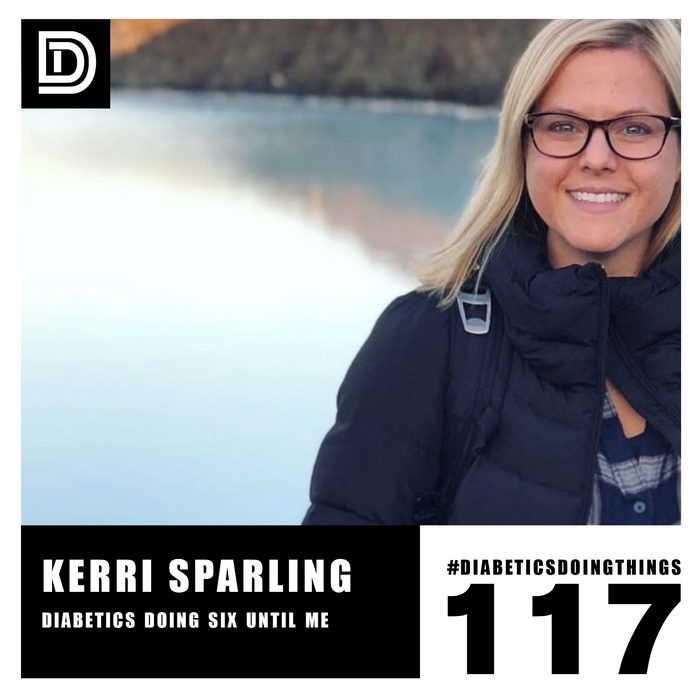
Diabetics Doing Six Until Me with Kerri Sparling
Episode summary
Kerri Sparling, who writes the blog Six Until Me, talks with Rob about being diagnosed with type 1 diabetes at age seven in 1986, including the bedwetting symptom that went undetected and the pee alarm her parents used before anyone suspected diabetes. She traces the early days of the diabetes online community starting in 2005, naming bloggers like Scott Johnson and Amy Tenderich who shaped her sense that she wasn't alone. She discusses her parents' divorce as a teen burnout period, writing her book Balancing Diabetes after a publisher approached her, raising two kids, and what she hopes for next: better insulin and technology access for people who can't get it, and prevention research so her own children never develop type 1. The two also compare Mario Kart characters and tracks.
Key takeaways
- Kerri Sparling was diagnosed with type 1 diabetes at seven, not six, despite her blog's name Six Until Me, after months of unexplained bedwetting that a mechanical 'pee alarm' failed to diagnose.
- Kerri says her parents' divorce around age 19 or 20 caused her worst diabetes burnout, with her highest-ever A1Cs, because the family crisis pushed diabetes care aside.
- Kerri started blogging in May 2005 after finding early diabetes bloggers like Scott Johnson and Amy Tenderich, and says their stories made her feel less alone.
- Kerri cites an ADA conference poster finding that reading diabetes blogs and social media correlates with better A1C outcomes, matching her own experience.
- Kerri says her biggest hope now is less about a personal cure and more about access to insulin and devices for people who have none, plus prevention research for the next generation.
Show notes
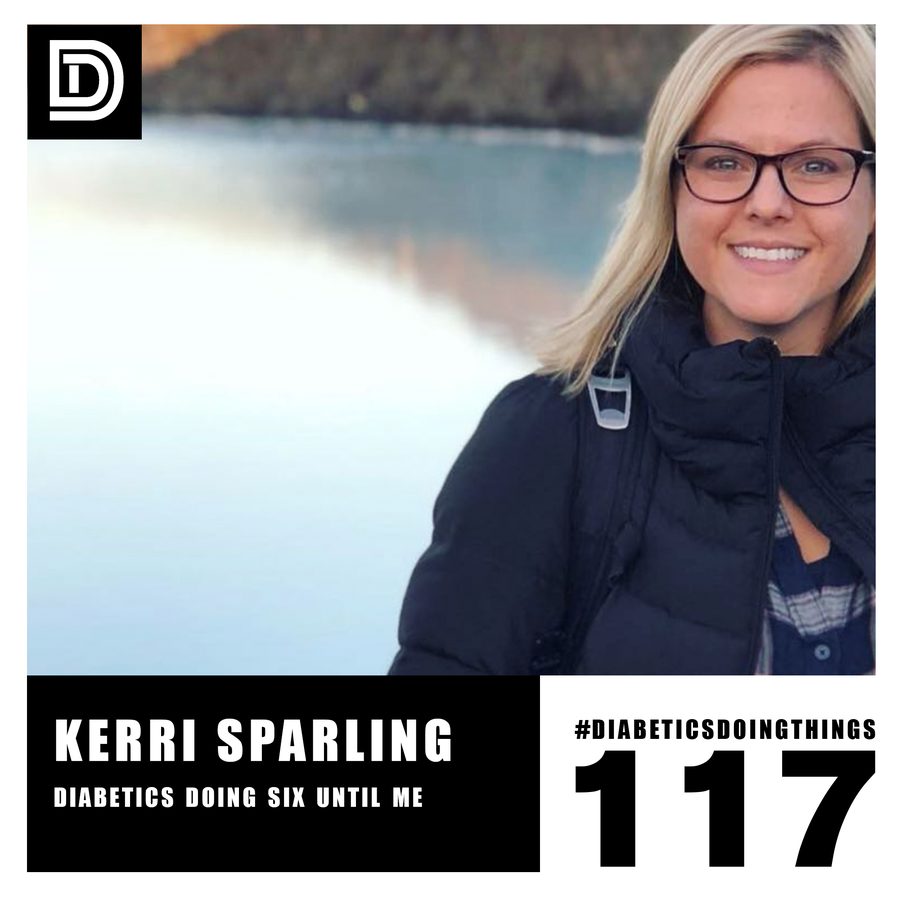
You’re in the Diabetes online community so you have for sure seen Kerri Sparling (@sixuntilme on Instagram) somewhere online, and likely on Sixuntilme.com .
I met Kerri for the first time in 2017 at a JDRF Dallas Type One Nation Summit, where she was giving a keynote presentation. We’ve stayed in touch over the years but finally made the podcast happen before the holidays.
Join as Kerri and I talk Diagnosis, the birth of Six Until Me, the early days of the DOC, her pro-tips on Mario Kart on Nintendo Switch, and how she strives for balance in her Diabetes, personal and professional lives. A must listen.
Questions this episode answers
Who is Kerri Sparling of Six Until Me?
Kerri Sparling is a diabetes blogger, speaker, and author who has lived with type 1 diabetes since age seven. She started the blog Six Until Me in 2005 and wrote the book Balancing Diabetes, published by Spry Publishing in 2014.
Why is Kerri Sparling's blog called Six Until Me if she was diagnosed at seven?
On the podcast, Kerri explains the title is a poetic simplification. She actually started wetting the bed at age six as an early undiagnosed symptom, but wasn't diagnosed with type 1 diabetes until she was seven.
How did the diabetes online community start, according to this episode?
Kerri says she found some of the first diabetes bloggers around 2005, including Scott Johnson (Scott's Diabetes), who started in December 2004, and Amy Tenderich (DiabetesMine), who started in February 2005. Reading their stories inspired her to start sharing her own.
Does reading diabetes blogs or social media improve blood sugar outcomes?
Rob mentions seeing a poster at an ADA conference suggesting that reading diabetes blogs and social media is linked to better A1C outcomes, and says his own clinical numbers improved after he got involved in the online community.
Full transcript Searchable, with timestamps
Rob Howe: Welcome to the Diabetics Doing Things podcast. We've been telling the amazing stories of type 1 diabetics all across the world since 2015, and we have over a thousand years of living with T1D on the podcast. The interviews range from incredible feats to everyday victories, and we celebrate them all just the same. Thanks for listening. And if you want to get involved even further, just send me an email at rob at diabeticsdoingthings.com. What's up, everybody? Just wanted to say thank you for listening to this podcast. It's been an amazing journey thus far, and I have a lot of really great stuff coming up in the future. so I'm going to do something that I haven't asked before if you're listening to this podcast a I would love it if you would subscribe to the podcast just so you get the notifications whenever we publish new episodes because if you've been listening for a while you know I don't always publish them consistently sometimes I'll publish five in a week sometimes it'll be only a couple in a month and you need to know when these episodes drop so be sure to subscribe and if you like the podcast, be sure to go to your preferred platform like iTunes and leave a review. I would love to boost my reviews and I've never asked you guys to do that before. So I figured you don't ASK, you don't G E T. I would love a review from you. So I want to hear from you there. Also, we are now available on Spotify. Turns out I was just submitting it to Spotify incorrectly, but I corrected that. So now we're on Spotify. So if that's your preferred listening platform, be sure to subscribe on there. Also just want to let you know that in 2019, we have an awesome new program coming called Tools of Type 1s. It's going to be on this podcast, so you don't have to subscribe anywhere new, but it's going to be an entirely new form of programming with some of your favorite Type 1 personalities. So they're going to be two a week starting January 8th. Be sure to tune in and I'm going to blast all the messaging I can all around. So be sure to listen to Tools of Type 1s launching January 8th, and thank you for continuing to listen to this podcast. Hello, and welcome back to another episode of Diabetics Doing Things. We're telling the amazing stories of people with type 1 diabetes from all across the world. And today, my very special guest, I'm really, really excited about this, is Keri Sparling. Welcome to the show.
Kerri Sparling: Hi, thanks for having me.
Rob Howe: so you don't I'm like already blindsiding you with questions or like comments but almost every diabetes blogger who's been around for the last like 10 or so years or has had type 1 for like 10 or so years has mentioned you in some point like in a conversation with me about why they got into online advocacy so you have the six until me blog you are carrie sparling speaker, author, blogger, extraordinaire. I'm like, I'm an honor. This is like hallowed ground
Kerri Sparling: we're on. No, dude, that's, that is really nice to hear. And I hope I can do it some justice. I'm sort of a hot mess all the time. So I think people are privy to that as often as they are,
Rob Howe: the diabetes stuff. Yeah, but I think that's what's great about you and what's like honest and vulnerable. And like, you know, people don't want to be sold a life with diabetes. That's all
Kerri Sparling: rainbows and butterflies, right? No, good. Well, then that works out great because I don't have
Rob Howe: any of those. Well, great. Well, for those who listen to this podcast and may not be as familiar with your story, your blog is six until me. And that's a great transition sort of segue into your diagnosis at six years old. So let's talk about it. So it's awkward right off the bat, because I
Kerri Sparling: started blogging in 2005 before things like SEO and putting the word diabetes in your blog title was a thing and was a smart move. So my blog title is like this poetic version of how I was diagnosed. And I wasn't even six, I was seven. So the whole thing feels like a lie, like right at the outset, which feels super wrong. But I started, and this is cool to talk about right away, I guess. So I started wetting the bed when I was six. And so that was my first symptom and like kind of how my body started to roll into the process of diabetes, but we just didn't detect the diabetes for several months. So it was six years until I started wetting the bed. And when you say the story of that out loud like it doesn't sound as kind of streamlined and nice and poetic as I wanted it to it's just a bedwetting story from baked in a little bit of a math lie but I was
Rob Howe: seven okay so you're seven the bedwetting I think I think every great story should start with a bedwetting story if like we're really being honest if you really want to get down to like
Kerri Sparling: the honesty part of it but I had a pee alarm I don't know if I've told you this story before but there was like a mechanism, mechanical thing that my parents bought to try to keep me from wetting the bed because they didn't know it was caused by high blood sugars. They thought it was just some kind of like childlike regression. So they bought me this pee alarm. Have you ever seen one of those things?
Rob Howe: You're going to have to paint a picture for us.
Kerri Sparling: It's a horror show. So it's got these two metal nodes and you're supposed to connect the two nodes inside your underpants. And we're starting off really well, I think, you and I.
Rob Howe: Yeah, I think this is going to be great.
Kerri Sparling: Sorry. And so you connect the two nodes inside your underpants. And if they detect any liquid, there's this kind of wire that feeds off of the nodes and goes to almost like a pump looking pack that you would wear on your waist. And if it detected moisture, the two nodes would connect and this alarm would go off. So in the middle of the night, there was like a like a siren going off from my underpants. And I'm six years old. And so I had to run down the hallway and my parents would disconnect the alarm. And it was this big panic point. And they did this because they thought it was just a bedwetting issue, not a diabetes thing. And just it was one of those things where like my mother in particular looks back at it and says, man, that was a horrible thing that we did to you. We bought you like an alarm clock for peeing the bed when in fact it was this more serious medical issue. So I don't know. They still sell them too. I've looked at them on Amazon. They look terrifying.
Rob Howe: Oh, my gosh. Well, at least we can lobby, use this podcast as a way to lobby against underpaying my pee alarms, right? And like speaking of Google SEO, what do you, you know, as a parent, you Google pee alarm. How do I get notified when my child wants the bed? Is that the search? I don't know.
Kerri Sparling: Well, my diagnosis was in 86, so like an internet search return was not a thing. My mom had no one to ask, so they just bought the alarm and hoped for the best.
Rob Howe: Well, and I think that's, I mean, at the core of our discussion today, I'm sure, is going to be the diabetes community and how it's changed since 1986, right? Speaking of 2005, I was diagnosed back then.
Kerri Sparling: Oh, in 2005? No kidding.
Rob Howe: In 2005, January 1st, 2005, actually. Well, that's convenient. It's really easy to remember. Like every New Year's, you know, in college I'd wake up, I'd be hungover. I'd be like, oh, yeah, I've had diabetes another year now. It was great.
Kerri Sparling: People with a polar bear plunge to celebrate. Right.
Rob Howe: Let's watch Lord of the Rings on network TV because the commercials. Anyway, that's a whole other story.
Kerri Sparling: Not the extended version?
Rob Howe: I would because I'd see it on TV and then change the extended version on DVD, which, of course, I own because I'm that person.
Kerri Sparling: So do I.
Rob Howe: You and I, I think, have a lot of sub things in common, like sub genre. We'll get into Mario Kart later, I'm sure. Intimate discussions about the fine tunings of Mario Kart. So yeah, back in 2005, you get diagnosed today in 2018 going into 19. You immediately grab your phone. You or your parents grab your phone and you search for, you know, I have type 1 diabetes. What now? Back then, that wasn't a thing. And then, you know, again, back 20 years before that, 19 years before that, it definitely wasn't a thing.
Kerri Sparling: Yeah, I remember putting diabetes into Google for the first time when I was like 24 and finding a bunch of reasons why life was basically going to suck. And that was such a hard search return page to look at and say, wow, that's that's the future. That's terrible.
Rob Howe: Well, right. And I think, you know, that kind of goes back to like different diagnosis stories, right? You, not everybody's diagnosis are created equal. I think it's probably the biggest thing I've learned from this podcast over the years. You know, some people get a pretty dire outlook of what their life's going to be like. And if you're left to your own devices at that time, you know, you could find much of the same. Thankfully, I think there's still a lot of that today. I think a lot of fear mongering, a lot of negative, a lot of, you know, hate using the term of fake news out there for life with diabetes. But, you know, now looking at, you know, people like yourself and the I think you mentioned on your on your website, like five other diabetes bloggers from, you know, the early days now into this sort of sprawling diabetes community. You know, there's a little bit of hope out there for people.
Kerri Sparling: Sure. And that's kind of like the weird divide, too, because when I was diagnosed, there was a lot. I don't know if I want to say it was fake news, but it wasn't necessarily outcomes were not as good as they are now. We didn't have the tools, we didn't have the resources, and we weren't given the right sort of instruction from our clinicians. We were fed a lot of fear instead of hope because they had so much to fear. And so I think we've come a long way as a community, but also as people. Like, we get to have the privilege of growing old and doing and getting annoyed by all the old people things. You know, like when your knees start to make a certain noise or when you're like, oh, man, I've got to look at AARP. And you're like, hell, yeah, I get to look at AARP because I get to be an old lady with diabetes. Like, that was not a bill of goods that was sold to me when I was diagnosed completely. But I feel like people are given that sort of narrative of you're going to be all right. You're going to have to do a lot of extra weird things and things might get stressful, but you get to be an old lady someday. So like that's a nice rewarding sort of thing to get when you're diagnosed instead of here all these bad things that are going to happen to you.
Rob Howe: It's incredible, really. I think one of the things that gets me so excited about, I mean, living that little glimmer of hope, right, of living with diabetes today. I've had some people on this podcast who've had type 1 for over 58, 59 years. You know, they were using cow insulin and boiling syringes. Yeah. And they were glass, you know, just when they got started when they were kids and their parents were doing the best that they could. And I look at them today and they're totally high-functioning adults with great lives and grandchildren in some cases. And I think of myself, it's like, okay, 50 years from now, outcomes are only going to get better for me and this gives me a lot of hope cure or not I think you know today you get diagnosed you can have your pick of the litter of amazing cgm technology research pumps or mdis or smart pens you know you name it technology is there and there's also this community and educational aspect that wasn't there even five ten years ago so yeah that's right It's an exciting time. The term T1D Renaissance got coined by a guest on this podcast, and I've fully stolen that and made presentations on it. So, yeah, because I think it is. There's a community aspect, there's a technology aspect, and for the first time, the outcome doesn't always have to seem so grim.
Kerri Sparling: Yeah, that's right. We're motivated a lot more by the hope than the fear now, and that's a huge paradigm shift that I'm grateful for.
Rob Howe: So how did you, let's go back to before six until me, the weird math misnomer. Let's go back to growing up young Kerri and your family and living with type 1 diabetes. What do you remember about life with type 1 early on?
Kerri Sparling: One of the first things I remember was, well, two things in the hospital. I remember taught to give an injection on an orange and I, and that is not something that's completely phased out at this point. Sometimes they give newly diagnosed people now that, that pad of fake skin. Have you seen that? It's disgusting. I have. Yeah. It looks like a wallet, but rubber. Yeah. But like a wallet made out of chicken fat or something. It's just a weird thing. Right. And so people inject now on that, but I was given an orange and that was weird because they said, practice, practice, practice on this orange. It's so much like human skin. And then when I had to go and give the needles to myself, I was like, I'm not an orange. This This is a completely different feel. So that was kind of weird. But then the other thing I remember is the kid that I shared a hospital room with at the Rhode Island Hospital was this kid named Eddie, and he had gotten bit by a spider. And so he had this giant like welt on his leg, and he had this infection that had grown around it, and the nurses were always coming in and checking his antibiotics and that sort of stuff. So he had a lot of attention and a very obvious physical symptom. And he was a couple years older than me. I think he was nine and I was seven. And I remember him turning to me on like the third or fourth day that they were in there because I was there for 12 days. And he's like, well, what's wrong with you? I said, oh, I have type 1 diabetes. And these words are all new to my mouth. So I'm all gleeful saying it because I didn't know what it was or any of that. He's like, oh, well, show me. And he's pointing to his spider bite going, well, this is mine. And I'm like, I don't have anything to show you. I look completely the same. And that kind of blew my mind that this huge thing had happened. And everybody seemed really stressed out about it. And the learning curve was tremendous. But I was small. and when I looked at myself, I was like, I look the same. I kind of feel the same. What makes this such a big deal? And so it took a long time for me to kind of understand the, not the severity of what I was diagnosed with, but more like what a chronic illness meant, what it meant to have something forever and sort of the minutiae that diabetes invades all the time. And to really wrap my head around the fact that this is going to be an all day, everyday sort of thing. And I've got to get my game face on for the rest of my life. And that was, there was a learning curve to that, that has taken me a long time to sort of work through. I didn't have something I could point to and say, well, here's my spider bite.
Rob Howe: That always stuck with me. It's always interesting. I've learned so much about diabetes before the age that I was diagnosed since getting more involved in the community. Because for me at 16, I was a pretty mature 16 year old. I got it. I was like, I gotta take care of myself. Like I understood the regimen. I knew what I wanted to do. So I was given the tools and I was able to go. but you know talking to parents trying to explain to a young child why you know you have to give them a shot before they eat or test their blood sugar they don't want to it's painful it's annoying and there's no and to them there's nothing different about them that's like such a poignant very difficult to grasp and I think that you know that's for you at seven years old to to have that right away like what a I don't know what a really interesting way of introducing you to this life with a chronic illness?
Kerri Sparling: Well, because I remember asking my parents, I was like, chronic, so is that like Christmas? And I remember them saying, well, no, it's like all the Christmases. And that was very heady. Like, oh my God, all the Christmases. That's a lot of Christmases. So you sort of fast forward and think that's intense. But I've had parallels as an adult and I have two kids myself. I have an eight-year-old and a two-year-old. And when my daughter was two, she's the eight-year-old or two and a half, I remember her asking me casually in the car while we were driving. She's like, mom, how many birthdays do you have left? I was like, you know, the screech of the tires as I pull the car over. I'm like, wait a minute, what? Like, what kind of a question is that? But I feel like that sort of encapsulated that moment of realizing diabetes was forever when you kind of get it wrapped up in that sort of a concise question. It sort of blew my mind. Yeah. And I
Rob Howe: think it's one of those things where initially you have this relationship with sickness where, okay, how long do I get better? And there's a, there's a shelf life to whatever it is, whether you have pneumonia, whether you have mono, whether you have a cold, there's sort of a prescriptive you know you go through you take some medicine for a few days you start to get better you turn the corner you move on right maybe if it's really bad you go to the doctor and then this sort of chronic illness which is just you know never goes away and it's always sort of your your daily battle of you know whatever that case is fighting for your better outcomes or trying to exercise or just be a normal kid. And it doesn't go away. So there's almost no reward. I think it's where a lot of people see burnout, especially early on or when they're in their teen years. Did you ever experience any of that? And how do you address it even today?
Kerri Sparling: I did. And just kind of to double back really quickly. It's interesting because you were diagnosed when you were 16 and I was diagnosed at the age of seven. And I don't, I didn't have a sense of what illness was. So diabetes shaped my sense of illness. And to me, a cold can be far more annoying than diabetes on any given day because diabetes is the thing that I'm used to the most. And so when I'm snuffly and my sinuses are all clogged and I'm like, oh my God, I feel terrible. I'm like, this is the worst. Oh, poor. And then other people look at diabetes and go, wow, that must be really tough. And I'm like, yeah, all right, whatever diabetes, I have a cold. This is terrible. Like it's a funny sort of perspective that it gives you on illness and that sort of stuff. So I don't feel disrupted by diabetes on a day to day basis, but I feel really jacked up by a cold. And so it's just, it's a, it's a weird thought process. But, um, and I already forgot the question that you asked me about burnout. What was it? Can you ask me again?
Rob Howe: I think it's just like the fact that you're, you know, you're day to day, like carrying that burden of, you know, Hey, I'm working, I'm doing as the best I can. And diabetes is not going away. Especially as a kid or in your teen years and beyond.
Kerri Sparling: So as a kid, I don't remember experiencing burnout, but I do remember, um, really bucking up against some of the daily duties of diabetes. Like I have clear memories of hiding behind the dining room drapes in our house when my mom wanted to give me my dinner injection. And I mean, she could see my feet sticking out the bottom of the curtain. So like she knew I was there, I was not hiding, but it was a really upsetting dynamic that she needed to do this thing, give me the injection. And I was really resistant to accepting it. And so that, you know, that was probably stressful and cause burnout for her, but it wasn't a term that was really talked about. And caregiver support wasn't what it is now. My mom wishes she had access to what parents now have access to or adults like us have access to. So that was that. But when I was a teenager, my parents actually divorced when I was 20, 1920. And so that threw me into more of a burnout phase than anything else, mostly because there was such a big issue that was being dealt with that diabetes fell by the wayside. And that experience over the course of like a year or so taught me that diabetes can't ever actually fall by the wayside without there being serious repercussions. And my A1Cs were the highest they had ever been during that time. And it was because I just didn't care and I needed to still care. And that's also a strange dynamic to have something that you truly can't ignore or it will eat you. And that is not – that's a hard thing to continue to kind of maintain every single day. And that's what we struggle with is people with type 1 or struggle, whatever word you want to use. That's what we're like. We're trying to maintain this baseline that other people take for granted, and it can really wear you down. But I think the thing that's helped me the most in managing that is the interaction with my peers. I didn't have a lot of that as a kid. I didn't know other people who didn't make insulin. So to have all of you guys now and to know that I'm not the only one who does this nonsense and gets frustrated by a borked-up infusion set or who celebrates 100 on a meter, that's a weird sort of dynamic, and that's weird stuff to be upset or celebrate. But you guys in this community, you really get that. And that means an awful lot to me. It helps keep me out of burnout a lot.
Rob Howe: Let's talk about that for a second because, you know, for years, all of us only had access to the people with diabetes in our own community, like in our own physical world, right? I think there were the first guy I ever met with diabetes went to my high school and his parents and my parents were good friends and knew each other. So I talked to him about it. He took me to lunch one day when I was in high school, which was like not a thing you do in high school. Like taking someone to lunch was weird. So it was like just a strange interaction. And we didn't have that, you know, we had been friends when we were younger. Didn't have that much in common at the time. But, you know, he was trying to like, hey, you're going to be fine. It's not a big deal. Yeah, yeah. Then I had two other kids in my immediate community that were brother and sister and were going through their own set of like sort of what you mentioned, I think like outside external issues causing them to put diabetes on the back burner and the suffering that came from that at the time. Right. So yeah, those are the only people I knew with diabetes really for the first 10 years. And I was like, okay, well, I don't really have anything in common with their treatment or their lifestyle, so I must not have anything in common with people with diabetes. that totally changed obviously, uh, you know, three and a half years ago. And like you said, now I can, every day I see somebody going through something that I relate to in some way. And it's amazing how even when I meet people in person, people I've never met don't have had no interactions with instantly. There's something that can, that we immediately bond with on a level that nobody else can. So what's that like?
Kerri Sparling: No, but that's, I think that's beautiful because there's something so unique about, like if you're out and you see someone's pump tubing hanging out you don't need to get their first name you don't need to find out where they're going or where they've come from you know something about something so intimate in their life that people in their intimate circles probably don't even understand on the level that you do this cursory stranger that passes by and says i have an insulin pump too and they go yeah and that like that electric moment is so awesome because you know in that instant that you you are not alone and that there's so much power to that and so much like inspiration on, you know, just finding out that you are not the only person who does these things. Like you said three and a half years ago, you started all of this. And so do you feel like you've become more forgiving of yourself throughout that? Because I've found that for me, like seeing other people who are walking the same walk, I'm a little more forgiving when I slip up because I know there's a group of people that will help lift me when I feel like this is getting very heavy. And then I in turn get to help lift somebody else when they're having a moment that feels really intense. And it just is like this rolling support mechanism that makes every day just that much easier, you know?
Rob Howe: I don't think I realized it. I think maybe I took it for granted a little bit at first. And then almost a year ago, I guess, I went off my pump and I went off my prescription insulin. And I lived totally over the counter for 30 days. And I did a video about it every day. it was this big, you know, the amount of effort it took, first of all, was just not worth it. But second of all, it was incredible that every night, like, after watching a video, somebody would say, hey, like, this is, I really respect what you're doing. Or, you know, I know you've had a really rough blood sugar day, but hang in there, we're pulling for you. And just like total strangers, people that have not messaged me before or since. And I read those. And those meant a lot to me. And I think like there, I don't know, there's no way to tell somebody that like in your first interaction, but it just like those, those things have, I think, a cumulative effect. The cumulative effect of community, that's a mouthful, but it's just.
Kerri Sparling: I like it though.
Rob Howe: I think it, the outcomes, you know, both like clinically as well as just mental health wise. Yeah. I mean, you talked about softening edges and like being easier on yourself. I mean I can't even express to you how valuable that is in a life with diabetes being able to just kind of brush some things off and continue to move forward because if not if we get too hung up on one number or one a1c or one bad day or whatever the case is the next day is harder you're fighting that uphill battle and I think softening those edges and really relying on community at times can, you know, just make this load a little lighter, like you said. Plus, yeah, I'm sorry, I just cut you off. But I was I was at ADA conference this summer. And there's like a million boards with like research and all these like, you know, incredible scientific developments on it. But the one that I gravitated towards was, does reading diabetes blogs and social media give you better A1C outcomes? And that was the title of the of the board. So I like lost myself in this giant maze of boards and like finally found it. And the answer was yes. And I knew that already because my own clinical outcomes are better from the time that I started the podcast
Kerri Sparling: and Instagram to today. And do you remember the authors of that paper? I don't, but I could find
Rob Howe: it. Um, I will, I will make this promise on the air. I will link to it in the show notes.
Kerri Sparling: Well, I, if it's the people that I suspect, I'm fairly certain that the author has had type 1 for 25 years and co-authored that paper with his wife who parents their child with type 1, if it's the same couple I'm thinking of. So it's like a really intense and intimate connection.
Rob Howe: See, like, and that's the other thing. It's just, I think it's the, just the nature of community in itself. Like we live in a very small world with diabetes. We live in an even smaller world of people with diabetes who are active and pursuing the latest and greatest in knowledge and technology and community, which is great, which is the tip of the iceberg. And so, yeah, when people, when you start to connect the dots a little bit, this person knows this person knows this person. It's really just like the three degrees of Kerri's Kevin Bacon.
Kerri Sparling: No, it's just, I mean, you said something earlier where you said something along the lines of, and I can't explain to you what it's like to have access to this community or what it feels like to have someone soften the edges or that sort of thing. And it just, it's stuck in my head because you don't have to explain it to someone like me or someone like us because that's the part we all get like there's no need to put more words behind that because we we get that instantly as a community like I said before you even know someone's name you know that they get that aspect of it and that is pure magic do you remember the
Rob Howe: first person let's let's like fast forward from adolescent Kerri forward a little bit let's even get through like you've launched and started six until me you're blogging it's 2005 the internet is the wild, wild west. Do you remember like the first few interactions you, you had with other
Kerri Sparling: people with diabetes through the internet? Oh yeah, definitely. So, um, I, like I said, I, I put diabetes into Google and got a bunch of crappy results. And at the time I was dating and looking for a new job and all this sort of stuff. So I wanted to find people who were like doing the things that I was doing instead of the things that I was afraid that were going to happen. And the first people that I stumbled across, a couple of them are still around. So I know, you know Scott Johnson who writes Scott's Diabetes and he is he was one of the very first that I came across he started his blog in December of 2004 and I started mine in May of 2005 so he was just ahead of me in in so much as he had a bunch of posts that I could go back and read and it weren't they weren't these medically laced jargon blah blah blah like crappy posts from some clinician it was from this guy who lived the same life that I did at least pancreasly speaking and And that really resonated for me because that's what I was looking for. And then I found Amy Tenderich, who was writing DiabetesMine, and she started in February of 2005. And then there was this woman who went by the nom de plume of Violet. And she was a little bit older than me, but in the same sort of life stage. And I just clung to these people like a life preserver because they were the first narratives about diabetes that I came across. And I was so inspired by the stuff that they were sharing because it was what I was looking for that that's what kind of spurred me to start sharing my story because I knew if I was looking for it there had to be at least one other person who also wanted to read about whether or not you hold that diabetes card close on a first date or how do you disclose diabetes to a potential new employer or how do you hide this device in this dress that doesn't hide much but I still want to make sure I'm taking care of myself and that sort of stuff like those are the questions that I wanted answered and this community has risen to that occasion and made it so that like it's not just medical advice nonsense. It's integrating that medical advice into real life so that we get to see how we live with diabetes and not just live around diabetes. You know what I mean?
Rob Howe: Well, I couldn't echo that more. And I'm like sitting here sort of nostalgic thinking of who my like four people were when I kind of joined this. And like, also, first of all, Scott Johnson could not, I don't know if I've ever met a more warm, just kind, awesome human
Kerri Sparling: in a first interaction with him as she should be he's fantastic he is such a nice person and just
Rob Howe: getting to meet him in person um you know a few weeks ago uh and you you as well i think we met in the past in dallas uh at one of your uh speaking engagements at a type 1 nation but uh to meet scott like face to face uh and just like this guy comes in with this big hug and big smile and you're just like wow yeah i don't know i don't know who this guy is a hundred percent but I just like him a lot. Let me, like, I'm down for whatever he's, like, whatever he's pitching, I'm buying it. And he was just, like, the nicest, warmest guy. And, you know, energy fills a room. And I think, like, you could say that about a few other people in the community as well. But, yeah, you know, I just, I caught myself, like, as you were mentioning those, and naming off those names, I was like, you know, there are four or five names that I can name as well. And so I'm going to text them all later. Oh, totally. Because, you know, in those moments, it's like, okay, yeah, these are the people that, like, I know them. Like, I know what they're going through. These are my people. And, you know, without them, you know, this would be a lot more difficult.
Kerri Sparling: Well, then also, like, I remember meeting Scott and becoming friends, George Simmons, who writes Ninja Betic. There were just a bunch of people back then. But I remember when the – I used to call them my diabetes friends. And I remember when the diabetes part of that friendship just got lopped off. And I just called them my friends. And that was a really nice transition because that's what they became. Some of these people are like family to me. And that is, again, pretty awesome.
Rob Howe: It is. And none of them live within a two-hour flight of where I live. Yeah, same. And at the same time, I communicate with them more than my college roommates. Where do you live? I forget. I live in Dallas. Oh, okay. Which is great because it's a hub airport. Anybody can get here. No one ever comes here on purpose, but I can get them here if I try hard enough, which is nice. Sorry, city of Dallas. I love you. You're my home.
Kerri Sparling: So let's talk through Rhode Island, right? Like we barely have an airport. So it's OK. I feel you.
Rob Howe: Yeah, that's true. But I mean, at least that's like an endearing part of Rhode Island, right? Like, I don't know. You could ask nine or 10 people in Texas. Nine of them couldn't tell you a city in Rhode Island. Just like that. They know that it's a place.
Kerri Sparling: No, it's a state.
Rob Howe: Right. so let's let's fast forward a little bit um again i'm just pressing rewind fast forward um you've now you're in the community you're you're writing you're when did you know that i'm trying to think of this in in the and put it succinctly when did you know that this was what you were supposed to do when it when was there a moment was there a because i because i think in creative projects and this is something that i when I talk to people like you, I really want to dig into because it's something I go through with myself. Like a creative life of work is a life. It's a long process. There's no set timetable. There's no moment where you're like, you know what? There may be a moment when you're finished, but there's no like Mount Olympus conquering. We finally won the battle type of moment. But when did you know that this was like that all this effort was put towards what you were truly meant to do? This sort of finding your voice or really understanding that this mattered and this was a really important thing?
Kerri Sparling: Man, that's an intense question because I'm not sure if I do know that this is what I'm supposed to. All I know is that there are people that are super kind and very generous and saying kind things about what my story has done to help improve their life. And that means the world to me. But I don't think these people understand that it's completely reciprocal. And so I started this because I felt alone. I was very lonely when it came to diabetes. I had lots of friends. My family's very supportive. I have lots of people in my home base that are awesome. But this diabetes part of my life was very isolated, and I needed some support there. And so all of these people who have the opportunity to say, oh, this person means something to me, or that person means something to me, like, all of those people just raising their hand and saying, oh, I have diabetes too, and I do all this crap as well. That is exactly what I was looking for. And so the reasons that I started doing this remain the reasons that I continue to do this. So in terms of it being like a, like a, like a calling, I don't know if it, I don't know if it, if it is, but I do know that by doing this, my life has improved both psychosocial health wise and physical health. My diabetes is well managed because I have access to people with big brains and dogs. Like that stuff is really important to me. Was that your dog?
Rob Howe: That was my dog. Yeah.
Kerri Sparling: All right. But you know what I mean? You get to feed off of your community and you grow as a result. I mean, I've had people who are... My first Dexcom system came from a lady who read my blog and saw that I was having trouble getting my insurance to cover it. And this was in 2006. And she sent me one that she had. She just put that thing in the mail and mailed it to my office. A woman that I didn't know just knew that I was financially struggling and that I was having trouble accessing the technology as I was hoping to prepare for a pregnancy. And she's like, I've got your back, lady. I don't know you. You don't know me, but I'm going to send you this incredible medical device to help make your life easier. What is more cool than that? It's unbelievable. We look each other up.
Rob Howe: Because I think ultimately we have each other's backs because like you said, I do all this crap too. Yeah, because we can't have each other's pancreases. That would be a complete waste of time. Yeah, totally. There's no pancreas swap with diabetes because what a waste. uh my i got my first cgm my first xcom from a podcast guest who yeah after she got off the podcast uh christine fallible she was like hey oh yeah she's like i get the sense that you don't have a cgm and i was like no i don't like i don't feel like i need one my a1c is fine blah blah she's like no stop you're stupid you need a cgm you're gonna love it and i was like okay fine and she's like okay well i'm gonna link you with my dexcom rep and they're gonna hook you up so i I was like, okay, cool. So they got through, got my insurance, and I had it within a week, and it was way easier than I had read it was going to be to get. And, yeah, getting a CGM absolutely changed my life. I don't use the Dexcom anymore, but I still have a CGM, and it's great.
Kerri Sparling: Right.
Rob Howe: And I wouldn't have known that. I wouldn't have made that jump because I didn't feel like I needed it. My diabetes mantra at that point was, if it ain't broke, don't fix it, and I felt like it was fine. So, you know, that's just me. I'm like, I'm a pretty regular dude. I don't like going to the dentist because like, I feel like my teeth are fine, but you know, I'm going to go. I'm going this week, actually. It was one of my, uh, one of my new year's resolutions.
Kerri Sparling: So making it wait until December.
Rob Howe: Hey, well, waited, waited is the wrong word, but, uh, yes.
Kerri Sparling: Oh, you could just say it's new year's for like 2019.
Rob Howe: Yes. Well, you know, I want to make sure. Oh yeah, exactly. I'm just getting, uh, just getting ahead of the, uh, head of the game off on the good phone. Get that jump. so all right let's talk through now blogger to author are we jumping forward okay back forward okay yeah i think forward do we need to go backward you tell me no no i i like the timeline hopping so i'm here for it go for it okay good um so balancing diabetes uh your first your first book um yeah yeah did you figure it out um no i would never come up with that on my own because I don't and I haven't. So whoops. Hey, it happens. So putting all that effort into your in your book came out in 2014. You know, I think I read some stats, like 90% of people say they're going to write a book. And like 1% of people actually do. Congrats, you're in the 1%. So that's really my only question. That's all my question. I don't know. Do you want to talk about the book? What was that like, like getting that, you know, applying that into the applying that blogging mentality, but having, I don't know, other stakeholders or deadlines to me, what was that like?
Kerri Sparling: I, I pitched that, but actually the book was pitched to me by the publishing company. It was published by Spry Publishing back in 2014. And they came to me with the idea, which was really nice of them. And it took me a while to get my thoughts organized around it. And then my husband, who is a filmmaker, went on a movie shoot and he was gone for three months. And when I was alone with our daughter while he was away, that's when I decided to write it. Because I like to find the most high-stress times in my life to add another high-stress deadline to. And it really worked out great. But it was one of those things where it was – I always wanted to be a writer growing up, even before I was diagnosed. Like that's one of the few things I remember about life before diabetes was that I wanted to write something. I used to write poems about our cat, which was like super fat. And the word cat and fat rhyme. So there were a lot of poems about my fat cat. And so I wanted that to transition into some kind of writing career. and diabetes happened to make itself known. And over a couple of decades, it became the voice that I chose to pursue. But I know that there's more that I want to write about other than diabetes. And so that's kind of what I'm in pursuit of now is transitioning away from all this pancreatically centric sort of writing and into a more fiction realm because I think that would be fun to pursue something that's not real. There's a lot of realness in sharing your diabetes story. And sometimes it's a little intense. So I'd like to fan out.
Rob Howe: and find something that's made up. Yeah, it is a little intense. And as the I don't want to say I'm struggling with the word owner. I'm not an owner of a fat cat. I'm a life partner, a life partner of a fat cat, I think. So I totally relate to that. Yeah, I'm a caregiver. He's more of a caregiver. I don't know. Michael J. Fox, you are. You're more than you know.
Kerri Sparling: Is it right in front of you? Are you having an omniscient sort of conversation with it?
Rob Howe: My office is in his room, basically. He has an entire room in my... It's not my office, it's his room. So he's currently locked out of it, though, because he's allowed occasionally. So he's made appearances on this podcast, but there's no episode with him. It's a big point of contention.
Kerri Sparling: Oh, well, I think it's... I mean, it's time. You have to send the text messages to those four people, and then you have to let the cat in and interview it.
Rob Howe: Yep, it's time. It's time to let the cat out of the bag. Wow, I can't believe I said that. Okay. Okay. So let's fast forward to today. You are.
Kerri Sparling: Fast forward. Got it.
Rob Howe: Yeah. We're continuing to hit that fast forward button. You're speaking, you are a mother of two, you're writing, you're writing diabetes related and non-diabetes related. Yeah. How do you find the balance in all of that? What, what is your, I mean, cause I think people, there's, there's questions that I get asked regularly about diabetes and diabetes community and getting involved is one of the more popular ones. Um, how do I get involved? How did you get involved? How did you get started? How do you, uh, balance your real life with your diabetes life? Um, and in an effort to make my answers better, now I'm asking you.
Kerri Sparling: I think balance is a misnomer. I'm sorry that it's in my book title and I have not achieved it in any realm of my existence. So like, sorry, can't answer that one. But I get that question a lot too. Are you saying people ask you, how do I get involved in this? Yeah. So, so when I got started, I was, I got in, I started sharing my story at a time when not a lot of other people were. And so it just, I got in at a good time and I rose my, I raised my voice at an opportune time that it got noticed readily and, and has maintained because I've decided to maintain the blog. And so I think that worked out really well and to my advantage, but like, I feel like a lot of people want to get involved and they get daunted by the fact that they might not get read as quickly, or they might not get as much feedback socially or it just doesn't seem like it's enough. And I always want to just take those people and remind them that their one story can touch one person and that can make all the difference for those two people. And so it doesn't matter if there are 10 people reading your content or 10,000 people reading it. The point is that you are making a difference for both yourself and for the person who's looking for that kind of information. And so I think more is more. Like I think as our community grows, that tide rises and all of our boats go up with it. I like that expression because it makes it seem like we're kind of buoyant for one another. And I'm into that. And so I think that the more people who are sharing their stories, we help change the societal perception of what diabetes is. And so it doesn't get perceived as just this like rainbows and unicorn sort of thing that people who are struggling look at and say, oh, I could never do that. I'm never 100. Or I don't want to run up that mountain or whatever the hell people are doing. And on the flip side, you get to see people who are talking about difficult things like complications and depression and all different mental health sorts of things and things that their bodies are going through that are tougher to share but just as important because it lets someone else know who's dealing with that, that they also aren't alone. Like I feel like our growing community gives a really fair assessment of what day-to-day with type 1 diabetes is like because we're willing to be vulnerable and put it out there. And so when people say, how do I get involved? It's like, find the medium that works best for you and tell your story in the way that feels the most genuine and authentic and even vulnerable, because that's the stuff that really resonates for people. So don't be afraid to be a little bit afraid. You know what I mean?
Rob Howe: yeah 100 i mean i think you know going back to what you said about not caring about whether it's having an impact or whether one person reads it or 100 people or 100 000 or whatever you know that for me in this podcast that was always the goal help one person from the beginning that's right most days that person is me um yeah why not though yeah why not and i think that you know in an increasingly metric driven world where we're able to see everything we ever posted on social media, how many people saw it, how many people liked it, whatever the case, we start to hold ourselves accountable to, you know, things that are not important. And we get, you know, we miss the original mission, which is, you know, contribute to a world to help people live better with type 1 diabetes. And, you know, sometimes that's being a friend, but it's always being yourself.
Kerri Sparling: That's right. And I really like what you said about the metrics driven sort of expectations. I wish people would care less about that because it really doesn't matter how many followers or blah, blah, blah. It's that's not what this whole thing is about. That's not why people do this. And if it is why people do this and they might want to do a little bit of a cross check on, on why they're involved in the first place and reassess, you know, maybe reshape their expectations because it's not about that. We're storytellers. That's crucial to people's survival
Rob Howe: with this sometimes. Yeah. I think just having someone to relate to can be the difference between a good day and a bad day for somebody. Just having a, you know, a person that they may never see or interact with who knows what they're going through. And, you know, for me, I've, I've found that that is so true. You know, sample size of one. But, you know, without the community, I would not have the answers to questions that I have the answers to now. And I would wonder a whole lot more than I do currently.
Kerri Sparling: That's awesome, though. Isn't it? It can be N of 2. I'll sign on to that as well.
Rob Howe: So thinking of this, like, you know, community aspect, we've talked a little bit about technology. We've talked a little bit about life today with diabetes. What is Kerri Sparling most hopeful for going forward with diabetes? Like in the future of life with diabetes, what gives you hope?
Kerri Sparling: Two things. Two things are top of mind, and they're very specific. The first one's very specific. I used to hope for a cure for myself a lot, and I used to think about it, and they told me, I got that five years until you'll be cured sort of nonsense when I was diagnosed. I'm kind of mad about it, but I'm also kind of over it. And so like middle school came and went with diabetes and high school came and went with diabetes. College came and went with diabetes. Pretty sure I wasn't going to walk down the aisle with diabetes. Right. But no, I did. I got married with diabetes. I had my kids with diabetes. Like there's always been this preposition dangling off of everything. And I felt like I had to sort of let that go. And so I don't have cure expectations for myself. I really hope that technology can make it so that diabetes becomes something I think about way, way less. But with that technology comes access. And so I'm very concerned about people's ability to access things as awesome as CGMs and pumps in these closed loop systems that make diabetes less of a thought process. That's awesome and optimal. But on the flip side of that, people need to be able to access the basics like blood sugar monitoring and insulin. And people die without insulin. So I feel like we've kind of moved away as a community a little bit on some discussion points from, we talk about technology a lot because it's so exciting, but we're oftentimes forgetting the people who are not accessing insulin. So when you had mentioned the month that you did going off of kind of off the technology grid and you were using regular, was it? And like over the counter insulins? Regular NPH. Yeah. Yeah. And so I saw that on your blog and I really respect that because it reminds us of the people who don't have access to what we might have access to. And it also is very humbling when we look at the things that we have access to to be like, this is awesome. And we should be happy about it and fight for it and kind of support the people who are in pursuit of making it better. So that's, so that's one thing that I'm, I'm really excited about. And then the other thing that I think about a lot is, is prevention. And so because I don't know if diabetes for me will be cured, I look at my two kids and I'm so very obsessed with them and I think they're great. And I love them with everything I've got. And even though diabetes is something that I know that I can live successfully with, I still don't want them to have it. And so if there's a way that I can help push prevention trials forward and make it so that diabetes, that maybe I'm the last generation of people who have to worry about diabetes and our children, this becomes something that they don't have to sweat because tech, you know, like science figured it out and they found a way to keep them from getting it in the first place. I just think, I think that's where my hope lives these days because I feel like it's very possible. Our lives can be improved by leaps and bounds, but I feel like they can really work to prevent it for people who haven't been diagnosed yet. And so I really, I'm very, very hopeful about
Rob Howe: that. Well, I echo that sentiment about, you know, hopeful for the future as well with prevention. I do want to go back because this question was about hope, but I do have, I have concerns as well about, I think I mentioned this earlier that the people that are interact in the type 1 diabetes online community are the, you know, the minority compared to all of the people, especially in the United States, or at least in the United States living with type 1. that there's this giant silent majority of people who really couldn't care less to interact with, or at least in our, you know, that's a generalization, which I hate, but who don't eat, maybe either don't have access or don't know where to look or aren't currently looking to get involved with the type 1 diabetes community who could really benefit. And so, you know, that's what keeps me up at night is how do I reach these people who are in underserved populations, who don't have access to the same type of technology, much less the same type of healthcare, that I have. And coming from a place of advocacy, like, how can I say that work is done when those people are not being served? So, you know, that's something for me that is a big priority going forward. I don't have the answer yet. But I think, you know, trying to search and, you know, really learn more along that journey is something that I'm really looking forward to. And, you know, I just don't have the answer for it. But, you know, but it also gives me hope that it's like, okay, if that is a problem that we're trying to solve, then we've successfully solved a couple
Kerri Sparling: other ones. Well, yeah. I mean, you saying you don't have the answer is fine. I don't think anyone has the answer, but there's a huge group of us that need to continue to ask the question. You know, why can't these people get access to something that we have access to? Why are some of these doors closed? How can we help to open them? Like if we keep asking those questions instead of kind of going along for the ride, if we buck up against the system and stand up for people who are not raising their voices or can't raise their voices. I feel like that's our, our, that might be where the calling part comes in. You know what I mean? Like if you have, if you're kind of privileged enough to be able to do the sorts of things that we are able to do, it's, it's, we have to be able to start asking the questions that help benefit people who aren't
Rob Howe: able to be in the room. It's our job. It is. And I think like, that's where advocacy begins and ends for people. We advocate not just for people with diabetes, but for all people with diabetes who may or may not like our posts, download our podcasts, read our blogs, watch our videos,
Kerri Sparling: but need our help. Right. That's exactly right. That is exactly right.
Rob Howe: Okay. I know that got heavy for a second. Oh man, that got, what you said earlier about diabetes content being really intense. Like that was it. That was the, that was the peak for this episode um okay i asked the same question uh on and i've realized i used to ask him on every interview lately i just i don't know what's going on with my mind but i've forgotten the last week maybe one or two that i've done recently um but if yeah here's the context it's very important um if imagine you're in an airport and you're at your gate they're about to shut the door to your gate but somebody walks up to you with who's either been recently diagnosed or is struggling with their type 1 diabetes. And for whatever the reason, you can't miss the flight. You've got something super serious waiting for you on the other end. So in that 30 seconds before they shut the door to your gate, what do you tell that person? What's the one thing you tell them?
Kerri Sparling: Oh, my gosh. This is so specific. Oh, my gosh.
Rob Howe: It's so specific.
Kerri Sparling: I know. They've just been diagnosed.
Rob Howe: Or they're struggling.
Kerri Sparling: I have this horrible habit of giving out my email or my phone number and telling them that I'm really sorry that I'm about to get on a plane, but I've had type 1 diabetes for 32 years. I've seen a lot of things come and go. I feel like the future has a lot of hope. I have two kids. I'm very happy. There's all sorts of crap that goes right and wrong, just like in everybody else's life. Just call me if you need someone to talk to, or you can email me. And then that would be probably the whole discussion. And then I would have like so many regrets that I didn't kind of skip the flight and sit and talk with them. But at the same time, if that person can just reach out to me just for like a second, and then I can connect them hopefully to all the rest of everybody that can help shepherd them on this journey so that
Rob Howe: they're led by hope and not by fear. I love it. Also, that was like right under the 32nd mark. I like never hold, I never hold anybody to the actual mark, but you really did make it underneath. So congrats. That's huge. And also really poignant and lovely. That's great. I too have a bad habit of
Kerri Sparling: giving out my email address to people yeah oh and i hate flying too so like i'm probably already wicked nervous about getting on the plane in the first place i'd be like oh my god you have diabetes it's gonna be all right but i'm really scared to get on the plane diabetes is like fine but the plane is scary you're gonna be fine like so it would be a more awkward transition
Rob Howe: was that the most new england thing you've ever said you're wicked nervous about flying
Kerri Sparling: i think i think that's just the wimpiest thing i've said and i say it regularly but i say wicked
Rob Howe: all the time yeah all right that's just good i just want to make everyone like for sure you're
Kerri Sparling: from rhode island it's not just a man yeah sure though but i pronounce my r's i think for the most part so there's like a weird agnostic sort of dialect all right to to make sure that we stay
Rob Howe: further off topic uh this is bonus round oh yes oh i think i know where you're going yeah uh if you if you're thinking mario kart so that's where we're going so if you a few i guess a week ago or so i had a pretty terrible 48 hours with diabetes from a failed site to that was literally built like bent 90 degrees um to a site that wasn't absorbing very well and all this stuff anyway like blood sugar's in the 600s for you know three or four hours late at night and i needed to get my blood sugar flowing so i'm instagram storing about playing mario kart and who slides into my dms with mario kart recommendations but carrie sparling give me give me your mario kart character
Kerri Sparling: vehicle and favorite map and why oh favorite map and why i am all day metal mario i live for him i don't know what it is but he just does it for me um favorite vehicle i don't do well on any of the motorcycles so it's got to be like a four-wheeled the big orange tires we're talking
Rob Howe: about switch right yeah we're talking to nintendo switch right now because you know why not okay
Kerri Sparling: so i like the big orange puffy tires you know the ones i'm talking about i do and i and i like the I like the squirrel for the hang glider thing. So I'm into all of that. And I pick the same thing every time. And my daughter is really good at it now. And sometimes she beats me when we race. But I never let her take Metal Mario at the same time because I feel very possessive about him. But favorite course, I don't know. I don't know if I have a favorite course. I don't like the Zelda one. For some reason, that one really bothers me. I don't like the Animal Crossing one either. But the bit with the dolphins, is that Dolphin Shoal?
Rob Howe: Yeah, I think so.
Kerri Sparling: And then the airplane hangar one, I don't know if they're the same ones. but what would be my favorite? The Wario Mountain.
Rob Howe: Oh, now we're talking. Love me some Wario Mountain. Simple, straight up, very fun.
Kerri Sparling: But the loops aren't the same. You're going down the mountain, you're going through the trees, you're on the slalom. It's not the same circle.
Rob Howe: Right. It always changes. And it threw me off at first because as a Mario Kart classic, as a fan of the classics, you go around the – you go around the track three times. It's the same. Warrior mountain. It doesn't work that way. No, it's like,
Kerri Sparling: Drops out of limp too. Don't you get like dropped out of him? Yeah. Cause you start on the top of the mountain. I mean,
Rob Howe: it logically, it makes sense. Like you couldn't do a lap on a mountain unless you went back up. So I, you know,
Kerri Sparling: I need better challengers. I don't mean to wreck my family, but they are no good at Mario cart. My daughter's getting better, but the rest of them are not very good. And so I never get a chance to get like the good stuff because it's always banana peels and maybe a green shell like occasionally but i never get any good stuff because i'm usually rocking first place so what am i going to do i've never gotten a star playing
Rob Howe: by myself um so because yeah same i i relate to that so i guess we're gonna have to start an online diabetes mario kart society as if we needed another place to have community but maybe we do
Kerri Sparling: it's niche of niche of niche but wait who's your character though you can't ask me mine and not I'll show yours.
Rob Howe: Okay, so yeah. Mine is King Boo. Oh, all right. Because, I mean, honestly, what's more Rob Howe than King Boo? I can't. I can't. I don't know. Nothing. I also like the big bike. I'm a big motorcycle guy. I don't need acceleration. Just give me that top speed. We're good to go.
Kerri Sparling: Okay.
Rob Howe: And I also like, I have not unlocked the squirrel yet. So I don't know what that's like. I'm a parachute guy, though, because I need that weight reduced.
Kerri Sparling: Okay. Oh, that's right, because you're King Boo.
Rob Howe: I'm King Boo. He's a big guy. Oh, yeah. He's a ghost, though. It doesn't really make sense to me, again, logically.
Kerri Sparling: How does he hold the steering wheel?
Rob Howe: You know, his ways are not our ways. That's all I got to say.
Kerri Sparling: I challenge you. If there is a way, I challenge you.
Rob Howe: We will figure it out. I think there is a way. So I accept. Gratefully accepted. Okay. So Kerri Sparling, you are six until me on all social media. You're six until me.com. Your book is balancing diabetes. You are all around the U S speaking a type 1 nations. And I'm a big fan. I'm so glad you took this time out to spend with us. And you know, can't wait till the next time we get to hang out, interact, whatever the case is.
Kerri Sparling: It was my pleasure. Seriously. Thanks for having me. It was a good, it was a good talk.
Rob Howe: Thank you for listening to this podcast. It's been an amazing journey thus far, and I have a lot of really great stuff coming up in the future. So I'm going to do something that I haven't asked before. If you're listening to this podcast, A, I would love it if you would subscribe to the podcast just so you get the notifications whenever we publish new episodes because if you've been listening for a while, you know I don't always publish them consistently. Sometimes I'll publish five in a week. Sometimes it'll be only a couple in a month and you need to know when these episodes drop. So be sure to subscribe. And if you like the podcast, be sure to go to your preferred platform like iTunes and leave a review. I would love to boost my reviews and I've never asked you guys to do that before. So I figured you don't ASK, you don't G-E-T. I would love a review from you. So I want to hear from you there. Also, we are now available on Spotify. Turns out I was just submitting it to Spotify incorrectly, but I corrected that. So now we're on Spotify. So if that's your preferred listening platform, be sure to subscribe on there. Also, just want to let you know that in 2019, we have an awesome new program coming called Tools of Type 1s. It's going to be on this podcast, so you don't have to subscribe anywhere new, but it's going to be an entirely new form of programming with some of your favorite Type 1 personalities. So they're going to be two a week starting January 8th. Be sure to tune in and I'm going to blast all the messaging I can all around. So be sure to listen to Tools of Type 1s launching January 8th. And thank you for continuing to listen to this podcast.
About Kerri
Kerri Sparling has lived with type 1 diabetes since she was seven and writes the blog Six Until Me, one of the earliest and longest-running diabetes blogs, started in 2005. She is the author of the book Balancing Diabetes (Spry Publishing, 2014) and speaks nationally, including at JDRF type 1 Nation events.