

En Español with Jorge Esquivel Ruiz
Episode summary
Jorge Esquivel Ruiz, diagnosed with type 1 diabetes at 15 in Campeche, Mexico, joins Rob Howe and co-host Eritrea for the show's first bilingual episode. Jorge describes a two-hour drive to reach the nearest specialist at diagnosis, learning to mix and inject insulin as a scared teenager, and the reality that most Mexicans with diabetes depend on public clinics that run short on insulin and specialists. He talks about cultural food habits built around tortillas and large meals, the stigma that diabetes is a death sentence in Mexico, and his advocacy work with the Campeche chapter of the Federación Mexicana de Diabetes, including families who hoard donated supplies meant for others in need. Part of the conversation is conducted in Spanish.
Key takeaways
- Jorge says he was diagnosed at 15 after a two-hour drive to the nearest specialist, with his blood sugar at 500 to 600.
- Jorge estimates about 80% of people with diabetes in Mexico rely on public health clinics that often run short on insulin.
- Jorge says insulin is sold over the counter in Mexican pharmacies, but a month's supply can cost 80-90% of a family's weekly income.
- Eritrea says she skipped her own insulin as a nine-year-old in Mexico and faked blood sugar readings by flicking her test strip.
- Jorge says his diabetes association in Campeche has seen people hoard donated insulin and supplies meant for families who actually need them.
Show notes
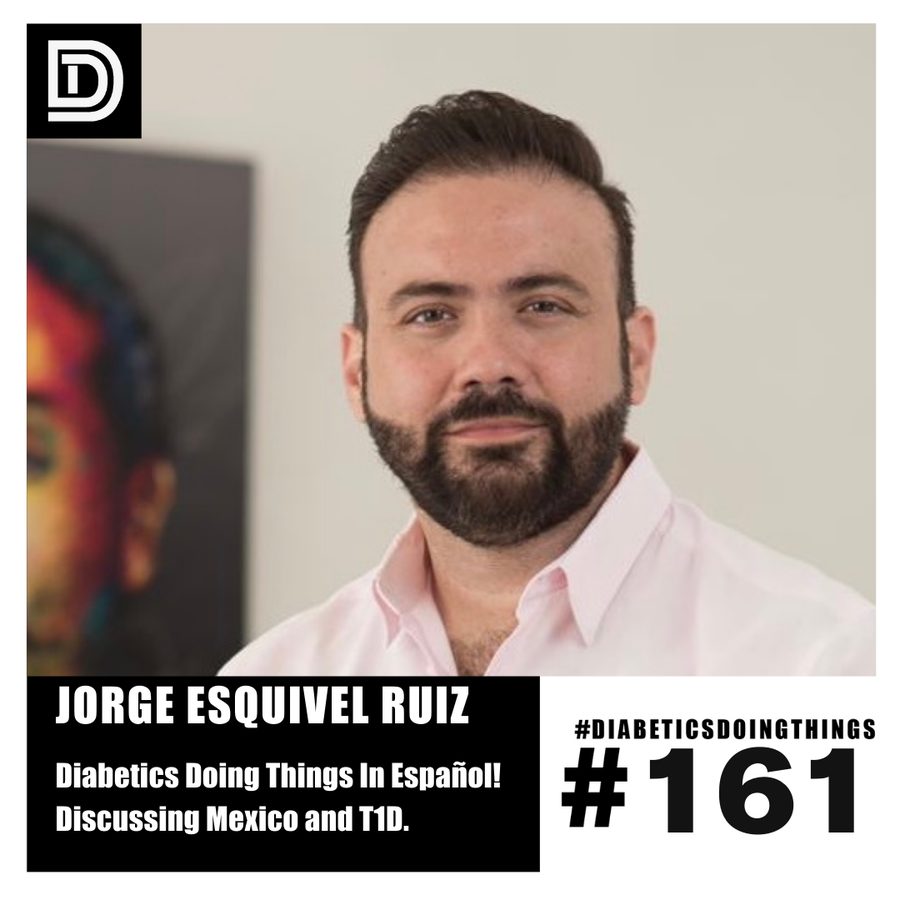
Jorge Esquivel Ruiz has been a longtime follower and listener of Diabetics Doing Things. So when he sent Rob a message on Instagram in November 2020 that said there was a clear lack of Spanish-speaking countries represented on the podcast, we felt the need to act quickly.
Jorge lives in a small town in Mexico, and talks about the challenges people with Diabetes in Mexico who do not live near a big city face not only with Diagnosis, but also with ongoing management of their supplies. In this episode we discuss:
The challenges rural communities in Mexico face with healthcare
How what is considered affordable for Americans is often too expensive for Mexican people
The truth about Mexico’s pharmacies for Mexican citizens
Jorge’s diagnosis story
Diabetes Community in Mexico
Jorge answers Rob’s famous “Airport” question in Spanish with help from Eritrea.
Do you live with Diabetes and speak Spanish as your primary language? We want to hear from you. Please contact us if you would like to share your story in Spanish.
Questions this episode answers
Is insulin available without a prescription in Mexico?
Guest Jorge Esquivel Ruiz says insulin can be bought over the counter at Mexican pharmacies, but a month's supply can run 400 to 500 pesos, which he says can equal 80-90% of a family's weekly income.
How far do people in rural Mexico travel to see a diabetes specialist?
Jorge says he had to travel two hours to reach the nearest endocrinologist when he was diagnosed, and he says many people in rural Mexico still face similar distances today.
What percentage of people with diabetes in Mexico rely on public healthcare?
Jorge estimates about 80% of people diagnosed with diabetes in Mexico depend on public health institutions, where insulin can run out and specialists are scarce.
Does Mexican food culture make diabetes harder to manage?
Jorge says yes, describing meals built around large amounts of tortillas and a cultural habit of expressing love and celebration through food, which he says makes portion control and carb counting difficult.
Full transcript Searchable, with timestamps
Eritrea: Okay, thank you.
Rob Howe: What's up, guys? Welcome back to another episode of Diabetics Doing Things. We're doing a little bit of a different intro today. My co-host, Eritrea, is here, and we've been recording interviews like all afternoon, so we're both a little bit dead, but we have a very exciting first for the podcast. We have, for the first time, a bilingual episode. Tell us a little bit about how this happened.
Eritrea: Hola, bienvenidos a Diabetics Doing Things, Diabetics Haciendo Cosas. Yeah, no, sorry, I just felt like we had to at least say the intro in Spanish because this one's a little bit in Spanish. Rob got an email from a gentleman who is all about diabetes awareness in Mexico and really wanted to talk about how there's like a lack of representation for diabetics in Latin America. And this gentleman is based out of Campeche, Mexico, which is part of the Yucatan Peninsula, which is beautiful. If you've ever been to Cancun, it's around that area. And so he emailed Rob and Rob was like, hey, let's do this. And I said, let's, let's interview this guy and let's do some of it in Spanish. And so that's kind of how it's-
Rob Howe: Well, because the context of his, the context of his email was important because he said, hey, Rob, you've never talked about to anyone from Mexico or Central or South America. And I was like, wow you're right uh let's make it happen and lucky for me eritrea is bilingual i guess trilingual
Eritrea: quad yeah trilingual give me my props don't take away my credit man sorry yeah yeah i'm just uh i
Rob Howe: speak one language over here like some simp but um i was like sure yeah absolutely let's do it and jorge came on the pod and absolutely crushed it you're gonna love this interview once we get into things it's just it's just amazing how diabetes can be the connector for so many people worldwide. And so, yeah, we're going to continue to expand into Latin and South America. So if you're listening to this and you have a story to tell, we now have somebody who can help facilitate that story. This podcast is officially bilingual. And it's apropos because I was looking at our Spotify wrapped for the year and we had listeners in 26 countries worldwide. So it's important for us to not only represent in English, but also Spanish and potentially other languages down the line. So if I could just get on my like Duolingo or something and actually get on my job, maybe we could do that.
Eritrea: Spanish, the Arabic podcasts are coming, all of that. We're really lucky English is such a language that's spoken because honestly, for this episode specifically, Jorge's English, I mean, his English is great. Like it's not hard to understand. He's really, really good at it. Most of the conversation, 75% of it is in English. so for those of you who are listening from Mexico a lot of it is in English but we did put in some very special little gems for you guys that are all in Spanish and I tried to switch as much as
Rob Howe: possible so there's that and for longtime listeners who remember when I used to ask every guest one question at the end of the pod Jorge answers that question and Espanol so get ready for a great interview and I'm going to let the three of us Jorge Eritrea and I take it away from here. Hello, and welcome back to another episode of Diabetics Doing Things. We are telling amazing stories of people with diabetes from all across the world. And that is the key phrase today all across the world because for the first time, we have a guest from Mexico. And I want to introduce you to him here shortly, but this episode will also be the first multi-language episode. So we'll have some of the conversation in English, some of the conversation in Spanish. And I'm very excited that my co-host Eritrea is here today to facilitate that part of the conversation for, as you guys know, I do not speak Spanish in any way that would be considered conversational. So Jorge Ruiz, welcome to the show, sir. Thank you very much. Hi, Eritrea. Hi, Rob.
Jorge Esquivel Ruiz: Thank you for having me here. I think that I've been following you for so long and I think why you're doing so great. And I just want to be part of that. And thank you very much for having me
Rob Howe: here. Well, I did want to give some context to the listeners of how this interview got started. You sent me a message on Instagram a couple of weeks ago and you mentioned, Hey, I want to be a part of this because to date, there haven't been any Spanish speaking episodes. There haven't been any Latin American, Central American, South American guests on the podcast. And we need to talk about what it's like to, and especially for us here in Texas, a very close neighbor, Mexico, what life is like for people with diabetes in Mexico. So let's kind of start like we always do. Tell us about your personal story with diabetes. How did you come to be diagnosed with diabetes?
Jorge Esquivel Ruiz: Well, 26 years ago, I'm 41 now, I got diagnosed. It was like, it was really funny because my mom works at a hospital. So she has been really aware about the symptoms and about everything that has to be about diabetes. is a cousin of mine, just when diagnosed by my mom's recommendation. So she was really aware of what diabetes was or how it was presented. So I live with my grandfather and she always thought that my grandfather was the one because of the ants in the bathroom and all these things. And so he got all the tests and he was really he went to doctor a lot of times and then one day she told me let's get you some tests and i was at high school i was starting high school first year in mexico is is at 15 years old and then i was in classes i went to the to the testing and then go to classes And like at the middle of the day, my parents were there and they told me we're going to go to see a doctor. And they didn't tell me what. The doctor was two hours away because in my city there were no specialists. And we were talking about there were no doctors that were specialized in diabetes. So the doctor was two hours away. My mom always told me that in the road I was singing and I was so happy and saying, oh, we're going to the city. and we're going to have lunch there and all that. And she didn't tell me, she said she was dying inside because she knows I was 500. My sugar level was in 500. So I got to the hospital and there was my pediatrician that is also family and they start with all the tests. And then like three or four hours ago, I was 600 at the sugar level when I got there. And that's a risk. My mom always told me that everyone says, no, don't go there because they're going to be two hours and his sugar levels are going up. And what are you going to do if you've got a coma on the road and all that? But they take the risk. They know that there were no one here in my city that could help us or could give a specialized opinion. So I got there, I got in the pill, and three hours later, I have this doctor that is still my doctor now. And he say, well, welcome, you are diabetes and you are insulin, you will need insulin. And my parents were totally freaked out, and they would say, no, we need to see another doctor. We need to get a second opinion. And I remember, and I always say that because I think the fear that you have when you hear something that you don't know makes you even braver than you think you are. And I remember that after 10 or 15 minutes of this discussion between the doctor, the nurses, and my parents, I said, okay, doctor, what do I have to do? I have to learn to get a shot. I have to learn to mix the insulin at that time. You need to mix your insulin every day. So that was the attitude that I need to take. I always say it because people say, oh, you are so great and you are so brave. No, I wasn't brave. I was totally scared. I was panicked. But you need to know what do you have to do. And if that's the difference between living a normal life or staying or living a shorter life, come on, just tell me.
Rob Howe: It's so interesting because I think I was having a conversation with someone today and they were saying that who knew that life with diabetes or even the moment you were diagnosed with diabetes would inspire so many people to rise to the occasion. to take that on. And like you said, what do I have to do? How do I manage this disease? Even in spite of, you know, denial or resistance from your parents and your family, having to go out of your way. And I really want to focus on that now. You mentioned this before we started recording, access to doctors who are specialists in diabetes. So endocrinologists, certified diabetes educators here in the United States is very rare in Mexico. So driving two hours out of your way is not, not everyone can do that. And like you said, it's, it's dangerous to do that in some cases, cause your sugars are going very high. Um, so what, what is life like for people in Mexico who don't live near a endocrinologist? And, and, you know, you, you mentioned you were trained on how to mix your insulin at the time, how to do your injections, very similar to somehow to the way that we're taught here in the United States. But what is that like at large for people living in Mexico with diabetes?
Jorge Esquivel Ruiz: I was talking about before with you that my main worry or what really worries me about is that we have all the opportunities and we have all the access, or I have all the access to the doctors, to the medication, to pay a private doctor. But there's, I think that the 80% of people diagnosed with diabetes here in Mexico, they don't have it. And they go to a public health institution that first you are going to get the attention for a doctor that is not specialized in diabetes. And then when you got your sugar so high, then maybe if in your city there's endocrinologo, that's what's called here. I don't know how do you name there. Who is the doctor specialized in diabetes? And then you have to wait a lot of time for that. And you have to learn by yourself. I, we've been working with people through the, what's similar to the American Association in United States, but it's like Federación Mexicana de Diabetes here in Mexico, that we have the chapter of Campeche, and we really have amazing stories of parents telling us that they need to learn. My parents needed to learn. They interviewed with other parents, with people from diabetes. We traveled every weekend to this near city that is called Merida to have this, like there was a community that there were nutritionists and there were people telling you how to manage your diabetes for a better control. These people doesn't have that. And they normally they have like their examples of people with diabetes, these people that is overweight, that is having a lot of complications. That is what people say. You are the first thing in Mexico that you imagine is you're going to lose a feet, your feet, or you're going to lose an arm because that's what diabetes means in Mexico. not well-controlled people. That's definitely. And not only the access, because you could have the access, but maybe you don't have the money to get their insulin. Public health system is having a great effort. We're having a great effort to have insulin, mostly. The insulin that the public health system gives here is almost what you can have it outside or in a pharmacy. But I don't know. Maybe they have to wait one month to have their insulin and maybe they just got run out of insulin and they don't get shots in that month. So it's really a big risk here in Mexico to be a diabetic. I think that we don't have the complete picture of how dangerous it is to do all the things that you are forced to do because you don't have access to this caring.
Rob Howe: And I want to talk about that a little bit. And Eritrea, you were nodding pretty emphatically when Jorge was describing learning on your own. Um, so I think from an education standpoint and you talked about sometimes I think me, especially because I'm very active in diabetes online community and very access to the latest technology, even just reading about it, understanding what's out there. We forget that there's this entire sort of full spectrum of diabetes care and management. And we mostly talk about in the U S insulin access, because it's a big problem for us, from a cost perspective. But there's also the education and there's also the access to test strips and, you know, sort of general consumer diabetes supplies. So I want to talk a little bit about like the education. So for someone who is someone like you, you were diagnosed, you live two hours outside of the big city. Someone today is diagnosed with diabetes or, you know their their doctor their local doctor says you know hey you've got diabetes what what is the process for that person what are they especially if they can't go to the city if they don't have the you know ability to do the transportation or don't have the money what
Jorge Esquivel Ruiz: does that look like for that person i think that is like a death sentence most of the most of the times or they feel like a death sentence that was that that's why i feel so important that we have stories from people from Mexico because we need to show them that yes, it requires a big compromise. Yes, it requires to make a lot of efforts, but you can't do it right. So I think that diabetes here in Mexico means you're going to be dying young, maybe, or you're going to have a lot of problems. And I think that people here in Mexico will have like this idea of if I'm going to die, Let's enjoy the life. So it's a thing to take care of themselves. It's totally, I mean, I really, I have a lot of argues with nutritionists that say, come on, you can have one cola at a day. like, come on, the only way I can drink a sugar, a Coke with sugar, is because I'm so low that I don't find another way to go high. So I think that those costumbres, those habits, that people have it like for a long time or diet is terribly for a people for people who has to take care of of their weight so i think that that's that's what it means to be be diagnosed it's a death sentence
Eritrea: yeah yeah because they're bad um so when you said that you're living like before you lived a few hours from your city, the major city, I would argue that that's most people's situation in Mexico. Most people live two hours away from a major hospital. So a little bit of background, my family, I have a lot of doctors in my family, but I also have a lot of hospital administration in my family in Mexico. And so like a lot of my tias, like they work in a seguro and like they're the administrators there. So they're the people that meet the diabetic and they're like, oh, tienes azúcar para San Luis. Like, we're sending you to a bigger hospital because we don't have someone on staff here to take care of you. And I, so I went to a situation when I was diabetic in Mexico, and I'm going to share a little bit so that you can understand the lack of education there, Rob. So when I was first diagnosed, my mom moved me to Mexico for the first half of the year that I was there. Everything was fine, but then she left, and I decided I didn't want to take my insulin anymore. I was nine at the time, and I said, I don't want to do this anymore, and I'm not going to. So my grandma would take me to see regular doctors and they would be like, why is she like that? She doesn't look okay. She smells fruity, but the blood sugars on the meter were fine because I was like flicking the strip, which by the way, don't ever do this people, but if you flick the strip, it lowers your sugar. And so I created these fake records. Nobody drew blood. Nobody was like, hey, this nine-year-old is manipulating us. They were willing to believe a meter instead of like going the extra mile to do work because in Mexico, the stigma of diabetics is like, you're dead anyway. Like you're not really actually here. You're not healthy. So by the time they figured it out, I got really sick. I was like in a coma at the seguro, but they were going to send me to like a bigger hospital in San Luis if I didn't wake up in a few hours. Thankfully, I woke up, so I never had to go. But like the way they talk about going to San Luis, like going to the bigger hospital in Mexico, it's like, or you don't make it back or you make it back. Like, that's just what it is. Most people expect you to die when you go to the big hospital. So I don't want to say that medical, like, because there's some good medical schools in Mexico. There are some amazing doctors that come out of Mexico, but the lack of caring for the other person, I think there's a lot of individualistic themes in Hispanic culture. So it's like, If you don't want to take care of yourself, that's you. And that's how Mexicans kind of are. So I say that just to kind of shed some light on, it's really common for people not to have the access, even if there's a pharmacy down the street from them.
Rob Howe: I think it's interesting though, the cultural side effects of diabetes. So you've talked about a little bit about the mindset of, well, if I'm going to die, I might as well enjoy my life anyway. I'm not going to deny myself these simple pleasures. if I'm going to the hospital people die so I'm not going to go I don't I don't want to I don't want to be part of that also you know I think you mentioned this a little bit Jorge and Eritrea and I were talking about this in preparation for this call you know at least from a and I don't want to compare Tex-Mex to Mexican food but the cultural like cultural food is not always super diabetes friendly. And especially like in the U S one of the big problems that we have in our education system is that most of our nutritionists do not have cultural diets that they can recommend or adapting their plans to fit the foods that people want to eat and they, and that are accessible to them as well. So how does that play a part, especially in these rural communities of, you know, if you do get preparation and training for counting carbs, you know, uh, tortillas and rice and like things with high fat and beans, like very rich in the Mexican culture. Those are difficult foods to manage from a diabetes perspective. Do you find that that is something that you see that's frustrating or that people feel sort of bad about that they're just not able to control their sugars with the foods that they are used to eating?
Jorge Esquivel Ruiz: more than frustrating it's really difficult to get rid of all this of this habits that you have i mean in in a regular meal you have like six tortillas at least no and you have like one kilo of tortillas on the table so it's so easy to do that i i actually do it and when you when you're the number five you say oh my god this is going to be a problem and i think it's really difficult because of the cultural habits that we have. I remember the mother of one kid that we have in the association that she was telling us that I don't eat. They were really, really, really poor. And she says, I prefer to give my kid the chicken, the broiled chicken that I'm not eating because it's quality food. and maybe I will take all the not quality food and all the tortillas and all the, because she needs that. And that's really, I think the food here in Mexico, we solve everything with food. If we are sad, we eat. If we are happy, we eat. If we are anxious, we eat. If we are not anxious, we eat. It's really difficult. Well, I think everyone in the world, but Mexico has this big relationship. on the Dia de Muertos, on that day that just passed in November, it's a lot of food. It's really difficult to get a part of this because it's like, I don't know how to call it, like los festines of the Romans where the Romans do all this food and they have to eat all day. Well, that's what I do normally on that day. So it's really hard. People in Mexico think that if you are a big boy, you are health. That's not exactly. Maybe even if you're skinned, you're not health too. But that's like a mission of our mothers. A mother in Mexico, a mom, has to get his kids the most bigger that he can because he's so healthy. He's eating so well. And they're telling you, you eat so well when you finish a big dish. That's not a big compliment. That would be, you have to eat what you need. For me, it has to be a problem. I have a lot of problems with that. I've been changing to vegan. The last two years I tried. It's impossible for a Mexican to be vegan.
Eritrea: I was wondering how you did that. I was like, how?
Jorge Esquivel Ruiz: I say I was a vegano hypocrite, you know, that you say you're vegan, but you just fall in love with a hamburger. But I think that it's going to be a struggle for all our lives because our culture is totally the opposite to what we need to understand as well-being. I think that's the big problem.
Eritrea: We have a lot of holidays. We have a lot. Like, okay, for example, the birthday of the Virgin Mary, which everybody knows that's December 12th. Like, that's a huge Mexican holiday. We don't even know what that is in America. El Dia del Niño, the Day of the Kids. That's a huge Mexican holiday. Like, and I think it's like on a random Tuesday. So I'm saying like, he's right. There's so much of our culture that's just like sit down and eat these tamales. So.
Rob Howe: Well, and I think that's something that makes diabetes super unique from country to country, and even in different provinces and different states. In the US, I think we, and this is where I'm going to be hard on US citizens currently, I think, I remember looking up the percentage. many people in the U S don't ever leave the border. They don't have, they only are in the United States. They never travel out, um, a dramatic percentage. And we can dig into why that is later. But, um, what that means is I think that they don't understand when we talk about rural Mexico or outside of Mexico city, outside of, you know, maybe Americans go visit resort towns in, uh, in Mexico, but they're not, you know truly in the country they're not in authentic parts of mexico that are very rural and very sparse and very spread out um so you have like the infrastructure is different so it's it's you know where if i'm diagnosed in dallas there's 20 endocrinologists here in town that that i'm going to have access to if one doesn't work out i can switch to another one you know uh i think The healthcare system, while it does have problems, is much larger. There's multiple hospitals. There's just the general infrastructure, roads, towns, electricity, et cetera. It's not as rural. It's obviously very developed. So I want to talk a little bit about what it's really like, because one of the things that we talk about related to diabetes in Mexico in the US is insulin. And you mentioned that it is available without a prescription and the, and you can get it and just show up to the pharmacy and pay for it and get it. Uh, Eritrea, I'd love for you to talk about your experience recently doing that as well, but you know, that that's all we hear about. So we don't hear the whole picture. We don't see this like not you. Yes, that is true in some cases, but you may have to drive two hours to be able to get to a pharmacy. You may, uh, you it's, it's cheap from an American's perspective, but that's a very different, you know, cost for somebody in Mexico. So talk a little bit about what Americans don't understand about living with
Jorge Esquivel Ruiz: diabetes in Mexico. Well, definitely the income for a Mexican is totally different. The only the moneda, the bills are so different in the US and in Mexico. That's why it's so expensive for us. And yes, you can go to a pharmacy, a drugstore, say, I just need this, I don't know, Ryzodeg, that's what I use, or Humalog, and say, yeah, okay, here it is. And you have to pay like 400 pesos, 500 pesos, that for a Mexican would be maybe their 80% or 90% of their income in that week. So if you need, well, actually, my case, I need two, three or four insulin pens at a month. So imagine what they have to sacrifice with their income to have access. So yes, it's easier, but it's really expensive. And then I think we're getting better. So long ago, there were no way I need to travel to buy the insulins. And I have like 10 or 12 pens here in my house and then take it to, and then the next month go in and have their stock of insulins. Now it's really easy to get it. Now we have access to all the insulins in the drugstore, maybe in the Seguro Social that Eritrea was calling that is like Social Security or Social Public Health Institution. They have I know they have the insulins I take. I'm registered at the Social Security, but I don't use them because normally the people go and say, oh, we just have three of them and they just run out. So you have to wait another month or two months, or you have to go buy it, and maybe we can refund you. So I think that's for, I don't know, for anyone who wants to take care, if you are going to start with all these barriers and all these problems, you definitely are going to say, oh, come on, I'm not going to do three times to the doctor or two times or are going to buy it now, but they don't refund me. And so next time I just stop taking the shots. That's the easier way.
Eritrea: Yeah, I think that, sorry, go ahead, Rob.
Rob Howe: No, no, I was going to say like, those are the decisions that, you know, some people have to make in the United States, right? But I think in mass, many people, you know, with commercial insurance, people who, people like me, for example, very rarely do we have to make a decision of, do I skip this meal and save my insulin and, you know, go into this sort of rationing phase? And there are plenty of examples of people in the United States that ration insulin. That's not what I'm saying, but I think that mindset is so much more rare here. We don't even entertain that that is the reality for many people in other places, especially in Mexico, because on the surface, like if we only read the headlines, which is all anyone ever does here anymore, we say oh well insulin is cheap in mexico cool we can move on and solve another problem but they're still you know suffering people with diabetes are suffering from the same problems we're suffering from here because of cost and you know that for me affordability and accessibility kind of go hand in hand where you know there are people who are making decisions right now that we don't know about who are just saying hey well my blood sugar is high but i need to save this insulin for the remainder of the month. So I'm just going to wait till I'm just going to, you know, exercise or I'm going to not give myself a shot. I'm just going to live with it high for a
Jorge Esquivel Ruiz: little while. Yes, of course. Really what the problem is, I think that's the bigger problem that we have. You don't only need to be like sure that you want to take care of yourself. you will have to struggle with taking care of yourself you will have to it's like an obstacle race like a Spartan race you will have to go down, go up and then you can have the minimum things to take care of yourself so that's really an obstacle race
Eritrea: something that I think Americans don't understand is what Jorge was talking about with the cost to living difference so right now Mexico's peso is actually at 16 I think it was at 20 a few weeks ago so it's yeah it's changing but most of the time people who live in Mexico once a month are making about making in those pesos which is like what 120 dollars no that's yeah let it's a crazy number to think about like the amount of money that people really truly live on and feed their families because a lot of us aren't okay like in a situation where Jorge is a little bit older they were able to figure out but there are situations where you're gonna either buy one kid's insulin or you're gonna feed the whole family there are literal little kids who like are outside there was a little boy in the town that I'm from that I remember when I was a kid my mom would send supplies to because he sold bubble gum like he literally would walk around selling little 10 cent chicles because that's how he could pay for is influence so i've never seen a child do that in america and that's what i say like the difference of the because i'm not saying we don't ration like rob said in america but i am just saying that the desperation in mexico is it's it's out it's out of hand and it's really sad to watch it and you know i wish there was more that we could do for all of it well and i'm looking here as well
Rob Howe: you know the because i was doing some googling so like cost of living in mexico versus like the minimum income. And it looks like there's a very big difference. There's an income equality problem in Mexico, just like there is in the US, where you're looking at the top 10% of the population earned 30 times more than the poorest 10%. And so just to give everybody who's listening and who's doing math in their head, it looks like the average household income, and this is reported by, I'm looking at a site right now, Baja Insider, average household income is 13,000 pesos, which is about $840 a month or so. And, and I think that's not, that's maybe even on the higher end.
Eritrea: That's on the higher end. Yeah. Like just like, even just me thinking about family members, like that's a lot of money.
Rob Howe: So, so I think by comparison, 800, your monthly income at $840, if even if you're paying $300 for your monthly insulin, like, and you think about rent and you think about family and you think about disposal and, you know, forget about disposal income. You know, everything from there is just the tremendous sacrifice you have to make just to keep yourself
Eritrea: alive. And then something that Jorge also mentioned was with the social security, when you get your insulin and how like, if they don't have any, you have to go get your own and then maybe they'll pay you back. So much in Mexico is like that. So much of it is like organized organizational structural bullshit for lack of a better word, because that's, that's what it is. It's some, or there's somebody in the town who doesn't like you whose grandma is the administrator there and so now you didn't get an appointment no that's how it goes like that's real stuff that happens because human beings are at the face of these organizations so it's real mucky like it's real conspiratorial over there so to me but that's just my opinion of what I see from the administrative side of getting medications getting your appointments getting what you need um but outside of that Jorge, I want to ask you, are there any treatments that you like to do or that you think are good for you that you do in Mexico that maybe aren't available here? Because I love like extra treatments or IVs or anything like that that y'all have.
Jorge Esquivel Ruiz: Well, I have to tell you that maybe with all I just tell you, the approach into my best control is not like another that you have. So you are like my heroes because you can have all these ranches and all that. But I think that what's really easy here in Mexico to be is like we have a lot of public spaces and we have a lot of that's free and you don't need to pay a gym and that. And the people is really get used to and the government is doing well here in Campeche. They are doing they are building all these spaces so people can do it, can exercise. I was really, it shocked me that when I went to Cuba, to La Habana, people were doing exercise at 3 p.m. in the sun totally, and they were doing exercise till three, four, five hours, and they have all this great body and all this great health because of that, because they're doing exercise all day long. And I think that the only thing that good, and it really took me a lot of time because when I got diagnosed, I was totally a sofa fan. I did anything of exercise. And I think that when you understand that the exercise is part of the treatment, And this last time that I went with my endocrinologist, he told me I was, I've been not regular in exercise the last two months. And he said, you're doing everything perfect. But if you don't do your exercise, you're going to stay high. There's no way. And I think that the only thing that we can do here, different, we have everything so near. and you have to walk maybe a lot of miles to get to the other city. And that's maybe something that I could say that it's a good thing here in Mexico, that we are more used to the physical activity more than they do in the States, that they are more technological video games. And I think that's something that maybe in Mexico we can do better, but we don't do it.
Eritrea: yeah campeche is beautiful have you googled it wrong it's hermosísimo like i'm too poor to go
Jorge Esquivel Ruiz: there it's so beautiful you have to and we are the only state that is like the lower risk of spread of covid now covid uh and que ciudad estás
Eritrea: okay i'm gonna show up you think i'm playing jorge welcome
Rob Howe: So you and you were saying that so COVID in Mexico is starting to slow down is that the
Jorge Esquivel Ruiz: there's just not as much well here in here in my city or my state we were the first state they have this like light light green light red light and yellow light and we are in green light since two months ago. We have like 13 people with COVID now, so it's really low. And the population is less than a million, but it has been contained really well.
Rob Howe: That's great to hear because in Texas, we are not doing so well. I think near a thousand cases per day in Dallas right now, which is a whole lot.
Eritrea: so mexicans are really really really clean like when i was in mexico this past time it was crazy to me i went to like little like not bodegas but like shops and they're tiny but outside i was telling rob yesterday that they have like these humongous garrafones like of water and they created these little makeshift like sinks and they're like like wash your hands or don't come inside we don't care if you have gel please wash your hands so i think mexico is just doing a better
Rob Howe: jobs in general so hope so well and i think like community like let's so let's talk a little bit about that even public health wise and community wise i feel like in a different way just the spirit and culture of mexico in the community is very looking after each other right and very concerned with with their fellow man i think in the u.s it's a little bit more worry about me first and then address everybody else. So I think with diabetes, have you seen that community, like even in your small area? Do you know other people with diabetes and are you guys connected?
Jorge Esquivel Ruiz: Yes. Yes, there have been a lot of efforts. It's really hard because we, I think one of the biggest problems in Mexico is that people doesn't get diagnosed. they they they have this oh i don't know people doesn't take care they say and diabetes if you don't if you don't have like 600 sugar you don't feel bad or maybe you say i'm just tired there's a lot of heat here and there's nothing happening to me so i think from the moment that you got the the diabetes and the moment that you got diagnosed there there could be like four five five, six years, or maybe never. Maybe you've always been there and you don't get diagnosed. So I think it's really difficult to have like the scenario, like the whole picture of how many people with diabetes are in Mexico. I think the last information we have from a census is like 2010, 10 years ago. So come on, we're blind. We cannot even have an approach to what the problem means now. So I think that there was always, when I got diagnosed, all the people in Campeche that I knew that have diabetes were 50 or 60 years old. That was like an old man illness. So I think that's a great thing that we could share. Well, I'm not young, but you are. and a lot of people that you have in diabetic doing things are. So I think that connection with other people that are struggling with the same at your same age, that's something that we need to look forward. When we have the association or when we were more active with the association because still there were a lot of teenagers and they don't feel because I was saying, oh, you can do it, you need to do this, you need to do that. but they don't have anyone of their ages that they are talking the same language. So that's why it's so important for me what you're doing, diabetic doing things, because you have all these examples, but also you need to sell them or you need to show them that there's not always a good day in diabetes. We have a lot of bad days and maybe the most are bad days. And you need to look forward to get through this. So I think that, yes, there's a sense of community. Yes, there's a lot of people. We have a lot of support of doctors that they were donating their, well, like Lancets and all that. And we were making them to the people that need it. But there's also another thing that's happening in Mexico. that's really, really, really dangerous. Families of people with diabetes are, I don't know how to say, lucrando con enfermedades de chicos, or they just say, oh, come on, I'm going to ask for Lancet here, and I'm going to ask for insulin here. And there's also a group in WhatsApp when there's people from all over Mexico, and they're saying, oh, this mom or this lady in facebook she's she just i just give her insulin and now she's asking again oh
Eritrea: supplies like they're hoarding them they're hoarding them i think that's the big problem because they are aprovechandose they are taking advantage taking advantage of what that the people
Jorge Esquivel Ruiz: wants to help and what's going to start happening is that people are not going to be helping anymore helpful anymore.
Rob Howe: There's things like that here too. I can't speak necessarily to the groups, although I'm sure that stuff happens. For example, there are companies that buy test strips from people with insurance and then sell them back to people without insurance. It's just a really messy business. I've seen billboards. These are very, in some cases, large companies. And then I think sometimes people with diabetes try to start like here, we would say side hustle, like a second income. And they see that as a, oh, I know about this. I can facilitate this and don't necessarily think about the people that they're alienating or taking advantage of. And I think it's, I don't know, it's just one of those things that people are trying to survive and do it in the best way they can. And sometimes that means taking advantage
Jorge Esquivel Ruiz: of things. That's really awful. That's the worst. I think we are in need of something. I think the big difference in a diabetic that takes the right care of himself and the one that just doesn't care is that they need to be not only understand it by their families. I have a lot of support from my family. I remember that the day I got diagnosed, I have family in Texas because they were flying the next week. So they came with the glucometer and with all the things that we, maybe it was really difficult to access. So I think that people with diabetes, what they need is to understand that you need to do the things the right way. If you do it not right, you are going to have a problem. Maybe not now, maybe you're not going to feel bad today, but then on one, two, three years from now. So I think that, yes, there's a big challenge in changing the mind of the people with diabetes because if you save them from the start or if you sell them the idea that they are going to die anyway. So I think whatever I do, whatever I have to do to take advantage for, I think there's no problem. I'm not going to be here to pay the consequences.
Rob Howe: That's an interesting mind game sometimes to play, I think, too. Because you can look at it two different ways. You can say, okay, well, if I'm going to die anyway, die early anyway, it doesn't really matter what I do, I'm going to die. But I think you can take that without a disease. You can have that same mentality. But you could also look at it the other way where, and this is sometimes, I don't think about this often, but I think when I'm really contemplating my own mortality, which occasionally happens. I'm like, well, I'm already on borrowed time. Like I should be dead. Um, if I was born 50 years earlier, I'd probably be dead. So, um, I'm on borrowed time. Like this is, I'm already like, this is bonus time. You know, this, I think this is, you know, you could choose to look at it as a blessing. Right. So, but what you said was really interesting because I think finding the right message or finding the right person, you could be somebody with diabetes. And many of the people who listen to this podcast have someone in their life with diabetes, they're connected with somebody else. But there are so many people out there who are living in isolation and who don't have the right person in their ear or the right support with their family, or maybe they don't have family, or maybe their employer is making things difficult for them, or they're having trouble with insurance, or they're having trouble with their job, or they have other responsibilities that are making them deprioritize their health. And I think to those people, I would just say like, that's okay. It doesn't make you a bad person. It doesn't make you a bad diabetic. You just have not necessarily had the same advantages or the same access or met the right person or heard the right message. and I would also say it's not too late. There's a lot of great examples of people who hadn't taken care of themselves for a time, but they realized it was important and they were able to live a great life, you know, once they got their diabetes under control. Eritrea, you mentioned you were nine years old and you were faking your blood sugars, but that eventually stopped and you took control of that. So, you know, I think you can always, it's not too late to change the story. And sometimes we just need to look at, take a different perspective on maybe what our initial reaction was to something.
Jorge Esquivel Ruiz: Yes, totally. And I think that, yes, definitely part of my treatment, it was the family support. I mean, my friend's support. I was starting high school. So my parents get to all my friends and they explain what to do if I have a low, what to do if I have a high, and to my teachers and with all the people that were around me. But also, I think that diabetes is a second chance to do the things right. So I always say when we were in these courses where all the people that I went all the weekends when I got diagnosed, that diabetes will give us the opportunity to take care of ourselves and to have a really healthy life. And if I don't have diabetes now, maybe I will be overweighted and maybe I will have, I don't know, heart issues and illness of other things because I will never stop and see what was I doing wrong. So I think that it's an opportunity every day. It's a second chance every day to do the things right, or maybe do it better than yesterday. And maybe there will be a day that you don't want to do anything. But as my doctor said, you just don't stop taking your shots, and then we'll be all right.
Rob Howe: That's something that I say often about compound interest. All of life's great treasures come from compound interest, So just a little bit every day over a long period of time. And it's, it's amazing how much you can accomplish. Okay. I want to do something different. Um, this will be the first one of this and I'll need your help here, Eritrea. But, um, on this podcast in the past, I asked people to tell me the one thing that they would tell someone with diabetes that they run into either at like an airport. They've only got a, they've only got a short amount of time. So I would like to ask you to, what is the one thing that you would tell someone with diabetes, if you, who is struggling with their diabetes or has been recently diagnosed? And I'd like for you and Eritrea to have that conversation in Spanish as we close out the episode.
Eritrea: Okay, nice.
Jorge Esquivel Ruiz: Perfect. Okay. What would someone say? Híjole. It's hard, right?
Eritrea: No, no le digas, nada más no le digas el burro trabaja doble, así que ponte a trabajar.
Jorge Esquivel Ruiz: No, yo creo que definitivamente cuídate con todo lo que esto significa. Cuídate yendo con un especialista, cuídate haciendo lo que tienes que hacer, no dejando tu tratamiento de lado. Cuídate todo, o sea, desde la cabeza, mentalmente. y si tienes creo que ese objetivo y si tienes esa meta pues bueno, todo lo demás viene se deriva de eso, de cuidarse uno mismo
Eritrea: wow I feel like that's deep, you know, you see muy profundo puede el corazón, o sea más que nada lo que quisieras para una persona so you're basically saying take care of yourself above all else whether you go to the doctor, whether you go to the specialist whatever it is you do take care of yourself because ultimately everything else is going to come back on your health like how you're going to do well if you're
Rob Howe: not feeling good so sweet i love that and uh jorge i just want to again as we kind of close this episode up first of all if people are listening and they want to get connected with
Jorge Esquivel Ruiz: you what is the best place to do that i think instagram would be the best place Jorge Esquivel Ruiz facebook Jorge Esquivel Ruiz and twitter i'm still on twitter me too i'm slow
Rob Howe: on twitter but i'll follow you my age yes go hey i'm starting to get old too so look out i've you're right though we we have had a lot of young people on this podcast but uh i gotta gotta do
Eritrea: better gotta move uh gotta move up a little bit sometimes y'all around the same age like i don't
Rob Howe: know why he's acting like so young hey you know i wear the hat that's the key um but i will say i Jorge, you messaged me with a challenge, and I'm grateful for that because we want this to be accessible. We want this to be for people who need help with their diabetes, people who need community, people who need inspiring stories. And in order to do that, we've got to make it accessible. And talking about Mexico, talking about Latin America, talking about South America, having someone here who speaks Spanish. It's our responsibility to make sure that it's available to them where they need it. So I appreciate you doing that and also being a longtime follower and being along for the journey. So we're going to continue to do, I'm super proud of the work that we're doing now that'll be coming out next year. And this is just a great way to spend an hour in the afternoon. So thank you for your time. I'm losing stories From all of the world
About Jorge
Jorge Esquivel Ruiz is a type 1 diabetic from Campeche, Mexico, diagnosed at 15, who volunteers with the Campeche chapter of the Federación Mexicana de Diabetes and reached out to Diabetics Doing Things to ask for more representation of Spanish-speaking people with diabetes.