

Julie Foster on Medtronic's Acquisition of Companion Medical (Part II)

Episode summary
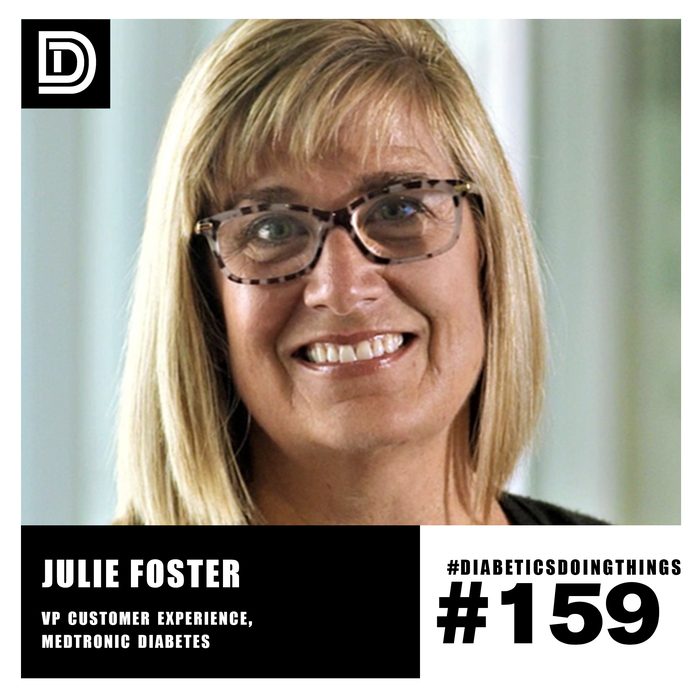
Julie Foster, Vice President of Customer Experience at Medtronic Diabetes, talks with Rob Howe about Medtronic's completed acquisition of Companion Medical, maker of the InPen smart insulin pen. Foster has worked at Medtronic for more than 30 years, including an earlier stint leading the diabetes business in Europe, and recently returned to lead customer experience. She explains why Medtronic wants to reach people who use multiple daily injections, not just pump users, and describes early integration work between the teams after the deal closed. She answers listener questions on affordable access programs, how the iPort injection device might work with InPen, and when Medtronic pumps will get Bluetooth smartphone connectivity through the MiniMed 770G.
Key takeaways
- Julie Foster says Medtronic's goal is to keep the InPen experience stable for current users, with no plan to raise prices.
- Foster says Medtronic is building financial assistance programs, including a CGM discount option and a program called Assurance for deferred payments during COVID.
- The MiniMed 770G, expected in fall 2020, adds smartphone Bluetooth connectivity and is approved down to age two.
- Foster says Medtronic's first integration priority is advancing CGM algorithms toward more personalized dosing insights, with iPort and InPen integration to be explored later.
- Foster says most people with diabetes use multiple daily injections, which is why Medtronic wanted InPen-style technology in its portfolio.
Show notes
9/23/2020 - Part 2
On August, 11 2020 Medtronic Diabetes announced its plans to acquire Companion Medical, makers of the InPen, the only FDA cleared smart insulin pen. Medtronic tasked us to collect questions from the Diabetes Community for Julie Foster, so that’s what we did. Since the acquisition has now officially closed, this episode is part 2 of a 2 part series. If you haven’t listened to part 1, check out Episode 159 of Diabetics Doing Things with Sean Salmon
Disclaimer: Rob Howe is a paid consultant of Medtronic Diabetes, this podcast was made possible by Medtronic but Rob’s thoughts and opinions are his own.
In this episode, Rob and Julie discuss:
Julie’s career with Medtronic (30+ years) and her new role as the VP of Customer Experience at Medtronic Diabetes
Julie’s excitement to integrate the InPen into the Medtronic suite of products
Why it’s important for Medtronic to meet patients where they are in their Diabetes journey
Medtronic’s planned integration for the InPen and what InPen customers can expect to hear from Medtronic
A question from the community, regarding affordable diabetes treatment options and how this acquisition helps with that.
Medtronic’s iPort and integration with the InPen
A question from the community on upcoming news about Bluetooth integration for Medtronic pumps
Questions this episode answers
What is the InPen and why did Medtronic buy Companion Medical?
The InPen is an FDA cleared smart insulin pen that tracks insulin doses and timing and includes a dose calculator on a mobile app. Medtronic acquired its maker, Companion Medical, to bring pump-like features to people who use multiple daily injections instead of a pump.
Will InPen users see any changes after the Medtronic acquisition?
Julie Foster says the focus is on a smooth transition with no disruption to current InPen users, and that service and support will stay consistent while Medtronic looks for ways to improve the experience.
When will Medtronic pumps get Bluetooth smartphone connectivity?
Foster says the MiniMed 770G, with smartphone connectivity and FDA approval down to age two, was expected to ship in fall 2020.
Does Medtronic plan to raise InPen prices or address affordability?
Foster says Medtronic does not intend to raise prices and is instead developing financial assistance options, including a CGM discount program and a program called Assurance for deferred payments.
Full transcript Searchable, with timestamps
Rob Howe: Welcome back everyone. This is the Diabetics Doing Things Podcast. I'm your host Rob Howe. And a few weeks ago in episode 156, we did part 1 of an interview with Medtronic Diabetes about the announcement of the planned acquisition of Companion Medical, makers of the InPen. So some of the questions that we sourced from the community were not able to be featured in that interview because the acquisition had not yet closed. But good news, the acquisition has closed as of the date of publishing. And Medtronic VP of Customer Experience Julie Foster joins us from Medtronic headquarters in Switzerland to talk through the acquisition and answer the questions we weren't able to answer previously on the pod with Sean Salmon. Julie has been with Medtronic for about 30 years in various capacities, and I found her knowledge of the journey in the diabetes innovation side to be particularly insightful considering she's been with Medtronic for about twice as long as I've had type 1 diabetes. Plus, she's just delightful to talk to. I think you're going to really love this interview with Julie Foster. So enjoy. Before we get started, just the usual disclaimers. I am a paid consultant and ambassador for Medtronic. This podcast was made possible by Medtronic Diabetes, but my thoughts and opinions are my own. Also, if you haven't heard part one of my interview with Sean Salmon, you should go back to episode 156 so you can get a nice clear picture of both parts one and two of the Medtronic Diabetes acquisition of Companion Medical. Enjoy. Welcome back to the Diabetics Doing Things podcast. We are telling the amazing stories of people with diabetes from all over the world. And what's really important about that all over the world caveat today is that my guest is calling from Switzerland. So we're going to be covering lots of time zones in our conversation today. My guest is for part two of an interview with Medtronic Diabetes announcing the companion medical acquisition. So some of you will remember our interview with Sean Salmon, which was part one prior to the closing of the acquisition. And today, very excited to introduce Julie Foster for part two. Now, Julie is the Vice President of Customer Experience at Medtronic Diabetes, and she's going to be joining us today to talk through some of the questions that you listeners and you in the diabetes community submitted to Diabetics Doing Things and to myself prior to the interview number one, but that we weren't able to answer until the acquisition was officially closed. So Julie, welcome to the podcast.
Julie Foster: Thank you so much, Rob. I'm just thrilled to be here.
Rob Howe: I'm thrilled to have you. And, you know, as usual, we, you know, we're here with our Medtronic Diabetes family. We're talking about the acquisition of Companion Medical. Sean was so great to give us his time. And I'm glad that we got to mix it up a little bit and meet more of the people behind, sort of behind the curtain, so to speak, of Medtronic Diabetes.
Julie Foster: No, I'm really excited. And I'm actually relatively new to my role, but not new to Medtronic. I've been at Medtronic for over 30 years. I actually was in the diabetes business between 2008 and 2011, leading the business in Europe. And I'm just thrilled to be back now in my new role leading the customer experience team. Well, we're thrilled to have you. And one
Rob Howe: of the things that I think I always talk about, and I sort of sound like a broken record, I'm sure my listeners are like, wow, here goes Rob again on his Medtronic, people behind the scenes, Soapbox. But I'll tell you because this is the first time we've had a conversation. When I first came to Medtronic headquarters, I met with different teams, customer experience team, design team, customer service. And I was so like blown away by how much the individual groups and the people behind the scenes knew about people with diabetes. So, you know, you've been at Medtronic for, and I don't want to, I don't want to date you here. So, you know, be careful 30, 30 years almost in total, if I'm not mistaken. 30 plus. 30 plus. Okay, so we'll leave it at that.
Julie Foster: But we stopped counting at 30. I like it. I think it's better that way for all sorts of reasons.
Rob Howe: So in that time, I mean, you've seen a lot of different changes. I think of my own life with diabetes over the past 15 years and the changes from then to now, but adding another 15 plus to that, what can you share about Medtronic and the employees sort of behind the scenes and thinking about the life of a patient with diabetes, kind of before we get into the fun acquisition news?
Julie Foster: Oh, it's really a great question, Rob. And it's been so interesting for me to be in another part of Medtronic and then come back because there's been an amazing amount of change, particularly on the innovation side beyond what I could have ever imagined. But what hasn't changed at all is this amazing and tireless commitment and passion of our employees and our diabetes family to serve those that are living with diabetes and do whatever we possibly can do to empower and really ensure that we can help those living with diabetes have the best life they possibly can have. And I was really inspired to come back to the diabetes family for all of those reasons. And in addition to that, really inspired because of Sean Salmon's vision and his shift of really ensuring that we're meeting our customers where they want to be on their journey. And we're not trying to direct how diabetes should be managed, but we're doing our best to provide options and ensuring that we're giving the best possible experience. It's been an amazing journey of learning. I'm definitely drinking out of the fire hose right now. And in that learning, I'm listening a lot and learning. We clearly have areas that we've got to improve upon, whether it's the CGM, whether it's consistent supply. But at the end of the day, we have a relentless commitment that has really never changed. but it's even brighter now to ensure that the experience that our customers have, if they choose to be part of the Medtronic family, is positive and as best as it can possibly be wherever you are on your journey. Well, I think that's a really good place for us to start
Rob Howe: regarding the acquisition of Companion Medical, because you're talking about meeting patients where they are. And, you know, some patients, and I think we're going to talk a little bit about the sort of stats later about multiple daily injections, but the InPen's a pretty revolutionary piece of technology. It provides insulin history and timing, as well as tools like a dose calculator on a mobile app, which those previously were only available to people with pumps. And I actually knew some people who would just carry an old pump around and dial up their carbs and things just so they know exactly what, you know, what kind of tools that they were using. So I always thought that was pretty interesting. So how excited are you to integrate the InPen into the Medtronic suite of products with the customer experience in mind?
Julie Foster: Oh, we're really excited because, you know, it was so fun to get to know the co-founder, Sean Saint, and really understand the vision that he had as someone who has type 1 diabetes and really an unmet need to really work to bring some of those pump capabilities to MDI users. And it's really brilliant. And it fits perfectly in the vision that Sean Salmon, our president, has laid out, who the community has heard from before, of really providing options. And together, Together, we really can learn from one another and leverage our strengths. For example, for Medtronic, how can we advance the algorithms that we have and bring them forward to even make that impact even smarter from a CGM perspective to evolve to really proactive and personal dosing insights for those living with diabetes? And that we know we have and are very confident we have the capabilities to do that, but we couldn't do it without, we can't do it alone, right? So it goes to this need, as Sean has pivoted on the vision, where partnership and collaboration is a must to be the best that we can possibly be in serving our customers.
Rob Howe: I'm so glad to hear that because I think, you know, A, collaboration is such a huge part of diabetes in general. Like, you know, whether it's, you know, in the community, whether it's in your family, whether it's with your endocrinologist or your care team. And I think it's just very cool to have that option of collaboration and like sort of an insular unit within your entire sort of 360 diabetes world. So I'm really excited about it.
Julie Foster: Yeah, and I think that the other piece there that, you know, to your point, Rob, we're learning this in our world right now of all the things that are happening, the importance of coming together to solve really challenging problems. But even improving access to the therapies, even ensuring that those that don't have access because of maybe, you know, their economic profile or whatever it might be, that we're also working together to ensure that we are learning, we're listening, we're learning, and we're acting, right? It's good to listen. It's good to learn. But it's most importantly to act and to reach out with these collaborations and really do the best that we can to serve the community.
Rob Howe: Well, I'm glad you brought up access because we did have a question from the community sort of in regards to affordable diabetes treatment options and how this acquisition helps with that. So can you talk a little bit about how important it is in Medtronic's plans for the InPen in terms of bringing more options to more people?
Julie Foster: Yeah, it's another really great question. And we are very sensitive to the realities of the financials and the challenges that can contribute to access to these therapies. And so our intent definitely with not only InPen, but really our entire portfolio from a technology service and support is not to increase prices at all. In fact, it's more of the opposite where we are working to develop programs that are going to help. Like, for example, we have some programs right now with we have one called CGM discount access for those that perhaps don't have insurance anymore for their CGM. And they used to maybe it's a Medicare patient or whatever the reason. How can we help and provide a discount so those patients don't have to make a choice of whether or not to have their CGM? And we've also have been working on a program. We have one called Assurance as well, that during this, these extraordinary times of COVID and the impact that it's having on so many of our family and friends and neighbors. I mean, how can we help with deferred payment plans, with having supplies for a few months and you can pay later, or just different creative options on the financing side. So we continue to look at that. We have more to learn there. And we're appreciative and grateful for the feedback that we receive on different thoughts and ideas, as this is something we're going to continue to focus on and also expand as we learn more.
Rob Howe: Yeah. And you mentioned that there's not just for people with diabetes on a regular basis, but now there are so many other challenges sort of that fit into a life with diabetes with COVID and so many people in the United States unemployed and losing insurance and things of that nature. Right. I think that also speaks to, and this is really access as well. You talked about, and Sean has mentioned previously, and I've heard him mentioned it a couple of times. So I know it really is sort of a banner line for you guys is meeting patients with diabetes where they are. And what that means in terms of overall patient populations, you know, I'm really interested to hear your perspective on this because most patients treat their diabetes with multiple daily injections. I know for me, uh, and for those of us in the diabetes community who are, we're sort of the tip of the iceberg in terms of, uh, we, we know what options are available. there's many people that use CGM. There's many people that use a variety of different pumps, but for most people with diabetes, they are multiple daily injections. So why is it so important for Medtronic to be able to meet those patients literally where they are,
Julie Foster: where they are not using a pump device? Well, I think there's a couple of reasons. I think first and foremost, the mission that we have at Medtronic that was penned by Our founder, Earl Bakken, who, by the way, had diabetes, had a pump, he crafted this vision in 1960. And it's focused around six tenets of alleviating pain, restoring health, and extending lives. a big premise to this vision. And I think a big reason when Sean came into his role, that he took a pivot and almost like a broadened the lens. Maybe that's a better way to say pivot because we're not moving anywhere. In fact, we're going deeper in the work we're doing with our pump technology. But in order to really bring that mission to life, it's about access in order to really get to people from around the world that have all different kinds of constraints we we have to meet them where they are and have options and we're in this for the long haul you know we we haven't always you know got it right and we've made some mistakes along the way, but we're deeply committed to address those gaps, as I said at the beginning that I've learned on my journey. And the acquisition of Companion Medical and the InPen is a very intentional step to bring that mission to life and to ensure we're providing options to those that choose to manage their diabetes however they want to. And it's not us to direct any of that. It's really our responsibility to provide the best therapy, best innovation, best options, the best service, support, training, and then meet them where they are. And InPen gives us that opportunity to do so. And I think there's a lot of excitement on the companion side as well because of Medtronic's size and global footprint, which is exciting for all of us to be able to provide another option to more people and to work together and learn from one another to optimize the technology and the intelligence of our really smart people on both sides to take these algorithms that are quite advanced and see how we can bring that to the in-pen and help it make even smarter with the end goal of being, you know, just helping a bit and reducing the burden and reducing, you know, having less things to think about and having more automation. And so we want to make sure we're carrying it through that portfolio. So it's really key to really bring our mission to life, which is what we're all called to do here at Medtronic. And certainly the very clear vision that Sean has laid out, which I think inspires all of us every day, the fact that we can really expand and help more people and provide options to more people. You know, when you were talking about
Rob Howe: the, you know, different touch points. It reminded me that like customer experience for a person with diabetes covers so many different things. I was like, okay, is it a star? No, I think it's like a 10 point star. And you know, all of the different ways that a person's life is affected by the technology and the treatment options that they use. You mentioned this and kind of alluded to it already, Medtronic size and global footprint. What did the companion medical team share with you in regards to their reasons to wanting to complete this acquisition? Was that a big part of it, globalization and access?
Julie Foster: Yeah, I think that was definitely very exciting to them. And the name that Medtronic has and the awareness out there globally. But also, I would say the ability to advance the technology. You know, a lot of, you know, Sean Saint and his team, they're so excited about working together and learning from one another to see what we can do to really advance those algorithms, as I mentioned prior, and bring them to the pen. And you know what? And other other options that we'll bring forward, whether we develop them ourselves or different acquisitions or different collaborations that we'll do. And having someone like Sean and his team now being part of our family is going to help us. You know, it's going to help push us collectively to do better, to move faster, and to challenge one another if we're doing the right things to really, you know, achieve the vision that we have.
Rob Howe: You know, it's exciting. And I think, you know, even still, like we're just now at the first steps of sort of the integration. And I think now that the acquisition is official, it's closed, which is awesome. Yeah. Yeah, it's exciting. What can you share about those sort of first steps and like in the planned integration plan for the InPen and especially to current InPen customers? What can they expect to hear and see from Medtronic?
Julie Foster: Well, I'll start with the latter part of your question first, because I want to make sure that it's incredibly clear to the community that our goal and sole focus, main focus that we have is to ensure a very, very, very smooth transition here. and that from an in-pen user standpoint, there's no change. If anything, our goal will be to make the experience even better, but stability for the in-pen users is really front and center and making sure that that experience remains consistent. So the teams are extremely focused on that and everything is around that, with that being the focal point and ensuring the service, the support and everything remains consistent as we go through this integration. We had a lot of our meetings this week, you know, because we closed last week and because of COVID, you know, we can't really have people together. So it's been on all these crazy Zooms and we're trying to meet people for the first time, which is so incredibly awkward. But we had a few people that we had go down to the companion medical office, which is in San Diego. And of course, social distancing and being very, very safe. You could see them, you know, in the room very far apart. But Rob, you would have just died because I think so many people have been alone in their, you know, small offices and rooms for months. Just the energy, I think, of being physically in one room together was just palpable. And that combined with the excitement of bringing our families together, it was incredibly inspiring for me sitting halfway across the world, you know, watching on a Zoom. I was so excited just watching it because the teams are incredibly energized. They're digging right in. They're making sure that we're integrating really key functions across the business quickly. And again, ensuring that the customers are always at the center. So whatever decisions that are being made, that question of, okay, let's make sure that there's not going to be anything that could disrupt what's the experience that our in-pent customers are having today. and we'll only be looking at things that even can improve that experience. But there's a lot of great excitement and energy. I can tell you that for sure.
Rob Howe: That's exciting. And I think one of the most relatable things to that is twofold. Number one, just like we're today, people meeting for the first time via Zoom. And how it's like, who talks first? And how do you get into that and really develop a relationship with somebody where you can't really shake their hand or see them? But then also when you finally get to meet somebody in person, obviously social distancing and wearing masks and being very safe. The other day in my office, I had two employees just come in and pick up something and they got there at the same time. And just the energy of being back in a room together, I just really into that so much. Yeah, it's the little things, you know. I know.
Julie Foster: I'm that way with my postman right now. I run out and see him and he don't even speaks a whole different language, but he's my new friend now.
Rob Howe: It's good to see human faces. I'll tell you that much. That's right. I'm really looking forward to it. And I think I'll never take for granted again, being able to, especially in the diabetes world, because so much of my life has been spent in person at events, at diabetes gatherings, and I'll never take those for granted again.
Julie Foster: No, no, I couldn't agree more.
Rob Howe: So I want to talk a little bit about an existing product that Medtronic has that can also affect and integrate with the in-pen. It's called the iPort, which is the small injection port that people can actually wear so that they're not injecting into the skin multiple times per day. How is the iPort going to integrate with the in-pen?
Julie Foster: That's a really great question. And it's actually something that we've talked about. And now that the deal is closed, we're actually going to be looking into that in a lot more detail. I will share, though, that our first priority is really on the CGM side and working to advance the algorithm work for CGM to move closer toward this proactive and personalized dosing and insights. So that's really our first priority, but we definitely will be assessing that and looking at opportunities.
Rob Howe: Very cool. I'm excited for the for the CGM integration as well. I think for me personally, I'm excited to have the option to maybe switch to a medtronic therapy that I could that's multiple daily injections. If I just want to take a little pump break for a couple of weeks.
Julie Foster: Right. Right. Yeah, absolutely. And I think that's really in line with, you know, the vision that is so inspiring here that Sean's laid out is just providing the options. And for whatever you choose, whenever you choose to do it, that empowers you, gives you freedom, but also gives you stability, right? So I think that's the importance of all this algorithm work that we're trying to do that reduces some of the burden, at least us playing a small part in that and really providing the best options we possibly can along with the support and the service that we continually need to advance as well.
Rob Howe: well speaking of your customer support team i know this last question that we sourced from the community is one that they're very familiar with um and it's it's one thing that i think a few people messaged when i when i put the question out there i put the little question box out on instagram there are a few people like please ask about this i'm dying to know when i will have bluetooth integration with my insulin pump so that they can see glucose numbers on the phone that they can do to share for caregivers and parents and also people like me who just want to be able to check their phone in a meeting. What do you have for us there? What's on the
Julie Foster: roadmap? Well, we're really excited that we, I think I can use the word finally, even though I'm coming new, I can feel the finally with the Medtronic family too, that we finally are there and we got the approval from the FDA. And now we're working to prepare to ship. And we're looking at the latter part of this fall to introduce the MiniMed 770G, which we're excited about because not only does it have the smartphone connectivity, but it also has the indication down to children to the age of two, which we believe is so important and meaningful. So we're excited to bring that out. And we continue to work on other advancements in the pipeline with the portfolio. And we'll look forward to working with you, Rob, to share those updates with the community so everyone can see the progress that we're making.
Rob Howe: Well, I, for one, am excited to find that Medtronic CGM app, open it on my phone and have it all connect. I'm super excited. I'm looking forward to sharing lots of screenshots when that's here.
Julie Foster: We are too.
Rob Howe: Well, Julie, I want to thank you for your time today and for being so open and giving in to the community to answer these questions following the acquisition of Companion Medical. Do you have any closing comments that you'd like to share with the community kind of as you're coming back into the diabetes space, you know, after a few years and literally coming back over to the United States as well? Yeah.
Julie Foster: Well, I think first and foremost, Rob, I want to thank you and really recognize the great and important work that you're doing. And it's really a privilege for us at Medtronic to be a small part of the incredible work that you're doing. So thank you for all of that. And I'd also, on behalf of our Medtronic family, I'd like to, I think the most important thing is just to thank the community. As I mentioned, it's very clear we have gaps to address, improvements to make, whether it's the CGM or supply or, you know, things around the experience. But what I can tell you without question is that we are deeply committed, each and every one of us, me personally, in this new role, especially coming back, very, very committed to get it right. and we know that we have to earn trust, right? You have to earn trust in life and you do that by ensuring that we're being very open, that we're being transparent, that we're sharing things along the way. We do the things that we say we're gonna do and that we really communicate consistently. but our commitment to all of you is unwavering and we appreciate the opportunity to serve you immensely and we never ever take it for granted so thank you for the opportunity thanks for letting me be here with you today and if you have any special request for me to bring something back from Switzerland like some Swiss chocolate or some cheese I know I think probably the best chocolatier, I want to say the world doesn't live too far from me.
Rob Howe: You know, the, uh, we were, we were talking, we were talking before we started recording about the trip I took to Medtronic, uh, EMEA headquarters in Switzerland two years ago. And you know, it doesn't, it doesn't surprise me that of course, one of the world's best chocolatiers lives close by because that place just continues to surprise. And, uh, and the joke, I'm just going to continue to put it out there because maybe one day it'll happen. If I just disappear. You guys never hear from me again. I'm probably coaching high school basketball somewhere in Switzerland. So I think I'll be able to find you. Okay, good. Everybody. I'll find Rob. Well, good. Well, Julie, thank you so much again for your time and your kind words and, and, uh, you know, about what we do here at Diabetics Doing Things. It's, it's interesting. You were talking about one of the benefits, um, you know, with Medtronic and, uh, the founder being having diabetes and wearing a pump. And, you know, it occurred to me that there's been a lot of, there's a lot of change in the diabetes technology community. But over the 12 of 15 years that I've lived with type 1, I've had a Medtronic pump by my side. And that works for me and not everybody wears a pump. But now there's an option for Medtronic therapy to be to kind of go outside and like you said, expand the lens. So thank you to you and your team. And I'm looking forward to working with you more once you're back over on a state side and more integrated into your role.
Julie Foster: Thank you so much, Rob. Looking forward to working with you too. And thanks everybody for listening.
About Julie
Julie Foster is Vice President of Customer Experience at Medtronic Diabetes. She has worked at Medtronic for more than 30 years, including a stint from 2008 to 2011 leading the diabetes business in Europe, and recently returned to the diabetes group in her current role.