

Diabetics Doing Things Comedy with Eric Van Leeuwen
Episode summary
Eric Van Leeuwen is a Dallas Comedy House improviser who was diagnosed with type 1 diabetes in 2010 at age 27, after doctors first told him he had type 2 and put him on metformin. He describes the fear of that misdiagnosis, the later endocrinologist visit that corrected it, and starting insulin. He and Rob recount how Eric found the podcast in 2016 by Googling "things diabetics do," which led him to Rob's bio and Dallas Comedy House, where he enrolled in improv classes. They discuss the diabetes online community, using Omnipod syringes as comedy props, performing with alarms and blood sugar swings mid-show, and how having diabetic friends at the theater makes managing the condition easier.
Key takeaways
- Eric Van Leeuwen was misdiagnosed with type 2 diabetes at 27 and put on metformin before an endocrinologist corrected it to type 1 about a year later.
- He discovered Diabetics Doing Things by Googling "things diabetics do" in 2016, which led him to sign up for improv classes at Rob's theater, Dallas Comedy House.
- Eric says he learned practical tips, like swabbing a pump site with alcohol before insertion, from watching other people in the diabetes online community.
- He uses leftover Omnipod syringes as comedy props on stage and in the short film "Killer Friends," saying they read well on camera.
- Eric says having diabetic friends at the theater, including Rob, Lindsay Power, and Scriven Bernard, means he can just say he needs a few minutes to treat a blood sugar issue without explaining further.
Show notes
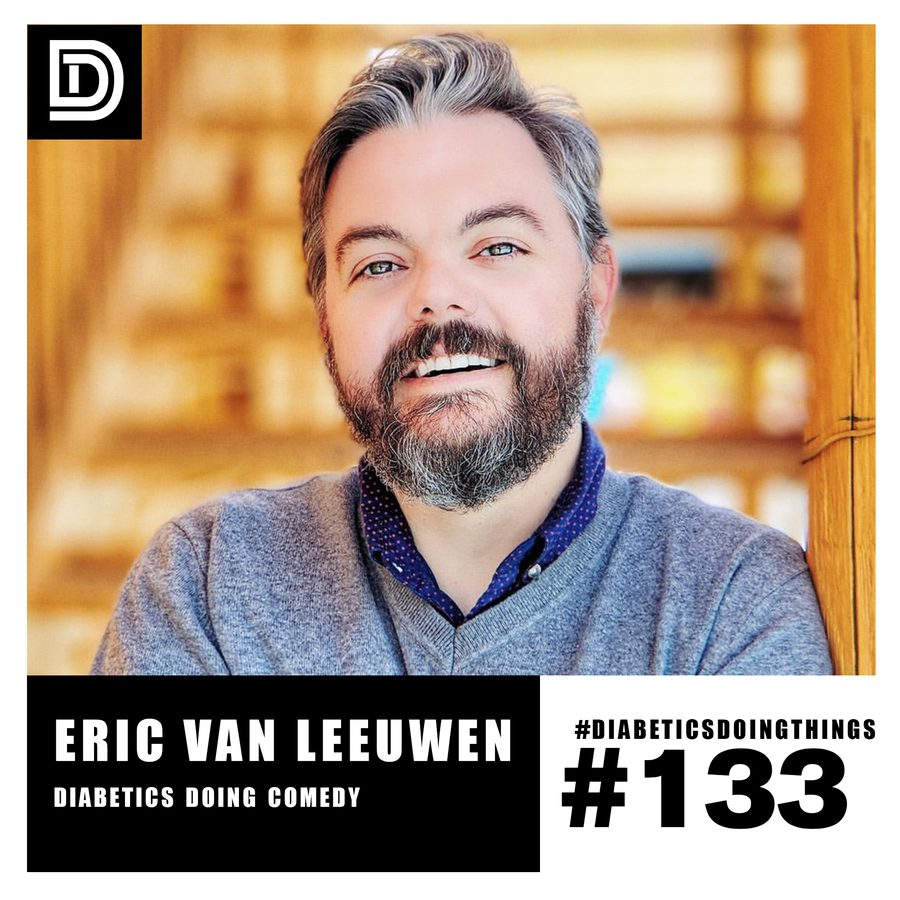
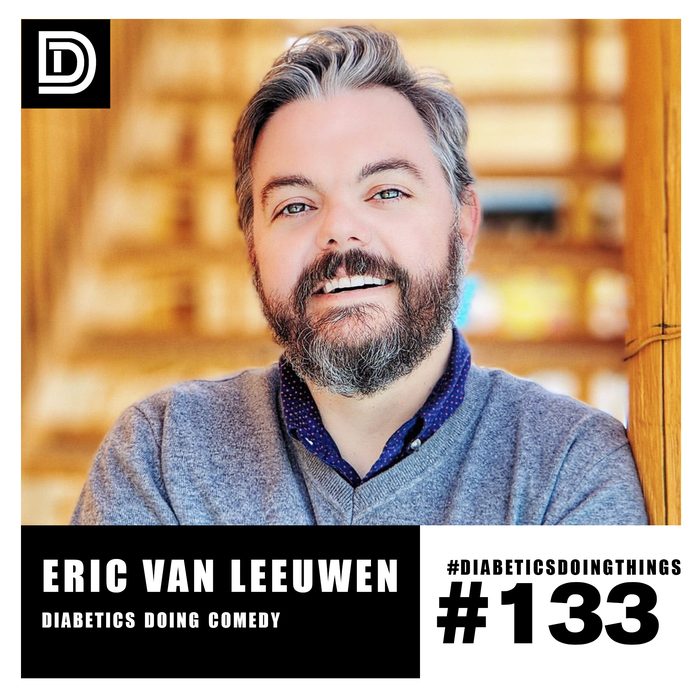
I’m excited to introduce you to Eric Van Leeuwen (@vanlooenator on Instagram), my friend who I met through Dallas Comedy House!
Eric joins Lindsay Power and Scriven Bernard as other DCH T1Ds who have been on the podcast, and he shares a story that I had forgotten about how he discovered this podcast.
After signing up to take level 1 improv in 2016, Eric was googling “Things Diabetics Do” which led him to this website and this podcast, and in reading my bio discovered that I was a teacher and performer at Dallas Comedy House, where he had just enrolled in classes.
Since then, Eric and I have become good buddies through our “beetus probs” Facebook messenger group, which features multiple T1Ds associated with the comedy community.
This isn’t Eric’s first time on Diabetics Doing Things, he also appeared in our first live show In 2018 at DCH, where Lindsay, Scriven, Eric and I improvised Diabetes related scenes to raise money for JDRF Dallas.
This episode is sponsored by Real Good Foods! Be sure to check out their new Breakfast Sandwiches, made with cauliflower cheesy buns with only 2g net carbs! They’re packed with protein (18g) and have no gluten or grains. Available in sausage egg & cheese and bacon egg & cheese flavors and they’re ready within seconds. Order them online or find a store near you today!
Questions this episode answers
Was Eric Van Leeuwen diagnosed with type 1 or type 2 diabetes?
He was initially misdiagnosed with type 2 diabetes at age 27 and prescribed metformin. About a year later, after his blood sugar became erratic, an endocrinologist diagnosed him with type 1.
How did Eric Van Leeuwen find the Diabetics Doing Things podcast?
In 2016 he searched "things diabetics do" online, found Rob Howe's bio mentioning Dallas Comedy House, and realized he was about to start improv classes at the same theater.
How does Eric manage diabetes while performing improv comedy?
He has lowered his pump's temp basal before shows to avoid blood sugar highs from adrenaline, and has discreetly treated a high blood sugar alert mid-scene when needed.
Does Eric use his diabetes supplies in his comedy?
Yes. He uses leftover Omnipod syringes as props in sketches and in the short film "Killer Friends," saying the production team felt at ease once he explained he was type 1 and knew how to handle them safely.
Full transcript Searchable, with timestamps
Rob Howe: Ladies and gentlemen, welcome back to the Diabetics Doing Things podcast. It's me, it's Rob. This is a very special episode. Not only special because the format is a little bit different. We're outside on the patio at the world famous Dallas Comedy House, but we're also wearing sunglasses. and Eric Van Leeuwen and I are talking a little bit about how Eric and I met as well as Eric's journey with type 1 diabetes. He was diagnosed as an adult. Many of the guests on this podcast who were diagnosed as adults were first misdiagnosed as type 2 and we talk a lot about how adults with type 1 diabetes have to overcome that struggle a lot of times with their doctors as well as just the general community and spreading awareness about what type 1 diabetes is and how you get it. So I hope you enjoy this episode. It's really, really funny. And Eric has become not just one of my favorite friends with type 1 diabetes, but also one of my favorite comedy voices in the Dallas community in general. So hope you guys enjoy this very special episode with Eric Van Leeuwen. Hello, ladies and gentlemen, thank you for continuing to listen to diabetics doing things. We've been doing this for four years now, thanks to listeners like you and the support of amazing sponsors like Real Good Foods. If you're involved in the diabetes online community, then you have for sure heard of Real Good Foods and their low-carb pizza and enchiladas, which are delicious. But they've really outdone themselves this time with their new breakfast sandwiches. It's just like your typical breakfast sandwich, sausage, egg, and cheese, or bacon, egg, and cheese, except the biscuit is made out of cauliflower and the whole sandwich has only two net carbs. That's two net carbs. And if you pop it in the microwave, it's ready in seconds. I'm not a big breakfast guy because I don't like having to deal with big blood sugar spikes for a high carb breakfast. But when I'm really craving a breakfast sandwich, I grab a real good food sandwich out of the freezer and hit the road without having to worry about a big spike in my blood sugar. Check out realgoodfoods.com to find them in the store near you or use code Rob Howe, that's me, to get a discount when you order the sandwiches online. I'm a big fan of brands who continue to support creators with diabetes and there has been no bigger supporter of me and my friends in the diabetes community than Real Good Foods. If you haven't checked them out yet, give them a shot and let me know what you think. And now let's get back to the episode. Okay, welcome back to another episode of Diabetics Doing Things. This is a very special episode for a few reasons and very personal to me in many regards. One, we're recording at the world-famous Dallas Comedy House. Number two, we're outside. This is the first ever outdoors diabetics doing things we are also both wearing sunglasses that's right so for you guys at home this is big this is a big moment i hope that you can feel the sunglasses through our voices mr eric van lewen welcome to the show thank you thank you rob thanks for having me uh i think we sound cooler yeah i actually am just getting i get a big sunglasses energy from this just just the way everything feels the ambiance uh clearly we are people who are cool enough to wear shades outdoors. That's right. Which is good. It's all I ever wanted. Yep. That's it. I see, you know, you came prepared as well. You got your phone and your Omnipod PDM on the table. That's right. You
Eric Van Leeuwen: know, a funny story. I've been up here for a little while today and, uh, and I was up here for an hour doing some, uh, writing and some pitching with some other people and, uh, and couldn't find my PDM at all. So I thought that I would have to, to go home and get it. It's a little very relatable. Yeah. It's just the, you know, the, the diabetic thing. It's the, it's like the, The thing that makes the Omnipod great is also the thing that makes it terrible because I can just leave without it.
Rob Howe: There's a thing that you need to have with you all the time that's not connected. That's right. That's right. It was in my car, though. It was in my car. Also, we are, like, directly in the Love Field flight pattern, so you guys are going to hear some planes flying over. But that's just part of living in Dallas. And we're in Deep Ellum, which is an amazing place that I lived for a number of years in. If you ever visit, this is a place that you should go. This is it. This is where I mostly host all my in-town meetups as well. nearby in Deep Ellum so I can Uber for $3 back to my apartment.
Eric Van Leeuwen: It's a great place. And then there's great comedy, great food, all kinds of stuff down here. So yeah, come check it out.
Rob Howe: So kind of with that in mind, we've got a little preamble. Eric, introduce yourself, obviously. And then let's talk a little bit about how we know each other and came to know each other because it's a really interesting and personal story for me that we'll get to in the story. So introduce yourself. And also, obviously, you have diabetes. Let's talk about that.
Eric Van Leeuwen: Okay. Well, my name is Eric Van Leeuwen. I live here in Dallas, Texas. I was diagnosed with diabetes back in 2010. It was, I was 27. Yes, 27. I just got married and it was sort of a funny story. And I'm like a lot of people, I was diagnosed a little bit later in life, not as a child. My wife, my new wife at the time, asked me to go get a physical because as a good 27-year-old guy, I wasn't going to see a doctor regularly, so she asked me to go do that. They ran some pretty standard tests, and they gave me a call a couple of days later and said I needed to come back in immediately, and they needed to speak to me. And they were a little dodgy over the phone. Like, they wouldn't tell me why. And finally, I got it out of them, and they said, you know, your blood sugar is really high. We think you have diabetes. um so I went back into this primary care physician and they said you know you're you're 27 so you must have type 2 diabetes and I left with some metformin and uh it was a couple of years later um or maybe a little less than that but I I finally was told by a nurse there to go see an endocrinologist and uh they ran some tests and so and let's talk about this for a second
Rob Howe: because I think there's been a lot of people on the pod and I've met over the years who were diagnosed after the age of 18 who went to a primary care or an urgent care. They said, Hey, your blood sugar is high. Take some metformin. You clearly have type 2. Um, and that's kind of it. And I think as a patient, you're like, okay, well, the doctor says this, that must be true. Uh, and so you didn't see an endocrinologist for years before that.
Eric Van Leeuwen: Right. Um, I went to the primary care because the, the metformin worked for me at first. Uh, I wasn't hospitalized for any reason. My A1C was 11 point something when I got diagnosed. But generally, I was okay. I got on the metformin and I felt better. And that was effective for a time. And my blood sugar started to, about a year into this, get a little weird. And I remember I had to call the nurse to say, you know, hey, is something wrong with my medicine? And she said, well, what does your endocrinologist say?
Rob Howe: And I said, uh, and oh, what? And that was a key insight that was not told you about, I'm sure.
Eric Van Leeuwen: That was a big thing. And so she said, you need to go to an endocrinologist. And she actually, she gave me a recommendation. I went in to see them and they ran some blood tests and, um, and that was when they, they, they said, no, you're definitely a type 1. Uh, I guess I was at a honeymoon phase and maybe the metformin extended that out a little more. I'm
Rob Howe: not sure, but, um, I mean, metformin works. Yeah. Oh yeah. It does what it's supposed to do.
Eric Van Leeuwen: It was effective. It dropped my A1C so quickly. You know, it was crazy. It was crazy that I didn't realize that I was feeling bad until I started feeling better until the medicine started to work. And I was like, oh, man, this is I sleep better. I, you know, I feel better after going on like a two mile walk. All of those things started to add up. And and I realized that, you know, it's something that had probably been going on for a little while. You know, I don't think anyone gets a gets blood sugars out high like overnight. Sure. It happened over time. Yeah. And that's
Rob Howe: interesting, you know, you, the insight, and I'm going to use this as a soundbite maybe for years, who knows, uh, you've agreed to be on this podcast. So that's me. I'm going to rip off your cool stuff. Uh, but you said you didn't know that you were feeling worse until you started to feel better or how bad you were feeling until you started to feel better. And that's something that I think really resonates with me. I remember when I was in the emergency room and I've said this before on the pod, this very attractive nurse, uh, at me at age 16 was like, Oh my God. Hey, uh she was like hey i'm gonna give you some insulin in your saline bag you know in my iv and it should make you feel better and she gave it to me i was like whoa like this is whatever you guys think is wrong like you're right this is it yeah uh give me some more of that stuff um and i think i was like i didn't realize that i was feeling so bad and so for you uh obviously when they tell you when the endocrinologist was like hey we got some news for you you're type 1 versus type 2 were you just again like uh excuse me what is this uh you know i it was uh
Eric Van Leeuwen: It was a really scary moment for me, and I've had two very scary moments at doctor's offices around this, and one was that, or I guess maybe three. One was when I was first diagnosed. They put me on metformin, and that was a tough one because they said, you know, here's your metformin, and you're going to come back in here, and you're going to know more about diabetes than we do the next time I see you. So, um, that's, they were, that's not reassuring. No, it was not reassuring. They were right. They were absolutely right. I came back in and I had done a lot of research on diabetes at the time. And so I knew a lot more, um, than they were throwing at me. But, uh, when I went to the endocrinologist's office and they told me that I was type 1, um, I was, I was terrified. Cause I, at that point in time, um, I think the only thing I had ever heard about type 1 was that these people, you know, had to stick themselves with needles. and they were sick all the time. That was their whole world.
Rob Howe: We got a bad rap out there.
Eric Van Leeuwen: Yeah, it was absolutely a bad reputation. And I mean, I grew up, I don't think I knew anybody that was type 1 when I was a kid. If I did, they never said anything about it or never had to give themselves an injection or test their blood sugar around me. The only other people that I really knew with diabetes were older people in their 50s and sixties and they had gotten it late in life. So I felt like kind of an island, which was weird.
Rob Howe: So, um, yeah, it's interesting. Like I think you're, I think back to before I had any experience, I had a couple of friends that weren't like, and somebody recently I was interviewing said, you know, I knew there was somebody around with diabetes. I didn't really know them and didn't really resonate with me. Like anything that they did, we didn't have anything in common as people. So diabetes never really came up or it wasn't helpful for me to have, you know, them as a friend. They weren't in my camp sort of, you know, so to speak. Right. Uh, and so I had a very similar thing. So it's like, yeah, you know, what do I, what do I know about this? Uh, and then, you know, obviously the, having the doctors say that, you know, is a, you know, what your first diagnosis said, you're going to know more than about diabetes than we do. Now we can laugh about, I think people listening are like, yeah, yeah, we actually do know way more because we deal with it more often. Uh, obviously every minute of every day. Um, but yeah, that's, that's an interesting thing is like, you know, you have, you feel like you have this thing under control. You've learned, you've done your research. I know you're a researcher type of guy. You're not afraid to ask the questions and go on the Google machine and figure it all out. Uh, and then now you figure out it's like something totally different. So that was, I assume, number two, the scary moment
Eric Van Leeuwen: with the doctor. Yeah, that was number two scary moment. Um, and they, you know, at, at that time for what, you know, the, as you said before the metformin was working, like everything was going okay. And so they didn't put me on insulin immediately because I was stabilized. They knew that you know they knew that everything was going on but my a1c was um maybe like it was between six and seven like i was doing okay uh and it was that that moment that i came in um some months after that and my and it was time you know it was sort of like a it was it was like bruce buffer it's time yeah yeah it was it was just a uh it was just a weird moment because i knew i'd been waiting on it i knew it had been going on and they called the doctor in and i see a i see a nurse practitioner who's fantastic. We have a great relationship and she's very knowledgeable and very good. Um, she's, she works with an endocrinologist. Um, and it was maybe the first time I had seen him, he came in to let me know that it was, that it was time. Here's the insulin and this is what's going on. And I remember, you know, just a, like a, a nearly 30 year old man, like, you know, and I broke into tears in his office. Cause I was like, Oh God, like I, it was scary. It was going to have to, um, that I was going to have to give myself these injections, uh, every day forever, you know, until we find, you know, until we find a cure. Um, yeah, it's, uh, you put it that way. And that was, and that's what it looked like at the time. Um, and I think that that's, I don't know. I think that, that if, if you're somebody like me and that's the way that that's the way that it seems like that's where your head goes at first. And, and again, not having anyone around me that was type 1, not really knowing, you know, not really knowing anyone, not having anyone in my circle. Sure. Um, that's why it ended up being so great. And, and I think this kind of leads into how you and I met each other, Rob, on a separate note altogether. Uh, you know, I, I, I learned to live my life. Like I, I walked out of that doctor's office that day. The, the, I'm glad you did. Yeah, it was great. Um, uh, you know, managing my diabetes and living my life. And I, a couple of friends of mine and I decided that we were going to sign up for improv classes here in Dallas. And, you know, I'm on the, I'm still on the computer all the time looking, you know, looking up diabetics. I spent a lot of time on the diabetes subreddit, which was a great resource for me at first.
Rob Howe: Our diabetes, shout out.
Eric Van Leeuwen: Oh man, big, big shout out, seriously. And that was my first that was my my first sort of look into helpful diabetics in the community, like out in the world, like just trying to like answer questions for other people if they've got the you know, if they've got the answers. So I was I think I literally was just like, are there things that diabetics do?
Rob Howe: And I got a question we all ask.
Eric Van Leeuwen: Exactly. And and if that's a question you've got, this is the podcast for you. Um, cause I Googled diabetics doing things and, uh, and your website showed up, Rob. And I, you know, and I, I looked at like your bio and it was like, Rob, how performs and teaches improv comedy in Dallas, Texas at Dallas comedy house. And I was like, I'm going there. I'm going to be there. Mind blowing.
Rob Howe: Like, uh, to me, like you reminded me of this story when we had lunch earlier today, but, uh, the first time we met, you had told me this. And I think I was like, I just had ankle surgery. I had just quit my job. So like I, my capacity for taking information at that point was just like, so I was, you know, on pain meds and like just unable to really wrap my mind around it. Also, we've come a long way as a podcast and as friends and you know, I've been all over the country and some parts of the world doing this diabetes thing since then. So hearing that now, just like a, the synchronicity of like the things that had to happen for that to be the case. Yeah. It just hits me right. It hits me right in the gut. uh it's just like yeah you know like this is why i do this that exact question like are there things that diabetics do uh if so you you may be entitled to compensation follow this podcast you know does this sound like you do you know someone like that call me right now um because you know and so i mean but even then like you had finished so you signed up i guess october 2016 we talked about that yeah it was when you're taking classes uh yes we had done some pods in 2016 i think six episodes 2017 is where I really leaned into it and you and I uh have been friends since then through the theater and yeah we even did uh people may recognize you from the 2018 uh improv for human style diabetes podcast that we did here live at Dallas comedy it was a lot of fun so much fun actually I still think it holds up stands alone as a like on its own outside of diabetes content as a very funny episode yes uh but very very good highly recommend I'll link to it in the show notes but um a very fun time uh so we got together with our other group so lindsey power uh lindsey power key who uh recently was remarried uh congratulations to her she's also expecting her third child here in the next few weeks so super exciting that the the family is growing uh and scriven uh bernard who has been on the podcast a number of times uh were obviously some of my first episodes because i knew them through the theater i had relationships with them with outside of diabetes and we really didn't even talk that much about it but we had recently started a facebook chat and we're like hey we should just get together for dinner and lindsey i believe had met you and scriven and made you like hey there's a new guy at the theater his name's eric we should invite him uh so we invited him that was the first time we met we ate uncle uber's sandwich shop highly recommend yes right around the corner yes in deep ellum you're here in deep ellum at any time like really anytime they have an amazing like amazing ribeye sandwich shaved ribeye sandwich as well as a burger deal on Tuesday, which I've gotten more times than I care to admit publicly. But we met there and we had this conversation and like, you know, kind of became part of our de facto comedy diabetes family. Yeah. Which since then has been, you know, still remain and we still have our Facebook group that we pop into every time one of us is having a, one of those days or an interesting article kind of pops up. And I frequently when I'm on panels or talking to people, I'm like, yeah, I, yes, I have this external diabetes community with the podcast and with my Instagram. But I also have this like private one that's just for me and my friends that I can really talk about. It's amazing how
Eric Van Leeuwen: helpful that can be. Oh, it's huge. And, and it's such a, it's, it's made such a big deal for me to, to have people that, that I could do, you know, that I can do this face to face with. And, and, and Rob and I have been trying, you know, you and I, we've been trying to get together for a little while just to like chat and hang out. And I'm, I'm, you know, we're in the same city and that's, so cool you know and I see Scriven and Lindsay here at the theater as well and I get to just to say hi and and we don't have to talk diabetes or I can you know if I'm just having a rough diabetes day I can just tell them I can just say hey you know this is what's you know this is what's going on and um you know I I know they know I know they know what that's like and that makes such a
Rob Howe: that makes such a big difference and I think when I talk to people about what it's like to meet someone with diabetes for the first time who's like also cool you know you're going to a meet up say you go into a meet up or you're going to your first meet up or your first jdrf conference or your first beyond type 1 event or your first you're just my type meet up or whatever the case is you meet somebody with diabetes and instantly you have this deep connection of like this person really knows what i'm going through really knows who i am you kind of can skip all that preamble of, hi, I'm a person with diabetes. This is what goes into that, blah, blah, blah, blah, blah. They already know. Yeah. And I think here especially, you know, Lindsay and I are on a team together. And Scriven and I, he sat in for my bro-prov troop a couple weeks ago. And we talked a little bit of diabetes before the show. But there have been times where, you know, it's like, oh, I'm feeling weird. I'm going to go check my blood sugar. And it's like, Lindsay will check in with me when she does that versus everybody else on Primary Colors because she's like, Primary Colors is our improv team. And she'll look at me and be like, hey, I need to go fix this real quick. Whether it's low blood sugar, high blood sugar, whatever. And just having that, it's like, oh, yeah, she's fine. She's just going to take three minutes and then she'll be back. That explanation to everyone else, I think, sets people at ease. So get you a friend with diabetes, I would say, is my ultimate tagline. So here we are at Dallas Comedy House. I also want to plug, you were in a very funny short film called Killer Friends. last year, which is also available on Amazon Prime. I'll link for that to my good buddy, Brent Crabill, the mastermind behind deep bro films, kind of spearheaded, but really love your role in that, as well as some of your characters, you're able to use some diabetes products and like leftovers to influence some of the, you know, just as props in your character work up here at DCH. So why don't you talk a little bit about like how, you know, when you're building
Eric Van Leeuwen: characters how diabetes plays into that sometimes um well so in the case of in in the case of this character and i hope i don't give away too much because you should definitely watch us on amazon
Rob Howe: it's like five minutes long and it's great jokes per minute very very high it's a very yeah it's
Eric Van Leeuwen: it's a very it's it's like a it's like a quick little meal um of comedy uh i i i wrote this character who was a hitman and he was uh questioning he was he was sort of grilling a guy because he had to get some information out of him. And because I have an Omnipod, every time I open up a new pod, I've got a syringe that's there. And so I'm just able to use that for fun. And it's interesting.
Rob Howe: It looks great on camera.
Eric Van Leeuwen: It looks so great on camera. So we did it in the film as well. I've done this on stage. I was actually in another sketch show where we were using a product that we were calling Electroblast, but it was in syringes. And so I just had like five or six old syringes in my bag for this to use. And it's, you know, it's funny because it plays really well on stage. It's also sort of funny to me to think about because I take for granted the fact that I just use this all the time. I'm comfortable holding it. It's interesting to see people get a little freaked out at first. What are you doing? You're like, no, it's fine. And, you know, I've taken the needle out or like I can handle it. I remember when we were shooting the short film, there was actually a talk about there's a talk about how we needed to be really careful because of this and that. And when I explained to them, hey, I'm type 1 diabetic, like I'm trust me, I'm very familiar with this. It actually put it actually put the production team at ease a little more. They were like, oh, OK, this guy's got it. He's got it. So it was funny.
Rob Howe: uh yeah yeah i always just you know for me i think it adds a lot because i know what it is uh so when i see it it means like okay i can see you of course it's a syringe or a you know electroblast in the sketch or in the scene but i can see it i was like oh well i know that that came from his leftover pile of diabetes shit that's just like laying around in everybody's drawers around their house or trash cans and lining backpacks and things whenever you like change bags or like get a new backpack or something if you don't find test strips and leftover crap in the bottom of it are you really type 1 diabetic I don't know I question it's a
Eric Van Leeuwen: it's a fun thing um and that was some of the stuff that you know that was it's funny to look at now um some of the stuff I started to learn about like uh after I first got diagnosed and got introduced to the diabetes online community as well which was such a big you know such a big thing so people would make jokes about like test strips in the wild and I'd go oh I don't know if I I don't know if I'm familiar with that. And I guess it's that, it's that recency effect. And so I'll spot them now, you know, I can spot a test strip in the wild now and, and just in a random parking lot.
Rob Howe: And I'm like, some of my people have been here. Yeah. There's that famous, this is a very niche joke. Walker, Texas Ranger is a, yeah, I don't know with Chuck Norris. I don't know if you ever watched, but growing up in Dallas, they shot it here outside of Dallas County. And there's also I loved Conan O'Brien's late night show when he was the late night with Conan O'Brien was one of my favorite things when I was a kid. And there's this very niche joke where he would pull a lever and show a random out of context clip from Walker, Texas Ranger. And one of them, Walker's just looking at the ground and he picks up some dirt and smells it and looks at the camera and says, plane crashed here. So I frequently do that same bit when I see a test strip that's not mine on the ground. I'm just like, plane crashed here. So very dumb, very silly, but very Rob Howell type of humor. So yeah, I think that's, that's a really interesting thing. I want to go back a little bit to kind of getting involved in the online community. And you and I were talking about this over lunch, the power of learning from people who are experiencing the same things as you, and also from different points of view. Some people are super into fitness and some people are very plant-based and some people are nurse practitioners or nurses or doctors and, you know, just the variety of information that we're able to gather. You know, how's that impacted you as a person with diabetes?
Eric Van Leeuwen: You know, it's, it's, it's, it's really, it's, it's been really cool to get to see people in real life that are experiencing this and going through this. And so if you're one of the, if you're one of the diabetes, like one of the big diabetes people out there on Instagram, I don't mean to say that there's like big and small diabetes people but um if you're out there on instagram and you're really showing it like uh there's at least one person that really appreciates it and and and he's right here um it's so cool to get to to see uh how people live their lives what they go through um rob and i were talking about little you know little things that i've learned just from watching your instagram stories or seeing your posts um you know like there's a you know, making sure to, to alcohol swab your, your, uh, your pump site when you change a site. Um, so that that way you can avoid, you know, some of the stuff that can go along without cleaning that. Something I wouldn't have thought of something that I don't think my doctor ever told me to. Um,
Rob Howe: you mentioned something as well earlier. We can call him out. Jesse Levine. Yes. Yes. You mentioned that there's something and he had shared, uh, about a Dexcom site. Uh, and you can go ahead and finish the story. I'll, uh, so I don't steal it from you, but, uh, you know, had helped you with like some of your new site placements.
Eric Van Leeuwen: Yeah. Yeah. I just, I just upgraded to the Dexcom G6. Uh, and, um, I think Jesse was talking about like a, like an inside the bicep site and, uh, you know, showed that it was the first time he was doing it. And then I think somebody sent him a message that said, Hey man, bad idea. There's like a vein there or something. And, uh, and he posted that. And now that's, that's, you know, he posted that part and that's in my head. Now. Um, I know that now, uh, because somebody, because somebody threw it out there on Instagram. Um, it's not something that, you know, I don't, I don't share about, I don't share about my diabetes a lot on Instagram for necessarily for the people that sometimes it's to educate the people that don't have it. Sure. Um, but if anything that I can learn, you know, even if it's just having like a bad blood sugar day and like saying like, all right, well, I'm just going to, you know, I'm going to get up and go after it again. Cause I think when you're in the middle of that, it's really easy to just, you know, to, to just be done, you know, feel very isolated. Oh yeah. Yeah. And exhausted. And, and, you know, all the other things that go along with like,
Rob Howe: you know, that kind of thing. Um, that's an interesting point. And I want to, I don't know how soapboxy this will get for me, but, uh, you know, there's a lot of people I think that divide their for, let's use Instagram as an example, divide their Instagram life between a diabetes account and a personal account. And I'm one of the people that just has a personal account. I have the podcast account, obviously, but I use it as my own account. So it's other things besides diabetes, but there's a lot of diabetes there because diabetes is a big part of my life. Obviously every meal, every time I wake up in the middle of the night with an alarm or whatever the case, like I have diabetes. So it's a part of my life. Um, it's interesting to hear like, you know, people who don't have diabetes accounts per se, but they're involved in the diabetes community and the effects that has on their life, uh, or even, even on like a micro scale day to day, like having a bad blood sugar day is something we all know about. Yeah. But you know, whether you have to make a post about that or not, you're able to see other people who are, and you're able to contribute to that conversation. And, you know, we were talking about some of the people that we follow mutually and have learned about through, you know, uh, other people's accounts. And I think that's something where when you look at that scale of, or that study that, um, I frequently mentioned from ADA 2018 about people who are involved in the diabetes community in some capacity have a better a1c outcome than those who aren't that those are the reasons why those hearing those experiences from people uh like me or like austin first or your jill rip alone or and many others who are have gone are going through the same things we are but have ideas or solutions or kind of crowdsourcing what to do and they sit in that middle uh that middle area of they're not they're not your doctor they're not your caretaker they're sort of your friend and they know what you're going through. Yeah. And they've probably tried something that
Eric Van Leeuwen: you're wondering about. Yeah, absolutely. Um, and I think the, the, especially, so I plugged into the, to the diabetes subreddit early on our diabetes. Um, and that was like the place where I got my information. Um, when I discovered and, and it was probably after meeting you and Scriven and Lindsay and connecting with you all on social media to, to discover, like, as an example, the diabetes Instagram community, it was just really great because for whatever reason, that platform is a place where people just dump all of their great stuff and some of their horror stories and all of that. And it's, um, and yeah, I, I, I know that I don't know if I could point to like an A1C difference or anything like that, but there's a, I personally have like a, an awareness difference in my life. Now I'm, I'm less worried about walking up to somebody with diabetes today. if I like notice a Dexcom on their arm or like see a, you know, see pump tubing, like hanging out, like I'm less worried about walking up to them and going, Hey, you know, me too. Like,
Rob Howe: yeah, I know, I know what that's like. And that's so cool. Uh, that's a small thing, but it makes a big difference. And I think like for me, one of the first times I met a person with diabetes in the wild, they came up to me cause they saw my pump tubing and it was a little bit, I was taken off guard by it at the time. Uh, cause it was whatever, 15 years ago, 12 years ago. And now, like if somebody did that, I would just, my response would be so different because it's been normalized. And like, you know, for me seeing diabetes on my social media in my everyday life is a normal thing. So when we think about general awareness and we think about, you know, things that we're trying to raise awareness about, like just general type 1 diabetes awareness or the insulin crisis, or how do we talk to people who don't know anything about, or maybe you're misinformed and don't have information. What I've learned is most people aren't evil. right they just are misinformed yeah or they don't know or they're ignorant and that's not ignorance as i think has a negative connotation but ignorance in this case is just they don't have any reason to know anything about diabetes no uh and so you are their first chance yeah and you know for them it's uh you know if you react you know very take it personally or very negatively maybe they're like man all people with type type 1 diabetes are assholes it's like because they get real defensive yeah it's like no uh you know what we do is you know every chance is an opportunity to educate and I think like also to connect. I've seen many people up here at the theater. I think there's a few like somebody interning or a younger guy who's up involved in the theater now who has type 1. And it's like, hey, not only do you have this, I have this. And there's other people up here who are doing really funny stuff, really creative things who also have it. So this is a safe place. If you ever need anything, let me know. And it's like at that point, you know, the job is done. You know, it's like just being available, being there to normalize and be friends.
Eric Van Leeuwen: Yeah. And I think that there's a, you know, there are opportunities to Rob's point, you know, there's opportunities to educate out there that are so important and so great. Getting to hear other people and what they have to say about it, getting to read it on Instagram or see it on your stories or do that kind of thing, gives me, you know, gives me some more examples to put to my voice. you know I remember seeing um the first time I ever mentioned an insulin pump to my parents they live in they live in southern Louisiana so I live away from you know I live away from them and uh I was away from them when I got diagnosed with type 1 um but there was a point where I started talking to them about getting an insulin pump and they didn't have a they didn't have a frame of reference for it and I remember my mom asked me like is it that bad is your diabetes so bad that you need an insulin pump and and I had connected with people and seen people in the community that were um you know, that, that were using pumps and I'd seen what the technology had done and the technology is fantastic. Um, you know, I, I've heard you say it on the pod here a lot, Rob, like probably no better time in history to be type 1 diabetic than right now. If you got to have it, might as well be now. And I got, you know, and I got to, I got to let my parents know, like, no, no, no, I don't think you understand. Like this will, this will do so many, so many better things for me to have this pump, to have this thing that functions more like a pancreas than I can with a syringe. Um, you know, and just like convenience too, right? Like, and like what you said is this
Rob Howe: works for me so much better. Right. And we were talking about that, uh, over lunch, like there's so everybody's so different and even outside of diabetes, like deciding what's right for you and what's not and what you want to do versus what you don't. And like what fits your lifestyle or idea of the person that you want to be and what doesn't is such an important and like mature a decision to make that, you know, in diabetes, you know, the ripple effects I think are incredible because, you know, there's lifestyle implications and, uh, there are, you know, food implications. I think there's so many things that revolve around food and diabetes and out of diabetes, but that's for another pod. But, uh, you know, just being able to say, Hey, you know, I get to be myself more like myself with my insulin pump on then, you know, have you ever treated a, let me ask you this, I'll put you on the spot. Have you ever, I guess with a PDM, maybe not, but like i've treated i've given myself insulin in the middle of an improv show before in the middle of what yeah of an improv show on this on the side like i got a i got an alert and i was like alert on high and i was like okay well i'm just gonna give myself like a unit real quick during the show because like i was out of the scene i was like i feel weird about this but i'm just gonna give it anyway put it back in my pocket and uh you know it was fine it was like it coasted right through yeah uh but it's always like a weird thing like especially in a two-man show I was in a two-man show and like my pump was going off and the 670 you have to like it when it's giving you an alarm it won't stop and it'll get progressively louder if you don't click it and address that you've seen it doesn't need you to take action all the time but just need to let you know and so I was like all right well I'm gonna have to do this in character somehow and so I like just kind of just somehow like popped it in like put it right back and then kept on moving and I was like you know what a few years ago I might have like really judged this decision but now it's just part of a part of what I'm doing and that character just like kept on
Eric Van Leeuwen: rolling and uh yeah what a fun time that's fantastic i've not had to um i've not had to give myself insulin in a show but uh i have been in shows where i've had uh where i've had like a temp basil um going that's lower because maybe you know maybe i've been trending down i don't have uh um you know so i'd rather give myself a little less a little less basal insulin than then try to you know get a coke before like an hour-long show where at the end of it i'm you know 300 because I, you know, drank that beforehand. And with the Omnipod, it will beep while the temp basal's going on every so often. So I've sat, you know, I've been on stage with that fear in the back of my head. I'm like, is it going to do it? Is this anybody going to notice? Is that what's going to go on? You know, but it didn't kill me. It's something I like, you know, being in the theater and having diabetes has not ever stopped me from doing a show or doing anything, you know, doing anything like that. Um, you know, as long as I'm taking care of myself the best I can. Right. And I think that's, I think that's huge. Um, because sometimes before a show, blood sugar is really high or blood sugar is really low.
Rob Howe: Um, you know, it's interesting for me, like speaking on that point, improv is one of the only things that still like adrenalizes me enough to bring my blood sugar up. Ah, it's like, there's always that fear, you know? And I think that's one of the reasons why I love improv is that there's a chance it goes badly. Like, you know, you can go up there. Absolutely. It's never happened, but there is a chance where it's like, this could be, we could just shit the bed here and like not say anything or totally go off the reservation and like not know what's going on. And that fear is so good. I like love jumping into that and like, like channeling that into this performance of like against all odds, we're going to have fun and like make this a thing. It's like, you know, this big improv chip on my shoulder, but it's like, you know, that, that feeling gives me a little bit of a spike. used to do the same thing with me for basketball back when I was younger and playing for things that actually mattered or mattered to me at the time. But that's always a fun thing for me is like improv is so important to me that it still gives me that little spike right before you go on stage. And so it's nice to be able to tell somebody who knows what that's like.
Eric Van Leeuwen: Yeah, I understand. It's always fun to test before a show. You've got to be ready. um i know you know robin uh robin and scriven who was mentioned earlier and i did a did a show one time uh a little 10 minute bit where we tested our blood sugar on stage yeah run the whole audience and that and did that part that was so fun that was a good time again like awareness yep look at us doing god's work that's it i mean we just you know if it's if it's out there and people know about it um it's less weird you know and I'm not I think to what you said earlier it's really easy to get judgy and rude with people if they don't know about diabetes um and it's probably just as easy to be kind and let them understand you know because I think we've all had those people in our lives that you know who are not diabetic who are like should you be eating that and I'm like I know does it have poison in it like otherwise it's fine um and and i think like for people
Rob Howe: i often say this and i'll include you in this as well because you're involved in the diabetes community when when you're involved and you're very like you're we are in like the one percent of people who are most informed about what's going on in diabetes like you know the people to follow we know the brands we know the technology we know what's coming from the fda and blah blah blah, blah, blah. Most people don't. Most people with diabetes don't. It's like 90, you know, for me, I think of, and I said this a lot, I think of the people who are out there who don't, they only, you know, know about or think about diabetes when they're in the hospital or when they're talking to their doctor. I mean, that's once in a blue moon. They don't go to JDRF events. They don't know about beyond type 1. They don't go to ADA. And you know, I, that keeps me up at night, but it's also an opportunity, like you said, to be kind and to take a step back and be like, you know what this person doesn't know what I deal with every day even though I deal with it a lot let me just check myself yeah really quick and say okay I'm gonna remove my ego I'm gonna remove my the my response to this this you know question that's a little bit invasive but not you know on purpose and I'm just give you a chance to say hey this is what my life is like I'm fine but if you really want to know there's a lot of shit that goes into this yeah yeah and I
Eric Van Leeuwen: I think that, you know, I think that the diabetes and Rob and I talked about this earlier. You know, diabetes has given me this chance that I do have to take this very seriously every single day. Because, you know, for better or worse, things can be really, you know, something really scary can happen without me, you know, with that's unexpected. So I have to take this very seriously. But I also have had to learn to not take myself too seriously. and so when somebody asks like you know you're supposed to be eating that cookie um it's fine they don't mean anything you don't mean anything i mean the worst case scenario they just want to make sure i'm okay right maybe that's the wrong way to ask it i don't know
Rob Howe: it's not but you know i think about it like it may be the first time they've considered that or like they've asked it and you know we've done it a million times but they to them it's day one or a moment one about thinking about a person's life with diabetes. And so it's like, hey, no, this is okay. As long as there's that poison in it, cha-ching, it's always good for a laugh. That's it. Always good for a laugh. So I think you've got to find the fun. That's been, I think, a big blessing for me and I'm sure for you is like with improv is like listening and, you know, trying to see the other person's point of view and responding in a way that is better for both people and just say, hey, you know what? This is fine. Let's use humor and laughter as a way to, you know, what do they say? tragedy plus time equals comedy. Yep. That's it. That's it. Uh, yeah, I, that's the way I think about diabetes in a lot of ways. So, um, well, man, I, I'm so glad that we actually made this happen and I'll take a lot of the, uh, the onus for being a person that runs around like a chicken with his head cut off and his pants on fire going Mach five. But, uh, that's just how I am. Uh, and I'm just grateful for our friendship and, uh, I can't wait to do another somehow diabetes theme show either on this podcast on a stage somewhere or just in a 10 minute bit in front of 15 people at 11 p.m. on a Thursday at Dallas Comedy House. Absolutely. Yeah, this place has given me so much in my life and I attribute, you know, most of my creative success later in my, you know, since I was in my 20s or whatever. And I walked in this door almost seven years ago today, actually, February 2013, I walked in Dallas Comedy House for the first time and I just never left. But it's also given me this amazing group of friends outside of diabetes and inside of diabetes with you, Lindsay, and Scriven and others. So I'm grateful for that. And yeah, this was a nice... Oh, here's my helicopter coming to pick me up. Oh, here we go. No, it was a nice day to just have lunch, talk a little bit about life, a little bit about diabetes, and a little bit about comedy. And you've got a show coming up Sunday afternoon. So if you're ever in Dallas or you're listening in Dallas, you need to come check out Dallas Comedy House to see amazing people doing amazing comedy. And occasionally, a person with diabetes will take the stage. More often than not, you have a chance of seeing that person. That's right.
Eric Van Leeuwen: There's a bunch of us here. We're actually, we're a lot more of us in the community than you would think, I think statistically. Yeah. And like, you know,
Rob Howe: it's really part of our diabetes plan. We're just going to take this theater over one by one until there's no regular people left and it's all people with diabetes. That's it. I know that's why you got involved. Of course, that's why I got involved. 100%. Diabetic Comedy House coming soon. Now we have the new DCH lookout. Really though, follow Eric on social media if you feel inclined at vanlooenator on Instagram, I'll include that link. And definitely check out DallasComedyHouse.com. If you want to do something to change your life in or out of diabetes, I think we're both better off because we walked in through those doors.
Eric Van Leeuwen: 100%. And thank you so much for having me on the pod, Rob. Thanks for doing this. I do things, man. Yeah, that's right. Doing things.
Rob Howe: I mean, just your story of how you found this podcast and how you found me and just the fact that we were able to meet and be friends. That's why I do it. That's why the name stuck. It was a working title, but the name stuck because what do people look for? People doing things with diabetes. And, you know, occasionally that results in real, real life things. So I'm very grateful for that. So thank you.
Eric Van Leeuwen: Thank you.
Rob Howe: Thanks again for listening. Please follow us on Instagram. Check out our sponsor, Real Good Foods. We're diabetics doing things on all the major platforms. And we also are available on Spotify. So if you prefer Spotify or your subscriber, check it out. I definitely have listened to more on Spotify in the recent years. They've got a lot of great podcasts, and it's just super easy to shuffle from music to podcasts and back and forth. Leave us a review if you have a chance, and tell a friend with diabetes about this podcast. That's the best endorsement and the best support that you can provide. Thanks so much, and we'll see you next time.
About Eric
Eric Van Leeuwen is a Dallas-based improviser and comedian at Dallas Comedy House. He was diagnosed with type 1 diabetes in 2010 at age 27, after an initial misdiagnosis of type 2.